Understanding Networking in Medicine for Future Interventional Radiologists
Networking in medicine is not just small talk at conferences—it is a deliberate, strategic process of building relationships that shape your training, research, and long-term career. For an MD graduate aiming for an interventional radiology residency, networking can be a decisive factor in an allopathic medical school match, particularly in a competitive field like IR.
Interventional radiology is still a relatively small, close-knit specialty. Many program directors and faculty know each other, collaborate on research, and cross paths through national societies. This means:
- Your reputation can travel quickly (in positive and negative ways).
- A single strong mentor can connect you to a broad IR network.
- Thoughtful medical networking can open doors to research, away rotations, and ultimately strengthen your IR match prospects.
This article will walk you through a structured approach to networking in medicine—on campus, online, and at conferences—tailored specifically for MD graduates pursuing interventional radiology residency positions.
Why Networking Matters So Much in Interventional Radiology
Interventional radiology is among the most competitive specialties in the allopathic medical school match, especially for integrated IR residencies. High board scores and strong clinical grades are essential, but they are often not enough. Networking can be the differentiator in several ways:
1. Access to Opportunities You Won’t See Advertised
For a prospective interventional radiology resident, some of the most valuable opportunities are never widely posted:
- IR-focused research projects
- Quality improvement initiatives in IR suites
- Case report and technique paper collaborations
- Visiting student rotations/away rotations in IR
- Shadowing days in high-volume IR practices
These projects often start with a faculty member saying to someone they know: “Do you have a student who might be interested in this?” Networking helps ensure your name is the one that comes to mind.
2. Stronger Letters and Real Advocacy
Residency selection committees read hundreds of letters. A generic letter—even from a well-known institution—does less for your IR match prospects than a specific, advocacy-style letter from someone who truly knows you. Robust mentorship in medicine, built through sustained networking, can give you:
- Letters that describe real interactions, not vague praise.
- Advocates who will email or call other programs on your behalf.
- People who will back up your application narrative when colleagues ask informally, “Do you know this applicant?”
3. Understanding IR Culture and Subspecialty Pathways
Networking introduces you to the “hidden curriculum” of interventional radiology:
- How IR practices differ (academic vs private, hospital-employed vs hybrid).
- Evolving trends: outpatient-based labs, interventional oncology growth, complex venous work, structural interventions.
- Realistic lifestyle and call expectations.
- How integrated IR residency compares to DR→IR pathways.
- Early career strategies for practice-building and maintaining procedural volume.
These nuanced insights are rarely captured in brochures or websites, but they are critical for deciding where to train and how to position yourself.
4. Making a Small Specialty Feel Accessible
Because IR is relatively small, many leaders in the field are active and approachable—on social media, at society meetings, and through mentorship programs. Networking demystifies the specialty:
- Senior IRs become real people instead of unreachable “names.”
- It’s easier to ask targeted questions about training, research, and career paths.
- You learn how others navigated the same stage you’re currently in.

Building Your Core IR Network at Your Home Institution
Your home institution is the most important starting point for medical networking. Even if your medical school does not have a large IR division, there are almost always ways to connect intentionally.
1. Identify the IR People in Your Ecosystem
Start by mapping out who is involved in interventional radiology at your institution or region:
- IR faculty: program directors, division chiefs, junior attendings.
- Diagnostic radiology (DR) faculty with IR affiliations.
- IR fellows and senior residents.
- IR physician assistants and advanced practice providers.
- IR nurses and technologists (for understanding workflow and team dynamics).
Practical steps:
- Check your hospital’s radiology department website for IR faculty profiles.
- Ask the radiology residency coordinator or chief residents who to contact for IR shadowing.
- If IR presence is limited, identify nearby academic centers or large private practices for potential external exposure.
2. Make a Professional First Contact
When reaching out, be clear and concise. A sample email structure:
- Subject: “MD graduate interested in IR – request for brief meeting/shadowing”
- 3–4 sentences:
- Who you are (MD graduate, institution, background).
- Your interest in interventional radiology and upcoming residency cycle.
- Specific ask (15–20 minute meeting, advice on getting involved in IR projects, or a short shadowing experience).
- Expression of appreciation and flexibility with their schedule.
Your goal is not just to shadow; it’s to begin a professional relationship. Come prepared with:
- A polished 1-page CV.
- A brief explanation of your IR interests (e.g., interventional oncology, PAD, venous disease).
- Specific questions (e.g., “What makes IR residency applicants stand out from this institution?”).
3. Convert One Meeting into Ongoing Mentorship
Mentorship in medicine rarely begins with someone officially declaring, “I will be your mentor.” Instead, it grows from repeated, productive contact. To cultivate this:
- End each meeting with a next step:
- “Would it be possible to follow up in 4–6 weeks once I’ve made progress on these steps?”
- “Is there any research or clinical project where I could contribute?”
- Deliver on what you promise.
- If you say you’ll draft a literature search or outline, send it on time.
- Update them periodically.
- Brief emails when you complete a project, publish a case, or receive an interview.
Signs a faculty member is becoming a true mentor:
- They proactively suggest opportunities for you.
- They offer to introduce you to colleagues.
- They provide critical (not just positive) feedback to help you grow.
4. Use IR Research as a Networking Engine
Research is one of the most powerful tools for IR networking and strengthening an MD graduate residency application:
- Start small: Case reports, retrospective institutional reviews, or QI projects in interventional procedures.
- Be useful: Offer to help with data collection, IRB applications, image review, or manuscript formatting.
- Be dependable: IR faculty are busy; if you become the person who consistently executes, they will remember you.
Research collaboration expands your network to:
- Co-authors at other institutions.
- Editors or reviewers who take note of repeated IR contributions.
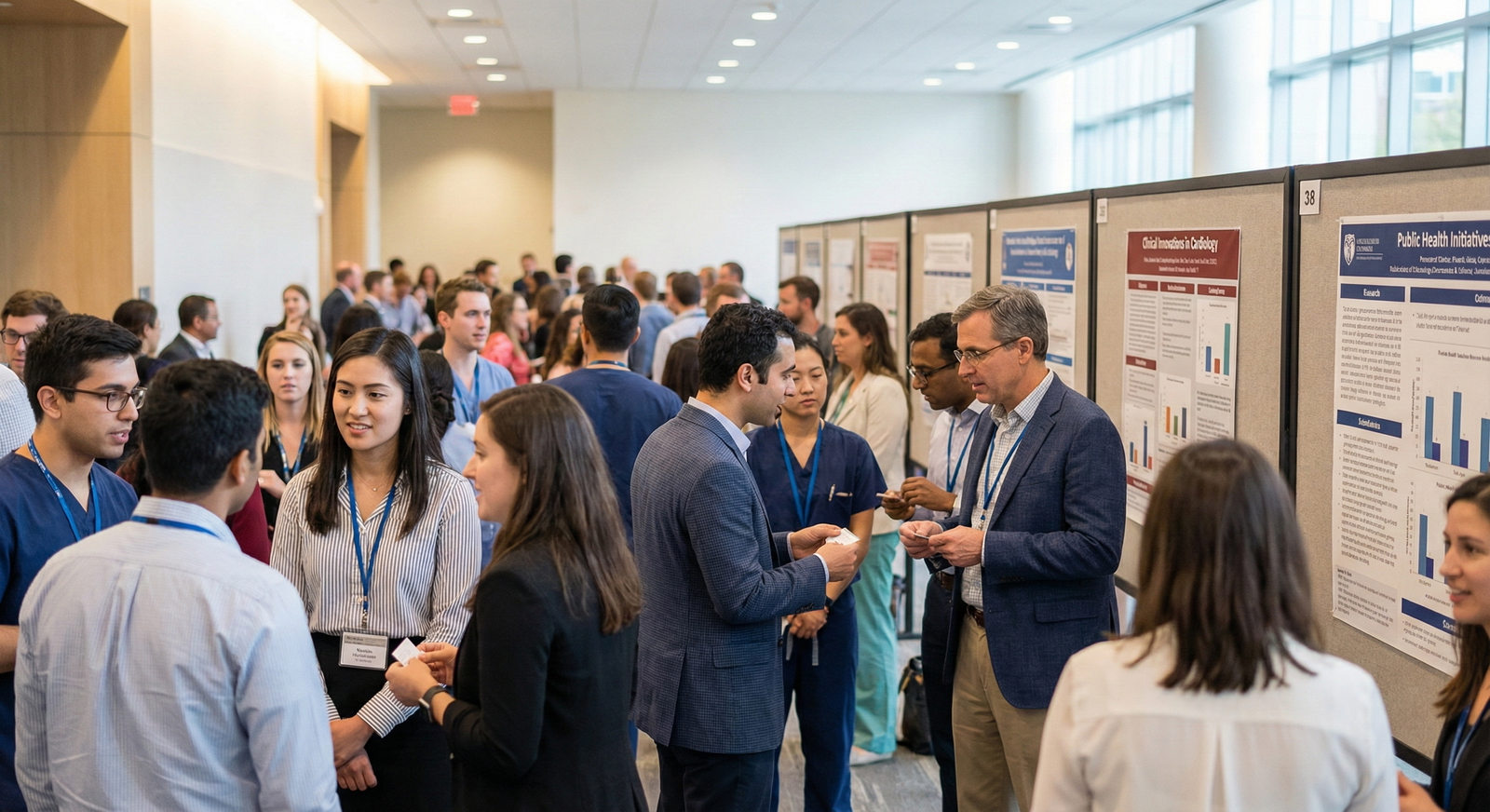
- Conference audiences where you present posters or oral abstracts.
5. Learn from IR Fellows and Residents
IR fellows and senior DR residents pursuing ESIR or IR pathways are critical networking contacts:
- They were recently in your shoes and know how the IR match really works right now.
- They can share concrete advice about programs, interviews, and the unspoken expectations of an interventional radiology residency.
- They often know which faculty members are especially supportive of trainees.
Approach them respectfully:
- Ask if they’d be open to a 15–20 minute conversation about their path to IR.
- Prepare specific questions: “If you were starting this process again as an MD graduate, what would you do differently?”
Leveraging Conference Networking and Professional Societies in IR
Conference networking is one of the highest-yield strategies for expanding beyond your local environment. For aspiring interventional radiologists, national and regional IR meetings are especially powerful.
1. Choosing the Right Conferences
Key IR-related conferences and organizations for MD graduates:
- SIR (Society of Interventional Radiology) Annual Scientific Meeting
- Flagship IR meeting; high-yield for the IR match and residency networking.
- SIR Medical Student and Resident (MSR) sessions and networking events
- Even as an MD graduate, these sessions can be helpful entry points.
- Regional SIR chapters
- Smaller, often more approachable settings for one-on-one interaction.
- Radiology society meetings with IR tracks
- RSNA, ARRS, and others where IR sessions draw faculty from many institutions.
If finances are tight, prioritize:
- The primary IR meeting (SIR annual).
- At least one regional or local IR event.
Look for:
- Student/trainee registration discounts.
- Travel scholarships or trainee grants offered by societies.
2. Preparing Before You Go
Conference networking is much more successful when you plan ahead:
- Review the program in advance.
- Flag sessions led by PDs or faculty from IR residency programs you’re interested in.
- Note panels on IR match, mentorship in medicine, practice-building, or early career IR.
- Make a target contact list:
- Faculty from programs you might apply to.
- IR educators known for working with trainees.
- Authors of IR research that aligns with your interests.
- Reach out briefly by email or social media 1–2 weeks before:
- “I’ll be at SIR and greatly admire your work in [topic]. If you’re available for a quick 5–10 minute chat between sessions, I’d be grateful to ask a couple of questions about pursuing IR residency.”
Even if only a few reply, you’ve already begun medical networking before you arrive.
3. How to Interact Effectively at Conferences
At the conference, think of every interaction as an opportunity to build a small but meaningful connection—not to “sell yourself,” but to learn and engage genuinely.
Concrete strategies:
- Attend trainee-focused events:
- IR residency and fellowship panels.
- Mentorship or speed-networking sessions.
- “Meet the faculty” or “Meet the program director” receptions.
- Ask concise, thoughtful questions during Q&A:
- “As someone planning to apply to an interventional radiology residency, how do you see training evolving in [specific area] over the next 5–10 years?”
- Introduce yourself briefly after talks:
- “Thank you for your presentation on [topic]. I’m an MD graduate pursuing IR residency and really appreciated your point about [specific detail]. Would it be alright if I follow up by email with a question or two?”
Do:
- Wear your badge clearly.
- Keep introductions under 30–60 seconds unless invited to continue.
- Be respectful of time (especially when speakers are surrounded by others).
Avoid:
- Trying to force long conversations when someone is clearly in a rush.
- Immediately asking for letters of recommendation or positions.
- Monologuing about your CV instead of engaging in two-way discussion.
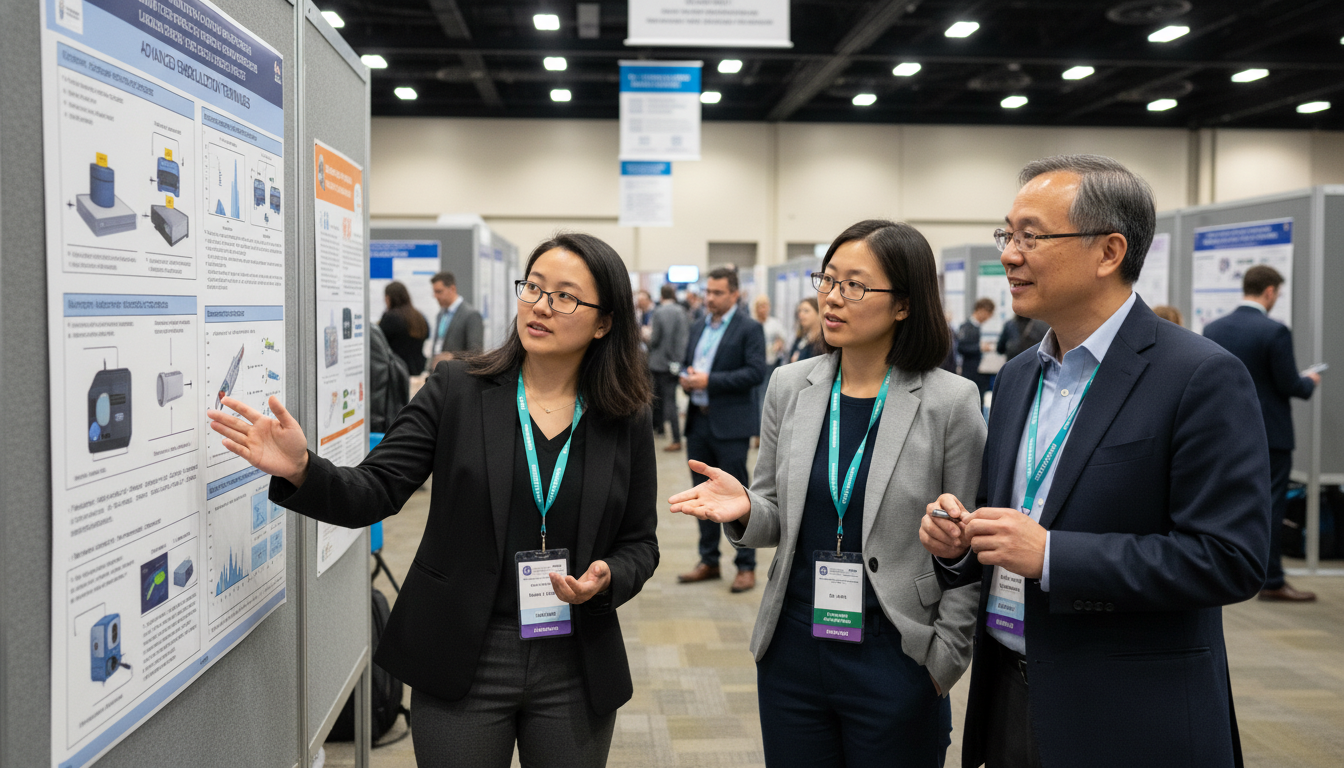
4. The Power of Poster and Oral Presentations
If you have IR research:
- Submit abstracts to SIR and relevant meetings.
- Stand confidently at your poster and be ready with:
- A 1-minute summary.
- A 3–4 minute deeper explanation if someone is interested.
- Ask visitors about their work:
- “Are you also in IR?”
- “Which program are you from?”
- “What kinds of cases are you most excited about these days?”
Each poster discussion can become a new connection. Collect business cards or connect on LinkedIn or X (Twitter) afterward.
5. Follow-Up After the Conference
The most important part of conference networking happens once you go home:
- Within 3–7 days, send brief thank-you emails:
- Remind them who you are (context, session or poster where you met).
- Mention something specific you learned or appreciated.
- If appropriate, ask one clear next-step question (e.g., “Would you recommend any reading or resources on [topic] for someone preparing for an IR match?”).
This follow-up is often what turns a fleeting conversation into an ongoing professional relationship.
Online Networking, Social Media, and Professional Presence in IR
Medical networking is no longer confined to hallways and hotel ballrooms. For aspiring interventional radiologists, online platforms can significantly amplify your reach—if used thoughtfully.
1. Professional Platforms to Prioritize
Consider cultivating a presence on:
- LinkedIn
- For a polished, CV-like profile and professional connections.
- X (Twitter)
- Many IR faculty, societies, and programs actively discuss cases, research, and IR match tips.
- Society platforms
- SIRConnect (if available), specialty forums, and trainee sections.
Key principles:
- Use your real name and a professional photo.
- Clearly state your status: “MD graduate pursuing interventional radiology residency.”
- Highlight key interests: “Interventional oncology, PAD, embolization, image-guided therapies.”
2. What to Post and How to Engage
You don’t need to post daily. Focus on:
- Quality over quantity.
- Signal, not noise.
Possible content:
- Sharing IR articles with a brief comment: “Interesting study on [topic]—important implications for IR training.”
- Commenting respectfully on IR threads: adding a question or reflection.
- Celebrating your academic milestones: posters, publications, IR-related volunteer work.
When interacting with IR attendings or programs:
- Be respectful and concise.
- Avoid controversial or unprofessional topics.
- Never share patient-identifiable information or images without proper de-identification and permissions.
3. Using Online Platforms for Mentorship Medicine
Many senior IRs are open to informal mentorship via social media or email. To approach:
- Engage first with their public posts—like, retweet with comments, or ask constructive questions.
- After some interaction, send a message:
- Introduce yourself briefly as an MD graduate pursuing IR.
- Mention what you’ve learned from their posts or publications.
- Ask a specific question or if they’d be open to one short conversation about IR training.
Not everyone will respond, and that’s okay. Even a few genuine connections can help significantly with your IR match strategy and overall understanding of the field.
4. Protecting Your Professional Brand
Your online footprint can influence how residency programs perceive you. To safeguard your IR residency prospects:
- Remove or privatize any content that could be unprofessional.
- Avoid negative comments about programs, colleagues, or patients.
- Remember that screenshots are permanent, even for deleted posts or “private” messages.
Strategic Networking During the IR Application and Interview Season
Once you enter the actual application cycle for interventional radiology residency as an MD graduate, networking becomes even more targeted and time-sensitive.
1. Communicating with Programs Before Application
Before ERAS opens:
- Attend any virtual open houses or Q&A sessions with IR and DR/ESIR programs.
- Prepare 2–3 questions tailored to each program (e.g., case mix, IR resident autonomy, research opportunities).
- Take notes on:
- Who spoke (PD, APD, residents).
- What they emphasized about their IR training environment.
You may also send brief, respectful emails to:
- Express genuine interest in a program.
- Note any connections (shared mentors, regional ties).
- Ask if they have any specific suggestions for applicants with your background (e.g., MD graduate, non-traditional timeline, research niche).
2. Making the Most of Interview Day
On IR and DR/ESIR interview days, your goal is not to “network aggressively” but to leave a memorable, positive professional impression:
With faculty:
- Ask thoughtful questions that show you’ve researched their program.
- Listen actively rather than rushing to impress.
- Be honest about your interests and career goals.
With residents and fellows:
- Ask about day-to-day IR workflow, call, and support.
- Gauge culture: collaboration vs competition; faculty accessibility.
- Maintain professionalism in all small-group or informal sessions—residents often give feedback to PDs.
Even if you don’t match at a particular program, people you meet can reappear later as colleagues, co-investigators, or faculty at future jobs.
3. Post-Interview Communication
Policies vary by program and specialty, but in general:
- Sending one concise thank-you email to the program director or key faculty is appropriate, if not explicitly discouraged.
- Emphasize:
- Specific features you appreciated (case mix, mentorship structure, research support).
- A genuine sense of fit.
- Avoid any language that violates NRMP rules (no explicit ranking commitments).
Your tone should be appreciative, not transactional.
4. MD Graduates with Special Circumstances
If you’re an MD graduate who:
- Is applying after a gap year.
- Is reapplying after an unsuccessful IR match cycle.
- Is switching from another specialty.
Networking becomes even more essential:
- Use your mentors to help refine your narrative and application strategy.
- Ask them to be candid about where your profile is competitive (integrated IR vs DR/ESIR, types of programs).
- Seek connections with applicants who had similar backgrounds and matched successfully.
Your relationships can help you avoid repeating mistakes and highlight growth since your previous cycle.
Putting It All Together: A Networking Blueprint for IR-Bound MD Graduates
To make this actionable, here is a streamlined roadmap for networking in medicine tailored to interventional radiology:
Home Base (Months to Years Before Applying)
- Identify IR faculty, fellows, and residents at your institution.
- Set up initial meetings and shadowing.
- Join or establish an IR interest group if available.
- Get involved in at least one IR-related research or QI project.
Mentorship Medicine (Ongoing)
- Nurture 1–3 strong mentor relationships (IR and possibly DR).
- Meet or email periodically with updates and questions.
- Seek honest feedback on your competitiveness and CV.
Conference Networking (Year Before and During Application)
- Attend at least one major IR conference (e.g., SIR) if possible.
- Present research if you can.
- Plan who you want to meet; follow up afterward.
Online Presence (Continuous)
- Maintain a clean, professional LinkedIn and/or X profile.
- Follow key IR societies and educators.
- Engage periodically in discussions related to IR training and research.
Targeted Application Season Strategy
- Attend virtual open houses and program sessions.
- Research programs thoroughly; note IR case volumes, structure, and culture.
- Communicate your sincere interest appropriately and professionally.
When done consistently, this approach doesn’t just increase your chances of an interventional radiology residency; it also creates a support network that will follow you into fellowship, early practice, and beyond.
FAQs: Networking in Medicine for MD Graduates Pursuing Interventional Radiology
1. I’m an MD graduate from a smaller allopathic medical school without a strong IR presence. Can I still build a competitive IR network?
Yes. Start with any available radiology or minimally invasive procedure faculty (e.g., vascular surgery, cardiology cath lab, interventional oncology in oncologic surgery). Ask if they have IR contacts they can introduce you to at larger centers. Attend regional or national IR meetings, apply for trainee scholarships, and build an online presence connecting with IR societies and mentors. Away rotations at IR-heavy institutions can also be crucial networking and exposure opportunities.
2. How early should I start networking if I want an interventional radiology residency?
Ideally, begin during medical school or as early as possible in your MD graduate timeline. However, it is never “too late” to start. Even 6–12 months before applying, you can still meet local IR faculty, join research projects, attend IR webinars or conferences, and develop relationships that lead to stronger letters and clearer guidance on your IR match strategy.
3. How do I avoid seeming pushy or transactional when networking?
Focus on learning and contributing rather than “getting something.” Ask about people’s work, listen genuinely, and look for ways to be helpful (e.g., assisting with data collection, literature review, or organizing sessions for students). Follow up occasionally with updates, not constant asks. Remember: relationships develop over time through professionalism, reliability, and mutual respect.
4. Does networking really matter if I already have strong scores and grades for the allopathic medical school match?
In a competitive field like interventional radiology, strong scores and grades are necessary but not sufficient. Networking and mentorship in medicine help you:
- Understand which programs align best with your goals.
- Access IR-specific projects that distinguish you from other applicants.
- Earn powerful, specific letters and real advocacy from respected IR faculty.
Even for top-tier applicants, effective networking can refine your program list, support your long-term career plans, and transform the IR match from a blind process into a guided, informed journey.
By approaching networking as a core professional skill—not an afterthought—you position yourself not only for a successful IR match, but also for a sustainable, well-supported career in interventional radiology.