Why Networking in Medicine Matters for an MD Graduate in Medical Genetics
For an MD graduate pursuing a career in medical genetics, networking in medicine is not optional—it's a core professional skill. The field is relatively small, highly specialized, and rapidly evolving with new technologies like whole-exome sequencing, gene therapies, and pharmacogenomics. Who you know (and who knows you) can shape:
- Your success in the allopathic medical school match
- Your chances in a competitive medical genetics residency or combined programs (e.g., pediatrics–genetics, internal medicine–genetics)
- Your access to research opportunities and niche subspecialties
- Long-term career paths in academic medicine, industry, or precision medicine initiatives
Because the genetics community is tighter-knit than many larger specialties, reputations travel quickly. Thoughtful medical networking—done with authenticity, professionalism, and follow-through—can make you memorable in a positive way.
This article focuses on how an MD graduate in medical genetics can strategically build and sustain a network that directly supports a strong genetics match, meaningful mentorship medicine relationships, and long-term growth.
Understanding the Medical Genetics Landscape and Who to Know
Before you can network effectively, you need a mental map of the medical genetics ecosystem and the key players within it.
Core Stakeholders in Medical Genetics
As an aspiring medical geneticist, your professional network should include:
Residency Program Leadership
- Program Directors (PDs)
- Associate/Assistant Program Directors
- Program Coordinators
- Department Chairs / Division Chiefs (Medical Genetics, Genomic Medicine)
These individuals have direct influence on the medical genetics residency selection process, can offer guidance about the allopathic medical school match, and often know each other across institutions.
Clinical Faculty in Genetics
- Clinical geneticists (adult and pediatric)
- Biochemical geneticists
- Cancer geneticists
- Neurogeneticists
- Reproductive geneticists and maternal–fetal medicine collaborators
Building relationships with faculty exposes you to different career paths and gives you potential advocates who can speak to your clinical and professional strengths.
Genetic Counselors and Interdisciplinary Team Members
- Genetic counselors
- Molecular pathologists
- Laboratory directors
- Bioinformaticians
- Pharmacogenomics and precision medicine specialists
These colleagues may not determine your residency slot, but they often provide valuable perspectives on day-to-day practice, evolving technologies, and interdisciplinary collaboration.
Peers and Near-Peers
- Co-residents and fellows in genetics and related fields (pediatrics, oncology, neurology, MFM)
- Recent graduates who successfully navigated the genetics match
- Medical students considering genetics
Peer networking in medicine is often underestimated. Your classmates and co-residents can become research collaborators, co-authors, or future leaders in the field.
Leaders in the Broader Genetics Community
- National society leaders (e.g., ACMG, ASHG, AAP Section on Genetics)
- Researchers running key genome projects
- Editors of genetics-focused journals
- Guideline authors and consensus-panel members
You may not interact with them daily, but even limited, well-timed contact (e.g., at conferences) can lead to mentorship, project collaborations, or letters of support.

Building a Strategic Networking Foundation During and After Medical School
Whether you are still at an allopathic medical school or have just graduated and are preparing for the medical genetics residency match, your daily environment is your most accessible networking space.
Step 1: Clarify Your Identity and Goals
Before you introduce yourself to anyone, be clear on how you want to present your professional identity:
- “I’m an MD graduate interested in medical genetics with a strong background in pediatrics and a focus on metabolic disorders.”
- “I’m an MD graduate preparing for a medical genetics residency, particularly interested in cancer genomics and hereditary cancer syndromes.”
Having a concise, honest “professional snapshot” makes your networking interactions more focused and memorable.
Actionable exercise:
Write a 2–3 sentence professional introduction that includes:
- Your training level (MD graduate, PGY-1, etc.)
- Your core area of interest in medical genetics
- A brief skill or experience highlight (research, QI project, teaching, etc.)
Practice saying this out loud until it feels natural.
Step 2: Leverage Home Institution Opportunities
If your allopathic medical school has a genetics department or affiliated clinical genetics service, take every chance to become visible:
Electives and Rotations
- Choose rotations in clinical genetics, pediatric genetics clinic, cancer genetics clinic, or metabolic clinics.
- Ask to attend case conferences, variant review boards, or multidisciplinary tumor boards with a genomics focus.
Teaching and Curriculum Involvement
- Volunteer to help with genetics teaching for junior students.
- Participate in curriculum committees or student interest groups related to genomics or precision medicine.
Research Engagement
- Approach faculty about small but concrete projects, such as case reports, chart reviews, or quality improvement projects in genetic testing workflows.
- Offer help with ongoing larger projects—database cleanup, literature searches, or data collection.
By contributing value consistently, you build a reputation as reliable and engaged—key attributes that faculty remember when writing letters or advocating for you in the genetics match.
Step 3: Use Digital Networking Wisely
For an MD graduate in medical genetics, online presence can extend your reach beyond your home institution.
LinkedIn
- Maintain a complete, professional profile emphasizing your genetics-related activities.
- Join and participate in groups focused on medical genetics, precision medicine, or genomics.
- Connect with faculty, peers, and conference contacts with a personalized note referencing where you met or what you discussed.
Professional Society Platforms
- Some societies (e.g., ACMG, ASHG) offer member directories, forums, and mentorship programs.
- Use these to ask focused questions or seek introductions to specific subfields (e.g., biochemical genetics, pharmacogenomics).
Email Etiquette
- Keep messages concise but personalized.
- Briefly mention who referred you (if applicable) and what specific advice or opportunity you’re seeking (not just “pick your brain”).
Example outreach email:
Subject: MD graduate seeking guidance on medical genetics residency
Dear Dr. [Name],
I am an MD graduate from [School] pursuing a career in medical genetics, with particular interest in [subfield]. I have [briefly describe relevant experience].I have been following your work on [specific project or paper] and would greatly appreciate 15–20 minutes of your time (phone or Zoom) to ask a few focused questions about training pathways and preparation for the genetics match.
Thank you very much for considering this.
Sincerely,
[Name]
[Current role, contact info]
Mastering Conference Networking in Medical Genetics
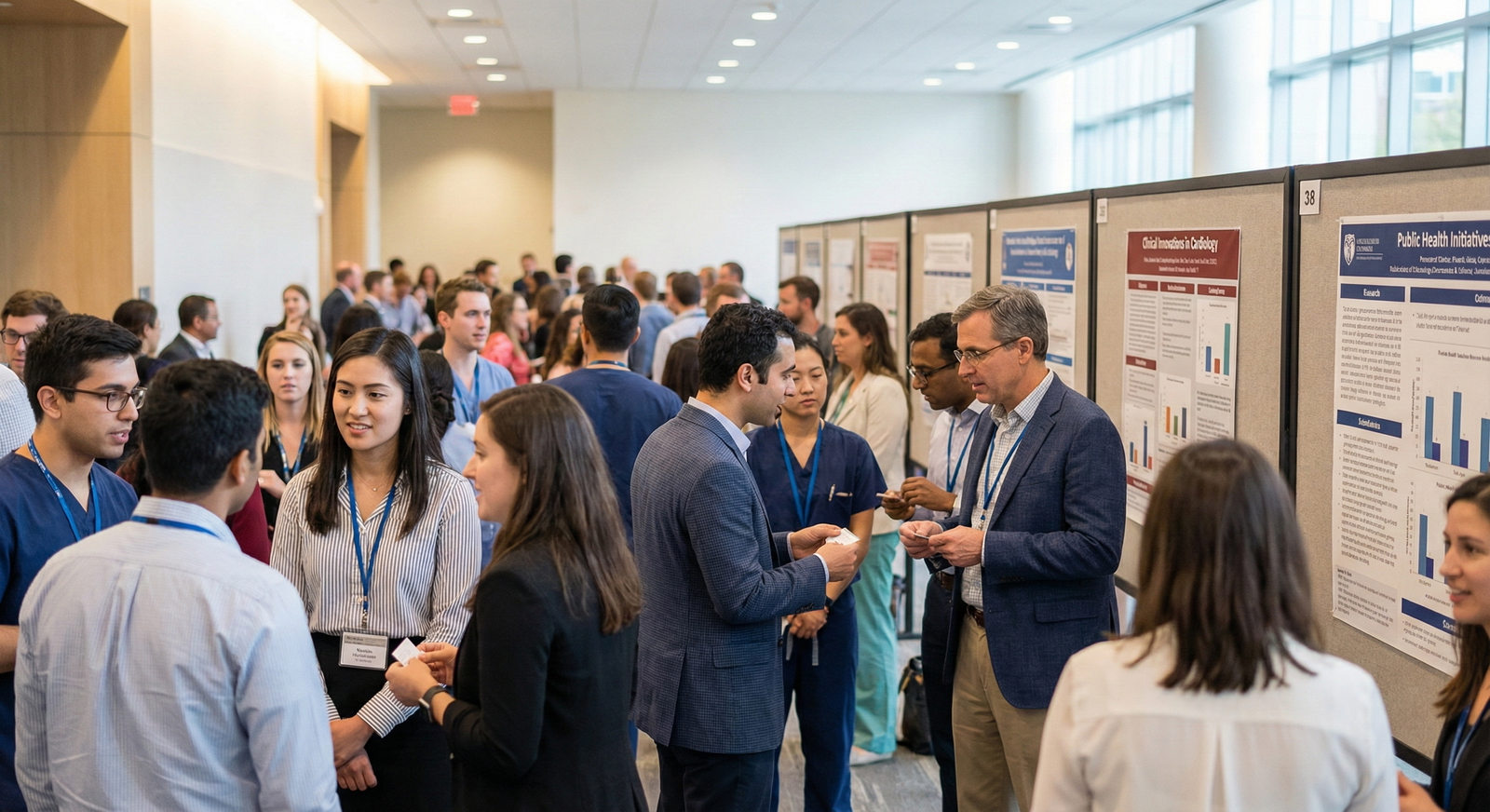
Conferences are among the most powerful venues for medical networking, especially in a relatively compact specialty like medical genetics. Strategic conference networking can directly influence your medical genetics residency opportunities and expand your mentorship medicine relationships.
Choosing the Right Conferences
As an MD graduate preparing for the genetics match, prioritize:
American College of Medical Genetics and Genomics (ACMG) Annual Meeting
- Strong emphasis on clinical genetics and training.
- Great for meeting residency program directors, fellows, and leaders in the field.
American Society of Human Genetics (ASHG) Annual Meeting
- Larger, more research-focused; excellent for those leaning toward academic or translational genetics.
Specialty or regional meetings
- E.g., cancer genetics consortia, metabolic disease conferences, pediatric or neurology meetings with strong genetics components.
If budget is an issue, look for:
- Student/resident travel awards
- Reduced registration fees
- Virtual attendance options with networking sessions and breakout rooms
Preparing Before You Go
Think of conference networking as a clinical procedure: preparation determines outcomes.
Set Clear Objectives
- Identify 3–5 program directors you want to meet.
- Target 2–3 research groups or labs whose work aligns with your interests.
- Plan to introduce yourself to at least 10 peers in medical genetics.
Schedule in Advance
- Email potential mentors or PDs 2–3 weeks before the conference:
- Reference a specific session or project.
- Ask for a brief meeting during a coffee break or poster session.
- Use conference apps to identify who will be attending and where they’ll present.
- Email potential mentors or PDs 2–3 weeks before the conference:
Prepare Your Talking Points
- Your professional introduction (as above).
- One or two questions tailored to each person:
- “What skills do you find most lacking in incoming medical genetics residents?”
- “How is your program integrating genomic sequencing into everyday practice?”
Bring a Simple Networking Toolkit
- Updated CV (digital and a few printed copies).
- Business cards or contact cards (even simple ones).
- A notebook or phone note app to jot key details after each interaction.
How to Approach People at Conferences
Conference networking can feel intimidating at first. Use structured but natural approaches:
At Posters
- Attend posters relevant to your interests.
- Ask the presenter:
- “What was the biggest surprise in your findings?”
- “How do you see this translating into clinical practice?”
- Introduce yourself and share your interests briefly; ask if you can stay in touch.
After Sessions
- Approach speakers with a specific, concise question.
- Link their talk to your interests:
- “I’m an MD graduate planning for medical genetics residency; how would you recommend I build skills in [topic they spoke on] before starting training?”
At Program Showcases or Residency Fairs
- Prepare 2–3 targeted questions for each program:
- “What distinguishes your medical genetics residency from others?”
- “How have your residents been involved in research or QI projects?”
- “What backgrounds have your strongest recent matches come from?”
- Prepare 2–3 targeted questions for each program:
Important: Do not open with “Can you help me get into your program?”
Instead, demonstrate curiosity, preparation, and professionalism—those traits themselves can make you memorable when applications arrive.
Following Up After Conferences
Follow-up is where conference networking becomes long-term medical networking.
- Timing
- Send brief emails within 3–7 days after the conference.
- Content
- Reference a detail of your conversation.
- Express appreciation for their time.
- Mention one clear next step (e.g., reading a paper they suggested, sending a CV, or asking a focused follow-up question).
Example follow-up:
Dear Dr. [Name],
It was a pleasure speaking with you after your session on [topic] at the ACMG meeting. I especially appreciated your insights on [specific point].As an MD graduate preparing for a medical genetics residency, I found your advice on building experience in [area] very helpful. I’ve already started looking into [resource or suggestion they mentioned].
If you’re open to it, I would be grateful to stay in touch as I navigate the genetics match and would welcome any feedback on how best to prepare for programs like yours.
Thank you again,
[Name]

Networking for a Strong Genetics Match and Early Career Success
Once you enter the active application window, networking in medicine should become more targeted and aligned with the medical genetics residency match timeline.
Using Networking to Inform Your Program List
Your professional contacts can help you answer crucial questions:
- Which programs are strongest in your subfield of interest (e.g., cancer genetics, biochemical genetics)?
- Which programs are particularly supportive of MD graduate applicants vs. combined track or PhD-heavy environments?
- Which programs have reputations for:
- Strong mentorship medicine culture
- Work–life balance
- Research support
- Visa or international graduate friendliness (if relevant)
Action steps:
- Ask faculty or mentors: “If you were in my position, with interests in X and Y, which programs would be at the top of your list and why?”
- Attend virtual open houses or Q&A sessions hosted by residency programs and ask thoughtful questions.
Networking During the Application and Interview Season
During application and interviews, your behavior and interactions become part of your “informal file.”
Pre-interview Contact
- It is appropriate to email PDs or faculty you have met at conferences or rotations:
- Briefly update them that you have applied to their medical genetics residency.
- Express continued interest in their program.
- Keep it professional and not pushy.
- It is appropriate to email PDs or faculty you have met at conferences or rotations:
During Interviews
- Treat every interaction (with residents, coordinators, and faculty) as networking:
- Ask about mentorship structures.
- Inquire about how residents get involved in research or QI.
- Show that you understand the realities of genetics practice:
- Ethical dilemmas
- Incidental findings
- Communication with families and multidisciplinary teams
- Treat every interaction (with residents, coordinators, and faculty) as networking:
After Interviews
- Send tailored thank-you notes to:
- PDs
- Any faculty with whom you had substantive conversations
- Reiterate a specific program feature that aligns with your goals.
- Send tailored thank-you notes to:
Networking for the Transition into Residency
Once you match into a medical genetics residency, your networking focus shifts from “getting in” to “moving up.”
Within Your Own Program
- Build relationships with:
- Senior residents and fellows
- Faculty beyond your primary mentor, including in other subspecialties
- Genetic counselors and lab staff who can provide day-to-day practical wisdom
- Offer to help with teaching sessions, journal clubs, or QI projects.
- Build relationships with:
Across Institutions
- Stay in touch with peers you met during the match and at conferences.
- Consider collaborative projects across programs—multi-center case series or survey projects.
Early Career Planning
- If you’re considering academic medicine, industry roles, or hybrid clinic–lab careers, start discussing this with mentors by early PGY-2.
- Ask to be introduced to alumni of your program working in roles that interest you (e.g., industry genomics, NIH, reference labs).
Building Authentic Mentorship and Long-Term Professional Relationships
High-quality mentorship is especially crucial in medical genetics, where training pathways, roles (clinical vs. lab vs. industry), and technologies are evolving rapidly.
Finding and Evaluating Mentors
Aim for a “mentor team” rather than a single person:
- Career Mentor
- Guides big-picture decisions (residency/fellowship, academic vs. non-academic paths).
- Content Mentor
- Expert in your specific area (e.g., hereditary cancer, metabolic disorders).
- Process Mentor
- Helps with skills like scientific writing, time management, or grant applications.
- Peer Mentor
- Someone 1–3 years ahead of you who recently navigated the genetics match or early career decisions.
Signs of a strong mentor:
- Makes time for you consistently.
- Offers specific feedback rather than vague encouragement.
- Respects your goals (not just their own agenda).
- Has a track record of successfully mentoring others.
Being a Good Mentee
Mentorship medicine is a two-way professional relationship. To keep mentors engaged:
- Prepare for meetings:
- Send a brief agenda or questions ahead of time.
- Bring updated CV or progress summary if relevant.
- Show follow-through:
- If they suggest a paper, read it and mention one insight at the next meeting.
- Report back on outcomes of their advice (e.g., “I reached out to Dr. X as you suggested; we’re planning a small project.”)
- Respect boundaries:
- Be mindful of their time.
- Avoid last-minute requests except in true emergencies (e.g., letter deadlines).
Transforming Networking into Sponsorship
Over time, the strongest professional relationships evolve from mere networking to sponsorship—where a senior person actively advocates for your advancement.
Sponsors:
- Nominate you for committee roles or speaking opportunities.
- Recommend you for positions, fellowships, or awards.
- Connect you with other influential people in the genetics community.
You do not ask someone directly to “be your sponsor,” but sponsorship often emerges when you consistently:
- Deliver high-quality work.
- Demonstrate reliability and professionalism.
- Align your efforts with their program’s or lab’s goals.
Common Networking Pitfalls (and How to Avoid Them)
Even well-intentioned MD graduates can undermine their efforts. Watch out for:
Transactional Behavior
- Only reaching out when you need a favor (e.g., during the match).
- Instead: Maintain light contact year-round—share an article, send a quick update on your progress, congratulate them on a new role.
Overpromising and Under-delivering
- Agreeing to projects that exceed your bandwidth.
- Instead: Start small, be realistic, and communicate early if timelines slip.
Lack of Professionalism Online
- Unprofessional social media posts or public complaints about programs or colleagues.
- Instead: Assume anything you post may be seen by future colleagues or PDs.
Neglecting Peer Relationships
- Focusing solely on “big names.”
- Instead: Invest in relationships with co-residents and fellows—these will often become your most enduring collaborations.
Fear of Reaching Out
- Avoiding contact because you feel you’re “bothering” people.
- Instead: Remember that most physicians in medical genetics want to support the next generation; a polite, well-prepared approach is usually welcome.
FAQs: Networking in Medicine for MD Graduates in Medical Genetics
1. How early should I start networking if I want a medical genetics residency?
Ideally, begin during your clinical years of medical school, especially if your school has a strong genetics presence. However, even if you decide late, you can still build meaningful connections during your final year, gap years, or early postgraduate training. If you are already an MD graduate, start now: reach out to genetics faculty at your current or former institution, attend at least one major genetics conference, and get involved in a small, achievable project.
2. Does networking really influence the genetics match, or is it all about board scores and grades?
Objective metrics matter, but in a small field like medical genetics, “fit,” professionalism, and reputation carry substantial weight. Strong networking won’t compensate for glaring academic issues, but it can:
- Help program directors understand your true strengths.
- Contextualize red flags (e.g., a leave of absence).
- Highlight your genuine commitment to the specialty.
Many PDs respond positively when they’ve already seen your name on a poster, heard of you from a trusted colleague, or interacted with you at a conference.
3. What if my home institution doesn’t have a genetics department?
You can still build a strong network:
- Seek electives at institutions with active genetics services or through visiting student programs.
- Reach out to genetics faculty at nearby academic centers for shadowing or short research opportunities.
- Use national societies, virtual conferences, and online mentorship programs to connect with the field. Be transparent about your limited local resources in your application—but demonstrate that you actively sought opportunities despite that.
4. How do I balance networking with the demands of residency or clinical rotations?
Treat networking as a longitudinal habit rather than an extra task. Practical strategies:
- Integrate networking into activities you already do (e.g., stay 5–10 minutes after grand rounds to introduce yourself to the speaker).
- Dedicate a small, regular time block (e.g., 30–45 minutes once a week) for emails, follow-ups, and reading mentor-recommended articles.
- Choose a manageable number of relationships to actively maintain, rather than trying to know everyone.
Thoughtful, sustained networking in medicine can transform an MD graduate’s path in medical genetics—from a stressful, opaque process into a more navigable journey guided by mentors, peers, and sponsors. By approaching medical networking with authenticity, preparation, and professionalism, you build not only a stronger candidacy for the genetics match, but also a supportive professional community that will follow you throughout your career.