Why Networking Matters So Much in Orthopedic Surgery
If you are an MD graduate pursuing an orthopedic surgery residency, your clinical performance and board scores matter—but they are only part of the equation. Orthopedics is a relatively small, close-knit specialty with a strong culture of mentorship, sponsorship, and reputation. In this environment, networking in medicine can significantly influence your allopathic medical school match outcome, fellowship opportunities, and early career trajectory.
For an aspiring orthopedist, networking isn’t about schmoozing or self-promotion. It’s about:
- Building authentic, long-term professional relationships
- Finding mentors and sponsors who will advocate for you
- Getting on the radar of residency and fellowship programs
- Learning the unspoken norms of the specialty
- Accessing research, leadership, and teaching opportunities
This article breaks down a practical, step-by-step strategy for medical networking tailored specifically to the MD graduate interested in orthopedic surgery residency and beyond. You’ll learn how to network effectively during medical school and early postgraduate years, at conferences, on away rotations, and online—while maintaining professionalism and authenticity.
Foundations of Networking for Orthopedic MD Graduates
Before you start emailing attendings and introducing yourself at conferences, you need a clear understanding of your goals, your “professional story,” and your value proposition.
Clarify Your Networking Goals
Your approach should depend on where you are in the path to ortho:
Pre-clinical / early clinical MD graduate (e.g., PGY-1 transitional year or prelim)
- Learn more about subspecialties (sports, trauma, spine, joints, pediatrics, hand, oncology).
- Find research mentors for publishable ortho projects.
- Understand the culture of orthopedic surgery and program expectations.
Applying for orthopedic surgery residency / reapplying for ortho match
- Build connections with faculty at target programs.
- Identify mentors willing to write strong, personalized recommendation letters.
- Learn program-specific “fit” factors and priorities for the allopathic medical school match.
Already matched MD graduate in orthopedic surgery residency
- Explore subspecialty fellowship options and research collaborations.
- Build regional and national reputation through presentations, committees, and societies.
- Identify senior mentors for career decisions and job search.
Write down 3–5 clear, realistic networking goals (e.g., “Obtain one orthopedic mentor at my own institution,” “Present at an orthopedic conference within 12 months,” “Connect with at least 5 residents from target programs before the next ortho match cycle”).
Craft Your Professional Story
In orthopedics, conversations often start with “Tell me about yourself.” A concise, confident professional story helps you make strong first impressions in any networking setting.
Use a structure like:
- Who you are – Background, current role
- What you’re interested in – Specific orthopedic interests
- What you’ve done – Brief mention of experiences or projects
- What you’re looking for next – Mentorship, opportunities, or advice
Example (MD graduate aiming for ortho residency):
“I’m Dr. Smith, an MD graduate currently in a surgical preliminary year, strongly interested in orthopedic trauma and sports. During medical school at an allopathic program, I completed biomechanics research on ACL reconstruction techniques and helped start a student interest group in orthopedic surgery. I’m working toward a successful reapplication to orthopedic surgery residency this upcoming ortho match cycle, and I’m seeking mentorship to strengthen my application, especially in trauma-focused research.”
Practice a 20–30 second version and a 60–90 second version. This will be your default opening at conference networking events, mentor meetings, and even in email introductions.
Build Your Professional Brand Early
Your “brand” is what people remember about you after brief interactions. In orthopedic surgery, common valued traits include:
- Reliability and strong work ethic
- Team orientation and humility
- Technical curiosity and willingness to learn
- Physical and mental stamina
- Integrity and professionalism
To reinforce this brand:
- Respond to emails promptly and professionally.
- Show up on time (or early) for meetings and calls.
- Follow through on tasks and deadlines—especially research.
- Be gracious and appreciative, without being overly deferential.
Your clinical and research reputation will often spread informally across attendings, residents, and coordinators—particularly within the tight-knit ortho community—so consistency is crucial.

Building Mentorship in Medicine: From Informal Allies to Career Sponsors
Mentorship in medicine is often the single most important factor for success in orthopedic surgery. For an MD graduate, especially from a school with fewer ortho resources, purposeful mentorship can compensate for structural disadvantages.
Understand the Different Types of Mentors
You’ll likely need several types of mentors:
Clinical mentors
- Attendings who let you scrub into cases, give performance feedback, and guide you on clinical skills.
- They can provide meaningful letters emphasizing your operative potential and team skills.
Research mentors
- Faculty who integrate you into ongoing orthopedic projects.
- Crucial for helping you publish, present at conferences, and build academic credibility.
Career mentors
- Often senior residents, fellows, or junior faculty who have recently navigated the ortho match and early career decisions.
- They know the current landscape of the allopathic medical school match and can offer tactical advice.
Sponsors
- More senior figures who actively advocate for you—recommending you for positions, emailing program directors about you, and nominating you for opportunities.
- Sponsorship is especially powerful in a smaller field like orthopedics, where reputations carry weight.
Expect that no single person will fill all these roles; creating a “board of mentors” is both normal and wise.
How to Find Mentors in Orthopedic Surgery
1. At your home institution (if available):
- Check your department’s website for faculty profiles by subspecialty.
- Attend grand rounds, journal clubs, and departmental events; introduce yourself briefly after talks.
- Ask residents which attendings are particularly supportive of students and MD graduates.
Example email to request a meeting:
Subject: MD graduate interested in orthopedics – request for brief meeting
Dear Dr. [Last Name],
My name is [Your Name], an MD graduate currently [at institution / in PGY-1 transitional year], strongly interested in pursuing orthopedic surgery residency. I’ve been particularly interested in your work on [specific topic, if possible].
I’m hoping to learn more about career paths in orthopedic surgery and ask your advice on strengthening my application for the upcoming ortho match. If you have 20–30 minutes available in the next few weeks, I’d be very grateful for the chance to speak with you briefly.
Thank you for your time and consideration.
Best regards,
[Your Name, degrees]
[Contact info]
2. If your school has limited orthopedic presence:
- Reach out to nearby academic centers or large community ortho groups.
- Email alumni from your medical school who went into orthopedics.
- Use professional societies (AAOS, subspecialty societies) to identify potential mentors.
3. Leverage near-peer mentorship:
- Residents and fellows may be more accessible and can provide honest, current advice about the ortho match, program culture, and realistic expectations.
- Ask them how they chose programs, what they would do differently, and which research opportunities are high-yield.
Make Mentorship Productive and Sustainable
To make the most of mentorship in medicine:
- Come prepared to meetings with a concise background, specific questions, and an updated CV.
- Ask targeted questions, e.g., “Given my current application, what 2–3 changes would have the biggest impact before the next ortho match cycle?”
- Follow up with a thank-you email summarizing key takeaways and planned next steps.
- Demonstrate progress between meetings—mentors are more engaged when they see you taking action.
Over time, the strongest mentors often evolve into sponsors—advocating for you with program directors, connecting you to their network, and positioning you for success in the orthopedic surgery residency landscape.
Conference Networking: Turning Meetings into Opportunities
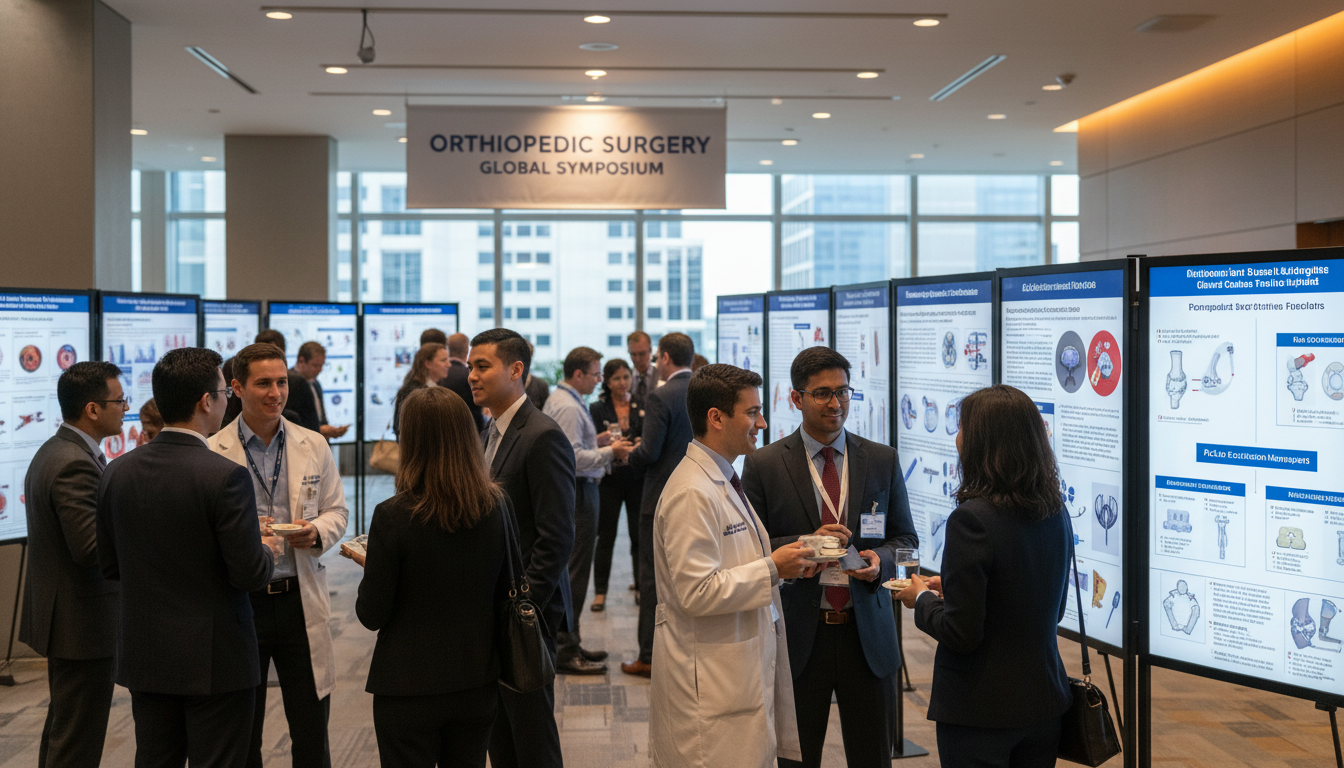
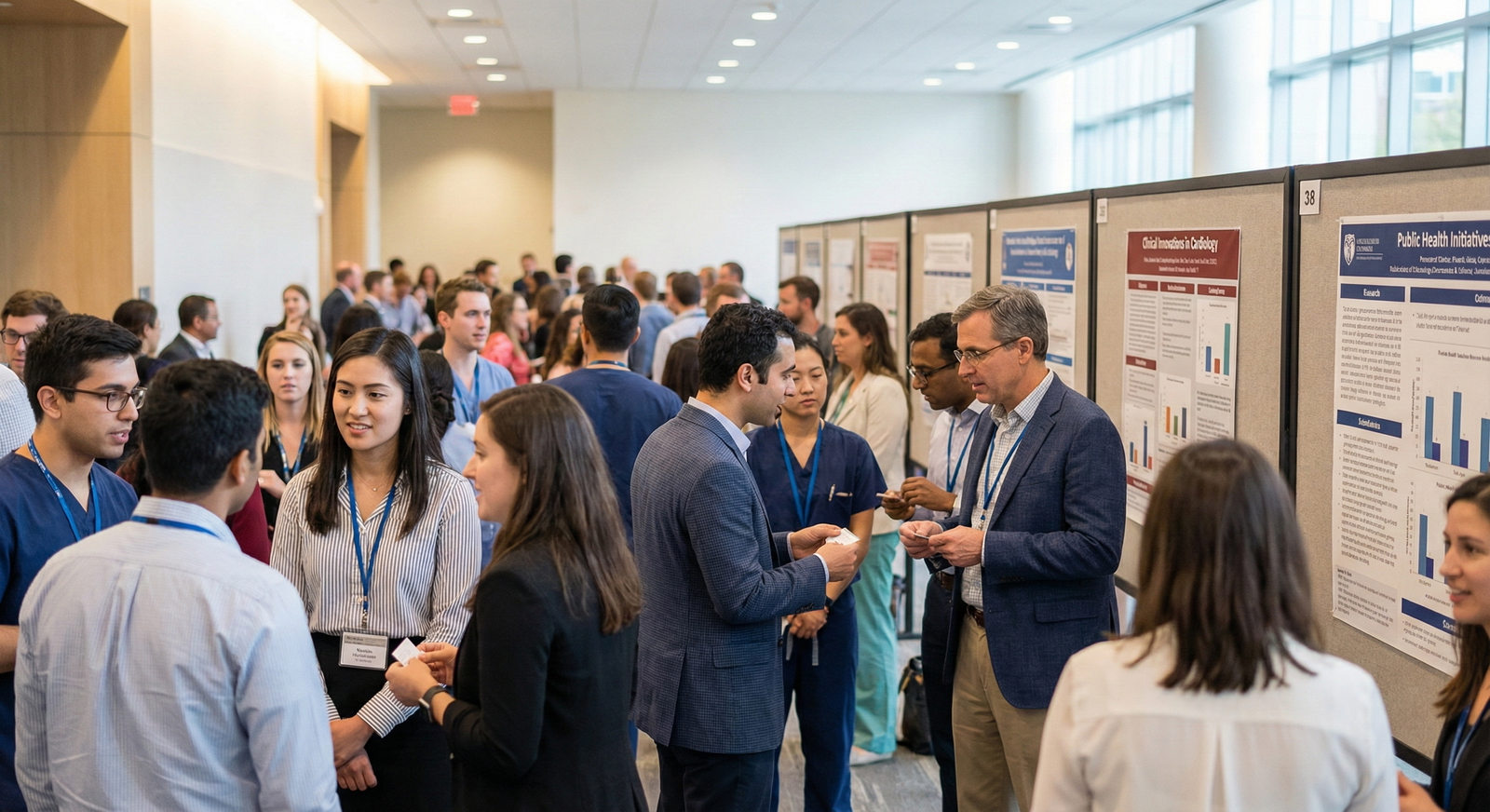
Orthopedic and general surgery conferences are powerful environments for medical networking. For an MD graduate aiming at ortho, these meetings offer concentrated exposure to leaders, residents, and ongoing research.
Choose High-Yield Conferences
Prioritize conferences where:
- Orthopedic residents, fellows, and faculty from your target programs are likely to attend
- Student/trainee registration rates are discounted
- There are structured networking sessions, mentorship programs, or poster presentations
Examples include:
- AAOS Annual Meeting (American Academy of Orthopaedic Surgeons)
- Subspecialty meetings (e.g., AOSSM, OTA, POSNA, AAHKS, NASS, ASSH, MSTS, etc.)
- Regional orthopedic society meetings
- Research symposiums at academic centers
If your budget is limited, choose one or two key meetings and aim to attend with a poster or podium abstract to make your participation more visible.
Prepare Before the Conference
Study the program
- Identify sessions in your area of interest (e.g., sports, trauma).
- Note faculty and residents from your target programs who are presenting.
Set specific goals
- Example: “Introduce myself to at least 3 attendings in trauma,” “Connect with at least 2 residents from [Program X].”
Prepare your materials
- Updated CV (PDF on your phone and email).
- A brief “elevator pitch” about yourself and your research.
- Business cards are optional but can be useful.
Reach out in advance (if appropriate)
- A brief email like:
“I’ll be attending the AAOS meeting next month and saw you’re speaking on [topic]. I’m an MD graduate pursuing orthopedic surgery with an interest in [area]. If you have a few minutes after your session, I’d be grateful for the chance to briefly introduce myself.”
- A brief email like:
How to Network On-Site
- Arrive early to sessions and sit where you can interact with others.
- Use natural openers:
- “What did you think of that case presentation?”
- “Are you in orthopedics as well? Which program are you with?”
- Approach faculty after they speak with a specific comment or question:
- “I appreciated your point about early mobilization in your trauma protocol. At my institution, we struggle with X—how do you manage that?”
- Keep initial interactions short and focused; avoid monopolizing someone’s time.
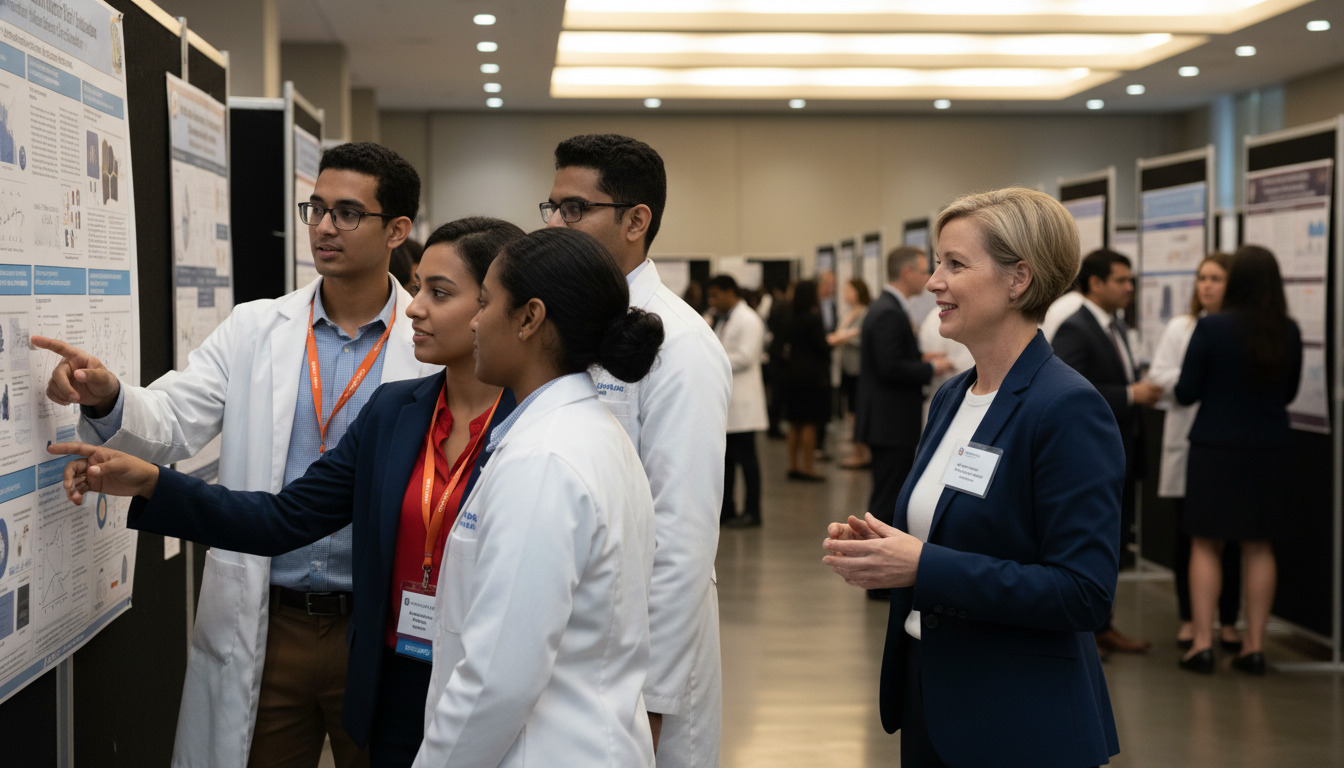
If you’re presenting a poster:
- Stand by your poster during your assigned time and practice a 2–3 minute summary.
- Have your name and contact easily visible; some will photograph your poster and name badge, so make sure your information is correct and professional.
Follow-Up After the Meeting
Within 3–7 days:
- Send brief, individualized emails reminding the person who you are and referencing your conversation.
- If you discussed potential research or mentorship, include your CV and a concise note:
“As discussed, I’ve attached my CV and would be very interested in getting involved with any ongoing projects in [area].”
Consistent, polite follow-up is what transforms a single conversation at a conference into a genuine, ongoing professional relationship.

Networking on Rotations and During the Ortho Match Process
Your clinical environment—sub-internships, away rotations, preliminary year rotations—is one of the most powerful venues for networking in medicine, particularly in orthopedics.
Treat Every Rotation as a Long Interview
When you’re rotating with an orthopedic service:
- Be the most reliable person on the team. Show up early, know your patients, and help with notes, orders, and logistics.
- Learn names of nurses, scrub techs, physician assistants, and residents. Being respectful and collaborative with the entire team builds a strong reputation.
- Ask for feedback periodically:
- “Is there one thing I could improve on this week, either in the OR or on the floor?”
Program directors and attendings often solicit informal feedback from residents, nurses, and staff; your day-to-day professionalism constitutes a form of “networking” that directly impacts your ortho match prospects.
Strategically Use Away Rotations
Away rotations are especially important in orthopedic surgery residency applications and ortho match outcomes.
To maximize your networking impact:
- Research program culture in advance through residents, alumni, and online forums.
- Reach out to the rotation coordinator and chief resident ahead of time to introduce yourself and confirm expectations.
- Let your interest be known, but not aggressively:
- “I’m very interested in this program for residency and am excited to learn from the team this month.”
During the rotation:
- Stay consistently engaged in the OR—help with positioning, prepping, and note-taking.
- Ask teachable, respectful questions without interrupting the flow of the case.
- Volunteer for call and extra cases when appropriate.
After the rotation:
- Send thank-you emails to key faculty and residents.
- Ask if they’d be comfortable providing feedback or writing a letter of recommendation.
- Stay in touch periodically, especially as the allopathic medical school match season progresses.
Communicating Interest Without Overstepping
Orthopedics is small; word travels. When expressing interest:
- Be honest about your level of interest in a program.
- Avoid promising multiple programs they are your absolute top choice.
- During interviews and follow-up, be respectful of match rules and program policies.
Your professionalism in these communications contributes directly to your reputation in the ortho community.
Online and Long-Term Networking Strategies in Orthopedics
In addition to in-person interactions, MD graduates can leverage online tools and long-term strategies to build a durable orthopedic network.
Use Online Platforms Thoughtfully
LinkedIn:
- Keep an updated, professional profile with:
- Photo (professional), headline (e.g., “MD Graduate | Aspiring Orthopedic Surgeon”), and brief summary.
- Education, research, publications, and posters.
- Connect with:
- Residents and attendings you’ve worked with
- Alumni from your medical school now in orthopedic surgery
- Physicians you meet at conferences
- Share or comment on orthopedic-related content a few times a month to stay visible.
Research networks (e.g., ResearchGate, Google Scholar):
- Maintain an updated list of publications, abstracts, and presentations.
- This reinforces your academic engagement in orthopedics.
Professional society portals:
- Many societies (AAOS and subspecialty groups) offer interest groups, mentorship programs, and forums—high-yield for MD graduates looking to expand their professional circle.
Maintain and Grow Relationships Over Time
Networking in medicine is about longitudinal relationships, not one-off contacts. To nurture your network:
- Periodically email mentors and sponsors with brief updates:
- New publication, poster, or leadership role
- Ortho match outcomes, residency milestones, or fellowship decisions
- Congratulate mentors on their promotions, awards, or major publications when you see them announced.
- If you move institutions (e.g., from medical school to residency), proactively share new contact information.
Importantly, as you progress—into orthopedic surgery residency, fellowship, and practice—transition from only asking for help to offering value:
- Share articles or resources that may interest your mentors.
- Offer to help with data collection, manuscript review, or teaching sessions.
- Later in your career, become a mentor yourself for the next generation of MD graduates entering orthopedics.
Avoid Common Networking Mistakes
Even well-intentioned MD graduates can unintentionally damage their professional image. Be mindful to avoid:
- Transactional behavior – Only reaching out when you need a letter or favor.
- Overemailing or pressuring – Multiple follow-ups in a short period if someone hasn’t replied.
- Unprofessional social media presence – Inappropriate content can quickly undermine your reputation.
- Gossip or negative comments – Especially about programs, residents, or faculty; orthopedics is small, and negativity can spread back to you.
Professionalism, humility, and consistency are the foundation of effective networking in medicine.
FAQs: Networking and the Ortho Match for MD Graduates
1. I’m an MD graduate without an ortho residency yet. Is it “too late” to start networking?
No. While it’s ideal to start building relationships during medical school, networking can begin at any stage. As an MD graduate, focus on:
- Connecting with orthopedic faculty where you’re doing your transitional or preliminary year
- Joining ongoing research projects to build your CV
- Attending at least one orthopedic conference and introducing yourself to residents and faculty
- Seeking honest feedback on your current ortho match competitiveness and concrete ways to improve
Consistent networking over 12–18 months can meaningfully strengthen a reapplication.
2. How important is mentorship in medicine specifically for orthopedic surgery residency?
Mentorship is extremely important in ortho for several reasons:
- Orthopedic surgery is a close-knit field, and recommendations from trusted faculty carry significant weight.
- Strong mentors can help you choose high-yield research, write impactful letters, and advocate directly with program leadership.
- Mentors provide insider insight on program culture and fit, which is often not obvious from websites or brochures.
For an MD graduate, especially one coming from a less well-known allopathic medical school, mentorship can be a major differentiator in the orthopedic surgery residency selection process.
3. How do I network at conferences if I’m naturally introverted or uncomfortable approaching people?
You don’t need to be extroverted to be effective at conference networking. Try these steps:
- Prepare a short self-introduction and 2–3 questions in advance.
- Start with small, structured interactions—poster sessions, Q&A after talks, trainee events.
- Aim for a few meaningful conversations rather than trying to meet everyone.
- Bring a friend or co-author to posters; alternating who speaks can reduce pressure.
- Follow up via email afterward—you may find written communication more comfortable.
Over time, repetition will make the process feel more natural.
4. What’s the difference between networking and just trying to “game” the ortho match?
Networking, at its core, is about building genuine, professional relationships—not manipulation or shortcuts. When done properly, networking:
- Helps you learn and grow as a future orthopedic surgeon
- Connects you to mentors who challenge and support you
- Pairs you with programs where you are a good fit and can thrive
- Contributes positively to the orthopedic community
“Gaming” the match would imply misrepresenting yourself, making insincere commitments, or treating relationships purely as transactions. Avoid that. Focus instead on authenticity, professionalism, and long-term contribution. Programs can usually tell the difference.
By approaching networking in medicine with intention and integrity—leveraging mentorship, conference networking, rotations, and online tools—you can significantly enhance your chances of a successful ortho match and build a satisfying, sustainable career in orthopedic surgery. For an MD graduate, these relationships are not just about getting into residency; they are the foundation of your professional identity and opportunities for decades to come.