Networking in medicine can feel unnatural for many MD graduates, especially those entering pathology, a specialty stereotyped as “behind the scenes.” Yet your ability to build and maintain professional relationships will strongly influence your pathology match, fellowship options, job prospects, academic opportunities, and even day‑to‑day satisfaction.
This guide is written for the MD graduate in pathology who wants to approach medical networking strategically and authentically—from the allopathic medical school match phase through early residency and beyond.
Understanding Networking in Medicine as a Pathologist
In medicine, networking is often misunderstood as forced small talk or transactional relationships. In reality, effective medical networking is simply:
Building mutually beneficial professional relationships based on shared interests, trust, and consistent engagement.
For pathology in particular, networking is crucial at three key stages:
The MD graduate residency transition
- Strengthening your application for the pathology match
- Identifying programs where you are a good fit
- Securing strong letters and informal advocacy
During pathology residency
- Finding mentors and sponsors in subspecialties (e.g., heme, dermpath, GI, molecular)
- Getting involved in research, quality improvement, and education
- Connecting with peers and faculty nationally (e.g., through USCAP, CAP, ASCP)
Approaching fellowship and early career
- Hearing about unadvertised fellowship and job openings
- Building a professional reputation beyond your home institution
- Developing a network for consultations, collaborations, and second opinions
Why Networking Matters More in Pathology Than You Think
Pathology is a relatively small specialty. Hiring decisions, fellowship selections, and even invited talks are often influenced by:
- Who has worked with you
- Who can vouch for your professionalism and reliability
- Who remembers you from conferences, projects, or shared committees
In a competitive pathology residency or fellowship environment, similar CVs are common. Networking often becomes the differentiator—your name recognition, your perceived reliability, and your relationships.
Example:
Two MD graduate residency applicants have similar board scores and research output. One took the time to (1) attend a virtual pathology open house, (2) meet the program director and ask thoughtful questions, and (3) follow up with a thank‑you email. When both names appear on the rank list discussion, faculty are simply more likely to remember the person who engaged directly. This is networking in action—subtle, but impactful.
Laying the Foundation: Professional Identity and Online Presence
Before you start “networking,” you need clarity on who you are as a developing pathologist and how you present yourself.
Clarify Your Emerging Professional Identity
As an MD graduate preparing for or starting a pathology residency, reflect on:
What aspects of pathology interest you most?
(e.g., hematopathology, neuropathology, cytopathology, informatics, molecular diagnostics, transfusion medicine)What kind of career do you envision?
- Academic vs community practice
- Research‑heavy vs diagnostically focused
- Education, leadership, or quality improvement roles
What motivates you in pathology?
Research impact? Teaching? Diagnostic puzzles? Patient safety? Systems improvement?
You don’t need to have everything figured out, but having a working direction helps you:
- Choose which conferences to prioritize
- Target which faculty or leaders to approach
- Articulate your interests when meeting others
Action step: Write a 2–3 sentence “professional snapshot” of yourself that you can adapt for introductions:
“I’m an MD graduate entering pathology residency with a strong interest in hematopathology and molecular diagnostics. I’m particularly interested in how genomics can refine cancer classification and prognosis.”
This becomes your anchor in conversations, emails, and profiles.
Build a Strategic Online Presence
In modern medicine, networking is hybrid: part in‑person, part digital. Before you start actively connecting, ensure your online footprint works for you.
1. LinkedIn profile
Even if it’s not heavily used in medical circles, it is increasingly valuable for:
- Showing your training trajectory (MD, allopathic medical school match, pathology residency)
- Highlighting your research, QI projects, and teaching experiences
- Connecting with industry, informatics, and academic leaders
Key elements:
- Professional headshot
- Clear headline: “Pathology Resident (PGY‑1) | MD Graduate | Interested in [subspecialty/interest]”
- Brief summary aligned with your professional snapshot
- Experience section with bullet points highlighting outcomes and skills
2. Professional email habits
Use a consistent, professional email (institutional or a simple personal address). Include:
- Full name, MD
- Current role (e.g., “Pathology Resident, PGY‑1, [Institution]”)
- A simple signature with contact info and, optionally, LinkedIn
3. Academic platforms (optional but useful)
- Google Scholar and ORCID: for tracking publications
- ResearchGate: for networking within research‑oriented groups
These platforms support your credibility when you email someone about shared research interests.

Networking During the Allopathic Medical School Match and Early Residency
As an MD graduate, your earliest and often most important networking occurs during the allopathic medical school match cycle and in your first year of pathology residency.
Leveraging Your Home Institution
If you have a home pathology department, it is your natural starting point for medical networking.
Actionable steps:
Identify approachable faculty
- Clerkship directors
- Residency program directors or associate PDs
- Faculty in your area of interest
Schedule brief meetings (15–20 minutes)
- Ask about their career path
- Share your emerging interests
- Ask: “Given my background and interests, what experiences or people would you recommend I connect with?”
Ask explicitly, but professionally, for guidance on the pathology match
Examples:- “Do you think I’m competitive for a pathology residency at academic centers?”
- “Which programs would you recommend based on my interest in [subspecialty]?”
- “Would you be willing to give feedback on my CV or personal statement?”
These conversations both improve your application and build relationships with potential advocates and letter writers.
Networking with Residents and Fellows
Current residents and fellows are often the most accessible and informative contacts for a prospective or new pathology resident.
How to connect:
- Request introductions from faculty: “Is there a resident or fellow you’d recommend I talk to about [program/subspecialty]?”
- Join residency‑run virtual info sessions or Q&A panels
- Attend pathology interest group events or journal clubs
What to ask:
- “What do you wish you had known before starting pathology residency?”
- “How did you choose your program?”
- “How did you find mentors or research opportunities?”
- “What conferences or societies were most valuable early on?”
These conversations give you realistic expectations and can open doors to research, electives, or presentations.
Using Electives and Away Rotations as Networking Platforms
Electives in pathology—especially away or visiting rotations—are powerful networking tools for the pathology residency match and for early mentorship.
Before the rotation:
- Email the rotation director introducing yourself, your interests, and your goals
- Ask if there are ongoing projects you might help with
- Review recent publications by key faculty (to support informed, thoughtful questions)
During the rotation:
- Arrive early, be prepared, and show curiosity
- Ask to join sign‑outs and case conferences relevant to your interests
- Volunteer for small tasks (literature reviews, data extraction, slide organization for teaching sessions)
After the rotation:
- Send personalized thank‑you emails to faculty you worked with
- Share any concrete outputs (e.g., “I incorporated your feedback into my abstract draft; thank you again for your guidance.”)
- Keep them updated periodically if they express interest in your progress
These behaviors help transform a short rotation into a long‑term professional relationship.
Mastering Conference Networking in Pathology
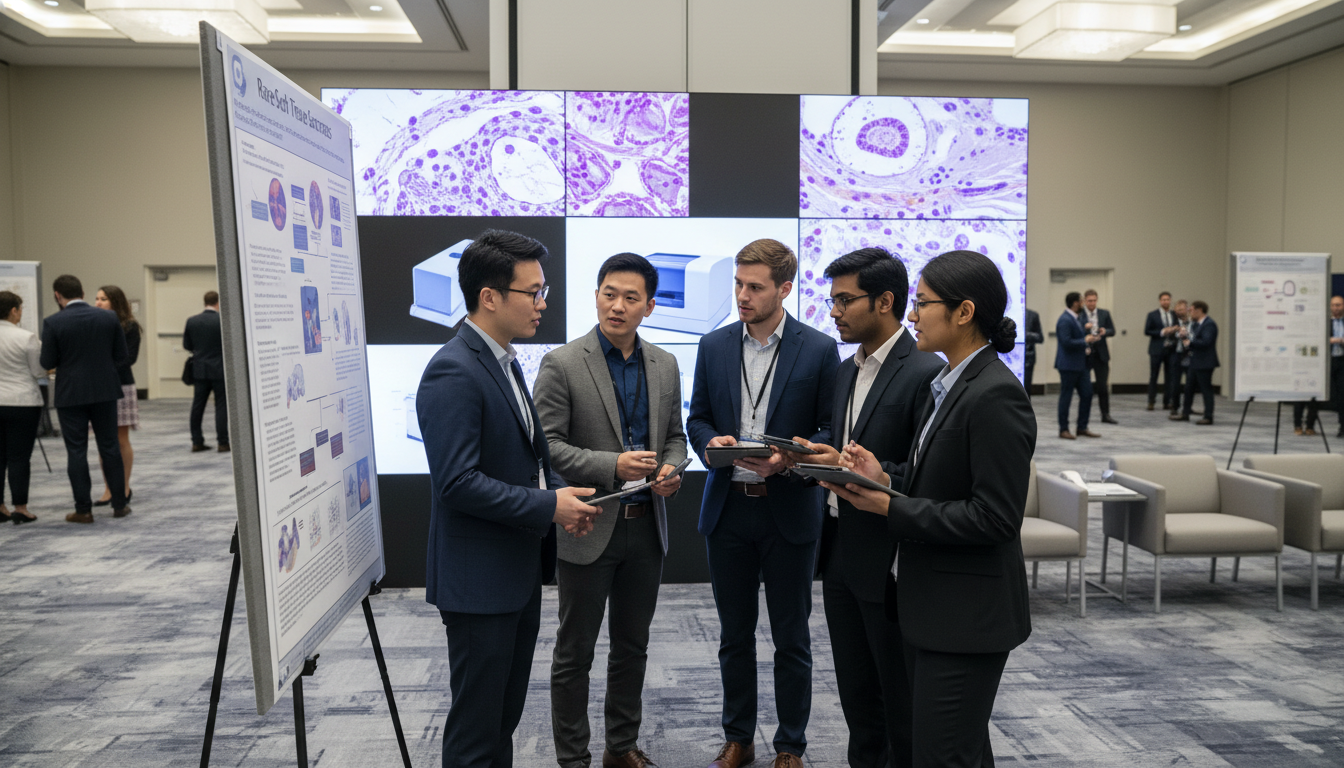
Conferences are some of the most efficient places to build and expand your network in pathology—locally, nationally, and internationally.
Key meetings include:
- USCAP (United States and Canadian Academy of Pathology)
- CAP (College of American Pathologists)
- ASCP (American Society for Clinical Pathology)
- Subspecialty meetings (e.g., hematopathology, neuropathology, cytology, molecular)
Preparing Before the Conference
To make the most of conference networking, do not just show up and wander. Prepare deliberately.
1. Define your goals
Examples:
- Meet at least 3 pathologists in [your subspecialty interest]
- Ask 2 program directors about what they look for in fellowship applicants
- Identify potential mentors or collaborators for a project
2. Review the program in advance
- Mark sessions that match your interests
- Note names of speakers and panelists
- Look up a few key people on PubMed or LinkedIn so you recognize their work
3. Reach out before the meeting
A short, targeted pre‑conference email can dramatically increase your networking success:
Subject: MD Pathology Resident Interested in [Subspecialty] – USCAP Meeting
Dear Dr. [Name],
I’m a [PGY‑1/PGY‑2] pathology resident at [Institution] with a strong interest in [subspecialty/area]. I’ve been following your work on [brief mention of topic]. I’ll be attending [conference name] this year and wondered if you might have 10–15 minutes for a brief conversation about your path in [field] and any advice for residents considering this focus.I understand the meeting is busy and completely understand if your schedule is full. Thank you for considering, and regardless, I look forward to hearing your talk on [session].
Sincerely,
[Your Name], MD
Pathology Resident, [Institution]
Even if they decline, you’ve introduced yourself respectfully and put your name on their radar.
Networking During the Conference
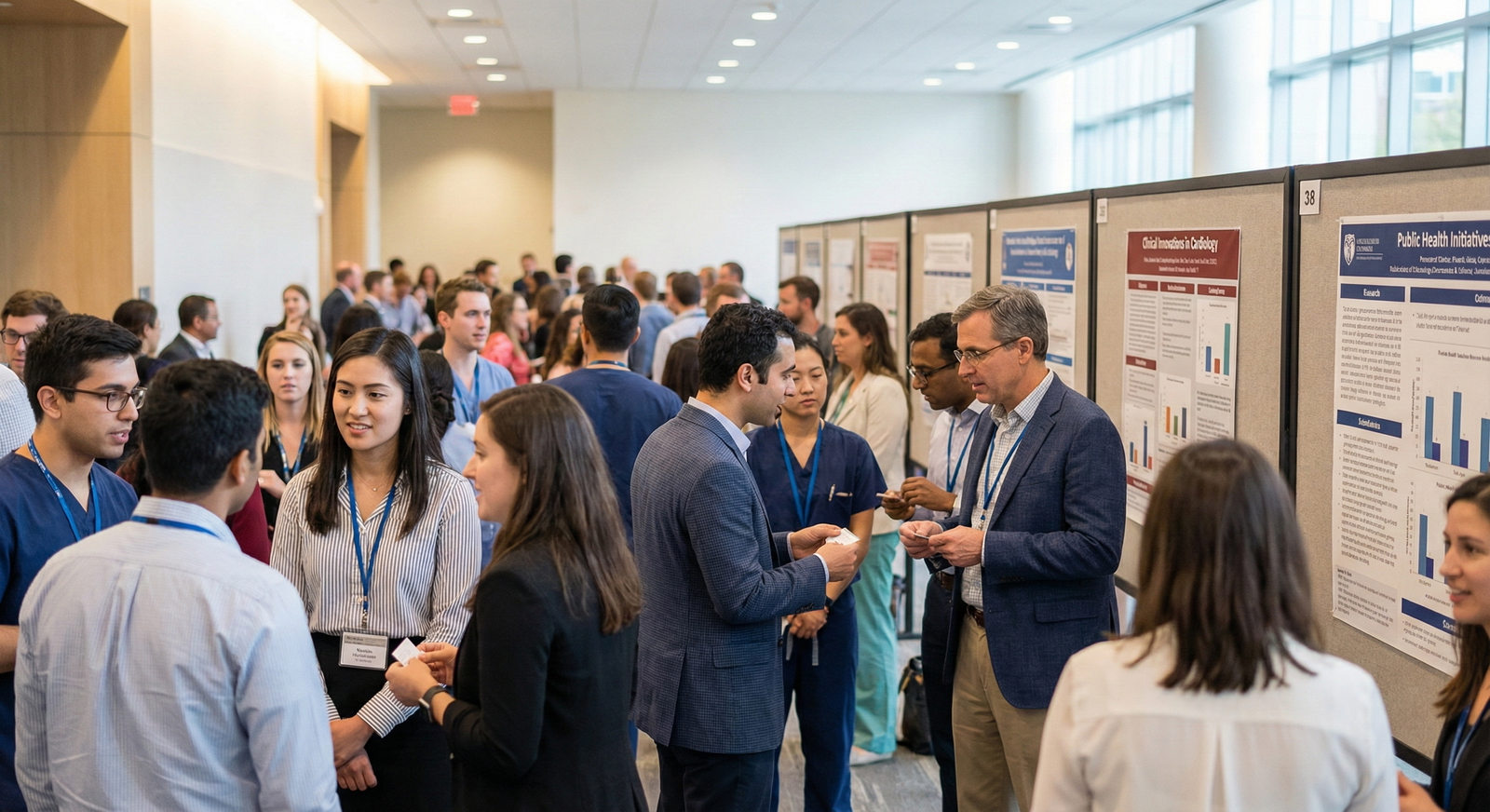
At posters and oral sessions:
- Stand by your own poster (if you have one) and engage anyone who stops with a clear 1‑minute summary
- When visiting others’ posters, ask:
- “What motivated this project?”
- “How do you see this being applied in practice?”
- “Are you planning follow‑up studies?”
Then introduce yourself with your brief professional snapshot.
In hallways, coffee lines, and receptions:
These informal spaces are often where the best connections occur. Use simple openers:
- “Hi, I’m [Name], a pathology resident at [institution]. What’s been your favorite session so far?”
- “I really liked your point about [topic] in the session just now. I’m [Name], a resident interested in [related field].”
Carry business cards or a digital alternative (e.g., LinkedIn QR, contact card) to make follow‑up easy.
Following Up After the Conference
Within 3–5 days of returning home:
- Send short, individualized emails:
- Thank them for their time
- Mention something specific you discussed
- Suggest a next step if appropriate (e.g., sharing a draft, scheduling a brief call, asking for a resource)
Example:
Dear Dr. [Name],
It was a pleasure meeting you at USCAP after your session on [topic]. I appreciated your advice about building expertise in [field] through early exposure to [strategy]. I’ve already spoken with my program director about incorporating more [relevant experience] into my schedule.
If you’re open to it, I’d be grateful to send you a brief update in a few months once I’ve explored potential related projects.
Thank you again for your time and insights.
Sincerely,
[Your Name], MD
Consistent, respectful follow‑up transforms one‑time encounters into ongoing relationships.

Mentorship and Sponsorship in Pathology
Effective mentorship in medicine is central to career development, especially in a specialized field like pathology. Equally important—but less discussed—is sponsorship.
Mentorship vs Sponsorship in Medicine
- Mentor: Advises, teaches, and guides you.
- Sponsor: Actively advocates for you when you are not in the room, recommending you for opportunities, positions, and presentations.
In the context of the pathology match, fellowships, and early career:
- A mentor might help you refine your CV or advise which programs to apply to.
- A sponsor might call a fellowship director on your behalf or recommend you as a co‑author or speaker.
Ideally, over time, some mentors also become sponsors.
How to Find and Engage Mentors
1. Identify potential mentors
Look for people who:
- Are doing work in areas you care about
- Have a track record of working with trainees
- Demonstrate professionalism and values you respect
These may include:
- Faculty at your own institution
- Mentors from previous research experiences
- People you’ve met at conferences or through online medical networking
2. Make the first contact specific and respectful
Example email structure:
- Brief introduction (who you are, where you train)
- How you know of them (talk, paper, recommendation)
- What you are seeking (short meeting, advice on a specific decision, feedback on a project idea)
- Clear acknowledgment of their time
3. Make it easy to help you
Before meetings:
- Send your CV and a short paragraph about your interests and goals
- Prepare 3–4 concrete questions (e.g., “How did you choose your fellowship?” “What would you do differently?”)
After meetings:
- Act on their advice when possible
- Report back on outcomes (e.g., “I followed your suggestion to contact Dr. X; she and I are now planning a small project.”)
This feedback loop motivates mentors to remain invested in your progress.
Building a Mentorship “Board”
No single mentor can provide everything you need. Aim to develop a small portfolio of mentors, each covering different aspects, such as:
- Clinical mentor: Guides diagnostic skills, case exposure, and pathology practice
- Research mentor: Supports publications, grants, and academic projects
- Career mentor: Advises on long‑term planning, work‑life integration, job search
- Peer/near‑peer mentor: A senior resident or recent graduate who understands your current training environment
This diversified approach is especially useful in pathology, where subspecialty choices and practice structures can be complex.
Practical Networking Strategies During Residency: Day‑to‑Day and Digital
Networking is not confined to special events; it is built day‑to‑day through how you show up in your residency and professional communities.
Day‑to‑Day Networking Inside Your Department
Your pathology residency program is your most important networking ecosystem early on.
Be someone others want to work with:
- Be reliable—meet deadlines, show up on time, follow through on tasks
- Communicate clearly and respectfully with attendings, staff, and co‑residents
- Show willingness to learn and accept feedback
Volunteer strategically:
- Join residency committees (education, wellness, quality improvement)
- Offer to help with educational activities (slide sessions for medical students, case conferences)
- Participate in departmental research or QI initiatives in your interest area
These activities increase your visibility and allow faculty to observe your strengths, which is crucial for later advocacy.
Cross‑Disciplinary Networking
Pathology intersects with every specialty. Building positive relationships with clinicians enhances:
- Consult interactions
- Shared research and QI projects
- Your understanding of the clinical impact of pathology
Examples:
- Attending tumor boards and introducing yourself to oncologists, surgeons, radiologists
- Volunteering to present pathology correlates in multidisciplinary meetings
- Collaborating on case reports or series with clinical teams
When clinicians see you as an engaged, approachable pathologist, they remember you when opportunities arise.
Digital Networking: Social Media and Online Communities
Used wisely, social media can amplify your network in pathology.
Twitter / X (Pathology and MedTwitter):
- Follow pathology leaders, societies, journals
- Engage with educational threads (e.g., unknowns, diagnostic challenges)
- Share cases only with strict adherence to privacy and institutional policies
LinkedIn:
- Connect with colleagues you meet at conferences or on rotations
- Share achievements (presentations, publications, awards) in a professional way
- Join pathology‑related groups or discussions
Specialty communities (Slack, Discord, forums):
- Many residency programs and societies host closed groups for case discussions and career topics
- These can be informal but powerful sources of advice and collaboration
Always maintain professionalism—assume anything you post could be seen by a future employer, fellowship director, or patient.
Common Pitfalls and How to Avoid Them
Even well‑intentioned MD graduates in pathology can make networking missteps. Awareness helps you avoid them.
Being Overly Transactional
If every interaction is focused on “What can you do for me?” people notice. Instead:
- Show genuine curiosity about others’ careers and work
- Look for small ways to support others (e.g., sharing relevant articles, helping with data collection, amplifying colleagues’ work online)
- Think long‑term relationship, not short‑term gain
Overcommitting and Under‑Delivering
In pathology, reputation is everything. If you say yes to every project but fail to follow through:
- Your mentors may stop trusting you with opportunities
- Your name may carry negative weight in small specialty circles
Be realistic and selective. It’s better to do a few things well than many poorly.
Neglecting Follow‑Up
Networking without follow‑up is networking wasted. Simple systems can help:
- Keep a spreadsheet or note listing:
- Who you met
- Where you met
- What you discussed
- When you last followed up
- Set reminders after conferences or meetings to send brief update emails
Underestimating the Value of Peer Networks
Many MD graduates focus only on senior faculty and overlook peers. Your co‑residents, fellows, and early‑career colleagues will:
- Become future division chiefs, fellowship directors, or collaborators
- Share job leads and insights from different institutions
- Be your support system when navigating career decisions
Treat peer relationships as core to your long‑term network, not secondary.
FAQs: Networking in Medicine for MD Graduates in Pathology
1. How early should I start networking for a pathology residency or pathology match?
Start as soon as you are seriously considering pathology. During medical school, this means:
- Attending your institution’s pathology interest group
- Introducing yourself to pathology faculty and residents
- Seeking pathology electives and research
If you are already an MD graduate, begin actively building relationships at least 6–12 months before applying for the pathology match or fellowships. Networking is cumulative; earlier is better.
2. I’m introverted and don’t enjoy “small talk.” Can I still be effective at medical networking?
Yes. Many pathologists are naturally introverted. You can:
- Prepare a short self‑introduction so you’re not improvising every time
- Focus on one‑to‑one or small‑group interactions instead of large receptions
- Ask thoughtful questions and listen actively—people remember good listeners
- Use email and written follow‑up to deepen relationships after brief in‑person meetings
Networking is less about being outgoing and more about being consistent, curious, and reliable.
3. How do I ask someone to be my mentor in pathology?
Often, mentorship evolves organically. Instead of explicitly asking, “Will you be my mentor?”:
- Start by requesting a brief meeting for advice on a specific question
- Follow up and show that you’ve acted on their advice
- Gradually involve them in your decisions and projects
After a few positive interactions, you might say:
“You’ve been very helpful in guiding my early steps in hematopathology—would you be comfortable if I continued to reach out to you as a mentor as I plan my next steps?”
Most faculty will understand and appreciate the clarity.
4. How can networking help me after residency, when I’m looking for a pathology job or fellowship?
Your network is often how you learn about:
- Unadvertised fellowship or job openings
- The true culture of specific departments or practices
- Which environments fit your skills and goals
Former co‑residents, mentors, conference contacts, and even clinicians you’ve worked with can:
- Notify you about upcoming positions
- Put in a good word for you with hiring committees
- Provide honest insight about workload, expectations, and growth opportunities
Building this network during residency means you’re not starting from zero when you’re ready to transition to fellowship or practice.
Networking in medicine for an MD graduate in pathology is not about self‑promotion—it’s about building authentic, sustained professional relationships that support your growth and allow you to contribute more effectively to the field. Whether you’re navigating the allopathic medical school match, thriving in pathology residency, or planning your long‑term career, intentional networking, mentorship, and conference networking will amplify both your impact and your opportunities.