Networking in medicine is not just about exchanging business cards; it is a core professional skill that shapes your career trajectory, especially as an MD graduate in a Preliminary Medicine year. As you navigate your prelim IM position and prepare for the next step in the allopathic medical school match process, effective medical networking will influence where you train, who mentors you, and what opportunities you see early—or miss entirely.
This article walks through a practical, step‑by‑step approach to networking tailored to MD graduates in a preliminary medicine year, with specific strategies, examples, and scripts you can start using today.
Understanding Networking in Medicine as a Prelim MD Graduate
As a recent MD graduate entering or currently in a Preliminary Medicine (prelim IM) year, you occupy a unique space in the training pathway:
- You’re a fully-fledged physician, but still transient in your program (often a 1‑year position).
- You’re often aiming for a categorical position in another specialty (e.g., neurology, radiology, anesthesiology, dermatology, radiation oncology, PM&R, etc.).
- You may feel pressure to “perform and move on,” which can unintentionally make you underinvest in long-term relationships at your prelim site.
Why Networking Matters More in a Preliminary Medicine Year
Short runway, big decisions
You have 12 months (or less) to:- Build strong relationships for letters of recommendation.
- Position yourself for the next allopathic medical school match cycle.
- Identify mentors who can support your transition to your target specialty.
You have dual spheres of networking
- Internal medicine faculty and residents at your prelim IM program.
- Faculty and leaders at your intended specialty programs, often at other institutions.
Your status is ambiguous (to others) unless you clarify it
Attendings may not automatically understand your goals. Proactive communication and networking is what makes them think of you when opportunities arise.Early professional identity formation This year is often where your professional reputation starts taking shape:
- Are you known as reliable and teachable?
- Are you the resident others want on their team?
- Do attendings feel comfortable recommending you?
All of this is networking—your daily interactions are the foundation upon which more formal conference networking and mentorship medicine experiences are built.
Foundations of Effective Networking: How You Show Up Day-to-Day
Before you go to conferences or reach out on LinkedIn, your clinical presence is your most powerful networking tool. People are far more inclined to help someone they see as reliable, hardworking, and kind.
1. Your Reputation Is Your Business Card
Key elements that shape your clinical reputation:
Reliability:
- Show up on time.
- Finish notes, follow up on tasks, and close loops.
- If you’re delayed, communicate early.
Preparation:
- Know your patients thoroughly (labs, imaging, overnight events).
- Read around your cases; be able to answer “Why this plan?” with basic reasoning.
Teachability and humility:
- Say “I don’t know, but I’ll find out.”
- Accept feedback without defensiveness.
- Show visible improvement after feedback.
Professionalism and kindness:
- Treat nurses, support staff, and co-residents with respect.
- Avoid complaining in public spaces—especially about the program or staff.
- Help your co-interns when able (e.g., pick up a sign-out task, stay 10 extra minutes).
Attending physicians often discuss residents informally: “Who should I write a letter for?” “Who might be a good fit for this research project?” Your day-to-day performance answers those questions long before you formally ask for help.
2. Introduce Yourself with Clear Career Goals
As a prelim MD graduate, you need to signal your trajectory early and consistently.
Example phrasing on your first week of a rotation:
“I’m Dr. Patel, one of the preliminary medicine interns. My long-term goal is to go into anesthesiology, and I’m currently in the process of planning for the next match. I’m really looking forward to strengthening my medicine foundation this year.”
This brief introduction:
- Clarifies you’re prelim IM, not categorical.
- Highlights you’re engaged and future-oriented.
- Opens the door for career conversations later.
Repeat a modified version with:
- Senior residents
- Program leadership
- Subspecialty attendings on electives
Identifying and Cultivating Mentors in Medicine
Mentorship in medicine is central to your growth and future opportunities. In a 1‑year prelim medicine role, you need a deliberate, time-efficient strategy.
Types of Mentors You Should Target
Clinical mentor at your prelim IM program
- Knows your bedside skills and work ethic.
- Ideal for letters of recommendation describing how you function as a physician.
Specialty mentor in your intended field
- May be at the same institution (e.g., the anesthesiology or neurology department).
- Helps with specialty-specific advice, research, and introductions.
Career or “meta-mentor”
- Often faculty who enjoy guiding residents through complex paths.
- Helps with match strategy, backup plans, and professional development.
You don’t need a large committee—2–3 engaged mentors can be more than enough.
How to Approach Potential Mentors
Look for faculty who:
- Enjoy teaching on rounds.
- Give balanced, thoughtful feedback.
- Have a track record of helping residents match into competitive specialties.
Then approach them directly. A simple script for an email:
Subject: Prelim Medicine Resident Seeking Career Guidance
Dear Dr. [Name],
My name is [Your Name], and I’m a preliminary internal medicine intern on your [service/ward/rotation] this month. My long-term goal is to pursue [target specialty], and I’m currently planning my application for the next allopathic medical school match cycle.
I’ve really appreciated your teaching and approach to patient care on our rotation. If you have 20–30 minutes available sometime in the next few weeks, I would be very grateful for your advice on how to best use this prelim IM year to prepare for [specialty] residency.
Thank you for considering this,
[Your Name], MD
Preliminary Internal Medicine Resident
[Program Name]
In person, you can say:
“I’ve really enjoyed working with you this week. I’m prelim medicine and planning to apply to neurology this cycle. I’d really value your perspective—would you be open to a short meeting to discuss my plans and get your advice?”
Making Mentor Meetings Productive
Bring:
- Updated CV
- List of target specialties/program types
- Short timeline (e.g., when you plan to submit ERAS, take Step 3, attend conferences)
Ask specific questions:
- “Given my interest in radiology, what would you prioritize during this prelim year?”
- “Are there particular attendings or departments you’d suggest I connect with?”
- “Would you be comfortable sharing my name with colleagues in [specialty] if you think it’s appropriate?”
After the meeting, always send a brief thank-you note and periodic updates (every 2–3 months).

Conference and Digital Networking: Beyond Your Home Institution
While your prelim IM program is your primary base, conference networking and online connections play an increasingly important role—especially if your target specialty is at another institution or in another region.
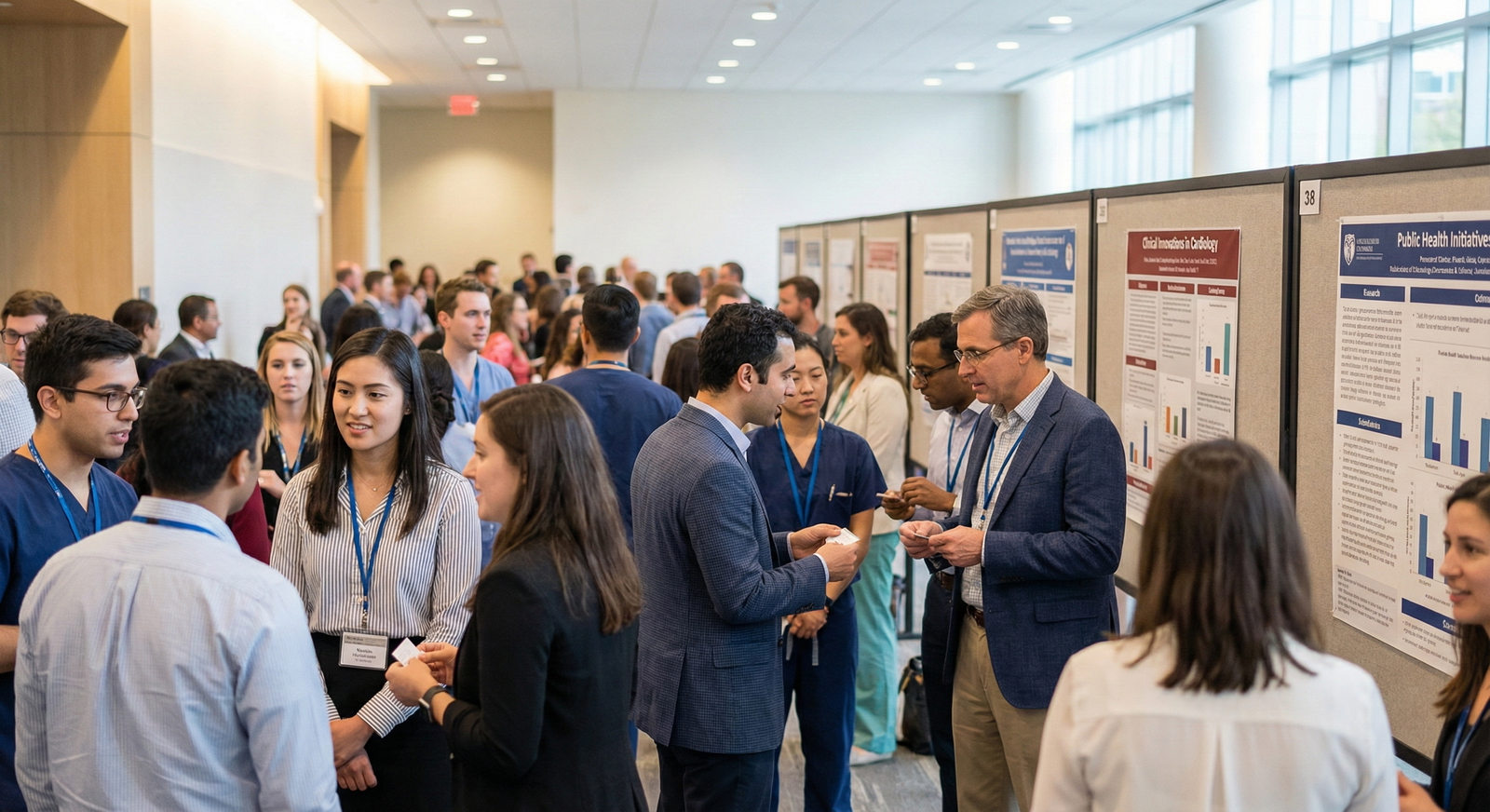
Strategic Conference Networking for a Prelim MD Graduate
You don’t need to attend every meeting; you need to attend the right ones.
1. Choose Conferences with High Yield
Depending on your target field:
- If you’re going into neurology: American Academy of Neurology (AAN).
- Radiology: RSNA, subspecialty society meetings.
- Anesthesiology: ASA, regional anesthesiology meetings.
- For general internal medicine exposure: ACP or SGIM can still be helpful.
Align with:
- Timing relative to the match cycle.
- Opportunities for medical students and residents (mentorship lunches, early-career sessions).
2. Go With a Plan, Not Just a Badge
Before the meeting:
- Review the program agenda.
- Identify:
- Sessions run by PDs or APDs in your field.
- “Meet the Professor” or early-career events.
- Institutional booths for programs you’re interested in.
Make a short list:
- 5–10 people you’d like to meet.
- 3–5 sessions you will attend for networking (not just content).
3. How to Introduce Yourself at Conferences
A simple, professional self-introduction:
“Hi, I’m [Name]. I’m an MD graduate currently in a preliminary internal medicine year at [Institution]. I’m planning to apply for [specialty] in the upcoming allopathic medical school match cycle, and I’m especially interested in [specific niche or interest]. I’ve been following your work on [topic] and wanted to introduce myself.”
Follow with 1–2 thoughtful questions about:
- Their research.
- Their institution’s training philosophy.
- Advice for residents in your position.
4. Following Up After Conferences
Within 48–72 hours:
- Send a short email or LinkedIn message:
- Reference the conversation.
- Mention something specific you learned.
- If appropriate, ask a simple next-step question (e.g., “May I send you my CV for feedback?”).
Example:
Dear Dr. [Name],
It was a pleasure speaking with you at the residents’ networking session at [Conference]. I appreciated your advice about gaining more procedural exposure during my preliminary medicine year as I prepare to apply for anesthesiology.
If you’re open to it, I’d be grateful for any feedback on my CV or general suggestions about strengthening my application for your type of program.
Thank you again for your time,
[Your Name], MD
Digital Networking: LinkedIn, Email, and Specialty Platforms
You don’t need to be a social media influencer, but you should be findable and professional online.
1. Optimize Your LinkedIn Profile
- Professional headshot (white coat or business attire).
- Headline:
“Preliminary Internal Medicine Resident | Aspiring [Specialty] Physician | [Key Interests]” - Summary:
- Briefly mention: MD graduate, current prelim IM role, target specialty, academic interests.
Use LinkedIn for:
- Looking up faculty prior to meetings.
- Connecting after meeting someone in person.
- Staying on the radar of potential mentors or collaborators.
2. Email Etiquette That Builds Your Reputation
- Use a professional address (preferably institutional).
- Keep initial emails short and structured.
- Proofread carefully—attention to detail reflects your professionalism.
Common email types:
- Introductory email (for mentorship or advice).
- Follow-up after meeting at conference or on rotation.
- Research interest inquiry (to a PI or department).
Always:
- Include your full name, MD, prelim IM at [Institution].
- Attach CV when relevant.
- Use clear subject lines: “Prelim Medicine Resident Interested in [Specialty] – Request for Advice”

Networking Within Your Prelim IM Program: Don’t Overlook Home-Field Advantage
Even if you plan to leave after your preliminary medicine year, your current institution is a powerful networking hub.
1. Key People You Should Know by Name
- Program Director (PD) of Preliminary Medicine
- Associate Program Director(s) (APD)
- Chief residents
- Core teaching attendings on wards and ICU
- Subspecialty faculty aligned with your target specialty
- GME office or career development staff, if available
Make sure each of these individuals knows:
- You are prelim IM.
- Your intended specialty.
- Your approximate timeline (e.g., applying this cycle vs. next).
2. How to Build Relationships Naturally
- Be engaged in conferences and academic half-days.
- Volunteer for:
- Small teaching roles (e.g., help interns with workflow you’ve mastered).
- Program initiatives that interest you (curriculum projects, QI, etc.).
- Ask for feedback—and then show that you act on it.
Example:
“Dr. [Name], you mentioned earlier this month that I should tighten my patient presentations to focus more on assessment and plan. I’ve been working on that, and I’d appreciate any additional feedback on how I’m doing now.”
This signals:
- Maturity.
- Growth mindset.
- Longitudinal engagement—critical for strong letters.
3. Leveraging Rotations Strategically
During your prelim year, prioritize:
- Rotations with:
- Strong teachers who have reputation for helping trainees.
- Faculty in or near your target specialty.
- Non-medicine rotations (if allowed) that align with your career goals:
- MICU for critical care interest.
- Cardiology for cardiology, EP, or interventional aspirations.
- Procedures-heavy rotations for anesthesiology or EM-bound.
On these rotations:
- Introduce your career goals early.
- Ask thoughtful clinical questions.
- Near the end of the month, request a brief meeting to discuss your trajectory.
Turning Networking into Concrete Outcomes
Networking is only as useful as the doors it opens. As a prelim MD graduate, your main outcomes usually are:
- Strong letters of recommendation.
- Research or scholarly projects.
- Insight into programs and specialties.
- Strategic support in the allopathic medical school match process.
1. Asking for Letters of Recommendation
Timing:
- Near the end of a strong rotation.
- After you have worked closely with an attending for at least 2–4 weeks.
How to ask:
“Dr. [Name], I’ve very much appreciated working with you this month. As you know, I’ll be applying to [specialty] this upcoming ERAS cycle, and I was wondering if you’d feel comfortable writing me a strong letter of recommendation based on our work together.”
Why “strong”? It gives them an out if they can’t genuinely support you.
Offer:
- CV
- Draft of personal statement
- Brief summary of cases or projects you’ve worked on together
Remind:
- Politely follow up a few weeks before letter deadlines.
2. Seeking Research and Scholarly Projects
You don’t need a massive RCT; even smaller projects help:
- Case reports or case series.
- QI projects in your prelim IM department.
- Retrospective chart reviews under a faculty mentor.
How to ask:
“I’m interested in strengthening my application for [specialty] with some scholarly work. Do you know of any ongoing projects I might be able to contribute to, even in a small way?”
Be specific about your time constraints and realistic availability.
3. Using Mentors for Program Intelligence and Advocacy
Mentors can:
- Provide candid insights into program culture and expectations.
- Introduce you to colleagues at other institutions.
- Occasionally send an email or make a call on your behalf.
Never demand or assume advocacy; instead:
“If, after working with me, you feel comfortable doing so, any advice or introductions you can offer as I apply to [specialty] would be deeply appreciated.”
4. Navigating Match and Rematch Issues
As an MD graduate residency applicant coming from a prelim IM year, you may be:
- Applying to a categorical PGY‑2 spot in your target specialty.
- Applying again after a previous unsuccessful match.
Discuss openly with a trusted mentor or PD:
- Whether your application needs repositioning.
- Whether you should consider categorical internal medicine as a parallel path.
- How to address gaps or prior match outcomes in your personal statement and interviews.
Their insight—and sometimes their direct advocacy—can be pivotal.
FAQs: Networking in Medicine for MD Graduates in Preliminary Medicine
1. I’m overwhelmed by my prelim IM workload. How can I realistically find time for networking?
Prioritize integrated networking—build relationships during activities you’re already doing:
- Introduce your career goals on day 1 of rotations.
- Ask for 10–15 minute debriefs at the end of a block with supportive attendings.
- Use brief lulls (post-call afternoon, lighter clinic days) to send 1–2 emails or follow-ups.
You don’t need hours each week; consistent small efforts add up.
2. Should I focus on networking in internal medicine or in my target specialty?
Both—but differently:
- At your prelim IM site: prioritize relationships that yield strong letters, mentorship medicine, and clinical skills.
- In your target specialty: focus on opportunities (research, introductions, conferences) and understanding program expectations.
Aim for at least one solid mentor in each domain.
3. How early in my preliminary medicine year should I start networking for the match?
Start immediately, but gently:
- Month 1–2: clarify goals, meet PD/APDs, introduce yourself on rotations.
- Month 3–6: secure at least one mentor, explore research, attend a regional or national meeting if possible.
- Month 6–9: request letters, refine CV and personal statement, engage heavier in conference networking.
Waiting until late spring can significantly limit your options.
4. What if I’m introverted or feel awkward networking at conferences?
Use structure to reduce anxiety:
- Prepare a 2–3 sentence introduction and 2–3 generic questions in advance.
- Aim for quality over quantity—even 3–5 meaningful conversations per conference is success.
- Follow up by email; many busy physicians actually prefer this to long in-person conversations.
Remember, most faculty appreciate motivated residents and are used to guiding early-career physicians.
By approaching networking as an integral part of your preliminary medicine year—not as an optional extra—you’ll position yourself strongly for your target specialty, build durable professional relationships, and transform a single intense year into a powerful launchpad for the rest of your career.