
For an MD graduate in a preliminary surgery year, networking in medicine is not optional—it’s strategic survival. Unlike categorical residents who already have a longer-term home, prelim surgery residents live with the uncertainty of “what’s next”: reapplying for a categorical spot, switching specialties, or leveraging the year as a bridge to something different. In that environment, who knows you and what they know about you can be just as important as your CV.
This article focuses on networking in medicine specifically for MD graduates in preliminary surgery: how to build relationships, how to use your prelim surgery residency year effectively, and how to align your networking with future residency goals—whether that’s an allopathic medical school match into categorical surgery, a different specialty, or an advanced program.
Understanding the Networking Landscape for Preliminary Surgery Residents
Networking in medicine is often misunderstood as superficial “schmoozing.” In reality, it’s about building genuine, professional relationships that:
- Help you learn about opportunities early
- Generate strong, specific letters of recommendation
- Provide advocacy during rank meetings and selection committees
- Offer emotional support and mentorship during a stressful prelim year
For an MD graduate residency trainee in a prelim surgery residency, several dynamics shape your networking strategy:
1. The Prelim Year is Time-Compressed
- You have less than 12 months to:
- Prove yourself clinically
- Get noticed by decision-makers
- Secure strong letters
- Apply to or re-apply for the match
You simply cannot wait until halfway through the year to network. Relationship-building should begin in month 1.
2. Your Goals May Be Multiple or Evolving
Common pathways for preliminary surgery residents include:
- Matching into a categorical general surgery spot (same program or elsewhere)
- Transitioning to another field (e.g., anesthesia, radiology, PM&R, internal medicine, EM)
- Pursuing a research year to strengthen a future application
- Moving into an advanced program that values surgical foundation
Your networking should be goal-aligned but adaptable. It’s okay if you’re initially unsure—what matters is being transparent with trusted mentors and seeking feedback early.
3. Relationships Are Multi-Level
Your network is not just program leadership. It includes:
- Senior residents and fellows
- Faculty in surgery and other specialties
- Program directors and APDs (surgery and non-surgical)
- Research mentors
- Medical education staff and coordinators
- Peers, co-prelims, and colleagues you meet at conferences
Each plays a different role in your medical networking ecosystem.
Everyday Networking on the Wards and in the OR
Your most powerful networking opportunities are not at national conferences—they’re in your daily clinical work. How you show up on wards, in the OR, and in conferences directly shapes:
- How people perceive you
- Whether they are comfortable advocating for you
- The strength and specificity of future letters

1. Be the Resident People Want on Their Service
People remember residents who make their lives easier. That’s networking.
Concrete ways to stand out:
- Be reliable: If you say you’ll follow up on a study or note—do it.
- Know your patients cold: Anticipate questions on rounds; know vitals, labs, imaging, and plans.
- Help the team without complaining: Volunteer for tasks when you can.
- Prepare for cases: Read the procedure, know the steps, and understand the indications.
When attendings and seniors see you as dependable, they are more likely to:
- Offer advice about future positions
- Introduce you to important contacts
- Give you research or QI projects
- Mention your name when opportunities arise
2. Turn Routine Interactions into Relationship-Building
You do not need a formal “networking appointment” to connect. Use normal clinical touchpoints:
Post-round debrief:
“Dr. Smith, I’m a preliminary surgery resident and considering applying for categorical positions next cycle. If you ever have time, I’d appreciate your advice on how to strengthen my application.”After a good OR day:
“I really enjoyed working with you today. I’m trying to grow as much as possible during this prelim surgery residency. Is there anything specific you recommend I focus on this month?”During a quieter call night:
Ask seniors or fellows, “How did you navigate your residency pathway?” or “What do you wish you knew as a PGY-1?”
These small conversations, repeated over months, crystallize into authentic professional relationships.
3. Make Your Goals Known—Strategically
Your program can’t help you if they don’t know your goals.
Within the first 4–8 weeks:
- Let your program director or associate PD know:
- That you are a prelim surgery resident
- Your likely goals (e.g., categorical surgery, anesthesia, radiology, etc.)
- That you are eager for feedback on clinical performance and competitiveness
Sample phrasing:
“I’m very grateful for this preliminary surgery year and want to make the most of it. My current plan is to apply for a categorical general surgery position. I’d really value your honest feedback on what I should focus on this year to be a strong candidate.”
This is not pushy; it’s professional. It signals seriousness and opens the door to mentorship.
Conferences, Academic Events, and Formal Medical Networking
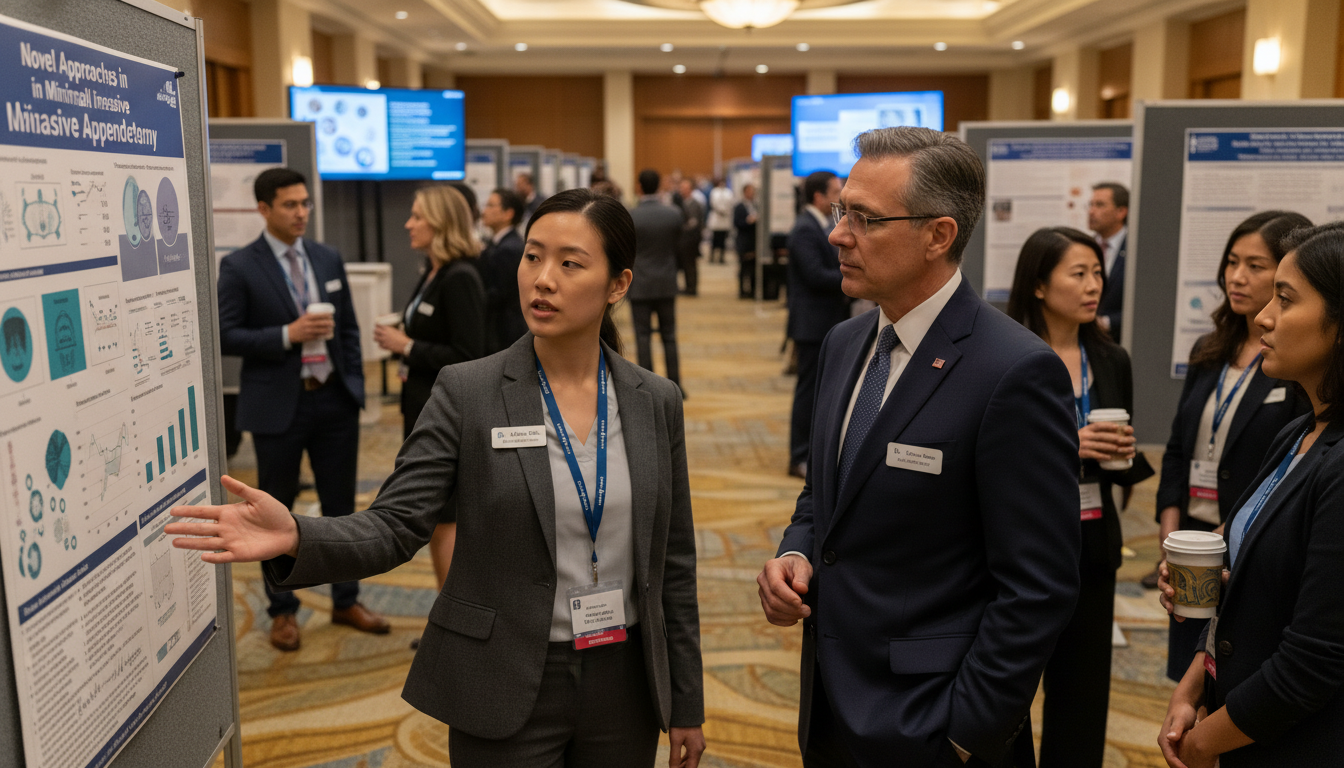
Conferences and academic events are powerful networking spaces, particularly if you’re trying to transition from a preliminary surgery year into another program or specialty. For many MD graduates, conference networking feels intimidating—yet this is a skill you can learn.
1. Start Local Before National
Don’t underestimate:
- Departmental grand rounds
- Morbidity and mortality (M&M) conferences
- Hospital QI or patient safety meetings
- Local/regional surgical society meetings
- Residency program retreats or education days
These gatherings offer low-pressure chances to:
- Introduce yourself to faculty you don’t work with daily
- Learn which attendings are involved in education, research, or selection committees
- Express interest in specific fields or projects
Ask your chief or program coordinator which local meetings prelim surgery residents are encouraged to attend.
2. Use Posters and Projects as Networking Anchors
If you have any ongoing or past research, QI, case reports, or educational projects:
- Ask mentors if they can be turned into poster or oral presentations
- Presenting gives you a natural reason to introduce yourself:
- “Dr. Lee, I’m presenting a poster on postoperative complications this afternoon—if you have a chance, I’d appreciate your feedback.”
Even a simple QI project from your prelim year (e.g., reducing post-op note delays, improving handoffs) can:
- Become a poster at a local or national meeting
- Make you more memorable to faculty
- Signal academic potential to future programs
3. Master the Short Introduction (Your “Professional Elevator Pitch”)
Prepare a concise way to introduce yourself at conferences or academic gatherings. Include:
- Who you are
- Where you are training
- Your current role (preliminary surgery)
- What you’re aiming for
Example:
“Hi, I’m Dr. Patel. I’m an MD graduate in a preliminary surgery residency at [Institution]. I’m very interested in transitioning into a categorical general surgery position and have been working on projects in surgical outcomes and QI.”
Or if considering a specialty change:
“Hi, I’m Dr. Nguyen, currently doing a preliminary surgery year at [Institution]. I’ve realized I’m particularly drawn to critical care and anesthesia and I’m hoping to explore those fields further.”
This consistent, confident introduction makes it easier for people to remember who you are and what you want.
4. Use Follow-Up Emails Effectively
Conference networking is incomplete without follow-up.
Within 48 hours of meeting someone you’d like to stay connected with:
- Send a short, specific email:
- Remind them who you are
- Thank them for any advice or time
- Mention 1–2 key points from your conversation
- Indicate you’d like to stay in touch or ask a specific follow-up question
Example:
Subject: Great meeting you at [Conference]
Dear Dr. Johnson,
It was a pleasure meeting you at the [Conference Name] general surgery session yesterday. I’m Dr. Maria Lopez, an MD graduate currently in a preliminary surgery residency at [Institution]. I appreciated your insight on pathways from prelim to categorical positions and your advice to prioritize clinical excellence early in the year.
If you’re open to it, I’d be grateful to send you my CV for feedback or schedule a brief call sometime in the next month. Thank you again for your time and guidance.
Sincerely,
Maria Lopez, MD
This simple step turns a brief encounter into a sustained professional connection.
Mentorship in Medicine: Building a Supportive Network
Effective mentorship in medicine is especially crucial for prelim residents, who often feel vulnerable, temporary, or overlooked. The right mentors can guide strategy, protect your time, and advocate for you in key rooms.
1. Types of Mentors You Should Seek as a Prelim Surgery Resident
Clinical Mentor (within Surgery)
- Knows your day-to-day performance
- Can comment on your bedside skills, work ethic, OR behavior
- Potential writer for detailed letters of recommendation
Career Mentor (specialty-focused or cross-specialty)
- Has experience on selection committees or with the allopathic medical school match process
- Helps you interpret feedback and realistic options
- May not be at your institution
Research/Academic Mentor
- Offers projects that can generate tangible output during your prelim surgery residency
- Helps build your academic profile if you need to strengthen your CV
Peer or Near-Peer Mentor (senior resident/fellow)
- Recently went through the process
- Shares practical insight on unwritten norms, schedules, and expectations
You may find one person who fills multiple roles, but often you’ll have a small “mentor team.”
2. How to Ask for Mentorship Without Feeling Awkward
When you identify someone you respect:
- Ask for a short meeting (15–20 minutes)
- Be clear about your status and goals
- Ask specific questions
Example email:
Dear Dr. [Name],
My name is [Your Name], and I’m an MD graduate in a preliminary surgery residency at [Institution]. I’ve really appreciated your teaching on [specific rotation or conference]. I’m currently exploring pathways to a categorical surgery position and would be very grateful for your perspective.
If you’re available, could we schedule a brief 20-minute meeting in the coming weeks? I’d like to ask your advice on how to focus my efforts this year and how competitive my trajectory may be.
Thank you for considering this.
Sincerely,
[Your Name], MD
Mentors appreciate clarity, respect for their time, and evidence that you’ve thought about your goals.
3. Maintaining Mentorship Relationships
Once someone agrees to mentor you:
- Come prepared to each meeting (agenda, questions, updates)
- Follow suggestions and circle back on outcomes
- Share key steps in your journey (e.g., interviews, match outcomes, decisions)
Strong mentors often become:
- Champions during selection discussions
- Sources of honest feedback (“You are competitive for these programs, but not these”)
- Lifelong connections beyond residency
Strategic Networking for Career Transitions and the Match
As a prelim surgery resident, your networking should be aligned with specific milestones, especially if you’re seeking:
- Entry into a categorical surgery program
- Transition to another specialty
- Success in a future allopathic medical school match cycle
1. Networking for a Categorical General Surgery Spot
If your goal is to stay in general surgery:
Clarify whether your current program has potential categorical openings.
- Ask your PD early in the year, respectfully, not demandingly.
- Even if none are guaranteed, they may know about likely future changes.
Network beyond your own institution.
- Reach out to faculty from your medical school, away rotations, or conferences.
- Ask if they know of programs that historically take prelims into categorical roles.
Leverage alumni networks from your MD program.
- Alumni often know which programs are open to receiving prelims.
- A short email from an alumnus to a PD on your behalf can be powerful.
Ask mentors how they would view your file as a PD.
- What gaps do they see?
- How can you address them this year? (e.g., more research, stronger letters, USMLE scores, evidence of professionalism)
2. Networking for a Specialty Change
Many prelim surgery residents realize their best fit may be:
- Anesthesiology
- Radiology
- PM&R
- Internal medicine
- Emergency medicine
- Other specialties that value procedural or critical care backgrounds
For these transitions:
- Identify faculty in those departments at your institution.
- Ask to shadow or rotate if possible.
- Request honest input on:
- How your prelim surgery experience can be framed as a strength
- Any additional steps (research, electives, letters) needed for a competitive application
Sample approach:
“Dr. Kim, I’m currently a preliminary surgery resident and have become increasingly interested in anesthesiology. I’d like to understand how applicants with a prelim surgery background are viewed and what I can do this year to be a strong candidate. Would you be open to a brief meeting?”
This targeted networking allows you to reposition your path without starting over.
3. Using Digital Networking (Email, LinkedIn, and Professional Platforms)
While in-person contact is strong, digital tools extend your medical networking reach:
Email:
- Most important and professional for faculty and PDs
- Use clear subject lines (“Prelim surgery resident seeking advice on [field] pathway”)
LinkedIn:
- Helpful for finding alumni from your allopathic medical school or prior rotations
- Good for connecting with non-clinical opportunities (industry, consulting, public health)
Specialty forums and resident groups (where appropriate):
- Some residents share categorical openings or transfer spots
- Always maintain professionalism; avoid venting or oversharing
Remember: Anything written online can be forwarded or screenshot. Protect your reputation.
Practical Networking Timeline for Your Prelim Surgery Year
To make this actionable, here is a suggested month-by-month framework:
Months 1–2: Foundation and Visibility
- Meet with your PD/APD to share broad goals.
- Identify 1–2 potential clinical mentors.
- Focus on outstanding clinical performance on early rotations.
- Ask seniors: “Who in the department is particularly supportive of prelims?”
Months 3–4: Clarify Direction and Begin Projects
- Decide if your primary path is:
- Categorical surgery
- Other specialty
- Research-focused bridge
- Start or join at least one project (research, case report, QI).
- Attend departmental conferences regularly and introduce yourself to new faculty.
Months 5–7: Active Outreach and Application Preparation
- Confirm your mentor team (clinical + career + possibly research).
- Ask mentors:
- “Which programs should I realistically target?”
- “How can we frame my prelim surgery year as a strength?”
- Begin preparing ERAS application, personal statement, and updated CV.
- Reach out to key contacts at other institutions for early advice.
Months 8–10: Interview Season and Intense Networking
- Use interviews themselves as networking:
- Ask PDs and faculty where your prelim experience would be particularly valued.
- Follow up after interviews with personalized thank-you notes.
- Keep your mentors updated about interview progress and concerns.
Months 11–12: Consolidation and Long-Term Relationships
- Inform mentors of your match outcome or next step.
- Express gratitude—these relationships often outlast your prelim year.
- Stay connected: a short message every 6–12 months keeps the link alive.
Frequently Asked Questions (FAQ)
1. I’m an MD graduate in a preliminary surgery year with very little time—where should I prioritize my networking?
Focus on:
- Program leadership (PD/APD) – for honest advice and potential internal pathways.
- Clinical mentors who see your daily work and can write strong letters.
- One or two key outside contacts in your target specialty (from med school, conferences, or alumni networks).
Start with your immediate environment (wards, OR, departmental conferences) and then build outward as your schedule allows.
2. How does networking actually affect my chances in the allopathic medical school match or re-match?
Networking can:
- Ensure your name comes up positively during rank list meetings
- Lead to stronger, more personalized letters of recommendation
- Alert you to unadvertised preliminary surgery or categorical openings
- Provide coaching on how to frame your prelim surgery residency year effectively
While it doesn’t replace scores or performance, it often determines how your file is interpreted and whether you get the benefit of the doubt.
3. I feel awkward about “self-promotion.” How can I network without feeling fake?
Reframe networking as:
- Sharing your goals so others can help you
- Expressing gratitude for teaching and mentorship
- Asking for advice, not favors
Instead of “selling yourself,” aim to build relationships around curiosity and appreciation. Be honest about your situation as a prelim surgery resident and open to feedback.
4. Is it okay to tell my current program I might switch specialties?
Yes—but do it thoughtfully:
- Talk first with a trusted mentor or chief resident.
- When you speak to your PD/APD, frame it as:
- Respect for surgery
- A genuine realization about better fit in another field
- A desire to still give 100% during your prelim surgery year
Most program leaders respect honesty, especially when you remain committed to excellent patient care throughout your year.
Networking in medicine as an MD graduate in preliminary surgery is not about personality type; it’s about intentional relationship-building. Your clinical excellence, curiosity, and professionalism are the foundation. When you combine that with thoughtful, strategic networking—on the wards, in conferences, and through mentorship—you turn a single year of uncertainty into a powerful bridge toward your long-term career.