Understanding Networking in Medicine as a New Urology MD Graduate
Networking in medicine is not just about collecting business cards or LinkedIn connections; it is about building genuine, mutually beneficial professional relationships over time. For an MD graduate entering urology, effective medical networking is one of the strongest predictors of success in the allopathic medical school match, your early urology residency experience, and ultimately your fellowship and job search.
Unlike some other specialties, the urology match is small, highly competitive, and driven heavily by reputation, advocacy, and fit. Program directors frequently rely on trusted colleagues’ opinions to differentiate between similarly strong applicants. Your letters of recommendation, who knows you, and how well people can speak to your work and character often matter as much as test scores or class rank.
For an MD graduate in urology, networking in medicine serves several critical functions:
- Information access: Realistic insight into programs, research opportunities, and subspecialties.
- Opportunities: Research positions, away rotations, committee roles, and leadership positions.
- Advocacy: Faculty who will pick up the phone, send an email, or directly speak to program directors on your behalf during the urology residency match.
- Career development: Long-term mentorship medicine relationships that guide your fellowship, academic vs. private practice choices, and job negotiations.
This article will walk through a practical, step-by-step approach to networking effectively as an MD graduate targeting urology residency—whether you are still in medical school, in a research year, or already starting residency and thinking ahead to fellowships and jobs.
Laying the Foundation: Clarifying Your Goals and Brand
Before you send a single email or attend a single conference networking event, you need clarity about who you are and what you are looking for. Otherwise, your networking efforts will feel scattered and superficial.
Define Your Near-Term and Long-Term Goals
For an MD graduate interested in urology, your goals typically fall into three overlapping buckets:
Short-term (0–12 months)
- Secure strong urology mentors and sponsors.
- Obtain meaningful clinical or basic science research projects.
- Build experiences that strengthen your urology residency application (or your transition from intern year into urology).
- Identify realistic programs for the allopathic medical school match or the early urology match.
Medium-term (1–5 years)
- Match into a strong urology residency (if you have not yet).
- Develop a competitive portfolio for fellowship (oncology, endourology, FPMRS, pediatrics, reconstructive, etc.).
- Gain leadership experience in national organizations (AUA sections, specialty societies).
Long-term (5+ years)
- Choose an academic vs. private practice track.
- Build a national reputation in a subspecialty.
- Establish durable mentorship medicine relationships and become a mentor yourself.
Clarifying these timelines will help you ask more specific questions and seek relationships that genuinely match your trajectory.
Craft Your Early Professional Brand
“Brand” in medicine is simply what people associate with your name. For a new MD graduate, this usually centers on:
- Work ethic: Reliable, responsive, prepared.
- Professionalism: Respectful, punctual, ethical, team-oriented.
- Interests: Example: “She’s very interested in endourology and quality improvement,” or “He’s passionate about global urology and resident education.”
- Strengths: Teaching skills, research drive, operative dexterity, systems thinking, communication.
You can influence this brand through:
- The way you show up on clinical rotations.
- The way you present your work at conferences.
- Your online presence (LinkedIn, professional Twitter/X, or a simple academic profile).
- How you follow up—prompt, gracious, and professional.
Actionable step: Write a 2–3 sentence “professional snapshot” of yourself that you could use in an email or an introduction at a conference. For example:
“I’m a recent MD graduate from an allopathic medical school with a strong interest in urologic oncology and disparities in prostate cancer outcomes. I’ve completed two clinical research projects on active surveillance and am looking to build longitudinal research and mentorship relationships as I apply for urology residency.”
This clarity makes networking conversations more concrete and memorable.

Strategic Networking Before and During the Urology Match
The urology match is early, small, and network-driven. Your relationships with urology faculty, residents, and national society members can significantly influence your trajectory.
1. Building Relationships at Your Home Institution
If you have a home urology program, this is your primary networking hub.
Know the Key People
Map out:
- Program director and associate program directors.
- Department chair.
- Clerkship director and medical student educators.
- Research-oriented faculty in areas you find appealing.
- Chief residents and senior residents who are active in teaching or research.
Introduce yourself early, even if you are an MS2/MS3 or a recent MD graduate doing a transitional year. A concise, polite email requesting a brief meeting or to discuss research interests is appropriate.
Example email snippet:
“Dear Dr. Patel,
I’m an MD graduate from [School] completing a research year with a strong interest in urologic oncology. Several residents mentioned your ongoing work in [topic]. I would be very grateful for 15–20 minutes of your time to learn more about your research and to see if there might be ways I could contribute.”
Be Present and Visible
- Attend urology grand rounds regularly, not just when you are on a rotation.
- Show up to morbidity & mortality (if students/trainees are allowed), journal clubs, and educational conferences.
- Volunteer for departmental projects (curriculum, quality improvement, community outreach).
Consistency builds familiarity; familiarity builds trust.
Turn Research into Relationship
Research is one of the most common entry points for medical networking in urology:
- Join 1–2 projects that are feasible to complete within 6–12 months.
- Aim for roles where you contribute meaningfully (data collection, drafting, analysis, presenting).
- Ask to present at local or regional meetings; this further expands your network.
Faculty who see you follow through on a project are more likely to advocate for you in the urology residency match.
2. Networking During Away Rotations
For many applicants, away rotations are the ultimate “live interview” and one of the strongest tools to stand out.
Before the Rotation
- Email the rotation coordinator and chief resident to introduce yourself and share your goals.
- Review the faculty list and identify 2–3 people whose interests align with yours.
- Read about the program—key cases they do, research themes, recent publications.
During the Rotation
Treat every day as both an educational and networking opportunity:
- Be early, prepared, and enthusiastic in the OR and clinic.
- Ask residents for feedback regularly and implement it.
- Volunteer to help with call schedules, teaching sessions, or small research tasks.
Offer to give a short talk (e.g., a 10-minute evidence-based review) if appropriate; it showcases your initiative and preparation.
After the Rotation
Post-rotation follow-up is where many MD graduates fall short:
- Send thank-you emails to faculty and residents who invested time in you, mentioning one or two specific things you appreciated.
- Share any work products that came out of the rotation (a case report draft, QI project idea, etc.).
- Add them to your professional network (e.g., LinkedIn, if they are active there) with a short personalized note.
The goal is not simply to be “remembered” but to maintain an evolving relationship.
3. Maximizing Conference Networking in Urology
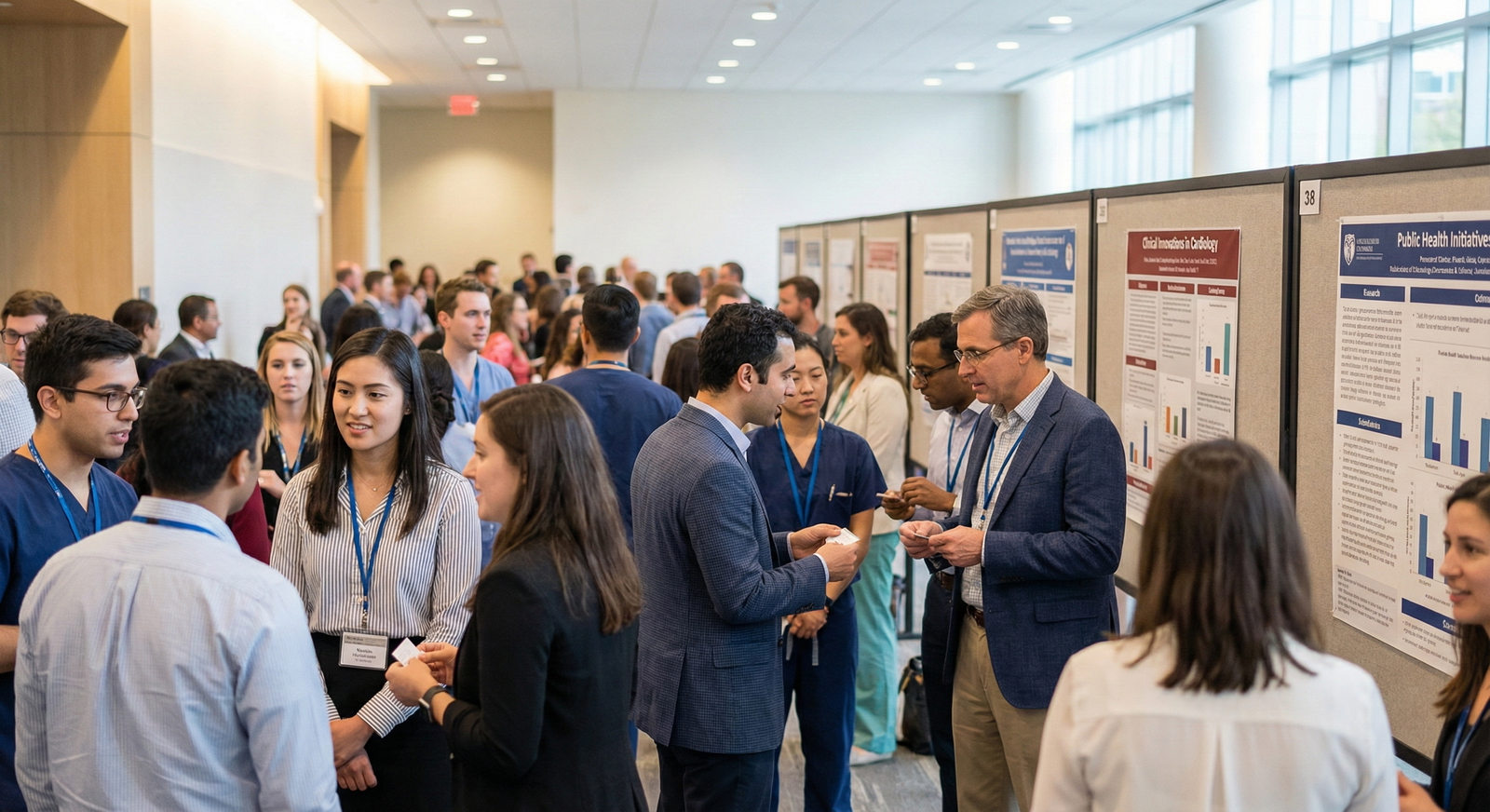
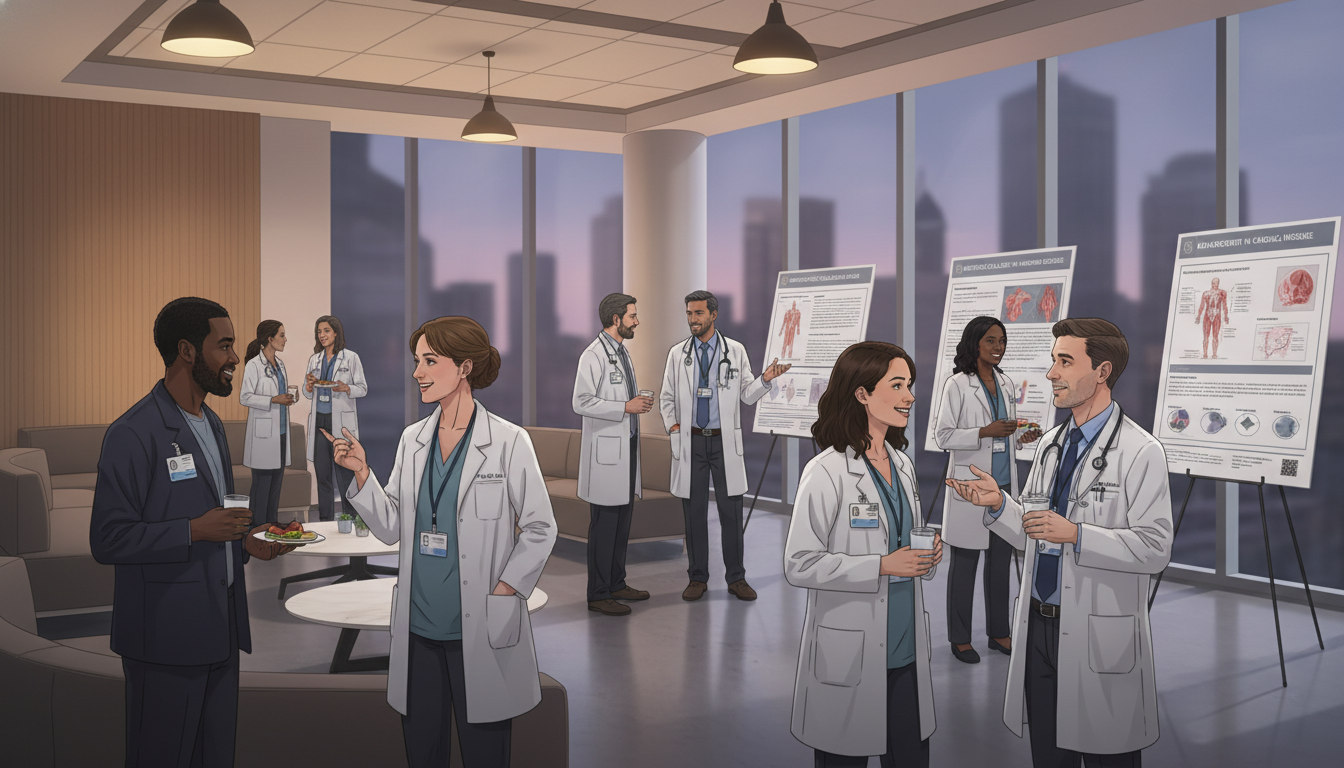
Conferences are concentrated networking environments—especially AUA (American Urological Association) and section meetings.
Before the Conference
- Review the program and note sessions and posters in your area of interest.
- Identify 5–10 people you want to meet: authors of papers you admire, program directors, junior faculty in your subspecialty.
- If you are presenting a poster or talk, polish it thoroughly; this often becomes a natural networking anchor.
Consider sending a brief email to people you particularly want to meet:
“I’ll be attending the AUA meeting and greatly enjoyed your recent paper on [topic]. If you have a few minutes during the conference, I’d be grateful for the chance to briefly introduce myself and ask a few questions about your work and career path.”
Not everyone will respond, but those who do are pre-selecting themselves as accessible mentors.
During the Conference
Effective conference networking is about strategy, not volume:
- Attend smaller sessions, section meetings, and special interest group events, where conversation is easier.
- Ask thoughtful, brief questions at Q&A sessions—this raises your visibility organically.
- At poster sessions, introduce yourself to presenters whose work you find relevant, especially if they are residents or fellows (often more accessible for ongoing collaboration).
How to introduce yourself in 30 seconds:
- Name, current role and institution.
- Career interest.
- Why you were interested in their talk/poster.
- Brief question or comment.
For example:
“Hi, I’m Dr. Nguyen, an MD graduate from [Institution] currently in a research year and applying to urology residency. I’m really interested in reconstructive urology, and your work on urethral stricture outcomes was fascinating. I was curious how you’re planning to incorporate patient-reported outcomes into your next phase of research.”
After the Conference
Within a week:
- Email individuals you met, thanking them for their time and specifying something you learned.
- If appropriate, propose a small, clear next step: reviewing a paper together, assisting with data collection, or staying in touch for future collaboration.
Effective conference networking is less about the total number of contacts, and more about converting a handful of promising interactions into ongoing relationships.

Finding Mentors and Sponsors in Urology
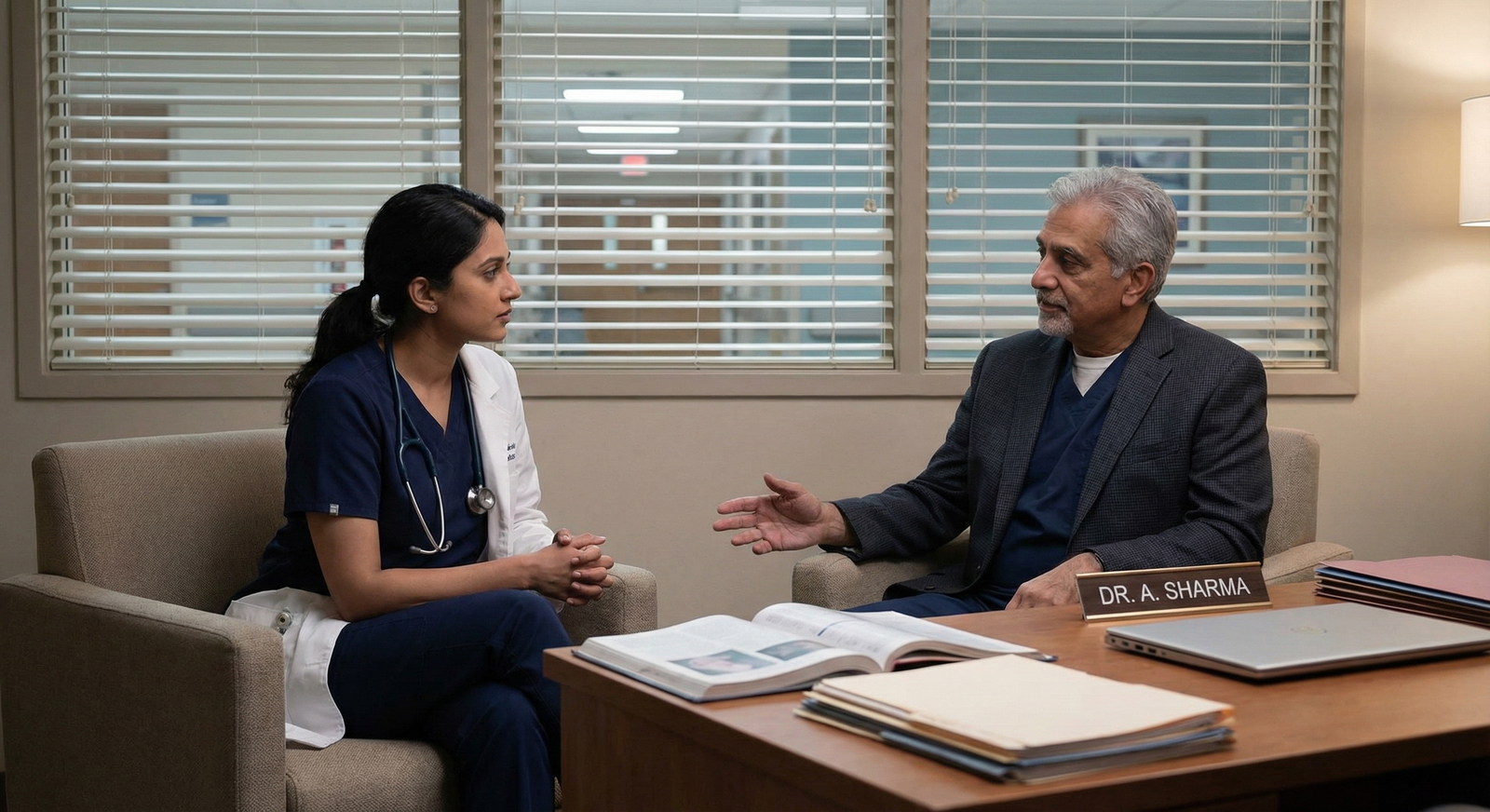
In mentorship medicine, it is important to distinguish between mentors and sponsors—both are crucial for an MD graduate in urology.
- Mentor: Offers guidance, feedback, and perspective. They help you think.
- Sponsor: Uses their reputation and influence to actively promote you for opportunities. They speak for you when you are not in the room.
Types of Mentors You Need
Different people can fill different roles:
Clinical Mentor
- Helps you develop clinical reasoning, operative judgment, and patient communication.
- Ideal for letters of recommendation and guidance on subspecialty choice.
Research Mentor
- Guides your academic projects, authorship, and conference presentations.
- Connects you to research networks and collaborators.
Near-Peer Mentor
- Senior resident or recent graduate who understands the current process.
- Offers pragmatic advice on ERAS, personal statements, program culture, and interview strategies.
Identity-Affirming Mentor (when applicable)
- Shares aspects of your background (gender, race/ethnicity, LGBTQ+, first-gen, IMG status) and can speak to navigating challenges specific to your identity.
You do not need to find all of these at once, and they may not all be at your home institution.
How to Approach Potential Mentors
Effective mentorship usually starts small:
Start with a specific ask.
- “Could I get 20 minutes of your advice about [topic]?”
- “Would you be willing to review my CV and give feedback on how to strengthen it for urology residency?”
Be prepared and respectful of time.
- Arrive with a concise background summary, specific questions, and any relevant documents (e.g., CV, draft personal statement).
Demonstrate follow-through.
- If they advise revising your CV, send the updated version.
- If they recommend articles, read them and send a brief reflection or follow-up question.
Mentors are far more likely to invest in MD graduates who act on their advice.
Turning Mentors into Sponsors
Sponsors typically emerge from mentors who:
- Have seen you work over time.
- Trust your professionalism and reliability.
- Believe in your potential enough to stake their reputation on you.
To cultivate sponsorship:
- Offer to take on tasks that lighten their load—data collection, first draft of manuscripts, preparation of slides, background research on projects.
- Keep them updated on your progress and wins.
- When the time is right, be explicit about your goals: “I’m applying for urology residency this cycle; I would be honored if you felt able to write a strong letter of recommendation,” or “I’m very interested in [Program]; do you have any colleagues there you might be comfortable reaching out to on my behalf?”
Sponsors are particularly powerful in the urology match, where a phone call or email from a respected colleague can bring your application from the middle of the pile to the top.
Digital Networking: Email, Social Media, and Professional Presence
While in-person connections are invaluable, digital platforms increasingly shape medical networking, especially for urology residency and fellowship opportunities.
Professional Email Etiquette
For MD graduates, email is often the first impression:
- Use a professional address (ideally institution-based or some version of firstname.lastname).
- Subject lines: clear and concise. E.g., “Prospective urology applicant seeking research opportunity,” “Follow-up from AUA meeting – [Your Name].”
- Keep messages short, structured, and polite:
- Who you are.
- How you found them.
- What you are requesting.
- Appreciation for their time.
Always proofread; small details affect how faculty assess your professionalism.
LinkedIn and Professional Profiles
LinkedIn is becoming more common in medicine for:
- Maintaining connections after conferences.
- Showcasing your research and presentations.
- Following institutions, journals, and professional societies.
Tips:
- Use a clear professional headshot.
- Add a concise headline: “MD Graduate Aspiring Urology Resident | Interests: Endourology & Health Services Research.”
- Briefly describe your research and clinical experiences and link to publications or posters where possible.
Social Media in Urology
Platforms like Twitter/X and, increasingly, specialized communities (e.g., AUA communities, institutional Slack/Teams channels) are used for:
- Sharing new research and guidelines.
- Discussing case-based controversies.
- Highlighting urology residency program culture.
If you choose to engage:
- Maintain strict professionalism—assume everything is public and permanent.
- Engage constructively: share papers, comment thoughtfully, highlight your own work in a modest, factual way.
- Follow urology societies, key opinion leaders, and residents/fellows in programs you are interested in.
A modest, consistent digital footprint can supplement your in-person networking and help people remember you.
Transitioning from Match to Residency: Networking for Long-Term Career Growth
Once you successfully navigate the urology match and begin residency, networking does not end; it evolves.
Internal Networking in Your Residency Program
As a resident, your immediate network is your most powerful:
- Get to know faculty beyond the OR. Ask about their career paths, practice patterns, and what they wish they had known at your stage.
- Support your co-residents. Reputation spreads fast; being known as a supportive team player will open more doors than you realize.
- Volunteer for departmental initiatives. Residency recruitment, curriculum panels, QI projects, and hospital committees all expand your internal network.
These relationships are crucial when you later apply for fellowship or your first attending job.
National and International Networking
As you advance in training:
- Present regularly at national meetings (AUA, SUO, SUFU, EAU, etc.).
- Join committees or working groups in relevant societies as a resident or fellow member.
- Consider collaborating on multi-institutional research projects.
For MD graduates with academic aspirations, these activities are foundational for building a recognizable name in your area of interest.
Networking for Fellowship and Jobs
When you approach fellowship or job searches:
- Start 1–2 years in advance.
- Talk with mentors about realistic options based on your goals and performance.
- Use your existing network: ask who they recommend you meet, where they see a good fit, and whether they are aware of unadvertised positions.
Many urology positions—especially in private practice or smaller academic centers—are filled through word of mouth long before they show up in formal postings. This is where a decade of consistent networking pays off.
Common Pitfalls in Medical Networking (and How to Avoid Them)
Even well-intentioned MD graduates can undermine their networking efforts. Be mindful of:
Transactional behavior
- Focusing only on what you can “get” from people.
- Solution: Approach relationships with curiosity and respect; look for ways to add value, however small (e.g., contributing data, offering to present, helping juniors later on).
Overcommitting and underdelivering
- Agreeing to more research or tasks than you can reasonably manage; missing deadlines.
- Solution: Be honest about your bandwidth. It is better to say, “I can commit to one project this semester and deliver it well,” than to say yes to three and disappear.
Poor follow-up
- Meeting someone once, then never reaching out again.
- Solution: Build a simple system—after meetings or conferences, list contacts with a one-line note and a reminder to follow up in a few days or weeks.
Neglecting boundaries and professionalism
- Overly informal emails, late-night texts, or social media interactions that blur professional lines.
- Solution: Maintain clear, respectful boundaries and err on the side of formality until a closer professional relationship is clearly established.
Ignoring non-physician collaborators
- Dismissing research coordinators, advanced practice providers, or administrative staff.
- Solution: Treat everyone with respect; these individuals often facilitate your access to opportunities and shape how others perceive you.
Avoiding these missteps will help you build a network built on trust and mutual respect.
FAQs: Networking in Medicine for MD Graduates Entering Urology
1. I’m an MD graduate without a home urology program. How can I still build a strong network?
Focus on three pillars:
- Regional programs: Reach out to nearby academic centers for observerships, research collaboration, or visiting student rotations.
- National societies: Join the AUA as a student or resident member, attend meetings, and participate in online educational events.
- Remote research/mentoring: Many urology faculty are open to remote collaboration, especially on multi-institutional projects or data analysis. A concise, professional email with a CV and specific interests can go a long way.
Aim to establish at least 2–3 mentors, even if they are at different institutions.
2. How early should I start networking if I’m aiming for the urology match?
Ideally:
- Preclinical years (if still in school): Attend grand rounds, meet department leadership, explore shadowing.
- Clinical years: Firm up mentors, engage in research, and start conference networking.
- Research or gap year: Intensively strengthen your portfolio and expand national connections.
As an MD graduate, “early” means as soon as you are confident that you are committed to urology. It is never too late to start—but starting sooner gives you more time to build genuine relationships.
3. How do I ask for a letter of recommendation or advocacy without sounding pushy?
Be clear, respectful, and give an easy opt-out:
“Dr. Smith, I’ve greatly appreciated your mentorship and the opportunity to work with you on [project/rotation]. I am applying to the upcoming urology residency match and would be honored if you felt able to write a strong letter of recommendation on my behalf. If your schedule or familiarity with my work does not allow for this, I completely understand.”
For advocacy (emails or calls to programs), discuss it during a meeting: “If you feel comfortable, would you consider reaching out to [Program] where I’m particularly interested in training?”
4. I’m introverted and find conference networking uncomfortable. What can I do?
You do not need to “work the room” to be effective:
- Set a modest goal: for example, three meaningful conversations per day.
- Use structure: attend small group sessions, workshops, or section meetings where conversation is more guided.
- Leverage your poster/talk: invite people to stop by, and treat each visitor as a built-in networking opportunity.
- Prepare a brief introduction and a few questions in advance; improvisation becomes much easier with a script in mind.
Quality matters more than quantity; a handful of strong connections each conference can be enough.
Thoughtful, consistent networking in medicine is one of the most powerful tools you have as an MD graduate pursuing urology. By combining genuine curiosity, professionalism, and strategic effort—from your home institution to conferences, from research to mentorship medicine—you position yourself not only for a successful urology match, but for a sustainable, fulfilling career in a specialty that depends deeply on collaboration and shared expertise.