

Why Networking Matters So Much in Neurology
In neurology, who you know and how you’re known often matter as much as what you know. The field is relatively small, fellowship-driven, and subspecialty-oriented. That makes networking in medicine—especially during neurology residency and the neuro match process—crucial to your career trajectory.
Strategic medical networking can:
- Strengthen your neurology residency or fellowship applications
- Open doors to research, QI projects, and leadership roles
- Help you find mentors and sponsors in mentorship medicine
- Provide early exposure to subspecialties (stroke, epilepsy, movement disorders, neurocritical care, etc.)
- Build your reputation in the neurology community before you graduate
Unlike some highly saturated specialties, neurology is still evolving, with new therapies, expanding subspecialties, and interdisciplinary care models. That environment rewards residents who build authentic relationships, collaborate widely, and become “known entities” for reliability, curiosity, and professionalism.
This guide walks you step-by-step through how to network in neurology—from M4 and early PGY years through fellowship planning—using conferences, social media, and everyday clinical opportunities to build genuine, lasting connections.
Foundations of Effective Networking in Neurology
Before tactics, you need the right mindset. Successful networking in medicine is less about self-promotion and more about building mutually beneficial, professional relationships over time.
The Networking Mindset: Give More Than You Take
Approach every interaction with:
- Curiosity – Ask thoughtful questions about others’ work and interests.
- Humility – You’re learning; it’s okay not to know, and okay to ask.
- Generosity – Share relevant articles, connect people with similar interests, offer to help with projects or tasks.
People remember residents who are reliable, respectful, and easy to work with more than those who have the most publications.
Your Neurology “Professional Story”
You’ll be asked some version of “So what are you interested in?” hundreds of times. Having a clear, flexible answer helps people remember you and connect you with opportunities.
Draft a 20–30 second “professional snapshot” tailored to neurology:
- Who you are (training level, institution)
- Your current focus or interest
- What you’re hoping to learn or do next
Example:
“I’m a PGY-2 neurology resident at City University Hospital, currently really interested in stroke and vascular neurology, especially systems of care and tele-stroke. I’m hoping to get involved in outcomes research or quality improvement projects related to door-to-needle times.”
This gives others a clear mental map of where you fit and how they might help you.
Understanding the Neurology Ecosystem
Networking is easier when you understand the landscape:
- Core subspecialties: stroke, epilepsy, movement disorders, neuromuscular, MS/neuroimmunology, headache, behavioral neurology, neurocritical care, neuro-oncology, pediatric neurology
- Stakeholders: academic neurologists, private practitioners, hospitalists, neurosurgeons, psychiatrists, intensivists, radiologists, rehab physicians, basic scientists, industry partners
- Professional societies: AAN (American Academy of Neurology), subspecialty societies (AES, AHS, ANA, etc.), regional neurology societies
Knowing these pieces helps you target your medical networking efforts and talk intelligently at conferences and during rotations.
Building Mentorship and Sponsorship in Neurology
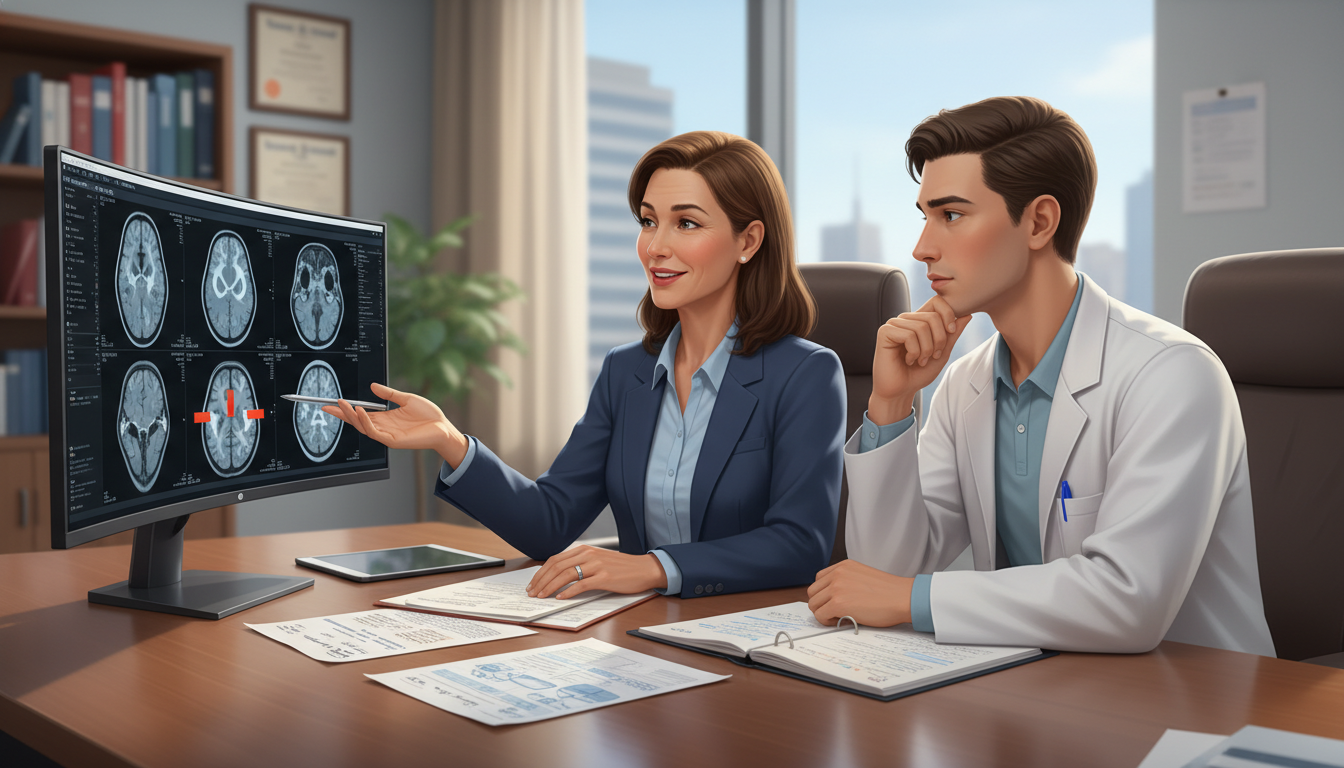
Mentorship medicine is the backbone of neurology career development. You will likely need multiple mentors for different aspects of your journey.
Types of Mentors You’ll Need
Clinical mentor
- Helps you grow as a neurologist at the bedside
- Gives feedback on your exam skills, diagnostic thinking, and patient communication
Academic/research mentor
- Guides you in projects, publications, and presentations
- Helps you navigate applying for fellowships or PhD/postdoc opportunities
Career mentor
- Advises on big-picture decisions: fellowships, job types, geography
- Helps prepare you for the neuro match, interviews, and negotiation
Near-peer mentor (senior residents, fellows)
- Shares practical tips on schedules, exams, board prep, and daily challenges
- Often easier to approach and more available than senior attendings
Sponsor (distinct from mentor)
- Uses their own reputation and influence to promote you: recommendation letters, key introductions, invitations to join high-profile projects
You may find that one person fills multiple roles—but don’t rely on a single mentor for everything.
How to Find Mentors in Neurology
Within your residency program:
- Identify attendings whose clinical style you admire
- Ask chief residents which faculty are known for supporting trainees
- Join your department’s stroke, epilepsy, or neuroimmunology meetings and pay attention to who mentors others
Outside your program:
- Attend neurology conferences and introduce yourself after talks you find compelling
- Use professional platforms (LinkedIn, AAN member directory) to find neurologists in your area of interest
- Ask your current mentors: “Is there anyone you recommend I talk to about X?”
Sample outreach email:
Dear Dr. Smith,
My name is Alex Nguyen, and I’m a PGY-2 neurology resident at [Institution]. I’ve been increasingly interested in movement disorders, particularly DBS programming and longitudinal patient care.
I’ve read your recent work on [specific topic] and found it very informative. I would be grateful for the opportunity to speak with you briefly about your career path and to get your advice on exploring movement disorders early in residency.
Would you have 20–30 minutes for a brief meeting or video call sometime in the next few weeks? I’m happy to work around your schedule.
Thank you for your time and consideration.
Sincerely,
Alex Nguyen, MD
PGY-2 Neurology Resident, [Institution]
Making Mentoring Relationships Work
Once someone agrees to mentor you, be an excellent mentee:
- Come prepared with an agenda and specific questions
- Follow through on agreed tasks and timelines
- Send brief updates on progress (“I submitted the abstract we discussed…”)
- Be respectful of time: end on time unless they invite you to continue
Example questions to ask:
- “Looking back, what was most helpful early in your career?”
- “If I’m interested in [subspecialty], what should I be doing this year?”
- “How do you recommend approaching research if I have limited prior experience?”
Over time, mentors will often transition into sponsors if you consistently demonstrate effort and reliability.
Conference Networking: Turning Meetings into Opportunities
Conference networking is where neurology residents can dramatically expand their professional world. Whether it’s the AAN annual meeting or a regional stroke conference, these events are powerful tools for medical networking if used strategically.

Preparing for Neurology Conferences
1. Set clear goals
Decide what success looks like:
- Meet at least 3 people in your target subspecialty
- Ask 2 faculty about fellowship programs
- Identify one potential research collaborator
2. Do your homework
- Review the program and highlight sessions relevant to your interests
- Note speakers you might want to meet; read at least one of their papers
- If possible, schedule meetings in advance:
- “I’ll be at AAN next month—would you have time for a quick coffee to talk about neurocritical care training?”
3. Print or prepare:
- A simple, professional business card (name, title, institution, email)
- A concise version of your CV on your phone or cloud storage (in case someone asks)
- A 1–2 sentence description of your project if you’re presenting a poster
At the Conference: How to Engage
During sessions:
- Ask concise, relevant questions during Q&A (introduce yourself briefly first)
- Approach the speaker afterward:
- “Thank you for your talk—I’m a PGY-2 neurology resident interested in neuroimmunology. I had a question about…”
At poster sessions:
- Present your work clearly and confidently if you have a poster
- When you visit other posters, introduce yourself to presenters:
- “Hi, I’m Sarah, a resident at [Institution]. This is really interesting—how did you design your inclusion criteria?”
- If a discussion is particularly useful, ask if you can follow up by email
During social and networking events:
- Attend resident/fellow mixers, early career lounges, and specialty interest group gatherings
- Don’t cling only to co-residents; aim to meet new people
- Use name tags: looking at institutions or subspecialties can be conversation starters
Following Up After Conferences
Following up is where conference networking turns into actual connections:
Within 3–5 days, send personalized emails:
- Remind them who you are (“I was the PGY-1 from [Institution] who asked about…”)
- Thank them for their time or insights
- If relevant, attach your poster or ask a next-step question (“Would you mind if I sent you a draft of the abstract once it’s ready?”)
Connect on LinkedIn or through society platforms (such as AAN’s online community), adding a short note referencing your interaction.
Over time, these small steps can lead to letters of recommendation, collaborative projects, and even fellowship interviews.
Everyday Networking: Clinical Rotations, the Neuro Match, and Beyond
Networking isn’t limited to conferences. Your daily work as a neurology resident is the most consistent opportunity to build a strong reputation and expand your network.
Networking on Neurology Rotations
On your home service:
Treat every day as a “long interview”
- Show up on time, prepared, and professional
- Be proactive: volunteer to present, follow up on consults, take responsibility
Make it easy for attendings and fellows to see your interest:
- “I’m really enjoying stroke rounds—are there any ongoing QI projects I could help with?”
- “If you ever need help with data collection for a study, I’d be happy to contribute.”
On away rotations or visiting electives:
Away rotations can be pivotal for neurology residency or fellowship applications and the neuro match:
- Clarify your goals before arriving: Do you want a letter? Exposure to a subspecialty?
- Learn the local culture quickly and adapt
- Get to know fellows—they often influence faculty impressions and can advocate for you
- Ask near the end:
- “I’ve really appreciated this rotation and your teaching. I’m strongly considering applying here for fellowship. Do you have any advice on how to be a strong applicant?”
Networking During the Neuro Match and Fellowship Applications
For many applicants, the “neuro match” refers to the neurology residency match or later the fellowship match in subspecialties. Networking plays a quiet but real role in both.
Before applying:
- Reach out to programs where your mentors have connections
- Ask to be introduced via email to program directors or key faculty in your interest area
- Express interest early, but authentically:
- “I’ve heard wonderful things about your epilepsy fellowship from Dr. X, and I’m very interested in programs with strong surgical epilepsy and EMU experience.”
During interviews:
- Come prepared with thoughtful, program-specific questions
- Be attentive and collegial with other applicants—today’s co-interviewee may be tomorrow’s collaborator
- Send individualized thank-you emails to interviewers within 24–48 hours
After interviews (within ERAS/NRMP rules):
- Keep communication professional and honest; avoid implying binding commitments
- Update programs on significant accomplishments (accepted abstracts, publications) if allowed
- Use your mentors to advocate on your behalf appropriately
Networking with Non-Neurologists
Some of your most important professional relationships will be outside neurology:
- Neuro-ICU teams, hospitalists, ED physicians, neurosurgeons
- Radiologists (especially neuroradiology)
- Rehab specialists and palliative care teams
Collaboration with these colleagues affects patient care and your reputation. Being known as the approachable, dependable neurologist can lead to:
- QI initiatives across departments
- Advocacy projects (stroke systems, teleneurology, epilepsy monitoring units)
- Future job opportunities in multidisciplinary centers
Digital and Long-Term Networking: Social Media, Email, and Career Transitions
Thoughtful online presence and sustained relationship-building are essential parts of modern networking in medicine.
Using Social Media Wisely as a Neurology Trainee
Platforms like X (Twitter), LinkedIn, and professional forums can extend your neurology network beyond your institution.
Best practices:
- Follow neurology societies (AAN, subspecialty groups), key opinion leaders, journals, and conferences
- Share or comment on articles with brief, respectful insights (avoid unprofessional debates)
- Highlight your work when appropriate: poster presentations, accepted publications, invited talks
- Maintain strict professionalism—assume everything is permanent and public
Example of a professional tweet:
“Excited to present our work on optimizing door-to-needle times in acute ischemic stroke at #AAN2026. Grateful for mentorship from @DrSmithNeurology and our stroke team at [Institution]. #neurology #stroke”
Social media can also help you discover neurology interest groups, journal clubs, and virtual events that expand your medical networking reach.
Email Etiquette in Medical Networking
Email is still the backbone of professional communication in mentorship medicine and conference networking.
Key habits:
- Use clear subject lines: “PGY-2 Neurology Resident Seeking Advice on Epilepsy Research”
- Be concise, specific, and respectful of time
- Avoid sending multiple follow-ups too quickly; 7–10 business days is a reasonable interval
- Always thank people for their time, even if they can’t meet or help directly
Save important emails and responses; they form the history of your relationships and can be helpful when you reach out again months or years later.
Sustaining Relationships Over Time
Networking isn’t a one-time event; it’s an ongoing process.
Ways to maintain connections:
- Send brief updates every 6–12 months to key mentors and contacts:
- “Just wanted to share that I matched into neurocritical care at [Institution]. Thank you again for your guidance last year.”
- Congratulate contacts on promotions, awards, or publications
- Meet in person at conferences when possible (“Are you attending AAN this year? It would be great to say hello in person.”)
Over the span of residency, fellowship, and early practice, your network matures into a community—people who know your work, trust your judgment, and think of you when opportunities arise.
Common Pitfalls and How to Avoid Them
Even well-intentioned residents can undermine their networking efforts. Being aware of pitfalls helps you avoid them.
Pitfall 1: Transactional Behavior
Only reaching out when you need something (like a letter or connection) makes relationships feel transactional.
Solution:
Invest in relationships early and consistently—check in, share updates, offer help—before you “need” anything.
Pitfall 2: Overcommitting and Under-Delivering
Eager residents sometimes say yes to every project and then struggle to complete tasks, damaging trust.
Solution:
Be honest about your bandwidth. It’s far better to say, “I don’t think I can take this on right now and do it well,” than to accept and miss deadlines.
Pitfall 3: Ignoring Professional Boundaries
Overly informal messages, late-night texts, or venting about colleagues can quickly erode your professional image.
Solution:
Maintain a courteous, professional tone across all platforms and communications. Save venting for safe, private, non-professional spaces.
Pitfall 4: Underestimating Peer Networks
Some residents focus exclusively on senior faculty and overlook the importance of co-residents and fellows.
Solution:
Invest in your peer group. Today’s co-resident may be tomorrow’s department chair, fellowship director, or research collaborator.
FAQs: Networking in Neurology for Residents and Applicants
1. How early should I start networking in neurology?
Start as soon as you have an interest in neurology—even as a medical student. Attend local neurology grand rounds, get involved in small projects, and meet faculty. That doesn’t mean you need a perfect career plan; it means you’re getting to know the community and letting people get to know you. By early residency (PGY-1/PGY-2), you should be actively cultivating mentors and exploring subspecialty interests.
2. Do I need to go to big national conferences to network effectively?
National meetings like AAN are valuable, but not mandatory for strong networking in medicine. You can build a powerful network through:
- Your home institution and affiliated hospitals
- Regional conferences and specialty symposia
- Virtual conferences and webinars
- Online neurology communities and interest groups
If cost is an issue, look for trainee travel grants, registration discounts, or volunteer opportunities through societies.
3. How do I ask for a letter of recommendation without it feeling awkward?
If you’ve worked closely with someone who knows you well, it’s entirely appropriate to ask. Frame it clearly and respectfully:
- Ask in person or via a well-written email
- Remind them of your work together (rotations, projects, presentations)
- Provide your CV and a brief summary of your goals (neurology residency, specific fellowships, etc.)
- Ask if they feel they can write a “strong, positive letter of recommendation”
This gives them space to decline if they don’t feel they can fully support you—something you want to know early.
4. I’m introverted. Can I still be successful at networking?
Absolutely. Many neurologists are introverted by nature. You don’t need to be the most outgoing person in the room to build a strong network. Focus on:
- One-on-one or small-group conversations instead of large social events
- Prepared questions and talking points so you’re not improvising under pressure
- Written follow-up (emails, messages) where you may feel more comfortable articulating your thoughts
Consistency, reliability, and genuine interest matter far more than extroversion.
Networking in neurology is not about collecting business cards or LinkedIn connections; it’s about building a reputation and a community over time. By approaching medical networking thoughtfully—through mentorship medicine, conference networking, and daily clinical interactions—you position yourself not just to match well or secure a prestigious fellowship, but to grow into a collaborative, connected neurologist who contributes meaningfully to the field.


