
Understanding Networking in Medicine as a Non‑US Citizen IMG
For a non-US citizen IMG aiming for an Emergency Medicine–Internal Medicine (EM‑IM) combined residency, networking isn’t optional—it is a core strategy for being seen, understood, and seriously considered in a very competitive space. Your academic record and exam scores may get your application opened, but your relationships often determine who will advocate for you, who will read your file more carefully, and who will remember you when interview spots are scarce.
Networking in medicine is not about superficial small talk or “using” people. It is a professional process of:
- Building mutually respectful relationships
- Demonstrating your value and reliability over time
- Learning from others’ experience and perspective
- Creating a support system that spans continents and career stages
For a foreign national medical graduate targeting EM IM combined programs, networking has additional layers:
- You must overcome geographical distance and limited in-person exposure
- You must address visa questions and concerns about training pathways
- You must demonstrate commitment to US healthcare without prior long-term US-based training
This article will walk you step-by-step through how to approach medical networking, conference networking, and mentorship medicine specifically tailored to a non-US citizen IMG pursuing Emergency Medicine–Internal Medicine.
Why Networking Matters More for Non‑US Citizen IMGs in EM‑IM
1. EM‑IM Is a Small, Tightly Connected Community
Emergency Medicine–Internal Medicine combined programs are relatively few compared with categorical Internal Medicine or Emergency Medicine programs. That means:
- Program directors and core faculty often know one another personally.
- Word-of-mouth about strong applicants—especially IMGs—spreads quickly.
- A single strong advocate can dramatically change your visibility.
If you are a non-US citizen IMG in this niche, networking can:
- Turn you from an “unknown foreign national medical graduate” into “the IMG that Dr. X recommended”
- Help you understand subtle differences between EM‑IM programs (focus on critical care, global health, admin tracks, etc.)
- Provide insider context on what each program values in IMG candidates
2. Overcoming the “Unknown” Factor
Program leadership may worry about:
- How well you will adapt to the US healthcare system
- Communication skills in a high-acuity ED setting
- Visa sponsorship logistics (J-1 vs H-1B, long-term plans)
Networking allows you to address these concerns before your ERAS file is opened:
- By presenting at conferences, you show English fluency and comfort in academic settings.
- By doing observerships, you provide US physicians with direct experience of your work ethic, clinical reasoning, and professionalism.
- By maintaining relationships, you create a network of potential letter writers and references who can vouch for you.
3. Creating Opportunities You Would Not Otherwise See
Many valuable opportunities are never formally advertised:
- Short research collaborations
- Open invitation to attend departmental conferences or journal clubs over Zoom
- Informal introductions to EM or IM faculty at other institutions
- “We have a last-minute interview spot—know anyone good?” conversations
You access these only when you are on the radar of physicians, residents, or researchers already embedded in the EM‑IM or broader EM/IM community.

Foundations of Effective Networking for Foreign National Medical Graduates
Clarify Your Story and Goals
Before you reach out to anyone, you need a clear, concise professional story. For an EM‑IM aspirant, that includes:
Who you are
- Medical school and country
- Graduation year and current status (recent grad, working, research, etc.)
Why EM‑IM (not just EM or IM)
- A coherent narrative: e.g.,
- Long-term goal in critical care, disaster medicine, or global health
- Interest in systems-based practice (ED flow + inpatient care quality)
- Desire to care for complex, undifferentiated patients across settings
- A coherent narrative: e.g.,
Your value-add
- Languages spoken
- Global or resource-limited setting experience
- Research or QI work relevant to ED or inpatient systems
- Strengths (teamwork, adaptability, cross-cultural communication)
Craft a 30–60 second “professional introduction” you can adapt to email, Zoom, or in-person introductions:
“My name is Dr. [Name]. I’m a non-US citizen IMG from [Country], graduated from [School, Year]. I’ve developed a strong interest in combined Emergency Medicine–Internal Medicine because I want to build a career at the intersection of acute care and complex chronic disease management—especially for underserved populations. Currently, I’m [doing research/clinical work/preparing for USMLE] with a focus on [topic]. I’m particularly interested in learning how EM‑IM physicians balance both roles and would value any advice on pathways for foreign national graduates.”
Practicing this beforehand makes you sound focused and confident.
Understand Cultural Expectations in US Medical Networking
As a non-US citizen IMG, you may come from a culture where:
- Networking is rare or feels like favoritism
- Contacting senior physicians directly may seem inappropriate
- Self-promotion is discouraged
In US academic medicine, respectful, initiative-driven communication is normal and valued. A few guidelines:
- Be concise and specific in emails.
- State your goals honestly (mentorship, advice, observership information).
- Respect time: short emails, reasonable response expectations, one follow-up if no answer.
- Show that you have done your homework (read their work, know their role).
Networking is not begging for favors—it is about demonstrating maturity, professionalism, and genuine interest.
Build Your Professional Presence Online
A modest, clean digital footprint helps you be memorable and credible:
LinkedIn
- Professional photo (neutral background, business or business-casual attire)
- Brief headline: “Non-US citizen IMG pursuing EM–IM | Interest in global emergency care & critical care”
- Summary with 1–2 paragraphs outlining your background and goals
- Add key experiences (research, volunteer work, language skills)
Research platforms
- Google Scholar / ResearchGate if you have publications
- Even if limited, list posters, local presentations, and QI projects
You do not need to be a social media influencer. You do need a professional profile others can quickly scan before or after meeting you.
Practical Strategies: Medical Networking and Conference Networking
Step 1: Identify the Right Circles
As an aspiring EM‑IM physician, prioritize communities where EM and IM overlap:
Society-level organizations
- Society for Academic Emergency Medicine (SAEM)
- American College of Emergency Physicians (ACEP)
- American College of Physicians (ACP)
- American Thoracic Society (ATS) or Society of Critical Care Medicine (SCCM) if you lean toward critical care
EM‑IM specific spaces
- EM‑IM program lists on SAEM or EMRA websites
- Social media accounts of EM‑IM programs
- Resident groups or panels at conferences focusing on dual training
Search websites for:
- “International medical graduate” or “IMG” resources
- “Student and resident sections”
- “Mentorship programs” or “career development tracks”
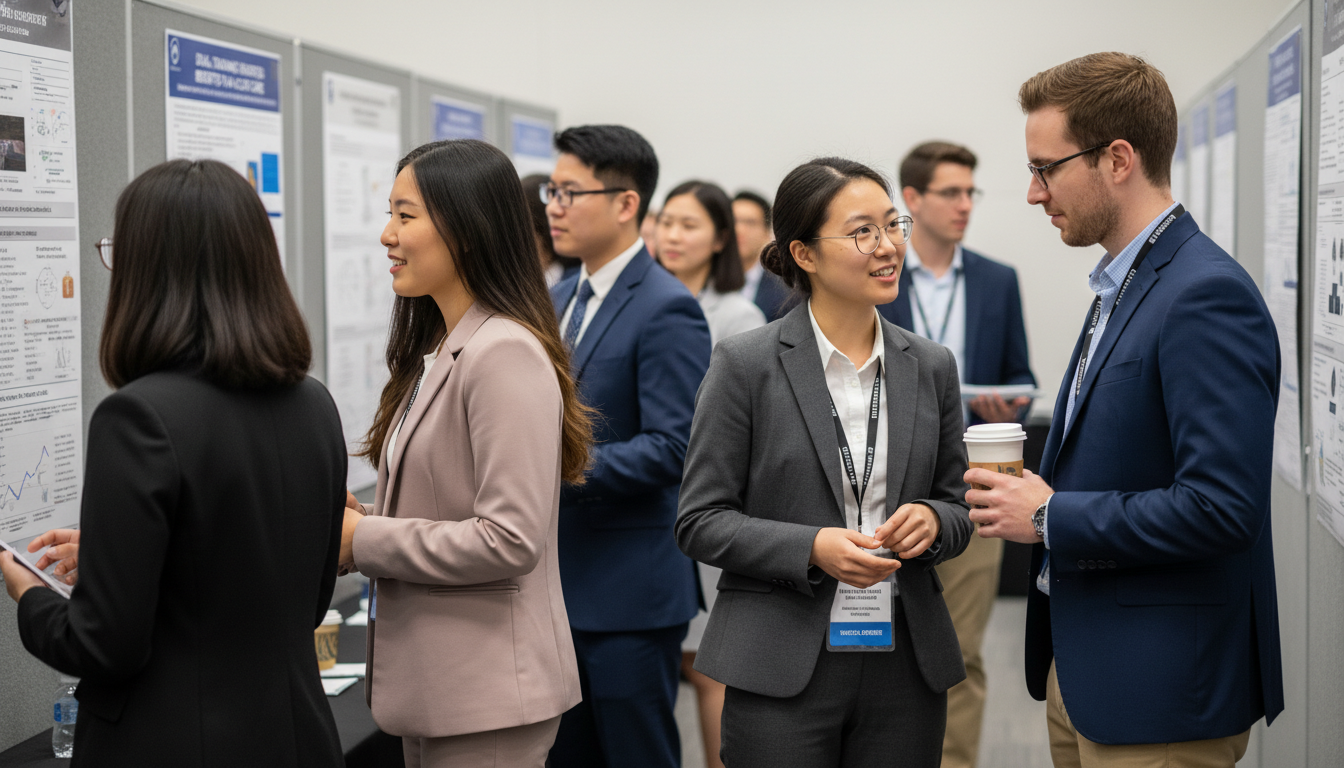
Step 2: Engage in Conference Networking Smartly (Even If You Can’t Attend in Person)
Conferences are powerful for medical networking, but as a non-US citizen IMG you may face:
- Visa and travel barriers
- Financial constraints
- Time zone differences
Still, you can strategically benefit:
Virtual Attendance
- Many conferences now offer virtual or hybrid formats.
- Attend EM‑IM panels, ED–IM joint sessions, and career development talks for residents and students.
- Use chat functions to ask concise, thoughtful questions that show your EM‑IM interests.
Before the Conference
- Identify EM‑IM program directors, associate PDs, and faculty presenting.
- Email 1–2 people in advance with:
- A short introduction
- Your specific interest in their work or program
- Ask if you may attend their talk or if they have any open student/IMG mentoring sessions.
During the Conference
- If virtual: keep your camera on when appropriate, dress professionally, use your real name.
- Use breakout rooms to introduce yourself to residents and faculty.
- Keep a notebook: note names, roles, and points of connection.
After the Conference
- Send individualized emails:
- Thank them for specific insights from their talk.
- Briefly restate your EM‑IM goal.
- Ask one concrete question or request permission to follow up in future.
- Send individualized emails:
Example follow-up email:
Subject: Thank you for your EM–IM insights at [Conference Name]
Dear Dr. [Last Name],
My name is [Name], a non-US citizen IMG from [Country] with a strong interest in Emergency Medicine–Internal Medicine training. I attended your session on [topic] at [conference] and was particularly struck by your discussion of [specific point].
I hope to apply to EM–IM programs in [application year]. If you are willing, I would greatly appreciate any brief advice on how an IMG like me can best prepare for EM‑IM training, especially regarding [research/US experience/skills].
Thank you again for your time and for sharing your experience.
Sincerely,
[Name]
[LinkedIn link, if you have one]
Building Mentorship in Medicine as a Non‑US Citizen IMG
Mentorship is the deeper layer of networking: instead of many weak ties, you cultivate a smaller number of meaningful relationships with people who can guide you, vouch for you, and support your development.
Types of Mentors Useful for EM‑IM Applicants
Career Mentors (Strategic)
- Help you refine your goal: EM, IM, EM‑IM, or EM → CCM, etc.
- Advise on exam timing, research priorities, and application strategy.
Content Mentors (Academic/Research)
- Involved in emergency or internal medicine research, QI, or education.
- Can offer projects you can join remotely (chart reviews, literature reviews, case series).
Process Mentors (Practical/Logistics)
- Familiar with visa issues, ECFMG certification, and ERAS/NRMP mechanics.
- Often IMGs themselves, or program staff used to working with foreign national medical graduates.
Near-Peer Mentors (Residents/Fellows)
- Current EM‑IM or EM/IM residents, especially previous non-US citizen IMGs.
- Can tell you what actually matters day-to-day and help you avoid common mistakes.
Where to Find Mentors Interested in IMGs
- EM‑IM program websites
- Many list resident and faculty emails. Some highlight diversity or international backgrounds.
- Twitter/X and LinkedIn
- Search “EM-IM resident,” “combined EM IM,” “EM-IM program director.”
- Look for posts about mentoring IMGs or global EM.
- International or global health initiatives
- EM global health groups often have faculty experienced with IMGs and cross-cultural training.
- Your home country’s alumni in the US
- Medical school alumni who are now in EM, IM, EM‑IM, or critical care in the US.
How to Approach Potential Mentors
- Start with a specific request, not “Can you be my mentor?”
- Show awareness of their time, and suggest a brief call (15–20 minutes).
- Share a short 1-page CV or summary if asked, but don’t attach large files unsolicited.
Example initial request:
“I am seeking brief advice on how a non-US citizen IMG with an interest in EM–IM can build a competitive profile, particularly regarding research and US clinical exposure. If you have 15–20 minutes for a short Zoom call in the coming weeks, I would be very grateful.”
After a good conversation, you can ask:
“Would it be alright if I check in with you every few months as I prepare for my EM–IM application?”
Mentorship grows organically through repeated, respectful contact and demonstrated follow-through on their advice.
Maintaining Mentorship Relationships
- Send periodic updates (every 2–3 months):
- Recently passed an exam
- Completed a research abstract
- Attended a specific conference or EM‑IM webinar
- Ask targeted questions, not vague “What else should I do?”
- Express genuine appreciation and highlight how their advice helped.
Mentors are more likely to advocate for a foreign national medical graduate when they have seen consistent effort and reliability over time.
Tactical Networking for the EM‑IM Application Cycle
Step 1: Use Observerships and Electives Strategically
For non-US citizen IMGs, US-based clinical time is crucial—both for understanding the system and for networking:
- Aim for experiences in EDs, inpatient IM wards, or ICU if possible.
- Prioritize institutions that:
- Have EM‑IM programs, or
- Have strong independent EM and IM residencies with IMG-friendly reputations.
During observerships or electives:
- Be present and engaged:
- Arrive early, read about patients, ask insightful (not excessive) questions.
- Show interest in transitions between ED and inpatient services—this aligns with EM‑IM.
- Introduce your career goals:
- “I’m interested in combined Emergency Medicine-Internal Medicine residency because…”
- Ask supervising physicians:
- If they know EM‑IM graduates or programs
- Whether they’d be open to writing a letter if they feel they know your work well
Step 2: Research and Connect with EM‑IM Programs Ahead of Applying
Create a spreadsheet of EM‑IM programs with columns such as:
- Program name and location
- Visa policy (J-1, H-1B, or no sponsorship)
- History of taking IMGs
- Contact emails (program director, associate PD, coordinator)
- Special tracks (critical care, global health, ultrasound, etc.)
For each program, consider sending a concise, individualized email before ERAS submission:
- Brief introduction (non-US citizen IMG, EM‑IM interest)
- 1–2 lines about why their specific program appeals to you (do your homework)
- Ask 1–2 concrete questions:
- “Do you consider non-US citizen IMGs for EM–IM positions?”
- “How can an IMG best demonstrate readiness for your EM‑IM training environment?”
Not all will respond, but some will, and these interactions can shape your personal statement or interview preparation.
Step 3: Use Residents as Bridges
EM‑IM and categorical residents are often more approachable and can:
- Provide honest program insights
- Alert you when their program is IMG-friendly
- Suggest how to frame your experiences in ways that resonate with EM‑IM faculty
Ways to connect:
- Program social media (Instagram, Twitter/X, LinkedIn)
- Virtual open houses and Q&A sessions
- EM and IM resident interest groups at conferences
When you speak with residents:
- Respect their time; keep questions focused.
- Avoid pushing them for special treatment or promises.
- Ask what they wished they had known as applicants.
Common Mistakes in Networking—and How to Avoid Them
Mass, Generic Emails
- Problem: Feels impersonal and often ignored.
- Solution: Personalize each message; mention specific talks, papers, or program features.
Over-asking Early (Letters, Positions, “Can you find me a job?”)
- Problem: Creates pressure and reduces goodwill.
- Solution: Build rapport first. Ask for advice and information before opportunities.
Inconsistency and Poor Follow-Through
- Problem: Saying you’ll send something or complete a task and then failing to do so.
- Solution: Track your commitments, set reminders, and communicate if delays occur.
Over-sharing Personal Struggles Without Context
- Problem: Can make a professional interaction feel emotionally overwhelming.
- Solution: Be honest, but focused: explain relevant challenges briefly, then pivot to how you’re moving forward.
Underestimating Near-Peer Mentors
- Problem: Focusing only on senior faculty or PDs.
- Solution: Value residents and fellows—they are often your most practical guides and strongest advocates.
Putting It All Together: A Sample Networking Roadmap (12–18 Months Before Applying)
12–18 months before ERAS:
- Clarify EM‑IM goals and craft your professional introduction.
- Build or update LinkedIn and basic academic profiles.
- Join at least one key EM or IM organization with a student/IMG section.
- Attend virtual EM‑IM or EM/IM sessions, especially those focused on careers or training.
9–12 months before ERAS:
- Secure at least one US-based observership or elective in EM, IM, or ICU.
- Initiate mentor relationships (1–2 faculty, 1–3 residents/fellows).
- Engage in a small research or QI project if possible (can be remote).
- Start a spreadsheet of EM‑IM and EM/IM programs of interest.
6–9 months before ERAS:
- Email EM‑IM programs and selected EM/IM programs to clarify visa policies and interest in IMGs.
- Refine personal statement themes based on your networking conversations.
- Request letters from US physicians who have seen your work ethic and professionalism.
3–6 months before ERAS:
- Attend virtual or in-person conferences or open houses targeting EM, IM, and EM‑IM.
- Deepen contact with mentors; request feedback on your CV and personal statement.
- Prepare talking points for interviews, including specific insights learned from networking.
Through this sequence, you transform from an anonymous non-US citizen IMG into a recognized, purposeful applicant in the EM‑IM ecosystem.
FAQs: Networking in Medicine for Non‑US Citizen IMGs in EM‑IM
1. As a non-US citizen IMG, is it realistic to match into EM‑IM?
Yes, but it is competitive and requires strategy. Many EM‑IM programs are cautious with visa issues and may prioritize applicants they know or those with strong US-based experiences. Networking, targeted observerships, strong letters, and a clear, compelling EM‑IM rationale significantly improve your chances. If EM‑IM positions are few, many IMGs also consider categorical Emergency Medicine or Internal Medicine with a later fellowship (e.g., critical care) as alternative paths to similar practice profiles.
2. How important is conference networking if I can’t travel to the US easily?
Even if you cannot attend in person, virtual conference networking can still be valuable. Many societies now offer virtual attendance, chat-based Q&A, and online mentoring sessions. You can:
- Ask informed questions in sessions
- Follow up with speakers by email
- Join virtual meet-ups or mentoring programs.
While in-person presence is powerful, consistent virtual engagement still demonstrates initiative and interest.
3. Should I tell everyone I meet that I am specifically targeting EM‑IM, or keep options open?
Be honest about your primary goal—EM‑IM—but also show awareness that EM and IM individually are strong options. A balanced way to phrase it:
“I’m primarily interested in EM‑IM because of [reasons], but I also recognize that strong training in Emergency Medicine or Internal Medicine alone could help me reach similar long-term goals through [pathways].”
This shows focus without sounding rigid or unrealistic.
4. How can I address visa concerns when networking with programs or mentors?
You do not need to lead with visa status, but you should be transparent when the conversation turns to logistics. When appropriate, say:
“I am a non-US citizen and will need [J-1/H-1B] visa sponsorship. I understand that policies vary and would appreciate any guidance on how foreign national medical graduates can best navigate this for EM‑IM or EM/IM training at your institution.”
Programs expect this question, and responsible mentors will be honest about feasibility and alternatives.
By approaching networking as a structured, ethical, and relationship-centered process, you—as a non-US citizen IMG—can turn a seemingly distant goal of Emergency Medicine–Internal Medicine training into a realistic, actionable pathway supported by mentors, colleagues, and advocates across the US medical system.