Understanding Networking in Medicine as a US Citizen IMG
For a US citizen IMG (US citizen who is an American studying abroad in medical school), “networking” often feels vague or intimidating—especially when you’re mostly outside the US training ecosystem. Yet for internal medicine residency and beyond, networking isn’t optional; it’s a core professional skill that directly shapes your IM match outcomes, fellowship chances, and long‑term career.
In medicine, networking simply means forming genuine, professional relationships with people who can:
- Teach you
- Vouch for you (letters, calls, emails)
- Connect you with opportunities (research, observerships, sub‑internships, jobs)
- Help you understand the unspoken rules of US training and practice
For a US citizen IMG in internal medicine, networking can:
- Offset disadvantages: limited US clinical experience, fewer home‑program connections, and less visibility in US schools.
- Strengthen your narrative: mentors and advocates who can contextualize your path as an American studying abroad.
- Open doors in real time: emails to PDs, “we know this student” phone calls, and personal introductions at conferences.
Think of networking as building a professional reputation and support system—deliberately and early—instead of hoping your application will “speak for itself.”
Core Principles of Effective Networking for US Citizen IMGs
Before diving into specific tactics, grounding yourself in a few core principles will keep your efforts targeted and sustainable.
1. Value First, Ask Second
Most students approach networking as: “What can this person do for me?” A better frame:
“How can we help each other, and how can I show I am serious, reliable, and worth investing in?”
Ways you can add value, even as a student:
- Being responsive and organized on research projects
- Sharing data, articles, or resources that are genuinely useful
- Offering to help with abstracts, literature reviews, or poster design
- Being a reliable volunteer for departmental events or teaching sessions
People are far more likely to mentor or advocate for someone who has already demonstrated reliability and initiative.
2. Relationships > Transactions
Transactional networking sounds like this:
- “Can you write me a letter?”
- “Can you introduce me to your program director?”
- “Can you forward my CV to your chief?”
Relational networking sounds like this:
- “Could I get your advice on my IM application strategy?”
- “Would you mind reviewing this abstract draft?”
- “Could I help with ongoing research in your group?”
Mentorship in medicine grows from repeated, low‑pressure interactions where you show:
- Commitment to internal medicine
- Professionalism and follow‑through
- Humility plus initiative
3. Consistency Beats Intensity
Because you’re an American studying abroad, you may only have short bursts in the US. That’s fine—but you can:
- Maintain email contact
- Join virtual meetings and journal clubs
- Send brief updates every few months
Networking is not one big event; it’s a series of small, consistent touches over time.
4. Your Story as a US Citizen IMG Is an Asset
Program directors increasingly understand the US citizen IMG pathway. Use this in networking:
You can emphasize:
- Unique perspective from training in a different health system
- Cultural adaptability
- Bilingual or multicultural experiences
- The fact you know the US system as a citizen (insurance, patient expectations, culture) and bring international training on top
Mentors and faculty can help you frame and communicate this narrative—but only if you start building those relationships early.
Where and How to Network: Specific Settings for Internal Medicine
Below are the highest‑yield environments for medical networking and how to approach each as a US citizen IMG targeting internal medicine.

1. US Clinical Rotations and Observerships
These are your single most important networking opportunities.
How to Approach Rotations
On any US internal medicine rotation (core, elective, sub‑I, or observership):
Arrive prepared
- Review common conditions on the service (CHF, COPD, pneumonia, diabetes, sepsis).
- Know the basic workup and first‑line management.
- Understand the local EMR basics as quickly as possible.
Show consistent professionalism
- Be early, not just on time.
- Volunteer for tasks: calling consults, following up labs, drafting notes (if allowed), updating families.
- Ask for feedback mid‑rotation: “Is there one thing I could do differently on rounds to be more helpful to the team?”
Turn faculty into mentors
- Identify 1–2 attendings or senior residents you connect with.
- Near the end of the rotation:
“I’ve really valued your teaching and perspective on internal medicine. Would it be okay if I stayed in touch by email and occasionally asked for career advice as I prepare for the IM match as a US citizen IMG?” - This converts a one‑time encounter into a continuing relationship.
Securing Strong Letters and Advocates
Letters are only part of their influence. Many internists also:
- Email PDs informally
- Speak up in selection meetings
- Make phone calls for you
Maximize that impact by:
- Providing an updated CV and personal statement draft when asking for a letter.
- Asking: “Do you feel you can write me a strong letter?” and giving them an easy out if not.
- Sending a brief email update 1–2 weeks before ERAS opens and again just before rank lists to keep you in mind.
2. Home‑Country and Regional Networks
As an American studying abroad, your local faculty and alumni can still be crucial bridges to US internal medicine:
- Many international schools have alumni in US IM residency or faculty roles.
- Senior faculty may have trained or done research in the US.
- Your school may have affiliate US hospitals for electives.
Actions:
- Ask your dean’s office for a list of alumni in internal medicine in the US.
- Send concise emails: who you are, your goals, a one‑paragraph story, and a specific ask (e.g., “Could we schedule a 20‑minute Zoom call for advice on IM applications as a US citizen IMG?”).
- Attend any visiting faculty sessions, grand rounds, or virtual talks by US clinicians—and follow up with a short, appreciative email and one thoughtful question.
These contacts can help with:
- Informal guidance on programs that are IMG‑friendly in IM
- Research and QI opportunities
- Introductions to US colleagues
3. Conference Networking in Internal Medicine
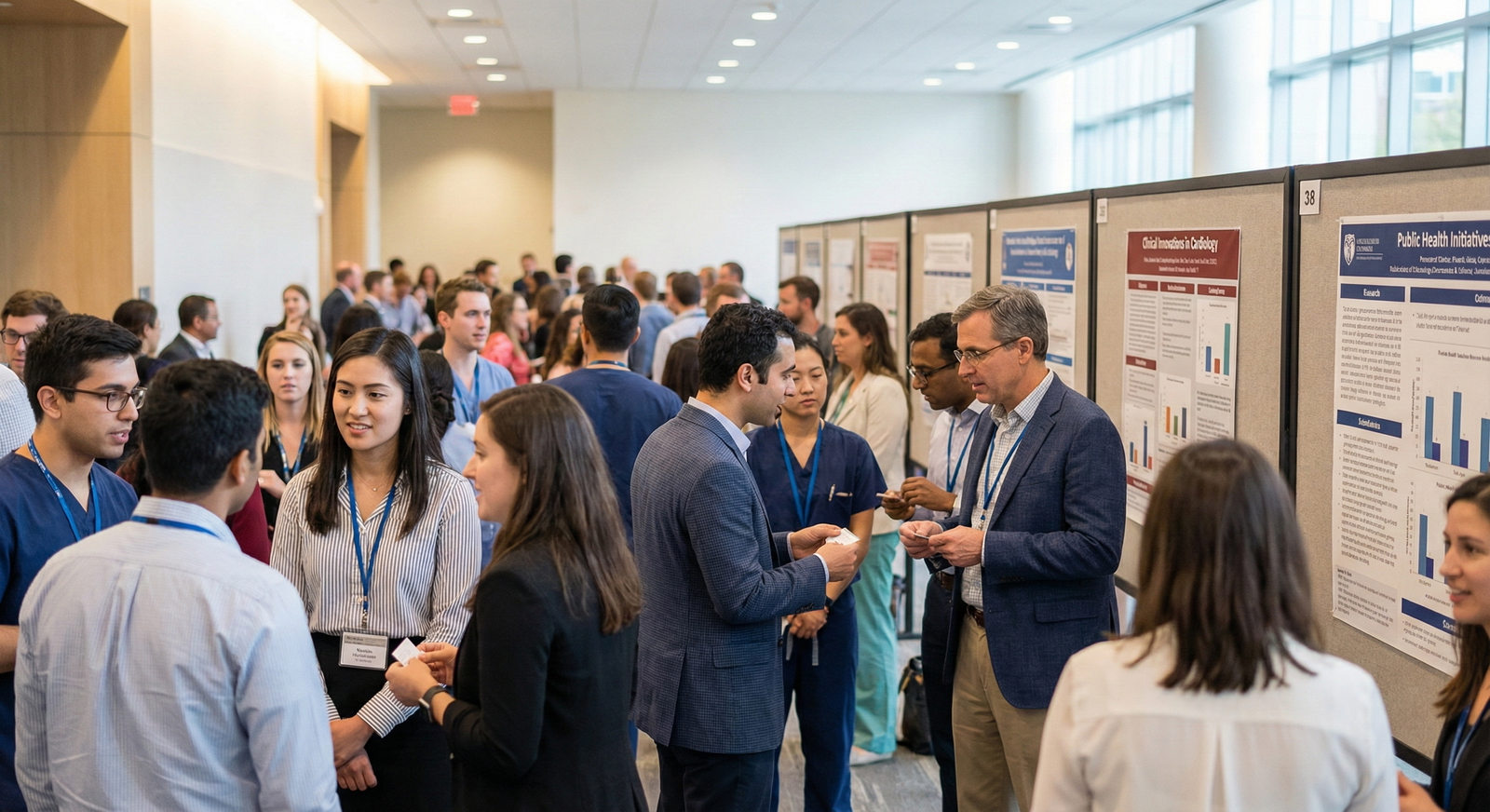
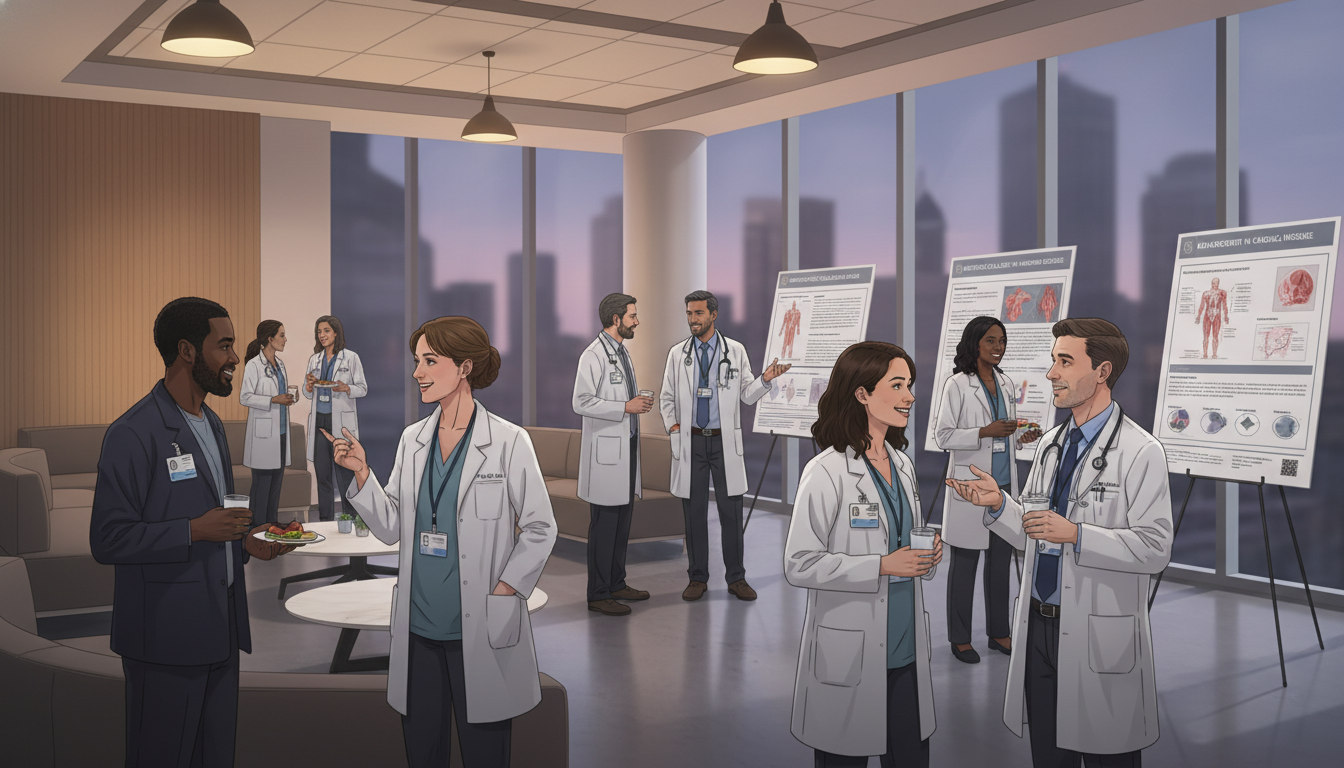
Conference networking is one of the most powerful, underused tools for US citizen IMGs. The big players include:
- American College of Physicians (ACP)
- Society of General Internal Medicine (SGIM)
- Subspecialty societies (e.g., American Heart Association, CHEST, American Society of Nephrology, IDSA)
Why Conferences Matter
- You can meet faculty and residents from dozens of programs in one place.
- Conversations at a poster or interest group session can turn into research collaborations, letters, or interview invites.
- Many conferences actively welcome students, including IMGs, with discounted registration.
How to Network Effectively at Conferences
Go with a plan
- Identify 5–10 people or programs you especially want to meet.
- Note session times where they’ll likely be speaking or presenting.
Use a simple introduction script After a talk or at a poster:
“Hello Dr. [Name], I’m [Your Name], a US citizen IMG in my [X] year at [School] with a strong interest in internal medicine. I really appreciated your points about [specific detail]. Would you have any advice for someone like me interested in [field/area] and planning to apply for internal medicine residency in the US?”
Convert encounters into follow‑ups
- Ask for a card or email.
- The next day, send a 4–5 sentence email referencing what you discussed.
- Attach your CV only if they have asked to see it or mentioned collaborating.
Over time, conference networking builds a web of people who’ve actually met you and associate you with interest and professionalism, not just a PDF in ERAS.
Digital Networking: Email, Social Media, and Virtual Spaces
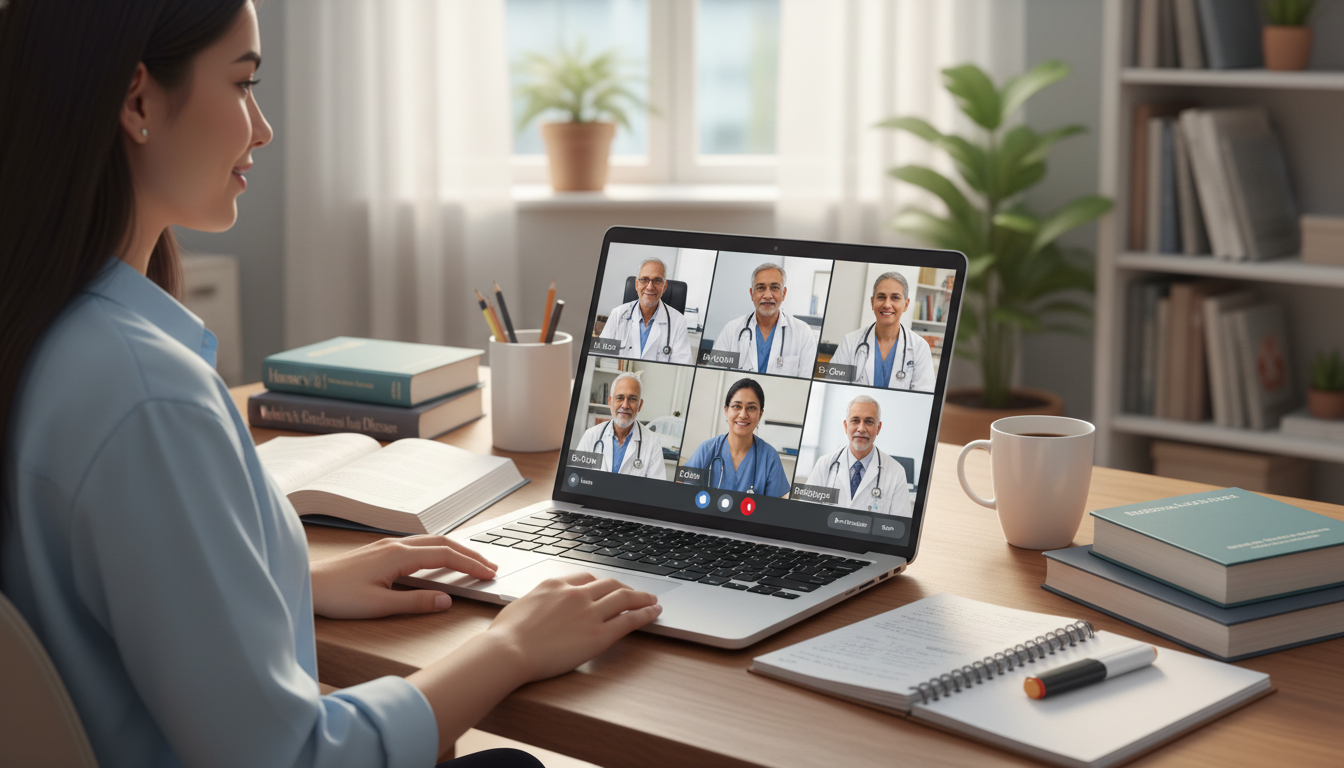
You may spend long stretches outside the US. That’s where digital networking becomes essential.
1. Professional Email Outreach
Well‑done email outreach is one of the highest‑ROI strategies for US citizen IMGs.
Whom to Email
- Internal medicine faculty at hospitals where you hope to rotate or match
- US citizen IMG alumni in IM residency
- Authors of IM papers or guidelines relevant to your interests
- Program chiefs or associate PDs listed as “student education” or “research”
Email Structure (Template)
Subject:US citizen IMG interested in Internal Medicine – Brief Request for Advice
Body (5–7 sentences):
Who you are:
“My name is [Name], a US citizen IMG in my [X] year at [School] with a strong interest in internal medicine.”Why them:
“I recently [attended your talk/read your paper/saw your profile] on [topic], and it strongly aligned with my interests in [specific area].”Your goal:
“I plan to apply for internal medicine residency in [Year] and am seeking guidance on building a competitive application as an American studying abroad.”A modest ask:
“If you have 15–20 minutes for a brief Zoom or phone call, I’d be very grateful for any advice you might share.”Closing:
“Thank you for considering this. I’ve attached a one‑page CV for context but there is no need to review it in detail unless helpful.”
Sincere, brief messages are surprisingly effective when you’ve done your homework on the person.
2. LinkedIn and Professional Platforms
While not as central as in other fields, LinkedIn can still help:
- Connect with residents, faculty, and alumni in internal medicine.
- Follow institution pages and internal medicine departments.
- Message alumni:
“I’m also a US citizen IMG from [School]. I’d love to learn from your path into internal medicine—would you mind a short conversation?”
Keep your:
- Headshot professional
- Headline clear (e.g., “US citizen IMG | Final-year medical student | Aspiring Internal Medicine Resident”)
- About section focused: goals in internal medicine, main interests, and 1–2 sentences about being an American studying abroad.
3. X (Twitter), Mastodon, and Other Med‑Ed Communities
Many internists, educators, and program directors are active on social media:
Use it to:
- Follow hashtags like #MedEd, #FOAMed, #InternalMedicine, #MedTwitter.
- Engage meaningfully: comment on threads with insights or questions, not just “Great post!”
- Share your own scholarly work (posters, accepted abstracts, QI projects).
Guidelines:
- Avoid posting unprofessional content, patient info, or political arguments that could reflect poorly on you.
- Use a real name and identify yourself clearly as a medical student/US citizen IMG.
- Aim to be known for curiosity, evidence‑based thinking, and respectful discussion.
Building Mentorship and Sponsorship in Internal Medicine
Mentorship in medicine is a structured relationship focused on guidance and growth. Sponsorship goes further: someone uses their reputation to push your career forward (writing letters, making calls, nominating you for roles or awards).
As a US citizen IMG aiming for internal medicine, you ideally want both.
1. Types of Mentors You Need
Aim for a small, complementary “board of advisors” rather than a single perfect mentor:
Clinical mentor (IM)
- Helps with clinical reasoning, patient care, and US practice norms.
- Often a letter writer for residency.
Academic/research mentor
- Guides you on projects, abstracts, and publications.
- Helps you build a scholarly profile and understand academic IM.
Career mentor familiar with IMGs
- Often an IMG or faculty who has worked with many US citizen IMGs.
- Gives realistic program lists, match strategies, and guidance on visa/credential conversations (even if you don’t need a visa, this affects program culture).
Peer mentor (resident or recent grad)
- Helps with immediate, practical questions: ERAS logistics, interview styles, away rotation tips.
2. How to Turn a Contact into a Mentor
Mentorship rarely starts with, “Will you be my mentor?” Instead:
- Start small: ask for advice on a narrow topic.
- Implement the advice and report back:
“I followed your recommendation to contact Dr. X about [topic]; thank you—that conversation led to a research opportunity.” - After 2–3 interactions, say:
“Your guidance has been incredibly helpful as I navigate internal medicine and the IM match as a US citizen IMG. Would you be comfortable if I continued to reach out to you periodically as a mentor?”
You’re showing them:
- You take advice seriously
- You act on feedback
- Their time has real impact
3. How to Be a Good Mentee
To sustain strong mentorship in medicine:
- Come to meetings prepared with a short agenda.
- Respect time: 20–30 minutes max unless they extend.
- Follow up with a short “action summary” email.
- Don’t ask for letters or favors too early; let the relationship mature.
Over time, some mentors naturally become sponsors—telling others about you, inviting you to projects, or advocating for you during selection.
Applying Networking to the Internal Medicine Match
Ultimately, your goal is to leverage medical networking to improve your chances in the internal medicine residency match. Networking won’t fix a deeply uncompetitive application, but it can:
- Turn “borderline” into “worth interviewing”
- Turn “unknown” into “someone we’ve heard good things about”
- Help you choose programs where you actually fit
1. Pre‑Application Year Strategy (Ideal Timeline)
1–1.5 years before the IM match:
- Secure at least 2–3 US internal medicine rotations (if possible).
- Identify potential letter writers and begin nurturing relationships.
- Get involved in at least one IM‑related research or QI project.
- Attend at least one IM‑related conference (even virtual) and make 3–5 new contacts.
2. During Application Season
Use your network to:
- Refine your program list (IMG‑friendly, US citizen IMG experiences, geographic preferences).
- Understand program culture beyond websites (ask your contacts: “How IMG‑supportive is your program?”).
- Signal serious interest: some programs notice when their faculty or alumni mention a candidate.
Ethical ways your mentors might help:
- Sending a brief “FYI, this applicant is strong” note to PDs.
- Suggesting electives or prelim years as backup plans.
- Helping you prepare for IM interviews, especially US style patient presentations and behavioral questions.
3. After Interviews and Before Rank Lists
- Send tailored thank‑you notes to interviewers where you had meaningful conversations.
- Update close mentors on where you interviewed and what you’re considering.
- Ask 1–2 trusted mentors to sanity‑check your rank list based on your goals (fellowship vs hospitalist, location, IMG support).
Your network helps you not only get in, but also choose wisely where you will thrive.
Practical Networking Examples for US Citizen IMGs
To make this concrete, here are a few scenario‑based examples.
Example 1: Emailing an Internal Medicine Faculty Member
You find an attending at a US hospital you’re targeting for an elective. You send:
- Clear subject line
- 5–6 sentence email requesting advice and briefly stating your goal
- Respectful tone and one specific ask (brief call or guidance on elective selection)
Outcome:
- They respond and agree to a 20‑minute Zoom.
- During the call, they advise you to apply for a specific sub‑I and offer to connect you with the department’s student coordinator.
- Later, when you arrive, you already have a warm contact in the department.
Example 2: Conference Encounter Turning into a Research Opportunity
You attend ACP and visit a poster session on heart failure management. You:
- Ask 2–3 thoughtful questions.
- Share, “I’m a US citizen IMG and plan to apply to internal medicine next year; I’m very interested in cardiology‑related QI projects.”
- The presenter suggests you email them to discuss a retrospective review they’re planning.
Outcome:
- You join as a co‑author, work reliably, and present the abstract at the next year’s meeting.
- The mentor later writes you a strong IM letter praising your work ethic and follow‑through.
Example 3: Maintaining Long‑Distance Mentorship
You complete a month‑long IM rotation at a US academic center and connect with a faculty member who supports you. Back at your overseas school, you:
- Send an update every 3–4 months: clinical milestones, USMLE progress, any research, and upcoming plans for the IM match.
- Ask for occasional career guidance, not just favors.
- When ERAS opens, you ask them explicitly for a strong letter and share your program list.
Outcome:
- They submit a detailed LOR and, for 1–2 programs where they trained or have colleagues, send a quick “recommendation” email.
- At least one program offers you an interview explicitly referencing their familiarity with your mentor.
Frequently Asked Questions (FAQ)
1. As a US citizen IMG, is networking really necessary for internal medicine, or will my scores and rotations be enough?
For some highly competitive applicants, strong USMLE scores and US clinical experience may be enough to secure a solid number of interviews, especially in community‑based programs. However, networking often:
- Opens doors at academic or mid‑tier programs
- Helps borderline applications get interviews
- Improves the quality of letters and the context in which you’re discussed
For most US citizen IMGs, networking doesn’t replace application strength; it amplifies and contextualizes it, especially for the IM match.
2. I feel awkward “asking for things.” How do I network without seeming pushy?
Shift your mindset:
- Approach people for advice, not favors.
- Offer to contribute (research help, QI work, drafting materials).
- Allow relationships to grow before asking for letters or introductions.
If you are respectful, concise, and appreciative, most mentors do not see this as pushy—mentoring is part of academic medicine culture.
3. How many mentors or contacts do I really need for a strong IM application?
You don’t need dozens. For internal medicine residency, a realistic and effective target is:
- 2–3 strong IM letter writers (including at least one from US clinical experience)
- 2–4 additional mentors or sponsors who know you well and may advocate informally
- A wider network of 10–20 lighter contacts (alumni, residents, faculty you’ve met)
Depth is more important than raw numbers. A few strong advocates beat many weak connections.
4. What if my medical school has very few connections to US internal medicine programs?
This is common for US citizen IMGs and can be overcome by:
- Proactively contacting alumni (even indirectly through LinkedIn and social platforms).
- Targeting US clinical electives and observerships deliberately, then maximizing those for in‑person networking.
- Using conference networking and digital outreach to create your own bridges.
You are not limited to the network you inherit from your school; you can build your own through deliberate, consistent effort.
Networking in medicine, especially in internal medicine, is not about collecting business cards—it’s about cultivating long‑term, reciprocal professional relationships. As a US citizen IMG, your path into internal medicine may require more initiative, but it also gives you a compelling story and an international perspective. Combine that with purposeful networking, and you can turn geographic distance into a distinctive strength rather than a barrier.