Understanding Networking in Medicine as a US Citizen IMG in Orthopedic Surgery
If you are a US citizen IMG or an American studying abroad and aiming for orthopedic surgery residency, networking is not optional—it is a core strategy for getting noticed, supported, and ultimately matched. Orthopedic surgery is one of the most competitive specialties, and for an ortho match as an IMG, strong test scores and research are necessary but rarely sufficient. Who knows you, what they know about you, and whether they are willing to advocate for you may be the difference between a generic application and a compelling, memorable one.
In medicine, “networking” often feels uncomfortable or misunderstood. Many applicants imagine awkward small talk or shallow social media connections. In reality, effective medical networking is about building authentic, professional relationships over time, grounded in shared clinical, academic, or educational interests.
This article will walk you through a structured, realistic approach to networking in medicine, specifically tailored to US citizen IMGs interested in orthopedic surgery. You will learn how to:
- Understand the dynamics of orthopedic surgery networking
- Build your home and away institution networks strategically
- Use conferences and virtual events for high-yield connections
- Leverage mentorship in medicine and turn relationships into advocacy
- Integrate networking into your application strategy and daily routine
Throughout, we’ll focus on practical, concrete steps that American students studying abroad can implement even with limited in-person access to US institutions.
The Realities of Orthopedic Surgery Networking for US Citizen IMGs
Orthopedic surgery residency is small, close-knit, and highly relationship-driven. Faculty and program directors frequently know each other from training, conferences, research collaborations, and national organizations. For a US citizen IMG, understanding these dynamics helps you network in a focused, strategic way.
Why Networking Matters More in Ortho Than in Many Other Fields
Three features make networking especially crucial in orthopedic surgery:
Tight-knit community
- Orthopedics is a relatively small specialty; surgeons frequently work with the same colleagues across research, professional societies, and conferences.
- Word-of-mouth—“I’ve worked with this student, they’re excellent”—carries real weight.
“Fit” and team culture are heavily emphasized
- Ortho programs invest years and significant resources in residents; they want people they trust in the OR, on call, and in clinic.
- Letters and advocacy from trusted orthopedic surgeons can validate your fit far more powerfully than a CV alone.
Biases and barriers for IMGs
- Some ortho programs are historically hesitant to interview IMGs, even US citizens.
- A strong internal advocate, particularly an orthopedist who knows the program or PD personally, can help you overcome institutional inertia or stereotypes about IMGs.
As a US citizen IMG, you must treat networking as a structured, long-term activity, not as something you do only right before ERAS.
Mindset Shift: From “Networking” to “Professional Relationship-Building”
Instead of thinking, “I need to network,” reframe it as:
- “I need to find surgeons whose work I respect and genuinely learn from them.”
- “I need to be visible, prepared, and helpful so people want to work with me again.”
- “I need to stay in touch and update mentors so they naturally become advocates.”
This mindset will make your efforts more authentic and far less awkward.
Building Your Core Network: Home Institution, US Rotations, and Remote Opportunities
For an American studying abroad, the word “home” is complicated—you may have:
- A medical school abroad with limited orthopedic surgery exposure
- A “home base” in the US (where you grew up, did undergrad, or have family)
- Planned US clinical rotations and away electives
Your job is to connect these worlds into a single, coherent network that supports your orthopedic surgery residency ambitions.
Step 1: Start Where You Are – Your Overseas Medical School
Even if there is no robust orthopedic department, your school can still be a platform:
Find any orthopedic surgeon or musculoskeletal specialist locally
- Ask your dean’s office or clinical coordinator who does orthopedics, trauma surgery, or sports medicine.
- Offer to shadow, help with data collection, or assist with presentations.
- Even if they are not in the US, you can:
- Learn clinical fundamentals
- Get involved in case reports or small projects
- Practice presenting cases and imaging
Leverage non-orthopedic mentors
- Some US programs value strong letters from internal medicine, surgery, or research mentors, especially those with US or international reputations.
- Ask them for:
- Career guidance about applying back to the US
- Potential introductions to US-based colleagues (especially alumni).
Tap alumni networks
Look for alumni from your school who matched into orthopedic surgery or other competitive US specialties.
Email template example:
Dear Dr. [Name],
My name is [Your Name], and I am a [Year] medical student at [School], very interested in orthopedic surgery and planning to apply for residency in the US. I saw that you matched into [Program] and would be grateful for 15–20 minutes of your time for advice on how to approach rotations, research, and networking as a US citizen IMG from [School].
I understand how busy residency is and truly appreciate any guidance you can offer.
Sincerely,
[Your Name]
Even one or two helpful alumni can save you months of guesswork.
Step 2: Strategic US Clinical Rotations and Observerships
For an ortho match, where and how you rotate in the US heavily influences your networking opportunities.
Prioritize sites where IMGs are actually considered
- Research program websites for:
- IMG interview data (if provided)
- Prior or current residents who trained abroad
- Use forums, program-specific data, and word-of-mouth from other IMGs.
- Aim for:
- One or two “reach” rotations (top academic or high-volume ortho centers)
- Several rotations at programs that historically interview US citizen IMGs
- Research program websites for:
Treat each rotation like a month-long audition
- Be early, prepared, and visible:
- Show up before the residents on day one.
- Know the OR schedule and cases for the day.
- Learn how the team communicates:
- Some programs value aggressive self-initiative; others value quiet efficiency. Mirror the local culture while staying authentic.
- Ask for feedback by week 2:
- “I’m very interested in orthopedics and want to make sure I’m contributing well. Is there anything I can improve in the OR or on rounds?”
- Be early, prepared, and visible:
Turn daily interactions into future advocates
- Identify 2–3 attendings plus 1–2 residents you connect with.
- Demonstrate consistency:
- Ask to present cases on rounds.
- Volunteer to help with small QI or research tasks.
- Before the rotation ends:
- Ask: “Would you feel comfortable writing a strong letter of recommendation for my orthopedic surgery application?”
If the answer is hesitant, look for another letter writer.
- Ask: “Would you feel comfortable writing a strong letter of recommendation for my orthopedic surgery application?”
Key networking objective for each rotation: leave with at least one strong advocate who:
- Knows you well
- Can speak to your work ethic, teachability, and teamwork
- Is willing to answer calls from PDs or other programs on your behalf
Step 3: Remote Networking and Research from Abroad
When you’re physically outside the US, you can still build a powerful network through:
Email-based research outreach
- Identify orthopedic faculty at institutions where you might later rotate or apply.
- Look for:
- Sports medicine
- Trauma
- Spine
- Hand/upper extremity
- Pediatric orthopedics
- Send a concise, respectful email highlighting:
- Your background as a US citizen IMG
- Your interest in their subspecialty
- Specific recent papers of theirs you’ve read
- A clear ask: remote research assistance (chart review, data entry, literature review, manuscript drafting)
Virtual grand rounds and institutional webinars
- Many departments now host virtual:
- Grand rounds
- Morbidity & mortality conferences
- Resident didactics
- Politely ask the department coordinator or academic office if medical students, especially US citizen IMGs, can observe.
- During Q&A, ask one thoughtful question per several sessions—this builds name recognition.
- Many departments now host virtual:
Consistent email follow-up
- Every 3–4 months, send a brief update to research mentors and key contacts:
- New publications or abstracts
- Upcoming US rotations
- Your anticipated application year
- This keeps you on their radar and naturally sets up future support.
- Every 3–4 months, send a brief update to research mentors and key contacts:
Conference Networking and Professional Societies: High-Yield Exposure for Ortho
Conference networking is one of the most efficient ways to meet many orthopedic surgeons in a short period. For a US citizen IMG, national and regional meetings can be game-changing.
Choosing the Right Conferences
Consider attending:
AAOS (American Academy of Orthopaedic Surgeons) Annual Meeting
- Huge, overwhelming, but extremely important.
- Best if you have at least one poster/presentation or are already connected with faculty who will be there.
Specialty societies, often more intimate and accessible:
- AOSSM (sports medicine)
- OTA (trauma)
- POSNA (pediatrics)
- ASSH (hand)
- NASS (spine)
Regional or state orthopedic meetings (often smaller and more personal)
- Can be easier settings to have real conversations.
- Look for meetings near your US “home base” or rotation cities.
Preparing for Conference Networking
Clarify your mission
- Are you:
- Meeting current research collaborators for the first time?
- Trying to identify programs friendly to IMGs?
- Seeking mentors in a specific subspecialty?
- Are you:
Pre-schedule connections
- Email people you already know:
- “Will you be at AAOS this year? I’m attending and would love to briefly say hello in person.”
- If you have a poster:
- Email your co-authors and invite them to the presentation time.
- Email people you already know:
Prepare a concise “professional introduction”
- 15–30 seconds:
- “Hi, I’m [Name], a US citizen medical student at [School abroad] interested in orthopedic surgery, particularly [subspecialty]. I’ve been involved in [short description of your ortho or research experience], and I’ll be applying to residency in [year].”
- 15–30 seconds:
How to Approach People at Conferences (Without Being Awkward)
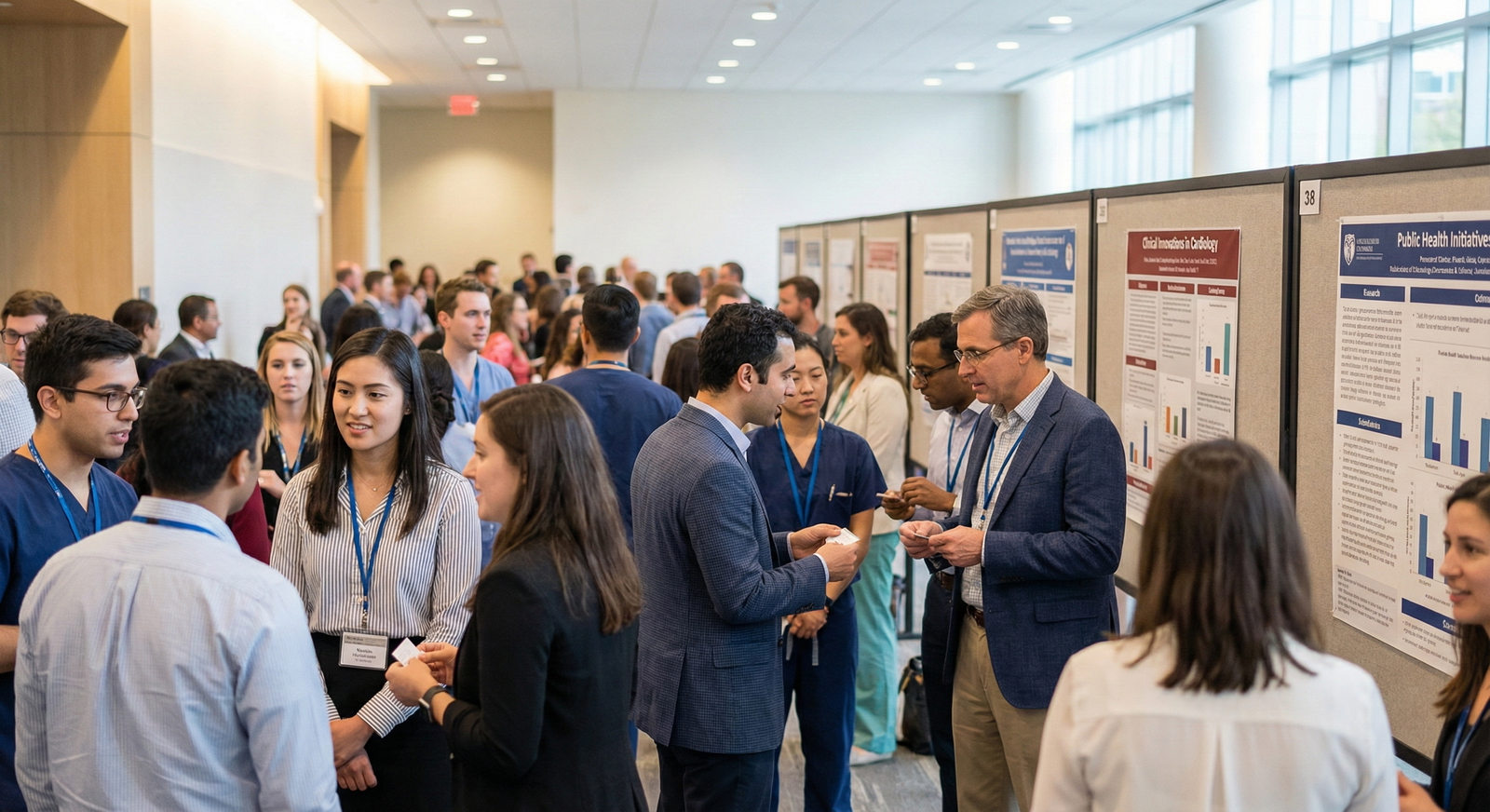
In a poster hall or networking session:
- Approach when they’re not in an intense conversation or clearly leaving.
- Use context:
- “I really enjoyed your talk about [topic]—I’m especially interested in how you approached [specific detail]. Could I ask a quick follow-up question?”
- Have 1–2 thoughtful questions ready.
- If the interaction goes well:
- “I’m a US citizen IMG planning to apply to orthopedic surgery. Would it be alright if I emailed you afterward for advice about research/away rotations/your program?”
Then, follow up within 48 hours with:
Dear Dr. [Name],
It was a pleasure meeting you at [meeting name] after your [talk/poster] on [topic]. I appreciated your insights about [specific point].
As I mentioned, I am a US citizen IMG at [school], strongly interested in orthopedic surgery and particularly in [subspecialty]. If you are open to it, I would be grateful for any advice you might have on how someone with my background can best prepare for an application to US orthopedic programs.
Thank you again for your time,
[Your Name]
This is conference networking with purpose—not just exchanging business cards.

Mentorship in Medicine: Finding, Growing, and Leveraging Mentors in Orthopedics
Strong mentorship in medicine transforms networking from a loose collection of contacts into a focused support system.
Types of Mentors You Need as a US Citizen IMG
Orthopedic content mentor
- An attending or senior resident who:
- Teaches you the basics of orthopedic clinical care
- Guides you on subspecialty decisions
- Helps identify realistic target programs
- An attending or senior resident who:
Application strategy mentor (ideally someone with selection committee experience)
- May be:
- Program director
- Associate PD
- Faculty heavily involved in resident selection
- Helps shape:
- Your ERAS application
- Personal statement
- List of programs and away rotations
- May be:
IMG navigation mentor
- Someone who:
- Is an IMG themselves (ideally in ortho or another competitive field)
- Or has successfully mentored IMGs through the match
- Helps you:
- Avoid common pitfalls
- Understand which programs are receptive vs. closed to IMGs
- Plan timelines and Step retakes, research years, or additional degrees if needed
- Someone who:
You do not need all three roles in one person; having multiple mentors is normal and often better.
How to Approach Potential Mentors
When you identify a potential mentor:
Start by being helpful and engaged
- Show up reliably for research meetings.
- Prepare before shadowing or OR days (know the cases).
- Share small wins and progress.
Make a specific ask
- Instead of: “Will you be my mentor?”
- Try: “Would you be willing to advise me as I plan my orthopedic surgery application strategy over the next year or two?”
Respect their time
- Come with an agenda to meetings:
- Updates since last time (1–2 minutes)
- Specific questions (3–5 items)
- Clarify next steps and how you’ll follow up
- Come with an agenda to meetings:
Turning Mentors into Advocates
As you build mentorship over months or years:
- Share your progress:
- New research
- Exam scores
- Rotations booked
- When application season approaches:
- Ask whether they would feel comfortable:
- Writing a strong LOR
- Reaching out to colleagues at other programs
- Giving feedback on your personal statement or program list
- Ask whether they would feel comfortable:
Many mentors are willing to call or email PDs about a student they genuinely believe in—this is where networking directly impacts your ortho match chances.
Integrating Networking into Your Ortho Match Strategy
Networking is most powerful when it is intentional and aligned with your overall orthopedic surgery residency plan.
Map Your Timeline
For a typical US citizen IMG:
2–3 years before applying
- Identify and email potential research mentors.
- Begin building remote relationships in orthopedics.
- Start conference exposure if feasible.
12–18 months before applying
- Lock in US clinical rotations/aways.
- Solidify at least one or two research projects.
- Increase presence in virtual conferences/webinars.
6–12 months before ERAS
- Convert relationships into:
- LORs
- Strong PD or faculty advocates
- Sharpen your narrative:
- Why orthopedics?
- How your IMG background is a strength (resilience, global perspective, extra maturity).
- Convert relationships into:
Interview season
- Use your network to understand:
- Program culture
- Red flags
- Where you might realistically rank higher.
- Use your network to understand:
Networking on a Weekly Basis: Small Habits, Big Impact
To avoid burnout and randomness, build a simple weekly routine:
Weekly (30–60 minutes)
- Email or message 1 mentor or contact with a short update or thoughtful question.
- Read 1 orthopedic article and note a point you could discuss with a mentor.
Monthly
- Attend 1 virtual orthopedic event (grand round, webinar, journal club).
- Update your “networking spreadsheet”:
- Names, institutions, how you met, last contact, next step.
Every 3–4 months
- Send a concise update email to your 3–7 core mentors and advocates.
This turns networking in medicine from a one-time push into a sustainable, long-term practice.
Being an American Studying Abroad: Turning a Challenge into a Talking Point
As a US citizen IMG, you should be ready to frame your background positively:
- Emphasize:
- Adaptability (navigating unfamiliar health systems, languages, and cultures).
- Initiative (building your own network without a built-in US home program).
- Global perspective (seeing orthopedic trauma, infection, or sports injuries in diverse settings).
During interviews and networking conversations, you can say:
“Training abroad as a US citizen has made me very intentional about my path back to US orthopedic surgery. I’ve had to seek out mentors, research, and exposure myself, which has taught me to be resourceful and proactive—qualities I plan to carry into residency.”
Frequently Asked Questions (FAQ)
1. As a US citizen IMG, how early should I start networking for orthopedic surgery?
Ideally 2–3 years before you apply. That doesn’t mean you need everything figured out—just that you begin:
- Emailing potential research mentors
- Attending virtual grand rounds or webinars
- Learning how orthopedic surgeons talk and think about cases
If you are closer to application season, focus your efforts on:
- Maximizing US rotations
- Identifying a small number of strong advocates
- Attending at least one key conference or regional meeting if possible
2. I feel awkward “networking.” How can I be more natural?
Focus on curiosity and contribution rather than self-promotion:
- Come with genuine questions about their work.
- Offer help with research, presentations, or data collection.
- Ask for guidance, not favors, at the beginning.
- Let strong work and consistent follow-up speak for you.
Most surgeons respond well to students who are prepared, respectful, and clearly invested in learning orthopedics—not just “selling themselves.”
3. Do I need a mentor at the exact program where I want to match?
It helps, but it’s not mandatory. You need:
- At least a few US-based orthopedic surgeons who:
- Know you well
- Can write strong, detailed letters
- Can vouch for you if PDs call
Mentors at other institutions can still be powerful advocates if they have a strong national reputation or personal relationships with PDs elsewhere. That said, if you’re serious about a particular program, trying to arrange a rotation and building relationships there is extremely valuable.
4. How important are conferences for networking compared to rotations and research?
For a US citizen IMG in orthopedic surgery:
- Rotations are usually the highest-yield networking tool—they show how you function in a real team.
- Research can build longitudinal relationships and demonstrate academic potential.
- Conferences amplify and connect both:
- They help you meet multiple people at once.
- They allow you to deepen relationships with existing mentors.
- Presentations (posters/orals) strengthen your CV and give you natural conversation starters.
If resources are limited, prioritize rotations and research, then add conferences as your budget and schedule allow.
Networking in medicine as a US citizen IMG interested in orthopedic surgery is challenging—but absolutely doable with strategy, persistence, and authenticity. By approaching medical networking not as superficial socializing, but as long-term, mentorship-driven relationship-building, you can significantly increase your chances of a successful ortho match and build a professional community that will support you throughout your career.