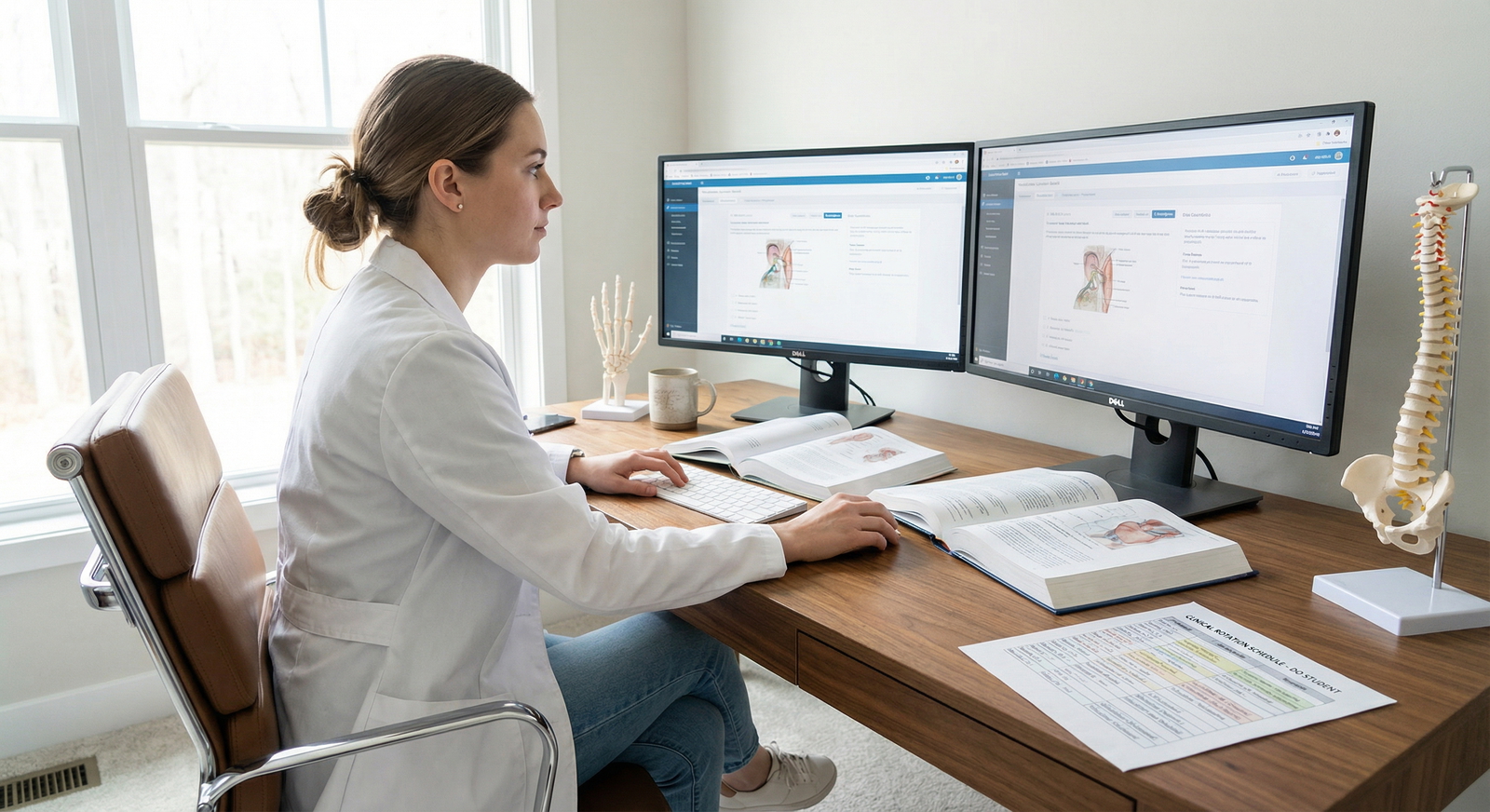
Networking in medicine is often the difference between simply matching somewhere and strategically building a career you’re proud of—especially if you’re a US citizen IMG in a Preliminary Medicine (prelim IM) year. For American students studying abroad, networking is not just “nice to have”; it is a core survival and success skill that affects everything from letters of recommendation to fellowship chances.
This article will walk you through how to network effectively as a US citizen IMG in a prelim medicine year, with a special focus on practical strategies, real-world scenarios, and common pitfalls to avoid.
Understanding Networking in Medicine as a US Citizen IMG
Networking in medicine is not about schmoozing or being fake. It is:
Systematically building genuine professional relationships that help you learn, grow, and open doors—for you and others.
For a US citizen IMG (American studying abroad), the “hidden curriculum” of networking is often less accessible. You may not have:
- A US medical school alumni network
- Structured mentorship programs built into your school
- Home program advocates in competitive specialties
Meanwhile, your Preliminary Medicine year is typically one year long and often does not guarantee a categorical spot. That makes the timeline tighter and raises the stakes. You need to:
- Adapt quickly to a new hospital culture
- Identify mentors fast
- Generate strong letters of recommendation within months
- Line up your next step (categorical spot, specialty switch, or fellowship trajectory)
Networking becomes the bridge between where you are (prelim IM, often with limited stability) and where you want to be (categorical residency, sub-specialty, or fellowship).
What Networking Really Does for You
For a US citizen IMG in prelim medicine, effective networking can:
- Convert a generic LOR into a high-impact advocacy letter
- Turn a brief rotation into a job lead or categorical spot
- Transform awkward conference attendance into research or mentorship opportunities
- Give you insider knowledge about programs, unadvertised positions, and realistic match chances
Seen this way, networking is a clinical skill: it can be learned, practiced, and improved.
Core Networking Principles for US Citizen IMGs
Before tactics, you need a mindset and framework. These principles apply whether you’re on wards, at a conference, or emailing a distant mentor.
1. Be Specific About Your Goals
“Networking” is too vague. Clarify your short- and long-term goals:
Short-term (during prelim IM year)
- Obtain 2–3 strong US-based letters of recommendation
- Identify 1–2 active mentors in medicine or your intended specialty
- Get involved in at least one scholarly project (QI, case report, review, etc.)
- Be known as reliable, teachable, and professional on your team
Long-term (3–5 years)
- Secure a categorical internal medicine or advanced position (e.g., neurology, radiology, anesthesia)
- Build a track record of scholarship if fellowship is the goal
- Develop a network that crosses institutions and specialties
Once your goals are clear, your networking becomes targeted rather than random.
2. Think “Mutual Benefit,” Not “What Can I Get?”
People respond better when they feel respected and not used. As a prelim IM resident, your “value add” may include:
- Helping with data collection or chart review for an attending’s project
- Writing first drafts of case reports or abstracts
- Giving feedback on workflow issues from a front-line perspective
- Introducing colleagues to opportunities you hear about (research, electives, webinars)
When people experience you as someone who contributes, they are more eager to advocate on your behalf.
3. Consistency Beats One-Off Interactions
A single polite conversation is nice; a pattern of dependable, high-quality work is unforgettable.
- Show up on time, prepared, and positive
- Respond to emails promptly
- Follow through on tasks, even small ones
- Keep in touch periodically (updates every few months)
Reliability is the foundation of your professional brand.
Building Your Network During a Preliminary Medicine Year
Your prelim IM year is fast and intense. You need a structured approach.

1. Start With Your Immediate Environment
Your primary network begins where you work:
- Co-residents (prelim and categorical)
- Chief residents
- Attendings on wards, ICU, and clinics
- Program leadership (Program Director, APDs, coordinators)
- Fellows in subspecialties (cards, GI, heme/onc, etc.)
Actionable steps:
First 2–4 weeks:
- Learn names and backgrounds of your co-residents and chiefs
- Identify 2–3 attendings you connect with during rotations
- Attend resident meetings and informal gatherings even if you’re tired
During each rotation:
- Ask attendings, “What’s the best way for interns to stand out positively on this service?”
- After a good interaction, say: “I’ve really appreciated your teaching this month. Could I stay in touch by email for career advice?”
2. Identify Potential Mentors Early
Mentorship in medicine can be career-defining—and as a US citizen IMG, you often start with fewer built-in mentors.
Look for mentors who:
- Seem invested in teaching
- Give specific feedback (not just “good job”)
- Have academic or leadership roles
- Are approachable and respectful to all team members
There are different types of mentors:
- Career mentor – helps with big-picture decisions (specialty, programs, strategy)
- Research mentor – guides scholarly work and publications
- Sponsoring mentor (“sponsor”) – actively advocates for you, makes calls, emails PDs
- Peer mentor – slightly senior residents or fellows who’ve walked your path (especially other IMGs or Americans studying abroad)
How to approach potential mentors:
Example email after a good rotation:
Dear Dr. [Name],
I wanted to thank you for your teaching on the [service] rotation this month. I learned a great deal, especially about [specific example].
As a US citizen IMG completing a preliminary medicine year here, I am actively planning my next steps in [internal medicine / specialty]. I greatly respect your perspective and was wondering if I might schedule a brief meeting to ask for your advice on my career path and how I can best position myself this year.
Thank you again for your time and guidance.
Best regards,
[Your Name], MD
Preliminary Internal Medicine Resident
3. Be Intentional About Performance
Your clinical performance is the most powerful networking tool you have.
- Show up 10–15 minutes early
- Know your patients thoroughly; anticipate questions
- Communicate clearly with nurses and allied health staff
- Take ownership but also ask for help when needed
- Be calm, kind, and solution-oriented under pressure
Attendings and chiefs notice. Later, when you ask for:
- A letter of recommendation
- A connection to another program
- A call to a fellowship director
Their mental image of you is what you created on rounds.
4. Use Program Leadership Strategically
As a prelim IM resident, you usually don’t have a guaranteed future in that institution, so being visible to leadership matters.
Schedule a brief meeting with your Program Director (PD) within the first few months:
- Share your background as a US citizen IMG / American studying abroad
- Clarify your long-term goals (e.g., categorical IM, radiology, anesthesia, neurology)
- Ask how residents in your position have successfully transitioned in previous years
Periodically update the PD or APD:
- New exam scores (e.g., Step 3)
- Research activities
- Conference presentations
- Positive feedback or awards
Your goal: when an unanticipated categorical spot opens, or a colleague asks, “Do you know a hardworking prelim interested in [specialty]?”—your name comes to mind immediately.
Effective Conference & Online Networking for US Citizen IMGs
For many American students studying abroad, conference networking and online networking are the first ways they tap into US-based professional communities.
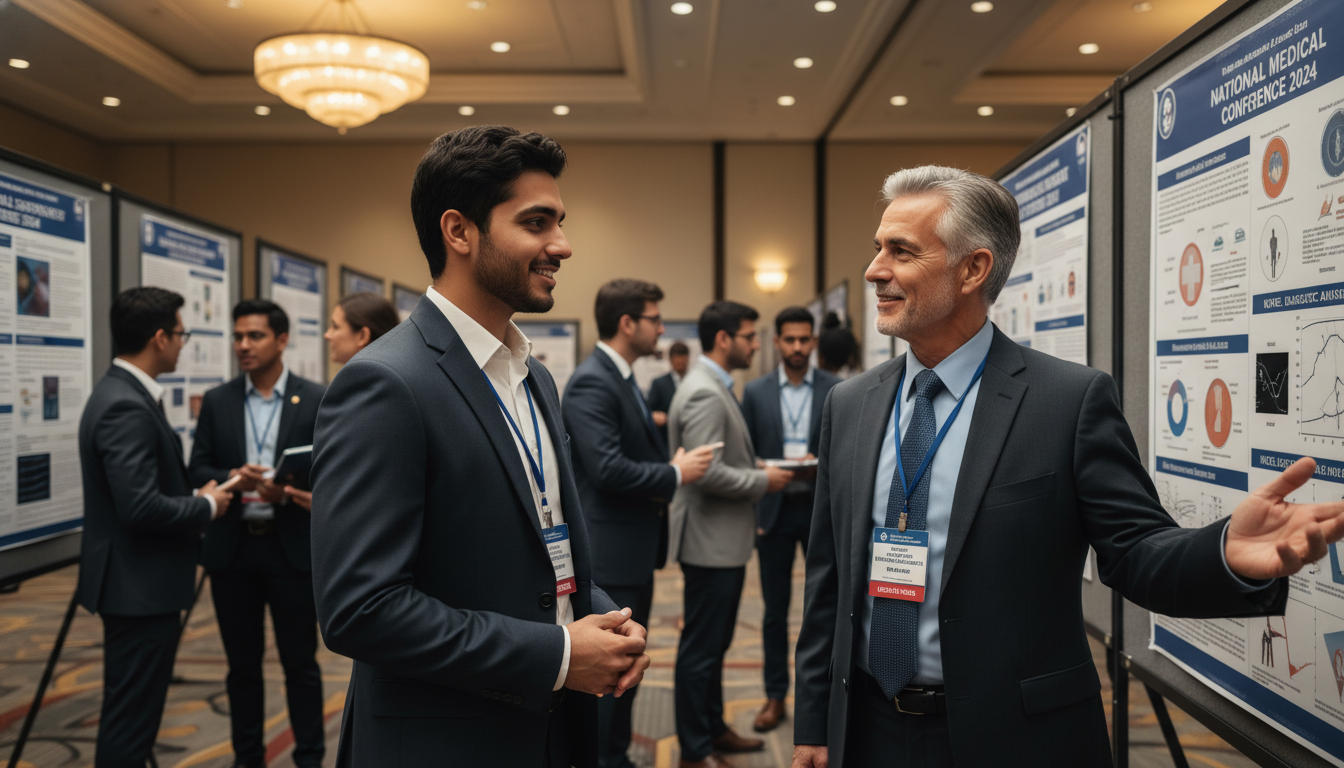
1. Conference Networking: Step-by-Step
Whether it’s ACP, SGIM, subspecialty meetings, or local hospital conferences, the principles are similar.
Before the Conference
Clarify your agenda:
- Are you aiming for research collaborations?
- Fellowship exploration?
- Exposure to certain institutions?
Identify targets:
- Look up speakers and panelists from programs you’re interested in
- Note down 3–5 attendings or fellows you’d like to meet
- Prepare 1–2 questions for each person (about their path, program, or advice)
Practice your introduction (30–45 seconds):
Example:
“Hi, my name is [Name]. I’m a US citizen IMG currently doing a preliminary medicine year at [Hospital]. I’m very interested in [field] and exploring options for a categorical position and eventually fellowship. I’ve been working on [brief project area], and I’d love to learn more about how residents at your institution get involved in similar work.”
During the Conference
Attend sessions where you can naturally talk with faculty (e.g., workshops, smaller panels, early-morning sessions).
Go to poster sessions related to your interest area; they are easier to approach than podium talks.
Ask focused questions:
- “How do residents usually get started in projects like this at your institution?”
- “What do you think differentiates successful fellowship applicants in your program?”
Exchange contact information:
- Ask: “Would it be okay if I emailed you to follow up on this and possibly get your advice on my path?”
- Take a photo of their badge if you might forget the spelling.
After the Conference
Within 3–5 days, send a brief follow-up email:
Dear Dr. [Name],
It was a pleasure meeting you at the [Conference] session on [topic]. I appreciated your insights about [specific point discussed].
As a US citizen IMG in a preliminary medicine year at [Institution], I’m exploring opportunities in [specialty/program type] and would be grateful for any advice you might have about preparing for [categorical positions / fellowship] and getting involved in [research/topic].
Thank you again for your time.
Sincerely,
[Your Name]
Keep a simple spreadsheet of contacts, dates, and topics discussed; follow up every few months with brief updates.
2. Online & Social Media Networking in Medicine
Digital presence can amplify your visibility as a US citizen IMG, particularly if you lack a strong home institution.
Platforms to consider:
LinkedIn: Clean, professional profile with:
- Current position (Preliminary Internal Medicine Resident)
- Medical school (clearly labeled as international)
- USMLE scores if you’re comfortable
- Publications, presentations, and projects
X (Twitter) / professional social media: Used heavily in academic medicine, especially for:
- Sharing publications
- Following thought leaders
- Learning about last-minute positions and research opportunities
How to engage professionally:
- Follow attendings, programs, and professional societies in your field
- Share or comment thoughtfully on clinical pearls, recent papers, and conferences
- Post about your academic work (e.g., “Grateful for the opportunity to present our QI project on [topic] at [meeting].”)
- Avoid anything vaguely unprofessional, political rants, or patient-identifying content
Over time, these platforms become another form of medical networking—a way for people to recognize your name and interests even before meeting you.
Leveraging Mentorship & Sponsorship as a US Citizen IMG
Mentorship in medicine is important for everyone—but for US citizen IMGs, it often compensates for structural disadvantages.
1. Finding Mentors Who Understand the IMG Experience
Ideally, look for mentors who:
- Are themselves IMGs or have trained many IMGs
- Understand the unique pathway of a US citizen IMG (visa issues may differ, but bias and structural challenges often overlap)
- Appreciate how a preliminary medicine year fits into broader career paths
Where to find them:
- Within your own institution (ask chiefs who has a track record of supporting IMGs)
- At conferences (seek out IMG-focused sessions or networking events)
- Through alumni connections from your international medical school
- Professional organizations with IMG sections or mentoring programs
2. Structuring the Mentorship Relationship
Make it easy for mentors to help you:
Propose an agenda before each meeting:
- CV review
- Strategy for next application cycle
- Prioritizing research projects vs. clinical focus
- Refining your personal statement and narrative as an American studying abroad
Respect their time:
- 20–30 minute meetings
- Come with specific questions, not “What should I do with my life?”
Accept feedback with humility, even if difficult:
- “Based on where you are, it may be harder to break into [hyper-competitive specialty], but here’s how you can maximize your chances or consider related paths.”
3. Converting Mentors into Sponsors
A mentor advises; a sponsor advocates.
Sponsors:
- Call PDs at other programs on your behalf
- Introduce you via email to research collaborators
- Recommend you for committee roles, projects, or interviews
You can’t demand sponsorship, but you can earn it:
- Deliver high-quality work consistently
- Be reliable with deadlines
- Communicate your goals clearly:
- “My goal is to secure a categorical IM position and pursue [fellowship]. If you feel comfortable, I’d be incredibly grateful for any advocacy or introductions you might consider appropriate.”
Don’t underestimate the power of one well-placed sponsoring mentor for a prelim resident.
Common Pitfalls and How to Avoid Them
Networking can go wrong in subtle ways—especially when you’re anxious about your future.
1. Coming Across as Desperate or Transactional
It’s understandable to feel urgent in a one-year prelim position, but avoid:
- Immediately asking, “Can you get me a spot at your program?”
- Sending long, scattered emails requesting “any opportunities” without focus
- Treating people like stepping stones
Instead:
- Start with curiosity: “How do residents in your program pursue [goal]?”
- Ask for advice first, opportunities later
- Show sustained interest and follow-through over time
2. Neglecting Your Reputation on the Wards
No amount of conference networking can fully compensate for a poor clinical reputation.
- If a sponsoring mentor hears that you’re disorganized, rude, or unreliable, advocacy may stop.
- Nurses and staff also communicate informally with attendings and leadership.
Your day-to-day professionalism is part of your networking.
3. Overcommitting to Research or Side Projects
Ambitious US citizen IMGs often say yes to every opportunity. The risk:
- Missed deadlines
- Incomplete projects
- Burnout and clinical performance decline
Better approach:
- Take on 1–2 high-yield projects you can realistically complete
- Clarify expectations and timelines with your mentor
- Learn to say: “I’d love to, but with my current schedule I worry I won’t be able to give this the attention it deserves.”
4. Not Following Up
You may have multiple promising conversations that go nowhere because you never followed up.
- Set reminders to send updates every 2–3 months
- Share concrete progress (“I passed Step 3,” “We submitted the abstract,” “I finished my prelim year with strong evaluations.”)
- Keep emails brief and respectful
Strategic Networking for the Next Step After Preliminary Medicine
For many US citizen IMGs, the prelim year is a bridge, not a destination. Networking shapes your transition.
1. If You’re Aiming for a Categorical Internal Medicine Position
Let program leadership know early:
- “My goal is to transition into a categorical IM position, whether here or elsewhere. I’d appreciate feedback on what I need to demonstrate this year to be a strong candidate.”
Ask mentors if:
- They know programs that often take strong prelims
- They’d be willing to email or call PDs where you’re applying
Target programs that:
- Have a history of accepting IMGs
- Value US clinical experience and strong Step 3 performance
- Have faculty connections with your mentors
2. If You’re Using Prelim IM for Another Specialty (e.g., Neuro, Radiology, Anesthesia)
Network with residents and attendings in your desired specialty at your institution:
- Ask to attend their conferences or M&M
- Request to meet briefly to understand how they view prelim-year performance
Seek letters of recommendation from medicine attendings who can highlight:
- Work ethic
- Teamwork
- Clinical reasoning
Engage in specialty-relevant projects (e.g., case reports, QI, imaging-related projects) through your prelim year mentors when possible.
3. Keep Your Narrative Coherent
As an American studying abroad who did a prelim medicine year, be prepared to explain:
- Why you went abroad
- Why you chose a prelim IM year
- What you learned and how it made you stronger
- Why you’re now targeting a specific path (categorical IM, another specialty, or fellowship)
Mentors and network contacts can help refine this narrative, so it sounds intentional and growth-oriented, not chaotic.
FAQs: Networking in Medicine for US Citizen IMGs in Preliminary Medicine
1. I’m a US citizen IMG in a busy prelim IM program and feel I have no time to network. What should I prioritize?
Focus on the highest-yield activities:
- Be exemplary on your rotations; your day-to-day team is your primary network.
- Identify 1–2 attendings and 1–2 senior residents/fellows as potential mentors.
- Schedule brief (20–30 minute) meetings with them to discuss your goals.
- Say no to extra projects you can’t realistically complete. A few strong relationships matter more than many weak ones.
2. How early should I start talking to my Program Director about future plans?
Within the first 2–3 months of your prelim year. You don’t need a perfect plan; just be honest:
- Share that you’re a US citizen IMG in a one-year position.
- Clarify whether you’re aiming for categorical IM at their institution, elsewhere, or another specialty.
- Ask what previous prelims did to successfully transition.
Updating them periodically (twice a year or around key milestones) keeps you on their radar.
3. What if I don’t have research experience—can I still network effectively?
Yes. Research is one networking pathway, not the only one. You can:
- Be recognized for outstanding clinical performance and professionalism.
- Ask attendings about small, manageable projects like case reports or QI.
- Build relationships via teaching, committee work, or quality/safety initiatives.
Your reliability and attitude will often matter more than an extensive publication list, especially early in training.
4. How do I handle bias or negative assumptions as an American studying abroad?
Address it indirectly through performance and professionalism:
- Be consistently prepared, knowledgeable, and humble.
- Own your background confidently: “I trained abroad, which taught me adaptability and resourcefulness. I’m grateful for the chance to prove myself in the US system.”
- Seek mentors who have successfully guided IMGs.
- Use strong US-based letters and sponsorship to validate your capabilities.
Over time, your work will speak louder than the label “IMG,” especially when amplified by advocates in your network.
By approaching medical networking, conference networking, and mentorship in medicine as deliberate, learnable skills, you can turn a potentially precarious preliminary medicine year into a powerful launchpad. As a US citizen IMG, you may start with fewer built-in advantages—but with intentional, strategic networking, you can build the relationships that shape a stable, rewarding career in medicine.