Why Networking Matters So Much During a Transitional Year
For a US citizen IMG, a Transitional Year (TY) can be an invaluable doorway into residency training in the United States—but it’s rarely the final destination. Whether you’re aiming for anesthesiology, radiology, dermatology, PM&R, neurology, radiation oncology, or another advanced specialty, your transitional year residency is a critical networking window.
You’ll have:
- Only 12 months to prove yourself
- Limited chances to stand out among categorical residents
- A narrow time frame to position yourself for the next Match cycle (or fellowship down the line)
In this context, networking in medicine is not about superficial small talk; it’s about:
- Building genuine professional relationships
- Finding mentors who can advocate for you
- Earning strong letters of recommendation
- Expanding your access to research, electives, and career opportunities
As an American studying abroad who has returned to the US system, you may feel you’re “behind” or “outside” traditional networks. Strategic medical networking can close that gap. This article will walk you through a comprehensive, practical approach tailored specifically to a US citizen IMG in a transitional year residency (TY program).
Understanding the Unique Position of a US Citizen IMG in a TY Program
The Advantages You Already Have
As a US citizen IMG entering a TY program, you bring several inherent strengths:
- Cultural familiarity: You usually understand US culture, communication norms, and expectations better than non‑citizen IMGs.
- Language fluency: You’re likely fully comfortable with colloquial English, which helps with patient rapport and interprofessional relationships.
- No visa hurdle: Programs and faculty know they won’t need to sponsor a visa for you in your next step, a real plus for many specialties.
Recognize these strengths. They make you easier to integrate into a team and often more approachable in informal settings—both important for networking in medicine.
The Challenges You Need to Anticipate
At the same time, as an American studying abroad, you may face:
- Limited pre-existing US clinical networks: You likely don’t have a home US medical school alumni network or long-term US mentors.
- Bias or misconceptions about IMGs: Some faculty may assume IMGs are less prepared or less competitive (even when it’s not true).
- Short runway in a Transitional Year: You may need to impress quickly to earn letters, research roles, and support for your desired specialty.
Networking during your TY is how you:
- Override assumptions with personal interactions and strong performance
- “Borrow” institutional credibility by attaching yourself to respected mentors
- Build a network efficiently in one intensive year
Think of your transitional year as a network accelerator—if you’re strategic.
Building Your Network Inside the Transitional Year Residency
Your TY program is your core ecosystem. Most of your mentorship in medicine, letters, and connections will come from inside this environment.

Step 1: Start Strong in the First 4–6 Weeks
The first month sets the tone for how others see you. Focus on:
- Reliability: Show up early, complete tasks, follow through on what you promise.
- Professionalism: Be courteous, humble, and responsive with nurses, staff, and consultants.
- Clinical curiosity: Ask thoughtful questions—enough to show engagement, but not so many that you slow down the workflow.
- Helpfulness: Offer to help co-residents with notes, follow-up calls, or small tasks when you have bandwidth.
Faculty and senior residents quickly categorize interns into:
- People they trust and enjoy working with
- People who are neutral
- People they want to avoid
Your first major networking goal: be in the first group.
Step 2: Identify Key People and Roles
Map your internal network. Important categories:
Program Leadership
- Program Director (PD)
- Associate Program Directors (APDs)
- Program Coordinator
Core Faculty
- Hospitalist attendings
- Specialty attendings (especially in your target field, if present)
- Site or rotation directors
Resident Leaders
- Chief Residents
- Senior residents interested in your specialty
- Residents who previously matched into your desired advanced specialty
Supportive Staff
- Program coordinator
- Education office staff
- Research coordinators
Your aim isn’t just to “know” these people; it’s to build working relationships where they see you as:
- Reliable
- Teachable
- Professionally mature
That’s what eventually leads to strong advocacy.
Step 3: Everyday Networking Through Excellent Clinical Work
High-quality work is the foundation of all networking in medicine. Some specific habits:
- Present clearly on rounds: Organized, concise, with key data at your fingertips.
- Follow up religiously: If you say you’ll call a consultant or update a family, do it promptly and document it.
- Own your patients: Know their problems, meds, pending labs, and discharge needs.
- Ask for feedback regularly: “Is there anything I can be doing differently to be more helpful to the team?”—and then apply what you hear.
These behaviors naturally create conversation points and respect from faculty, which makes further networking easier and more authentic.
Step 4: One-on-One Meetings With Faculty
Within your first 2–3 months, request brief meetings with several faculty, especially:
- Your program director
- APDs who oversee resident career development
- Faculty in your target specialty (if available at your site)
You might say:
“Dr. Smith, I’m a US citizen IMG in this transitional year residency, and I’m hoping to match into anesthesiology next year. Would you have 15–20 minutes sometime this month for advice on how to make the most of this year and position myself well?”
In the meeting:
- Bring a 1-page CV (or have it available by email).
- Be ready to summarize your background and goals in 2–3 minutes.
- Ask for specific advice, such as:
- “Which rotations or electives would you prioritize in my situation?”
- “Who else would you recommend I talk to?”
- “Are there any local or national conferences you’d suggest I attend?”
Then follow up:
- Send a short thank-you email summarizing 1–2 key points you found helpful.
- Act on at least one piece of advice and later circle back with an update.
This transforms a random meeting into an ongoing mentorship in medicine.
Leveraging Conferences and Professional Organizations for Medical Networking
Beyond your program, conferences and organizations are high-yield tools for expanding your network—especially if your TY hospital doesn’t have a strong presence in your intended specialty.

Step 1: Choose the Right Meetings
Depending on your target specialty, consider:
Transitional Year context
- General internal medicine or hospital medicine meetings (SGIM, SHM)
- If you’re undecided, these expose you to many fields.
Specialty-specific meetings
- Anesthesiology: ASA annual meeting
- Radiology: RSNA, ACR meetings
- Neurology: AAN
- Derm, PM&R, Radiation Oncology, etc.: respective national society meetings
Regional conferences
- State or regional specialty society meetings (smaller, more approachable, often cheaper).
Even if funds are tight, sometimes:
- Programs have limited travel funding for residents who present posters.
- Specialty societies provide IMG or trainee travel grants.
Ask your PD or coordinator early in the year about these options.
Step 2: Prepare a Clear Networking Plan
If you attend a conference:
Before the meeting
- Review the program agenda and identify:
- Sessions with residency program panels
- Medical student / resident career workshops
- Meet-and-greet or trainee networking events
- Look up program directors or faculty from programs you’re interested in and note their sessions.
- Review the program agenda and identify:
Set tangible goals
- Example goals:
- Talk to at least 3 faculty in my target specialty
- Ask 2 questions at trainee-oriented sessions
- Introduce myself to at least one PD or APD
- Example goals:
Step 3: Conference Networking Tactics
At conferences, focus on:
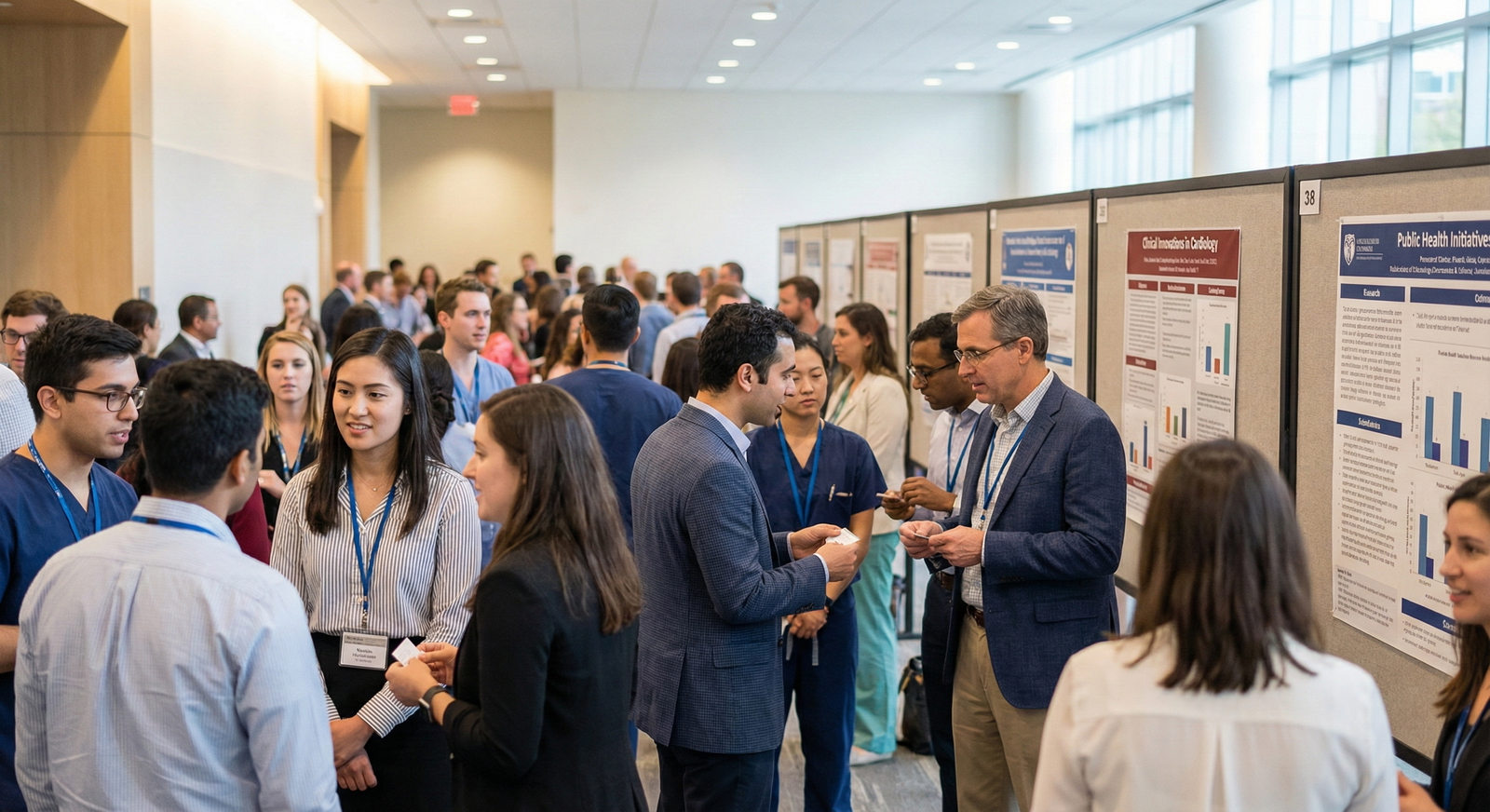
Poster sessions:
- Easiest environment for casual conversation.
- Ask the presenter:
- “What was the most surprising part of your project?”
- “How did you get involved with research at your institution?”
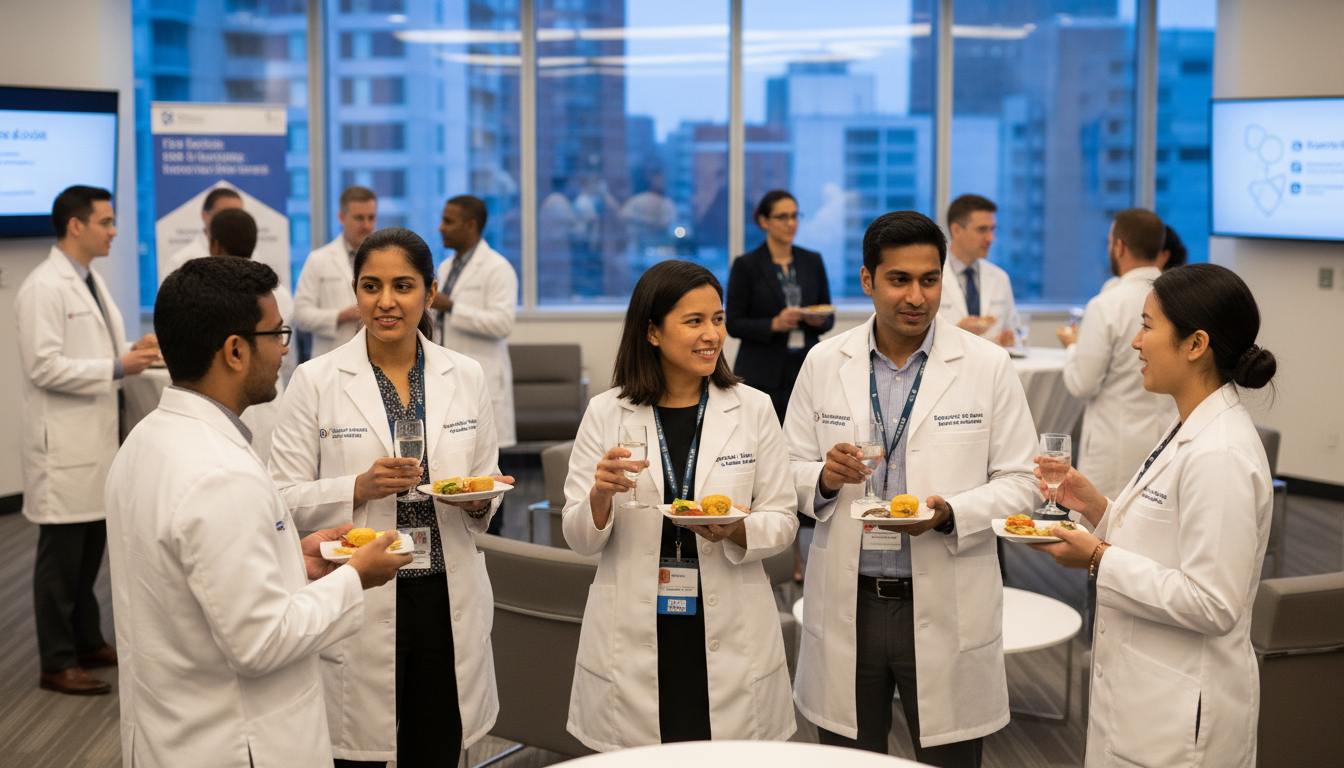
Resident/trainee events:
- Often designed specifically for networking.
- Introduce yourself as:
- “I’m a US citizen IMG doing a transitional year residency and planning to apply to [specialty] next cycle.”
After talks:
- Wait near the front after a session and say:
“Thank you for your talk, Dr. X. I’m a transitional year resident and very interested in [topic]. Would it be okay if I emailed you with a couple of questions about getting involved in similar work?”
- Wait near the front after a session and say:
Have a short, clear self-introduction ready:
“Hi, I’m [Name], a US citizen IMG currently in a transitional year residency at [Institution]. I’m planning to apply to [Specialty] and I’m looking for guidance on building my experience and network in the field.”
This frames your background and goal in one or two sentences.
Step 4: Follow-Up After Conferences
The real value of conference networking is in the follow-up:
- Email within 3–5 days:
- Thank them for their time.
- Reference something specific you discussed.
- If appropriate, ask:
- “Would you be open to a brief virtual meeting to discuss how someone in my position (US citizen IMG in a TY program) could get involved with [research/education/project]?”
Even if they can’t offer a project, they may:
- Introduce you to someone else
- Offer career advice
- Remember you when your application appears later
Creating and Sustaining Mentorship in Medicine
Mentorship is one of the most valuable outcomes of effective networking in medicine. As a transitional year resident, you’ll likely need more than one mentor.
Types of Mentors You Should Seek
Clinical performance mentor (inside your TY program)
- Typically a core faculty member or hospitalist.
- Helps you refine clinical judgment, rounding skills, and efficiency.
- Likely to write your strongest letter of recommendation.
Specialty-specific mentor (often outside your TY if your program lacks that specialty)
- Someone in your target field:
- At your hospital, an affiliate hospital, or another institution.
- Advises on boards, research, electives, and application strategy.
- Someone in your target field:
“Process” or career strategy mentor
- Could be a chief resident, senior resident, or faculty member.
- Helps you navigate:
- ERAS strategy
- Interview prep
- Where/how to apply as a US citizen IMG
Peer mentors
- Recent graduates of your TY program who matched into your desired specialty.
- Can tell you exactly:
- What helped them
- Which electives to pick
- Which faculty are supportive
How to Turn a Contact Into a Mentor
Mentorship often develops gradually. A practical sequence:
Initial contact (clinic, ward team, conference, email introduction).
First “advice” conversation (15–30 minutes, in person or virtual).
Implementation and update
- You follow some advice.
- Two months later, you email:
“I wanted to update you that I took your advice and arranged an elective in [X]. It’s been incredibly helpful. I also started working on a small QI project with Dr. Y. I would really appreciate your thoughts on my next steps.”
Regular but not burdensome contact
- Touch base every 2–3 months with concise updates and one or two focused questions.
- Respect their time—make it easy for them to help you.
Over time, those repeated, meaningful interactions convert a casual contact into a committed mentor.
Asking for Letters of Recommendation
As a US citizen IMG in a transitional year residency, your letters are critical. When you ask:
Choose faculty who:
- Have seen you work directly
- Are familiar with US residency expectations
- Have a positive reputation in their field
Ask explicitly:
“Dr. X, I’ve really valued working with you on [rotation/project]. I’m applying to [Specialty] this coming cycle and wanted to ask if you’d feel comfortable writing a strong letter of recommendation on my behalf.”
Using the word “strong” gives them an easy out if they cannot endorse you fully.
- Provide:
- Updated CV
- Brief personal statement draft (even if rough)
- List of programs if relevant
- A reminder of specific cases or projects you worked on together
This makes it far easier for them to write you a targeted, supportive letter.
Digital Networking and Professional Identity as a US Citizen IMG
In addition to in-person networking, your online presence can support (or hinder) your efforts.
Step 1: Professionalize Your LinkedIn
Even if many physicians don’t use LinkedIn daily, it’s increasingly common among academic leaders and industry partners.
Make sure your profile includes:
- Professional headshot
- Headline: “Transitional Year Resident | US Citizen IMG | Aspiring [Specialty] Physician”
- About section:
- Brief narrative of your path as an American studying abroad, your return to the US system, and your clinical interests.
- Experience:
- Internship/TY program, previous clinical roles, research experiences.
- Featured section:
- Any publications, posters, or talks.
Use LinkedIn for medical networking by:
- Connecting with:
- Faculty you’ve worked with
- Residents and fellows you meet at conferences
- Alumni from your TY program
- Periodically sharing:
- Conference attendance
- New posters or papers (ensure patient privacy and institutional policies are followed)
Step 2: Consider a Limited, Purposeful Presence on X (Twitter) or Other Academic Platforms
Academic medicine communities are very active on X (formerly Twitter):
- Follow:
- Professional societies in your specialty
- Thought leaders and educators
- Engage:
- Comment respectfully on educational threads
- Share insights from conferences (again, respecting all privacy and institutional policies)
Do not post:
- Patient details
- Complaints about your program
- Anything you wouldn’t want a PD to see (because many will).
Your digital footprint should reinforce that you are:
- Thoughtful
- Professionally engaged
- Committed to lifelong learning
Step 3: Email Etiquette as a Networking Tool
For a US citizen IMG trying to reach faculty at other institutions, email may be the main channel. Best practices:
Subject line examples:
- “Transitional Year Resident Interested in [Specialty] – Request for Brief Advice”
- “US Citizen IMG TY Resident Seeking Mentorship in [Field]”
Body structure:
- 1–2 sentences: who you are
- 1–2 sentences: your goal
- 1–2 sentences: what you’re asking for (specific, time-limited)
Example:
Dear Dr. [Name],
My name is [Name], and I am a US citizen IMG currently in a transitional year residency at [Institution], with plans to apply to [Specialty] this coming ERAS cycle. I’ve followed your work on [topic or paper] and am very interested in building similar experience.
If you have availability, I would be grateful for a brief 15–20 minute virtual meeting at your convenience to ask for guidance on how someone in my position can best prepare for a career in [specialty].
Thank you for your time and consideration,
[Name]
[Contact information]
Respectfully following up once after 1–2 weeks is acceptable; if there’s no response, move on.
Practical Networking Strategies Month-by-Month in a TY Program
To make this actionable, here’s a rough timeline for a transitional year residency focused on networking.
First Quarter (Months 1–3)
- Learn the system: EMR, hospital culture, expectations.
- Aim to be known as reliable and hardworking.
- Meet with your PD and at least one APD.
- Identify at least one potential clinical mentor.
- Clarify your specialty target (if not already decided).
Second Quarter (Months 4–6)
- Secure specialty-relevant rotations/electives for later in the year.
- Start or join a small QI or research project (even a modest one).
- Attend at least one regional meeting or virtual conference if possible.
- Connect with prior TY graduates who matched into your target specialty.
Third Quarter (Months 7–9)
- Deepen relationships with mentors—regular check-ins.
- Finalize plans for ERAS:
- Personal statement drafts
- Programs list
- Solidify your letter writers and confirm their willingness.
- If possible, present a poster (regional or national) to strengthen both your CV and your conference networking.
Final Quarter (Months 10–12)
- Keep clinical performance strong—reputations can change quickly.
- Update mentors on interview outcomes and next steps.
- Maintain connections with co-residents; they will be your future colleagues and referral network.
- Reflect on what worked in your networking and mentorship in medicine—and carry those lessons into your advanced specialty residency.
Frequently Asked Questions (FAQ)
1. As a US citizen IMG in a TY program, is networking really as important as exam scores and clinical performance?
Yes. Exam scores and strong clinical performance get you into consideration; networking in medicine and mentorship often determine how strongly people advocate for you when selection committees sit down to rank applicants. A respected faculty member calling or emailing a program director on your behalf can significantly influence how your file is perceived—especially as an American studying abroad who might not have a home institution champion.
2. How do I network if my transitional year residency is at a small community hospital with few subspecialists?
Focus on three levels:
- Internal: Impress hospitalists and core faculty; they still write powerful letters about your work ethic and clinical skills.
- Affiliations: Ask if your program has links to larger academic centers; seek electives or moonlighting-adjacent experiences (where allowed by policy) to meet specialists.
- External: Use specialty society memberships, virtual conferences, and email outreach to connect with mentors at academic centers. Even virtual mentorship in medicine is better than no mentorship.
3. I feel awkward “networking”—how can I make it feel more genuine?
Reframe networking as relationship-building around shared interests:
- Focus on curiosity: ask about their path, interests, and advice.
- Offer value where you can: help with data collection for a project, present a poster, be a reliable team member.
- Be consistent and authentic: small, meaningful interactions over time matter more than forced, one-time chats.
Most physicians enjoy helping motivated trainees, especially those who show initiative and follow-through.
4. When should I start asking for letters of recommendation during my transitional year?
Identify potential letter writers early, but usually:
- Ask toward the end of a strong rotation (last week) or immediately after completing a meaningful project with them.
- For ERAS, you’ll typically want to have commitments from letter writers by late spring or early summer and completed letters uploaded by late summer.
- As a US citizen IMG, prioritize letters from US faculty who have directly supervised your clinical work during the transitional year residency or your US clinical experiences.
Strategic, consistent networking during your transitional year will not only help you secure your advanced specialty position—it will also lay the foundation for a durable professional network that supports you for decades to come. As a US citizen IMG, your path is different, but with focused effort in your TY program, conference networking, and thoughtful mentorship in medicine, you can transform that difference into a compelling, resilient career story.