Why Networking Matters Even More for a US Citizen IMG in ENT
Otolaryngology–Head and Neck Surgery is one of the most competitive specialties in the Match. For a US citizen IMG (often an American studying abroad in the Caribbean or another international school), the bar is even higher. Program directors must feel confident that you are not only academically strong but also a known, trusted quantity in the US system.
That’s where networking in medicine becomes a strategic asset rather than a vague “soft skill.” Effective medical networking:
- Puts your name and face in front of otolaryngology faculty and program directors
- Opens doors to research, away rotations, and meaningful mentorship in medicine
- Helps you understand which programs are IMG-friendly and how they evaluate applications
- Allows others to advocate for you when selection committees discuss your file
As a US citizen IMG in ENT, you may not have the automatic home-program advantage or built-in pipelines that many US MD students enjoy. Smart, intentional networking helps close that gap.
This article breaks down a practical, step-by-step approach to networking in otolaryngology as a US citizen IMG: what to do before you apply, how to behave at conferences, how to leverage social media and email, and how to sustain relationships that ultimately support a successful otolaryngology match.
Understanding the Networking Landscape in Otolaryngology
Before you start reaching out to people, it helps to understand the “ecosystem” you’re entering. Otolaryngology is a relatively small specialty with tight professional networks. That’s both a challenge and an opportunity.
Key Players in ENT for a US Citizen IMG
As you design your networking strategy, think in categories:
- Academic otolaryngologists
- Department chairs
- Program directors and associate PDs
- Research division chiefs (e.g., head and neck oncology, rhinology, otology, laryngology, pediatric ENT)
- Clinical faculty at community and hybrid programs
- May be more open to IMGs and can provide strong clinical letters
- Residents and fellows
- Gatekeepers to culture and hidden opportunities
- Often key voices in ranking discussions
- ENT researchers and PhD collaborators
- Can involve you in projects even if you’re physically abroad
- Professional organizations
- American Academy of Otolaryngology–Head and Neck Surgery (AAO-HNS)
- Subspecialty societies (e.g., AOS, ARS, ABEA, ASPO)
If you’re an American studying abroad, you may feel detached from these networks. The goal of your networking plan is to insert yourself into these circles in a way that feels natural, professional, and mutually beneficial.
How Networking Actually Influences the ENT Match
Program directors rarely offer interviews based solely on networking, but networking often tips the balance between “maybe” and “yes.” It can:
- Turn a generic ERAS application into “Oh, I remember this student; they were great at our conference poster session.”
- Lead to strong, detailed letters from US otolaryngologists who know you well.
- Help you land research positions and sub-internships (aways) at programs you might not otherwise access.
- Reveal unwritten rules like which programs “quietly rarely interview IMGs,” preventing wasted applications and fees.
For a US citizen IMG, this is critical: even if you have solid scores and a strong CV, you’re often starting from an “unknown” category. Networking converts you from an unknown quantity into a known, trusted colleague-in-training.
Laying the Groundwork: Preparing to Network Effectively
Before you start emailing faculty or attending conferences, make sure your foundation is solid. Networking is far more effective if people can quickly see who you are, what you’ve done, and where you’re headed.
Build a Professional Identity
Create a concise professional summary
- 2–3 sentences you can use in emails, at conferences, or when introducing yourself:
- “I’m a US citizen IMG in my third year at [School] with a strong interest in otology and medical education. I’ve completed research in hearing disorders and am planning to apply to ENT residency in 2026.”
- 2–3 sentences you can use in emails, at conferences, or when introducing yourself:
Polish your CV and a one-page “ENT snapshot”
- Full CV for formal requests
- A shorter one-page document focusing on:
- ENT-related research
- US clinical experience
- Honors and leadership
- Keep these updated and ready to send within minutes of a request.
Professional email and signature
- Use a simple, professional address (e.g., firstname.lastname@…)
- Signature should include:
- Full name, degree and year (e.g., “MD Candidate, Class of 2026”)
- Medical school and location
- Phone number (US number if possible, especially if you’re an American studying abroad)
- LinkedIn or professional website if available
Optimize Your Online Presence
As medical networking increasingly happens online, your digital footprint matters.
LinkedIn
- Photo: professional, neutral background
- Headline: “US Citizen IMG | Aspiring Otolaryngologist (ENT) | [School Name]”
- About section: 2–3 paragraphs emphasizing ENT interest and career goals
- Add ENT-related experiences and skills (research, presentations, language skills)
X (Twitter) / Instagram (optional but valuable)
- Follow: AAO-HNS, ENT journals, residency programs, and faculty.
- Use respectful, professional tone—assume program directors may read everything.
- Occasionally comment on ENT articles, conferences, or journal clubs to become visible.
Research profiles (if applicable)
- Google Scholar, ResearchGate, or ORCID: link all publications and abstracts.
- This is especially valuable if you’re remote and building research collaborations virtually.

Strategic Networking Channels: Where and How to Connect in ENT
You don’t have unlimited time or money, especially if you’re paying for international travel or living abroad. Focus on high-yield networking channels that are realistic for a US citizen IMG.
1. Research as a Networking Engine
Research is one of the most powerful ways to build relationships in otolaryngology.
Finding ENT Research as a US Citizen IMG
Leverage geography
- If you spend breaks in the US, identify ENT departments near your home or relatives.
- Email faculty 2–3 months before you arrive:
- Brief introduction as a US citizen IMG
- Express interest in unpaid summer research/observership
- Attach CV and one-page ENT snapshot
Cold-emailing ENT researchers
- Target faculty who publish on topics you genuinely find interesting.
- Look at acknowledgment sections of papers—often lists research coordinators or labs open to students.
Sample Email Template
Subject: US citizen IMG seeking ENT research opportunity (Summer 2026)
Dear Dr. [Last Name],
My name is [Name], and I am a US citizen IMG and third-year medical student at [School] with a strong interest in otolaryngology. I will be in [City] from June–August 2026 and am hoping to gain experience in ENT research and exposure to academic otolaryngology.
I’ve attached my CV and a one-page summary of my relevant experiences. I would be grateful for any opportunity to contribute to ongoing projects in your group, even in a volunteer capacity.
Would it be possible to schedule a brief 15-minute call to see if there might be a fit?
Thank you very much for your time and consideration.
Sincerely,
[Your Full Name]
MD Candidate, Class of [Year], [School]
[Phone] | [Email]
How Research Becomes Networking
- Regular meetings with your PI and team help them get to know you personally.
- You get chances to present at lab meetings or conferences.
- Over months, your PI can:
- Write a strong letter
- Introduce you to colleagues at other programs
- Recommend you for away rotations
This is medical networking at its best: you provide tangible value (your time and effort), and mentors support your long-term career.
2. Conference Networking: Turning Events into Opportunities
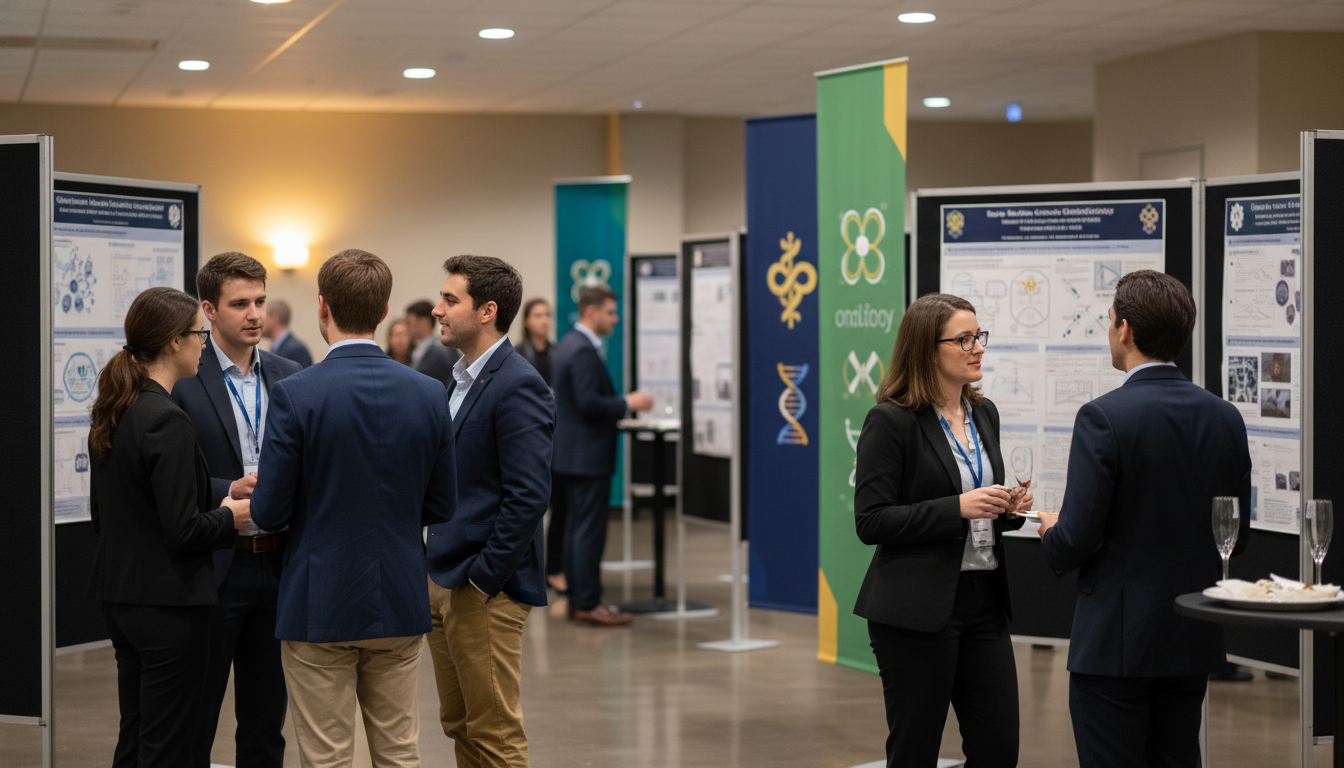
Attending ENT conferences can be expensive, but as a US citizen IMG, they are disproportionately valuable. You get to be physically present in the same room as the people who will later read your application.
Priority Otolaryngology Meetings
- AAO-HNSF Annual Meeting & OTO Experience
- The main US otolaryngology conference, rich in residency-related sessions.
- Regional and state ENT meetings
- Often more intimate, with easier access to faculty and residents.
- Subspecialty meetings (if you have a specific interest)
- Example: American Neurotology Society, American Rhinologic Society.
Before the Conference
- Register early as a student—look for discounts or travel scholarships for trainees.
- Review the program to identify:
- Sessions on residency, mentoring, or career development
- Presentations by faculty from programs you’re targeting
- Reach out ahead of time:
- “I saw you’ll be speaking at AAO-HNS about [topic]. I’m a US citizen IMG interested in ENT and will be attending. Would it be okay if I briefly introduce myself after your session?”
At the Conference: How to Act and What to Say
- Dress professionally (business or business-casual; avoid looking like a tourist).
- Use a simple, clear self-introduction:
- “Hi, my name is [Name]. I’m a US citizen IMG studying at [School] and I’m very interested in ENT, especially [subspecialty]. It’s great to meet you.”
- Ask focused questions:
- “For US citizen IMGs, what do you think are the most important experiences to prioritize before applying to ENT?”
- “Does your program take away rotators from outside the US, and when is the best time to apply for that?”
- Have a business card or QR code linking to your CV or LinkedIn.
After the Conference: Following Up
Within 3–5 days, send brief, individualized emails:
Dear Dr. [Last Name],
It was a pleasure meeting you at the AAO-HNS session on [topic]. As a US citizen IMG interested in ENT, I really appreciated your advice about [specific point they made].
I’ll be applying for ENT residency in [year] and plan to build more research experience in [area]. If in the future there are any opportunities to contribute to projects with your group, I would be very interested.
Thank you again for taking the time to speak with me.
Best regards,
[Your Name]
This simple follow-up is the difference between a forgotten handshake and the beginning of a mentoring relationship.

Building Mentorship and Sponsorship in Medicine as a US Citizen IMG
In a competitive field like ENT, mentorship medicine and sponsorship are not optional luxuries; they’re critical levers for someone outside the traditional pipeline.
Types of Mentors You Need
Clinical ENT mentor (ideally in the US)
- Observes your clinical skills directly
- Writes detailed letters about professionalism, communication, and teamwork
- Can host or help arrange observerships or electives
Research mentor (ENT or related field)
- Guides projects and publications
- Teaches you how to present at meetings
- Introduces you to collaborators elsewhere
Career mentor familiar with IMG pathways
- May or may not be an otolaryngologist
- Helps strategize exams, application timing, and backup plans
- Understands challenges specific to a US citizen IMG or American studying abroad
Resident or near-peer mentor
- Gives unfiltered advice on specific programs
- Helps you prepare for interviews and sub-internships
- Shares practical tips (housing, transportation, US clinical culture)
How to Ask for Mentorship Without Being Awkward
- Start with a small ask, not a lifelong commitment:
- “Would you be open to a brief 20-minute call to discuss my plans to apply to otolaryngology as a US citizen IMG?”
- Once you’ve spoken to them 2–3 times:
- “I really appreciate your guidance over the past few months. Would you feel comfortable if I considered you a mentor as I prepare for the ENT match?”
Mentors are more likely to say yes when they see you:
- Show up on time to meetings
- Act on their advice
- Communicate progress and gratitude
From Mentors to Sponsors
A sponsor actively advocates for you—recommending you for positions, calling colleagues, or speaking on your behalf in selection meetings. Sponsorship tends to develop over time from mentoring relationships where you’ve consistently proven reliability, initiative, and commitment.
As a US citizen IMG, this transition is crucial: a well-placed sponsor may:
- Call a program director when you apply for an away rotation
- Recommend you for a research fellowship or gap-year position
- Encourage programs to look beyond your IMG status and focus on your merits
Your job: do excellent work, communicate clearly, and make it easy for mentors to feel proud attaching their name to yours.
Practical Networking Tactics for US Citizen IMGs: Step-by-Step
This section ties everything together into concrete actions you can take during each phase of your training.
Preclinical Years (If Your Curriculum Allows)
- Identify 1–2 ENT faculty or departments in the US (near family or where you plan to be in the summer).
- Reach out for shadowing/observership and possible research.
- Begin reading ENT textbooks or review articles to build basic familiarity.
- Attend virtual ENT webinars or AAO-HNS online sessions when possible.
Clinical Years Abroad
- Maximize any ENT exposure you get locally
- Show commitment by attending clinics/theater regularly.
- Ask for involvement in small projects (e.g., audits, QI projects).
- Maintain a US connection
- Even if you’re abroad, schedule quarterly email updates with your US mentors.
- Join ENT journal clubs or case discussions online if offered by US departments.
Example Update Email
Dear Dr. [Last Name],
I hope you’ve been well. I wanted to briefly update you on my progress. Over the past few months, I completed my ENT rotation here at [Hospital], where I saw a high volume of [cases]. I also started a small project on [topic].
I’m planning to be in the US from [dates] and hope to arrange some observerships or research time in ENT during that period. If you have any suggestions for departments I might contact, I would be very grateful.
Thank you again for your continued guidance.
Best,
[Your Name]
Dedicated Research/Gap Year (Highly Recommended for Many US Citizen IMGs in ENT)
If feasible, a structured research year in the US can dramatically boost your network and competitiveness.
- Aim to be physically based at a US ENT department.
- Treat it like a full-time job:
- Be present, proactive, and available for clinical observership opportunities.
- Volunteer to help with extra projects and presentations.
- Attend departmental conferences, grand rounds, and social events.
- Ask residents: “What made you stand out when you applied?” and “How does your program view US citizen IMGs?”
Final Year and Application Cycle
Away rotations / Sub-internships
- Prioritize programs open to US citizen IMGs; ask mentors and residents where you’re likely to get a fair shot.
- On rotation:
- Show up early, stay engaged, own your patients, be enthusiastic but not overbearing.
- Ask for feedback mid-rotation so you can correct course early.
- At the end, express interest clearly:
- “This rotation has really confirmed my interest in your program. I would be thrilled to train here one day.”
Interview season
- Stay in touch with mentors and sponsors—send them your final program list if they offer to assist.
- Use informal networking:
- Thank-you emails to interviewers.
- Occasional updates if something significant changes (new publication, award).
Post-interview
- Avoid excessive or pressured communication, but if a faculty member invites updates, send a brief message reaffirming your interest.
Common Pitfalls in Medical Networking (and How to Avoid Them)
Even with the best intentions, it’s easy to misstep. As a US citizen IMG trying to break into a small specialty like ENT, you must guard your reputation carefully.
Pitfall 1: Being Transactional
If every interaction is obviously about “what can you do for me,” people will pull back. Focus on:
- Genuine curiosity about their work
- Appreciation for their time
- Offering value where you can (e.g., taking on less glamorous research tasks reliably)
Pitfall 2: Over-emailing or Being Demanding
- Don’t send multiple follow-ups within days if someone hasn’t responded. Wait 10–14 days, then send a single polite nudge.
- Recognize that faculty are busy; silence often means “no bandwidth right now,” not rejection of you as a person.
Pitfall 3: Neglecting Professionalism Online
- Avoid venting about exams, programs, or politics on public accounts linked to your name.
- Never post confidential patient or clinical details.
- Assume every tweet or post could be screenshotted and shown in a program director meeting.
Pitfall 4: Failing to Maintain Relationships
Networking is not a one-time event. If you only contact people when you need a letter, it feels opportunistic.
- Send brief updates 2–3 times per year.
- Share good news (match results, publications) and thank them explicitly for their role in your journey.
- When you become a resident, pay it forward to future US citizen IMGs.
Final Thoughts: Turning “IMG” into “Incoming ENT Resident”
Being a US citizen IMG in otolaryngology is challenging, but not impossible. Many American studying abroad have successfully matched into ENT by combining strong academic performance with thoughtful, persistent networking in medicine.
Key principles to keep in mind:
- Start early and be intentional—networking is cumulative, not last-minute.
- Focus on research, conference networking, and long-term mentorship as your highest-yield strategies.
- Be professional, reliable, and authentic; your reputation is your most valuable asset.
- Let your mentors and sponsors see your growth—they are often more invested in your success than you realize.
If you invest steadily in building relationships during medical school, by the time you apply, you won’t just be “a US citizen IMG in ENT.” You’ll be [Your Name], the motivated, reliable future otolaryngologist that multiple respected faculty already know and trust.
FAQs: Networking in Medicine for US Citizen IMGs in Otolaryngology
1. As a US citizen IMG, do I really need a research year to match ENT?
Not every US citizen IMG completes a research year, but many successful applicants do, especially in highly competitive specialties like otolaryngology. A research year in a US ENT department can significantly expand your medical networking, generate publications, and secure strong letters. If your application has gaps (limited US experience, fewer research outputs, lower early scores), a research year is often a strategic investment.
2. How many ENT conferences should I attend as a student?
Quality beats quantity. For most US citizen IMGs, aiming to attend one major ENT conference (such as AAO-HNS) and perhaps one regional or state meeting is realistic and valuable. Focus on attending when you can present a poster or oral abstract—that automatically creates networking opportunities with people who share your interests.
3. What if my home (international) medical school has no ENT department or mentors?
You’re not alone. Many American studying abroad face this. Focus on building US-based connections through:
- Summer observerships or short research stints during breaks
- Cold-emailing ENT faculty at institutions where you have geographic ties
- Virtual journal clubs, webinars, and online mentoring programs through organizations like AAO-HNS
The key is to create a “virtual home department” through your US mentors and research collaborators.
4. How do I know if a program is realistic for a US citizen IMG applicant in ENT?
Use your network strategically. Ask residents and mentors:
- “Has your program interviewed or matched US citizen IMGs in the past few years?”
- “Are there minimum score or visa-related thresholds?” (Even as a US citizen, some IMG policies may still apply.)
Cross-check your mentors’ advice with tools like program websites, FREIDA, and recent match data. Your mentors can help you categorize programs into “reach,” “target,” and “unlikely,” making your otolaryngology match list more realistic and cost-effective.