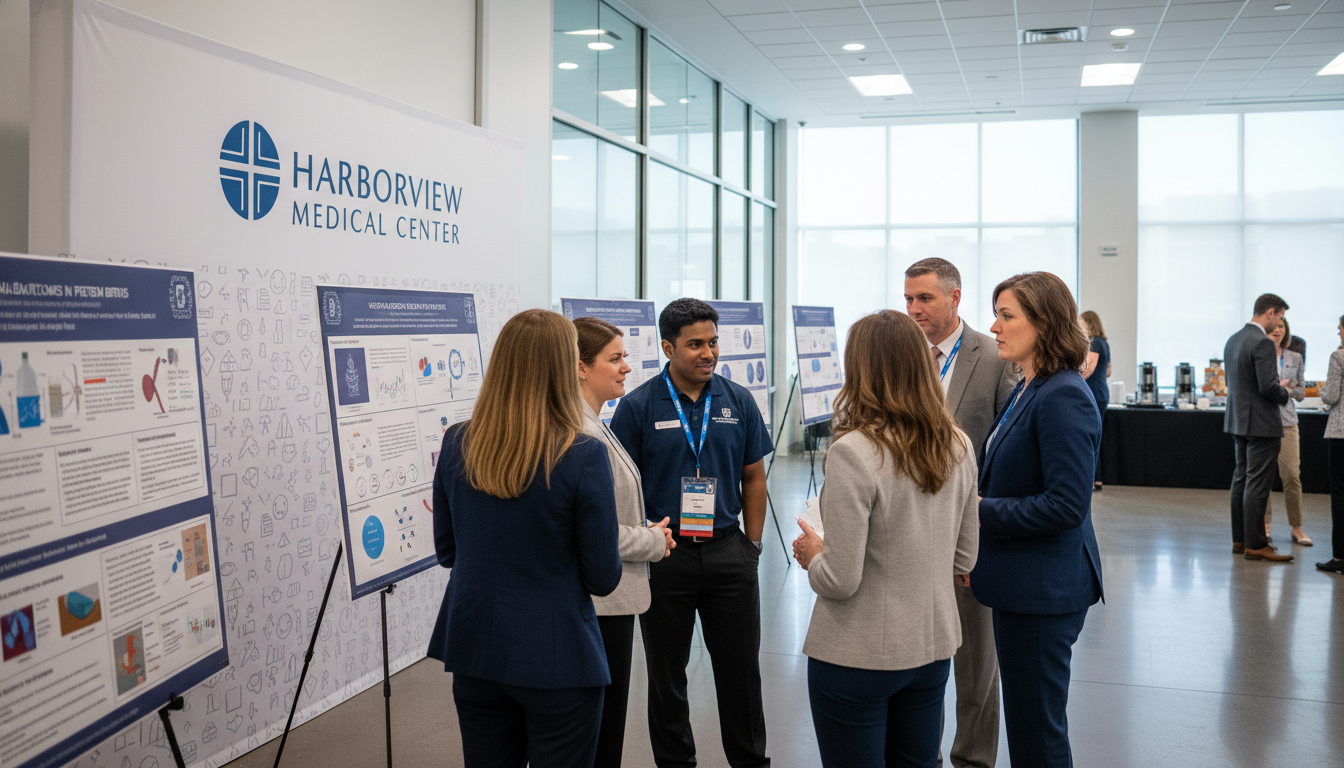
Networking in medicine is not just about collecting business cards or adding connections on LinkedIn—it is a critical, career-shaping skill, especially in a relationship‑driven specialty like Obstetrics & Gynecology. From the obstetrics match process to early attending life, your ability to build authentic professional relationships can open doors to training, jobs, research, mentorship, and leadership roles you may not even know exist yet.
This comprehensive guide focuses on networking in medicine with a specific lens on OB GYN residency and early career development. Whether you are a medical student aiming for an OB GYN residency, a current resident, or a fellow thinking about your next steps, you will find practical strategies, examples, and tools you can start using immediately.
Why Networking Matters So Much in OB GYN
OB GYN is a relatively small, tightly connected specialty. People know each other across training programs, conferences, and professional societies. This can be a powerful advantage—if you learn to use networking intentionally and ethically.
How networking impacts the OB GYN career journey
1. The obstetrics match and residency applications
Networking can directly and indirectly influence your OB GYN residency match outcome:
- Letters of recommendation from well‑known OB GYNs carry significant weight, especially if they are known by PDs on selection committees.
- Away rotations and sub‑internships are often facilitated by prior relationships—faculty who know you may advocate for you to rotate at their alma mater or partner institution.
- Signal of genuine interest in the specialty through longitudinal relationships (e.g., involvement with an OB GYN interest group, research mentor, society committees) helps programs see you as committed and informed.
Importantly, networking does not replace merit; it amplifies and showcases it. Strong networking helps ensure your hard work is visible in the right places.
2. Fellowship, jobs, and practice opportunities
After OB GYN residency, whether you pursue generalist practice or fellowship (MFM, Gyn Onc, REI, FPMRS, Complex Family Planning, Minimally Invasive Gyn Surgery), networking plays a major role in:
- Hearing about unposted jobs through word of mouth.
- Getting early insight into which fellowships or practices align with your values, volume preferences, and lifestyle needs.
- Finding advocates who will email a program director or department chair on your behalf.
- Building relationships with community hospitals, academic departments, or private practices that may later become employers.
3. Mentorship and sponsorship in medicine
- Mentorship medicine involves guidance, advice, and support across clinical skills, research, work–life balance, and career decisions.
- Sponsorship goes a step further: a sponsor actively uses their influence to promote you—inviting you to speak, nominating you for committees or awards, or recommending you for roles.
Both roles almost always grow from intentional networking in medicine.
4. Emotional support and career resilience
OB GYN is rewarding but demanding—emotionally intense deliveries, high‑risk obstetrics, surgical complications, and difficult conversations around loss, cancer, or reproductive decision‑making. A professional network:
- Normalizes challenges and reduces isolation.
- Provides role models who have navigated burnout, parenthood, or non‑traditional paths.
- Connects you with peers who validate your experience and share coping strategies.
Core Principles of Effective Networking in Medicine
Before diving into specific strategies for OB GYN residency and beyond, it helps to understand what good networking actually looks like.
1. Focus on relationships, not transactions
People sense when you are only around because you want something (a letter, a position, an introduction). Effective networking:
- Is longitudinal—built over time, not in one email or one conference.
- Prioritizes mutual respect and mutual benefit, even early in your training.
- Values the person as much as the “opportunity” they might represent.
Ask yourself: If this person never wrote me a letter or helped with a job, would I still appreciate knowing them? If the answer is yes, you are approaching networking in a healthier way.
2. Be reliably professional
You build (or destroy) your reputation in small, everyday interactions:
- Answer emails in a timely and respectful manner.
- Show up prepared and on time for meetings or conferences.
- Follow through on what you say you will do (projects, drafts, call schedules).
- Don’t gossip; medicine is small, and OB GYN is smaller.
Reliability is one of the most powerful forms of “network currency” you possess.
3. Add value—even as a student or resident
You may feel you have little to offer as a trainee, but you do. You can:
- Help with data collection, literature searches, or IRB submissions.
- Present at journal club or teaching conferences, taking work off an attending’s plate.
- Share relevant articles or resources with your team.
- Support peers by sharing study tips, rotation advice, or templates for consult notes.
People remember those who make their lives easier.
4. Practice respectful persistence
Many busy OB GYNs are not ignoring you—they are overwhelmed. It is appropriate to:
- Send a polite follow‑up email if you have no response in 7–10 days.
- Gently check in again after a talk or conference if they encouraged you to do so.
- Clarify expectations about timelines: “If I don’t hear back by X date, is it okay if I follow up?”
Professional persistence communicates genuine interest without being intrusive.
Networking Before and During the OB GYN Residency Match
For medical students interested in OB GYN, the pre‑match years are your foundation. You don’t need a huge network; you need a small, meaningful one.
Building your OB GYN network as a pre‑clinical student
1. Join your school’s OB GYN interest group
These groups are ideal low‑pressure environments to start networking in medicine:
- Volunteer to help organize speaker events, career panels, or skills workshops.
- Introduce yourself briefly to guest speakers and send a follow‑up thank‑you email.
- Ask upper‑class students about their OB GYN experiences and mentors.
Example email after a talk:
Dear Dr. ___,
Thank you for speaking at our OB GYN interest group yesterday about your work in maternal–fetal medicine. I especially appreciated your discussion about caring for patients with limited access to prenatal care.I’m a first‑year medical student very interested in OB GYN and would love to learn more about how you built your career. If you have 15–20 minutes available in the next month, I’d be grateful for the chance to ask you a few questions about your path and how to get more involved in research.
Best regards,
[Name], MS1
This kind of email is short, specific, and respectful—a great foundation for mentorship medicine.
2. Seek early clinical exposure
Shadowing in L&D, clinic, and the OR helps you:
- Get to know residents and attendings informally.
- Observe communication styles and team culture.
- Show up reliably (e.g., every Thursday morning clinic), which builds familiarity.
Ask a resident or attending at the end of a good shadowing session:
“Would it be okay if I email you about potential research or other ways to stay involved with OB GYN?”
Networking during core OB GYN and sub‑I rotations
Your core OB GYN clerkship and sub‑internships are prime time for building your reputation.
1. Excel in day‑to‑day performance
Networking is not only conversations—it is also:
- Having your notes ready, concise, and accurate.
- Anticipating routine tasks (consents, labs, imaging follow‑up).
- Being kind to nursing staff, midwives, anesthesia, and consultants.
- Owning your mistakes and asking for feedback.
Residents and attendings quickly share positive (and negative) impressions, which shape who they recommend or advocate for during the obstetrics match.
2. Express your interest in OB GYN clearly
Don’t assume people know you want to go into OB GYN. Say it explicitly:
- “I’m strongly considering OB GYN and would appreciate any advice you have on building my application.”
- “I’m planning to apply to OB GYN this cycle; I’d be grateful for feedback on my strengths and areas to improve.”
This often opens the door for suggestions, introductions, or research opportunities.
3. Ask for mentorship thoughtfully
Instead of “Will you be my mentor?”, try:
- “Would it be okay if I reached out occasionally with questions as I navigate the OB GYN match?”
- “I really admire how you communicate with patients; would you be open to a brief meeting to discuss how you developed those skills?”
If the interaction goes well and becomes more regular, you can later formalize it:
“I’ve really appreciated your guidance this past year—would you be comfortable if I considered you a mentor as I continue in OB GYN?”

Mastering Conference Networking in OB GYN
Conferences are concentrated networking opportunities. For OB GYN, major meetings include ACOG, APGO, SMFM, SGO, ASRM, AUGS, and others, plus regional and institutional events. Strategic conference networking can shape your trajectory well beyond residency.
Before the conference: plan with intention
1. Clarify your goals
Decide what you want from this particular event:
- Learn about subspecialties to guide fellowship decisions?
- Meet potential research collaborators?
- Explore employment options in a specific region?
- Deepen relationships with mentors already in your orbit?
Your goals should direct how you spend your time.
2. Study the program and speakers
Review the schedule in advance:
- Highlight sessions where people you admire are speaking.
- Flag poster sessions aligned with your interests (MFM, gynecologic oncology, reproductive justice, minimally invasive surgery).
- Look for networking receptions, trainee events, or SIG (special interest group) meetings.
Prepare 2–3 thoughtful questions or talking points related to your interests.
3. Prepare your personal “elevator pitch”
Have a 20–30 second introduction ready:
- Who you are (year, institution).
- Your stage (e.g., applying to OB GYN, PGY‑2 resident).
- Your specific interests (e.g., disparities in maternal morbidity, minimally invasive gynecologic surgery, reproductive endocrinology).
Example:
“Hi, I’m Sarah, a third‑year medical student at [School] applying to OB GYN. I’m especially interested in high‑risk obstetrics and maternal health inequities. I’ve been working on a project looking at severe maternal morbidity among patients with limited prenatal care access.”
During the conference: practical networking strategies
1. Use poster sessions intentionally
Poster halls are among the best places for organic, low‑pressure conference networking:
- Visit posters related to your interests and ask open‑ended questions.
- If you’re a student or early resident, say:
“I’m early in my training and very interested in this area—how did you get started in this line of research?” - Exchange emails or scan badges if there’s a natural connection.
If you are presenting a poster:
- Stand by your poster during your session with a professional, approachable demeanor.
- Offer a 1–2 minute summary when people walk up.
- Have a list of next‑step ideas ready (“We’re hoping to expand this to multi‑center data” or “We’re planning a follow‑up qualitative study on patient perspectives”).
2. Approach speakers after sessions
After an inspiring talk, wait in line and introduce yourself briefly:
- Start with sincere appreciation for a specific aspect of the talk.
- Share how it connects to your interests.
- Ask if you may email a brief follow‑up question or request a short Zoom meeting.
Example:
“Dr. ___, thank you for your excellent session on improving postpartum follow‑up. I’m a PGY‑1 in OB GYN at [Institution], working on a QI project around postpartum hypertension management. Would it be okay if I emailed you with a question about how you structured your follow‑up protocols?”
3. Leverage structured networking events
Many major OB GYN societies host:
- Resident and fellow receptions
- Speed mentoring sessions
- Women in medicine or diversity and inclusion receptions
- Subspecialty “Meet the Expert” roundtables
Bring a small notebook or a notes app to jot down names, key points, and follow‑up actions. Treat these sessions as launching points for post‑conference connections.
After the conference: solidify your network
1. Send personalized follow‑up emails within 5–7 days
Keep them specific and short:
- Remind them where you met.
- Reference something memorable from your conversation.
- State a clear, small next step (e.g., “Could we schedule a 15‑minute Zoom call in the next month?”).
2. Keep in touch periodically
You don’t need constant contact, but:
- Send updates when you match, start residency, publish work, present at another conference, or change directions.
- Share relevant articles or news in their area of interest if it genuinely reminds you of them.
This transforms a one‑off interaction into an ongoing relationship and is one of the most powerful forms of medical networking.
Building and Using Mentorship in OB GYN
Mentorship medicine in OB GYN is not “nice to have”—it’s essential. Strong mentors and sponsors can guide you through clinical complexity, burnout, career decisions, and leadership development.
Types of mentors you need
No single person can be everything. Aim for a mentorship team:
- Clinical mentors: Help you develop as an OB GYN physician—operative skills, decision‑making on L&D, managing complications.
- Research mentors: Guide you in study design, publications, conference submissions, and sometimes grant funding.
- Career mentors: Advise on fellowship options, job searches, academic vs. community practice, and long‑term planning.
- Near‑peer mentors: Senior residents or recent graduates who remember the stage you’re in and give very practical, current advice.
How to be a good mentee
1. Prepare for meetings
- Send an agenda or questions in advance when possible.
- Come with updates: “Since we last met, I completed X and Y; I’m stuck on Z.”
- Respect their time—if you scheduled 20 minutes, aim to finish in 18.
2. Follow through and close the loop
Nothing erodes mentorship faster than repeatedly failing to complete agreed tasks. If circumstances change:
- Let them know as early as possible.
- Take responsibility and propose an alternate plan.
3. Ask for specific help
Vague: “Do you have any advice?”
Better: “I’m deciding between applying to generalist jobs versus MFM fellowship. Can we discuss pros and cons based on my goals and family plans?”
Specific questions are easier to answer and demonstrate that you’ve thought things through.
Transitioning from mentorship to sponsorship
Sponsors often start as mentors who become confident enough in you to stake their reputation on your success. They might:
- Nominate you for resident awards or society committees.
- Recommend you as a junior reviewer, panelist, or co‑author.
- Call a colleague at another institution to advocate for your fellowship or job application.
You cannot demand sponsorship, but you can encourage it by:
- Consistently performing well.
- Being reliable and professional.
- Clearly communicating your aspirations: “Long‑term, I’m hoping to be an academic generalist with a focus on medical education and equity; I’d love your advice on opportunities that align with that.”

Practical Tools for Day‑to‑Day Networking in OB GYN Residency
Once you’re in OB GYN residency, networking in medicine shifts from “getting in” to “growing and sustaining” your career.
Internal networking: within your own department
1. Get to know faculty across subspecialties
- Rotate on all services with curiosity about people’s careers, not just pathologies.
- Ask attendings about their paths: “What made you choose Gyn Onc instead of generalist practice?”
- Attend departmental seminars, grand rounds, and morbidity & mortality (M&M) conferences; introduce yourself to visiting speakers.
2. Treat every rotation as a “long interview”
Your residents, nurses, midwives, and consultants will eventually be your references, colleagues, or even employers. Build trust by:
- Being dependable on call.
- Communicating clearly during handoffs.
- Helping out when others are overwhelmed.
- Owning patient issues and follow‑through.
External networking: beyond your home program
1. Use medical networking platforms wisely
- LinkedIn: Keep a professional profile, list presentations and publications, and connect with people you’ve actually met or worked with.
- Doximity: Useful for verifying your professional presence and connecting with OB GYNs in your region.
- Twitter/X and other social media: Many OB GYN subspecialists and societies share research, advocacy, and education. Use cautiously:
- Maintain professionalism.
- Avoid patient‑specific details or venting about work.
- Follow societies (e.g., ACOG, SMFM, SGO), OB GYN educators, and advocacy leaders.
2. Engage in multi‑institutional projects
- Join collaborative quality improvement networks, multi‑center research groups, or guideline committees if opportunities arise.
- Reach out to residents at other institutions you meet at conferences to discuss shared interests or collaborative projects.
3. Cultivate relationships with non‑physician colleagues
OB GYN care is deeply team‑based:
- Midwives, nurses, social workers, lactation consultants, anesthesiologists, family medicine, and pediatrics colleagues can all become part of your informal network.
- They may later connect you with opportunities in community hospitals, public health, or interdisciplinary programs (e.g., perinatal mental health, substance use in pregnancy).
These relationships enrich your career far beyond job leads—they improve your day‑to‑day effectiveness and patient care.
Common Pitfalls and How to Avoid Them
Even well‑intentioned trainees can run into networking mistakes. Awareness helps you avoid them.
1. Being purely transactional
Red flag behaviors:
- Only contacting mentors when you need a letter or favor.
- Disappearing after you get what you want.
- Pushing aggressively for introductions with people you’ve barely met.
Instead, adopt a long‑term mindset: the goal is a career‑long relationship, not a one‑time outcome.
2. Overcommitting to impress people
Saying “yes” to every project, committee, or collaboration to please mentors is tempting—but dangerous. You risk burnout and damaged trust when you inevitably can’t keep up.
Be realistic:
- “I’m very interested in this, but I want to be upfront that my call schedule over the next 3 months is heavy. Would a smaller role be possible, like [X], or should I join a future project when I have more bandwidth?”
3. Neglecting boundaries and professionalism
Avoid:
- Overly personal disclosures early in a professional relationship.
- Late‑night or weekend texts unless invited or truly urgent.
- Social media posts that could reflect poorly on you, your program, or your patients.
Healthy boundaries keep relationships safe and sustainable.
4. Comparing your network to others’
Every trainee’s environment is different. Some programs have nationally famous faculty; others don’t. But:
- You can still build a strong network through conferences, virtual events, and regional meetings.
- A few deep relationships often matter more than many superficial ones.
- Mentors at smaller or community programs can be just as impactful and sometimes more accessible.
FAQs: Networking in Medicine for OB GYN Trainees
1. I don’t go to a “top” medical school or residency. Can I still build a strong OB GYN network?
Yes. While institutional reputation can open some doors, many OB GYN leaders trained at less‑well‑known programs. You can:
- Attend regional and national conferences and engage meaningfully.
- Join professional societies as a trainee member (many have discounted rates).
- Seek virtual mentorship through institutional partnerships, interest groups, or society mentorship programs.
- Focus on doing excellent work where you are—and making sure key people know about it.
2. How many mentors should I have as an OB GYN resident?
There is no magic number, but most residents benefit from:
- 1–2 primary mentors at their home institution.
- 1–2 external mentors (could be from conferences, research, or prior institutions).
- Several near‑peer mentors (senior residents, fellows, recent grads).
The goal is a diverse support team rather than one “perfect” mentor.
3. When is the right time to ask for a letter of recommendation for OB GYN residency or fellowship?
Ask when:
- You have worked closely with the faculty member (ideally at least 2–4 weeks).
- They have seen you in multiple settings (L&D, clinic, OR, or longitudinal research).
- They have given positive feedback and seem enthusiastic about your performance.
Phrase your request as:
“Do you feel you know me and my work well enough to write a strong letter of recommendation for my OB GYN residency applications?”
This wording gives them space to decline honestly if they cannot write a strong letter.
4. I’m introverted and find conference networking intimidating. How can I still be effective?
Introverts can be excellent networkers by:
- Setting small, realistic goals (e.g., meet 2–3 new people per day).
- Scheduling short, one‑on‑one conversations instead of large social events when possible.
- Preparing questions and an elevator pitch in advance to reduce anxiety.
- Following up thoughtfully by email, which often feels more comfortable than extended small talk.
Quality beats quantity; a few genuine connections matter far more than working the entire room.
Networking in medicine within Obstetrics & Gynecology is not about being the loudest or most outgoing person; it is about being curious, reliable, thoughtful, and intentional. Start where you are—on your current rotation, in your next clinic session, at your upcoming conference. With each small, authentic interaction, you are building the network that will support you through the challenges of residency life, help you navigate the obstetrics match or fellowship decisions, and sustain you throughout a meaningful career in OB GYN.