Why Networking Matters So Much in Plastic Surgery
Networking in medicine is important everywhere, but in plastic surgery it is absolutely pivotal. The field is small, tightly connected, and highly competitive. Word-of-mouth, reputation, and relationships often carry as much weight as test scores once you reach a certain level of competitiveness.
For anyone pursuing plastic surgery residency—especially the integrated plastics match—networking is not about schmoozing or being fake. It’s about:
- Getting access to opportunities (research, sub-internships, letters)
- Learning from people who are already where you want to be
- Demonstrating professionalism, reliability, and genuine interest
- Building a support system that will follow you through your career
In a specialty where many programs know each other’s residents, faculty, and even applicants, your name will travel. Used wisely, medical networking allows you to shape that narrative.
This guide will walk you through:
- How to build a networking foundation early (even as an M1/M2)
- Using conferences and meetings for high-yield connections
- Leveraging mentorship in medicine strategically
- Optimizing away rotations and home program relationships
- Digital networking (email, social media, and beyond)
- Common pitfalls to avoid
Throughout, examples and concrete scripts will keep this practical and actionable.
Laying the Foundation: Networking Starts Before Your Application
Effective networking in medicine starts long before ERAS opens. The students who are known, trusted, and supported by faculty and residents usually began building those relationships early.
Step 1: Start with Your Home Institution
If your school has a plastic surgery department or division, this is your launchpad.
Action steps:
Identify key people
- Program director and associate PDs
- Department chair or chief of plastic surgery
- Research-oriented faculty (check institutional profiles and PubMed)
- Chief residents and senior residents
Introduce yourself early A simple email can open doors:
Dear Dr. [Name],
My name is [Your Name], and I’m a [M1/M2/M3] interested in plastic surgery. I’ve been learning more about the specialty and would be grateful for the chance to briefly meet you, hear about your career path, and ask a few questions about getting involved early.
Would you have 15–20 minutes available in the coming weeks for a brief meeting or Zoom call?
Sincerely,
[Name, School, Contact]Show up consistently
- Attend plastic surgery grand rounds whenever possible
- Go to resident teaching sessions if they are open to students
- Volunteer for departmental events (journal clubs, skills labs, anatomy sessions)
Simply being a recognizable, reliable face changes how comfortable people feel involving you in projects or recommending you.
Step 2: Get Involved in Research as Relationship-Building
In plastic surgery, research is both a credential and a networking tool. It gives you a structured way to work closely with faculty and residents.
How to choose projects strategically:
- Look for actively publishing attendings and residents (recent PubMed activity).
- Ask about timeline and expectations:
- “What’s the realistic timeline for submission?”
- “What role do you envision for a student?”
- Prefer projects where you’ll have regular interaction with a mentor:
- Weekly or bi-weekly check-ins
- Clear responsibilities (chart review, data analysis, writing sections)
Networking benefits of research:
- Faculty see how you work under pressure and handle feedback.
- Residents become your advocates (“We should interview this student”).
- Presentations from these projects get you noticed outside your institution.
Think of each project not just as a PubMed line, but as a bridge to long-term professional relationships.
Step 3: Connect with Residents (Your Most Accessible Mentors)
Residents are often your most frequent and approachable contacts. They:
- Remember the integrated plastics match recently
- Understand current program cultures
- Can advise you on away rotations, ERAS strategy, and interview prep
Practical ways to connect:
- Ask to shadow in clinic or OR
- Request a brief “career chat”:
“I’d love to hear how you approached the match and what you’d do differently.”
- Offer help:
- “If you ever need help with data collection or literature review, I’d be glad to contribute.”
When residents feel you’re respectful, hardworking, and self-directed, they frequently become your internal champions.

Conference Networking: Transform Meetings into Opportunities
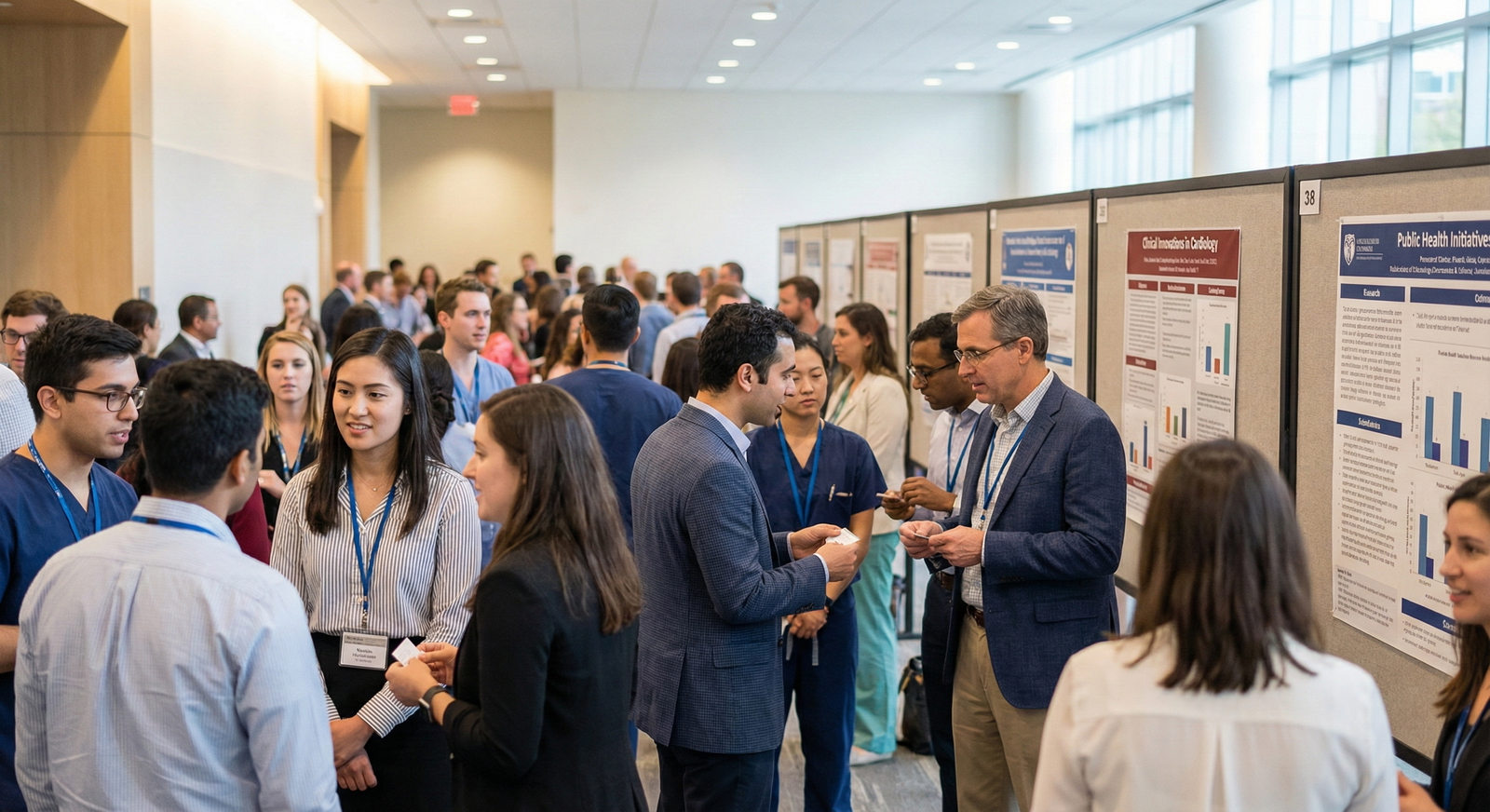
Professional conferences are some of the highest-yield environments for medical networking in plastic surgery. You’re in the same building with program directors, chairs, research leaders, and residents from all over the country.
Key meetings include:
- American Society of Plastic Surgeons (ASPS) annual meeting
- The AAPS, regional plastic surgery societies
- Specialty meetings (hand, craniofacial, aesthetic societies)
- Medical student-focused events within these meetings
Prepare Before the Conference
Walking into a conference without a plan is a missed opportunity.
1. Know who will be there
- Check the conference program for:
- Session chairs and speakers
- Abstract authors on topics related to your interests
- Identify:
- Faculty at programs where you might want to do away rotations
- Leaders in your research area (e.g., microsurgery, craniofacial, hand, aesthetics)
Make a shortlist (10–20 names) and learn:
- Their institution
- Their main clinical/research interests
- Any papers of theirs you’ve read
2. Clarify your goals
Examples of realistic goals:
- “Have a meaningful conversation with at least 5 plastic surgery attendings.”
- “Introduce myself to faculty from X, Y, Z programs.”
- “Ask 2–3 people for advice on optimizing away rotations.”
How to Approach People at Conferences
Many students feel awkward “cold approaching” faculty. In plastic surgery, it’s expected and often welcomed if done respectfully.
Common contexts for approaching:
- After a talk or panel (“I had a question about your data…”)
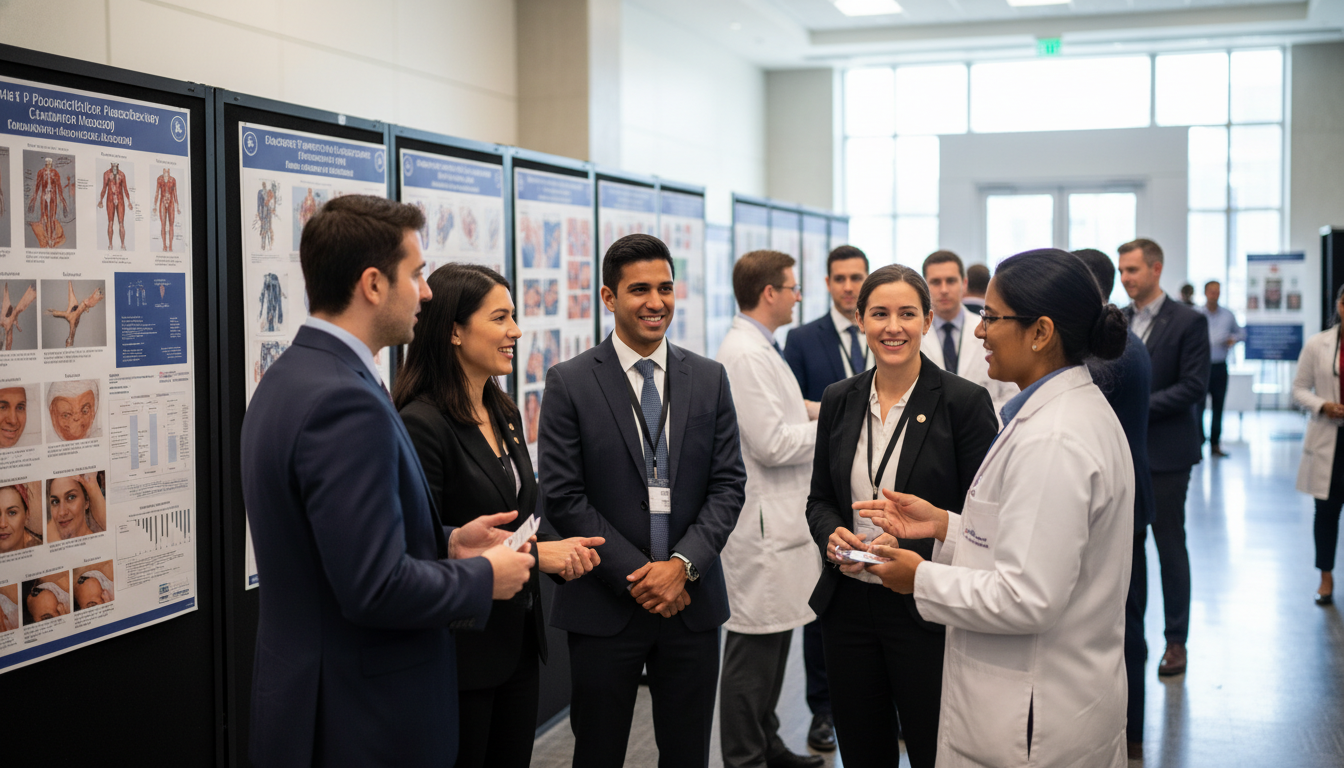
- At poster sessions
- During networking or social events
- At resident/faculty receptions open to students
Simple approach script:
“Hi Dr. [Name], my name is [Your Name], I’m a [year] at [school]. I really enjoyed your talk on [topic], especially [specific detail]. I’m interested in [related area] and was wondering if you had any advice for a student considering a career in plastic surgery and potentially your area of focus.”
Tips:
- Ask one or two thoughtful questions.
- Don’t monopolize their time—3–5 minutes is fine.
- If the conversation goes well, ask:
“Would you be open to my following up by email if I have more questions about [away rotations / research / your field]?”
Immediately after the interaction, jot down:
- Name, institution, position
- Key topics you discussed
- Any promised follow-up
Presenting Your Work: Networking Magnet
If you’re presenting at a conference, your poster or talk serves as a “networking booth” where people find you.
High-yield strategies:
- Be present at your poster the entire assigned period.
- Stand up during your oral session Q&A; answer questions concisely and professionally.
- When someone stops by your poster:
“Would you like a brief overview?” (60–90 seconds, max)
- Ask what they work on and where they’re from; this often opens doors.
Afterwards, if a conversation goes well:
- Offer to email them your abstract or future manuscript.
- Ask if there are opportunities for students to help with related work.
Follow-Up After Conferences
Networking at conferences doesn’t count unless you follow through.
Within 3–5 days:
Send short, tailored emails:
Subject: Great to meet you at [Conference Name]
Dear Dr. [Name],
It was a pleasure meeting you at [event/session] at [Conference]. I really appreciated your insights on [specific topic].As I mentioned, I’m a [year] medical student at [school] interested in plastic surgery, particularly [interest]. I’d be grateful for any further advice you have on [away rotations / research / applying to programs like yours].
Thank you again for your time and guidance.
Sincerely,
[Your Name]
Attach your CV only if requested or if it’s clearly relevant (e.g., they invited you to email about potential project involvement).
Mentorship in Medicine: Building Your “Personal Board of Advisors”
In a complex, high-stakes process like the integrated plastics match, mentorship is one of your most valuable assets. Think beyond a single “big-name” mentor and aim for a diversified network.
Types of Mentors You Should Have
Local plastic surgery faculty mentor
- Knows you personally
- Can vouch for your work ethic and professionalism
- Helps with letters of recommendation
Resident mentor(s)
- Offers practical strategies for rotations, exams, ERAS, and interviews
- Gives honest, current insight about programs
External faculty mentor
- Frequently someone you worked with during research, conference networking, or an away rotation
- Can broaden your perspective beyond your home institution
Peer mentor
- A student 1–2 years ahead of you
- Recently navigated the same process with fresh, relevant experience
How to Cultivate Mentoring Relationships
1. Be prepared and respectful
When you meet with a mentor:
- Come with a concise agenda (e.g., CV review, away rotation list, research plans).
- Provide updates on what you’ve already done; mentors appreciate proactive mentees.
2. Ask good questions
Examples:
- “Given my current profile, what would you prioritize over the next 6–12 months?”
- “How would you strategize my away rotation choices?”
- “Are there red flags or gaps in my application that I should work on now?”
3. Make it easy for them to help you
- Send your CV in advance.
- Draft emails or documents they can quickly edit rather than create from scratch.
- If they offer suggestions, implement them and report back.
This creates a positive feedback loop: mentors see you use their advice effectively, and they become more invested in your success.
Mentors vs. Sponsors
In plastic surgery, you want not only mentors (who give advice) but also sponsors—people who are willing to:
- Recommend you for opportunities (research, electives, away rotations)
- Speak positively about you to colleagues at other institutions
- Advocate for your interview when your file comes up
Sponsorship is usually earned through sustained work and trust, not one-off meetings. When an attending or senior resident starts saying, “This is a great student; you should get to know them,” you’re moving from mentorship into sponsorship territory.
Maximizing Networking During Clinical Rotations and Away Electives
Your MS3/early MS4 year clinical rotations—especially your home plastic surgery rotation and away electives—are some of the highest-impact networking experiences you’ll have.
These are not just month-long “auditions” for the integrated plastics match; they are intense, day-in, day-out opportunities to demonstrate what you’re like as a future colleague.
Home Rotation: Building Deep Relationships
On your home plastic surgery rotation, everyone evaluating you may influence your letters and internal support.
Keys to effective networking during home rotations:
Be reliable and early
- Arrive before the residents.
- Anticipate tasks: pre-rounding, pulling imaging, prepping dressings.
Be teachable
- Ask questions that show you’ve thought about the problem.
- Accept feedback with maturity: “Thank you—that’s really helpful. I’ll adjust that going forward.”
Engage beyond the minimum
- Volunteer for extra call or weekend cases when possible.
- Ask to join clinics or cases with different faculty to broaden your exposure.
How this becomes networking:
- Residents start telling faculty: “This student works hard, doesn’t complain, and wants to learn.”
- Faculty see you repeatedly in different settings (clinic, OR, rounds), and your reliability builds trust.
Later, when letter-writing and ranking discussions occur, that goodwill and familiarity matter.
Away Rotations: Networking Across the Country
Away rotations are perhaps the most direct intersection between networking in medicine and the integrated plastics match. Programs regularly match students who rotated with them.
Before your away rotation:
- Read about the program:
- Faculty interests
- Resident structure
- Recent research output
- Reach out to chief residents or coordinator:
- Ask about expectations
- Clarify schedule, dress code, call responsibilities
During the rotation:
Your goal is twofold:
- Prove you would be a great resident at that program.
- Make a positive impression on multiple faculty and residents.
Practical strategies:
Learn names fast—faculty, residents, staff, nurses.
Ask residents:
- “What qualities does this program really value in applicants?”
- “What do you wish you had done differently on your own aways?”
Request feedback halfway through:
“I really want to make the most of this rotation. Is there anything I can do differently or better over the next two weeks?”
Participate in resident education:
- If asked to present at journal club or case conference, overprepare.
- Speak with clarity and confidence but not arrogance.
Networking nuance:
- Be enthusiastic but not pushy about your interest in the program.
- It’s appropriate, near the end of the rotation, to express:
“I’ve really enjoyed my time here and would be very excited to train at a program like this. Are there any additional steps you’d recommend as I prepare my application?”
Staying Connected After Rotations
Post-rotation follow-up keeps relationships alive:
- Email key faculty and residents:
- Thank them for teaching and for the opportunity.
- Include one specific thing you appreciated.
- If you presented or helped with a project, offer to continue contributing remotely.
- When ERAS season approaches, a brief update email is reasonable:
“I wanted to share that I’ve applied to your program this season. My time on your service reinforced my enthusiasm about training there.”
This kind of professional, low-pressure contact strengthens how well they remember you when applications are reviewed.
Digital and Social Networking: Email, Social Media, and Professional Presence
In modern plastic surgery, networking in medicine extends beyond hospital hallways and conferences. Your digital footprint can support—or undermine—your professional reputation.
Email Etiquette That Builds (Not Burns) Bridges
You’ll use email constantly to:
- Request meetings
- Inquire about research or rotations
- Thank mentors and faculty
Key principles:
- Subject lines: Clear and specific (“M3 student interested in plastic surgery – meeting request”).
- Tone: Formal but warm; avoid slang or overly casual language.
- Length: Short and focused; busy surgeons appreciate brevity.
- Response time: Aim to reply within 24–48 hours.
If you don’t receive a reply:
- Wait 7–10 days.
- Send one polite follow-up:
“I wanted to follow up on my previous email in case it was missed. I remain very interested in [topic].”
Two attempts are usually enough; beyond that, assume the person is too busy or not available.
Social Media: A Powerful but Double-Edged Tool
Platforms like Twitter/X, Instagram, and LinkedIn are widely used in plastic surgery for:
- Sharing research and clinical work
- Highlighting resident and department achievements
- Announcing events, grants, and positions
How to use social media productively for medical networking:
Follow wisely
- Plastic surgery societies (ASPS, AAPS, specialty societies)
- Departments and programs you’re interested in
- Thought leaders and educators in areas you care about
Engage professionally
- Like and share research or educational content.
- Comment thoughtfully:
- “Thank you for sharing this important work on [topic]. As a medical student, I found the discussion on [detail] particularly helpful.”
Showcase your professional identity
- Educator, aspiring surgeon, researcher, advocate (e.g., global surgery, gender-affirming care, wound reconstruction).
Avoid:
- Posting unprofessional photos or content.
- Commenting on controversial topics in a way that can appear disrespectful or inflammatory.
- Sharing patient-specific details or any identifiable information.
Remember: many plastic surgery attendings and residents will see your online presence—treat it as an extended part of your application.
Virtual Events and Webinars
Post-pandemic, many programs host:
- Virtual open houses
- Meet-and-greet sessions with residents
- Webinars about the integrated plastics match
Treat these as mini-networking sessions.
Best practices:
- Keep your camera on if possible, with a professional background.
- Ask 1–2 well-prepared questions (when invited).
- Jot down names of participants (residents, PDs) and key program details.
- Follow up selectively:
- If a resident gave particularly helpful advice, a short thank-you email or LinkedIn message can be appropriate.
FAQs: Networking for Plastic Surgery Residency Applicants
1. Do I need to know someone “important” to match into plastic surgery?
No single connection guarantees success in the integrated plastics match. Plenty of applicants match without a “famous” mentor. What matters far more is:
- Consistent, positive impressions at your home and away rotations
- Strong, detailed letters from people who know you well
- Evidence of dedication to the field (research, electives, conferences)
- Professionalism and reliability
Strategic networking increases your access to these opportunities and advocates, but it does not replace a solid application.
2. How many conferences should I attend as a medical student?
Quality is more important than quantity. If resources are limited, even one major plastic surgery meeting (e.g., ASPS) or a strong regional meeting can be very valuable, especially if you:
- Present your own research
- Actively introduce yourself to faculty and residents
- Follow up afterwards
If you have multiple accepted abstracts, you can justify more meetings, but never at the expense of grades, research deadlines, or Step/Level performance.
3. I’m at a school without a plastic surgery program. How can I network effectively?
You’ll need to be more intentional, but it’s very possible:
- Seek out nearby or regional programs and ask to attend:
- Grand rounds
- Resident teaching conferences
- Initiate remote research collaborations:
- Email faculty at other institutions with a concise proposal and CV.
- Attend national or regional meetings where you can meet faculty face-to-face.
- Use away rotations strategically to gain exposure and mentorship.
Building 1–2 strong external mentorship relationships is often enough to open many doors.
4. How do I avoid coming across as “fake” or overly transactional when networking?
Authenticity comes from focusing on learning and contribution, not just what you can get.
- Ask about people’s work and genuinely listen.
- Volunteer help where appropriate (research, departmental efforts).
- Be honest about your interests and limitations.
- Maintain contact even when you don’t “need” something—share updates, express appreciation for past advice.
When you show up prepared, work hard, and treat everyone respectfully, people will perceive you as a future colleague rather than someone simply trying to collect “connections.”
Thoughtful, sustained networking in medicine—especially in a small, close-knit field like plastic surgery—is less about clever tactics and more about consistently showing who you are: a reliable, curious, and collegial future surgeon. If you combine that with strong clinical performance, research engagement, and professionalism, your network will naturally become one of your greatest assets in the integrated plastics match and throughout your career.