Why Networking Matters So Much in Urology
Networking in medicine is never just about “who you know.” In urology, it’s tightly linked to your education, reputation, and career trajectory. Because urology is a relatively small specialty with a competitive urology match, the same names and faces recur across programs, conferences, and publications. That can work for or against you.
Why networking is uniquely powerful in urology residency and beyond:
- Small, interconnected community: Many faculty trained together, sit on the same society committees, review each other’s manuscripts, and share recommendations about applicants and junior faculty.
- Reputation moves faster than you think: A strong impression (good or bad) at a sub-internship, conference, or social event can reach program directors hundreds of miles away.
- Competitive urology match dynamics: When applicants are otherwise comparable on scores and CVs, programs often lean heavily on trusted opinions: “Do you know this student?” “Would you take them?”
- Procedure-heavy, apprenticeship-style training: Much of surgical training is built on trust. People advocate for those they trust in the OR, in letters, and for early career opportunities.
- Subspecialty career paths: Whether you’re interested in oncology, endourology, reconstructive, pediatrics, or FPMRS, doors often open through mentors and networks in those subspecialty communities.
Think of networking less as transactional (“What can this person do for me?”) and more as building a reputation in a small, tight-knit profession. Your goal is to be known as prepared, reliable, teachable, and collegial.
Core Principles of Effective Networking in Medicine
Before diving into tactics, it helps to anchor yourself with a mindset. The physicians most respected for their “medical networking” are not usually the loudest or most extroverted; they’re the most consistent, generous, and authentic.
1. Focus on Value, Not Self-Promotion
You’ll stand out in any urology residency or professional setting if you shift from “How do I get something?” to “How can I contribute?”
Examples of providing value:
- Volunteering to help with data collection or REDCap cleaning for a clinical outcomes project.
- Offering to review abstracts or slides for a busy attending before a conference.
- Helping co-residents prepare for oral boards or mock interviews by creating question banks or sharing resources.
- Sharing summaries of new guidelines (AUA, EAU) with your team or group chat.
This doesn’t mean you never talk about your goals—it means you earn the right for others to care about your goals by being helpful first.
2. Build a Reputation for Reliability
In a small specialty like urology, people quickly learn who follows through.
Key behaviors:
- Respond to emails within 24–48 hours, even if just to say, “Received, working on this.”
- Meet deadlines early when possible; if you foresee a delay, communicate early.
- Show up on time (or a bit early) for every meeting, clinic, and OR start.
- Complete “small” tasks (e.g., “Can you pull the charts on these 10 patients?”) thoroughly and accurately.
Mentors are far more likely to invest in someone they know will make them look good when they recommend you to others.
3. Aim for Long-Term Relationships, Not One-Off Encounters
Having 50 brief conference introductions is less valuable than 5 meaningful, ongoing relationships.
A good mental model:
- First interaction: Make a strong impression, be curious, and learn what matters to them.
- Follow-up: Send a short, specific email within 48–72 hours.
- Maintenance: Reach out every few months with an update, question, or brief note of appreciation.
Think in terms of years, not weeks. Someone who meets you as an MS2 might write your letter as an MS4 and later invite you to a national project as a fellow.
4. Authenticity Beats Artificial “Networking”
You don’t have to be a classic extrovert. You do need to be:
- Genuine: Don’t pretend to be fascinated by an area that doesn’t interest you.
- Curious: Ask thoughtful questions about others’ work and perspectives.
- Respectful of time: Keep your initial asks small and focused.
Urologists are busy and generally have good “radar” for insincerity. If you’re truly excited about reconstructive urology, it will show—your reading, questions, and effort will reflect it.
Networking During Medical School and the Urology Match
Your pre-residency years are the foundation for the rest of your urology network. Intentional choices here can dramatically improve your urology match prospects and your early training experience.

Getting Started: On Your Home Turf
Even before sub-internships or conferences, you can network effectively where you are.
Identify key urology faculty at your institution
- Look at your department’s website.
- Note their interests (oncology, pediatrics, endourology, andrology, reconstructive, FPMRS, etc.).
- Start with 1–2 you’re genuinely curious about.
Request a brief meeting (15–20 minutes)
- Use a concise, respectful email:
- Who you are (year, school).
- Why you’re reaching out (interest in urology, specific subspecialty, or project they did).
- Specific ask (short meeting for advice, not “a research position” in the first line).
- Use a concise, respectful email:
Prepare for the meeting
- Read 1–2 of their recent papers or lectures.
- Have 3–4 questions ready:
- “How did you decide on your subspecialty?”
- “What’s one thing you wish you’d known before starting urology?”
- “What types of projects are accessible for a student at my level?”
- Be ready with a 30–60 second version of your story: who you are, why urology, and what you’re hoping to learn/do next.
Follow up and show commitment
- Send a thank-you email with 1–2 specific takeaways.
- If they suggested a paper or task, complete it quickly and report back.
- Ask if you may touch base periodically as you explore urology.
Entering Research and Projects Strategically
Research in urology serves multiple networking purposes:
- Puts you in regular contact with mentors and residents.
- Connects you to collaborators at other institutions.
- Gives you concrete topics to discuss at interviews and conferences.
To maximize networking impact:
- Start small, aim for completion. A well-executed retrospective chart review or QI project is more impressive than 6 unfinished ideas.
- Work with residents. They are often your most accessible mentors and future advocates in the urology match.
- Aim for visibility. Try to convert projects into abstracts, posters, or presentations at:
- AUA, SUO, SUFU, SMSNA, SPU, or regional AUA sections.
- Institutional research days or medical student symposia.
Each presentation is both a CV line and a live networking event.
Sub-Internships and Away Rotations: Your Most Intense Networking Stage
Acting internships (“sub-Is”) in urology are where many programs form strong opinions that influence the urology match. This is also high-yield networking time.
Your priorities on a sub-I:
Be the most prepared student on the team:
- Read about each case the night before (indications, steps, common complications).
- Know your patients’ stories and labs cold.
- Offer to give a short (5–10 minute) presentation on a relevant topic.
Integrate with the residents:
- Ask them about their paths, subspecialty interests, and how they chose the program.
- Volunteer for tasks that make their day smoother (notes, orders requested by the team, calling consults with supervision).
- Show that you’re teachable: ask for feedback and adopt suggestions.
Demonstrate professionalism daily:
- Be early, have a positive attitude, and never speak negatively about anyone.
- Maintain patient-centered empathy even after long days in the OR.
- Avoid overstepping; ask before acting when unsure.
Network-wise, your goal is not just to get a letter—it’s for the narrative about you to be consistently positive when your name comes up in conversations elsewhere.
Urology Interviews and the Hidden Network
During interview season:
- Every interaction counts: coordinators, residents, faculty, and even other applicants may later become colleagues or advocates.
- Ask thoughtful, specific questions:
- “How does your program support residents with early subspecialty interests?”
- “What recent changes has your program made based on resident feedback?”
- Send targeted follow-ups:
- Brief thank-you emails mentioning one specific conversation point.
- Do not mass-email generic messages to every interviewer.
Remember that urology is small: residents talk to friends at other programs, faculty compare notes nationally, and impressions are often shared.
Leveraging Conferences and Digital Spaces for Medical Networking
Conference networking and thoughtful online presence can expand your reach beyond your own institution.

Conference Networking: A Step-by-Step Playbook
Major urology conferences (AUA, EAU, subspecialty meetings, and regional sections) are prime environments for high-impact networking.
Before the conference:
Set clear goals:
- Meet 2–3 specific people (e.g., authors whose work you admire, fellowship directors).
- Attend certain sessions aligned with your interests.
- Present your work if possible.
Scan the program in advance:
- Mark talks and panels by people you want to meet.
- Note “meet-the-professor” or early-career sessions—these are often networking-friendly.
Reach out preemptively (when appropriate):
- Email: “I’ve been following your work on [topic]; I’ll be attending [conference] and would value 10 minutes to say hello and ask 1–2 questions about [specific interest].”
During the conference:
Use natural networking moments:
- After a talk: wait, introduce yourself, and mention one specific aspect you found insightful.
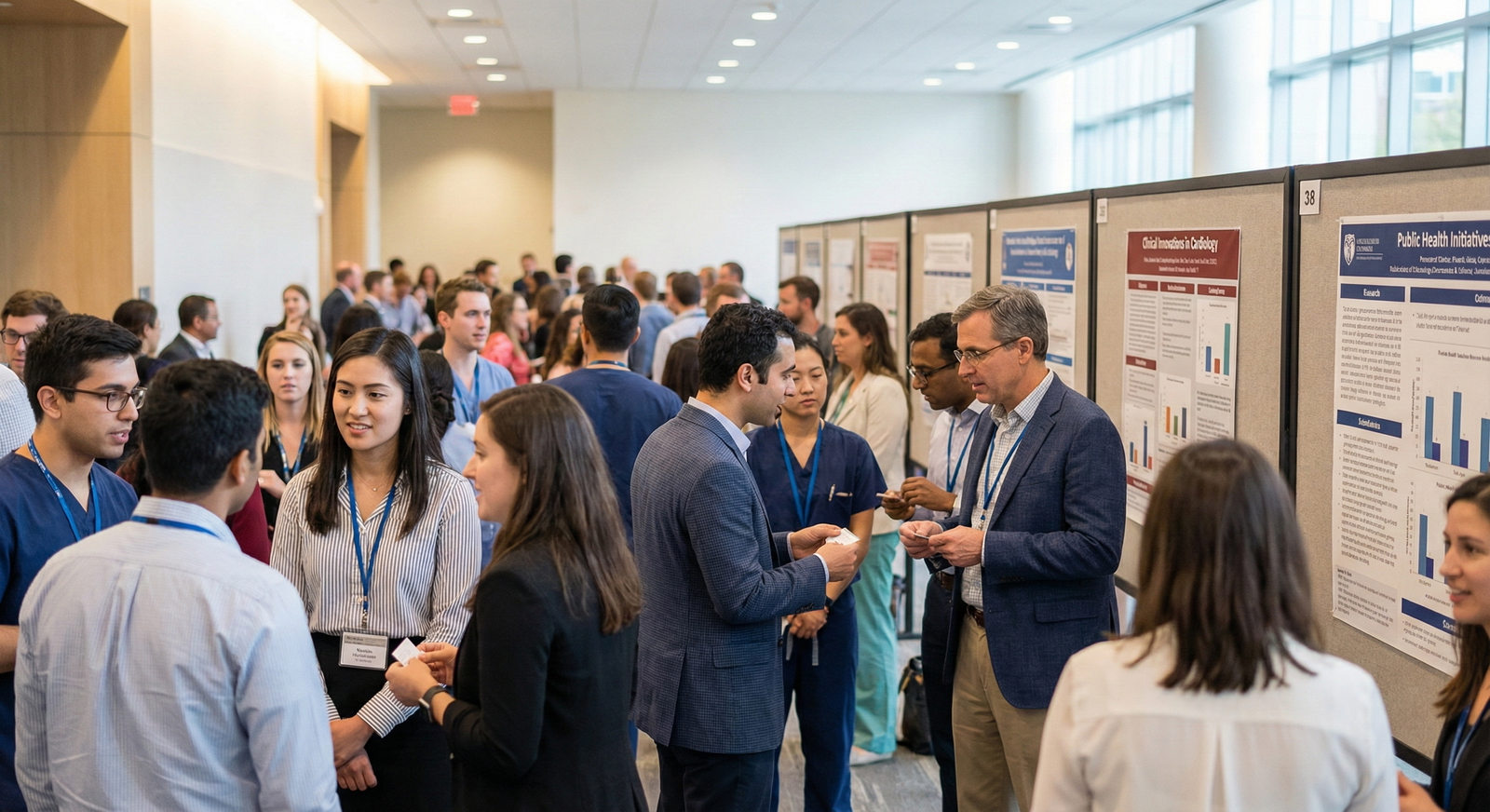
- Poster sessions: ask presenters to walk you through their work; exchange contact info if particularly relevant to your interests.
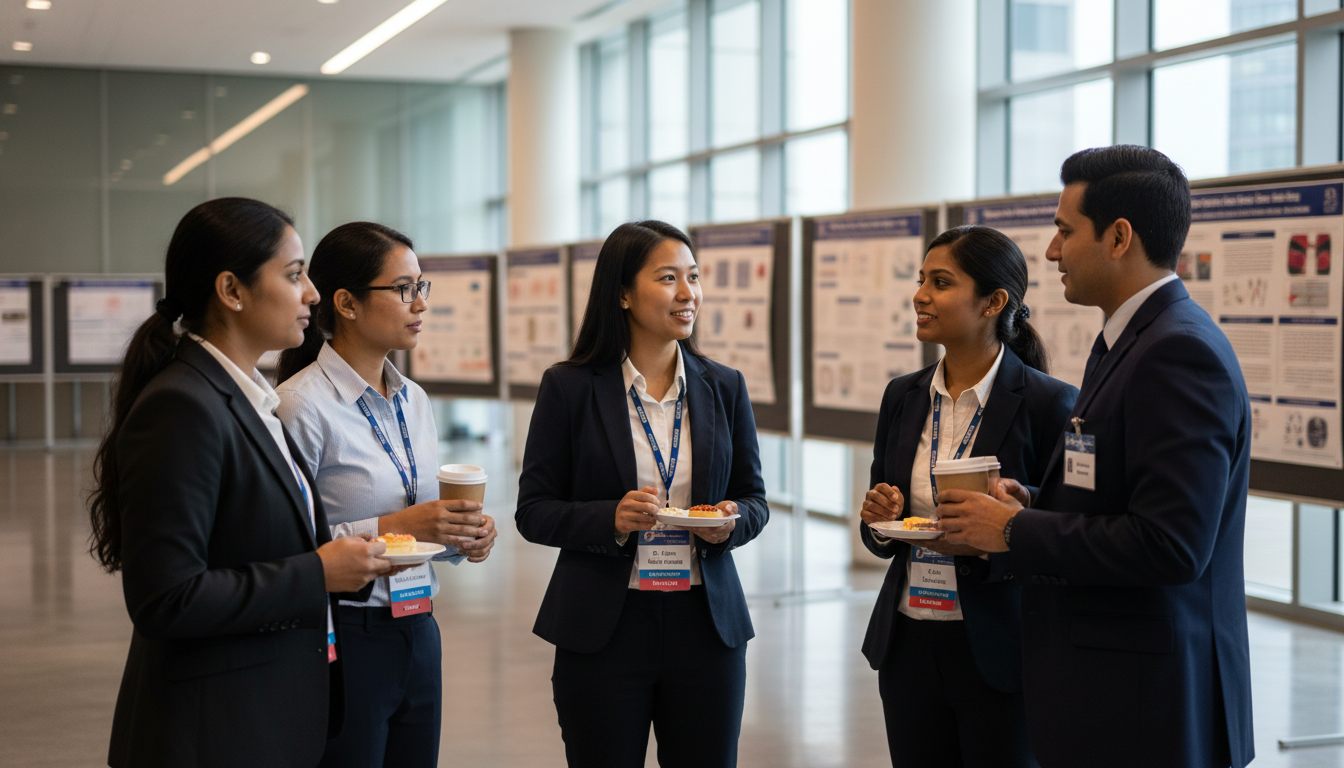
- Social events and trainee receptions: ask open-ended questions like “What brought you into this subspecialty?” or “What’s been most rewarding in your role?”
Introduce yourself succinctly:
- “I’m [Name], a [MS4 / PGY-2] at [Institution], interested in [subspecialty]. I’ve been working on [brief description of project or theme].”
Respect time and energy:
- Keep initial conversations 3–5 minutes unless they prolong it.
- If you sense fatigue or they’re in a rush, close gracefully: “I don’t want to keep you, but I really appreciate your time. I’d love to follow up by email if that’s okay.”
After the conference:
- Within 3 days, send concise emails:
- Remind them of the context of your meeting.
- Reference something specific you discussed.
- Mention one concrete next step, if relevant (e.g., sending a manuscript draft you discussed, or reading an article they recommended).
Smart Use of Social Media and Online Platforms
A strong, professional digital presence can serve as a quiet but powerful form of networking in medicine.
Twitter/X, LinkedIn, and specialty platforms:
Curate, don’t overshare:
- Focus on urology-related content: guideline updates, landmark trials, conference highlights, educational threads.
- Avoid unprofessional posts, patient-identifying information, or divisive arguments unrelated to medicine.
Engage meaningfully:
- Comment thoughtfully on articles shared by urologists whose work you admire.
- Share brief takeaways from conference talks (respecting content guidelines).
- Highlight your own work humbly: “Honored to present our team’s work on [topic] at [meeting].”
Build a simple “academic card” online:
- Updated LinkedIn or a small personal website listing:
- Education and training.
- Research interests and selected publications.
- Contact info.
- Many mentors now search for trainees online—make what they find coherent and professional.
- Updated LinkedIn or a small personal website listing:
Virtual Conferences and Webinars
Even if travel is limited, virtual formats still allow meaningful networking:
- Use chat and Q&A to ask concise, insightful questions.
- Connect with speakers via email or LinkedIn afterward: “I attended your webinar on [topic]; I especially appreciated your point about [X].”
- Join virtual interest groups and journal clubs organized by national societies, which are often very trainee-friendly.
Mentorship, Sponsorship, and Long-Term Career Relationships
Strong networks in urology aren’t just broad; they’re structured. That structure usually includes mentors, sponsors, and peers who help you grow at each stage.
Types of Mentors in Urology
Career mentors
- Help you think about overall trajectory: academic vs. community practice, subspecialty choices, timing of fellowship.
- Often more senior (associate/full professors, division chiefs).
Research mentors
- Work with you on specific projects, abstracts, and papers.
- Can be faculty, fellows, or research-focused attendings.
Clinical/technical mentors
- Teach OR skills, clinic workflow, and decision-making.
- May include senior residents and fellows, not only attendings.
Peer mentors
- Slightly ahead of you: MS4s when you’re MS2, PGY-4s when you’re PGY-2.
- Help with practical advice on applications, rotations, and urology residency life.
It’s normal—and healthy—to have multiple mentors; no single person can fill every role.
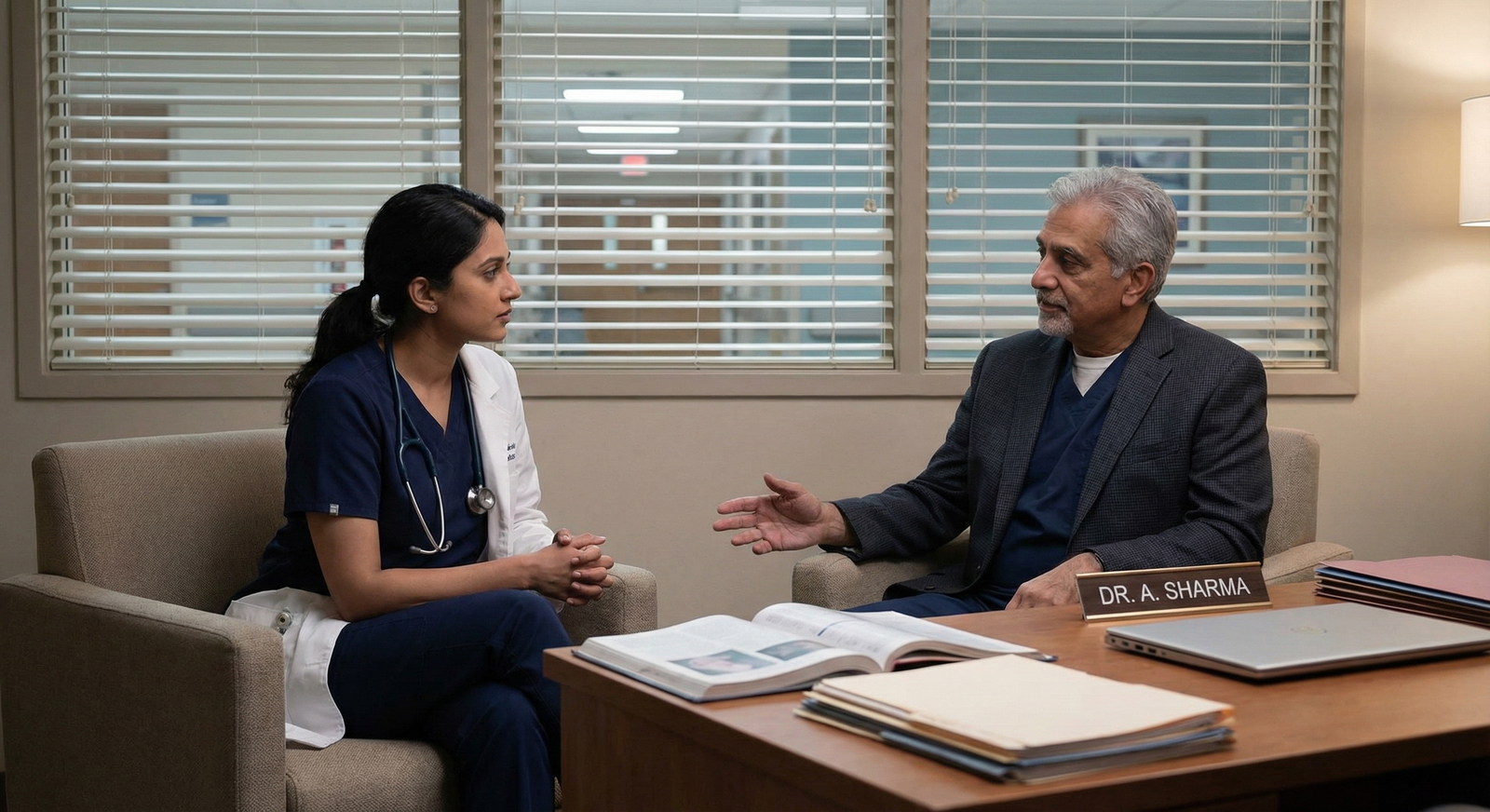
Mentorship in Medicine vs. Sponsorship
Both are crucial in a competitive field like urology:
- Mentors advise, teach, and guide.
- Sponsors actively advocate for you when you’re not in the room:
- Recommending you for committees, talks, or positions.
- Putting your name on collaborative projects.
- Calling colleagues to support your application.
You generally earn sponsorship over time by being reliable, prepared, and aligned with their standards of professionalism. Many sponsors begin as mentors who gradually grow confident enough in you to stake their reputation on yours.
How to Be a Good Mentee
Mentorship is a two-way relationship. You can strengthen it by:
Being prepared at each meeting:
- Send a brief agenda beforehand.
- Bring updated CVs, lists of questions, or drafts you want feedback on.
Acting on advice when appropriate:
- Even if you don’t follow every suggestion, show that you’ve considered it seriously.
- Circle back: “I tried what you recommended regarding [X] and here’s how it went.”
Protecting their time:
- Bundle non-urgent questions.
- Show progress between meetings.
As you advance, pay it forward by mentoring students and junior residents; this both strengthens your network and deepens your own understanding.
Practical Networking Tips for Each Career Stage
To make this concrete, here’s a stage-by-stage guide for networking in urology.
For Preclinical Medical Students
- Join your school’s urology interest group or help start one.
- Attend all available urology grand rounds and resident presentations.
- Ask a senior student or resident if you can shadow in clinic/OR.
- Aim for one research or QI project with a urology connection.
- Start a simple tracking document of mentors, projects, and key contacts.
For Clinical Students and Urology Applicants
- Do your core surgery rotation well—surgical reputations matter.
- Meet with several urology attendings early to refine your plan.
- Build 1–2 sustained research relationships, not just scattered contributions.
- Treat every urology elective and sub-I as both an evaluation and networking opportunity.
- Engage in conference networking if you can attend even one major meeting before applying.
For Urology Residents
- Connect with faculty beyond your home program via:
- Multi-institutional research collaborations.
- Subspecialty society memberships and working groups.
- Decide on mentorship medicine intentionally:
- Identify at least one career mentor and one research mentor.
- Attend sectional and national meetings regularly, budgeting time for deliberate conference networking.
- Start building peers across institutions; your co-residents at other programs will be your colleagues for decades.
For Fellows and Early Attendings
- Lean into sponsorship: ask mentors where you can contribute at the national level (guideline panels, educational committees, multi-center trials).
- Continue active involvement in societies and interest groups aligned with your subspecialty.
- Mentor students and residents—this both strengthens your local network and enhances your own visibility.
Frequently Asked Questions (FAQ)
1. Is networking really that important for the urology match, or do scores and research matter more?
In urology, all three matter—and they interact. Strong board scores and a solid CV open doors; networking and mentorship often determine who gets the strongest letters and top-of-list rankings when applicants look similar on paper. Trusted faculty opinions can significantly influence how programs view you.
2. I’m introverted and dislike “schmoozing.” Can I still be effective at medical networking?
Yes. Many respected urologists are introverted. Focus on small group or one-on-one conversations, thoughtful emails, and reliable follow-through on work. You don’t need to “work the room”; you need a handful of meaningful, sustained relationships with mentors, sponsors, and peers.
3. How do I follow up with someone I met at a conference without being annoying?
Send a short email within 2–3 days:
- Remind them who you are and where you met.
- Mention 1–2 specifics from your conversation.
- If appropriate, ask a small, concrete question or share a brief update. If they don’t respond, you can send one gentle follow-up a few weeks later. After that, it’s best to let it rest and look for other contact points (e.g., seeing them at the next meeting).
4. What if my school doesn’t have a strong urology department—how can I still build a network?
Leverage external venues:
- Reach out by email to urologists at nearby institutions for shadowing or research.
- Attend regional AUA meetings and trainee events if possible.
- Engage in online journal clubs, webinars, and specialty societies that welcome medical students.
- Consider doing away rotations at programs with strong mentorship in your areas of interest. Letters and connections from outside your home institution can carry significant weight.
Networking in medicine, especially within a small specialty like urology, is not an optional “extra”—it’s woven into how training, opportunities, and careers unfold. By approaching medical networking with authenticity, reliability, and a focus on mentorship medicine, you’ll not only strengthen your chances in the urology residency match but also build a meaningful professional community that will support you for the rest of your career.