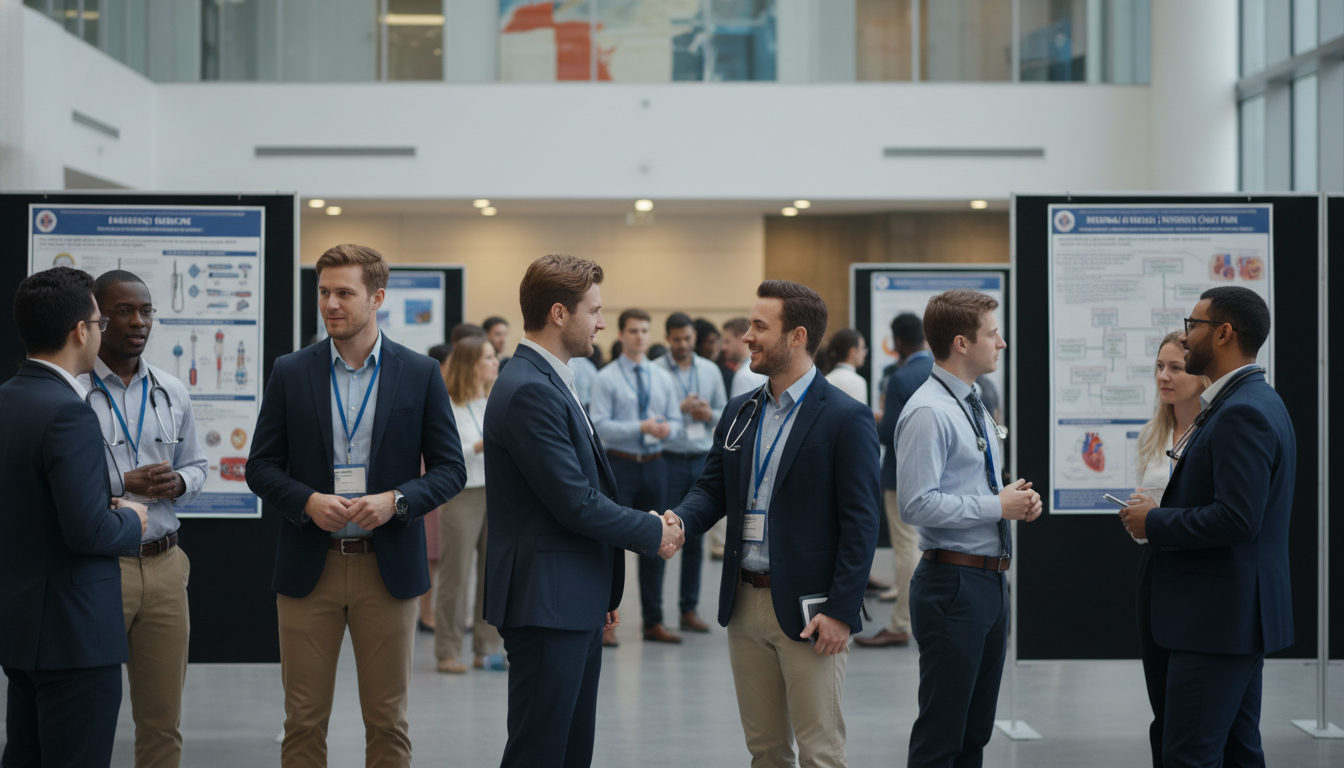
Why Networking Matters for an MD Graduate in EM–IM
As an MD graduate pursuing or entering an Emergency Medicine–Internal Medicine (EM–IM) combined path, your clinical training is only part of the equation. The relationships you build—across departments, institutions, and disciplines—will have a direct impact on your residency experience, fellowship opportunities, and career trajectory.
Networking in medicine is not superficial small talk; it is the deliberate, long-term building of professional relationships that help you:
- Navigate the allopathic medical school match and post-residency job market
- Access mentors and sponsors in emergency medicine internal medicine
- Gain early exposure to leadership, quality improvement, and research
- Position yourself for niche roles like ED–hospitalist hybrids, critical care, or academic EM–IM
For an EM–IM combined resident or applicant, networking is particularly valuable because you straddle two specialties and two cultures. You will interface with:
- EM faculty, PDs, and chairs
- IM subspecialists, hospitalists, and program leadership
- Interdisciplinary teams (ICU, cardiology, surgery, radiology, etc.)
- Administrators, quality officers, and hospital leadership
Done intentionally, this network becomes your safety net, your opportunity engine, and your professional sounding board.
Understanding the Unique Networking Landscape in EM–IM
The EM–IM combined pathway is relatively small compared with categorical emergency medicine or internal medicine programs. This creates both challenges and advantages for networking.
The Advantages of Being in a Small, Hybrid Field
High Name Recognition Within the Niche
When people hear you are EM–IM combined, they immediately have a sense of your flexibility and breadth. In EM and IM circles, EM–IM residents often stand out, which makes it easier to be remembered after conferences, committee meetings, or email introductions.Dual Access to Two Networks
You are part of:- Emergency medicine organizations (ACEP, SAEM, AAEM)
- Internal medicine organizations (ACP, SGIM, SHM, CHEST, etc.)
- Combined and subspecialty communities (e.g., EM–IM, EM–IM–CC pathways, ED–obs units, ED–hospitalist models)
This dual identity means you can attend more meetings, join more listservs, and meet more people whose careers could mirror the kind of hybrid practice you envision.
Built-In Interdisciplinary Credibility
EM–IM graduates are often sought after for:- Leadership roles in observation units, CDU/ED-run inpatient pods
- Quality and patient safety initiatives bridging ED and inpatient care
- Transitions of care projects and sepsis pathways
- ED-based clinical operations
Those projects are network-rich: you’ll interact with nursing leadership, case management, social work, administrators, and specialists. The impressions you make there can translate into future references, positions, and collaborations.
The Challenges You Must Navigate
Fragmentation of Time and Identity
Rotating through EM and IM blocks can make it harder to embed deeply in either department’s social and professional ecosystem. You might miss EM journal clubs while on wards, or IM research meetings while on night shifts in the ED.Less Standardized Career Templates
Unlike a straightforward EM or IM trajectory, EM–IM pathways are diverse: academics, community ED with inpatient shifts, critical care, hospital leadership, rural practice, flight medicine, etc. You’ll need a network of people with diverse career paths to help you identify what “success” looks like for you.Few Local Role Models
At many institutions, you may have only a handful of EM–IM faculty or none at all. You’ll need to network beyond your home institution to find mentors who truly understand your combined identity.
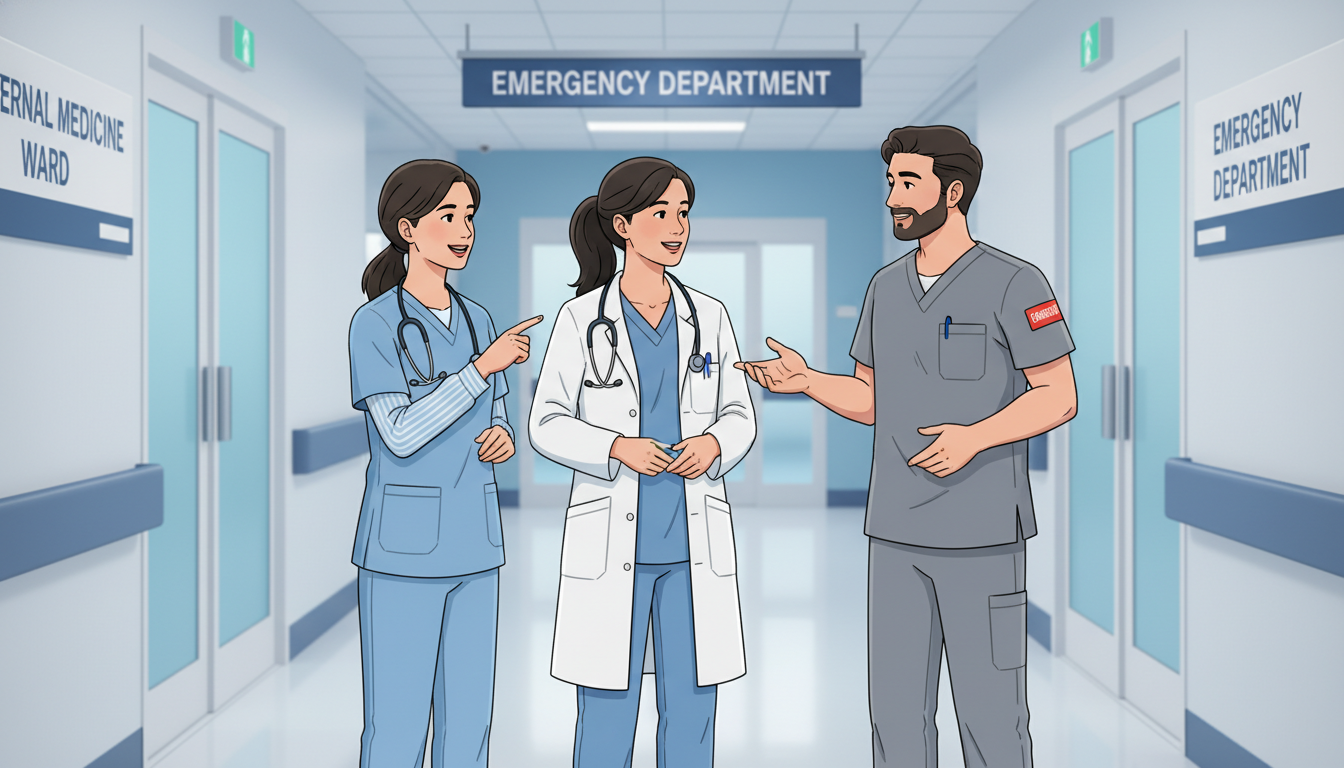
Core Networking Principles for EM–IM MD Graduates
Whether you’re in the MD graduate residency phase or transitioning from an allopathic medical school match, several networking principles apply across settings.
Principle 1: Think Long-Term, Not Transactional
Networking in medicine is about professional relationships that evolve over years, not one-off favors.
- Shift your mindset from “Who can help me match/get this job?” to “Whom can I learn from, collaborate with, and add value to over time?”
- Keep a running list of people you respect—attendings, chiefs, upper-levels, administrators—and periodically update them on your progress or send a brief note of appreciation.
Actionable tip:
After a meaningful interaction (e.g., they reviewed your abstract, gave career advice, or supervised you on a pivotal rotation), send a 3–4 sentence email:
“Thank you for your insights on EM–IM career paths during our conversation last week. I particularly appreciated your suggestion about exploring ED–obs units. I’ll follow up on the resources you recommended and would love to keep you updated as I move forward. Gratefully, [Your Name]”
This frames the relationship as ongoing, not one-off.
Principle 2: Be Visible, Reliable, and Pleasant to Work With
You don’t have to be the loudest voice in the room, but you must be consistently visible and reliably professional.
- Show up prepared to conferences, meetings, and committees.
- If you volunteer for a project (QI, research, committee work), meet deadlines or proactively communicate if you need more time.
- Be the resident who is kind to nurses, techs, and ancillary staff—your reputation spreads across departments and years.
Over time, reputation becomes your most powerful networking tool. When someone asks, “Do you know anyone good for this project/position?”, people should immediately think of you.
Principle 3: Add Value Early and Often
Networking is not just about getting; it’s also about giving.
As a resident or recent MD graduate, you might think you have little to offer. You do have value:
- You can help on a faculty member’s manuscript, database search, or abstract submission.
- You can bring a resident/fellow perspective to departmental initiatives (e.g., handoff tools, triage redesign, throughput).
- You can connect people across EM and IM (e.g., linking an ED faculty with an IM quality officer for a joint sepsis initiative).
When you offer help in a targeted, thoughtful way, you stand out as someone who understands collaborative medicine.
Networking Strategies Within Your Residency and Hospital
The hospital is the most important and accessible place to build your network, especially early in your EM–IM career.
Build Deep Relationships in Both Departments
Because EM–IM residents split time, it’s crucial to be intentional:
- Identify 2–3 “anchor mentors” in each department
- For EM: Someone in clinical operations, an academic EM faculty, and perhaps an EM–IM or EM–CC specialist if available.
- For IM: A hospitalist with QI interest, a subspecialist aligned with your interests (e.g., pulm/crit, cardiology), or a program director/APD.
Schedule a brief meeting with each at least twice per year to:
- Update them on your goals (e.g., “I’m exploring ED–hospitalist hybrid jobs”)
- Learn about upcoming projects, committees, and leadership opportunities
- Ask who else they think you should meet
- Show up outside of clinical shifts
Attend:- EM conference/journal club even when on IM if schedule permits
- IM grand rounds and M&M when on EM (especially if cases relate to transitions of care, sepsis, or ED–ward issues)
Just being in the room consistently increases your visibility and your sense of belonging to both departments.
Use Clinical Work as a Networking Tool
Your everyday shifts and rotations are networking opportunities:
On ED shifts:
- Introduce yourself to consultants: “Hi, I’m [Name], one of the EM–IM residents…”
- Ask brief but targeted questions: “For future similar cases, what information is most helpful when I call you?”
- Over time, they will remember you as thorough and collegial.
On wards and ICU:
- Communicate clearly with ED teams during admissions and transfers.
- Volunteer to help smooth tricky admits or discharges; ED colleagues will remember the EM–IM resident who understands both worlds.
With nursing and ancillary staff:
- Learn names.
- Ask for their input on workflow issues.
- A good relationship with nursing and case management builds your reputation as a team player—this often reaches department leadership informally.
Leverage Committees and QI Projects
EM–IM physicians are perfectly positioned to lead or contribute to:
- Sepsis pathway improvement
- ED–inpatient handoff redesign
- Observation unit or CDU workflows
- Readmissions and transitions of care projects
- ED boarding and throughput initiatives
These projects place you in rooms with:
- Department chairs and vice chairs
- Chief medical officers (CMO), quality and patient safety leaders
- Physician informaticists and hospital administrators
Actionable approach:
Ask your PD or mentor:
“Are there any ED–inpatient or transitions-of-care projects where an EM–IM resident could meaningfully help?”Once on a project:
- Attend meetings reliably.
- Volunteer to draft a short section of a proposal, gather data, or present a slide or two.
- Request to present the work at morbidity and mortality (M&M), departmental conference, or hospital QI forums.
Each presentation expands your internal visibility and signals that you are someone who can operate at the systems level.

Medical and Conference Networking: Expanding Beyond Your Institution
Conference networking is one of the most powerful tools for EM–IM residents and MD graduates. Done well, it can lead to collaborative research, multi-institutional QI projects, and job offers.
Choosing the Right Conferences
As someone in emergency medicine internal medicine, you’ll want a strategic mix:
EM-focused conferences
- ACEP Scientific Assembly
- SAEM Annual Meeting
- AAEM Scientific Assembly
IM-focused conferences
- ACP Internal Medicine Meeting
- SHM Converge (for hospital medicine)
- CHEST, SCCM, or ATS if you are leaning toward critical care
Combined/bridge spaces
- Regional EM–IM interest group meetings
- Hospital medicine conferences with ED-related tracks
- Quality, safety, or health systems conferences (e.g., IHI) with ED-ward content
You do not need to attend everything. One or two well-chosen meetings per year, with clear networking goals, is more valuable than a scattershot approach.
Preparing Before the Conference
Medical networking is more effective if you plan ahead:
Review the agenda early
- Identify EM–IM or ED–hospitalist style sessions.
- Flag speakers whose careers resemble what you want in 5–10 years.
Reach out before the meeting
Send a concise email to selected speakers or faculty:
“I’m an EM–IM resident at [Institution] with a strong interest in ED–inpatient transitions of care. I noticed you’re speaking on [topic] at [conference]. If you have 10–15 minutes during the meeting, I’d be grateful for the chance to ask a few career questions.”
Most will not have much time, but even a quick hallway conversation can lead to long-term mentorship.
Prepare a brief “professional introduction” Have a 20–30 second version ready:
- Who you are (EM–IM resident, year, institution)
- Your main interests (e.g., EM–IM–CC, ED observation, QI)
- What you’re hoping to explore (e.g., “hybrid ED-hospitalist roles in academic centers”)
This prevents you from rambling or underselling yourself when you meet someone important between sessions or at a poster hall.
Networking During the Conference
Attend smaller sessions and workshops
Large plenaries are valuable for learning but not for medical networking. Smaller breakout sessions, workshops, and interest group meetings allow you to:- Ask questions at the end.
- Speak to the presenters informally.
- Meet other attendees with similar interests.
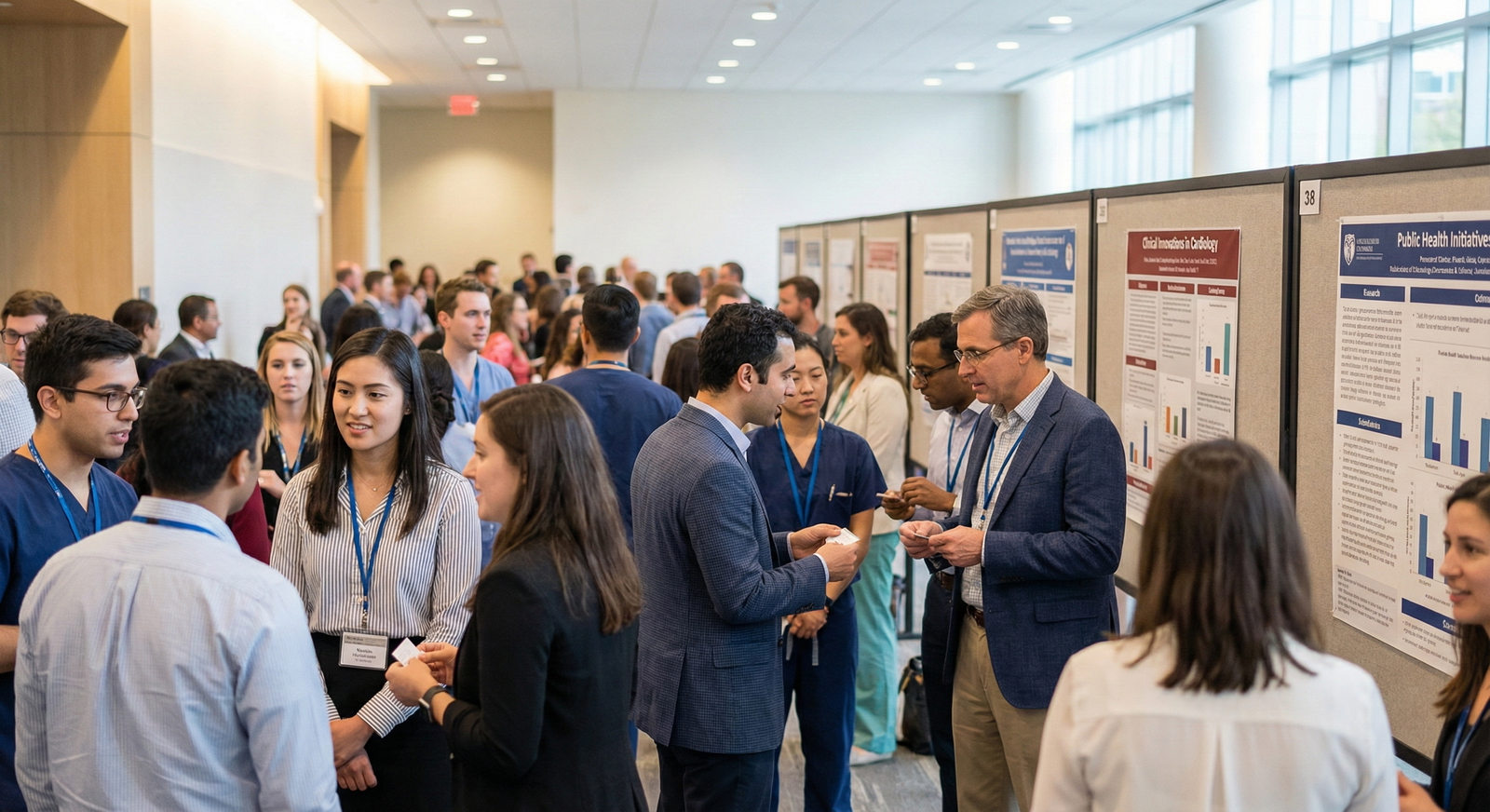
Use poster sessions strategically
- Visit posters related to EM–IM, observation, boarding, sepsis, or critical care pathways.
- Ask one or two substantive questions (e.g., “How did you get buy-in from both EM and hospital medicine for this intervention?”).
- Exchange contact info if the project aligns with your interests.
Leverage informal spaces
- Coffee breaks, receptions, and hallway chats are where many key relationships start.
- Don’t hover only with people from your own institution. Intentionally meet 3–5 new people daily:
“Hi, I’m [Name], an EM–IM resident at [Institution]. What brings you to this session?”
Following Up After the Conference
The follow-up is where conference networking becomes enduring medical networking:
Within 3–5 days, send brief thank-you emails:
- Reference a specific point from your conversation.
- Share one concrete step you took based on their advice.
- Ask if you may reach out again in the future.
Connect on professional platforms:
- LinkedIn (if they use it)
- Professional society networking portals or listservs
If applicable, suggest a small, concrete collaboration:
- “You mentioned your ED–obs unit is evaluating readmissions. Our institution is doing similar work; would you be open to a short Zoom call to compare approaches?”
Mentorship, Sponsorship, and Peer Networks in EM–IM
Networking isn’t only top-down (attendings, chairs, program directors). The most resilient professional ecosystems include mentors, sponsors, and peers.
Mentorship in Medicine: Formal and Informal
Mentorship medicine is foundational in both EM and IM, but EM–IM residents often need more than one mentor:
- Clinical mentors in EM and IM who help you refine your bedside practice.
- Career mentors who have a similar practice model (e.g., ED–obs, ED–hospitalist, EM–IM–CC).
- Project mentors who guide research or QI initiatives.
To build these relationships:
- Ask your PD or chief residents for recommendations.
- Join EM–IM or EM/IM interest groups at national organizations.
- Use mentoring programs at conferences (many societies have formal matching).
When you meet with mentors, bring an agenda:
- 2–3 questions about career direction.
- One concrete update since your last meeting.
- One specific ask (e.g., “Whom should I talk to about ED-based ICU models?”).
Sponsorship: The Hidden Engine of Career Opportunities
While mentors coach you, sponsors advocate for you when you’re not in the room. They:
- Put your name forward for committee roles
- Nominate you for awards or invited talks
- Recommend you for jobs or fellowships
Sponsors may be department leaders, program directors, or national society figures. You build sponsorship by:
- Doing excellent, reliable work on projects that matter to them
- Communicating your goals clearly (“I’m hoping to be competitive for an EM–IM–CC fellowship in 2 years”)
- Staying in touch with succinct progress updates
You cannot ask someone, “Will you be my sponsor?”, but you can behave in ways that make it easy for them to sponsor you.
Peer Networking: Your Future Collaborators
Your co-residents, fellows, and colleagues at other institutions are your future clinic partners, ED directors, and collaborators.
- Stay connected via group chats, alumni networks, or social media (used professionally).
- Share opportunities: “There’s an EM–IM–focused panel at SAEM—anyone want to co-apply?”
- When a peer asks for help (e.g., editing a CV, serving as a mock interviewer), show up; social capital is cumulative.
Peer networks often outperform formal structures in helping with:
- Locums and job leads
- Off-the-record intel on departments and leadership
- Emotional and professional support during stressful phases (e.g., match, boards, job search)
Bringing It All Together: A Networking Roadmap for EM–IM MD Graduates
To translate these concepts into actions, here is a practical roadmap you can adapt based on your stage (early residency, mid-residency, senior, or early attending):
PGY-1 to Early PGY-2: Foundation-Building
- Focus on being clinically solid and reliable—your reputation starts here.
- Identify 2 EM and 2 IM mentors.
- Attend at least one local or regional conference and practice basic conference networking.
- Join at least one national organization as a resident member (ACEP, ACP, SHM, etc.).
- Volunteer for a small, manageable project that bridges ED and inpatient care.
Late PGY-2 to PGY-3: Strategic Expansion
- Clarify your initial career direction: academic vs community; ED-only vs hybrid; interest in critical care, hospital medicine, or ED operations.
- Seek out at least one mentor whose current job resembles your ideal 5–10-year plan.
- Present a poster or talk at a regional/national meeting.
- Start cultivating mentorship medicine relationships beyond your institution via conferences or society mentorship programs.
- Participate in at least one institutional committee or QI project related to transitions of care, sepsis, or ED boarding.
PGY-4 to PGY-5: Transition and Sponsorship
- Explicitly share your post-residency goals with your mentors and potential sponsors:
- “I’m looking for a hybrid ED–hospitalist position in an academic center.”
- “I’m planning to apply for EM–IM–critical care fellowships.”
- Ask for feedback on your CV, personal statement (if fellowship), and job search strategy.
- Attend at least one major conference aligned with your planned career (e.g., SHM if hospitalist-focused; ACEP/SAEM for EM-heavy; SCCM/CHEST for critical care).
- Practice medical networking with potential employers, fellowship PDs, and future collaborators.
- Keep a spreadsheet of significant contacts, including where/when you met, what you discussed, and planned follow-ups.
Early Attending Years: Sustaining and Giving Back
- Maintain regular contact with key mentors and sponsors; update them once or twice a year.
- Begin mentoring students and residents—paying forward what you received.
- Stay engaged in professional societies, committees, or working groups related to your EM–IM niche.
- Continue conference networking, but with a shift toward collaboration, speaking opportunities, and leadership roles.
FAQs: Networking in Medicine for EM–IM MD Graduates
1. I’m introverted and don’t enjoy “networking.” Can I still build a strong network in EM–IM?
Yes. Networking is not about being extroverted; it’s about being consistent and intentional. Focus on:
- One-on-one conversations rather than large social events.
- Asking thoughtful questions and listening carefully.
- Following up via email, where you may feel more comfortable.
Your reliability, kindness, and professionalism often matter more than your social energy level.
2. Does networking really affect my chances in the allopathic medical school match or fellowship match?
Networking is not a substitute for strong scores, letters, and performance. However, it can:
- Help you understand what specific programs value and tailor your application accordingly.
- Connect you with potential letter writers or away rotation sponsors.
- Provide accurate, nuanced insights into program culture beyond what’s listed online.
For fellowship, programs often know each other’s faculty; a positive word from someone in your network can reinforce what they already see in your application.
3. I’m in a program with no EM–IM faculty. How can I find mentors who understand my combined training?
You’ll likely need to network beyond your institution:
- Join EM–IM sections or interest groups within national organizations (e.g., ACEP, SAEM, ACP, SHM).
- Attend sessions labeled EM–IM, ED–hospitalist, or ED–obs at conferences.
- Reach out to EM–IM faculty at other institutions using conference directories or society membership lists; ask for a short virtual meeting.
Many EM–IM physicians remember how isolating training can feel and are willing to mentor trainees at other programs.
4. How can I balance clinical workload with conference networking and committee work without burning out?
Prioritization is key:
- Choose 1–2 high-yield projects instead of saying yes to everything.
- Be strategic about conferences—attend those most aligned with your goals.
- Schedule networking and committee work during relatively lighter rotations when possible.
- Periodically reassess: “Is this activity bringing me closer to my desired EM–IM career?” If not, it may be time to step back.
Strong boundaries—around your time, energy, and focus—are part of sustainable networking in medicine.
Networking in medicine for an EM–IM MD graduate is not a side activity; it is central to shaping your clinical, academic, and leadership journey. By understanding the distinctive landscape of emergency medicine internal medicine, applying deliberate networking strategies in your hospital and at conferences, and cultivating mentorship and sponsorship, you can create a professional ecosystem that supports you throughout your career.