Why Networking Matters So Much in Plastic Surgery
For an MD graduate interested in plastic surgery, networking in medicine is not a “nice-to-have”—it is an essential skill that directly impacts your ability to match, train, and ultimately succeed in a highly competitive specialty.
Plastic surgery—especially the integrated plastics match—is small, tight-knit, and reputation-driven. Program directors know each other, faculty talk regularly, and word of mouth about applicants travels quickly. Your performance on rotations and your test scores matter, but who can speak to your character, work ethic, and trajectory often matters just as much.
Key reasons networking is critical for an MD graduate pursuing plastic surgery residency:
- Hyper-competitive environment: Integrated plastic surgery residency positions are limited, and many strong candidates do not match each year. Strategic medical networking can be the differentiator.
- Close-knit specialty: Plastic surgery is one of the smallest surgical specialties. Mentorship in medicine, recommendations, and introductions can open doors not visible on ERAS.
- Opportunities are often “hidden”: Research positions, sub-internships, away rotation recommendations, and advocacy letters frequently arise through personal connections rather than open postings.
- Career longevity: Networking doesn’t end with the allopathic medical school match; it continues into fellowship, academic collaborations, private practice, and leadership roles.
Your goal is to build an authentic, professional presence within the plastic surgery community—locally, regionally, and nationally—so that when your name appears on an application list, people already have a positive, concrete impression of who you are.
Foundations: Building Your Personal “Networking Identity”
Before sending emails or registering for meetings, clarify how you want to present yourself professionally. This “networking identity” will guide how you introduce yourself, what you emphasize, and how others remember you.
1. Define Your Plastic Surgery Brand as an MD Graduate
Your “brand” is not a slogan—it’s the consistent story people associate with you. For a plastic surgery–bound MD graduate, it often includes:
Clinical interests:
- Reconstructive (e.g., microvascular, oncologic, trauma, burn)
- Aesthetic (e.g., facial aesthetics, body contouring)
- Subspecialty focus (e.g., craniofacial, hand, gender-affirming surgery)
Professional strengths:
- Strong research background (basic science, outcomes, education)
- Technical skills and OR performance
- Teaching and leadership
- Innovation, device development, digital health, global surgery
Personal story:
- Why plastic surgery?
- Key experiences that shaped you (e.g., burn unit volunteer, craniofacial research, reconstructive surgery exposure)
Try to summarize this in 2–3 sentences you can modify for emails, introductions at conferences, or when meeting faculty:
“I’m an MD graduate from [School] pursuing integrated plastic surgery residency. I’m especially interested in [subfield], with research focused on [brief description]. I’m looking to grow as a surgeon-scientist by working with mentors who value [your key values: outcomes research, global health, innovation, etc.].”
2. Prepare Your Networking Toolkit
Before you start active medical networking, make sure your basic tools are current and polished:
CV (PDF, 1–2 pages for most MD graduates)
- Highlight plastic surgery experiences: rotations, research, presentations, leadership.
- Use clear, professional formatting with consistent dates, indentation, and bullet styles.
Short Bio (100–150 words)
- Can be used for introductions, email signatures, or conference profiles.
Professional headshot
- Plain background, professional attire, neutral expression – suitable for conference profiles, institutional pages, and LinkedIn.
Online presence
- LinkedIn: Up-to-date, with clear headline (“MD Graduate Pursuing Integrated Plastic Surgery Residency”) and a short About section.
- Professional Twitter/X or Instagram (optional but powerful in plastics): Many plastic surgeons are active on social media. If you use these platforms:
- Keep content professional.
- Engage with research and academic content, not just aesthetic cases.
- Avoid posting patient images unless you are fully compliant with HIPAA and institutional policies.

Strategic Networking Before and During the Allopathic Medical School Match
Whether you are currently applying or planning a future cycle, networking must be deliberate. Random introductions help, but strategic steps aligned with your plastic surgery goals are far more effective.
1. Start Local: Your Home Institution and Region
If your MD graduate residency goal is plastic surgery, your closest and most accessible network is usually at your own institution.
a. Engage Your Home Plastic Surgery Department
If your medical school has a plastic surgery department:
Identify key faculty:
- Program director
- Chair or division chief
- Research-oriented faculty
- Junior attendings interested in mentoring
Request brief meetings:
- 15–20 minute one-on-ones, either in person or via Zoom.
- Purpose: Introduce yourself, learn about their career path, and ask how you can get involved.
Sample email (condensed):
Subject: MD Graduate Interested in Integrated Plastics – Request for Brief Meeting
Dear Dr. [Name],
My name is [Your Name], an MD graduate from [Institution] pursuing integrated plastic surgery residency. I’ve been involved in [brief summary of relevant experience], and I’m hoping to learn more about your work in [their focus area].
If you have 15–20 minutes in the next few weeks, I’d be grateful for the opportunity to briefly speak with you about your career path and ways I might contribute to ongoing projects in plastic surgery.
Thank you for your time and consideration.
Sincerely,
[Name]
[Contact Information]
During these meetings, don’t just ask for help with applications. Demonstrate curiosity about their work and be prepared to ask questions about:
- How they chose plastic surgery
- What they look for in integrated plastics match applicants
- Ongoing research or quality projects needing help
b. Connect with Residents and Fellows
Residents are often the bridge between faculty and applicants.
- Ask about research and clinical opportunities.
- Offer reliable help: data entry, chart review, literature reviews, abstract preparation.
- Observe in clinic or OR (if allowed) to demonstrate engagement and build rapport.
This grassroots networking can lead to strong letters of recommendation and advocacy from people who truly know your work.
2. If You Don’t Have a Home Plastic Surgery Program
Many MD graduates face this challenge. You can still build a strong network:
- Identify nearby institutions with plastic surgery departments (academic centers or large training programs).
- Reach out proactively:
- Ask about observing in clinic/OR.
- Inquire about remote or data-driven research projects.
- Use alumni connections:
- Contact your medical school alumni office to identify plastic surgeons (academic or private practice) willing to mentor.
Articulate clearly that, as an MD graduate without a home program, you are looking for mentorship in medicine and opportunities to get involved in scholarly work.
3. Using Conference Networking to Build National Connections
Conferences are high-yield environments for medical networking, especially in a small specialty like plastic surgery.
Key conferences for aspiring plastic surgeons include:
- American Society of Plastic Surgeons (ASPS) annual meeting
- American Society for Aesthetic Plastic Surgery (The Aesthetic Society) meetings
- Specialty or regional meetings (hand surgery, craniofacial, local plastic surgery societies)
- Medical student–focused plastic surgery symposia
a. Before the Conference
Register early, apply for travel grants if available.
Review the program:
- Mark sessions where potential mentors or programs of interest are presenting.
- Highlight sessions with resident or student involvement.
Reach out ahead of time:
- Email 3–5 faculty whose research interests align with yours:
- Mention you will attend the conference.
- Express interest in their work.
- Ask if they’d be open to a brief conversation at the meeting.
- Email 3–5 faculty whose research interests align with yours:
b. During the Conference
Effective conference networking in medicine is intentional:
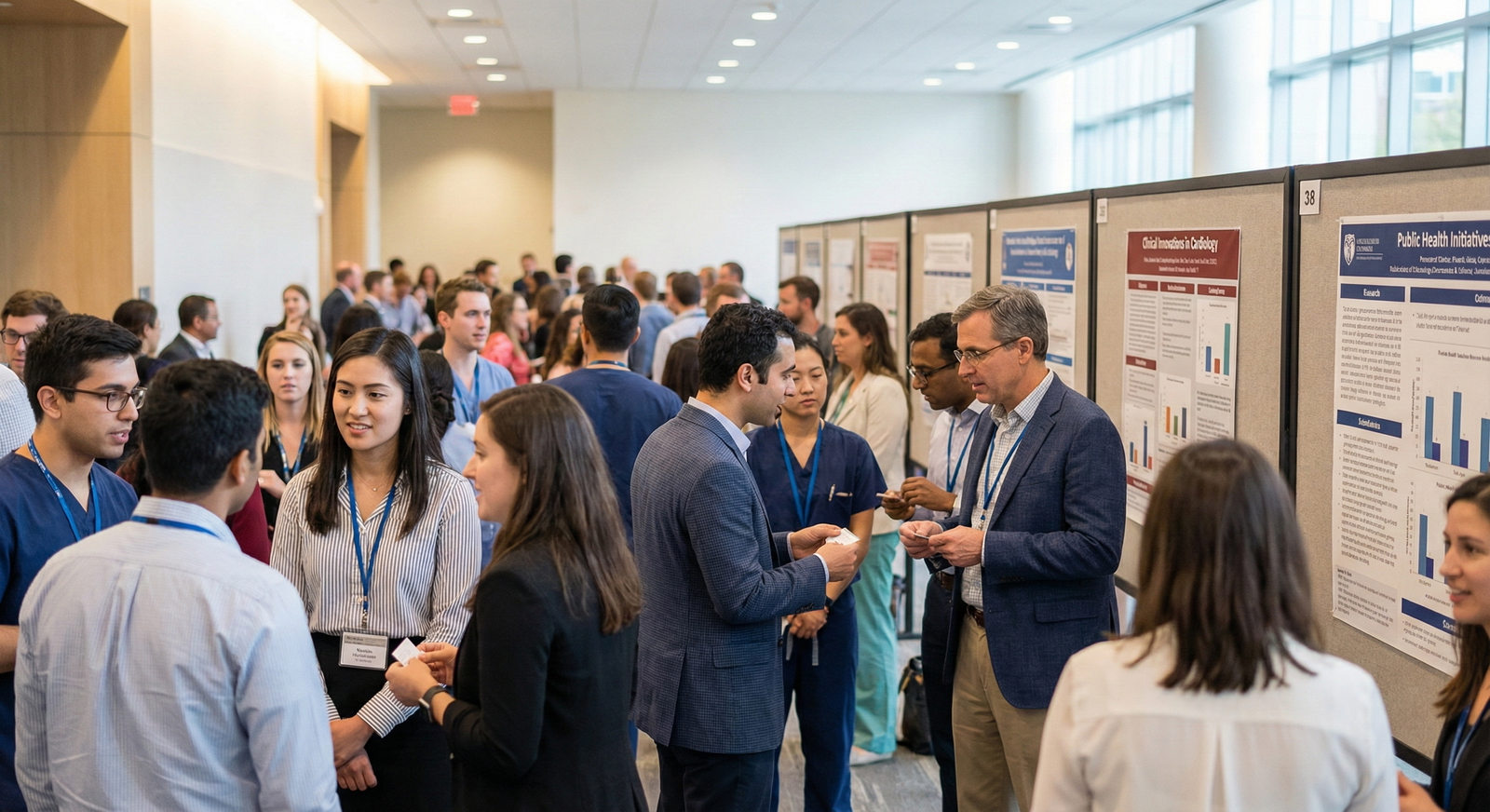
Attend poster sessions:
- Introduce yourself to presenters, especially those from programs you’re targeting.
- Ask about their project and how their institution supports trainees.
Ask focused questions in sessions:
- A concise, professional question can make you memorable to speakers.
Use a simple introduction formula:
“Hi Dr. [Name], I’m [Your Name], an MD graduate from [Institution] interested in integrated plastic surgery residency. I’ve been involved in [brief relevant activity], and I really enjoyed your talk on [topic]. I was curious about [specific follow-up question].”
Exchange contact information:
- Ask if they are open to continued contact or if there are opportunities to get involved in related research.
c. After the Conference
Follow-up is where conference networking becomes long-term mentorship:
- Within 3–7 days, send a brief email:
- Thank them for their time.
- Reference something specific you discussed.
- If appropriate, ask about next steps (e.g., potential research, shadowing, future meetings).
Mentorship in Medicine: Finding, Cultivating, and Benefiting from Mentors
Mentorship in plastic surgery is critical not only for matching but also for long-term career development. Strong mentors can become sponsors—people who actively advocate for you behind closed doors.
1. Types of Mentors for the Plastic Surgery–Bound MD Graduate
You will likely need a combination:
Clinical mentors:
- Plastic surgeons who observe your clinical and OR performance.
- Key for letters of recommendation and specialty-specific guidance.
Research mentors:
- May or may not be plastic surgeons.
- Help you develop scholarly output (abstracts, manuscripts, presentations).
Peer mentors:
- Senior residents, recent integrated plastics match applicants, or fellows.
- Offer practical advice about the application process and program culture.
Career mentors/sponsors:
- Senior faculty or leaders in plastic surgery.
- May nominate you for committees, recommend you for positions, or introduce you to other leaders.
Aim to have at least 2–3 mentors with different strengths rather than relying on a single individual.
2. How to Approach Potential Mentors
When approaching a potential mentor:
Be specific about what you’re seeking:
- “I’m hoping to work on clinical outcomes research in breast reconstruction.”
- “I’d appreciate guidance on planning my integrated plastics match application over the next year.”
Show that you’ve done your homework:
- Mention a paper of theirs you read.
- Reference a presentation you attended.
Commit to being low-burden and high-yield:
- Respect their time.
- Follow through on every task with reliability and quality.
3. How to Be a Good Mentee
Networking in medicine fails if you don’t deliver on your end. To build lasting mentor relationships:
Communicate clearly:
- Clarify deadlines, expectations, and project scope.
- Provide regular updates without being asked.
Be dependable:
- If you commit to data collection, finish it on schedule.
- If something delays you (e.g., exams, family issues), let your mentor know early.
Add value:
- Bring ideas, suggest next steps, or draft sections of manuscripts.
Over time, strong mentors will naturally become advocates—mentioning you in conversations with program directors, inviting you to co-author, and suggesting you for positions.

Practical Networking Tactics for the Integrated Plastics Match
Now let’s connect these principles to the actual integrated plastics match and residency transition.
1. Using Networking to Strengthen Your Application
Networking should improve concrete elements of your application:
Research Productivity
- Collaborate on plastic surgery projects (clinical, outcomes, basic science, education).
- Aim for:
- Abstracts and posters at national meetings.
- Manuscripts in peer-reviewed journals.
- Work with mentors who are well-known in the field—letters from them are powerful.
Letters of Recommendation
- Target 2–3 letters from:
- Plastic surgeons who know your work personally.
- Research mentors who can speak to your depth and consistency.
- Networking helps ensure that letter writers:
- Actually know you.
- May also know program directors at places where you apply.
- Target 2–3 letters from:
Sub-internships (Away Rotations)
- Networking with residents and faculty can help you:
- Identify best-fit programs.
- Prepare before you arrive (“What does this program value most in rotators?”).
- Alumni or mentors may put in a good word for you before your rotation, which can shape expectations favorably.
- Networking with residents and faculty can help you:
2. On Rotations: Networking Without Being “Political”
Integrated plastics match decisions are heavily influenced by your performance and behavior on sub-internships.
To network effectively:
Know everyone’s names:
- Residents, scrub nurses, PAs, clinic staff.
- Treat all team members with respect and humility—word spreads quickly.
Be present and prepared:
- Review cases the night before.
- Read about patients you see in clinic.
- Show that you are invested in plastic surgery as a career, not just as a prestige specialty.
Ask for feedback:
- Mid-rotation, ask a resident or attending:
- “Is there anything I can do differently to be more helpful to the team?”
- This shows maturity and gives you the chance to improve in real time.
- Mid-rotation, ask a resident or attending:
Show genuine curiosity:
- Ask about faculty members’ paths to plastic surgery.
- Ask residents about program culture, research support, and call structure.
Aim to leave each rotation with:
- At least one faculty member who can write a strong letter.
- Several residents who would gladly advocate for you to the program director.
3. Interview Season: Turning Contacts into Advocates
During the interview phase:
Leverage existing connections:
- Let mentors know when you receive interviews at programs where they have relationships.
- Some mentors will reach out on your behalf (you don’t need to ask; simply informing them is usually enough).
Network during pre-interview events:
- Resident socials, virtual meet-and-greets, or pre-interview dinners.
- Show sincere interest in the program and individual residents.
- Ask thoughtful questions about mentorship, research, and operative experience.
Follow up selectively after interviews:
- A brief thank-you email to key faculty or residents, referencing specific conversations.
- Avoid generic templated messages; tailor them so it’s clear you paid attention and are sincerely interested.
Networking Beyond the Match: Building a Long-Term Plastic Surgery Career
Once you secure an MD graduate residency in plastic surgery, networking doesn’t stop—it changes focus. Now you are building your identity within the specialty.
1. As a Resident: Expanding Your Professional Circle
Attend national and regional meetings regularly:
- Submit your research to ASPS, AAPS, regional societies.
- Presenting often leads to organic networking—people approach you.
Join committees and societies:
- Resident sections of national societies.
- Task forces on education, diversity, or innovation.
Reach across institutions:
- Collaborate with residents and fellows from other programs on multi-institutional projects.
- Participate in national resident collaboratives, which expand both your visibility and your network.
2. Mentoring Those Behind You
One of the most powerful forms of networking in medicine is paying it forward:
- Mentor medical students interested in plastic surgery.
- Offer honest guidance to integrated plastics match applicants.
- Co-author papers with junior trainees, supervised by your faculty.
This enhances your reputation as a supportive, collaborative future colleague—something program leadership and future employers value highly.
3. Protecting Your Professional Reputation
In a small specialty like plastic surgery, your name travels:
Maintain professionalism:
- In the OR, on rounds, in clinic.
- On email and social media (assume anything you post could be seen by a future employer).
Handle conflicts maturely:
- Disagreements and stress will occur in residency.
- How you respond—seeking solutions, staying respectful—shapes how faculty and peers talk about you later.
Be consistent:
- Show up prepared.
- Follow through on research and committee work.
- Your reliability is part of your network.
Frequently Asked Questions (FAQ)
1. I’m an MD graduate without a home plastic surgery program. How can I still network effectively?
You can still build a strong network by:
- Identifying nearby institutions with plastic surgery departments and asking about observing or research roles.
- Using medical networking at conferences—attend national meetings, introduce yourself to faculty and residents, and follow up after.
- Leveraging alumni networks from your allopathic medical school to connect with plastic surgeons in academic or private practice.
- Seeking remote research opportunities (e.g., database projects, systematic reviews) with established plastic surgery investigators.
Your goal is to create a “virtual home program” through external mentors and collaborators who know you well.
2. How early should I start networking for an integrated plastics match?
Ideally, begin in late MS2 or early MS3:
- Join plastic surgery interest groups or national student societies.
- Start research in plastic surgery or related surgical fields.
- Attend at least one regional or national plastic surgery meeting if possible.
As an MD graduate, even if you decided late, start immediately—reach out to plastic surgeons, identify short- and long-term research projects, and request structured mentorship focused on the upcoming application cycle.
3. I’m uncomfortable with “self-promotion.” How do I network without feeling fake?
Focus on curiosity and contribution rather than self-promotion:
- Ask people about their work, career path, and advice.
- Look for ways you can help (collect data, assist with projects, share literature).
- When discussing your own interests, frame them in terms of what you want to learn and contribute, not just what you want to get.
Authentic enthusiasm and reliability are far more important than aggressive self-promotion.
4. How important is social media networking in plastic surgery?
Social media is increasingly influential in plastic surgery, especially for aesthetic practices and academic visibility. For an MD graduate:
- It can be helpful but not mandatory.
- If you use platforms like Twitter/X or Instagram:
- Keep your content professional and academically oriented.
- Follow leaders in plastic surgery, engage with research discussions, and share educational content.
- Be cautious with patient images or aesthetic-heavy content, especially before residency, to avoid misunderstandings and professionalism concerns.
Used wisely, social media can complement—but not replace—real-world mentorship and conference networking.
By approaching networking in medicine as a long-term, relationship-based skill rather than a single-season tactic, you will position yourself strongly for the integrated plastics match and for a sustainable, impactful career in plastic surgery.