Why Networking Matters More Than Ever in Vascular Surgery
As an MD graduate entering—or aiming for—a vascular surgery residency, you are stepping into one of the most relationship‑driven specialties in medicine. Technical skill and exam scores are essential, but who knows your work, your reputation, and your professional values often determines which doors open for you.
In vascular surgery, networking is not just socializing. It is:
- A strategic tool to strengthen your allopathic medical school match prospects
- A way to identify and access integrated vascular program opportunities
- A foundation for future jobs, fellowships, and collaborative research
- A critical path to finding mentorship in medicine and sponsorship
This article focuses on networking in medicine specifically for MD graduates in (or targeting) vascular surgery: how to build connections, use conferences effectively, approach mentors, and maintain relationships that support your career from match to attending life.
Foundations of Networking in Vascular Surgery
Understanding the Vascular Surgery Landscape
Vascular surgery is a relatively small specialty with an even smaller community of academic leaders, program directors (PDs), and influential faculty. This small size is a major advantage for an MD graduate residency applicant who networks strategically: people remember you, and word spreads quickly—positively or negatively.
Common training pathways:
- Integrated vascular surgery residency (0+5)
- Traditional general surgery residency followed by vascular fellowship (5+2)
Regardless of pathway, the “hidden curriculum” is consistent: relationships matter. Program directors routinely discuss applicants with:
- Colleagues at other institutions
- Prior mentors and research supervisors
- Conference collaborators and committee members
When you are known—as a hard-working, reliable, teachable MD graduate—your name carries weight far beyond what appears in ERAS.
Networking vs. “Schmoozing”
Networking in medicine sometimes gets a bad reputation as being transactional or superficial. Effective networking in vascular surgery is the opposite:
- It is service‑oriented: contribute to projects, help with data, show up prepared.
- It is authentic: share genuine interests (e.g., PAD, aortic disease, limb salvage).
- It is long‑term: relationships develop over years, not a single encounter.
If your approach is: “How can I add value to this person’s work and this field?” you will naturally avoid seeming opportunistic.
Core Networking Principles for MD Graduates
Visibility over volume
You don’t need 500 contacts. You need a manageable network that knows you: your work ethic, communication style, and areas of interest.Depth over breadth
A small set of strong mentorship and sponsorship relationships is far more powerful than dozens of superficial interactions.Consistency over intensity
Brief but regular touchpoints (emails, quick updates, short messages at conferences) sustain relationships far better than one big, intense conversation followed by silence.Preparation over improvisation
Research people, institutions, and sessions before conferences or zoom meetings. Come in with smart, specific questions.
Practical Networking Strategies for the Allopathic MD Graduate
1. Start at Home: Your Institution’s Network
Before looking outward, leverage your own medical school or current hospital.
Key contacts within your institution:
- Vascular surgery division chief
- Program director and associate PDs
- Vascular fellows
- Research coordinators and lab managers
- Senior residents interested in vascular surgery
Actions you can take:
Request a brief introductory meeting
- Prepare a 2–3 sentence “professional snapshot”:
- Who you are (MD graduate, year, school)
- Your interest (e.g., limb salvage, carotid disease, endovascular techniques)
- Your goal (e.g., integrated vascular program vs 5+2 pathway)
- Prepare a 2–3 sentence “professional snapshot”:
Ask targeted questions, for example:
- “What distinguishes a strong vascular surgery applicant from a good one?”
- “Are there ongoing projects or quality initiatives where a motivated MD graduate can contribute?”
- “Which conferences or societies are most valuable for networking at my stage?”
Volunteer strategically
- Join quality improvement (QI) projects (e.g., improving post-op DVT prophylaxis compliance).
- Help with retrospective chart reviews for PAD or aneurysm outcomes.
- Assist with patient education materials (e.g., smoking cessation, wound care).
Every task completed well builds your professional reputation within your “home base.” PDs and attendings talk, often across institutions; this is the starting point of effective medical networking.
2. Use Research as a Networking Engine
Research is a high-yield networking tool because it creates structured, repeated interactions with faculty and other trainees.
How to use research to build your network:
Identify a niche within vascular surgery:
- Peripheral arterial disease and limb salvage
- Aortic aneurysm disease (open vs EVAR)
- Carotid disease and stroke prevention
- Dialysis access and venous interventions
Approach faculty with a concrete ask:
Instead of: “Do you have any research?”
Use:“I’m an MD graduate interested in vascular surgery, particularly limb salvage and PAD. I’ve worked with REDCap and basic statistics (SPSS/R). Are there any ongoing or planned projects where I could help with data collection, chart review, or manuscript preparation?”
Aim for collaborative projects
Choose work that naturally connects you with:- Fellows and senior residents (future references)
- Faculty across departments (radiology, cardiology, wound care, rehab)
- Multi-center study teams (broader exposure)
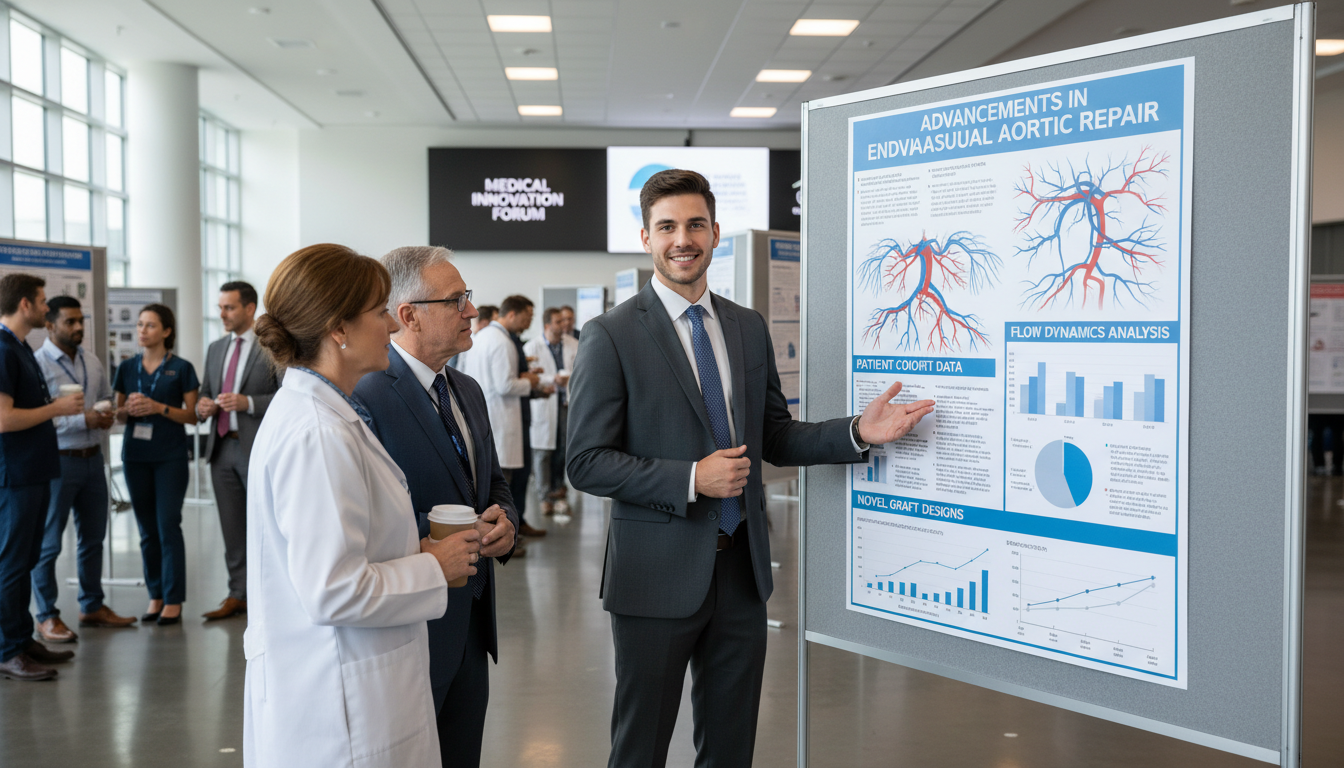
Turn research into conference networking
- Submit abstracts to SVS (Society for Vascular Surgery) and regional vascular societies.
- Present posters or oral talks whenever possible.
- Use these presentations as conversation starters with attendings and PDs.
This is networking that feels—and is—substantive: you’re contributing to the field and developing a reputation for follow-through and academic curiosity.
Conference Networking: Turning Events into Opportunities
Why Conferences Are High-Yield for Vascular Surgery
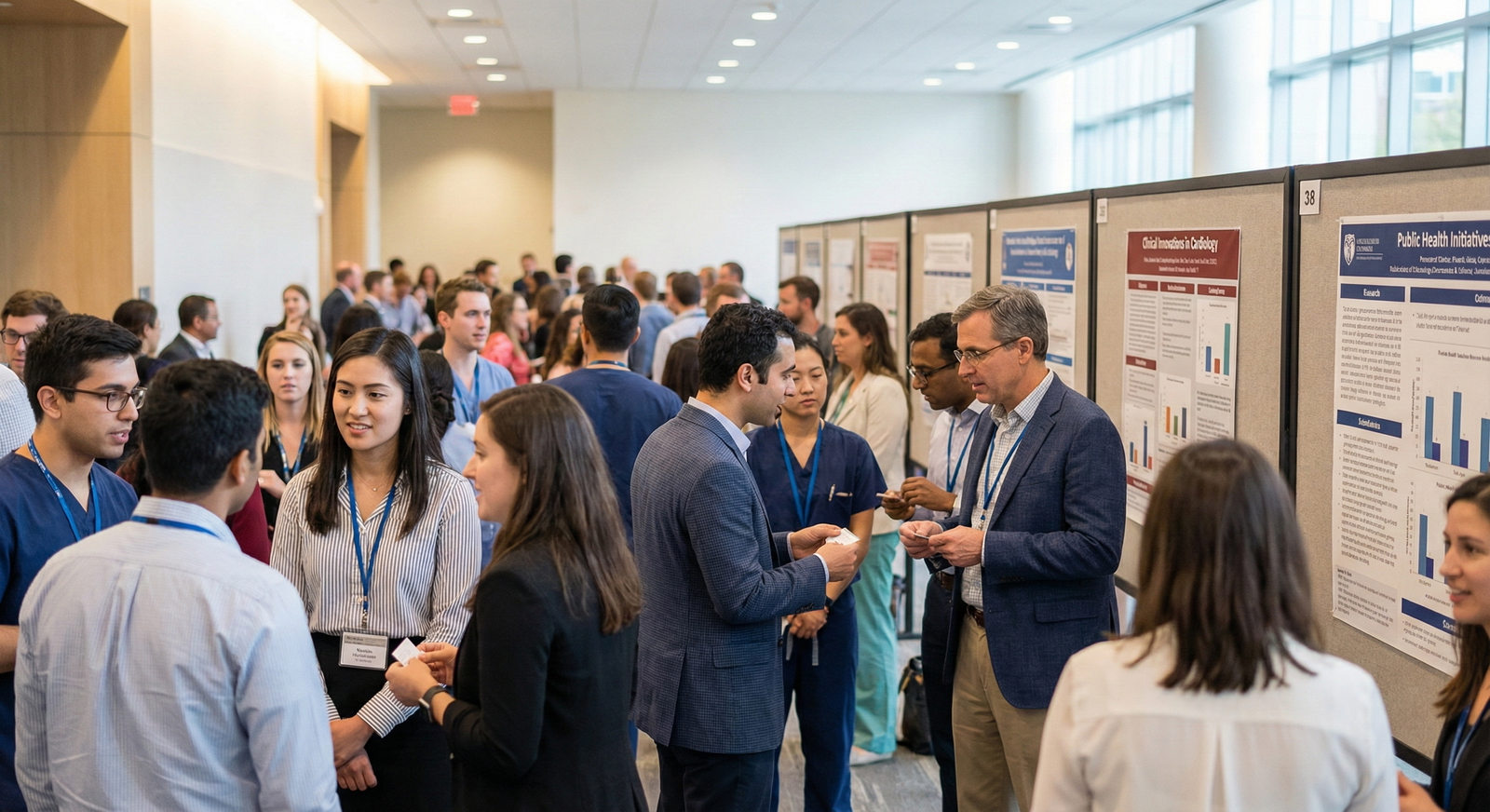
Conferences compress the vascular surgery world into a few days: program directors, fellowship directors, national thought leaders, and residents all in one venue. This makes conference networking one of the single most powerful tools in your career development.
Key vascular surgery–relevant meetings:
- SVS Vascular Annual Meeting (VAM)
- Regional vascular society meetings (e.g., Western, Southern, Eastern)
- General surgery meetings with vascular content (e.g., ACS Clinical Congress, SAGES)
If you’re in or approaching the allopathic medical school match process, these meetings are ideal to:
- Learn about integrated vascular programs firsthand
- Meet PDs and current residents informally
- Understand culture and expectations at different institutions
Pre-Conference Strategy
1. Identify your goals
For an MD graduate residency candidate, goals might include:
- Meet PDs and residents from 3–5 target integrated programs.
- Introduce yourself to faculty you’ve cited or followed.
- Find at least one potential research or mentorship connection.
2. Study the program
- Highlight vascular surgery sessions, trainee sessions, and “meet-the-expert” panels.
- Flag talks where PDs or faculty from your target programs are speaking.
- Look for medical student/resident networking events or SVS trainee events.
3. Reach out before the meeting (when appropriate)
For faculty whose work you know well (especially if you’ve cited them), you can send a brief email 1–2 weeks before the conference:
Dear Dr. [Name],
I’m an MD graduate from [Institution] with a strong interest in vascular surgery, particularly [specific area]. I’ve been following your work on [short reference to specific study or topic].I’ll be attending [Name of Meeting] this year and noticed you’ll be speaking on [session/talk]. If your schedule allows, could I briefly introduce myself after your talk or during a break? I’d appreciate the opportunity to learn more about your work and your program’s approach to training.
Best,
[Full name, credentials, institution, contact info]
Even if they don’t respond, you’ve set context for a face-to-face introduction.
On-Site: How to Network Without Awkwardness
1. Use your poster or talk as your home base
If you are presenting:
- Stand by your poster during assigned times.
- Prepare a polished 1–2 minute summary.
- If a faculty member or PD stops by, ask a simple follow-up:
“I’d love any feedback on how to strengthen or expand this work.”
2. Approach people after sessions
Right after a talk is prime time for respectful, brief introductions:
Start with genuine appreciation:
“I enjoyed your discussion of [specific point]. The way you framed [X] was really helpful.”Then add your context and question:
“I’m an MD graduate interested in vascular surgery and considering the integrated pathway. From your perspective as a PD, what qualities best distinguish successful 0+5 residents?”
3. Join trainee and networking events
Look for:
- SVS trainee section events
- Medical student/resident mixers
- Breakfasts or small group breakout sessions
These are lower-pressure environments to meet other applicants, residents, and mentors. Your peers today are your collaborators and referral sources tomorrow.
4. Avoid common conference mistakes
- Overselling yourself: Keep introductions short and balanced; you don’t need your full CV in conversation.
- Hovering around a single “big name” faculty for too long.
- Alcohol overuse at social events; vascular surgery is small—reputations form quickly.
- Monopolizing PDs: Be respectful of their time, especially when others are waiting.
Mentorship and Sponsorship: The Real Power of Networking
Understanding Mentorship in Medicine vs. Sponsorship
For an MD graduate in vascular surgery, you need both:
Mentors
- Provide guidance, feedback, and career advice.
- Help you think through choices (integrated vascular program vs general surgery first, academic vs private practice, research focus).
- Offer tactical advice (how to structure away rotations, frame your personal statement, prepare for interviews).
Sponsors
- Use their reputation and influence to actively advocate for you.
- May call or email PDs, suggest you as a fellow or junior faculty recruit, or invite you onto committees.
- Often senior, well-known faculty in the vascular community.
Networking done well nurtures both.
How to Find and Cultivate Mentors
1. Start local, then branch out
- Identify 1–2 vascular surgeons at your institution who seem approachable and committed to education.
- Ask if they’re willing to meet 1–2 times per year to discuss your goals and progress.
- As your career advances, add 1–2 external mentors from conferences or collaborative projects.
2. Make mentorship easy for your mentor
Come with an agenda:
- Updates since last meeting (rotations, research, presentations)
- Questions/decisions you’re facing
- Specific asks (feedback on CV, personal statement, list of programs)
Follow through on advice. If they recommend you contact someone or read something, do it and circle back with an update.
3. Don’t expect one person to be everything
You may have:
- A research mentor (heavily involved in your academic work)
- A clinical mentor (advice on surgical training and technical skill development)
- A personal/career mentor (work-life balance, long-term planning)
This is normal and healthy.
Converting Mentors into Sponsors
Sponsors typically:
- Emerge from mentoring relationships where you’ve proven reliability
- Need evidence that endorsing you will reflect well on them
To position yourself:
- Deliver consistently on research tasks, clinical responsibilities, and commitments.
- Communicate clearly: share your career goals explicitly (e.g., “I hope to match into an integrated vascular surgery residency with strong open aortic volume and limb salvage.”).
- Ask directly, but respectfully, when the time is right:
- “As I’m preparing for the allopathic medical school match and applying to integrated vascular programs, would you feel comfortable writing a strong letter on my behalf?”
- “Do you think there are colleagues at other programs I should connect with, and would you be open to an introduction if appropriate?”
Sponsors can:
- Recommend you to PDs informally.
- Invite you to join national or regional committees.
- Put your name forward for talks and panels as you progress.

Digital and Everyday Networking: Small Habits, Big Impact
Professional Use of Social Media
Used well, platforms like Twitter/X, LinkedIn, and sometimes Instagram can extend your reach far beyond your institution.
How to use them constructively:
Follow vascular surgery leaders and societies
- SVS, regional vascular societies
- PDs and academic vascular surgeons
- Journals like Journal of Vascular Surgery
Engage thoughtfully
- Comment insightfully on clinical pearls or new research.
- Share your own work when published or presented.
- Maintain professionalism—avoid patient identifiers, hot-take controversies, and anything you wouldn’t want a PD to see.
Show your interests, not your ego
- “Grateful to present our work on [topic] at SVS. Learned a lot from the discussion on [X].”
- Highlight collaborators and mentors when acknowledging work.
Everyday Networking on Rotations and in the OR
Everyday clinical moments shape your professional reputation:
Be the person attendings want back
- Prepare for cases: know the indication, imaging, and key anatomy.
- Anticipate needs in the OR (e.g., prox/distal control, equipment).
- Help with notes, consent forms, family updates when appropriate.
Engage respectfully with the team
- Vascular surgery is deeply collaborative: anesthesia, radiology, podiatry, wound care, ICU.
- Be known as the MD graduate who communicates clearly and treats everyone well.
Ask for feedback and act on it
- “Is there one thing I can do to be more effective on this service?”
- Incorporate that feedback visibly—mentors notice.
These are all forms of medical networking—just less formal. People remember who they enjoyed working with when writing letters or discussing candidates.
Putting It All Together: A Networking Roadmap for MD Graduates in Vascular Surgery
Below is a staged plan you can adapt, whether you’re about to apply or already in a vascular surgery residency.
Early Stage MD Graduate (Pre-Application or Early PGY)
- Identify at least one local vascular surgery mentor.
- Join one research project that is realistically achievable.
- Attend at least one conference (even regional) within 12–18 months.
- Begin modest online engagement with vascular surgery content.
Active Application Period (Allopathic Medical School Match / Residency Applications)
- Clarify your target pathway: integrated vascular program vs 5+2.
- Secure strong letters from mentors and sponsors.
- Use conferences and digital networking to:
- Learn about program cultures.
- Meet residents and PDs informally.
- Follow up with meaningful thank-you emails and occasional updates.
Early Residency in Vascular Surgery (or General Surgery with Vascular Interest)
- Deepen relationships with key faculty and fellows.
- Take on more substantive research roles (first-author work, multi-center studies).
- Get involved in SVS committees or trainee groups.
- Begin planning your long-term profile (academic vs clinical focus), with guidance from mentors and sponsors.
Done thoughtfully, this networking strategy doesn’t just help you match. It lays the foundation for a career in vascular surgery where you are supported, known, and connected to a broader community of surgeons working toward the same goal: better outcomes for patients with complex vascular disease.
Frequently Asked Questions (FAQ)
1. I’m an MD graduate from a lesser-known allopathic medical school. Can networking really offset that?
Yes. In a small field like vascular surgery, personal reputation can significantly soften institutional bias. If PDs hear from trusted colleagues that you are hardworking, technically promising, and collegial, that weighs heavily. Strong mentorship in medicine, visible research participation, and meaningful conference networking can all help bridge the gap between school name and your demonstrated potential.
2. How many conferences should I attend as an MD graduate interested in vascular surgery?
Quality matters more than quantity. If finances are limited, aim for:
- At least one major vascular meeting (e.g., SVS VAM) during your application period.
- One regional or local conference where you can present a poster or talk.
Presenting work and engaging deeply at one or two meetings is more valuable than passively attending many.
3. How do I approach a busy vascular surgeon or program director without being a burden?
Be respectful, concise, and prepared. Use short emails with:
- A clear subject line (e.g., “MD graduate interested in integrated vascular program – brief question”).
- A 1–2 sentence introduction and a specific request (e.g., 10–15 minutes for advice).
- Flexibility on timing and format (virtual vs in-person).
In person, keep your initial ask short—under 2–3 minutes—and, if they’re rushed, request a brief follow-up via email.
4. I’m already in a general surgery residency but want to pursue vascular. Is it too late to network effectively?
Not at all. You are in an excellent position:
- You can demonstrate strong performance on vascular rotations and consults.
- You can join vascular research projects and present at conferences as a resident.
- You can cultivate mentors who may sponsor you for vascular surgery residency or fellowship positions.
The same principles apply: show up prepared, follow through on commitments, communicate clearly, and be explicit about your interest in vascular surgery.
Thoughtful, sustained networking is one of the highest-return investments you can make as an MD graduate in vascular surgery. Relationships you build now—through research, mentorship, and conference networking—will shape not only your path to residency and fellowship, but the quality, satisfaction, and impact of your entire surgical career.