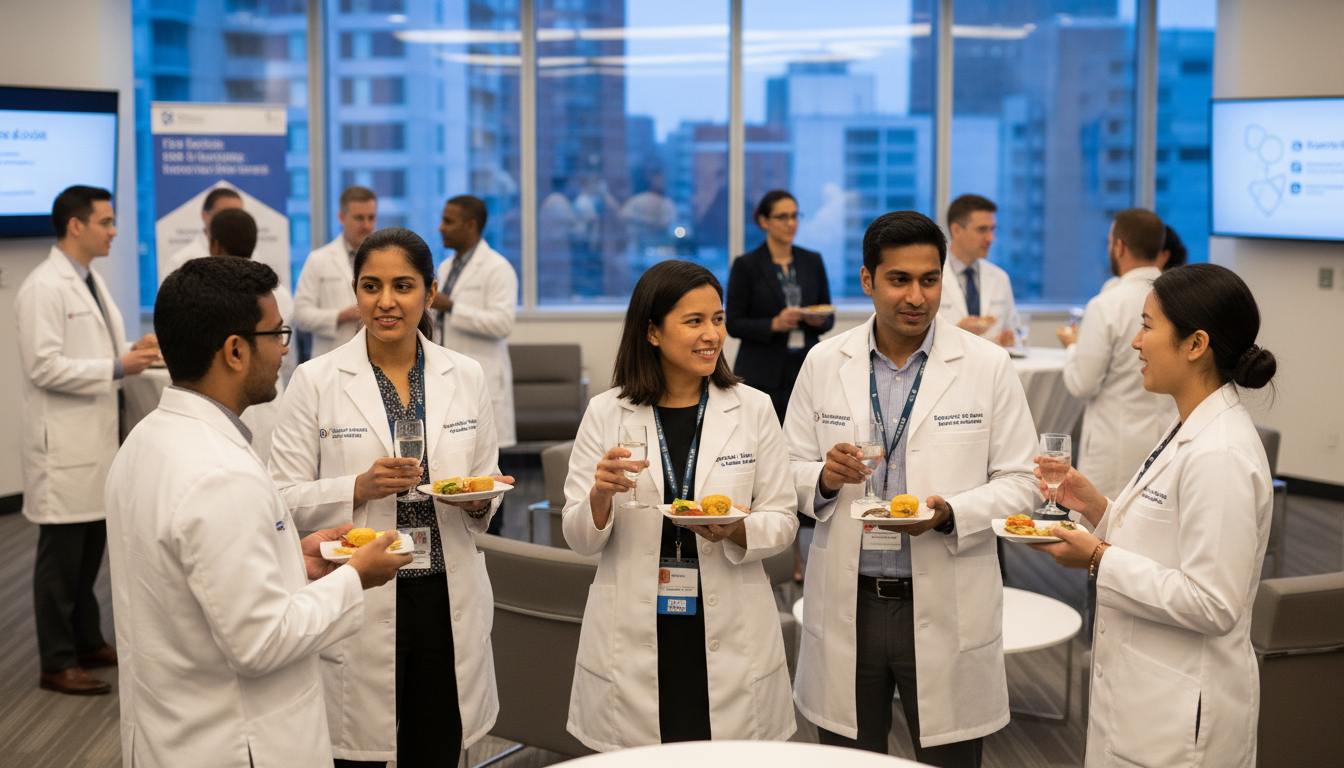
Why Networking Matters Even More for Non-US Citizen IMGs in Global Health
For a non-US citizen IMG interested in global health, networking in medicine is not a luxury—it is a survival skill.
You face unique layers of complexity:
- Visa restrictions and sponsorship questions
- Limited access to in-person US clinical experiences
- Fewer “built-in” alumni and institutional connections
- Additional scrutiny of your training background
At the same time, global health is a relationship-driven field. Many opportunities—global health residency tracks, funded research, global rotations, NGO positions, and academic collaborations—circulate informally through professional networks long before they ever reach a public posting.
Effective networking can help you:
- Get strong US-based letters of recommendation
- Learn which programs genuinely support global health and foreign national medical graduates
- Identify mentors who understand your visa and immigration challenges
- Secure research, QI, or advocacy projects aligned with international medicine
- Find hidden opportunities in global health residency track pathways
This article breaks down a practical, step-by-step strategy for networking in medicine tailored specifically to the non-US citizen IMG pursuing global health.
Laying the Foundation: Clarify Your Global Health Identity
Before you begin active medical networking, you need a clear, concise narrative of who you are and what you want. This is your professional “identity statement.”
Step 1: Define Your Global Health Focus
Global health is broad. Narrowing your interests makes conversations more memorable and opens doors to targeted opportunities.
Reflect on:
- Population: refugees, migrants, rural communities, maternal-child health, HIV/TB, NCDs, disaster medicine, climate health, etc.
- Region: Sub-Saharan Africa, South Asia, Latin America, Middle East, small island nations, etc.
- Type of work: clinical care, implementation science, capacity building and training, health systems strengthening, policy and advocacy, humanitarian response.
Example identity statements:
- “I am a non-US citizen IMG from Nigeria with clinical experience in rural primary care, interested in global health residency tracks with a focus on maternal health and health systems strengthening in West Africa.”
- “I am a foreign national medical graduate from India focused on non-communicable disease management in low-resource settings, particularly diabetes and hypertension care integration at the primary care level.”
Step 2: Build a Simple Networking Toolkit
Prepare materials you can adapt quickly for different networking contexts:
Short verbal introduction (30–45 seconds)
- Who you are (name, background)
- Current training/stage
- Global health interests
- What you’re seeking
Example:
“My name is Dr. X. I’m a non-US citizen IMG from Pakistan with clinical experience in rural district hospitals. I’m particularly interested in global health residency tracks that integrate infectious disease care and health systems strengthening in South Asia. I’m currently seeking research or mentorship opportunities related to tuberculosis control and implementation science.”Longer “story” (2–3 minutes)
- A brief personal motivator (e.g., clinical experience, family story)
- One or two concrete examples of your global health work
- Your long-term goal (e.g., academic global health, NGO leadership, international medicine policy)
Digital footprint
- A concise, professional LinkedIn profile
- Up-to-date CV (and a 1-page “networking CV” highlighting global health, research, and leadership)
- (Optional) A simple professional website or online portfolio (e.g., about.me or a single-page site) summarizing your global health work
Having this toolkit ready makes interactions smoother and more confident.
Strategic Online Networking: Building Global Health Connections from Anywhere
As a non-US citizen IMG, you may not be physically in the US for much of your networking. Online platforms become your primary arena.
Use LinkedIn Intentionally (Not Passively)
LinkedIn is underused by many physicians but can be powerful when used with purpose.
Step 1: Optimize Your Profile
Key elements:
Headline:
Example: “Non-US citizen IMG | Aspiring Internal Medicine Resident | Global Health & Health Systems | Interested in Global Health Residency Tracks”About/Summary:
• 3–5 sentences: background, global health focus, key experiences, and goals in international medicine
• Mention being a foreign national medical graduate if it is relevant to your storyExperience & Activities:
- Highlight global health electives, outreach camps, telemedicine, NGO work, refugee clinics, research, and QI projects
- Emphasize cross-cultural communication, resource-limited setting experience, and language skills
Featured Section:
- Add links to any publications, posters, blogs, or organizational pages you contributed to
Step 2: Targeted Connection Strategy
Prioritize connecting with:
- Faculty and fellows in global health residency track programs
- Program directors and associate program directors with titles like “Director of Global Health,” “Director of International Medicine,” “Global Health Pathway Director”
- Alumni from your medical school currently in US residencies or global health positions
- Leaders and members in organizations like:
- Consortium of Universities for Global Health (CUGH)
- Global Health Council
- Specialty-specific global health groups (e.g., ACP Global Health, AAP Global Health, ACEP Global Emergency Medicine)
Sample connection message:
“Dear Dr. [Name],
I am a non-US citizen IMG from [Country] with experience in [brief focus, e.g., rural primary care and TB care]. I’m very interested in global health residency tracks and noticed your work in [specific area]. I would be grateful to connect and learn more about training opportunities and mentorship in global health.
Sincerely, [Name]”
Short, specific, and respectful.
Leverage X (Twitter) and Other Professional Platforms
Many global health professionals are active on X (Twitter).
Follow:
- Major journals (The Lancet Global Health, BMJ Global Health)
- Global health centers at US universities
- Global health NGOs and think tanks
- Individual clinicians, researchers, and policy leaders
Engage by:
- Commenting thoughtfully on global health threads
- Sharing brief reflections from articles or webinars
- Posting your own clinical insights from resource-limited contexts (respecting patient privacy)
This builds your visible identity in global health without needing formal titles.

Conference Networking: Turning Events into Long-Term Relationships
Conferences are some of the most powerful networking venues in medicine, especially for international medicine and global health. Even if you can attend only virtually, you can still extract value.
Choose the Right Conferences
For a non-US citizen IMG with limited travel funds, be strategic. Look for:
- Conferences with global health tracks:
- Society of General Internal Medicine (SGIM) – Global Health
- IDSA, ASTMH, CUGH, specialty-specific global health sections
- Events explicitly mentioning:
- Global health residency track
- International medicine
- Mentorship medicine or career development sessions
- Meetings that offer:
- Scholarship or discounted registration for foreign national medical graduates
- Virtual participation options
- Networking or mentorship-focused events
How to Network Effectively at Conferences (In-Person or Virtual)
Before the Conference
Scan the program
- Identify speakers and sessions in your area (e.g., humanitarian medicine, refugee health, maternal health, climate and health).
- Make a short list of 5–10 people you’d like to meet.
Reach out ahead of time
Brief email template:Subject: Non-US citizen IMG interested in your work in [area] – [Conference Name]
Dear Dr. [Name],
My name is [Name], a non-US citizen IMG from [Country] with experience in [1–2 lines]. I will be attending [Conference Name] and noticed your session on [topic]. I am very interested in pursuing a global health residency track and would be grateful for 10–15 minutes of your time during the conference to ask a few questions about your career path and training opportunities.Thank you for considering this.
Sincerely,
[Name]
[LinkedIn profile link]
Even if only 1–2 people respond, you have meaningful meetings lined up.
During the Conference
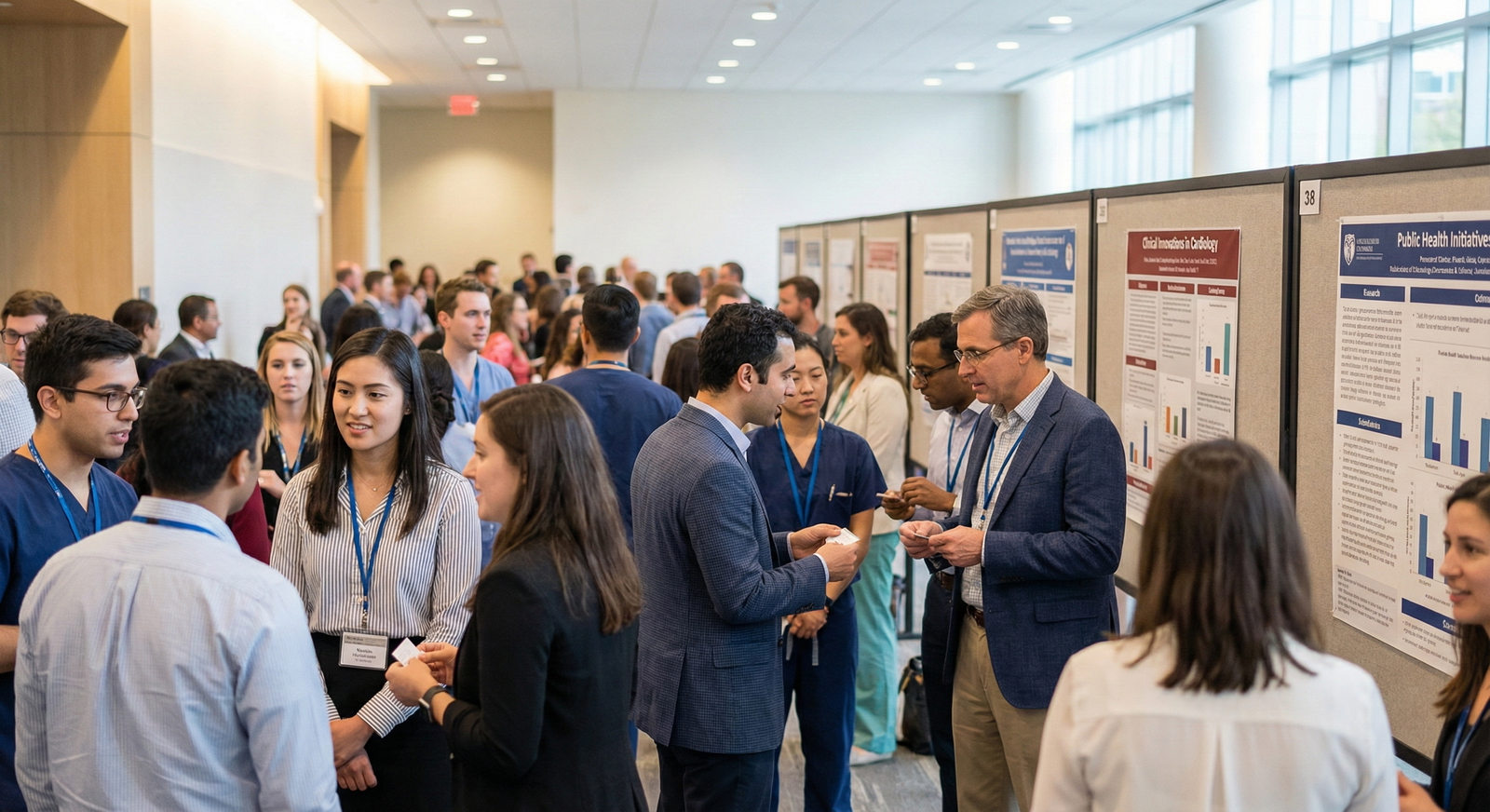
Poster sessions are gold for conference networking
- Approach presenters whose topics overlap with your interests.
- Use simple openers: “Your work on [topic] caught my attention because I’ve seen similar challenges in [your context]. How did you choose this project?”
- At the end: “Would you be open to staying in touch? I am a foreign national medical graduate exploring paths into global health residency tracks and would appreciate any advice.”
Ask questions after talks
- Introduce yourself briefly at the mic or afterward.
- Ask specific, content-driven questions—not generic “How do I get into global health?”
- Example: “Given your work in refugee health in the Middle East, how do you see residents best integrating structured training in humanitarian response into their residency years?”
Join mentorship or trainee sessions
Many global health conferences now have dedicated mentorship medicine sessions and trainee meetups. These are designed for people like you. Go, introduce yourself, and follow up afterward.
After the Conference
Within 48–72 hours:
- Send personalized thank-you emails or LinkedIn messages
- Reference specific points from your conversation
- Ask 1–2 focused questions or request a 20-minute follow-up call
This is where conference networking turns into durable professional relationships.
Building Mentorship in Medicine as a Non-US Citizen IMG
Mentorship is the backbone of career development in global health, especially when you are navigating visas, immigration, and multiple health systems.
Types of Mentors You Should Seek
Aim for a mentorship team, not just one person:
Career Mentor
- Helps you understand pathways into US residency, global health tracks, and long-term career structures in international medicine.
Content/Research Mentor
- Guides you in a specific topic area (e.g., HIV care, health systems research, refugee health, maternal-child health) and helps you find or design projects.
Process/Navigational Mentor (especially for non-US citizen IMG)
- Another international trainee or faculty member who understands visa issues, ECFMG processes, and the reality of being a foreign national medical graduate in the US system.
Peer Mentors
- Residents or fellows a few years ahead of you who are currently in global health residency track programs.
How to Ask for Mentorship Without Overstepping
Start small and specific.
Instead of:
“Can you be my mentor?” (which feels heavy to many people)
Try:
“I really admire your work in [area]. As a non-US citizen IMG trying to enter a career in global health, I would be grateful for 20–30 minutes to ask about your training path and any advice you might have for someone at my stage.”
After you’ve had 2–3 conversations:
“Your advice has been very helpful, and I find myself regularly turning to your guidance. If you feel comfortable, I would be honored to consider you a mentor as I navigate the next steps in applying for global health-friendly residency programs.”
Being a Good Mentee
You increase your chances of sustained mentorship if you:
- Come prepared with specific questions, not “tell me everything.”
- Send a brief agenda before meetings.
- Follow through on any tasks or reading they suggest.
- Update them periodically on your progress (e.g., Step exams, match cycle, projects).
Mentors are more likely to invest in foreign national medical graduates who demonstrate reliability and initiative.

Turning Networking into Tangible Opportunities
Networking in medicine is not just accumulating contacts; it is about creating mutual value and opening specific doors.
Aim for Concrete Outcomes from Your Network
From your connections, you should be seeking:
Research collaborations
- Remote data analysis, literature reviews, co-authorship on global health projects
- Join multicenter registry projects or quality improvement initiatives
Educational outputs
- Case reports from your home country or clinical setting
- Narrative pieces on health systems or patient experiences (while maintaining confidentiality)
- Contributions to online teaching or global health curricula
Clinical or observership opportunities
- Short US observerships with faculty who know your interests
- Global health elective introductions through US-based mentors
Guidance on program selection
- Which residencies truly support global health residency track options
- Which programs have a track record of sponsoring visas for non-US citizen IMGs
- Which institutions provide protected time or funding for international medicine work
Example: How Networking Can Lead to a Publication
- You attend a virtual panel on refugee health.
- You ask a targeted question about integrating refugee health into residency training.
- Afterward, you connect with a panelist who runs a refugee clinic in the US.
- In a follow-up call, you share your experience caring for internally displaced persons in your home country.
- The mentor suggests co-authoring a commentary comparing refugee care models across settings.
- You help draft the manuscript, bringing unique insights as a non-US citizen IMG.
- You gain a publication, a deeper mentorship relationship, and a stronger narrative for your residency application.
This is networking translated into concrete academic output.
Tailoring Your Strategy to the Residency Application Timeline
Networking in global health should be synchronized with the residency application phases.
12–24 Months Before Applying
- Clarify your global health identity and interests.
- Establish your online professional presence.
- Join global health interest groups and online communities.
- Start attending smaller, affordable or virtual conferences.
- Begin building one or two mentorship relationships.
6–12 Months Before Applying
- Refine your list of global health-friendly programs.
- Reach out to program leadership (especially global health track directors) with concise, respectful emails:
- Mention you are a foreign national medical graduate.
- Ask whether they have experience supporting non-US citizen IMGs in their global health pathway.
- Seek chances to join small, doable projects that can finish within 6–12 months.
During Application and Interview Season
- Use interview days as networking opportunities:
- Ask to meet or email global health track directors.
- Inquire about resident involvement in international medicine, overseas rotations, and partnerships.
- After interviews, send specific thank-you notes highlighting your alignment with their global health mission.
After Match (and During Residency)
- Continue participating in conference networking.
- Actively engage in mentorship medicine—both as mentee and eventually as mentor to more junior IMGs.
- Use residency research/QI time to strengthen your global health portfolio in line with your long-term goals.
Common Pitfalls in Networking for Non-US Citizen IMGs—and How to Avoid Them
Being too vague about your interests
- Saying “I’m interested in global health” is too broad.
- Solution: Always specify population, topic, or region when you introduce yourself.
Reaching out only to program directors
- They are busy and may not always reply.
- Solution: Also contact fellows, residents in global health tracks, junior faculty, and administrative coordinators.
Networking only during match season
- This appears transactional.
- Solution: Build relationships at least a year before applying, when possible.
Ignoring visa and foreign national issues until too late
- Some global health programs may have limits on foreign national medical graduate participation (funding rules, travel restrictions, etc.).
- Solution: Ask directly—but politely—about support for non-US citizens and visas.
Not following up
- Initial conversations fade if you don’t follow up.
- Solution: Keep a simple spreadsheet of contacts, last contact date, and next step.
FAQ: Networking in Medicine for Non-US Citizen IMGs in Global Health
1. As a non-US citizen IMG, is it realistic to aim for a global health residency track?
Yes, it is realistic—but it requires strategic planning. Many institutions have global health residency track or “international health pathway” options within Internal Medicine, Pediatrics, Family Medicine, Emergency Medicine, and other specialties. The critical steps are:
- Identifying programs with both global health and a history of supporting foreign national medical graduates.
- Networking early with global health track directors and residents.
- Demonstrating clear, sustained commitment to international medicine through research, clinical work, or advocacy in your home or host country.
2. How can I network effectively if I cannot travel to the US for conferences?
You can still build a strong network via:
- Virtual conferences and webinars (many now include networking breakout rooms).
- Active engagement on LinkedIn and X (Twitter), especially with global health organizations and journals.
- Email-based outreach to mentors and program faculty.
- Joining international medicine interest groups, online journal clubs, and global health webinars.
Your physical presence is helpful, but consistent digital presence is often enough to build meaningful professional relationships.
3. Should I mention that I am a foreign national medical graduate when contacting potential mentors or programs?
In most cases, yes—briefly and matter-of-factly. It helps potential mentors and programs understand:
- Your training context
- Possible visa needs
- The unique perspective you bring as a non-US citizen IMG
You do not need to lead with visa questions in the first sentence, but you should be transparent fairly early in the relationship, especially when discussing long-term opportunities.
4. How do I avoid seeming like I only care about people because I want a residency position?
Focus on curiosity and contribution rather than just your own goals:
- Ask thoughtful questions about people’s work and experiences.
- Offer your perspective from your home health system or patient population.
- Look for ways to help—collect data, translate materials, review literature, share context-specific insights.
- Build connections even with people who are not directly linked to a residency program (NGO leaders, global health researchers, policy makers).
When you approach networking as a way to join a community of people aligned around global health values, rather than only as a path to a job, your interactions feel—and are—more authentic.
By approaching networking in medicine strategically, consistently, and authentically, you as a non-US citizen IMG can move from being “an outsider trying to break in” to a valued member of the global health community. Your international experience and perspective are not handicaps; they are assets. Effective networking helps ensure that the right people can see—and support—what you bring to the future of international medicine.