Why Networking Matters So Much in Orthopedic Surgery
Orthopedic surgery is one of the most competitive and relationship-driven specialties in medicine. Your technical skills, test scores, and research matter—but who knows you, trusts you, and can vouch for you often determines how far you go.
In orthopedic surgery, networking in medicine is not superficial socializing. It is:
- How you learn about opportunities before they’re posted
- How you access research, letters, and mentorship
- How your name shows up in program meetings when ortho match decisions are made
- How you build a professional identity that will follow you from medical school, through orthopedic surgery residency, and into practice
Residents and faculty frequently say: “This is a small world.” Programs talk to each other, fellowship directors call your mentors, and reputations travel quickly. Thoughtful, authentic medical networking is one of the few things you can start building early that continues to pay off throughout your career.
This guide focuses specifically on orthopedic surgery: where and how to network, what to say, what to avoid, and how to leverage connections ethically and effectively.
Core Principles of Networking in Orthopedic Surgery
Before diving into conferences, emails, and social media, it helps to understand a few basic principles that govern networking in medicine—especially in ortho.
1. Relationships > Transactions
Orthopedic surgeons have finely tuned instincts for insincerity. If you approach people only when you need a letter, a rotation slot, or a research project, the relationship will feel transactional and short-lived.
Instead:
- Think in years, not weeks
- Aim for mutual benefit, even as a student or resident
- Follow up over time, not only around the ortho match cycle
Example:
You meet a sports surgeon at a regional meeting who gives you advice about research. Months later, you email a brief update: how their suggestion helped, a paper you submitted, and a thank-you. You’re not asking for anything—you’re building a real relationship.
2. Professionalism Is Your Brand
In a small specialty like ortho, your “brand” forms quickly and sticks:
- Do you show up on time and prepared?
- Are you respectful to staff, patients, and peers?
- Do you follow through on work you promised?
Every rotation, conference interaction, and email reply contributes to your reputation. When residency programs discuss you, faculty often start with: “They’re great to work with” or “I’ve heard mixed things about their professionalism” long before they mention your Step score.
3. Be Specific About Who You Are and What You Want
You’ll meet many potential mentors and collaborators. They are more likely to remember and invest in you if you present:
- A clear interest (e.g., “pediatric ortho and deformity correction” instead of “I like everything”)
- A simple, concise story (e.g., athlete with ACL injury → interested in sports medicine → currently on related research project)
- A concrete next step (e.g., “I’d like to get involved with clinical outcomes research in trauma, even at the data collection level.”)
Specificity makes it easier for others to help you.
4. Consistency Beats Intensity
You don’t need to network intensely at every single event. What matters more:
- Periodic, thoughtful touchpoints
- Reliability on research and clinical teams
- Long-term engagement with a few key mentors and groups (e.g., specialty societies, interest groups)
The most effective networkers in orthopedic surgery are usually the ones whose names keep popping up—in research meetings, conference programs, student interest groups, and rotations—not those who “network hardest” at one big conference.
Building Your Network as a Medical Student
For most students, the first real exposure to networking in medicine happens in the preclinical and early clinical years. In orthopedic surgery, the earlier you start forming authentic connections, the better.

1. Start at Home: Your Home Institution
If your school has an orthopedic department, that is your most important initial networking environment.
Key steps:
Join or create an orthopedic surgery interest group
- Serve as an officer or organizer if possible
- Invite residents and attendings to give talks—this becomes a natural networking opportunity
Identify an early mentor
- Ask senior students: “Who is approachable and supportive in ortho?”
- Email that faculty member: briefly introduce yourself, express your interest, and request a short meeting to discuss how to get involved
Show your face regularly
- Attend department grand rounds
- Join fracture conferences when allowed
- Ask residents politely if students can observe subspecialty clinics or OR days
This is your “home field.” Many orthopedic surgery residency programs give strong weight to how you performed and interacted in your own department.
2. Shadowing and OR Exposure
Shadowing is often your first in-person networking platform.
To make it count:
Prepare beforehand
- Read about the procedure (e.g., rotator cuff repair steps, basic anatomy, relevant imaging)
- Learn basic OR etiquette: where to stand, how to avoid contaminating the field
Be engaged but not intrusive
- Ask insightful questions during appropriate quiet times
- Offer help with tasks students can reasonably do (e.g., positioning, holding retractors under supervision, documenting)
Follow up after shadowing
- Send a brief thank-you email
- Mention one specific thing you learned or appreciated
- If genuine, state that you’d like to come back or be involved in their work
These small touches often lead to offers like: “If you’re interested, we have a research project you could help with.”
3. Research as a Networking Engine
In orthopedic surgery, research is both a CV booster and a powerful networking tool.
How to leverage research for networking:
Join an existing research team
- Especially those with residents, fellows, and attendings—more people to know you and vouch for you
- Ask: “Is there a project at the data collection or chart review stage I could help with?”
Be the most reliable person on the team
- Meet or beat deadlines
- Communicate proactively if you run into obstacles
- Volunteer for unglamorous tasks (data cleaning, IRB paperwork)
Present at local and national meetings
- Each poster or podium talk is an excuse to meet surgeons in that subspecialty
- When someone asks a question, introduce yourself afterward and follow up via email if appropriate
Over time, your research mentors become some of your strongest letter writers—and often introduce you to colleagues at other programs, which really matters when it’s time for the ortho match.
4. Away Rotations as High-Stakes Networking
Sub-internships / away rotations in orthopedic surgery are the most intense networking environments for residency applicants. They are month-long interviews where:
- Residents and attendings assess your skills, work ethic, and fit
- You build relationships that can open doors at that program and beyond
To make the most of away rotations:
Arrive prepared
- Review common cases for that service (trauma, joints, spine, sports)
- Learn standard post-op orders and common medications
Be the student residents want on their team
- Early, prepared, humble, and helpful
- Volunteer for floor work, notes, and consults
- Ask how you can make residents’ lives easier (without overstepping)
Network laterally and vertically
- Laterally: build relationships with co-rotating students and junior residents—they may be your colleagues or letter writers later
- Vertically: identify 1–2 attendings who get to know you well and can later advocate for you
Follow-up is crucial: send thank-you emails to faculty and residents who invested in you, update them when you match, and maintain those relationships into residency.
Conference and Society Networking in Orthopedics
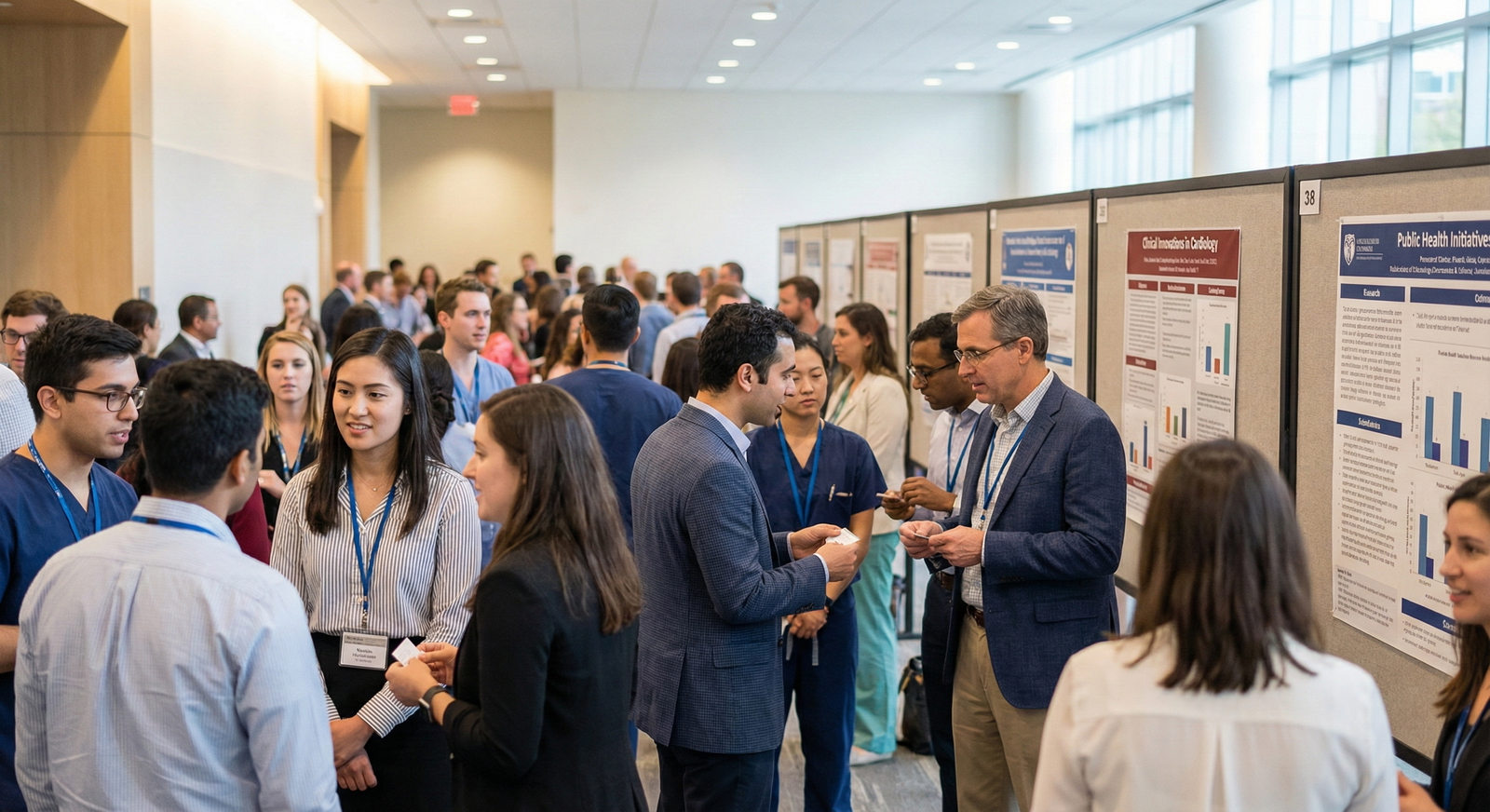
Professional conferences are among the highest-yield venues for medical networking in ortho, especially during late medical school and residency.

1. Choosing the Right Conferences
You don’t need to attend every national meeting. Instead, focus on:
- National organizations
- American Academy of Orthopaedic Surgeons (AAOS)
- American Orthopaedic Association (AOA) “CORD” for education-related exposure
- Subspecialty meetings relevant to your research or interest:
- AOSSM (sports), POSNA (pediatrics), OTA (trauma), AAHKS (joints), NASS (spine), etc.
- Regional and state ortho meetings
- Often more intimate and less overwhelming
- Easier to have meaningful conversations with leaders in your region
If you have limited funds, prioritize meetings where:
- You (or your team) are presenting
- Your research mentor is attending and can introduce you to others
- Key programs you’re targeting for orthopedic surgery residency are known to be active
2. Preparing for Conference Networking
Before you arrive:
Study the program schedule
- Highlight sessions and symposia aligned with your interests
- Note which faculty from target programs are presenting
Coordinate with your mentor
- Ask if they’ll introduce you to colleagues
- Let them know which programs you’re particularly interested in
Prepare a 20–30 second “professional intro”
- Name, training level, institution
- Specific interests (e.g., “I’m particularly interested in hip preservation and cartilage restoration.”)
- A brief connection point (e.g., “I’ve been working on outcomes research in FAI surgery.”)
This intro should sound natural, not memorized, and adaptable to different people you meet.
3. How to Approach Faculty and Residents
Some practical approaches:
After a talk or panel
- Ask a brief, specific follow-up question: “You mentioned X in your talk—how do you see that affecting training in the next few years?”
- Introduce yourself and your interest: “I’m a MS3 from [School], interested in trauma, working with Dr. Y on [project].”
At poster sessions
- Visit posters from programs you’re interested in
- Engage the presenter: “How did you collect long-term follow-up on this cohort?”
- If relevant, mention your related work and exchange contact information
Through your mentor
- Stand with your mentor during informal conversations—they will often naturally introduce you
- When introduced, be ready with 1–2 concise points about your interests and work
Always be respectful of time and context—if someone looks rushed, keep it under a minute and move on.
4. Follow-Up Strategy After Conferences
Within 3–5 days after a meeting:
- Send short, specific thank-you emails:
- Remind them briefly of the context where you met
- Mention one concrete thing you appreciated or learned
- If appropriate, propose a next step (reviewing your CV, discussing research collaboration, or simply staying in touch)
Example:
Dear Dr. Smith,
It was a pleasure meeting you after your OTA trauma symposium last week. I especially appreciated your comments on resident autonomy and case complexity. As a MS3 at [Institution] working on distal femur fracture outcomes, your perspective was very helpful.
Thank you again for your time. I hope to stay in touch as I continue exploring trauma orthopedics.
Best regards,
[Name]
Save their replies and contact info. Over time, this becomes your own curated “micro-network” within orthopedics.
Mentorship and Sponsorship in Orthopedic Surgery
Networking in medicine is often discussed as casual conversations, but in orthopedics, the real impact comes through mentorship and sponsorship.
1. Understanding Mentorship vs Sponsorship
Mentorship in medicine: Guidance, advice, feedback. A mentor:
- Helps you make decisions (research, away rotations, applications)
- Reviews your personal statement or CV
- Advises you when challenges arise
Sponsorship: Active advocacy. A sponsor:
- Recommends you for positions or projects
- Calls program directors on your behalf
- Puts your name forward for committee roles or presentations
In orthopedic surgery, some mentors naturally become sponsors as they grow to trust your character and work ethic. Not every mentor will be a sponsor—but you need both.
2. Building a Mentorship “Team”
Relying on a single mentor is risky. Instead, aim for a small, diverse group:
- A clinical ortho mentor in your area of interest
- A research mentor, who may be in ortho or another field but is methodologically strong
- A near-peer mentor (senior resident or fellow) who recently navigated the ortho match
- Optionally, a career development mentor (often in medical education or advising roles)
You don’t need to formalize all of these; the relationships can evolve naturally. The key is to avoid putting all your needs on a single overburdened person.
3. Being a High-Value Mentee
Mentorship is a two-way street. To encourage faculty to invest more deeply:
- Show initiative: Come with specific questions, not “What should I do?”
- Do your homework: Read up before meetings; know your own metrics and timeline
- Respect their time: Be prepared, start with the most important questions, and be concise
- Close the loop: Let them know what you did with their advice and how it turned out
Over time, as mentors see you execute consistently, they are more likely to become sponsors, advocating for you in residency selection, fellowships, and early career roles.
4. How Mentors Influence the Ortho Match
For orthopedic surgery residency, mentors can:
- Make direct calls to program directors or chairs
- Provide strong, specific letters of recommendation that highlight your character, work ethic, and performance compared with peers
- Help you build a realistic rank list based on your competitiveness and fit
- Introduce you to subspecialty networks that matter for future fellowships
This behind-the-scenes advocacy is often what “moves the needle” between comparable applicants.
Strategic Networking During Residency and Beyond
Once you’ve matched into orthopedic surgery residency, networking doesn’t end—it matures.
1. Internal Networking: Within Your Residency
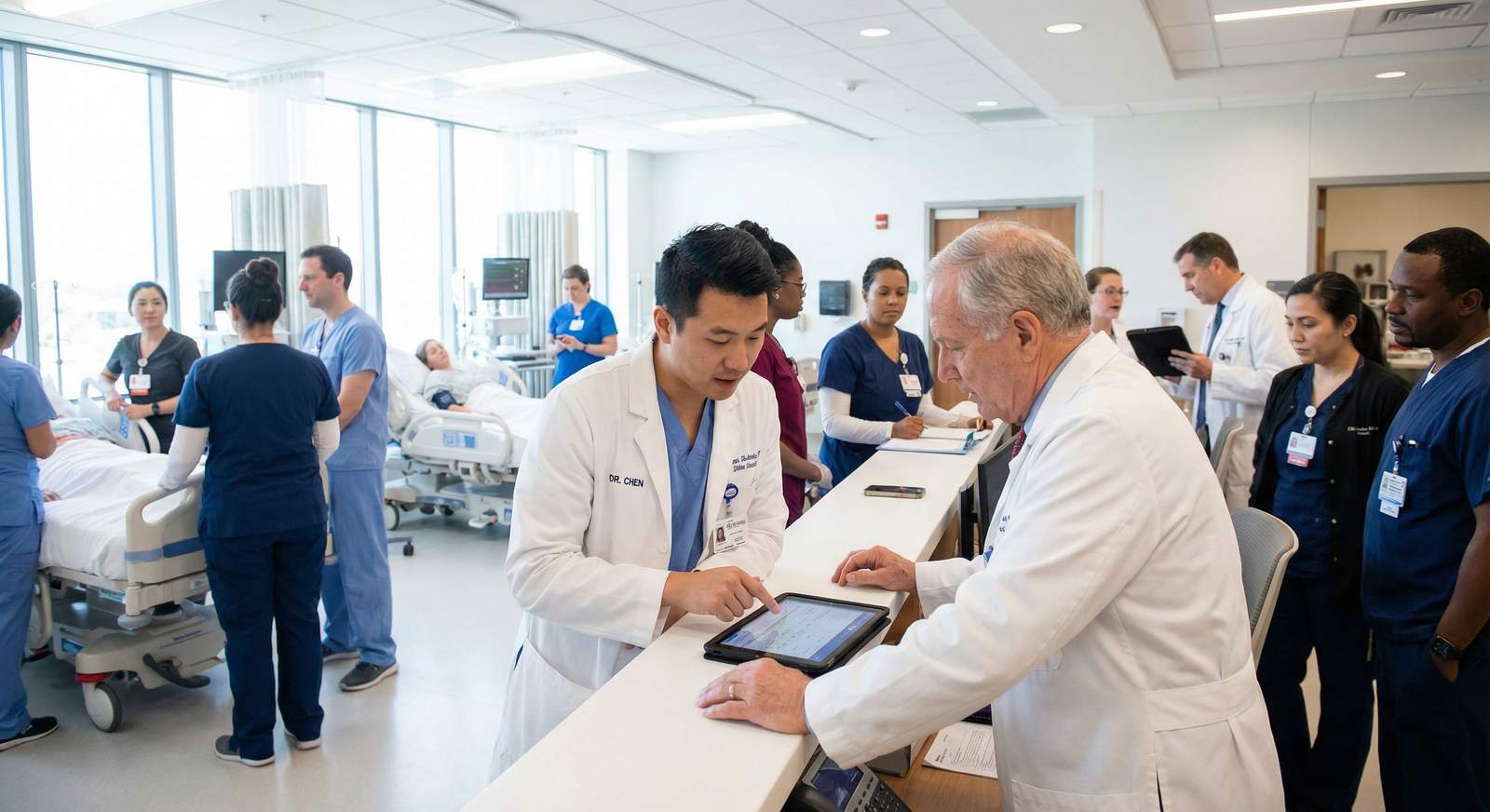
Inside your own program, medical networking means:
- Building trust with co-residents
- Learning from senior residents’ mistakes and successes
- Developing rapport with attendings who can later:
- Support fellowship applications
- Invite you into practice
- Nominate you for committees or courses
Practical tips:
- Be reliable on call and in the OR; residents talk, and reputations spread fast
- Join resident-led projects (quality improvement, education, research)
- Participate in department social events when possible—low-pressure networking
2. External Networking: Cross-Program and Subspecialty
As a resident, your external network matters most for:
- Fellowship applications
- Academic collaborations
- Future job opportunities
High-yield strategies:
Multi-center research projects
- Join or initiate studies involving other institutions
- This connects you with young faculty and fellows beyond your home program
Resident and young surgeon groups
- Many societies have resident sections (e.g., at AAOS, subspecialty societies)
- Volunteer for committees—these roles put you in regular contact with peers and leaders
Courses and skills labs
- Industry-sponsored courses and cadaver labs often draw residents from many programs
- Use breaks and social events to compare training experiences and build relationships
3. Using Social Media Intentionally
Platforms like Twitter/X, LinkedIn, and sometimes Instagram are increasingly common in orthopedics.
Done well, they can support professional identity building and medical networking:
- Follow orthopedic surgery residency programs, societies, and thought leaders
- Share your academic work (when allowed), reflections on training, and educational content
- Engage respectfully with debates and discussions
Avoid:
- Posting complaints about call, attendings, or patients
- Sharing identifiable patient information
- Commenting impulsively on controversial topics without thinking about downstream impact
Your digital footprint becomes part of your reputation—programs and employers do look.
4. Networking for Your First Job
Later in residency and fellowship, your network helps you:
- Learn about unadvertised job openings
- Understand the real culture of potential practices or groups
- Get honest advice about negotiation and contract terms
Your mentors and sponsors often know who’s hiring before formal postings appear, and can steer you toward (or away from) certain opportunities.
Common Pitfalls and How to Avoid Them
Even well-intentioned applicants and residents can undermine their networking efforts.
1. Being Overly Transactional
Red flags:
- Only emailing mentors when you need a letter or favor
- Meeting someone and immediately asking for a rotation spot or letter
- Treating every interaction as a means to an immediate end
Solution: Focus on long-term relationships and genuine curiosity about people’s work, not just what they can do for you this year.
2. Over-Networking and Burnout
You do not need to:
- Attend every conference
- Meet every prominent surgeon
- Say yes to every opportunity
Signs you’re overdoing it:
- Research and networking obligations interfere with core clinical learning
- You feel constant pressure to “perform” socially
- Your well-being and sleep are deteriorating
Solution: Prioritize quality over quantity. It’s better to have 5–10 strong relationships than 50 superficial ones.
3. Neglecting Professional Boundaries
Common issues:
- Overly casual communication (e.g., late-night texts, unprofessional jokes)
- Fraternizing in ways that blur student–resident–faculty boundaries
- Discussing confidential issues about programs, residents, or patients
Always err on the side of professionalism. Ortho may seem informal at times, but boundaries still matter—and violations can seriously hurt your reputation.
4. Burning Bridges
Orthopedic surgery is a small community. Burning bridges with:
- Co-residents
- Program leadership
- Research collaborators
…can echo later when fellowship or job directors ask, “So, how was it working with them?”
When conflicts arise:
- Address issues directly and calmly
- Seek mentorship on how to handle difficult situations
- Avoid venting publicly or via group chats that may be screenshotted
Repairing a strained relationship early is much easier than dealing with its consequences years later.
FAQs: Networking and Orthopedic Surgery
How important is networking compared with scores and research for the ortho match?
All three matter. For orthopedic surgery residency, strong scores and research often get you in the conversation; medical networking and reputation frequently determine how you’re ranked among similar applicants. Programs want residents they know will work hard, fit the culture, and represent the department well—information that comes largely through relationships and trusted recommendations.
What if my school doesn’t have a home orthopedic program?
You’ll need to be deliberate about building an external network:
- Seek ortho rotations at affiliated hospitals or community sites
- Use national and regional conferences to meet attendings and residents
- Connect with alumni from your school who went into ortho
- Prioritize away rotations at programs where faculty are known for working with “orphan” applicants
Mentorship medicine is still possible—you just have to work harder to find mentors beyond your institution.
How many away rotations should I do for orthopedic surgery?
Most applicants do 2–3 away rotations, plus their home ortho sub-I if available. Each away rotation is a major networking and evaluation opportunity. Choose programs where you have genuine interest in matching, and where your mentors think you’ll be a realistic candidate. Fewer, well-chosen rotations with excellent performance are more valuable than many rushed or poorly chosen ones.
How do I maintain relationships without feeling like I’m bothering people?
Think in terms of brief, meaningful touchpoints every few months:
- Send a short update when a paper is accepted, an award is received, or you reach a milestone (e.g., matching, starting residency)
- Forward a relevant article or talk link with a one-line note: “Thought of your work on X when I saw this.”
- Say thank you when their advice pays off
If you’re concise, respectful of time, and not constantly asking for favors, most mentors and colleagues will welcome updates—and will be more willing to help you when you do need something.
Networking in orthopedic surgery is not about being the loudest or most extroverted person in the room. It’s about consistently showing up as a reliable, curious, and collegial member of the community—on your home service, on away rotations, at conferences, and online. If you approach networking in medicine with authenticity, professionalism, and a long-term mindset, the relationships you build will support you far beyond the ortho match, through residency, fellowship, and into a fulfilling orthopedic career.