Why Networking Matters in a Preliminary Medicine Year
Your preliminary medicine year (prelim IM) can feel like a 12‑month sprint: heavy admissions, cross‑cover chaos, frequent rotations, and the looming transition to your advanced specialty. In all of that, “networking” can sound like a luxury—or a buzzword you’ll “get to later.”
In reality, networking in medicine during your prelim year is one of the highest‑yield investments you can make for your career. It directly affects:
- The quality of your mentorship and day‑to‑day support
- Opportunities for research, QI, and leadership
- Letters of recommendation (LORs) for fellowship or job applications
- How you’re perceived by your future colleagues and faculty in your advanced field
- Your resilience and sense of belonging in a demanding year
This guide focuses specifically on networking in Preliminary Medicine, recognizing the unique constraints and opportunities of a transitional year. You’ll learn practical ways to build a professional network even on a brutal call schedule, how to approach medical networking authentically, and how to leverage conferences, mentorship, and everyday clinical work to set up the rest of your career.
Understanding the Networking Landscape in a Prelim IM Year
Networking in medicine isn’t about collecting business cards or pretending to be extroverted. It’s about building genuine professional relationships that are mutually beneficial and grounded in patient care, curiosity, and respect.
What Makes Prelim IM Different?
In a categorical internal medicine residency, you have 3 years to build relationships. In a preliminary medicine year, you have:
- Shorter time horizon: Only 12 months to make impressions and connections
- Rotational fragmentation: Frequent rotation changes (e.g., wards, ICU, night float, subspecialties) with constantly shifting teams
- Dual identity: You’re a medicine intern, but your long‑term home is another specialty (neurology, radiation oncology, anesthesiology, dermatology, radiology, etc.)
- Competing priorities: You’re trying to survive call, learn internal medicine, and prepare for your advanced specialty simultaneously
These constraints make intentional networking essential. You can’t “wait and see” who you naturally connect with; you need a deliberate plan.
Core Networking Goals for a Prelim Year
You don’t need 50 connections; you need the right ones. For most prelim interns, key goals include:
- At least 2–3 strong faculty relationships in internal medicine
- 1–2 mentors in your advanced specialty, either in your own institution or externally
- A few trusted peer allies (co‑interns, residents, fellows) who can offer support and collaborate on projects
- Exposure to broader professional communities via conferences, societies, and scholarly activities
If you finish your prelim IM year with this structure in place, you will be well‑positioned for fellowships, academic roles, and future leadership positions—even if your day‑to‑day schedule felt like survival mode.
Building a Network on the Wards: Everyday Clinical Networking
Your main networking arena during a prelim medicine year is not the national conference; it’s the wards, the ICU, and the call room. The people who see you work every day will become your most credible advocates.
Show Up as the Colleague People Want to Work With
Your professional reputation is the foundation of all medical networking. Before asking for mentorship or opportunities, you need to be someone colleagues are eager to support.
Concrete behaviors that build that reputation:
Reliability:
- Pre‑round thoroughly; know your patients in detail.
- Follow through on tasks, pages, and calls—especially unpleasant ones (family meetings, difficult dispositions, late‑night sign‑outs).
Humility + ownership:
- Admit mistakes early and clearly. (“I missed that creatinine rise yesterday; I’ve already re‑dosed meds and updated the plan.”)
- Ask for help without being defensive or vague.
Teachability:
- Ask focused questions: “Can I quickly run by how you approached that hypercalcemia workup?”
- Take feedback seriously and visibly incorporate it.
Faculty are more likely to offer you projects, introductions, and letters if they see you as a reliable, teachable intern.
Turning Routine Work into Relationship‑Building
You don’t need separate “networking time.” Embed relationship‑building into what you’re already doing.
On rounds:
Ask brief, content‑driven questions that show interest:
- “I’m planning to go into neurology—are there particular systemic diseases on our list that you find especially important for neuro residents to know well?”
- “For ICU‑bound patients, what do you think neurology fellows appreciate most from medicine teams up front?”
When an attending gives a great teaching point, follow up:
- “I really appreciated your framework for volume assessment—do you have a go‑to article or resource you recommend?”
After a rotation you liked:
Send a short thank‑you email that doubles as a networking step:
Dear Dr. Smith,
I wanted to thank you for the teaching and feedback on our wards rotation this month. I especially appreciated your approach to complex discharge planning and your structured way of thinking through hyponatremia.
I’m a preliminary medicine intern going into anesthesiology, and I’d love to stay in touch as I continue to build my internal medicine foundation. If you’re open to it, I’d be grateful for occasional career advice or feedback as the year goes on.
Best,
[Name]
This transforms a single rotation into the start of an ongoing professional relationship.
Network Laterally: Your Co‑Interns and Residents
Your peers are your future:
- Co‑interns will become fellows and attendings across the country.
- Senior residents will soon be academics, hospitalists, or subspecialty fellows.
Ways to build meaningful peer connections:
- Be generous with help: Offer to cover a break, share sign‑out templates, or explain an admission workflow you’ve mastered.
- Create micro‑communities: Start a case‑based WhatsApp or Signal group (“Interesting ICU Cases,” “Tough Admissions Pearls”) where people share quick clinical tips.
- Propose small collaborative projects: A QI project on handoff efficiency, or a brief case report on an unusual presentation you admitted together.
Your medical networking doesn’t only go upward; building sideways can be just as impactful long‑term.

Mentorship in a Prelim Year: Finding the Right People, Fast
Mentorship in medicine can be the difference between feeling lost for a year and using your prelim IM experience as a powerful launch pad. But with only 12 months, you can’t wait for mentors to “find” you.
The Three Types of Mentors You Need
In a preliminary medicine year, aim to intentionally cultivate:
Clinical Skills Mentor (Internal Medicine)
- Focus: Becoming an excellent intern and safe physician
- Who: Wards or ICU attendings, chief residents, senior residents
- Value: Ongoing clinical feedback, tips on efficiency, help navigating the culture of the IM program
Career/Specialty Mentor (Your Advanced Field)
- Focus: Long‑term trajectory (fellowships, academic vs. private practice, niche interests)
- Who: Faculty and fellows in your advanced specialty at your current or future institution
- Value: Strategic advice, specialty‑specific opportunities, targeted networking
Project/Scholarly Mentor
- Focus: Research, QI, education projects, or case reports that can realistically be completed in a year
- Who: Any faculty member with an active project aligned with your interests
- Value: CV building, exposure to scholarly work, external visibility (abstracts, posters, presentations)
These roles can overlap in the same person, but they don’t have to. What matters is that each need is explicitly addressed.
How to Approach Potential Mentors
When you see an attending you respect, or a fellow in your advanced specialty you’d like guidance from, make a concrete ask instead of “Can you be my mentor?” Ask for:
- A brief 20–30 minute meeting to discuss career paths
- Targeted feedback on your performance during a rotation
- Thoughts on one or two potential project ideas
Example email to an IM attending:
Dear Dr. Lee,
I enjoyed working with you on the MICU rotation last month and learned a great deal from your structured approach to respiratory failure and goals‑of‑care discussions. I’m a preliminary internal medicine resident going into neurology next year, and I’d love to get your perspective on how I can get the most out of my prelim year to better serve my future patients.
If you have 20–30 minutes in the next few weeks, I’d be grateful for the chance to meet briefly to ask for your advice and feedback.
Best regards,
[Name]
Most faculty respond positively to specific, respectful requests.
Making Mentorship Meetings High‑Yield
Go into a mentorship meeting prepared:
- Bring a 1‑page CV or ERAS application for context.
- Prepare 3–4 focused questions, such as:
- “What do you wish more prelim interns understood about internal medicine by the end of the year?”
- “What skills do you see in interns who transition most smoothly into highly procedural specialties (like anesthesiology or interventional specialties)?”
- “Are there small‑scope projects you think a prelim intern could realistically complete?”
End with a clear next step: “Would you be open to me checking in once or twice more this year?” or “May I follow up about possibly joining the QI initiative you mentioned?”
Conference Networking and External Connections
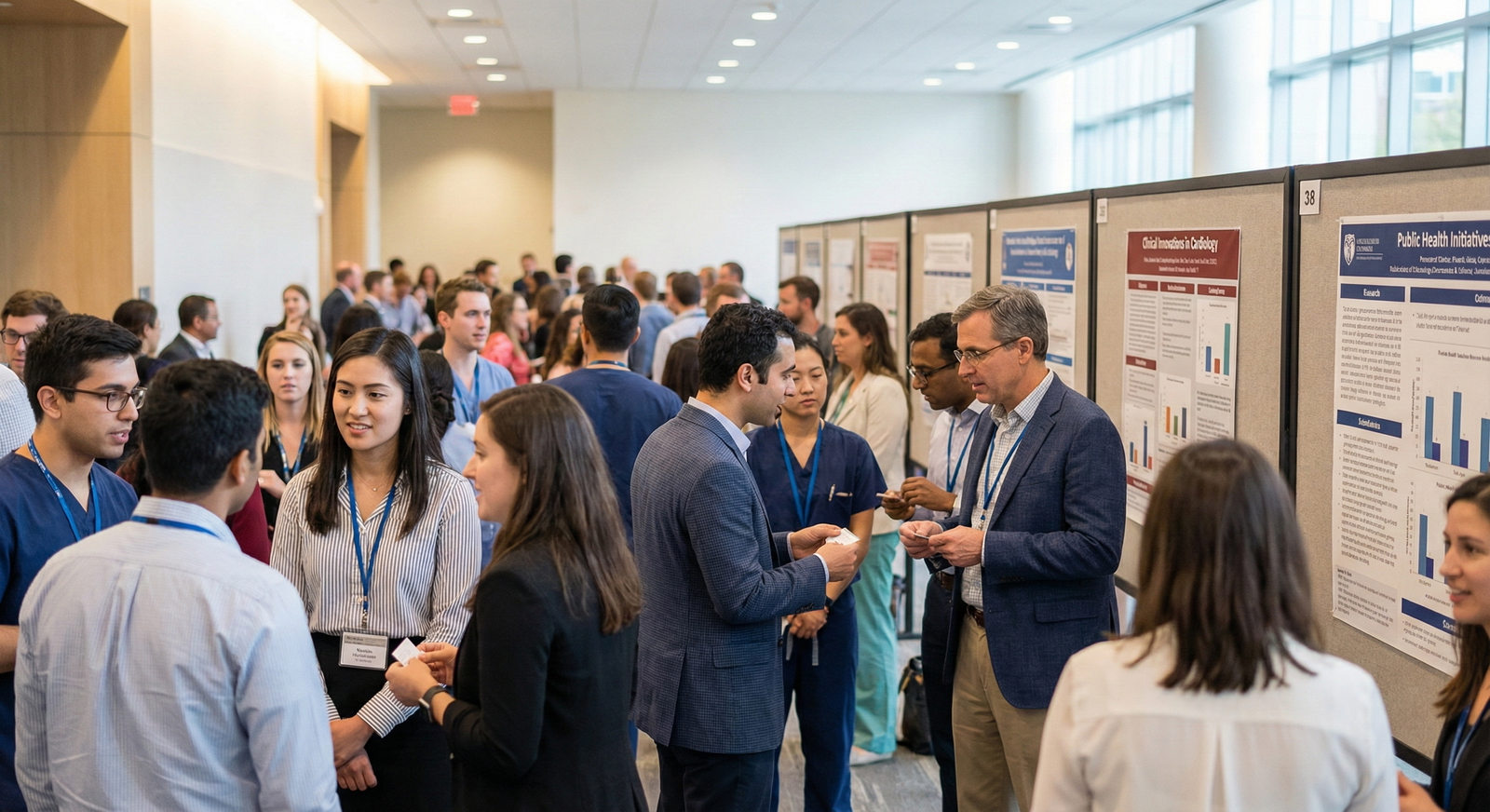
Even during a demanding preliminary medicine year, well‑planned conference networking can expand your world beyond your own hospital and introduce you to leaders in your future specialty.
Should a Prelim Intern Go to Conferences?
If you can attend one well‑chosen conference during your prelim year—and especially if you’re presenting—it can be powerful for:
- Meeting potential future mentors and collaborators in your advanced specialty
- Learning about fellowships and niche career paths
- Strengthening your CV with a poster or oral presentation
Ideal scenarios:
- Presenting an abstract (case report, QI project, retrospective study)
- Attending your advanced specialty’s main annual meeting (e.g., AAN for neurology, ASA for anesthesiology, RSNA for radiology)
- Joining a focused trainee‑oriented session or mentoring workshop
Preparing for Conference Networking
Maximize your conference investment with intentional prep:
Clarify your goals
- Are you seeking research mentors? Fellowship insight? Education roles? Industry exposure?
- Write down 2–3 priorities.
Pre‑conference outreach
- Identify 3–5 people (faculty, program directors, researchers) you’d like to meet.
- Email them 2–3 weeks before the meeting:
- Mention a paper of theirs you read or a session they’re leading.
- Ask if they’d have 10–15 minutes to talk at some point during the conference.
Prepare your “30‑second story”
- Who you are: “I’m a preliminary medicine intern at [Institution].”
- Your path: “I’m going into [specialty] next year.”
- Your interests: “I’m especially interested in [clinical/research niche].”
- Your ask: “I’d love your advice on how to stay involved in [topic] early in my training.”
At the Conference: Practical Networking Tactics
- Attend trainee events: Residents’ mixers, early‑career luncheons, or mentorship breakfasts are high‑yield spaces for conference networking.
- Ask thoughtful, concise questions at talks or poster sessions. Afterward, introduce yourself briefly to the speaker.
- Follow a simple rule: 3 genuine conversations per day. That’s enough to build a meaningful set of new connections over a 2–3 day meeting.
Don’t measure success by how many people you “meet”; measure it by how many people you can credibly follow up with afterward.
Post‑Conference Follow‑Up
Within a week of the conference:
- Send personalized emails to people you spoke with:
- Thank them for their time.
- Mention a specific point you found helpful.
- Offer a clear next step (“May I send you my CV to explore project possibilities?” or “Could I reach out again closer to fellowship application season?”).
This is where medical networking becomes durable; the follow‑up converts brief encounters into ongoing relationships.

Strategic Projects and Visibility: Doing More with Less Time
You don’t need a massive randomized trial during your prelim year, but you do want a few strategic contributions that increase your visibility and credibility.
Choosing the Right Scope as a Prelim Resident
Given your limited timeframe and heavy clinical load, prioritize projects that are:
- Feasible in 6–9 months
- Low‑logistics (no complex IRB or multi‑center collaboration required)
- Aligned with your advanced specialty, if possible
High‑yield options:
Case Reports / Case Series
- Ideal when you encounter a rare disease, unusual presentation, or novel management approach.
- Can often be completed with a small team and lead to a poster presentation at a national or regional conference.
Quality Improvement (QI) Projects
- Focus on something you see every day: discharge delays, handoff quality, code status documentation.
- QI is particularly feasible within a hospital system and often encouraged by residency leadership.
Small Retrospective Chart Reviews
- Collaborate with a faculty mentor who already has a data set or an ongoing project.
- You contribute analysis, writing, or literature review.
Using Projects for Networking and Mentorship
Projects are not only CV lines—they are relationship‑builders:
- Working closely with a mentor over months deepens the relationship beyond a single rotation.
- Co‑authors (fellows, other residents, statisticians) become part of your extended professional network.
- Presentations create opportunities for conference networking and external introductions.
Example:
You notice frequent readmissions for heart failure patients from your wards rotation. You approach your cardiology attending:
“I’ve noticed we have several heart failure readmissions within 30 days. I’m a prelim intern going into neurology, but I’m very interested in systems‑based improvements. Is there an existing effort to look at this, or could a small QI project be useful? I’d love to help if so.”
This may lead to:
- A practical QI project
- Introduction to the hospital’s QI team or data analyst
- A poster or abstract at a medicine or cardiology meeting
All of that came from one carefully‑framed question.
Protecting Yourself While You Network: Boundaries, Burnout, and Authenticity
It’s tempting to think you should say “yes” to every opportunity in your prelim IM year, but that’s a recipe for burnout. Sustainable networking in medicine requires clear boundaries.
Set Realistic Capacity
Ask yourself honestly:
- How many hours per week can you reliably dedicate to networking and scholarly work without harming your clinical performance or well‑being?
- What 2–3 networking priorities matter most this year?
Examples of realistic commitments for many prelim interns:
- 1–2 meetings with mentors per month
- 1 modest project (case report or QI initiative)
- 1 regional or national conference with a poster/presentation
- Occasional department or residency social events
More isn’t always better; consistency beats intensity.
Avoid Common Pitfalls
Over‑promising on projects
- If you’re asked to join a complex study with a heavy time commitment, it’s okay to say:
- “I’m very interested, but I want to be honest about being a prelim intern with a demanding clinical schedule. Could we define a narrow role for me that I can realistically complete this year?”
- If you’re asked to join a complex study with a heavy time commitment, it’s okay to say:
Networking only within your future specialty
- You still need strong preliminary medicine year advocates, especially if you might return to IM for hospitalist work or future fellowship considerations.
- Internal medicine faculty see your day‑to‑day performance and can become powerful recommenders.
Transactional interactions
- If you only appear when you need a letter or opportunity, relationships feel shallow.
- Instead, send occasional updates, share a relevant article, or simply express gratitude for helpful advice—even when you don’t “need” anything.
Staying Authentic
You don’t have to alter your personality to network effectively:
- Introverts can excel at one‑on‑one mentorship, thoughtful emails, and small‑group discussions.
- Extroverts may enjoy conference receptions and resident social events as networking venues.
In all cases, authenticity is key:
- Be transparent about your career stage: “I’m still exploring whether I want to focus on X or Y within neurology.”
- Admit what you don’t know and ask for guidance. Most senior physicians remember how confusing early training was and respect honest curiosity.
Frequently Asked Questions (FAQ)
1. I’m overwhelmed on wards. When is the best time in the year to focus on networking?
Early in the year (July–September), prioritize observing, building your clinical foundation, and identifying potential mentors. From October onward, when you’re a bit more efficient:
- Schedule one mentorship meeting every 4–6 weeks
- Identify one project to commit to by mid‑year
- Aim to solidify at least 2–3 strong faculty relationships by March–April
You don’t need to network heavily every month; periodic, focused efforts are enough.
2. How do I ask for a letter of recommendation as a prelim intern?
Ask faculty who have:
- Seen you over multiple weeks or rotations
- Observed you in challenging or longitudinal situations (ICU, wards blocks, complex discharges)
- Given you feedback and watched your growth
Approach them 2–3 months before you need the letter:
“I’ve really valued working with you on [rotations]. I feel you’ve seen me grow clinically and professionally. Would you feel comfortable writing a strong letter of recommendation for me for [fellowship/job/opportunity]?”
Provide your CV, personal statement draft, and any relevant instructions.
3. Is it worth networking in internal medicine if I’ll never be an internist?
Yes. Your preliminary medicine year shapes your identity as a physician. Even if you plan a career in radiology or dermatology, IM mentors:
- Strengthen your overall clinical judgment
- Provide credible LORs and references
- Connect you to hospital‑based QI, education, or leadership opportunities
Additionally, your future advanced specialty colleagues often work closely with internists; understanding that culture and having trusted medicine allies helps throughout your career.
4. I’m at a smaller or community program without big‑name researchers. How can I still build a strong network?
You can still build a powerful network by:
- Focusing on local mentorship for clinical growth and QI projects
- Presenting at regional or national conferences, even with case reports or QI abstracts
- Joining national specialty societies (many have trainee memberships and virtual events)
- Using email and virtual meetings to connect with external mentors who share your interests
High‑impact relationships don’t have to be local; your medical networking can extend nationally through deliberate outreach and conference participation.
Networking in medicine during a prelim IM year doesn’t require being everywhere, doing everything, or knowing everyone. It requires intentionality: show up well clinically, identify a few key mentors, commit to one or two meaningful projects, and leverage targeted conference networking and professional societies. Done thoughtfully, your preliminary medicine year becomes much more than a bridge—it becomes the foundation of a durable, supportive professional network that will follow you throughout your career.