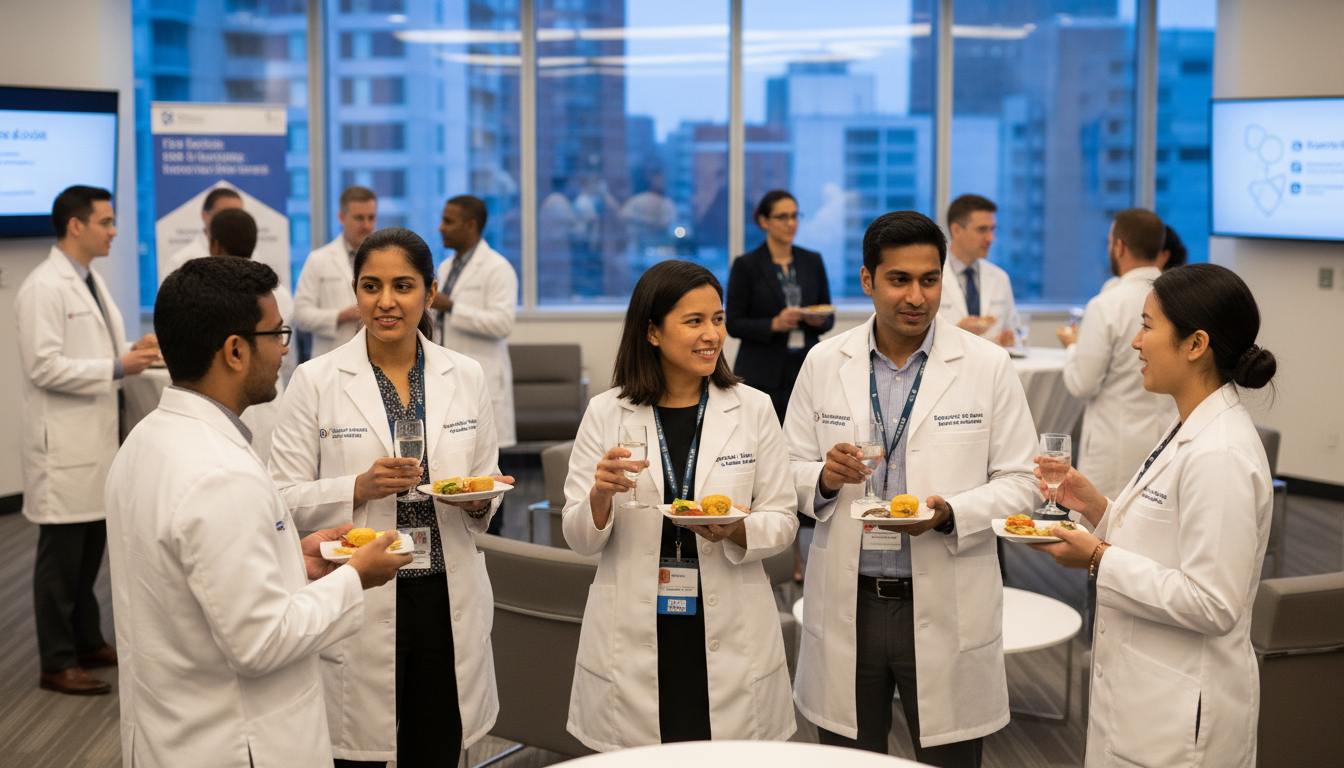
Why Networking Matters More for Caribbean IMGs in Anesthesiology
As a Caribbean international medical graduate (IMG) interested in anesthesiology, you are competing in one of the more competitive specialties while carrying additional perceived risk factors in the eyes of some program directors: offshore training, variable US clinical exposure, and questions about exam performance or clinical readiness.
Networking in medicine is not optional for you—it is strategic risk reduction.
For a Caribbean medical school residency applicant in anesthesiology, networking:
- Humanizes your file in a stack heavily filtered by scores and school name
- Builds advocates who can vouch for your work ethic and clinical ability
- Opens doors to opportunities (audition rotations, research, subcommittee work) that never appear on public websites
- Provides real-time intelligence about which programs are IMG-friendly and what they value in anesthesia applicants
- Creates longitudinal mentorship that guides you through med school, the anesthesia match, residency life, and beyond
Well-networked SGU residency match candidates and other Caribbean IMGs often report that their interviews and eventual anesthesiology residency positions came from relationships built months to years before ERAS submission.
Your goal is not superficial “schmoozing.” It is to build authentic, professional relationships that demonstrate:
- Reliability
- Curiosity about anesthesiology
- Commitment to continual improvement
- Team-first attitude in perioperative care
The rest of this article breaks down exactly how to do that as a Caribbean IMG targeting the anesthesia match.
Core Principles of Networking for Caribbean Anesthesia Hopefuls
Before specific tactics, it helps to understand the principles that separate effective networking from time-wasting “just saying hi to people.”
1. Think Long-Term, Not Transactional
Weak approach: “Can you help me get an anesthesiology residency interview?”
Strong approach: “I admire your career path in anesthesiology. I’d love to learn how you navigated early training decisions and what you’d recommend I focus on at my stage.”
If your first contact is a request for a letter or an interview hook, you appear transactional. Relationship-first, ask-for-help-later is the sustainable strategy.
2. Show, Don’t Just Say
Anyone can say, “I’m very interested in anesthesiology.”
You stand out by demonstrating that interest:
- Joining anesthesia interest groups
- Attending anesthesiology grand rounds
- Completing an elective or sub-internship in anesthesia
- Participating in a perioperative QI project
- Reading and discussing anesthesia literature with mentors
Mentors and program faculty remember the student who followed through.
3. Play to Your Strengths as a Caribbean IMG
You may not control your school’s brand perception, but you do control:
- Adaptability – Many Caribbean IMGs have already navigated a move to a new country and healthcare system
- Work ethic – Juggling complex clinical schedules, exams, and visas
- Resilience – Overcoming initial rejections, visa barriers, or failed attempts
- Diverse patient exposure – Many have seen broad pathology, tropical medicine, and resource-limited care
When networking, don’t apologize for being a Caribbean IMG; instead, connect your background to what makes you a strong future anesthesiologist (calm under pressure, flexible problem-solver, cross-cultural communicator).
4. Give Before You Ask
Even as a student, you can offer value:
- Volunteer to help with data entry for a QI or research project
- Offer to proofread or format slides/posters for a busy mentor
- Connect younger students to resources they shared with you
- Help with logistical tasks for departmental events
People help those who help them.

Building Your Network During Caribbean Med School and Clinical Rotations
You don’t need to be in residency to start meaningful medical networking. The pre-clinical and clinical years are when you lay the foundation that will directly impact your anesthesia match.
A. Start Where You Are: Your Caribbean Medical School Ecosystem
Even if your campus is not in the U.S., it already contains critical networking opportunities:
Faculty with U.S. connections
- Many Caribbean medical schools employ faculty who trained or worked in U.S. anesthesiology programs.
- Identify them early (bios on the website, CVs, seminar talks).
- Attend their office hours and ask:
- “Could you share how anesthesiology has evolved since you trained?”
- “What do you think U.S. anesthesia programs look for in Caribbean IMGs?”
Alumni channels and SGU-style match data
- Most large Caribbean schools (e.g., SGU, AUC, Ross) publish match lists.
- Look for SGU residency match or your school’s equivalent in anesthesiology and related fields.
- Reach out via LinkedIn or alumni platforms:
- “I saw you matched into anesthesiology from [School]. I’m a current MS2 very interested in the specialty. Would you be open to a short 15–20 minute conversation about your path?”
Student organizations and interest groups
- If there is no anesthesia interest group, start one.
- Invite alumni anesthesiologists via Zoom to speak about:
- “Day in the Life of an Anesthesiologist”
- “How I Matched Anesthesiology as a Caribbean IMG”
You become a connector—not just a seeker—which is valuable networking capital.
B. Maximizing Clinical Rotations for Networking
Your U.S. clinical rotations are your strongest arena for meaningful networking in medicine.
1. Treat Every Rotation as a Potential Reference
Even on non-anesthesia rotations (IM, surgery, ICU), anesthesiology residency programs care about:
- Work ethic
- Team behavior
- Reliability
- Capacity to handle acutely ill patients
Action steps:
- Be early, stay engaged to the end of cases/rounds
- Volunteer for procedures (arterial lines, basic airway skills where allowed)
- Ask for feedback midway through the rotation and respond to it
This builds a base of strong letters of recommendation, which is critical for any anesthesia match applicant—especially a Caribbean IMG.
2. Identify Anesthesia Allies on Other Services
On surgery or ICU rotations, look for opportunities to connect with anesthesiologists:
- Ask the surgery attending or resident:
- “Would it be okay if I briefly observed anesthesiology for part of today’s case when I’m not needed here?”
- In ICU, anesthesiologists often rotate as intensivists. Introduce yourself:
- “I’m very interested in anesthesiology and critical care. Could I ask you a few questions after rounds about your training path?”
Keep a simple contact log (Excel/Notion): name, role, email, where met, any follow-up topics.
3. Sub-Internships and Electives in Anesthesiology
Anesthesiology electives and sub-internships are where your clinical performance and networking overlap most clearly.
To maximize them:
- Email the clerkship coordinator before the rotation starts:
- Introduce yourself as a Caribbean IMG truly interested in anesthesiology
- Ask about expectations and opportunities (case reports, QI projects, journal club)
- Early in the rotation, ask an attending or PD (if appropriate):
- “I’m very motivated to pursue anesthesiology residency. What behaviors or skills during this rotation would make you confident recommending me for the specialty?”
- Volunteer to present at a brief case-based teaching session or journal club. This shows initiative and academic curiosity.
4. How to Ask for Letters of Recommendation Professionally
Near the end of a rotation where you’ve consistently performed well:
- Ask in person if possible, a few days before the end:
- “I’ve really enjoyed working with you and learned a lot on this rotation. I’m applying to anesthesiology this cycle. Would you feel comfortable writing a strong letter of recommendation on my behalf?”
The word “strong” gives them permission to decline if they cannot honestly support you.
If they say yes:
- Follow with an email including your CV, draft personal statement, ERAS ID, and a short bullet list of cases or contributions you made that they might want to mention.
Conference and Online Networking: Extending Your Reach Beyond Rotations
As a Caribbean IMG, your geographic and institutional limitations make conference networking and online presence especially important.

A. Using Conferences Strategically as a Caribbean IMG
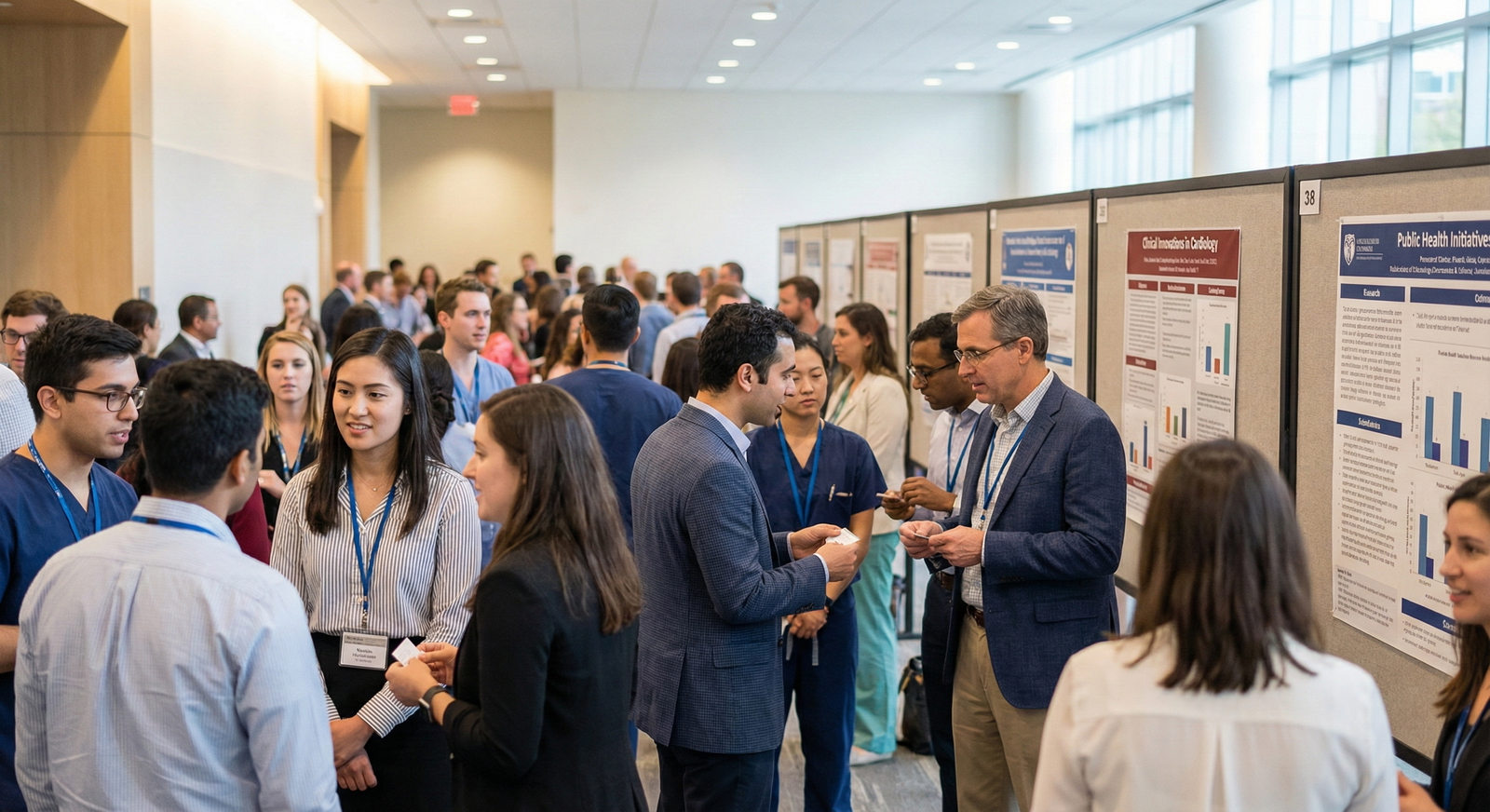
Conferences are not about collecting lanyards—they’re about targeted relationship-building.
Relevant conferences for anesthesiology-bound IMGs include:
- American Society of Anesthesiologists (ASA) annual meeting
- Specialty society meetings: Society of Critical Care Anesthesiologists (SOCCA), regional anesthesia societies, etc.
- Local/regional anesthesia and perioperative medicine symposia near your rotation sites
1. Get There with a Purpose
If finances are tight:
- Prioritize local or regional conferences while on rotations
- Apply for student travel scholarships or discounted registration
- Go with at least one of:
- A poster presentation
- A case report
- A QI project abstract
Even a small poster from your rotation is valuable because it gives you a conversation anchor.
2. Conference Networking Tactics That Work
Before the conference:
- Use the program to identify anesthesiology program directors, associate PDs, or faculty from IMG-friendly programs
- Email them briefly:
- “I’m a Caribbean IMG medical student rotating in [city], very interested in anesthesiology at your institution. I’ll be attending [conference] and would value 5–10 minutes of your time for advice if you’re available.”
At the conference:
- Attend sessions where your target people are speaking
- Ask one thoughtful question at the end of a talk (introduce yourself by name and status)
- Approach them afterward:
- “Thank you for your talk. I’m [Name], a Caribbean IMG student. I’m particularly interested in [topic]. Would it be okay to email you a brief follow-up question about resources or potential ways a student might get involved in similar work?”
After the conference:
- Send a short, specific thank-you email within 48 hours:
- Mention one thing you learned from them
- If relevant, attach your CV and express interest in future anesthesia opportunities
B. Online Platforms: Turning Social Media Into Professional Leverage
1. LinkedIn for Medical Networking
Set up a clean, professional LinkedIn:
- Headline: “Caribbean Medical Student (MS3) | Aspiring Anesthesiologist | Interested in Perioperative Medicine and Critical Care”
- About section: Include your interests (anesthesiology, regional anesthesia, ICU, global health) and exam status (USMLE/COMLEX if applicable)
- Experience: Rotations, research, teaching, leadership
Networking steps:
- Connect with anesthesia residents and faculty at programs where you rotate or hope to apply
- Personalize connection requests:
- “I’m a Caribbean IMG interested in anesthesiology and saw your post about [topic]. I’d love to follow your work and learn more about your experience at [program].”
Use LinkedIn messaging sparingly and respectfully, focusing on advice, not favors.
2. Academic Twitter / X and Specialty Societies
Many anesthesiologists are active on X (formerly Twitter):
- Follow: major anesthesia journals, prominent anesthesiologists, ASA, program accounts
- Engage by commenting thoughtfully on educational threads (not just “Great thread!”)
- Share your own learning (without patient identifiers): brief reflections on anesthesia cases or articles you read
This helps you gradually become a recognizable name in an online anesthesiology community.
3. Email Etiquette for Cold Outreach
When emailing a potential mentor or faculty:
- Use a clear subject line:
- “Caribbean IMG interested in anesthesiology – seeking brief career advice”
- Keep it short (5–7 sentences):
- Who you are (school, year, interest in anesthesiology)
- How you found them (talk, publication, conference, rotation)
- One or two specific questions or a request for a brief call
If no reply after 10–14 days, one polite follow-up is acceptable. If still nothing, move on.
Mentorship in Medicine: Finding and Using Mentors Wisely
Networking gets you contacts; mentorship in medicine turns some of those contacts into real guides and advocates.
A. Types of Mentors You Need as a Caribbean IMG in Anesthesiology
Career Mentor (Big Picture)
- Helps you decide: anesthesiology vs. other fields, subspecialties, long-term goals
- Often an attending anesthesiologist or senior resident
Process Mentor (CV and Match Strategy)
- Understands the anesthesia match landscape for IMGs
- Helps plan your exam timing, rotations, and ERAS strategy
Near-Peer Mentor (Recently Matched or Current Resident)
- May be Caribbean IMG themselves
- Shares practical tips and recent experiences
You may not find all three in one person; that’s normal.
B. How to Turn a Contact Into a Mentor
Mentorship usually evolves; you don’t need to start by saying, “Will you be my mentor?”
Instead:
- Have one or two short, focused conversations
- Follow their advice and report back
- “I read the article you recommended on [topic]. I especially learned X. I applied it during my last rotation by doing Y.”
- Ask if they’d be open to periodic check-ins (e.g., every 2–3 months)
Mentors are more willing to invest when they see you’re coachable and proactive.
C. Setting Expectations and Respecting Boundaries
When you feel the relationship is becoming mentorship:
- Clarify expectations in a brief message:
- “I find your insights very helpful as I plan for an anesthesiology residency. Would it be okay if I updated you every few months and occasionally asked for advice on decisions like rotation selection and applications? I’ll be respectful of your time.”
Respect their limits:
- Don’t send multiple long emails with vague questions
- Make meetings focused: have 3–4 specific questions prepared
- Always show appreciation and share outcomes (e.g., interview invites, match result)
Applying Your Network to the Anesthesia Match: From Preparation to Residency
Networking is not just to “get interviews.” It supports every stage of your path as a Caribbean IMG in anesthesiology.
A. Using Your Network Before ERAS Submission
Your network can:
- Review your CV and personal statement
- Anesthesiology mentors can ensure you highlight perioperative skills appropriately
- Help you target IMG-friendly programs
- Especially those where Caribbean IMG alumni have matched or where faculty show openness
- Alert you to research or QI projects you can quickly contribute to before ERAS
- Advise on whether programs may consider visa sponsorship, crucial for many Caribbean IMGs
B. During Interview Season: Network Intelligence and Professionalism
Mentors and contacts can:
- Provide program-specific insights:
- “This program loves candidates who can articulate interest in regional anesthesia.”
- “Here, they care a lot about teamwork stories and dealing with intra-op stress.”
- Offer mock interview practice or connect you to residents who will
- Provide guidance on thank-you emails and post-interview communication
Always be honest about your interest level. Word spreads quickly in relatively small fields like anesthesiology.
C. Once You Match: Continuing to Network in Residency
Your networking doesn’t stop after you secure a Caribbean medical school residency in anesthesiology. In residency, networking helps you:
- Land fellowships (cardiac, critical care, pain, regional)
- Build relationships in perioperative medicine and ICU teams
- Prepare for academic, private practice, or global health careers
Concrete steps for PGY-1/CA-1 years:
- Join committees (quality improvement, patient safety)
- Seek out national societies’ resident sections (ASA Resident Component)
- Present at least one poster or talk during residency
- Maintain ties with Caribbean IMG students coming behind you—become the mentor you wish you had
This is also where your earlier SGU residency match-type network and Caribbean IMG alumni network becomes resources for job searches and fellowships later.
FAQs: Networking in Medicine for Caribbean IMGs in Anesthesiology
1. I’m at a Caribbean school without a home anesthesia program. Can I still be competitive?
Yes—but you will need to be more deliberate. Secure strong anesthesia electives and sub-internships at U.S. institutions, cultivate mentors there, and aim for excellent letters. Use conference networking and online platforms to compensate for the lack of a home department. Many anesthesiology residents from SGU and other Caribbean schools matched this way.
2. How early should I start focusing on anesthesiology networking if I’m not 100% sure of the specialty yet?
You can start exploring as early as pre-clinical years—attend anesthesia talks, shadow, talk to anesthesiologists. You don’t need to commit fully to anesthesia to start building a network; mentors often help you clarify your fit. By early MS3 (or equivalent), if you’re leaning strongly toward anesthesiology, you should actively cultivate specialty-specific mentors.
3. What if I’m introverted and feel uncomfortable with networking?
Networking in medicine doesn’t require being loud or extroverted. It’s about consistent, respectful, one-on-one conversations and following through. Focus on small steps: introduce yourself to one attending per week, send one follow-up email after each rotation, ask one thoughtful question during a conference. Over time, it will feel more natural.
4. Is it okay to ask mentors directly if they can help me get an interview at their program?
Timing and relationship depth matter. Early on, avoid direct asks. As the relationship matures and they know your work well, it can be appropriate to say: “I’m very interested in [Program], and I value your insight. Do you think my application is a good fit there, and is there anything I can do to be on their radar?” Let them decide if and how to advocate. Your primary focus should always remain on performance and professionalism; advocacy is a bonus, not an entitlement.
By approaching medical networking systematically—through rotations, conferences, online platforms, and mentorship—you can transform the inherent challenges of being a Caribbean IMG into a compelling story of resilience, initiative, and growth. In a field like anesthesiology, where calm collaboration and trust are central, those qualities are exactly what the right programs are looking for.