Why Networking Matters Even More for DO Graduates in Ophthalmology
For a DO graduate interested in ophthalmology, networking in medicine is not just “nice to have”—it can be a decisive factor in your career trajectory. Ophthalmology is a small, relationship-driven specialty with limited residency spots and a tight-knit professional community. At the same time, DO applicants can still encounter misconceptions or limited exposure at some academic centers. Strategic medical networking helps you:
- Get on program directors’ and faculty’s radar before the ophtho match
- Access research, away rotations, and letters that strengthen your application
- Find mentors who understand the DO graduate residency landscape
- Learn the hidden curriculum: what programs actually value, who to contact, and how decisions are made
- Build a professional reputation that will serve you long after residency
This article focuses specifically on networking in medicine for a DO graduate pursuing ophthalmology residency—how to approach it, who to connect with, and what concrete steps to take before and during the osteopathic residency match process.
Understanding the Networking Landscape in Ophthalmology as a DO
Ophthalmology is unique in several ways that shape how you should approach medical networking and mentorship in medicine.
1. The Small, Relationship-Driven Nature of Ophthalmology
Ophthalmology is a relatively small specialty. Faculty often know each other across institutions, especially within subspecialties (retina, cornea, glaucoma, pediatric ophthalmology, etc.). Word of mouth travels quickly.
What this means for you:
- Positive impressions multiply: A strong work ethic on a rotation or project can lead to multiple recommendations and informal advocacy.
- So do negative ones: Chronic lateness, poor communication, or unprofessional behavior can spread within this close-knit circle.
- Reputation can precede your application: Many ophthalmology program directors will hear about promising students via colleagues well before interviewing.
2. The DO Perspective: Opportunities and Realities
While the landscape is improving, many DO students still face:
- Less built-in exposure to ophthalmology compared with some MD-focused institutions
- Fewer home ophthalmology programs, especially those with a long-standing research infrastructure
- Continued variability in how programs view DO applicants, despite unified ACGME accreditation
Networking helps address these by:
- Bridging institutional gaps: Connecting you to research mentors, away rotations, and informal advisors outside your home school.
- Humanizing your application: Once faculty know you personally, your degree letters matter less than your performance and character.
- Surfacing DO-friendly programs: Mentors and upper-level residents can steer you toward programs with a strong track record of welcoming DO graduates.
3. Types of Networking You Need
In ophthalmology, three overlapping forms of networking in medicine are essential:
Local networking – At your home institution or regional hospitals:
- Ophthalmology faculty, general ophthalmologists, optometrists involved in teaching
- Residents, fellows, and departmental administrators
Conference networking – At regional, national, and subspecialty meetings:
- American Academy of Ophthalmology (AAO)
- ARVO (research-focused)
- Subspecialty societies (ASCRS, ASRS, AAPOS, etc.)
Digital networking – Online platforms and virtual spaces:
- Email, LinkedIn, Doximity, and institutional networking boards
- X (Twitter) and other academic social media for ophthalmology
- Virtual conferences, webinars, and interest group meetings
Your strategy should intentionally involve all three.

Building Your Core Network: Mentors, Sponsors, and Peers
Not all connections are equal. To succeed in the ophthalmology residency and ophtho match process as a DO graduate, you need three key groups in your medical networking ecosystem.
1. Identifying and Securing Strong Mentors in Medicine
A mentor is someone who gives you guidance, feedback, and long-term support. For a DO applicant to ophthalmology, try to assemble a small “board of advisors” rather than relying on one person.
Aim for mentors in these categories:
Clinical ophthalmology mentor (MD or DO)
- Ideally at your home institution or a nearby academic center
- Sees your clinical work directly (clinic, OR, consults)
- Can write a detailed letter and speak to your patient care skills
Research mentor in ophthalmology
- May or may not be at your home institution
- Helps you complete tangible scholarly output: posters, abstracts, publications
- Can co-present with you at conferences, creating visible medical networking opportunities
DO-specific advisor
- A DO ophthalmologist (or senior DO resident/fellow)
- Understands unique challenges in the osteopathic residency match process
- Can recommend DO-friendly programs and strategies tailored to your profile
Career/strategy mentor
- Someone with experience in graduate medical education (GME), program leadership, or advising
- Helps with big-picture decisions (gap years, away rotations, how many programs to apply to)
How to Approach a Potential Mentor
Use a concise, respectful template like:
Dear Dr. [Name],
I’m a [3rd-year DO student at X school] with a strong interest in ophthalmology. I have particularly enjoyed [specific aspect of their work, paper, talk, or clinic experience].
I’m hoping to learn more about ophthalmology as a career and to get involved in [clinical experience / research / quality improvement]. Would you be open to a brief meeting (15–20 minutes) to discuss how I might best prepare for an ophthalmology residency and whether there might be opportunities to work with your team?
Thank you for your time and consideration.
Best regards,
[Your Name, DO Class of ____]
Be prepared with:
- A 1-page CV
- A brief “elevator pitch” (who you are, why ophthalmology, what you’re looking for)
- One or two specific questions (e.g., “How do you view DO applicants?” “What experiences would make me more competitive?”)
2. Recognizing the Role of Sponsors
Mentors advise; sponsors advocate. A sponsor is someone who:
- Recommends you to program directors
- Invites you to co-author or present
- Suggests you for opportunities (away rotations, research projects, leadership roles)
In ophthalmology, sponsors often include:
- Division chiefs or department chairs
- Well-known subspecialists with strong national reputations
- Faculty who trained at, or are close to, programs you’re targeting
You usually earn sponsorship through:
- High-quality work and reliability
- Longitudinal interaction (e.g., 6–12 months on a research project)
- Demonstrating professionalism and initiative
As a DO graduate, securing at least one strong sponsor who believes in you and is willing to informally or formally speak on your behalf can substantially influence your ophthalmology residency application outcome.
3. Don’t Overlook Peer Networking
Peers—co-residents, co-students, and early-career ophthalmologists—can be powerful allies:
- They share live intel (“This program loves DOs,” “Apply here, the PD is very supportive of nontraditional paths”).
- They may flag you to their programs, especially if they’re current residents.
- They can collaborate on multi-institution projects or conference networking events.
Practical ways to expand your peer network:
- Join ophthalmology interest groups at your school and regional institutions
- Actively participate in online ophthalmology communities (professional and moderated)
- Add co-authors, co-rotators, and friendly residents on LinkedIn or similar platforms, with a short personalized message
Mastering Conference Networking in Ophthalmology
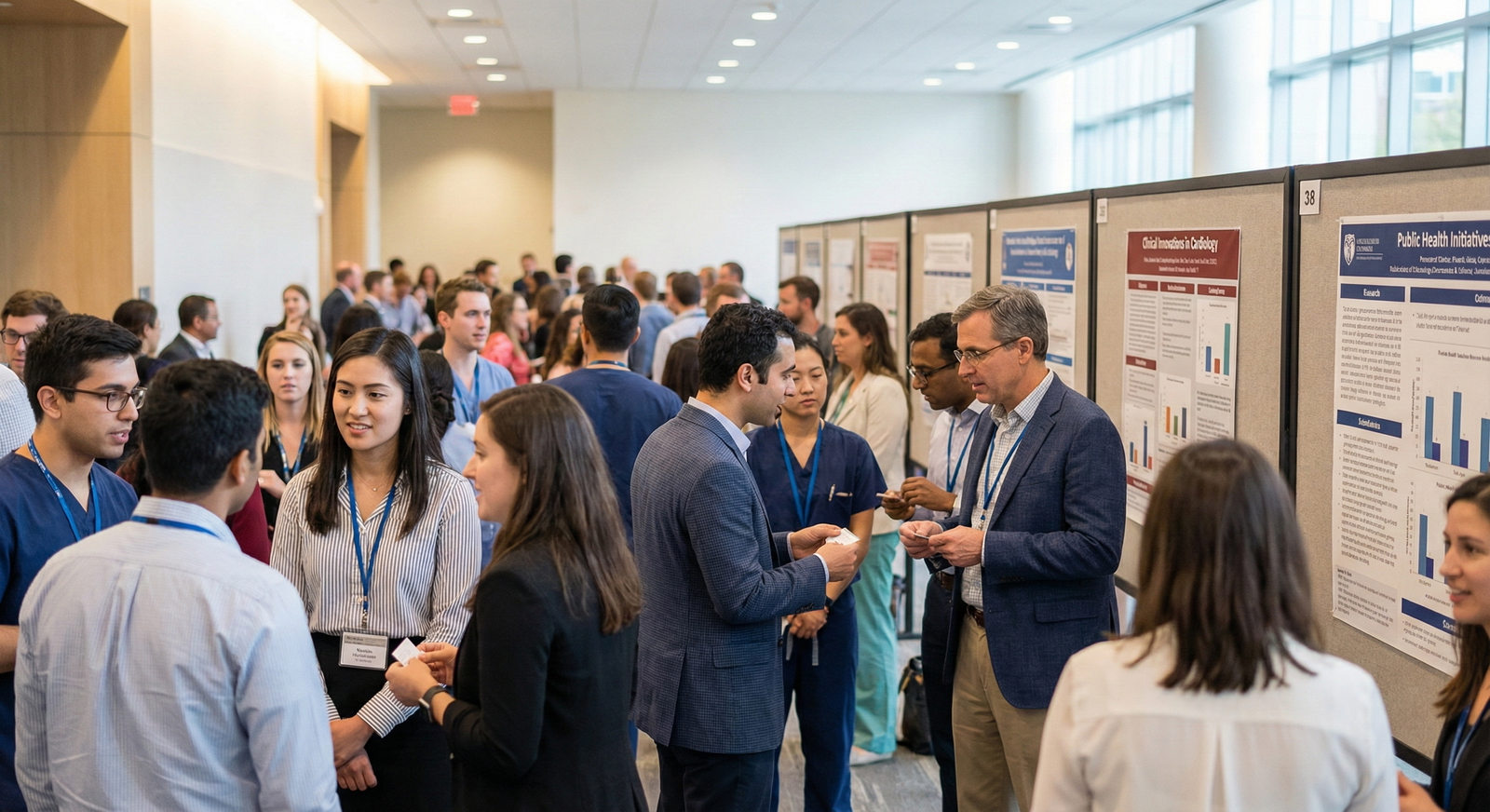
Conference networking is one of the most powerful tools for DO graduates pursuing ophthalmology, because it lets you bypass institutional silos and meet the broader community on equal footing.
1. Choosing the Right Conferences
For a DO graduate early in the process (MS2–PGY1), prioritize:
- AAO (American Academy of Ophthalmology) – The flagship U.S. meeting.
- ARVO (Association for Research in Vision and Ophthalmology) – Best if you have or want research; very research heavy.
- Regional ophthalmology society meetings – Smaller, more intimate, often easier for meaningful conversations.
- Subspecialty meetings (depending on your interests):
- ASCRS – Cataract and refractive
- ASRS – Retina
- AAPOS – Pediatric ophthalmology and strabismus
If travel budget is limited, target one major meeting (like AAO) and one regional meeting where your mentors or target programs are likely to attend.
2. Preparing Before the Conference
Effective conference networking is mostly about preparation:
Know who will be there
- Ask mentors which programs or colleagues to connect with.
- Review program schedules and speaker lists.
- Identify 5–10 key people (program directors, faculty, residents) at programs you’re interested in.
Reach out in advance
Short, polite email example:Dear Dr. [Name],
I’m a DO medical student from [School] with a strong interest in ophthalmology, particularly [subspecialty/area]. I’ve read your work on [specific topic] and will be attending [Conference] this year.
If you’ll be at the meeting, I’d be very grateful for the chance to briefly introduce myself and learn more about your program and your work. Would you have 10 minutes during the conference for a quick conversation between sessions or at your poster/presentation?
Sincerely,
[Your Name]Have something to talk about
- Ideally, be presenting a poster or case (even as a co-author).
- If not, be ready to discuss ongoing or planned projects, your interests (e.g., global ophthalmology, tele-ophthalmology), and your DO perspective.
3. At the Conference: How to Actually Network
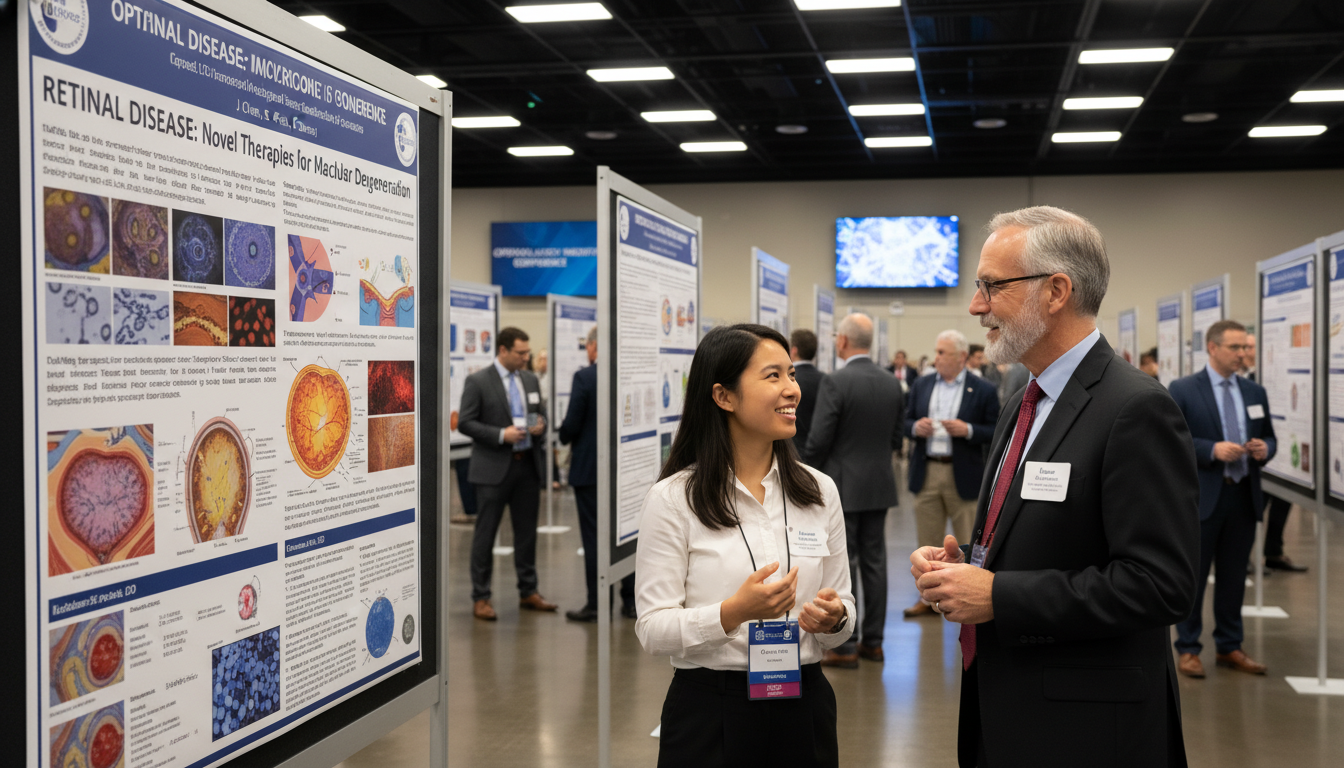
During sessions and poster presentations:
- Approach speakers or presenters right after their talk/poster.
- Start with a simple opener:
- “Thank you for your excellent talk on X…”
- “I’m a DO student interested in ophthalmology; I really appreciated how you…”
- Ask one or two thoughtful questions, not an interrogation.
- If the interaction goes well, ask:
- “Would you be open to a brief follow-up by email? I’d love to learn more about your work and training at [institution].”
At social or networking events:
- Many conferences have resident/fellow receptions or “meet the program” events.
- Introduce yourself succinctly:
- “Hi, I’m [Name], a DO student from [School]. I’m very interested in ophthalmology and especially [subspecialty], and I’m hoping to learn more about your program.”
- Listen actively and ask about:
- Resident culture
- Surgical volume
- How they view DO applicants
- Away rotation policies
Important: You do not need to lead with being a DO, but you also shouldn’t avoid it. Normalize it with confidence:
“I’m a DO graduate from [School] and I’ve been fortunate to get strong exposure to [X]. I’m particularly excited about [Y in ophthalmology].”
4. Following Up After Conference Networking
Within 3–5 days:
Send personalized emails:
- Remind them where you met.
- Reference something specific you discussed.
- If appropriate, attach your CV and briefly mention your interest in their institution or project.
Example:
Dear Dr. [Name],
It was a pleasure meeting you at the [Conference] poster session on [topic]. I appreciated your insights into [specific point], particularly regarding how your program incorporates DO graduates into your residency.
As I mentioned, I’m a DO student from [School] with a strong interest in [subspecialty]. I’ve attached my CV for your reference. If any research or clinical shadowing opportunities arise at [Institution], I would be eager to be considered and to contribute.
Thank you again for your time and advice.
Best,
[Your Name]
This is how conference networking evolves into long-term mentorship and sometimes sponsorship.
Strategic Networking for the Ophthalmology Residency and DO Match Process
Networking is most powerful when it is aligned with the timeline of your ophtho match strategy as a DO graduate.
1. MS1–MS2 / Preclinical Years
Focus: Exploration, initial relationships, early research.
Key networking actions:
- Identify the ophthalmology faculty at your school or region and ask to shadow.
- Join ophthalmology interest groups locally and nationally (e.g., AAO medical student sections, student-run ophthalmology organizations).
- Attend at least one local or virtual ophthalmology conference or webinar.
- Seek your first research or QI project—even a chart review or case series can be a strong entry point.
- Begin connecting on LinkedIn or professional platforms with residents and junior faculty you meet.
2. MS3 / Core Clinical Year
Focus: Deep engagement with ophthalmology, growing visibility.
Key networking actions:
- Do a formal ophthalmology elective if available.
- Request feedback from faculty and ask for longitudinal involvement:
- “I’ve really enjoyed this rotation and I’m committed to ophthalmology. Are there ongoing projects where I could continue working with your team?”
- Clarify with mentors whether a research year or additional scholarly work would meaningfully help your DO graduate residency chances.
- Use medical networking to identify DO-friendly ophthalmology programs:
- Ask DO ophthalmologists where they trained and which programs they recommend.
- Ask residents at various programs: “Does your program interview DO applicants regularly?”
3. MS4 / Application and Ophtho Match Year
Focus: Converting relationships into interviews and strong letters.
Key networking actions:
Away rotations (sub-internships)
- Use your network to secure rotations at 1–3 target programs (depending on capacity and finances).
- Let your mentors know where you’re rotating so they can email colleagues on your behalf.
- On rotation, treat every day as a month-long interview—be reliable, teachable, and kind to everyone.
Maximize mentorship medicine for letters of recommendation
- Ask the mentors who know you best, not just the biggest names.
- Provide them with your CV, personal statement draft, and a brief bullet list of what you hope they can emphasize (clinical skills, work ethic, DO background, etc.).
Before and after interviews
- If you have mentors at or connected to a program, let them know when you receive an interview:
- “I’m very excited to have an interview at [Program]. If you have any advice about how best to prepare or highlight my DO background positively, I’d appreciate your guidance.”
- If appropriate, mentors can reach out to colleagues to support your candidacy—this is how sponsorship often plays out in the osteopathic residency match.
- If you have mentors at or connected to a program, let them know when you receive an interview:
Using Digital and Local Networking to Support Your Ophthalmology Career Long-Term
Networking does not end once you match; residency life and challenges in ophthalmology will continue to rely on professional relationships. Your network will support fellowship applications, job searches, and collaborative research.
1. Digital Presence: Professional and Strategic
LinkedIn or Doximity
- Keep your profile updated with:
- DO degree and training locations
- Ophthalmology interests and projects
- Presentations and publications
- Connect with mentors, co-authors, and residents professionally.
- Occasionally share or comment on ophthalmology articles or conference presentations to remain visible.
- Keep your profile updated with:
Academic Twitter/X and similar platforms
- Follow major ophthalmology societies, journals, and thought leaders.
- Engage respectfully with threads on new papers or guidelines.
- Use it more as an academic listening and light-engagement tool than a personal outlet.
2. Local Community and Hospital Networking
Even if your DO school lacks a full ophthalmology department, local ophthalmologists can be invaluable:
Private practice ophthalmologists may offer:
- Shadowing
- Case exposure
- Letters that attest to your clinical maturity and professionalism
Hospital administrators and GME staff can:
- Help you understand the logistics of away rotations and electives
- Connect you to visiting faculty or tele-mentoring programs
Being known as the reliable, humble, hard-working DO student interested in ophthalmology can open doors you wouldn’t predict.
3. Sustaining Relationships Over Time
- Send a short update email to key mentors 1–2 times per year:
- Share what you’re working on, interviews or match outcomes, and express gratitude.
- Thank mentors meaningfully when you present work they helped you with (emails, acknowledgments in posters, etc.).
- As you advance (resident → fellow → attending), pay it forward:
- Reach out to DO students interested in ophthalmology.
- Offer informal advising or co-authoring opportunities.
- This not only helps others but also deepens your standing in the ophthalmology community.
FAQs: Networking in Medicine for DO Graduates in Ophthalmology
1. As a DO graduate, do I need a “big-name” mentor to match into ophthalmology?
A famous name helps, but it is far less important than substance. Program directors want letters that are detailed and credible. A mid-career faculty member who has directly supervised you and can describe your clinical abilities, professionalism, and fit for ophthalmology is often more valuable than a star faculty member who barely knows you. That said, if a well-known ophthalmologist becomes a true mentor or sponsor and knows your work well, that can be a powerful asset.
2. How can I politely bring up being a DO in networking conversations without sounding defensive?
You don’t need to lead with it, but you should be comfortable stating it plainly and confidently. Example: “I’m a DO student at [School] and have really enjoyed my ophthalmology experiences so far, especially [X].” If someone asks about your path, you can briefly explain what drew you to osteopathic medicine and how the DO philosophy complements ophthalmology (e.g., emphasis on holistic care, communication, and hands-on skills). Use a neutral, matter-of-fact tone; your goal is normalization, not justification.
3. I don’t have a home ophthalmology program. How do I build a strong network?
Leverage a mix of regional, digital, and conference networking:
- Ask your dean’s office and internal medicine, neurology, or neurosurgery faculty if they know ophthalmologists who teach or practice locally.
- Reach out directly to nearby academic centers’ ophthalmology departments for shadowing or research; introduce yourself as a DO student seriously interested in ophthalmology.
- Join AAO and student ophthalmology groups; attend virtual webinars and Q&A sessions.
- Aim to present a poster at a regional or national ophthalmology meeting—research mentors do not always have to be at your own institution.
Over time, these efforts can substitute for and sometimes surpass what students at schools with home programs receive by default.
4. How can I tell if an ophthalmology residency is DO-friendly before I apply?
Use medical networking to gather specific information:
- Check program websites and recent resident lists for DO graduates.
- Ask DO ophthalmologists where they trained and which programs they consider supportive of DO applicants.
- At conferences or virtual meet-the-program events, ask residents: “Does your program routinely interview and match DO students?”
- Ask mentors if they know the program director or faculty and what their attitudes have been historically.
No single data point is definitive, but patterns (consistent DO residents, positive feedback from peers, and reassuring comments from faculty) are strong indicators that a program is DO-friendly.
By intentionally cultivating mentors, sponsors, and peers; leveraging conference networking; and maintaining a professional digital and local presence, you can turn networking in medicine into a core strength of your application. As a DO graduate pursuing ophthalmology residency, these relationships often make the difference between a generic file on a desk and a compelling, three-dimensional applicant that programs actively want to recruit.