Why Networking Matters So Much in Neurosurgery
For an MD graduate interested in neurosurgery, technical excellence and exam scores are necessary—but not sufficient. Neurosurgery is one of the most competitive and insular specialties in medicine. Who knows you, who trusts you, and who is willing to advocate for you can dramatically influence your trajectory from the allopathic medical school match through fellowship and early faculty positions.
Networking in medicine—done well—is not about transactional schmoozing. It is about building a reputation for reliability, curiosity, and integrity, and cultivating relationships that make people comfortable putting their name behind you. For neurosurgery in particular, where teams handle high‑risk, high‑stakes brain surgery residency cases and patient outcomes, trust and personal familiarity matter even more.
How Networking Specifically Impacts Neurosurgery Careers
For an MD graduate residency candidate in neurosurgery, strategic networking can:
- Strengthen your chances in the allopathic medical school match by:
- Generating strong, specific letters of recommendation
- Creating advocates who will call or email program directors on your behalf
- Giving you program‑specific insights (culture, expectations, “hidden curriculum”)
- Open doors to research and publication:
- Access to high‑impact neurosurgery projects and clinical trials
- Co‑author opportunities on brain surgery residency‑relevant topics
- Shape your subspecialty path:
- Early exposure to spine, vascular, functional, skull base, pediatrics, or neuro‑oncology mentors
- Opportunities to visit or rotate at centers of excellence
- Accelerate your development during residency:
- Senior residents and faculty who invest in your growth
- “Phone‑a‑friend” network for complex cases, job searches, and career decisions later
In a small field like neurosurgery, your network often precedes you. Program directors routinely call colleagues to ask, “Do you know this applicant?” or “What’s your honest impression of this resident?” Intentional, authentic networking ensures that what follows your name is consistent, positive, and specific.
Foundations of Effective Medical Networking for Neurosurgery
Before diving into conferences and cold emails, it helps to understand the principles behind effective medical networking, especially in a high‑stakes specialty like neurosurgery.
Principle 1: Reputation Is Your Primary Currency
In neurosurgery, your reputation is often summarized by a small set of traits:
- Work ethic (reliable, early, prepared)
- Operative potential (hands, judgment, ability to stay calm)
- Integrity (honest, ethical, owns mistakes)
- Team behavior (teachable, not arrogant, good under pressure)
Every interaction—on rounds, in the OR, during a conference networking event—feeds into those descriptors. Think of networking as curating consistent, credible “data points” about who you are.
Actionable steps:
- Show up early to everything: rounds, cases, meetings with mentors.
- Follow through on even “small” tasks (returning articles, sending promised summaries).
- Own your learning gaps: “I don’t know, but I’ll look it up and report back.”
Principle 2: Relationships, Not Transactions
People can sense when you only reach out because you “need something”—a letter, a favor, a connection. Sustainable medical networking is relationship‑based, not task‑based.
Signs you’re doing this right:
- You stay in touch with mentors even when you don’t need anything.
- You share updates about your progress and express genuine gratitude.
- You look for ways to provide value back (research help, teaching juniors, organizing events).
Principle 3: Depth Beats Breadth in a Small Field
In neurosurgery, a few strong advocates are more valuable than dozens of superficial contacts.
Aim to cultivate:
- 1–2 primary faculty mentors in neurosurgery
- 1–2 research mentors (could be neurology, radiology, oncology if aligned with your goals)
- 2–4 senior residents/fellows who know your day‑to‑day work
- A growing peer network of co‑residents and MD graduate colleagues interested in neurosurgery
Building a Network During Medical School and Early Residency
If you are an MD graduate or transitioning from an allopathic medical school match into neurosurgery residency, your most powerful networking environment is your own institution—followed closely by your regional and national neurosurgery community.
Step 1: Start Where You Are – Your Home Department
Your home neurosurgery department (or affiliated program) is your first and most important network.
Key strategies:
Show up consistently to neurosurgery events
- Grand rounds
- Morbidity & mortality (M&M) conferences
- Journal clubs and case conferences
- Visiting professor lectures
Introduce yourself briefly to speakers afterward: name, level (MD graduate, PGY‑1, etc.), and interest in neurosurgery or a specific subspecialty.
Ask for structured mentorship, not vague help Instead of:
“Can you be my mentor?”
Try:
“I’m an MD graduate interested in neurosurgery residency and early exposure to vascular cases. Would you have 20 minutes to discuss how I can get involved in clinical research or shadow in the OR?”Be visible in the OR for the right reasons
- Arrive early, learn the patient’s story and imaging.
- Introduce yourself to the scrub techs, anesthesiologist, and nurses.
- Ask the resident or attending before the case: “What’s one thing I should focus on learning during this operation?”
- Offer to help with tasks within your skill level (positioning, documentation, reviewing imaging).
Step 2: Leverage Research as a Networking Engine
Research is a powerful form of medical networking because:
- It creates structured, recurring interactions with faculty and senior residents.
- It leads to tangible products—abstracts, manuscripts, presentations—where your work ethic becomes visible.
- It gives senior people a concrete basis for recommending you in neurosurgery and brain surgery residency contexts.
How to start:
- Identify faculty whose work aligns with your interests (vascular, skull base, spine, functional neurosurgery, neuro‑oncology).
- Read 2–3 of their recent papers. Come with 1–2 specific ideas or questions.
- Email concisely:
- Who you are (MD graduate, year, background)
- Your goal (neurosurgery residency, academic career, specific interest)
- What you can offer (time, data collection, coding, literature review)
- Suggest a short meeting to explore project possibilities.
Make it easy to work with you:
- Respond to emails within 24–48 hours.
- Turn drafts around promptly.
- Keep a shared document with tasks, deadlines, and updates.
- When something will be delayed, communicate early.
This reliability becomes part of your “brand,” and people recommend those who make their own work easier and better.

Step 3: Senior Residents and Fellows – Your Underused Asset
In neurosurgery, senior residents and fellows often have a clearer memory of the MD graduate residency application process and of conference networking tactics than busy attendings.
How to build these relationships:
- Ask for practical advice: “If you were me, what would you focus on in the next 6–12 months to strengthen my neurosurgery application?”
- Volunteer to help with:
- Resident‑led research projects
- Educational sessions for juniors or medical students
- Quality improvement (QI) or database work
- After working with them, ask if they’d be comfortable giving feedback on your performance. Incorporate it and let them see improvement.
Senior residents also talk to program directors. A handful of enthusiastic comments from respected senior residents can tip the scales when ranking neurosurgery residency applicants.
Mastering Conference Networking in Neurosurgery
Conference networking is one of the most visible, high‑yield ways to expand your neurosurgery network beyond your institution. When done with intention, it can advance both your academic footprint and your career opportunities.
Choosing the Right Conferences
If you’re focused on neurosurgery and brain surgery residency, prioritize:
- National meetings:
- AANS (American Association of Neurological Surgeons)
- CNS (Congress of Neurological Surgeons)
- Subspecialty meetings (once you have an interest area):
- Spine, vascular, skull base, functional, pediatrics, tumor
- Regional neurosurgery societies for more approachable medical networking and mentorship medicine opportunities.
As an MD graduate, even attending virtually (if travel is difficult) can be valuable, especially if you have a poster or oral presentation.
Before the Conference: Prepare Your Networking Game Plan
Treat a conference like a mission with a simple plan:
Identify 5–10 people you’d like to meet
- Program directors of target neurosurgery residency programs
- Faculty whose research you’ve cited or followed
- Residents from programs you’re considering
Do basic homework
- Read 1–2 recent papers or watch a recorded talk.
- Note 1–2 specific questions or compliments (“I appreciate how your group approached X problem…”).
Reach out briefly ahead of time (optional but powerful) A short email can make in‑person networking feel more natural:
- Introduce yourself and your current status (MD graduate, PGY‑1, etc.).
- Mention your interest in neurosurgery and perhaps a specific subspecialty.
- Say you’ll be at [Conference] and would value 10 minutes to ask about [topic: career path, research, brain surgery residency training at their institution].
- Offer flexibility: coffee break, after a session, or even a quick hallway chat.
Even if they don’t reply, you’ve primed your name.
During the Conference: Practical Networking Tactics
1. Use sessions strategically
- Sit near the front of sessions relevant to your interests.
- Ask one thoughtful, concise question during Q&A if appropriate.
- After the session, approach the speaker:
- Start with a specific comment (“I appreciated your data on postoperative complications in spine surgery…”).
- Introduce yourself (name, MD graduate, level, institution, interest).
- Ask one brief, targeted question or request 5–10 minutes at a later break.
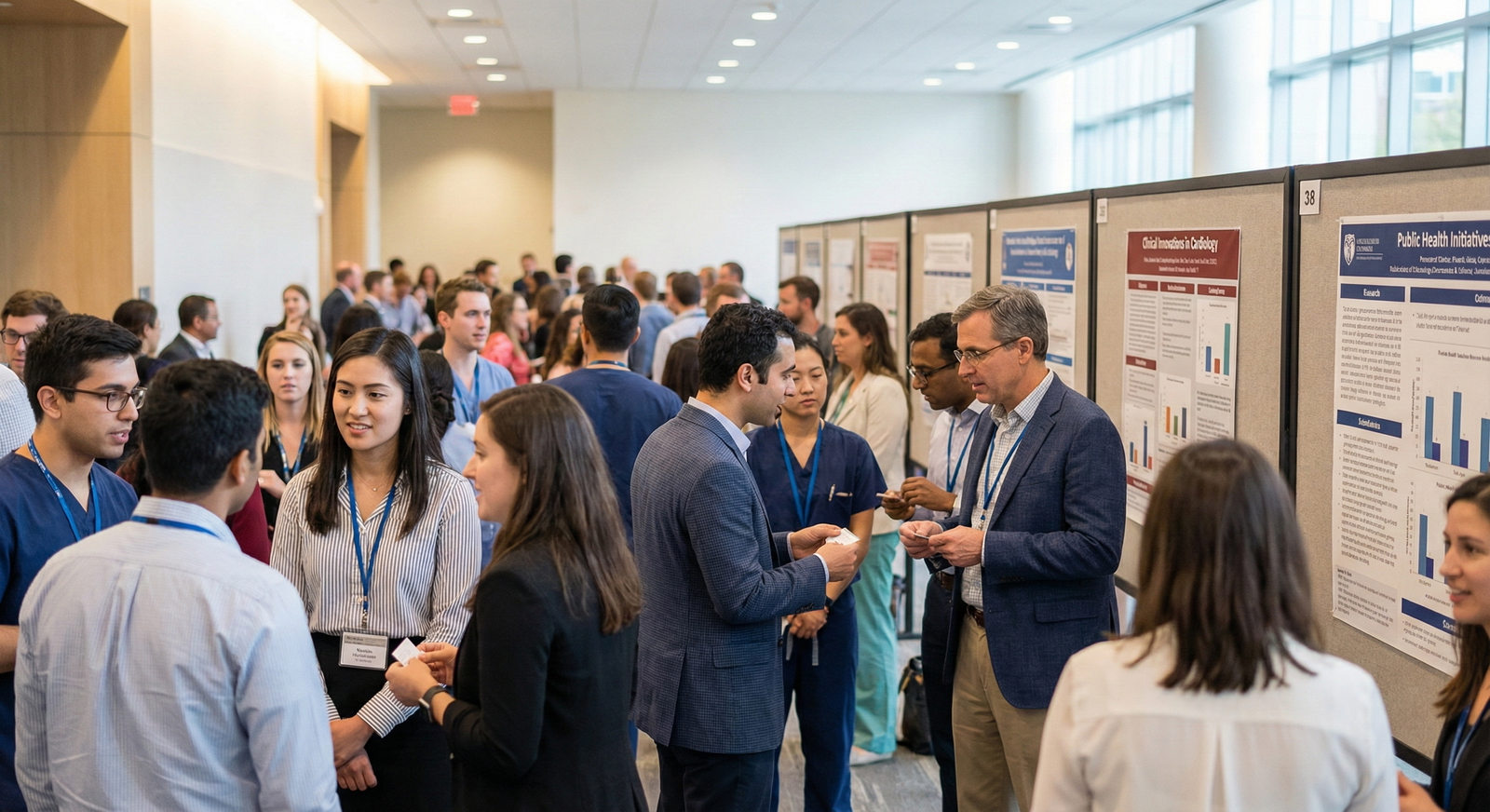
2. Poster sessions: Don’t just stand—engage
If you have a poster:
- Prepare a 60‑second and a 3‑minute version of your summary.
- Greet passersby: “Hi, would you like a quick overview of this project?”
- Ask interested attendees about their work: “What kind of cases do you see at your center?” or “How does this compare to your experience?”
If you’re browsing posters:
- Focus on people from institutions or subspecialties you’re interested in.
- Ask genuine questions and exchange contact info when there’s a natural connection.
3. The art of the brief introduction
You should have a clear, concise self‑introduction ready:
- “Hi, I’m [Name]. I’m an MD graduate from [Institution], applying for neurosurgery residency next year. I’m particularly interested in [subspecialty or topic]. I’ve been following your work on [specific area] and had a quick question about…”
Keep it under 30–45 seconds. Then listen.
4. Collect, then convert, contacts
- Have a simple way to log interactions:
- Notes app on your phone
- Back of a business card
- Email draft you continually update
- Within 24–72 hours, send concise follow‑up messages (see below).

After the Conference: Cementing the Relationship
This is where most people fail; they meet many but connect with few.
Your goal: Turn a brief conference interaction into an ongoing professional relationship.
Follow‑up email structure:
- Subject: “Pleasure meeting you at [Conference] – [Your Name]”
- 2–3 short paragraphs:
- Remind them of context: “We spoke briefly after your talk on [topic]…”
- One takeaway or appreciation: “I especially valued your advice about [X].”
- One clear next step:
- Ask if you can send an updated CV for future opportunities.
- Request a brief virtual meeting for further guidance.
- Offer to help with a project if they hinted at ongoing work.
Send within a week while memories are fresh.
Mentorship in Medicine: Building a Supportive Neurosurgery Circle
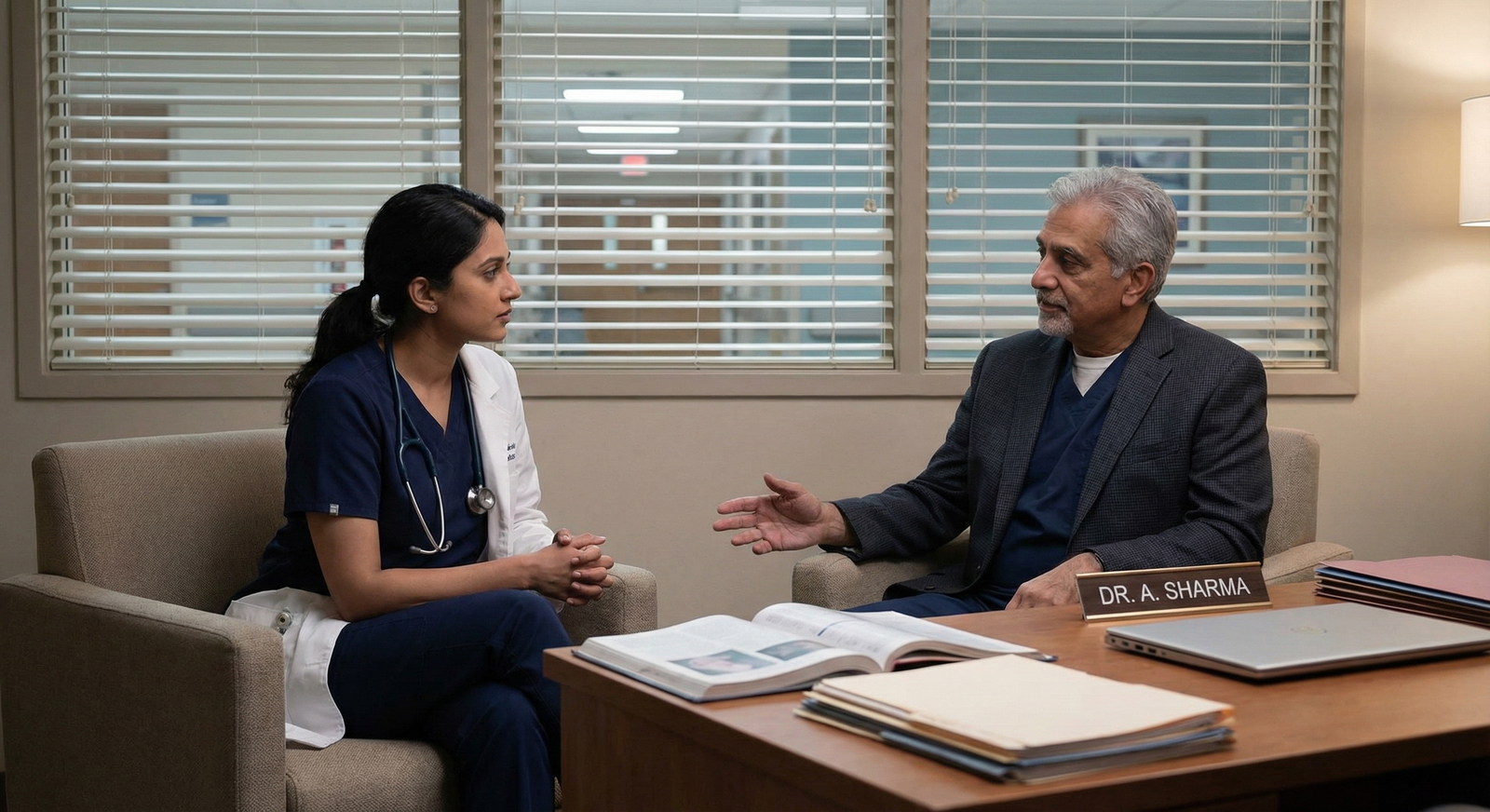
Mentorship medicine is central to success in neurosurgery. The path is long, high‑pressure, and often emotionally taxing; you need guides at multiple levels.
Types of Mentors You’ll Need
Career mentors
- Usually faculty in neurosurgery.
- Help shape your overall trajectory: residency, fellowship, academic versus private practice.
Research mentors
- May be neurosurgeons, neurologists, oncologists, radiologists, or basic scientists.
- Help you build a portfolio of neurosurgery‑relevant scholarship.
Near‑peer mentors
- Senior residents, fellows, or early junior faculty.
- Provide practical guidance: how to survive call, manage early operative responsibilities, and balance life with training.
Personal/wellness mentors
- Sometimes outside neurosurgery.
- Help you maintain perspective, prevent burnout, and navigate major life decisions.
How to Cultivate Mentorships Effectively
1. Be clear about what you want from the relationship
- “I’m looking for guidance on shaping my neurosurgery residency application.”
- “I’d like help developing my interest in functional neurosurgery research.”
- “I’m struggling with work–life integration during PGY‑2 and would value your perspective.”
Clarity shows respect for their time and makes it easier for them to say yes.
2. Make meetings efficient and prepared
- Send a short agenda in advance if it’s a longer meeting:
- Updates since last time
- Key questions (3–5 items)
- Decisions you’re trying to make (e.g., which sub‑internships to choose)
- Arrive with specific questions, not general “What should I do?” confusion.
3. Show appreciation and close feedback loops
- Share outcomes that resulted from their advice:
- “Based on your suggestion, I contacted Dr. X and just submitted an abstract.”
- “Following your recommendation, I changed how I prep for cases, and it’s made a big difference.”
Mentors invest more in mentees who clearly apply and value their guidance.
4. Let mentorship evolve organically
A relationship may start as “I’m helping you with one research project” and gradually become your primary career mentorship connection. Don’t force labels; focus on mutual respect, reliability, and growth.
Networking as a Neurosurgery Resident: Sustaining and Expanding Your Circle
Once you’ve entered neurosurgery residency, your networking goals shift from “getting in” to “building a long‑term career.”
Inside Your Program: Building Your Internal Reputation
Every day of your neurosurgery residency is a networking opportunity with people who can influence your fellowship options, job searches, and long‑term collaborations.
Focus on:
Being the resident others want on their team
- Anticipate needs in the OR and on the floor.
- Communicate clearly and respectfully with nurses and staff.
- Offer help when co‑residents are overwhelmed.
Owning your professional development
- Seek feedback regularly.
- Address recurrent issues quickly and transparently.
Teaching juniors and students
- Explain cases and anatomy.
- Help them scrub meaningful portions of the case when appropriate.
- Model how to behave in complex, high‑stress clinical situations.
Program directors and faculty notice which residents elevate the whole team. Those are the people they recommend strongly for fellowships and positions.
Outside Your Program: National and International Presence
In the mid‑to‑late years of neurosurgery residency, you can:
- Develop niche expertise (e.g., endoscopic skull base, minimally invasive spine).
- Take active roles in national societies (AANS/CNS resident committees).
- Present regularly at neurosurgery meetings.
Networking here is about being seen repeatedly as someone who:
- Produces solid work.
- Communicates well.
- Is collegial and reliable.
This reputation will follow you as you consider fellowships, brain surgery residency‑adjacent subspecialty training, or early attending roles.
Practical Pitfalls and How to Avoid Them
Even with good intentions, it’s easy to make missteps in networking in medicine, particularly in a small field like neurosurgery.
Pitfall 1: Being Overly Aggressive or Transactional
Red flags:
- Sending repeated requests when someone hasn’t responded.
- Leading every interaction toward “Can you get me into your program?”
- Introducing yourself and immediately asking for a letter of recommendation.
Correct approach:
- Focus first on learning and contributing.
- Give the relationship time to mature before asking for major support (e.g., calls to program directors).
Pitfall 2: Neglecting Professionalism in Informal Settings
At conferences, social events, or even online spaces (Twitter/X, LinkedIn):
- Avoid controversial or unprofessional posts related to patients, colleagues, or institutions.
- Be mindful of alcohol use and behavior at social functions.
- Assume that anything you say or do in a neurosurgery context may eventually reach a program director or department chair.
Pitfall 3: Failing to Maintain Relationships
Networking is not a one‑time event; it is an ongoing process.
Maintenance strategies:
- Send brief annual updates to key mentors and contacts:
- Current year in residency
- Recent accomplishments (papers, presentations)
- Upcoming goals (fellowship plans, job search)
- Congratulate them on major visible achievements (promotions, awards, important publications).
- Offer help when appropriate—such as collaborating on a multi‑center study.
Frequently Asked Questions (FAQ)
1. I’m an MD graduate without a home neurosurgery program. How can I network effectively?
You can still build a strong neurosurgery network:
- Seek neurosurgery rotations or sub‑internships at nearby academic centers.
- Reach out to neurosurgeons in related departments (e.g., neuro‑oncology tumor boards, spine surgery teams) who work with neurosurgery.
- Use medical networking at national and regional conferences to connect directly with neurosurgery residency programs.
- Engage in remote/virtual research projects with neurosurgeons at other institutions—many groups are open to motivated MD graduates who can handle literature reviews and data management.
2. How early should I start networking if I’m considering neurosurgery?
Ideally, as early as you can:
- During pre‑clinical years: attend neurosurgery grand rounds and talk to residents.
- As a clinical MD graduate: take neurosurgery electives, join research projects, start conference networking.
- If you’re later in your training or career, start now—consistent action over 6–12 months can significantly strengthen your neurosurgery residency or fellowship applications.
3. Do I have to be extroverted to be good at networking in medicine?
No. Many excellent neurosurgeons are naturally introverted. Effective networking depends more on:
- Being prepared with a few thoughtful questions.
- Listening well and following through.
- Building a small number of strong, authentic relationships.
You don’t need to work every room; you need to connect deeply with a manageable number of people.
4. How do I ask for a letter of recommendation or advocacy call without being awkward?
Timing and groundwork matter:
- Ask mentors who:
- Know your work over time.
- Have seen you clinically and/or academically.
- Frame the request respectfully:
- “I’m applying for neurosurgery residency this cycle, and your guidance has been very important to me. If you feel you know my work well enough to write a strong letter of recommendation, I would be honored to include one from you.”
- For advocacy calls or emails to program directors:
- Ask only after a mentor has expressed strong support.
- Phrase it as: “Do you think it would be appropriate for you to reach out to any programs where your input might be helpful?”
By approaching networking in medicine as a long‑term, relationship‑centered process, you will steadily build a community of mentors, colleagues, and advocates who trust you and want to see you succeed. In neurosurgery—a field where the stakes are high, the teams are small, and the community is tight‑knit—those relationships will be as critical to your success as your operative skill and clinical knowledge.