Why Networking Matters So Much in Otolaryngology (ENT)
For an MD graduate entering otolaryngology, networking in medicine is not optional—it is a core professional skill. ENT is a relatively small, tight-knit specialty where your reputation, relationships, and visibility often carry as much weight as your CV. The allopathic medical school match process for ENT residency is highly competitive, and even after you’ve matched, your network continues to shape your fellowship opportunities, research collaborations, and early career trajectory.
In a specialty where many programs know each other well, your name will come up in conversations long before and long after interview season. A well-cultivated network can:
- Strengthen your profile for the otolaryngology match
- Open doors to research and quality improvement projects
- Connect you to mentors and sponsors who will advocate for you
- Provide early exposure to subspecialty areas (e.g., head & neck, otology, rhinology)
- Help you navigate the challenges of residency life and career decisions
This article will walk you through strategic, practical steps to build and leverage medical networking as an MD graduate in ENT—before, during, and after residency.
Understanding the ENT Landscape: Where Networking Fits
Otolaryngology is a specialty where people tend to stay connected for decades. The community is smaller than many other surgical fields, and there are clear hubs for clinical and academic leadership. Understanding these dynamics will help you focus your networking efforts.
The Structure of the ENT Community
Key players you should be aware of:
- National organizations
- American Academy of Otolaryngology–Head and Neck Surgery (AAO-HNS)
- American Head & Neck Society (AHNS)
- American Neurotology Society, American Rhinologic Society, and others
- Regional otolaryngology societies
- Often host smaller, more approachable meetings
- Academic ENT departments
- Chairs, program directors (PDs), and faculty who shape the allopathic medical school match landscape for ENT residency
- Subspecialty communities
- Laryngology, pediatric ENT, facial plastics, sleep surgery, etc.
Most of these entities interact frequently through conferences, collaborative research, and shared trainees. That means:
- A strong impression on a mentor in one city can influence how you are perceived in another.
- Conference networking can lead to invitations for away rotations, research electives, or even future jobs.
Where Networking Matters Most for an MD Graduate
As an MD graduate focused on ENT, you’ll feel the impact of networking at several key stages:
Pre-match (late medical school / research year)
- Finding ENT research projects and mentors
- Securing strong letters of recommendation
- Getting solid away rotation opportunities
Match cycle (otolaryngology match year)
- Being remembered positively by programs
- Having faculty or mentors make supportive calls on your behalf
- Understanding the reputation and culture of different programs
Residency years
- Identifying mentorship in medicine for subspecialty interests
- Joining multicenter research groups
- Preparing for fellowship applications and early career positions
Transition to attending
- Building referral networks
- Finding academic or community practice positions
- Starting collaborations in education, quality, and research
Core Principles of Effective Medical Networking
Before discussing specific tactics, it’s important to define what “good” networking in medicine looks like.
1. Focus on Relationships, Not Transactions
You’re not just collecting business cards or LinkedIn connections; you’re trying to build enduring professional relationships. In ENT, where your reputation is long-lived, a transactional mindset is easy to detect—and rarely appreciated.
Instead:
- Ask about people’s interests and work before talking about your needs.
- Look for ways to contribute (help on a project, share relevant literature, connect people).
- Follow up with genuine gratitude, not just when you need a favor.
2. Show Up Consistently
Relationships solidify through repetition. Someone who sees you once at a conference may barely remember you; someone who sees you at several meetings, hears from you by email, and collaborates on a small project will see you as part of their professional circle.
Examples of consistency:
- Attend the same annual meetings year after year (AAO-HNS, regional ENT societies).
- Join recurring journal clubs or research meetings (even virtually).
- Send periodic updates (once or twice a year) to mentors: new publications, match progress, career milestones.
3. Be Clear About Your Interests (But Stay Open)
Mentors and senior colleagues can help you best when they understand:
- Your current level (MD graduate, PGY-1, PGY-2, etc.)
- Your specific interests (e.g., otology, rhinology, academic career, global surgery)
- Your short-term needs (research, guidance on away rotations, career advice)
At the same time, ENT is dynamic. Some of the most rewarding opportunities may be in areas you hadn’t considered; be open to exploratory conversations.
4. Protect Your Professional Reputation
ENT is a “small world.” What helps or hurts your reputation travels quickly. Behaviors that build trust:
- Being reliable—doing what you say you’ll do, and on time
- Being prepared for meetings, journal clubs, OR days
- Communicating clearly and respectfully with everyone (from staff to chairs)
Red flags that spread quickly in this community:
- Repeatedly missing deadlines without explanation
- Gossip, unprofessional social media posts, or disparaging colleagues
- Dishonesty about contributions or experience

Mastering Conference Networking in ENT
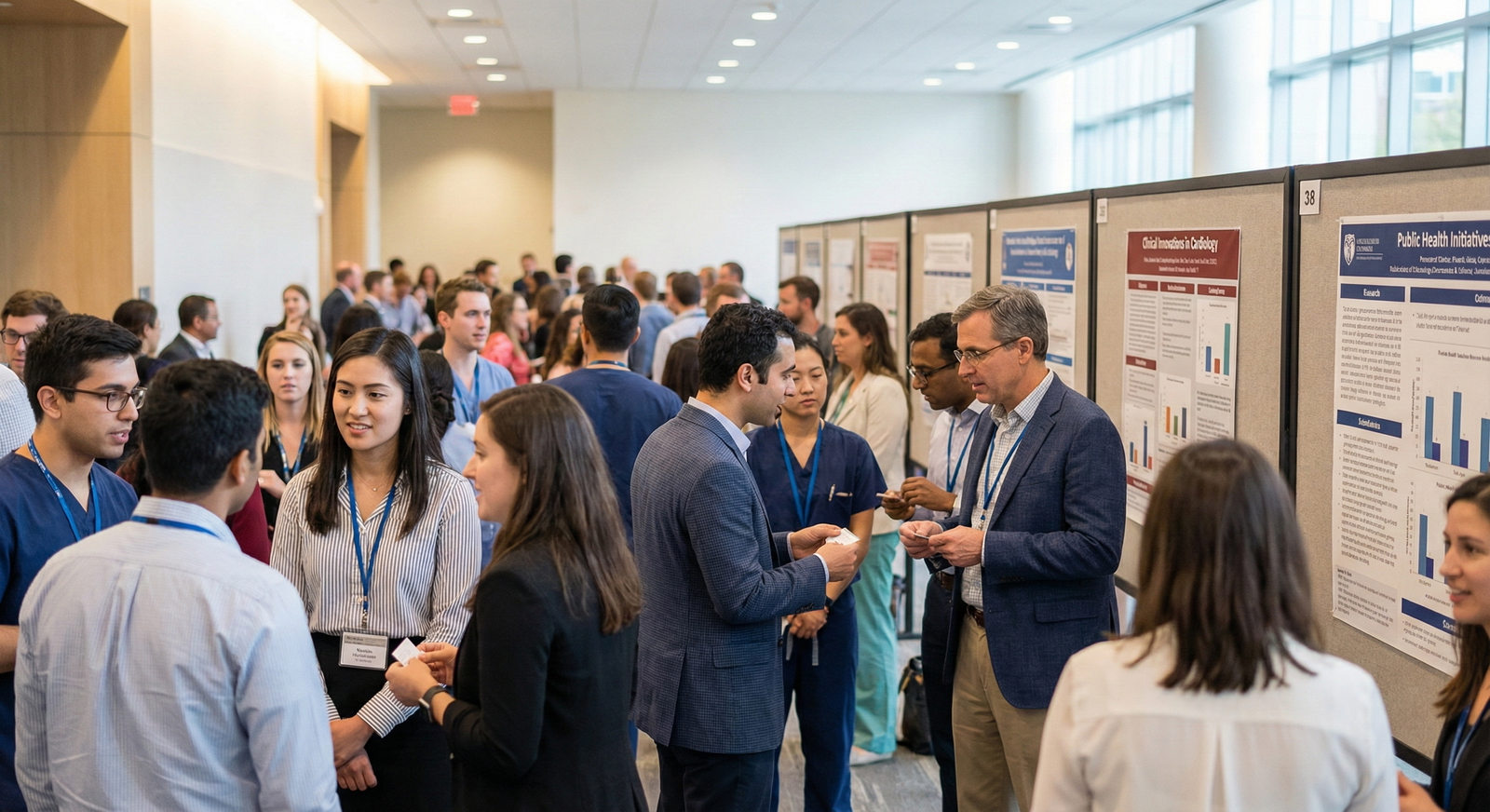
Conferences are one of the highest-yield environments for medical networking. For an MD graduate targeting ENT, conference networking is where you can make face-to-face impressions that no application can replicate.
Choosing the Right Conferences
Consider a mix of:
- National meetings
- AAO-HNSF Annual Meeting & OTO Experience
- Subspecialty meetings (American Rhinologic Society, Triological Society sections, etc.)
- Regional meetings
- State or regional ENT societies
- Often more intimate and less intimidating; you can interact more directly with leaders
If cost is a barrier, look for:
- Student or trainee travel grants
- Reduced registration fees for residents and recent MD graduates
- Virtual or hybrid attendance options
Before the Conference: Strategic Preparation
Review the program
- Identify sessions, panels, and posters relevant to your interests.
- Note faculty whose work you’ve read or admired.
- Highlight programs where you might apply for residency or fellowship.
Reach out in advance (when appropriate)
For example:“Dear Dr. Smith,
I’m an MD graduate applying for ENT residency with a strong interest in laryngology. I’ve been following your work on vocal fold scarring. I see you’re speaking at the AAO-HNS meeting, and I wanted to introduce myself briefly if you’ll have a few minutes between sessions. Thank you for your time—looking forward to your talk.”Prepare your personal introduction
A concise, confident “elevator pitch”:- Who you are (MD graduate, current research or clinical position)
- Your main area of interest in ENT
- 1–2 relevant experiences (research, away rotations, projects)
- What you’re hoping to learn or do next
Example:
“I’m Dr. Patel, an MD graduate completing a research year in otology. I’m focused on hearing preservation in cochlear implantation and planning to apply for ENT residency this cycle. I’ve been working on a multi-institutional outcomes study and would love to get involved in more collaborative research.”
During the Conference: High-Yield Strategies
Poster and oral sessions
- If you or your institution has a poster: be present during your session, invite questions, and introduce yourself to any faculty who stop by.
- If you’re attending others’ posters: ask one or two thoughtful questions, then introduce yourself and briefly share your interests.
Example question:
“I’m interested in rhinology and noticed your outcomes data on revision sinus surgery. How do you see this influencing your surgical decision-making in borderline cases?”Networking events and receptions
- Go to the resident, fellow, or trainee receptions—these are designed for people at your stage.
- If you’re shy, set small goals (e.g., meet and exchange contact info with three new people each evening).
Hallway and coffee-line conversations
- Many valuable interactions happen informally. If you recognize a faculty member from a talk you enjoyed, it’s appropriate to say:
“Dr. Lee, I really appreciated your session on office-based laryngology. I’m an MD graduate going into ENT and would love to learn more about how you structure your practice.”
- Many valuable interactions happen informally. If you recognize a faculty member from a talk you enjoyed, it’s appropriate to say:
Be present, not on your phone
Looking at your phone during sessions, in the lobby, or at poster sessions can create a “do not approach” signal. Stay approachable.
After the Conference: Following Up
Within a week:
- Send concise thank-you emails to anyone who:
- Took time to speak with you or advise you
- Offered to connect you with someone else
- Discussed a potential project or collaboration
Example follow-up:
“Dear Dr. Johnson,
It was a pleasure meeting you at the AAO-HNS trainee reception. I appreciated your advice on seeking early exposure to otology and your suggestion to read more about [specific topic]. I’ll be applying to ENT residency this year with a strong interest in academic otology. If you ever have multicenter research projects that need motivated collaborators, I’d be grateful to be considered.
Best regards,
[Your Name]”
Keep a record (spreadsheet or note) of who you met, where, what you discussed, and any agreed-upon next steps.
Building Mentorship and Sponsorship in ENT
Mentorship in medicine is central to success in ENT. But for the otolaryngology match and beyond, you also need sponsors—people who will actively support your advancement.
Types of Mentors You’ll Need
Clinical mentors
- Help you develop operative skills and clinical judgment
- Offer specialty-specific advice (e.g., timing of fellowship, balancing surgery and clinic)
- Can write meaningful letters of recommendation
Research mentors
- Guide you in ENT research methods and publication strategy
- Introduce you to collaborative networks
- Help you understand which projects signal commitment to ENT
Career/Professional mentors
- Advise on major decisions: academic vs. private practice, fellowship choices
- Strategize around negotiating offers, building a niche, and long-term growth
Peer mentors
- Residents ahead of you or recent graduates
- Understand the current reality of match pressure, burnout, and work-life balance
Finding and Approaching Mentors
Within your home institution (if you have ENT)
- Attend grand rounds and resident didactics when allowed.
- Ask the chief resident or program coordinator which faculty enjoy working with students or MD graduates.
- Express your interest clearly:
“I’m very interested in an ENT residency, especially pediatric otolaryngology. I’d be grateful for any opportunities to observe, assist with research, or receive guidance.”
If you don’t have a home ENT program
- Use medical networking via conferences and regional societies.
- Seek away rotations or visiting scholar opportunities.
- Reach out respectfully to ENT departments in nearby cities or academic centers.
- Highlight your genuine interest and willingness to contribute.
Evaluating the mentor-mentee fit
Look for:- Responsiveness to emails
- Willingness to meet or talk periodically
- A track record of supporting trainees
- A style that matches your learning needs (structured vs. flexible)
Transforming Mentors into Sponsors
Sponsors are usually more senior and influential (division chiefs, program directors, leaders in societies) who can:
- Call program directors during the otolaryngology match cycle
- Nominate you for awards, committees, or speaking opportunities
- Champion you for fellowships or positions
To cultivate sponsors:
- Demonstrate excellence and reliability on every task, even small ones.
- Keep them updated on your progress (without overloading them).
- When the time is right, be explicit about your goals:
“I’ll be applying for ENT residency this cycle and would be honored if you felt you could support me with a strong letter or advocacy as appropriate.”

Daily Networking During ENT Residency
Once you’ve matched into an ENT residency, networking does not stop. Residency is when you lay down the foundation of your long-term professional identity.
Networking Inside Your Program
With attendings
- Be prepared for cases, know patients’ histories, and read about planned procedures.
- Follow through on research or QI ideas they suggest.
- Ask for feedback—and then act on it.
With co-residents
- Co-residents are future colleagues and referral sources.
- Support them clinically and personally; your peer reputation matters enormously.
With other specialties
- ENT touches neurosurgery, plastics, pulmonology, oncology, allergy, and more.
- A good collaborative reputation can lead to:
- Interdisciplinary research
- Complex joint cases
- Strong interdepartmental referrals when you’re an attending
External Networking During Residency
Multicenter research collaborations
- Ask program leadership if there are national groups you can join or contribute to.
- Be the resident who reliably collects data or handles IRB submissions.
Society involvement
- Join relevant committees of AAO-HNS or subspecialty societies as a resident member.
- Volunteer for small roles: reviewing abstracts, helping with trainee events, etc.
Social media (used professionally)
- Follow major ENT societies, journals, and leaders.
- Share or comment on evidence-based content, your publications, and educational material.
- Avoid posting anything that could compromise confidentiality or professionalism.
Positioning Yourself for Fellowship and Early Career
For ENT residents considering fellowship:
- Start networking with subspecialty leaders by PGY-3 or early PGY-4.
- Present at subspecialty meetings (e.g., rhinology, head & neck) if possible.
- Ask your mentors:
- Which fellowships align with your goals?
- Who should you meet at conferences?
- How can you strengthen your application beyond case numbers?
For those considering going straight into practice:
- Use your mentors’ networks to learn about job opportunities early.
- Attend regional meetings where local groups and hospitals recruit.
- Be transparent with mentors about your preferences (geography, academic vs. private, niche interests).
Practical Networking Scenarios and How to Navigate Them
To make this tangible, here are common scenarios and ways to handle them effectively.
Scenario 1: You’re an MD Graduate Without a Home ENT Program
- Goal: Build enough exposure, mentorship, and advocacy to be competitive for an ENT residency.
- Actions:
- Do at least one ENT away rotation at an academic center, ideally two.
- Engage in ENT research, even remotely (chart reviews, systematic reviews, multi-institutional databases).
- Attend at least one ENT-focused conference, even if virtually.
- Proactively email program coordinators and faculty with a concise CV and a clear explanation of your interests and goals.
Scenario 2: You Feel Shy at Conferences
- Goal: Still network meaningfully without forcing yourself into extreme extroversion.
- Actions:
- Prepare 3–4 open-ended questions to ask presenters or faculty.
- Go to smaller sessions (workshops, small-group breakouts) where shorter, more genuine conversations are easier.
- Set numerical goals (e.g., meet 2 new faculty members and 3 residents per day).
- Attend trainee-focused events where other attendees are at similar career stages.
Scenario 3: A Senior Faculty Member Offers You a Project
- Goal: Convert this into a strong working relationship.
- Actions:
- Clarify expectations (timeline, your specific responsibilities, data access).
- Communicate early if you hit obstacles.
- Deliver ahead of schedule when possible.
- After completion, ask if you can continue working with them or expand the project.
Scenario 4: A Mentor Isn’t a Good Fit
- Goal: Pivot respectfully to find better-aligned mentors.
- Actions:
- Avoid burning bridges; remain courteous and professional.
- Gradually shift your effort to other mentors more responsive and aligned with your goals.
- You don’t need to formally “end” the relationship; you can simply adjust who you go to for what kind of guidance.
Frequently Asked Questions (FAQ)
1. How early should I start networking for an ENT residency as an MD graduate?
Start as early as you’re reasonably sure ENT is your path. In the ideal case, this means:
- Late MS2 or early MS3: attend ENT grand rounds, shadow when possible.
- MS3–MS4: get involved in at least one ENT research project and attend at least one related conference.
- During a research year (if you take one): maximize medical networking—especially conference networking and multi-institutional projects.
If you discovered ENT late, focus on high-yield opportunities (away rotations, targeted research, strong letters).
2. Do I need multiple ENT mentors, or is one enough?
You should aim for a small team of mentors, not a single “all-purpose” mentor. Ideally:
- 1–2 clinical ENT mentors (including someone who can write a strong letter for the otolaryngology match)
- 1 research mentor (ENT-focused, if possible)
- 1 career mentor (may be ENT or another specialty, but understands competitive fields and career strategy)
They don’t all need to be in the same institution, and it’s normal for your mentorship panel to evolve as you advance.
3. How can I network effectively if I can’t afford to attend many conferences?
You still have options:
- Prioritize one major ENT-related meeting (AAO-HNS or a regional society) and seek:
- Trainee scholarships
- Reduced registration or virtual attendance
- Join virtual grand rounds or webinar series offered by ENT societies.
- Engage with faculty and residents through:
- Email introductions
- Virtual research meetings
- Multi-institutional collaborative projects
- Ask mentors to introduce you via email to colleagues at other institutions.
Even a small number of high-quality relationships can be more impactful than attending many meetings superficially.
4. How does networking actually influence the match for ENT residency?
Networking can influence the ENT residency and allopathic medical school match in several indirect but powerful ways:
- Strong mentorship leads to high-impact letters of recommendation.
- Faculty who know you well may call program directors to advocate on your behalf.
- Away rotations and research collaborations expose you to programs that will recognize your name and work during interview selection.
- Good reputations travel—being known as diligent, ethical, and collegial can distinguish you in a crowded applicant pool.
Networking does not replace the need for solid scores, evaluations, and performance, but in a small specialty like ENT, it can be the deciding factor among similarly qualified MD graduate candidates.
Cultivating a thoughtful, authentic approach to networking in medicine as an MD graduate entering otolaryngology is one of the most powerful investments you can make. Your relationships—with mentors, peers, faculty, and collaborators—will shape not only how you match, but the kind of ENT physician you ultimately become.