Why Networking Matters So Much for Non‑US Citizen IMGs in Med-Peds
For a non-US citizen IMG interested in Medicine-Pediatrics (Med-Peds), your credentials on paper—scores, research, and letters—are only part of your story. The other part is who knows you, trusts you, and is willing to speak up for you. That is exactly what effective medical networking provides.
In a competitive field like Med-Peds, especially in the United States, networking is not about “schmoozing” or being extroverted. It is about building professional, ethical, mutually respectful relationships that:
- Turn cold applications into warm ones by adding a known name or face
- Lead to clinical electives, research positions, and quality letters of recommendation
- Help you understand which programs are realistic targets for a foreign national medical graduate
- Provide mentorship medicine opportunities tailored to non-US citizen IMGs
- Offer emotional support and guidance during the stressful match process
For a non-US citizen IMG, networking can also help navigate additional challenges such as:
- Visa sponsorship questions (J-1 vs H-1B)
- Understanding program preferences for foreign national medical graduates
- Building US-based clinical experience and credibility
- Finding advocates who understand your unique barriers and strengths
Med-Peds is a relatively small specialty. That is a disadvantage if you rely only on anonymous applications—but a major advantage if you network well. Because the community is small and tight-knit, people talk, recommend, and remember.
Your goal is not to “collect contacts.” Your goal is to become known as:
“That non-US citizen IMG who is reliable, hardworking, great with patients, and serious about Med-Peds.”
The rest of this guide will show you practical ways to get there.
Understanding the Med-Peds Ecosystem as a Non‑US Citizen IMG
Before you network, you must know the environment you’re stepping into. Med-Peds is not just “half internal medicine and half pediatrics.” It has its own culture, priorities, and career paths.
What Makes Med-Peds Unique
Some key features of Med-Peds relevant to networking:
- Smaller community: There are far fewer Med-Peds programs than categorical Internal Medicine or Pediatrics. Program directors, faculty, and residents often know each other across institutions.
- Strong identity and culture: Med-Peds physicians take pride in caring for patients across the lifespan and in tackling complex, often underserved populations (e.g., transition care for youth with chronic illness, complex primary care, academic medicine, global health).
- High emphasis on fit: Because programs are small, “fit” matters a lot—collegiality, teamwork, adaptability, and authentic interest in Med-Peds.
This means that during the medicine pediatrics match, committees pay attention to:
- Whether you understand what Med-Peds actually is (not just a “backup” between Internal Medicine and Pediatrics)
- Whether trusted people in the Med-Peds community can vouch for you
- Whether your experiences and goals align with what Med-Peds programs actually do
Networking is how you learn this culture and demonstrate fit.
Unique Challenges for Non‑US Citizen IMGs in Med-Peds
As a non-US citizen IMG, you may face:
- Limited US clinical experience (USCE): Harder to obtain Med-Peds–specific rotations outside the US.
- Fewer Med-Peds electives: Many hospitals abroad don’t have a Med-Peds structure; your CV may look like “generic” Internal Medicine + Pediatrics.
- Visa barriers: Not all Med-Peds programs sponsor visas. You must identify realistic targets and ask the right questions.
- Lack of “home program”: Without a US medical school or home Med-Peds program, you lack built-in connections.
Good networking helps you:
- Find Med-Peds-friendly programs that have previously supported foreign national medical graduates
- Connect with faculty and residents who understand visa processes
- Translate your experiences into a compelling Med-Peds narrative
- Get informal advice about the medicine pediatrics match that you cannot find on official websites
Core Networking Strategies for Non‑US Citizen IMGs in Med-Peds
1. Start with Your Existing Circles
Even if you are thousands of miles from the US, you are not starting from zero.
Audit your current network:
- Faculty in internal medicine and pediatrics at your home institution
- Prior graduates who matched into US residencies (any specialty)
- Visiting professors from the US or other countries
- Research collaborators with US affiliations
- Exchange program coordinators or global health offices
Ask targeted, respectful questions like:
- “Do you know any Med-Peds physicians or programs in the US?”
- “Are there alumni from our institution currently in Med-Peds residency?”
- “Could you introduce me by email to colleagues who work in combined medicine-pediatrics?”
Even a single introduction to a Med-Peds faculty member or resident can lead to:
- Elective opportunities
- Research collaborations
- Informal guidance on your application strategy
2. Build a Professional Online Presence (Especially on LinkedIn)
For a foreign national medical graduate, your online presence is often your first “handshake” with US colleagues.
Optimize your LinkedIn profile:
- Use a professional, high-quality headshot and clear headline:
“International Medical Graduate | Med-Peds Aspirant | Interested in Complex Primary Care & Global Health” - In your “About” section, briefly share:
- Your medical school and graduation year
- Clear Med-Peds interest and why (e.g., continuity across lifespan, transition care)
- Key experiences (research, leadership, teaching)
- Openness to mentorship and collaborative projects
Actionable steps:
- Connect with:
- Med-Peds residents and faculty
- Program coordinators (for informational purposes)
- Non‑US citizen IMG physicians who successfully matched in Med-Peds or Internal Medicine/Pediatrics
- Follow:
- National Med-Peds organizations (e.g., NMPRA – National Med-Peds Residents’ Association)
- Major academic centers with Med-Peds programs
- Pediatric and internal medicine professional societies
When you send connection requests, avoid generic messages. Use simple, respectful notes:
“Dear Dr. X, I am a non-US citizen IMG from [Country], deeply interested in Med-Peds. I admire your work in [area]. I would be grateful to connect and learn from your posts and professional journey.”
Over time, your feed becomes a learning and networking hub—updates about conferences, research calls, and opportunities.
3. Use Email Strategically and Professionally
Cold emails can feel intimidating, but they are a realistic way to expand your medical networking footprint from abroad.
Who to email:
- Med-Peds program directors or associate program directors
- Med-Peds faculty whose research aligns with your interests
- Current Med-Peds residents (especially former IMGs or non-US citizen IMG graduates)
- Coordinators or directors of global health, transition clinics, or complex care programs
Purposes of emailing:
- Requesting an informational interview (15–20 minutes via Zoom)
- Asking about observership eligibility
- Inquiring about research volunteer positions
- Exploring tele-mentoring or case-based collaborations
Key email principles:
- Short subject line: “Prospective IMG Med-Peds Applicant – Brief Guidance Request”
- Brief, specific, and respectful body:
- Who you are (1–2 lines)
- Why you’re writing specifically to them (demonstrate you’ve done your homework)
- A clear, realistic ask (e.g., 15-minute call, feedback on alignment with Med-Peds, or information about opportunities)
Example:
Dear Dr. [Name],
My name is [Your Name], a non-US citizen IMG from [Medical School, Country], graduating in [Year]. I am strongly interested in Med-Peds, particularly in [e.g., transition care, complex primary care].I have been following your work on [specific topic or clinic], and it closely aligns with my experience in [brief example].
If your schedule allows, I would be very grateful for 15–20 minutes of your time for brief guidance on how I might strengthen my preparation for the medicine pediatrics match as a foreign national medical graduate.
Thank you for considering my request.
Sincerely,
[Name]
[LinkedIn link]
[ERAS ID if relevant and in-season]
Not everyone will respond—but some will. Those who do are natural starting points for mentorship and advocacy.
4. Turn Every Clinical Interaction into Networking
If you secure US clinical experience—whether observerships, externships, or electives—you are inside the core networking zone.
On any rotation (even if not labeled “Med-Peds”):
- Show up early, be prepared, and be proactive with tasks appropriate to your role.
- Ask thoughtful questions that link adult and pediatric care, highlighting your Med-Peds mindset. Example:
- “How will this adolescent’s management change when they transition to adult care?”
- “In your practice, how do you coordinate with pediatric subspecialists as your patients age?”
- Share your career interest clearly but briefly:
- “I’m applying for Med-Peds because I want to care for patients through key transitions—especially [e.g., youth with chronic illness].”
Convert impressions into support:
- Ask attending physicians if they know Med-Peds colleagues or programs they recommend you learn about.
- If they seem supportive and know your work well, ask if they’d feel comfortable:
- Writing a letter of recommendation, or
- Introducing you by email to a Med-Peds contact
Specific requests are easier to fulfill than vague ones.
Mastering Conference Networking as a Non‑US Citizen IMG
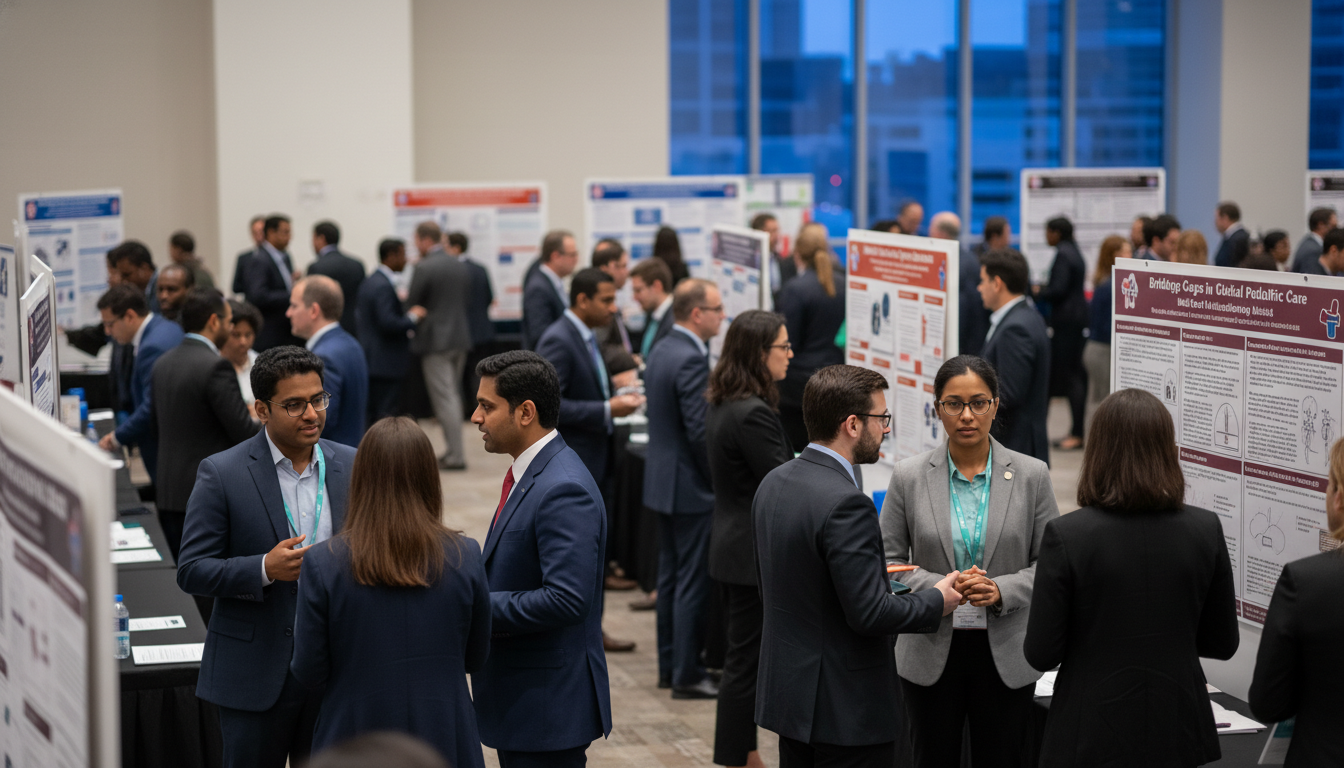
Conference networking is one of the most efficient ways to meet many Med-Peds people in a short time. Even one well-planned conference can transform your network.
Choosing the Right Conferences
For Med-Peds–interested foreign national medical graduates, consider:
- Med-Peds–specific meetings
- National Med-Peds Residents’ Association (NMPRA) meetings
- Med-Peds program directors’ workshops (as permitted)
- Broad medicine and pediatrics conferences
- Internal medicine (ACP, SGIM, hospital medicine societies)
- Pediatrics (AAP, PAS, subspecialty organizations)
- Student/trainee–oriented meetings
- International medical student conferences with US faculty attendance
- Regional meetings where US academic centers participate
Virtual conferences also count and often have lower barriers for non-US citizen IMGs.
Before the Conference: Prepare Intentionally
1. Research Attendees and Programs
- Identify Med-Peds programs presenting workshops or posters.
- Make a list of:
- Program directors
- Associate program directors
- Med-Peds faculty involved in education or global health
- Residents with Med-Peds affiliation
2. Reach Out Ahead of Time (If Possible)
Email or message on LinkedIn:
“I see you will be presenting at [Conference]. I am a non-US citizen IMG very interested in Med-Peds. If you have a few minutes after your session, I would be honored to briefly introduce myself and learn more about your program.”
You may not always get a response, but when you do, it creates a scheduled connection that is much easier than random hallway introductions.
3. Prepare Your “Micro-Introduction”
You will repeatedly answer the question: “So, tell me about yourself.”
Prepare a 20–30 second version that highlights:
- Who you are (non-US citizen IMG from [country/school])
- Your Med-Peds interest and focus
- One or two unique strengths or projects
Example:
“I’m [Name], a non-US citizen IMG from [School, Country], graduating this year. I’m applying to Med-Peds because I want to care for medically complex adolescents as they transition to adult care. I’ve been working on a quality-improvement project improving follow-up for youth with congenital heart disease.”
During the Conference: How to Network Without Feeling Fake
1. Use Sessions as Conversation Starters
- Ask thoughtful questions during Q&A.
- Afterwards, approach the speaker:
- “Thank you for your talk on transition clinics. I’m a non-US citizen IMG interested in Med-Peds and transition care. Could I ask a quick question about how your residents get involved in this area?”
2. Visit Posters and Exhibits Strategically
- Stop at posters related to Med-Peds topics: adolescent medicine, complex care, chronic disease across age groups.
- Ask presenters:
- “Are any Med-Peds residents involved in this work?”
- “Does your institution have a Med-Peds program?”
- Share your interest; request a card or email if the conversation goes well.
3. Respect Time, but Be Clear About Your Goals
Rather than “Can you help me get into your program?”, ask:
- “As a foreign national medical graduate, how can I best position myself for a Med-Peds residency?”
- “What do Med-Peds program directors look for in non-US citizen IMG applicants?”
- “Are there common mistakes you see IMG applicants make during the medicine pediatrics match?”
This tells faculty that you are coachable and serious.
After the Conference: Consolidate and Deepen Connections
The real power of conference networking is in the follow-up.
Within 48–72 hours:
- Email people you met:
- Thank them for their time.
- Mention one specific thing they said that helped you.
- If appropriate, ask a simple next step (e.g., “May I send you my CV for feedback on Med-Peds alignment?” or “May I stay in touch with occasional updates as I prepare for the match?”).
- Connect on LinkedIn, referencing where you met.
Example follow-up:
Dear Dr. [Name],
It was a pleasure meeting you at [Conference] after your session on [Topic]. Your comments about how Med-Peds residents contribute to transition clinics were inspiring.As a non-US citizen IMG planning to apply in Med-Peds, I especially appreciated your advice about focusing my experiences on continuity of care across age groups.
With your permission, I would be grateful to stay in touch and occasionally seek your guidance as I prepare for the medicine pediatrics match.
Thank you again for your time and insight.
Best regards,
[Name]
Over time, these follow-ups turn brief encounters into mentorship medicine relationships.
Building Mentorship and Long-Term Relationships in Med-Peds
Networking is not just collecting business cards; it is about building sustained mentorship and sponsorship.
Mentorship vs Sponsorship
- Mentor: Offers advice, feedback, and support; helps you grow.
- Sponsor: Actively uses their reputation to advocate for you—recommending you to programs, inviting you to projects, or co-signing emails on your behalf.
As a non-US citizen IMG, you ideally want both, but you often start with mentors who may later become sponsors.
Finding Good Mentors in Med-Peds
Potential mentors for a foreign national medical graduate:
- Med-Peds faculty you meet via:
- Email outreach
- Conferences
- Research collaborations
- Internal medicine or pediatrics faculty who:
- Understand your interest in combined training
- Are well-connected and supportive of IMGs
- Senior residents or fellows (Med-Peds or categorical) who:
- Recently navigated the match
- Understand visa and IMG challenges
Traits of effective mentors:
- Have enough time to respond, at least occasionally
- Give honest, sometimes critical feedback
- Understand or are willing to learn about your visa and IMG context
- Expect you to do your part (follow through, be organized, respect their time)
How to Nurture Mentorship Relationships
Be organized and proactive:
- Send concise updates every 2–3 months:
- New publications or projects
- Exam results
- Conference presentations
- Changes in your timeline
- Ask specific questions:
- “Does my personal statement reflect a clear Med-Peds focus?”
- “Given my profile, what tier of programs should I target in the medicine pediatrics match?”
- Send concise updates every 2–3 months:
Show progress and gratitude:
- When you apply their advice, let them know how it helped.
- A simple email: “Your suggestion to highlight continuity of care has improved my CV description of [experience]. Thank you.”
Make it easy for them to advocate:
- Share an updated CV in a clear format.
- Provide a short professional summary they can forward if they wish.
Give back when you can:
- If you later gain experience or match into Med-Peds, help junior IMGs from your home school.
- Share resources or opportunities you discover.
When and How to Ask for Letters or Introductions
Once a mentor has known you for a reasonable time and seen your work:
- You may ask:
- “Would you feel comfortable writing a strong letter of recommendation for my Med-Peds applications?”
- “Would you be willing to introduce me to colleagues at [Program/Institution] where my interests might fit?”
Be prepared for “no” or “not yet”—this is not rejection, but sometimes genuine concern about writing you a letter that meets US residency expectations. Take their feedback, ask how you can grow, and continue building credibility.
Common Networking Pitfalls for Non‑US Citizen IMGs (and How to Avoid Them)
1. Being Vague About Your Goals
Problem: Saying “I’m interested in internal medicine or pediatrics or Med-Peds” signals uncertainty.
Solution: Even if you are still deciding, when networking in the Med-Peds world, frame your story:
- Highlight overlapping interests: continuity of care, transition medicine, complex chronic disease.
- Use language that shows you understand Med-Peds as a distinct pathway, not just a compromise.
2. Only Reaching Out When You Need Something
Problem: Contacting people only for favors (LORs, observerships) can feel transactional.
Solution:
- Engage in genuine conversation about their work.
- Share your own learning and growth.
- Thank them for any help, even if it doesn’t directly lead to an immediate opportunity.
3. Ignoring Visa and IMG Realities
Problem: Avoiding the visa question until the last minute can waste time and strain relationships.
Solution:
- Research whether programs sponsor J-1 or H-1B visas before deep outreach.
- When appropriate, state clearly: “I will require [visa type]. I understand this may limit options, but I want to be transparent and respectful of your program’s policies.”
4. Overloading People with Long Messages
Problem: Long, unfocused emails or messages are less likely to be read.
Solution:
- Use short paragraphs and clear asks.
- Show that you respect their time by being concise.
5. Underestimating Peers and Near-Peers
Problem: Focusing only on “big names” and ignoring residents or junior faculty.
Solution:
- Residents are often the most practical mentors for the immediate steps of the medicine pediatrics match.
- Fellow IMGs who matched before you understand the specific path and can offer targeted advice and encouragement.
FAQs: Networking in Medicine for Non‑US Citizen IMGs in Med-Peds
1. As a non‑US citizen IMG with no US contacts, where do I start?
Begin with what you already have:
- Ask faculty at your home institution about alumni in US training, especially Med-Peds or internal medicine/pediatrics.
- Build a strong LinkedIn profile and connect with Med-Peds residents and faculty.
- Email Med-Peds interest groups, such as NMPRA, to ask about resources for foreign national medical graduates.
- Attend virtual conferences or webinars focused on Med-Peds or combined training.
From there, gradually move from passive following to active engagement: comments, questions, and eventually emails or video calls.
2. How can I network effectively if I cannot travel to US conferences?
You can still build powerful networks through:
- Virtual conferences: Ask questions in chat, attend breakout sessions, and follow up with speakers via email.
- Online communities: Med-Peds interest groups, NMPRA webinars, institutional open houses.
- Social media: Professional use of X (Twitter) or LinkedIn to engage with Med-Peds topics and leaders.
- Remote research or QI collaborations: Offer to help with data analysis, literature reviews, or drafting manuscripts.
Always treat virtual interactions with the same professionalism as in-person encounters.
3. When is the right time to mention that I’m a foreign national who needs a visa?
Be transparent early, but not as the very first sentence. For example:
- Introduce yourself and your Med-Peds interest.
- Then add: “As a non-US citizen IMG, I will require [J-1/H-1B] sponsorship to train in the US.”
Most faculty appreciate honesty. It allows them to give realistic advice about which programs or paths fit your situation.
4. Can networking really influence my chances in the medicine pediatrics match as an IMG?
Networking does not replace strong academic performance, US clinical experience, or exam scores. However, it can significantly:
- Improve the quality and relevance of your letters of recommendation
- Help you target programs more likely to consider non-US citizen IMGs
- Increase your chances of being remembered positively during application review
- Provide nuanced guidance on how to present your Med-Peds story
In a small, relationship-driven specialty like Med-Peds, being a known and trusted applicant can be the difference between being just another name on a list and being invited for an interview or ranked more favorably.
If you approach medical networking with authenticity, curiosity, and persistence, you can transform your position as a non-US citizen IMG from a limitation into a distinctive strength. Med-Peds thrives on diverse backgrounds and perspectives; your job is to make sure the right people in this community have the chance to know your story, your skills, and your dedication.