Understanding Networking in Medicine as a Non‑US Citizen IMG in Medical Genetics
For a non-US citizen IMG interested in medical genetics, networking is not optional—it is one of your most powerful tools. In a small, intellectually demanding field like medical genetics, program directors and faculty often know one another, attend the same meetings, and collaborate across institutions. Your reputation, visibility, and relationships can significantly influence interviews, letters, and ultimately the genetics match.
This article focuses on how a foreign national medical graduate can build a strategic, sustainable networking plan tailored to medical genetics, particularly in the US system. You’ll learn how to identify the right people, use conferences effectively, build mentorship in medicine, and maintain connections—even from abroad.
Why Networking Matters More in Medical Genetics
Medical genetics is a relatively small specialty with a strong academic and research orientation. That creates both challenges and opportunities for a non-US citizen IMG.
1. A Small, Interconnected Community
Compared with large specialties (like internal medicine or pediatrics), medical genetics has:
- Fewer residency positions and programs
- A high concentration of academic and research-focused departments
- Faculty who frequently know each other through conferences, committees, and research collaborations
Implication for you: A strong impression on one faculty member can echo across the field. Conversely, remaining invisible can hurt you more in a small specialty than in a large one.
2. Holistic Review in a Competitive Pool
Residency programs in medical genetics, especially combined programs (e.g., Pediatrics/Medical Genetics, Internal Medicine/Medical Genetics), often:
- Expect evidence of genuine interest in genetics (research, electives, coursework)
- Value interpersonal skills and teamwork due to intensive multidisciplinary work (genetic counselors, lab scientists, pediatric subspecialists)
- Look beyond test scores to see whether you “fit” the culture and academic mission
Networking helps you:
- Show programs your motivation for medical genetics beyond your ERAS application
- Demonstrate communication skills in real-world interactions
- Generate advocates who can speak credibly about your fit, maturity, and long-term potential
3. Extra Barriers for Non‑US Citizen IMGs
As a foreign national medical graduate, you face additional challenges:
- Visa sponsorship concerns (J-1 vs H-1B)
- Limited access to US clinical experience before application
- Potential bias or misconceptions about training background
- Less familiarity with “unwritten rules” of the US medical system
Networking can reduce these barriers by:
- Allowing faculty to see you as an individual, not just a file
- Giving you insight into which programs are IMG-friendly and visa-supportive
- Helping you understand expectations about professionalism, communication, and hierarchy in US training

Building a Networking Foundation Before You Arrive in the US
You do not have to wait until you are physically in the US to begin medical networking. Thoughtful preparation can position you as a serious candidate well before application season.
1. Clarify Your Professional Story in Medical Genetics
Before you network, be clear about your own path. This clarity helps you introduce yourself effectively and ask for specific help.
Reflect on:
- Why medical genetics?
- Personal or family experience with genetic disease
- Research in molecular biology, genomics, rare disease
- Fascination with precision medicine and counseling
- What have you already done related to genetics?
- Genetics electives in medical school
- Thesis in molecular genetics or pharmacogenomics
- Case reports of rare syndromes
- Volunteer work with families affected by genetic conditions
- Where are you now and what’s your timeline?
- Step exams completed or planned
- ECFMG status
- Target application year for the genetics match
Create a concise 30–60 second narrative (your “professional introduction”) that you can use in emails, at conferences, and in informal conversations. For example:
“I’m a non-US citizen IMG from [Country], with a strong interest in medical genetics. My final-year thesis focused on exome sequencing in pediatric neurodevelopmental disorders, and I’ve worked on two case reports describing rare syndromes. I plan to apply for the medical genetics residency match in [Year] and I’m particularly interested in programs that integrate clinical genetics with genomic research.”
2. Identify Key Organizations and Online Communities
Several professional organizations are central to genetics networking:
- American College of Medical Genetics and Genomics (ACMG)
- Main professional society for clinical geneticists in the US
- Annual meeting is the single most important conference for medical genetics networking
- Offers trainee memberships and travel awards
- American Society of Human Genetics (ASHG)
- More research-heavy, but excellent for academic networking and understanding cutting-edge genomics
- Global/Regional Genetics Societies
- Such as European Society of Human Genetics (ESHG), local genetics societies in your region
Action steps:
- Join at least one professional society as a student/trainee member if finances allow.
- Subscribe to newsletters and follow them on LinkedIn and X (Twitter) for updates on conferences, webinars, and trainee opportunities.
- Look for IMG or trainee interest groups or listservs that discuss opportunities, scholarships, and mentorship.
3. Start Research and Academic Networking from Abroad
Even from outside the US, you can connect academically:
Find faculty with similar interests
Use PubMed, institutional websites, and Google Scholar to identify US-based geneticists:- Working in your area of interest (e.g., inborn errors of metabolism, cancer genetics, neurogenetics)
- Affiliated with programs that have medical genetics residencies
Reach out with targeted, professional emails
A networking email should be:- Short (10–12 sentences)
- Specific about your interests and background
- Respectful of their time
Example structure:
- Brief intro (who you are, non-US citizen IMG, interest in medical genetics)
- Mention how you found them (paper you read, conference talk, program website)
- One specific question or request (e.g., advice on pathways for foreign national medical graduates, possibility of remote literature projects, recommendation for resources)
- Gratitude and no pressure
Never start by asking for a residency position or letter of recommendation. Build trust first through genuine interest and contributions.
Making Conferences Work for You: Mastering Conference Networking
Conference networking is one of the most efficient methods for becoming visible in a small field like medical genetics. The ACMG annual meeting is especially critical for you as a non-US citizen IMG.
1. Choose the Right Conferences
For residency-focused networking, prioritize:
ACMG Annual Clinical Genetics Meeting
- Many residency program directors and faculty attend
- Numerous trainee-focused events
- Exhibits from residency programs, labs, and institutions
ASHG Annual Meeting (secondary, but valuable if you have research involvement)
- Strong emphasis on human genetics research
- Good for connecting with principal investigators and lab-based mentors
Target attending at least one of these before or during your application year.
2. Prepare Before the Meeting
To maximize conference networking:
Study the attendee list and program (if accessible)
- Identify program directors and faculty from programs you’re interested in
- Note names of speakers in your subspecialty interests
Plan 5–10 strategic targets:
- PDs of medical genetics residencies you might apply to
- Faculty you cited in your research or whose work you admire
- Leaders in education or IMG advocacy
Practice your introduction and “ask”
- Introduction: Who you are, your background, your interest in medical genetics
- Ask: “I’d really value your advice on…”
- Steps a foreign national medical graduate can take to become competitive
- Types of US-based experiences that help IMGs in medical genetics
- Whether their program has had success with non-US citizen IMGs
3. On-Site: How to Approach People Confidently and Professionally
At the conference:
Use structured networking opportunities:
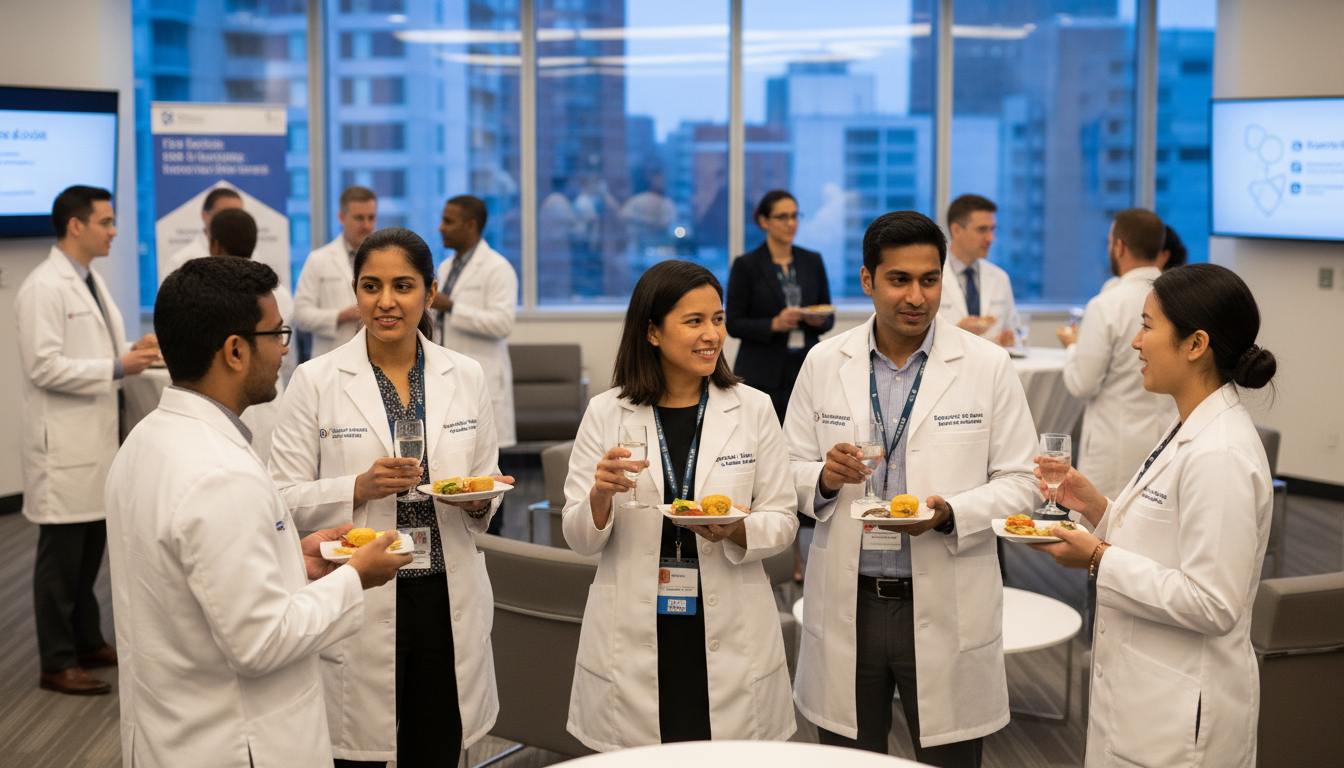
- Trainee and early-career receptions
- Mentoring breakfasts or “meet the expert” sessions
- Residency and fellowship fairs
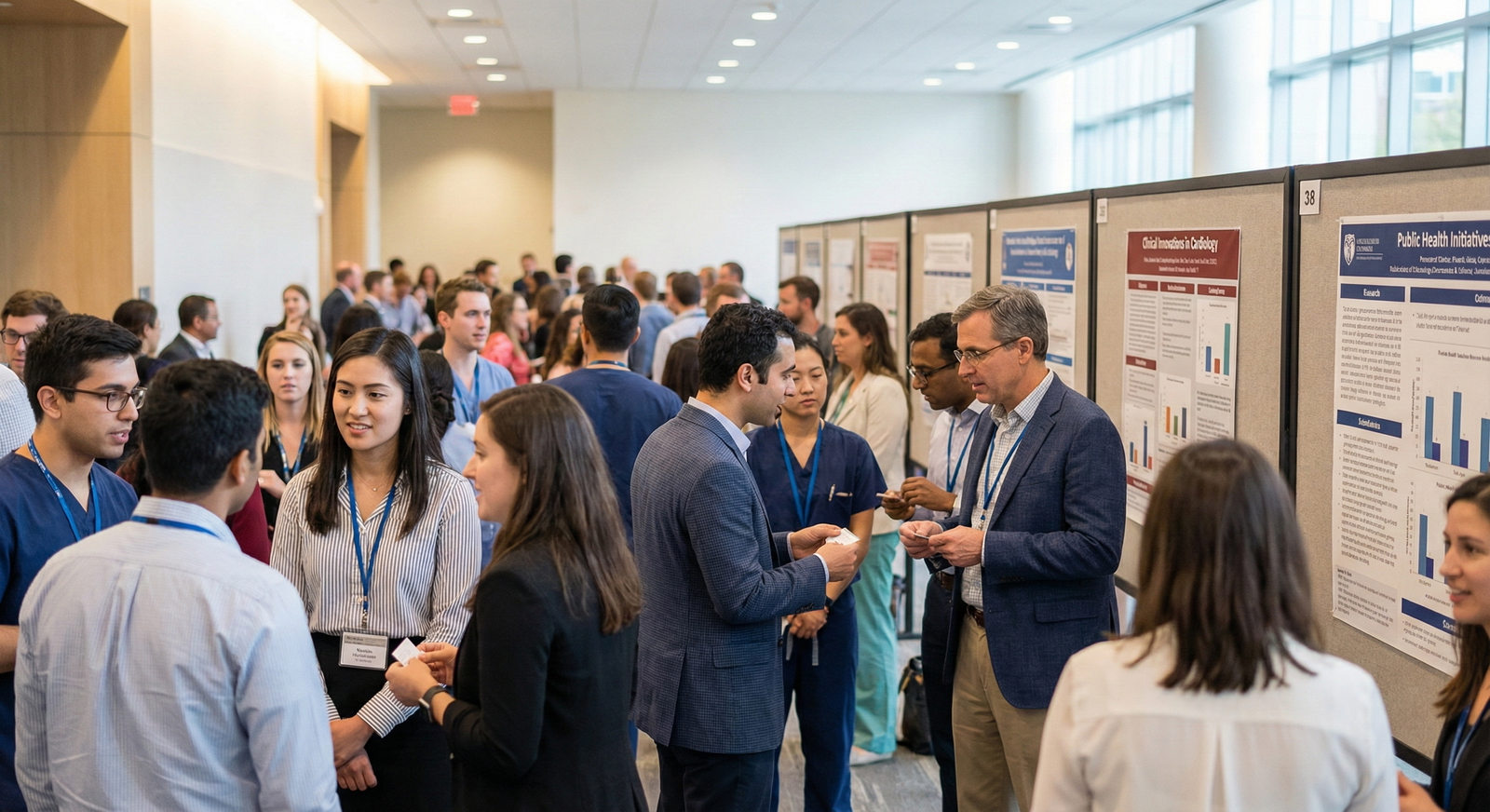
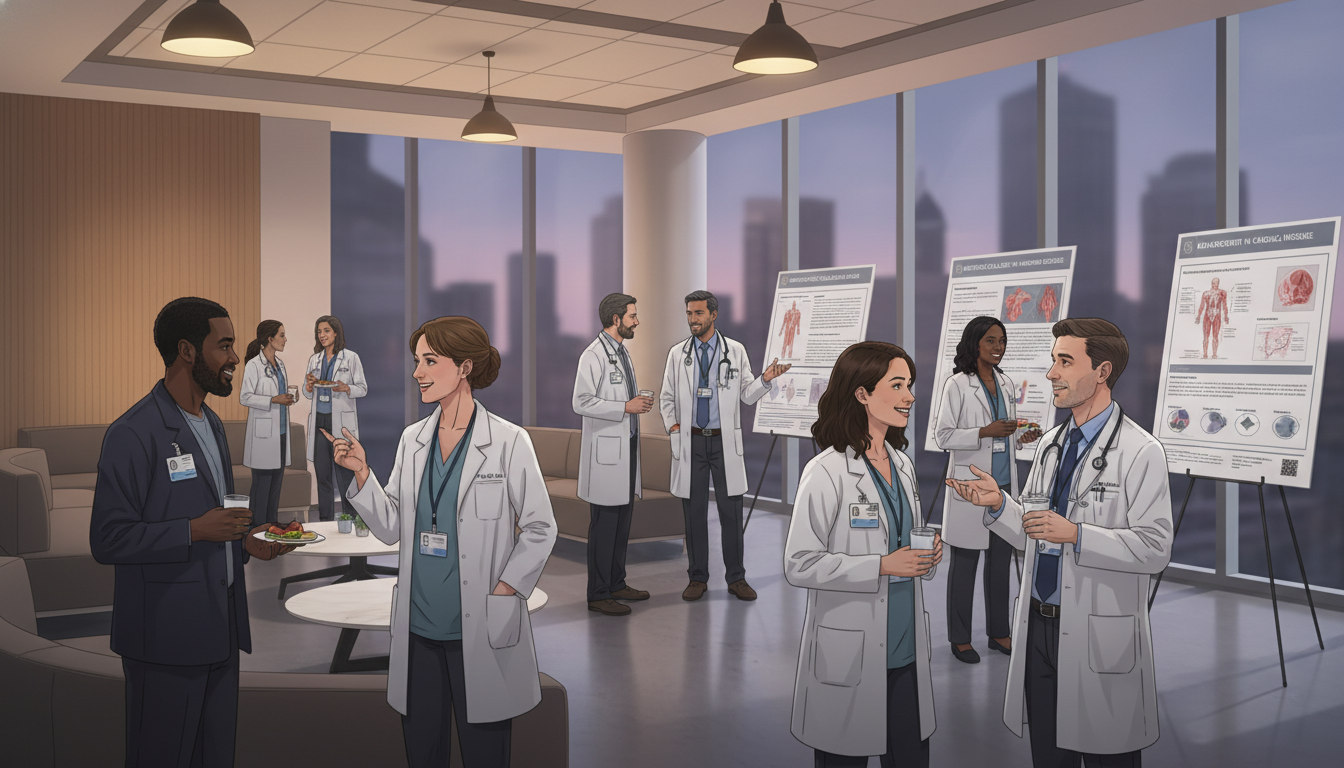
- Poster sessions in your area of interest
How to introduce yourself:
Walk up, smile, wait for a natural pause, and say something like:
“Hello Dr. [Name], my name is [Name]. I’m a non-US citizen IMG from [Country] with a strong interest in medical genetics, especially [sub-area]. I’ve been following your work on [specific project or paper]. If you have a minute, I’d be grateful for any advice on how someone with my background can prepare for a medical genetics residency in the US.”
Keep initial conversations short unless they extend it. Respect that conference schedules can be tight.
Have a clear next step:
Before you walk away, say:
“Would it be alright if I follow up by email to ask a few more detailed questions and share my CV?”
If they agree, write their name and institution immediately in a small notebook or on your phone.
4. Presenting a Poster as an IMG
Presenting at ACMG or ASHG significantly boosts your visibility and credibility.
Types of work you can present:
- Case reports of rare syndromes
- Small research projects (chart reviews, genotype-phenotype correlations)
- Educational initiatives in genetics (curriculum, public education)
Benefits beyond the CV line:
- Natural conversation starter: “I’m presenting a poster on X. I’d love your feedback.”
- Opportunity to stand at your poster and meet dozens of faculty and peers
- Demonstrates initiative and genuine engagement with the field
Action: Start early (6–12 months before the conference) to develop a project and submit an abstract.

Creating and Sustaining Mentorship in Medicine
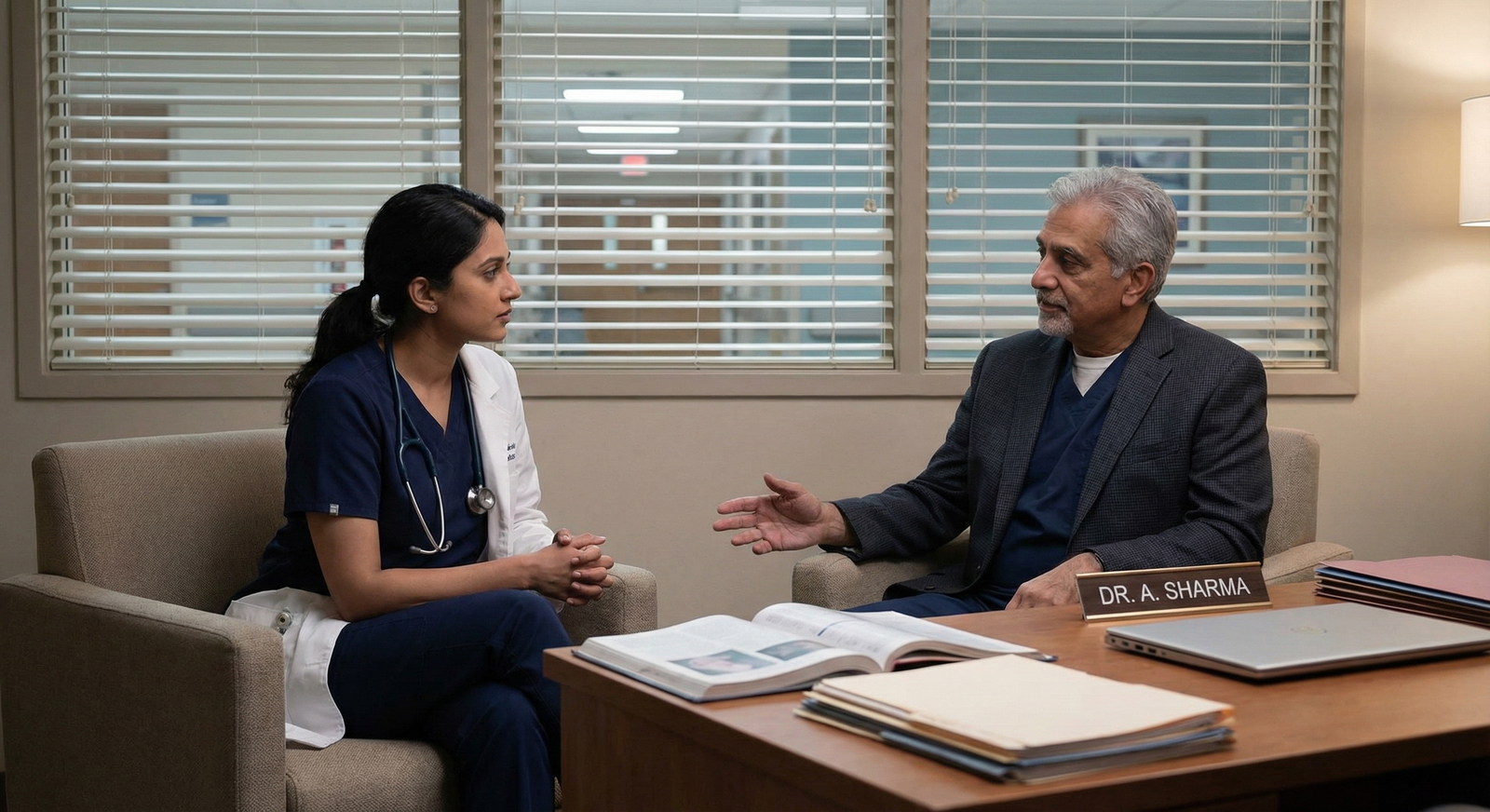
Mentorship is the backbone of effective networking. For a non-US citizen IMG in medical genetics, a good mentor does more than give advice—they help you interpret the system, find opportunities, and avoid missteps.
1. Types of Mentors You Should Seek
You will benefit from having more than one mentor:
Content Mentor (Scientific/Clinical Genetics Mentor)
- Deep experience in medical genetics or a subspecialty area
- Helps guide your academic and clinical focus
- May invite you to collaborate on research projects
Process Mentor (Career Navigation Mentor)
- Familiar with the US medical system and residency process
- Can explain the nuances of the genetics match, visa issues, and IMGs’ challenges
- Might be a program director, senior resident, or alum
Near-Peer Mentor (Resident or Fellow)
- Currently in medical genetics or related fields
- Offers practical advice on interviews, daily life, and culture
- Often easier to approach and may be more available
You do not need one person to fill all roles; a small “mentorship team” is ideal.
2. How to Approach Potential Mentors
When approaching a potential mentor:
- Do your homework – Read at least a few of their publications or their program biography.
- Send a focused, respectful email – Explain:
- Who you are (non-US citizen IMG, your current stage)
- Why you’re specifically reaching out to them (shared interests, their role in ACMG, specific subspecialty)
- What kind of guidance you’re hoping for (e.g., one or two conversations per year, advice on project directions)
Example:
“I am a non-US citizen IMG from [Country], currently preparing to apply to medical genetics residency in [Year]. I have been particularly interested in [subfield], and your work on [specific topic] has strongly influenced my thinking. If you have a brief window in the next 4–6 weeks, I would be very grateful for a 20–30 minute conversation to ask your advice on how someone with international training can best prepare for a career in medical genetics.”
3. Being a Good Mentee
To maintain mentorship relationships:
- Come prepared to every meeting:
- Send an agenda or 2–3 questions in advance.
- Bring an updated CV if relevant.
- Respect their time:
- Be punctual.
- Keep to the time limit unless they extend it.
- Follow through:
- If they recommend reading something, read it.
- If they suggest emailing a colleague, do so within a week.
- Provide updates:
- Share major milestones (exam results, acceptances, poster presentations).
- Thank them for specific advice that helped you.
This level of professionalism not only strengthens the relationship but also makes mentors more comfortable advocating for you.
Practical Networking Strategies During the Application and Match Cycle
When you’re approaching or entering the genetics match cycle, networking becomes more time-sensitive and focused.
1. Use Clinical and Research Experiences Strategically
If you obtain US-based experiences (observerships, externships, research fellowships):
Act like a junior colleague, not just an observer:
- Ask thoughtful questions about patient cases and genetic testing decisions.
- Volunteer to help with literature searches, patient education materials, or case write-ups.
Signal your interest in residency, but don’t pressure:
- After some time (not on the first day), you might say:
“I’m planning to apply for medical genetics residency, and I want to make the most of this experience. Do you have any advice on how I can best demonstrate my commitment and potential in this field?”
- After some time (not on the first day), you might say:
Ask about the program’s experience with IMGs and visas:
- Frame it professionally:
“As a foreign national medical graduate, I want to understand the realities of visa sponsorship and IMG training in genetics. Could you share any insight about how your program approaches this?”
- Frame it professionally:
2. Program-Level Networking: Before and After Application
Before applying:
- Attend virtual open houses many programs now host.
- Introduce yourself briefly in Q&A segments or follow-up emails.
- Ask targeted, thoughtful questions:
- Integration with pediatric or internal medicine training
- Support for research or advanced degrees (e.g., MPH, PhD)
- History of matching non-US citizen IMGs
After submitting applications:
- If you have already established contact with faculty:
- You may send a brief update email:
- Mention that you applied to their program.
- Reaffirm your interest and what specifically attracts you to their training structure.
- Keep it short and professional; avoid repetitive “interest” emails.
- You may send a brief update email:
Post-interview:
- Send personalized thank-you notes within 48–72 hours.
- Mention one or two specific things you appreciated from the interview.
- Highlight again how your background and goals align with medical genetics and their program.
3. Balancing Visibility with Professional Boundaries
Strong networking does not mean aggressive self-promotion. Avoid:
- Sending weekly emails to the same faculty
- Asking explicitly about your rank position
- Pressuring faculty for letters or special favors
Instead, aim for:
- Occasional, meaningful contact (e.g., updates every few months)
- Genuine interest in their work, not just what they can do for you
- Respect for institutional policies around communication during the match
Common Challenges and How to Overcome Them as a Non‑US Citizen IMG
1. Shyness or Language Barriers
Networking can be daunting if English is not your first language or you are naturally introverted.
Strategies:
- Practice your introduction and a few common questions aloud.
- Start with near-peers (residents, fellows) to build confidence before talking to senior faculty.
- Use email follow-up to clarify or expand on points if you struggled to express something clearly in person.
2. Cultural Differences in Professional Interactions
Some cultures discourage approaching seniors directly, while US academic culture often values initiative.
To adapt:
- Observe how US-trained students/residents interact: tone, level of formality, small talk.
- Aim for respectful, concise communication: polite but confident.
- If uncertain, ask a near-peer mentor: “Is it appropriate to email Dr. X about this?”
3. Visa Uncertainty
As a foreign national medical graduate, you must factor in:
- Whether programs sponsor J-1 only, or J-1 and H-1B
- Institutional policies and historical patterns with non-US citizen IMGs
Networking helps because:
- Faculty or program coordinators can clarify their program’s position.
- Senior IMGs already training in those programs can share their real-world experience.
- You can focus your efforts on programs that are truly accessible to you.
Putting It All Together: A Networking Action Plan
Below is a sample one-year plan for a non-US citizen IMG planning to apply to the medical genetics residency match.
9–12 Months Before Application
- Join ACMG (trainee membership if possible).
- Identify 10–15 faculty whose work aligns with your interests; send 3–5 carefully crafted intro emails.
- Work with a mentor (local or remote) to develop a case report or small project, aiming to submit an abstract to ACMG or ASHG.
- Begin attending virtual webinars and online events on genetics and genomics.
6–9 Months Before Application
- If possible, attend ACMG or ASHG:
- Present a poster if you have one.
- Meet program directors and trainees in person.
- Strengthen relationships with 1–2 mentors:
- Schedule focused conversations about your application strategy.
- Seek opportunities for short US experiences (observerships, research visits) that connect to medical genetics.
3–6 Months Before Application
- Finalize your CV, personal statement, and ERAS entries with feedback from mentors.
- Attend program open houses and virtual Q&A sessions.
- Clarify visa realities for each program you’re considering.
- Continue nurturing 3–5 key relationships via polite, periodic updates.
During Application and Interview Season
- Use interviews as another form of networking:
- Ask thoughtful questions about training structure, research, and mentorship.
- Send targeted thank-you notes; keep a log of each interaction.
- Maintain professional, measured communication (no excessive emails).
By the time rank lists are submitted, your name should be familiar—not only as a non-US citizen IMG but as a thoughtful, engaged future medical geneticist who has already begun contributing to the community.
FAQs: Networking in Medicine for Non‑US Citizen IMGs in Medical Genetics
1. As a non‑US citizen IMG, is networking really as important as exam scores for genetics residency?
USMLE scores and other objective metrics remain critical screening tools. However, in a small field like medical genetics, networking can strongly influence which applications get a closer look, who receives interview invitations, and how programs interpret “borderline” metrics. Effective medical networking helps contextualize your achievements and demonstrates your commitment to the specialty.
2. How early should I start networking if I’m still a medical student outside the US?
Ideally 1–2 years before your intended genetics match cycle. Start with low-pressure steps: join ACMG or similar organizations, attend virtual events, identify potential mentors, and work on a genetics-related project or case report. Early engagement shows programs that your interest in medical genetics is sustained, not last-minute.
3. I can’t afford to attend US conferences easily. How can I still network effectively?
You can:
- Attend virtual portions of ACMG or ASHG (many offer online access).
- Participate in webinars and online journal clubs related to medical genetics.
- Reach out to faculty by email with specific questions about their work or about IMG pathways.
- Collaborate on remote research or case reports with mentors abroad who have connections to US faculty.
While in-person conference networking is powerful, sustained, high-quality virtual engagement still makes a meaningful difference.
4. How do I avoid coming across as pushy when I’m trying to build connections?
Focus on value and respect:
- Personalize every communication and show that you’ve done your homework.
- Ask for advice or feedback, not favors or guarantees.
- Space out your emails (every few months or based on new updates).
- End messages with genuine gratitude, regardless of outcome.
This balanced approach signals professionalism and maturity—qualities medical genetics programs are eager to see in any applicant, especially a foreign national medical graduate navigating extra challenges.