Understanding Networking in Medicine as a Non‑US Citizen IMG in Pediatrics‑Psychiatry
Networking in medicine is not just “schmoozing” at conferences. For a non‑US citizen IMG interested in Pediatrics‑Psychiatry—or the Triple Board (Pediatrics/General Psychiatry/Child & Adolescent Psychiatry) pathway—it is often the decisive factor that turns a strong CV into real opportunities: observerships, research positions, strong letters, and residency interviews.
In a competitive hybrid specialty like peds psych, relationships matter even more because:
- Triple Board programs are few and relatively small.
- Faculty often know each other across programs.
- Your visa status and IMG background mean you must stand out as a trusted, known quantity.
This article breaks down how to build a targeted, strategic networking plan in the US medical system, tailored specifically for non‑US citizen IMGs aiming for Pediatrics‑Psychiatry and Triple Board pathways.
Section 1: The Mindset Shift – From “Asking for Favors” to “Building Professional Relationships”
Many foreign national medical graduates feel uncomfortable with “networking” because it can seem transactional or insincere. Reframing your mindset is the first—and arguably most important—step.
1.1 What Networking in Medicine Really Means
In academic medicine, networking is:
- Relationship‑building with people who share clinical, research, or educational interests.
- Mutual support: sharing knowledge, opportunities, and feedback.
- Professional visibility: so others can confidently vouch for your character and work.
It is not:
- Begging for residency spots.
- Randomly emailing people to “sponsor” you.
- Forced small talk without genuine interest.
For peds psych and Triple Board, networking often looks like:
- Collaborating with a child psychiatrist or developmental pediatrician on a case report.
- Staying in touch with a supervisor from an observership by sending periodic updates.
- Asking a program director thoughtful questions about how they integrate pediatrics and psychiatry training.
1.2 Overcoming Common IMG Barriers
As a non‑US citizen IMG, you may face:
- Cultural differences: Direct self‑promotion may feel uncomfortable.
- Language or accent concerns: Worry that you’ll be misjudged.
- Visa anxiety: Fear that your status makes you less desirable.
Counter this with preparation and clarity:
- Understand that US academic culture values initiative—introducing yourself, asking good questions, and following up are seen as positive.
- Your accent is not a weakness; being clear, organized, and respectful matters much more.
- Be transparent and realistic about visas, but don’t lead with it. Lead with your value, commitment, and track record.
Section 2: Mapping the Networking Landscape in Pediatrics‑Psychiatry and Triple Board
Before sending any emails, you need a map of where meaningful medical networking actually happens in your field.
2.1 Key Organizations and Societies
For Pediatrics‑Psychiatry and Triple Board, certain organizations are particularly valuable:
- AACAP (American Academy of Child and Adolescent Psychiatry)
- Has Triple Board‑relevant content and mentorship medicine initiatives for trainees.
- Offers reduced rates for trainees and sometimes special categories for international members.
- APA (American Psychiatric Association) – Child psychiatry and combined training tracks.
- AAP (American Academy of Pediatrics) – Especially Sections on Developmental & Behavioral Pediatrics and other mental health–related interest groups.
- ABPN / ABP–related resources – For understanding combined training pathways.
- Local or regional psychiatry and pediatrics societies – Often more accessible starting points.
Action step:
Create a spreadsheet of societies, with columns for:
- Membership cost
- Student/trainee options
- Listservs or newsletters
- Mentorship or networking programs
- Annual conference dates
2.2 Triple Board and Peds‑Psych Programs: Your Primary Targets
You should know by name the Triple Board and combined pediatrics‑psychiatry programs you’re aiming for. For each program:
Identify:
- Program Director (PD)
- Associate Program Director(s)
- Key faculty in child psychiatry and pediatrics
- Chief residents or current Triple Board residents
Collect:
- Email addresses from program websites
- Recent publications (PubMed search with their names + “pediatrics psychiatry child”)
- Any conference presentations (search program + AACAP/AP/AAA meetings)
This preparation makes your future outreach specific and relevant, rather than generic.

2.3 Where Networking Actually Happens Day‑to‑Day
The most productive networking channels for a non‑US citizen IMG typically include:
- Email and LinkedIn: Initial introductions, follow‐ups, maintaining contact.
- Conferences and virtual meetings: High‐density networking over short periods.
- Research collaborations: Deep, trust‑building relationships.
- Clinical experiences: Observerships, externships, or telehealth shadowing.
- Social media (professionally): Following peds psych leaders on X (Twitter), LinkedIn, or specialized platforms.
Consider each of these as “lanes” in your networking strategy; you don’t need to use all of them at once, but you should gradually build presence in several.
Section 3: Conference and Event Strategy – Turning One Meeting into Many Opportunities
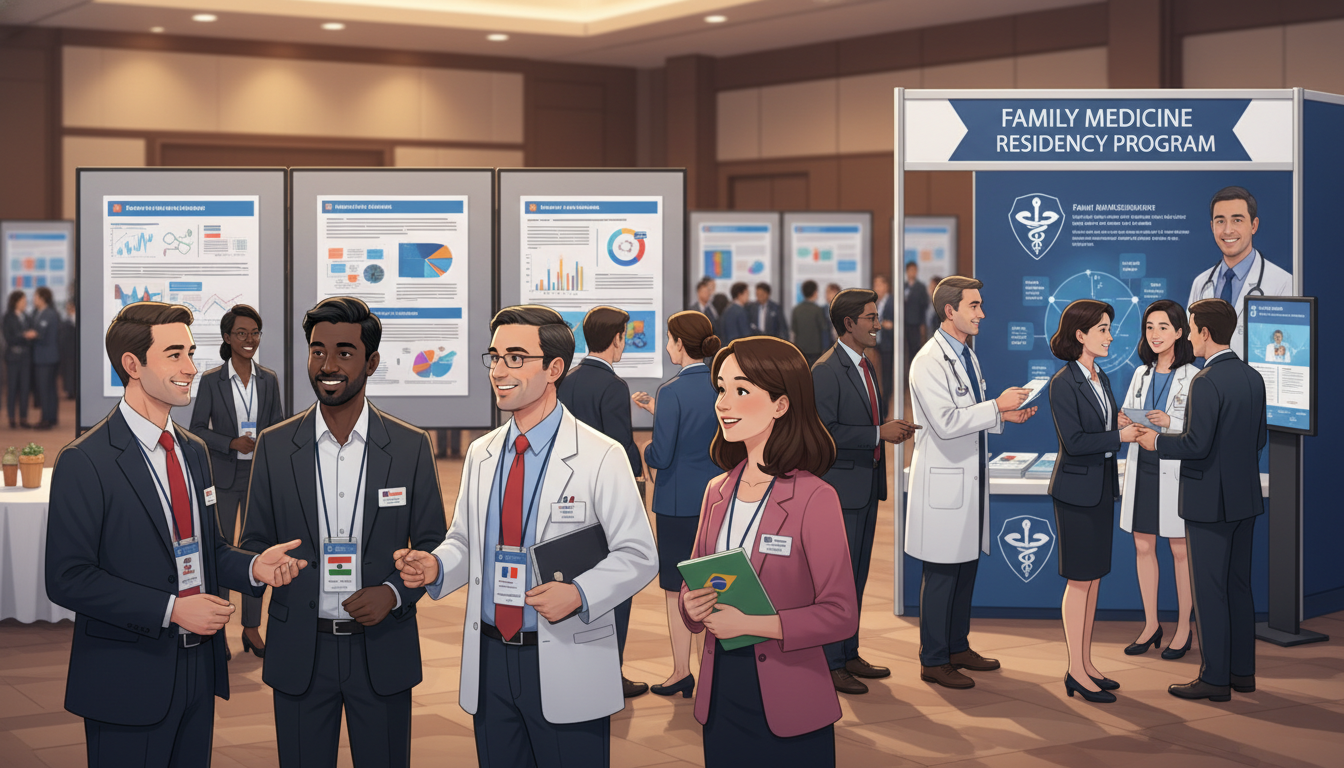
Conference networking is powerful because it compresses months of email outreach into a few days of in‑person or virtual interactions.
3.1 Choosing the Right Conferences
Priority events related to peds psych and Triple Board:
- AACAP Annual Meeting – High yield for child and adolescent psychiatry, Triple Board, and mentorship.
- AAP National Conference & Exhibition – Look for sessions on behavioral and mental health, integrated care, or developmental pediatrics.
- APA Annual Meeting with child and adolescent or combined tracks.
- Regional child psychiatry or pediatric mental health symposia (often more intimate, easier to approach faculty).
If finances are tight:
- Consider virtual attendance: Many conferences now stream sessions and have virtual networking or chat features.
- Look for travel scholarships or IMG grants through AACAP, APA, or specialty societies.
- Attend local or regional meetings if you are already in the US for an observership or exam.
3.2 Preparing Before You Go
Treat conferences like clinical procedures: success comes from preparation.
Define your goals
- Example: “Meet at least 3 Triple Board faculty and 2 current residents.”
- “Ask 1–2 people about research collaboration possibilities.”
- “Introduce myself to at least one potential mentor in peds psych.”
Research attendees
- Use the conference app or program to identify:
- Sessions given by Triple Board PDs or child psychiatry leaders.
- Poster sessions on pediatrics‑psychiatry interfaces (e.g., ADHD, autism, somatic symptoms, pediatric depression).
- Use the conference app or program to identify:
Prepare a 30‑second professional introduction
- Example:
“Hello, Dr. Smith. My name is [Name]. I’m a non‑US citizen IMG from [Country] with a strong interest in integrated pediatrics and psychiatry, especially early childhood trauma and development. I’m preparing for US residency and very interested in combined or Triple Board training. I’ve been following your work on [topic], and I’d appreciate any advice on how someone with my background can get involved in this field.”
- Example:
Bring a simple one‑page CV or QR code
- Not always needed, but useful if someone asks for your background.
- Include contact info and highlight peds psych–relevant work.
3.3 How to Network During the Conference
Concrete tactics for medical networking at conferences:
Ask questions after talks
- Prepare 1–2 thoughtful questions related to the session and your interests.
- Avoid very broad or personal questions during public Q&A like “How can I get residency?”
Approach speakers at the podium afterward
- Example script:
“Dr. Lee, thank you for your talk on integrated care. I’m a non‑US citizen IMG, very interested in Triple Board and in working at the interface of pediatrics and psychiatry. I especially liked your point about [specific detail]. Would you have a moment for a quick question about how trainees like me might start getting involved in research or clinical observerships in this area?”
- Example script:
Use social events and breaks
- Sit at tables with people you don’t know.
- Introduce yourself to residents and fellows—often more approachable and can give candid advice.
- Ask, “What brought you into peds psych?” or “What do you enjoy most about Triple Board training?”
3.4 Following Up After the Conference
Without follow‑up, most contacts will fade within weeks.
- Within 72 hours, send a concise email:
- Subject: “Follow‑up from AACAP – IMG interested in Triple Board”
- Body:
- Remind them where you met and one specific topic you discussed.
- Express appreciation for their time.
- Ask one clear next‑step question or propose a brief virtual meeting.
Example:
Dear Dr. Rodriguez,
It was a pleasure meeting you after your AACAP presentation on integrated pediatric primary care and psychiatry. I’m a non‑US citizen IMG from India, strongly interested in peds psych and Triple Board training. I appreciated your advice about starting with small collaborative projects and being persistent.
As I plan my path, I’d be grateful for any guidance on whether your department ever involves motivated international graduates in remote chart review or literature‑based projects. If you have 15 minutes in the next month, I would greatly value a brief conversation about how I might align my interests with opportunities in your team.
Thank you again for your time and for your inspiring work.
Sincerely,
[Name]
[USMLE status, brief line about background]
[Contact details]
Section 4: Building Long‑Term Mentorship and Sponsorship in Medicine
Mentorship medicine is one of the most powerful tools for non‑US citizen IMGs, especially in niche areas like Pediatrics‑Psychiatry and Triple Board.
4.1 Mentors vs. Sponsors
- Mentor: Offers advice, feedback, and support; guides your growth.
- Sponsor: Uses their influence to recommend you for positions, research roles, or residency interviews.
Both are important, but sponsors typically emerge after you’ve built trust through productive work with someone.
4.2 Where to Find Mentors as a Foreign National Medical Graduate
Potential mentorship sources:
- Faculty at your home institution with child or adolescent mental health interests.
- US physicians supervising your observership or electives—especially in pediatrics, psychiatry, or developmental clinics.
- Conference contacts you successfully follow up with.
- Formal mentorship programs:
- AACAP mentorship programs, including for international doctors.
- APA or AAP mentorship initiatives.
- Institution‑specific mentorship networks at hospitals where you do rotations.
When you reach out, be specific:
“I admire your career path in integrated pediatrics‑psychiatry, and I’m seeking a mentor who can help me understand how to build a long‑term career in this field as a non‑US citizen IMG. Would you be open to occasional conversations (perhaps once every 2–3 months) to guide my development?”
4.3 How to Be a “Good Mentee”
To sustain strong mentorship:
Come prepared to meetings:
- Send a brief agenda 24 hours before.
- Update on what has changed since last time (exam scores, projects, applications).
Respect time:
- Start and end on schedule.
- Ask if it’s okay to take a bit more time if the discussion is running long.
Execute on advice:
- If your mentor suggests a task (e.g., “contact Dr. X about your interest in ADHD research”), follow through and report back.
Show progress and gratitude:
- Share small wins: “Thanks to your suggestion, I joined the child psychiatry journal club at my home institution.”
Over time, mentors who see your reliability and growth are more likely to become sponsors, writing strong letters or directly recommending you to residency programs.

4.4 Mentorship Specific to Peds Psych and Triple Board
For Pediatrics‑Psychiatry and Triple Board, good mentors will help you:
- Choose projects that show your integrated interest (e.g., child trauma, autism, somatic symptoms, school refusal).
- Understand how combined training works:
- Rotations structure.
- Differences between standard pediatrics + child psych vs Triple Board.
- Strategize around:
- Visa‑friendly programs.
- Building a narrative of “continuity” (you didn’t randomly pick this field).
Ask targeted questions, such as:
- “From your perspective, what differentiates a strong Triple Board applicant?”
- “How can an IMG demonstrate readiness for the dual demands of pediatrics and psychiatry?”
Section 5: Research, Clinical Experiences, and Digital Presence as Networking Tools
Your day‑to‑day work can itself be your networking engine—if you approach it strategically.
5.1 Using Research to Build Relationships
For a non‑US citizen IMG, research collaborations are one of the most effective ways to get to know US faculty in pediatrics‑psychiatry.
Practical steps:
Identify overlap between your interests and theirs
- Example topics:
- Pediatric depression and anxiety.
- Autism spectrum disorders.
- Trauma in refugee or immigrant children.
- Somatic symptom disorders in adolescents.
- Example topics:
Start small and concrete
- Offer to help with:
- Literature reviews.
- Data entry or chart review (if you’re in the US and authorized).
- Simple case reports or poster abstracts.
- Offer to help with:
Email structure for research networking
- Short introduction (who you are, your exam status, and focus on peds psych).
- One sentence summarizing why you’re reaching out specifically to them.
- Proposal for a practical way you might contribute.
Example:
Dear Dr. Chen,
My name is [Name], a non‑US citizen IMG from [Country] with a strong interest in pediatrics‑psychiatry and Triple Board training. I recently read your paper on depression and somatic complaints in adolescents and found it very aligned with my clinical experiences in [brief context].
I am currently in the US preparing for residency applications and am eager to gain more structured research experience in child mental health. If your team ever needs assistance with literature reviews, data management, or preparing abstracts/posters, I would be very grateful for an opportunity to contribute.
I understand the demands on your time and would be happy to start with a small, clearly defined task to demonstrate my reliability.
Thank you for considering this,
[Name]
[USMLE status, location]
5.2 Clinical Experiences and Observerships as Networking Platforms
As a foreign national medical graduate, you may rely on observerships or externships to gain US experience:
Treat each day as a professional audition:
- Be punctual, prepared, and engaged.
- Read about patients’ conditions before rounds (especially mental health comorbidities).
- Ask thoughtful, concise questions.
Express your specific interest in Pediatrics‑Psychiatry:
- Tell attendings: “I am very interested in the interface between pediatrics and psychiatry, including Triple Board training. Are there particular cases or clinics where this comes up that I could observe?”
Offer practical help:
- Summarize articles or guidelines related to complex cases.
- Prepare mini‑presentations on topics like ADHD, autism screening, or pediatric anxiety.
These behaviors make faculty remember you as a contributor, not just an observer, and become more willing to write strong letters or connect you with peds psych colleagues.
5.3 Building a Professional Digital Presence
For medical networking, your online presence is often the first impression.
LinkedIn
Create a complete profile with:
- Professional photo.
- Headline: “Non‑US citizen IMG | Aspiring Pediatrics‑Psychiatry / Triple Board physician.”
- Summary emphasizing your motivation for integrated care.
Connect with:
- Faculty you’ve worked with.
- Residents and fellows in peds psych or Triple Board.
- Professionals you meet at conferences (with a short reminder note).
Research profiles
- Google Scholar, ResearchGate, or ORCID if you have publications.
- Link these from your LinkedIn.
Professional Twitter (X)
- Follow child psychiatrists, developmental pediatricians, Triple Board programs.
- Like and occasionally comment thoughtfully on academic content.
- Share accepted posters or publications, tagging co‑authors and institutions.
Your goal is not to become a social media influencer, but to signal seriousness and engagement in your chosen field.
Section 6: Practical Networking Tactics for the Residency Application Phase
Your networking should become more focused and tactical as you approach the Match.
6.1 Before Applying
Clarify your story
- Why pediatrics?
- Why psychiatry?
- Why both, and potentially Triple Board?
- How does your background as a non‑US citizen IMG enrich this field (e.g., cross‑cultural perspectives, experience with trauma in low‑resource settings)?
Inform mentors and key contacts
- Share your target list of programs.
- Ask: “Based on your knowledge, do you recommend adding or removing any programs from this list?”
Ask mentors about advocacy
- After they’ve seen your work, some mentors may:
- Email PDs.
- Mention you in conversations.
- Don’t demand this, but you can say:
“If you feel comfortable, any guidance or advocacy you could provide to programs where you have connections would mean a great deal to me.”
- After they’ve seen your work, some mentors may:
6.2 During Application Season
Polite updates
- When you get a new publication, presentation, or US experience, send brief updates to 2–3 key mentors.
Interview networking
- Treat every interview day as another medical networking event.
- Ask residents:
- “What type of background do your strongest residents typically have?”
- “How supportive is the program of IMGs and of those on visas?”
- After interviews, send tailored thank‑you emails that reference shared interests in peds psych.
6.3 After Match (or If You Don’t Match)
If matched:
- Maintain your network
- Let mentors know where you matched and express gratitude.
- Offer to help future applicants from your home country or institution.
If you do not match:
- Reach back to mentors quickly
- Ask for honest feedback and help revising your strategy.
- Consider:
- Research years in child mental health.
- Additional observerships with stronger peds psych exposure.
- Reframing your personal statement to sharpen your integrated narrative.
Remember: many successful peds psych or Triple Board physicians matched after a non‑linear path, using sustained networking and mentorship to improve their chances.
FAQ: Networking in Medicine for Non‑US Citizen IMGs in Pediatrics‑Psychiatry
1. As a non‑US citizen IMG, when should I start networking if I’m interested in peds psych or Triple Board?
Start as early as possible—ideally while still in medical school or at least 12–24 months before you plan to apply for residency. Networking takes time to mature into mentorship, research, and letters. Even if you’re already close to application season, begin now; a few meaningful connections are better than none.
2. How do I address my visa status when networking or applying?
Be honest but do not lead with visa concerns. First highlight your qualifications, experience, and motivation. When opportunities become more concrete (e.g., a research position or serious discussion about residency), clearly state your visa needs (often J‑1 for residency) and ask whether the institution is able to sponsor. Many programs are familiar with non‑US citizen IMGs and appreciate straightforward, early clarification.
3. I feel uncomfortable “selling myself.” How can I network authentically?
Focus on curiosity and contribution rather than self‑promotion. Ask people about their work, listen closely, and look for ways you can help—through research assistance, case reviews, or even sharing perspectives from your home country. Genuine interest plus reliable follow‑through is far more powerful than flashy self‑promotion.
4. Is it possible to get into peds psych or Triple Board without strong networking?
It is possible but significantly harder, especially as a foreign national medical graduate. In small, relationship‑driven specialties like Pediatrics‑Psychiatry and Triple Board, programs often favor applicants with known, trusted advocates. Networking gives you that human context: mentors who can say, “I know this person, I’ve worked with them, and they will succeed here.” Building those relationships greatly improves your chances and enriches your future career in integrated child mental health.