Understanding Networking in Medicine as a Non‑US Citizen IMG in a Transitional Year
For a non-US citizen IMG in a Transitional Year (TY) residency, networking in medicine is not optional—it’s strategic survival. Your TY program is short, competitive, and often fast-paced. You are balancing clinical demands, visa constraints, board exams, and the pressure to secure a categorical spot for next year. In all of this, who knows you and how well they know your work can dramatically shape your next opportunity.
This article focuses on how a foreign national medical graduate can use the transitional year residency to build meaningful connections, find strong mentors, and create real opportunities in the US system—without feeling fake, pushy, or overwhelmed.
1. Why Networking Matters More for Non‑US Citizen IMGs in a Transitional Year
Networking in medicine isn’t just about handing out business cards or adding people on LinkedIn. It is about building professional trust. For a non-US citizen IMG in a TY program, it matters even more for several reasons:
1.1. Overcoming Limited Time in One Institution
A transitional year residency is only one year. Unlike categorical residents who have 3–7 years to build a reputation locally, you have 12 months—sometimes less if you’re reapplying early—to:
- Impress faculty and program leadership
- Get strong letters of recommendation
- Identify champions who will advocate for you
- Explore and secure a categorical position (e.g., Internal Medicine, Radiology, Anesthesiology, Neurology, PM&R, etc.)
Effective networking compresses this timeline by maximizing every rotation, conference, and interaction.
1.2. Addressing Visa and Immigration Constraints
As a foreign national medical graduate, visa issues (J-1, H-1B, or pending status) shape your options:
- Not all programs sponsor visas.
- Some specialties (e.g., Ophthalmology, Dermatology) are extra competitive and less IMG‑friendly.
- Program directors often worry about delays, paperwork, and future availability.
Networking allows you to:
- Identify programs that regularly sponsor non-US citizen IMGs.
- Connect with current or former residents who matched with the same visa type.
- Clarify immigration logistics with GME offices via trusted internal contacts.
1.3. Reducing the “Unknown IMG” Barrier
Many faculty are unfamiliar with your medical school, grading system, or clinical environment. Networking humanizes the “non-US citizen IMG” label:
- Your work ethic and reliability become visible, not theoretical.
- Your story (why you chose US training, your goals) becomes memorable.
- Personal recommendations (emails, calls, quiet advocacy) help overcome bias and uncertainty.
In a competitive match environment, a well‑placed email or phone call from someone who knows you can be the difference between “interview offered” and “application lost in the stack.”
2. Core Principles of Effective Medical Networking for TY IMGs
Before strategy and tactics, you need the right mindset. Many IMGs feel awkward about networking, seeing it as “using people” or “fake socializing.” In medicine, healthy networking is different.
2.1. Think in Terms of Mutual Value, Not Favors
Networking is mutual support over time, not one‑sided asking. Even as a TY intern, you bring value:
- You can be a reliable, hardworking team member.
- You can help with data collection, QI projects, or research.
- You can share unique international perspectives on healthcare.
- You can help juniors (MS4s, observership students) navigate the system.
Approach relationships with the mindset:
“How can we help each other grow?” rather than “What can I get from this person?”
2.2. Show Your Value Through Professionalism
Your daily behavior is your strongest networking tool:
- Arrive prepared and on time.
- Anticipate tasks and follow through.
- Communicate clearly, especially about patient safety.
- Treat nurses, staff, and patients with respect.
Many meaningful career connections begin with simple observations like:
“Who is that intern who always follows up, helps the team, and seems genuinely interested?”
2.3. Be Specific About Your Career Direction
Your mentors and sponsors can’t help you if they don’t know what you want. Even if you’re still exploring, state a working direction:
- “I’m leaning toward Internal Medicine with an interest in Cardiology.”
- “I’m interested in Radiology and possibly Interventional Radiology.”
- “I’m deciding between Anesthesiology and Critical Care paths.”
You can adjust over time, but specific goals:
- Help people connect you to the right opportunities.
- Make you more memorable.
- Show that you’ve thought seriously about your future.

3. Building a Powerful Network Inside Your Transitional Year Program
Your TY program is your primary networking environment. Even if it’s small or community‑based, it can be a launchpad for your next step.
3.1. Identify Key People and Their Roles
Within your TY program and affiliated hospitals, map out:
Program Leadership
- Transitional Year Program Director
- Associate Program Directors
- Chief Residents
Specialty-Specific Faculty
- Attendings in the specialty you’re targeting (e.g., IM, Radiology, Surgery, Anesthesia).
- Fellowship directors who often know residency PDs.
Resident Peers and Seniors
- Categorical residents pursuing your desired specialty.
- Fellow IMGs who matched successfully into competitive programs.
Non-Physician Allies
- Program coordinators (vital for communication and logistics).
- GME office staff (visa, contracts, credentialing support).
Create a simple spreadsheet or note with names, roles, and how you’ve interacted with them. This keeps your medical networking intentional, not random.
3.2. Make the Most of Each Rotation
Each rotation is a mini‑networking environment. Use it deliberately:
On Day 1–2:
- Introduce yourself clearly: name, background, TY resident, and career interest.
- Example: “I’m Dr. Patel, a transitional year resident, and I’m interested in applying to Internal Medicine next year.”
During the Rotation:
- Volunteer for small but visible tasks (follow-up calls, brief presentations, early drafts of notes, or QI data).
- Ask 1–2 thoughtful educational questions per day, not every hour.
- Stay late occasionally when the team is overwhelmed or a complex case arrives.
- Offer to help with small educational or research-related tasks.
At the End of the Rotation:
Ask the attending:
- “I’ve really enjoyed working with you this month. I’m planning to apply for [specialty]. Do you have any advice?”
- If rapport is strong: “If you feel you know my work well enough, I’d be honored to ask for a letter of recommendation.”
Request feedback: “What could I improve before my next rotation?” – and then act on it.
This approach builds both reputation and documentation (strong letters, positive evaluations, future references).
3.3. Use Academic and QI Projects Strategically
Even in a busy TY program, there are chances for small but meaningful projects:
- Retrospective chart reviews
- Case reports or case series
- Quality improvement projects (sepsis bundle, discharge summaries, handoff improvement)
- Educational talks or workshops (for students or nurses)
Action steps:
Early in the year, tell faculty in your desired specialty:
- “I’m interested in [specialty] and would love to help with any ongoing projects, even small roles.”
Choose projects you can realistically complete during your TY year.
Aim for tangible output:
- Abstract submission to a conference
- Poster presentation
- Institutional presentation
- Manuscript draft (even if not yet accepted)
These academic activities both expand your network (co‑authors, conference contacts) and strengthen your CV as a foreign national medical graduate.
3.4. Program Social Events and Informal Networking
Even if you’re introverted, attending social events helps:
- Resident retreats or wellness days
- Department dinners or graduation events
- Journal clubs, M&M conferences with informal discussion afterward
You don’t have to be the loudest voice. Aim to:
- Introduce yourself to 1–2 new people each event.
- Ask about their career path: “How did you choose [specialty]?”
- Follow up with an email or LinkedIn connection if relevant.
4. Conference and External Networking: Leveraging the Wider Medical Community
Medical networking goes beyond your hospital. Conferences, online communities, and alumni networks offer high-yield opportunities, especially for a non-US citizen IMG in a TY program who needs visibility beyond a single institution.
4.1. Choosing the Right Conferences
You do not need to attend every meeting. Focus on:
Specialty-specific national conferences
- e.g., ACP (Internal Medicine), RSNA (Radiology), ASA (Anesthesiology), AAN (Neurology), etc.
Regional meetings (state or regional chapters)
- Often cheaper, smaller, and easier for medical networking.
Resident/trainee-focused events
- Workshops on careers, mentorship medicine, visa issues, and match strategy.
If money is an issue (common for non-US citizen IMG residents):
- Look for travel scholarships, trainee discounts, or diversity IMG grants.
- Ask your TY program if they fund conference travel for accepted abstracts or posters.
4.2. How to Do Conference Networking Without Feeling Awkward
Conference networking is a skill. Structure it:
Before the Conference
- Identify 3–5 people or institutions you want to connect with.
- Email in advance if appropriate:
- “I’m a transitional year resident and an IMG interested in [specialty]. I’ll be at [conference]. Would you have 10–15 minutes for a quick conversation?”
During the Conference
- Attend sessions in your target specialty.
- Ask thoughtful questions at the end of talks, briefly introducing yourself.
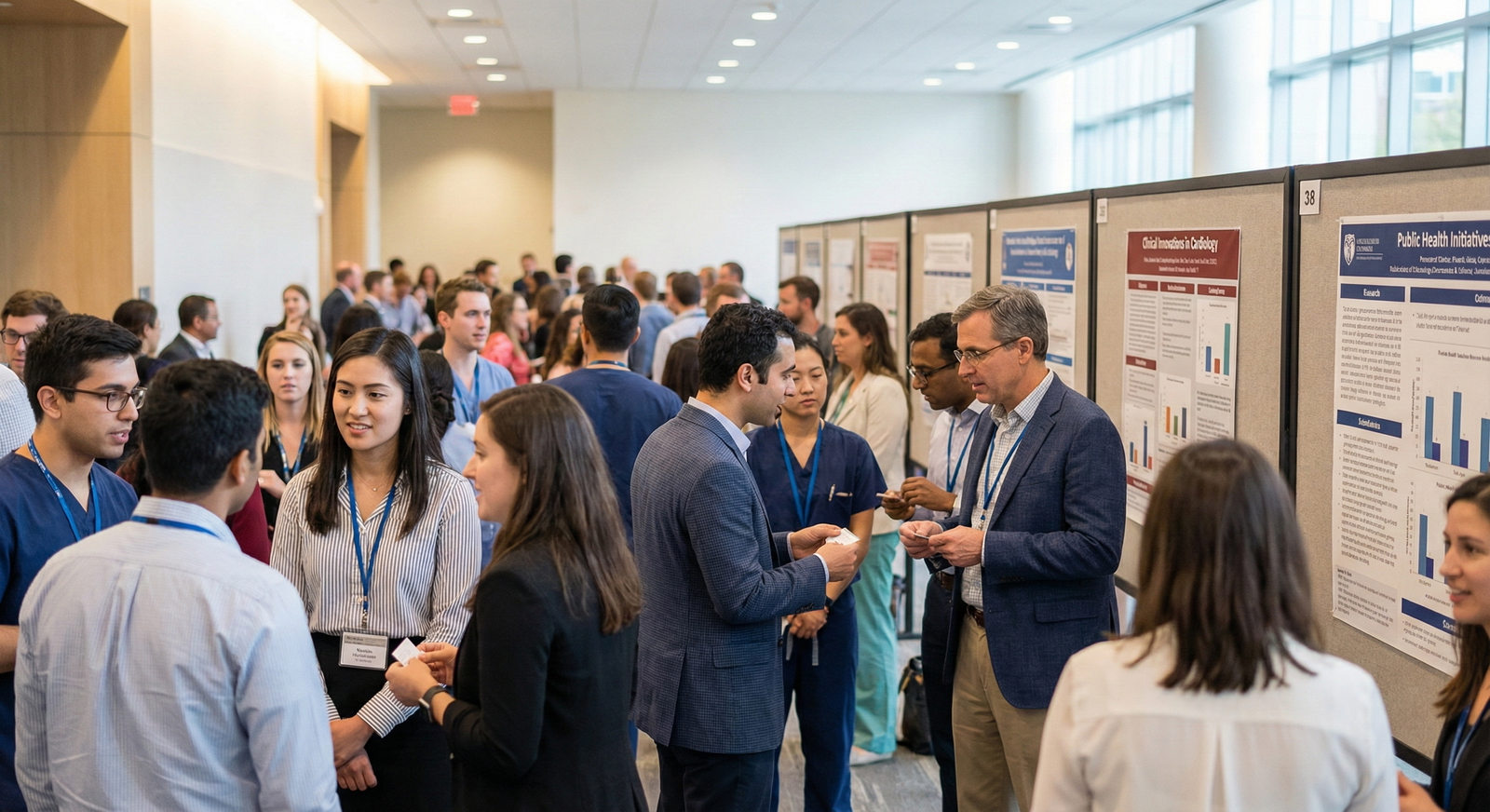
- Visit poster sessions and talk to presenters from programs you’re interested in.
- Join resident or IMG-focused sessions—these are often rich in advice and connections.
After the Conference
- Send a short follow‑up email:
- Thank them for their time.
- Mention one specific topic you discussed.
- Express interest in staying in touch or exploring future opportunities.
This is conference networking with purpose, not just wandering the exhibit hall.
4.3. Online and Social Media Networking
Professional online presence is especially helpful if you trained outside the US and need broader visibility.
LinkedIn
- Keep your profile updated with your TY program, visa status (optional but often helpful), interests, and publications.
- Connect with residents, fellows, and faculty you meet.
- Share or comment thoughtfully on relevant posts.
Twitter / X and Other Platforms
- Many specialties have strong communities (#MedTwitter, #IMGsInMedicine, specialty-specific hashtags).
- Engage professionally—comment on articles, share cases (de‑identified), discuss educational content.
Institutional Alumni Networks
- Your foreign medical school alumni in the US can be crucial contacts.
- Join alumni groups and reach out to graduates in your target specialty.
For all platforms, maintain strict professionalism: no patient identifiers, no disparaging comments about colleagues or institutions.

5. Finding and Using Mentorship and Sponsorship in Medicine
For a non-US citizen IMG, mentorship medicine and sponsorship are central to advancement. They’re related but different.
- Mentor – guides you, gives advice, reviews your CV, helps you think.
- Sponsor – uses their influence to open doors (emails PDs, recommends you, invites you to projects).
You need both.
5.1. Types of Mentors You Should Seek During TY
Aim for a small, diverse “mentor board” rather than relying on one person:
Clinical Mentor in Your Target Specialty
- Helps you understand what programs value.
- Guides you in building a competitive profile.
Career/Strategy Mentor
- May be a TY faculty member or chief resident.
- Helps you plan rotations, interviews, and applications as a foreign national medical graduate.
Peer or Near-Peer Mentor
- A senior resident or fellow who matched recently as a non-US citizen IMG.
- Offers practical, recent advice on ERAS, interviews, test timing, visa concerns.
5.2. How to Approach Potential Mentors
You don’t need a dramatic speech. Use simple, respectful language:
- Email or in-person:
- “Dr. Smith, I’ve really appreciated your teaching on this rotation. I’m a transitional year resident and an IMG planning to apply for [specialty]. Would you be open to meeting briefly sometime to discuss my career plans and get your advice?”
At the first meeting:
- Be prepared:
- Updated CV
- USMLE scores
- List of specialties/programs of interest
- Specific questions (e.g., “How can I strengthen my application in the next 6 months?”)
Follow up with:
- Occasional updates: “I applied to X programs,” “I got an interview at Y,” “I submitted an abstract,” etc.
- Gratitude and acknowledgement of their help.
5.3. Converting Mentors into Sponsors
Sponsorship tends to evolve from mentorship when:
- You consistently show reliability and initiative.
- The mentor believes in your potential and is willing to attach their reputation to you.
Triggers for sponsorship might look like:
- They offer to email a program director on your behalf.
- They invite you to co‑author a paper, present at grand rounds, or join a project.
- They introduce you to influential colleagues at conferences.
You can gently encourage sponsorship by being clear and honest about your needs:
- “I’m very interested in applying to [Program X]. If you feel comfortable, would you be willing to support my application or reach out to the PD?”
If they hesitate, don’t push. Protecting trust and reputation is more important than a single opportunity.
6. Common Pitfalls and How to Avoid Them
Even with good intentions, some networking mistakes can hurt your chances as a non-US citizen IMG in a transitional year residency.
6.1. Being Transactional or Pushy
Pitfall examples:
- Asking for a letter in the first week of a rotation.
- Sending long emails demanding detailed help from someone you barely know.
- Repeatedly asking for personal favors without contributing or updating.
Solution:
- Focus first on working hard and proving yourself.
- Build genuine relationships through consistent, respectful contact.
- Time major requests after you’ve developed real rapport (e.g., end of rotation, after working together on a project).
6.2. Neglecting Professional Boundaries
Avoid:
- Over‑sharing personal problems or visa anxiety in early interactions (mention briefly when relevant, but don’t make it your identity).
- Sending messages late at night or expecting immediate responses.
- Mixing social and professional lines inappropriately (especially on social media).
Maintain a respectful, professional tone in all communications.
6.3. Relying Only on IMGs or Only on One Community
It’s natural to feel most comfortable with other IMGs, especially those from your country or language. But if your entire network is limited to this circle:
- Your visibility with decision‑makers may be limited.
- You may miss broader perspectives and opportunities.
Aim for a mixed network:
- Fellow non-US citizen IMGs (peer support, shared challenges).
- US graduates, categorical residents, fellows.
- Faculty across age, background, and training paths.
6.4. Ignoring Long‑Term Relationship Building
Networking is not only about the match this year. Some connections may benefit you:
- 3–5 years later when you apply for fellowship
- When you look for an attending job
- When you seek collaborators for research
Keep a simple system:
- A contact list or spreadsheet (name, institution, specialty, how you met, last contact).
- A habit of sending quick updates a few times per year.
Frequently Asked Questions (FAQ)
1. As a non-US citizen IMG in a transitional year, when should I start networking for my next residency position?
Start immediately, but pace yourself. In the first 1–2 months, focus on:
- Solid clinical performance
- Understanding your hospital system
- Identifying potential mentors in your target specialty
By month 3–4, you should:
- Have at least one or two informal mentor meetings
- Join or start a small project (QI, case report, or research)
- Introduce your career goals to key faculty in your desired specialty
By mid‑year, you want established relationships that can lead to strong letters, targeted advice, and possibly advocacy for positions in categorical programs.
2. How can I mention my visa status without hurting my chances while networking?
Be honest but concise, and don’t open with it. Once you’ve established professional interest:
- “I’m currently on a J-1 visa (or planning to be) and will need a program that sponsors [J-1/H-1B]. I know this can affect program selection, so I’m trying to be thoughtful about where I apply.”
Use mentoring or career discussions as a context for this, not casual hallway chats. Many mentors appreciate your transparency because it helps them guide you toward realistic options.
3. I feel shy and my English isn’t perfect. How can I still network effectively?
You do not need to be extroverted or have perfect English to succeed in medical networking. Focus on:
- Listening carefully and asking 1–2 clear questions rather than talking constantly.
- Preparing short introductions and common phrases in advance.
- Using email to follow up, where you can take time to write and edit.
- Letting your work ethic, reliability, and kindness speak very loudly on rotations.
Many faculty respect humility and effort far more than flawless language.
4. What if my Transitional Year program is small and not strongly connected to my desired specialty?
You still have options:
- Use your rotations at affiliated hospitals to connect with specialty departments.
- Attend regional or national conferences related to your target specialty.
- Leverage online networks (LinkedIn, MedTwitter, alumni groups).
- Ask your TY program leadership if they know contacts in your target field and would be willing to introduce you.
A small TY program does not limit your future if you are proactive with external medical networking and maintain a clear, consistent presence in your field of interest.
For a non-US citizen IMG in a transitional year residency, networking in medicine is the bridge between your current position and your future specialty. With intentional effort—building relationships on rotations, participating in conference networking, and cultivating strong mentorship medicine—you can turn a single intense year into a launchpad for a successful lifelong career in the US system.