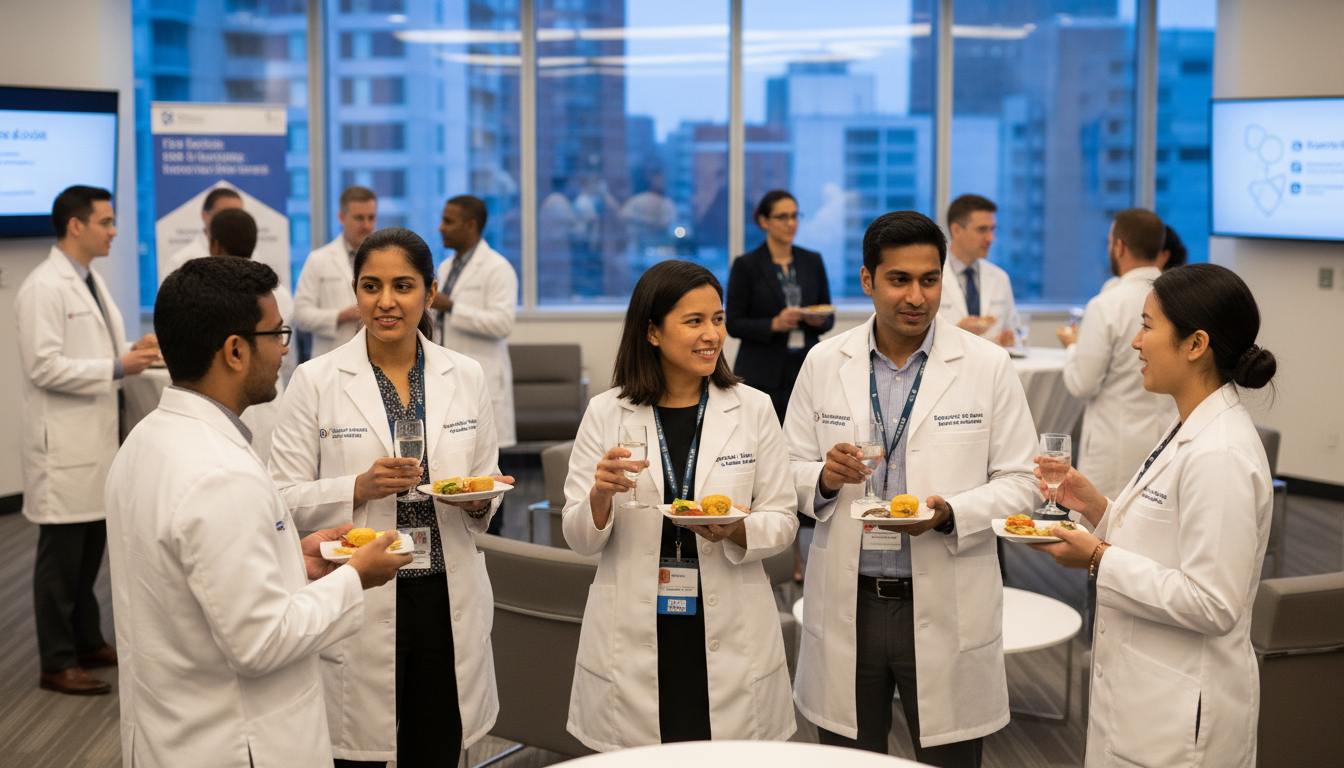
Understanding the Power of Networking as a US Citizen IMG in Emergency Medicine
For a US citizen IMG interested in emergency medicine residency, networking is not optional—it’s strategic survival. You’re competing in a highly visible, fast-paced specialty where reputation, personal connections, and trusted recommendations often distinguish otherwise similar applicants.
You already face extra questions in the EM match:
- “Why did you train abroad?”
- “Can you handle US emergency department workflow?”
- “Will you fit our team culture?”
Thoughtful, consistent medical networking can help you answer all of these before anyone even asks—through people who know you, trust you, and advocate for you.
This article breaks down practical, step-by-step networking strategies tailored to US citizen IMGs targeting emergency medicine. You’ll learn how to:
- Build visibility in the EM community even if your school has limited US ties
- Use conferences and virtual events for high-yield conference networking
- Find and cultivate mentorship in medicine specific to EM
- Turn away rotations and clinical experiences into strong advocacy
- Leverage social media and professional platforms without being performative
Throughout, you’ll see concrete examples, sample phrases, and realistic timelines you can implement immediately.
1. The US Citizen IMG Reality in the EM Match
Why networking matters more for US citizen IMGs
As an American studying abroad, you occupy a unique space:
- You’re familiar with US culture and likely plan to work in the US long-term.
- Yet program directors may know little about your medical school, curriculum, or grading system.
- You often have fewer “built-in” alumni and faculty connections at US teaching hospitals.
This creates two challenges in the emergency medicine residency landscape:
Information gap
Programs don’t automatically know how to interpret your record—what your clinical exposure really looked like, how rigorous your training was, or how you compare to US grads.Trust gap
With many qualified applicants, EM programs lean heavily on trusted voices:- EM attendings
- Residency leadership
- Known faculty at their own or affiliated institutions
Networking helps you systematically close both gaps.
What networking in medicine actually is (and isn’t)
Effective networking is not:
- Aggressively asking people for favors
- Sending mass LinkedIn messages: “Can you help me match?”
- Collecting email addresses and never following up
In EM, networking means:
- Creating genuine, professional relationships with people in the specialty
- Showing up consistently where EM professionals gather (clinics, conferences, online communities)
- Adding value—being reliable, prepared, and engaged so others want to invest in you
- Staying on their radar over months and years, not weeks before ERAS
If you think, “I don’t have natural connections,” that’s exactly why you need a plan. Networking is a skill set, not a personality trait.
2. Building Your Emergency Medicine Network from Scratch
You can start building your EM network regardless of where you are in medical school. The key is to approach it in layers: home base → regional → national → digital.

A. Start with your immediate environment
Even if your school is abroad and has no EM department, you likely have:
- Internal medicine or surgery attendings who trained in the US
- Alumni who matched into US residencies (in any specialty)
- Visiting faculty from US institutions
- Deans or administrators with US connections
Action steps:
Identify US-connected faculty and alumni
- Ask your Dean’s office or career office for:
- A list of US residency–matched graduates
- Faculty who did residency or fellowship in the US
- Search LinkedIn for “[Your School Name] emergency medicine” or “[Your School Name] residency United States.”
- Ask your Dean’s office or career office for:
Request brief meetings (15–20 minutes) Use a concise email like:
Subject: US EM residency advice as a US citizen IMG
Dear Dr. [Name],
My name is [Your Name], a [Year] medical student at [School]. I’m a US citizen planning to apply to emergency medicine residency in the US. I understand you have experience with US training pathways, and I would be very grateful for 15–20 minutes of your time to ask a few focused questions about strengthening my application and building connections.
I’m happy to meet virtually at your convenience.
Thank you for considering this,
[Your Full Name]
[Graduation Year] | [School]Use each meeting to get “one step further” Ask:
- “Is there anyone in emergency medicine you think I should speak with?”
- “Are there specific EM programs that have been IMG-friendly in your experience?”
- “Do you know of any EM alumni from this school?”
This turns one connection into two or three—classic network growth.
B. Target away rotations strategically
For US citizen IMG applicants in EM, away rotations (auditions) are arguably the single most powerful networking tool.
They let you:
- Prove you can function in a US ED
- Earn EM Standardized Letters of Evaluation (SLOEs)
- Build relationships with attendings, residents, and coordinators who will directly impact your application
Key principles:
Apply early and broadly
- Many EM programs cap IMG rotators; slots fill early.
- Use VSLO/VSAS and also program websites, as some manage visiting students independently.
- Target a mix:
- IMG-friendly community EM programs
- Academic programs in regions you have ties to (e.g., “I grew up in New Jersey”)
Treat every day as a live interview
- Be on time (actually, be early).
- Read about common ED complaints before shifts (chest pain, abdominal pain, sepsis).
- Ask for feedback early: “I’m hoping to pursue EM; is there one thing I can do better on next shift?”
Network deliberately during the rotation
- Get to know:
- Chief residents
- Clerkship director
- Program director when possible
- Ask near the end:
- “Are there particular programs you think might be a good fit for my background as a US citizen IMG?”
- “Is there anything specific you think I should highlight in my personal statement?”
- Get to know:
Follow up post-rotation Send a short email to key attendings, e.g.:
Dear Dr. [Name],
Thank you again for the opportunity to rotate in your ED last month. I learned a tremendous amount, especially about [specific case/teaching point]. The experience solidified my desire to pursue emergency medicine.
I will be applying this ERAS cycle and will be sure to include [Program Name] on my list. I’m very grateful for your teaching and any advice you may have as I move forward.
Sincerely,
[Your Name]
These small touches keep you memorable when SLOEs are written or rank lists are made.
C. Use digital platforms strategically (without overdoing it)
For American studying abroad students, LinkedIn bridges the geographic gap.
- Make a clean, professional profile:
- Professional headshot
- “US Citizen IMG | Aspiring Emergency Medicine Physician” in the headline
- Short About section: your story in 3–4 sentences
- Connect with:
- EM residents and attendings at programs where you rotate or apply
- Alumni from your school in US residencies
When sending a connection request, personalize it:
Hi Dr. [Name],
I’m a US citizen IMG in my [Year] at [School], interested in emergency medicine. I’ve been learning about [Program/Hospital] and would appreciate the chance to stay connected and learn from your posts.
Best,
[Your Name]
You’re not asking for anything yet; you’re opening a door.
X (Twitter) and other FOAMed spaces
Emergency medicine has a strong presence in FOAMed (Free Open Access Medical Education). Many program directors, EM educators, and residents are visible there.
Follow:
- EM program accounts
- Known EM educators and FOAMed contributors
- EM organizations (ACEP, SAEM, AAEM)
Engage sparingly but thoughtfully:
- Like and occasionally comment on educational threads
- Share cases or learning points (de-identified, HIPAA-compliant)
- Avoid controversial or unprofessional debates
If a PD or faculty member recognizes your name from a FOAMed space and then sees your application, that’s instant familiarity.
3. Conference Networking: Turning Events into Relationships
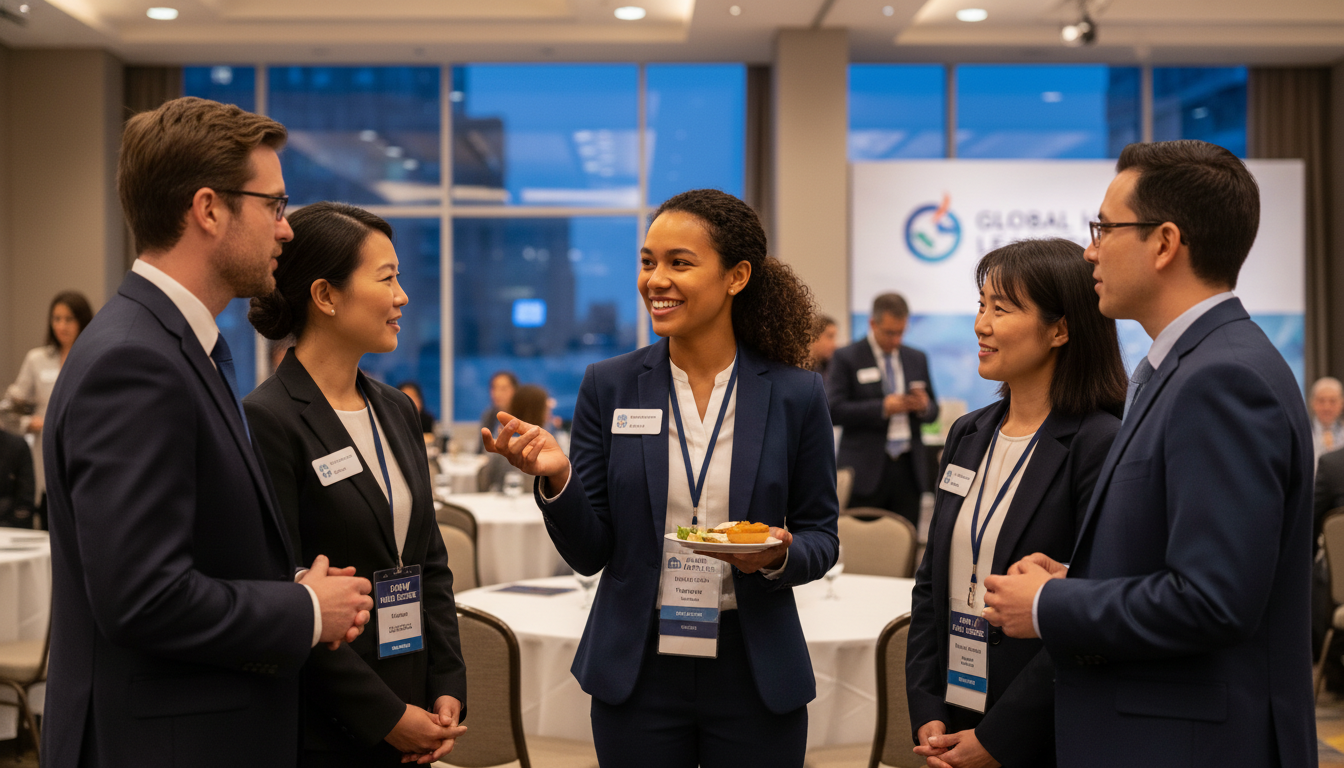
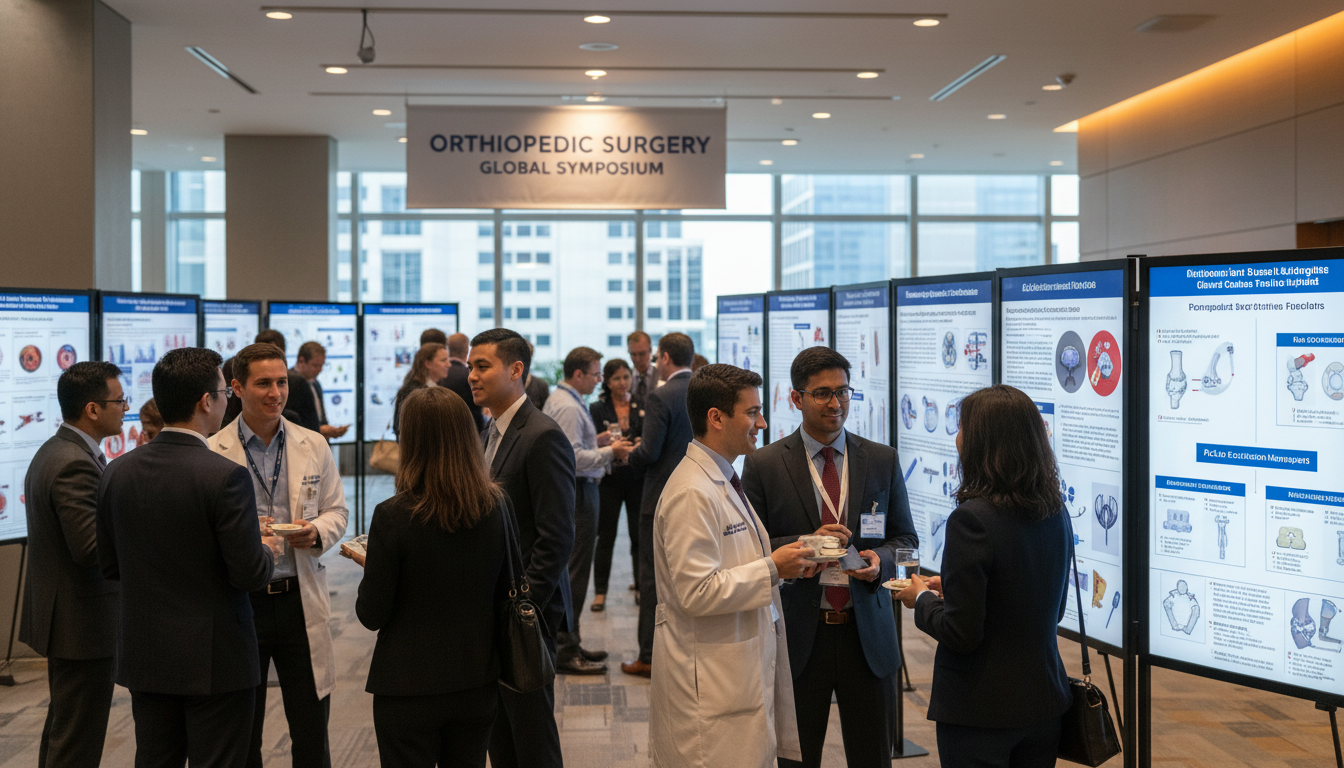
Conference networking is one of the most efficient ways to meet many EM physicians in a short time. As a US citizen IMG, you want to be visible and memorable, not just another badge in the crowd.

Choosing the right conferences
Look for both large and targeted events:
National EM conferences
- ACEP Scientific Assembly
- SAEM Annual Meeting
- AAEM Scientific Assembly
Student/resident-focused events
- EMRA (Emergency Medicine Residents’ Association) events
- Regional EM interest group or residency fairs
- Virtual EM residency showcases (many now held annually)
As an American studying abroad, you might not attend annually, but even one strategically planned conference can significantly expand your EM match network.
Prepare before you arrive
Set clear goals Examples:
- “Meet at least 2 program directors and 4 residents from programs I’m applying to.”
- “Ask three EM educators about how they view IMG applicants.”
- “Identify at least one potential mentor in academic or community EM.”
Research programs and people
- Look at the conference program and flag:
- Sessions led by PDs or APDs
- Residency fairs or “meet the program” events
- IMG or international medical graduate–focused sessions
- Look at the conference program and flag:
Prepare your short introduction (30–45 seconds) Include:
- Who you are: “I’m [Name], a US citizen IMG in my [Year] at [School].”
- Your interest: “I’m planning to apply to emergency medicine this coming cycle.”
- A specific angle: “I’m especially interested in [community EM / academic EM / ultrasound / global health].”
Example:
“Hi, I’m Sarah, a US citizen IMG in my final year at [School] in [Country]. I’m applying to emergency medicine this upcoming ERAS cycle, with a strong interest in community EM in the Northeast. I’ve done two EM rotations in the US and am hoping to learn more about how different programs integrate ultrasound into resident education.”
How to approach people at conferences
You don’t need to be extroverted; you need to be prepared and respectful.
Situations and strategies:
After a talk
- Wait your turn in the small cluster around the speaker.
- Ask one thoughtful question, ideally related to your situation.
Example:
“Dr. [Name], thank you for your talk on chest pain risk stratification. As a US citizen IMG planning to apply to EM, do you have any advice on how I can best demonstrate my readiness to work in a busy US ED?”
Then:
“Would it be alright if I followed up by email with one or two questions about rotation planning?”
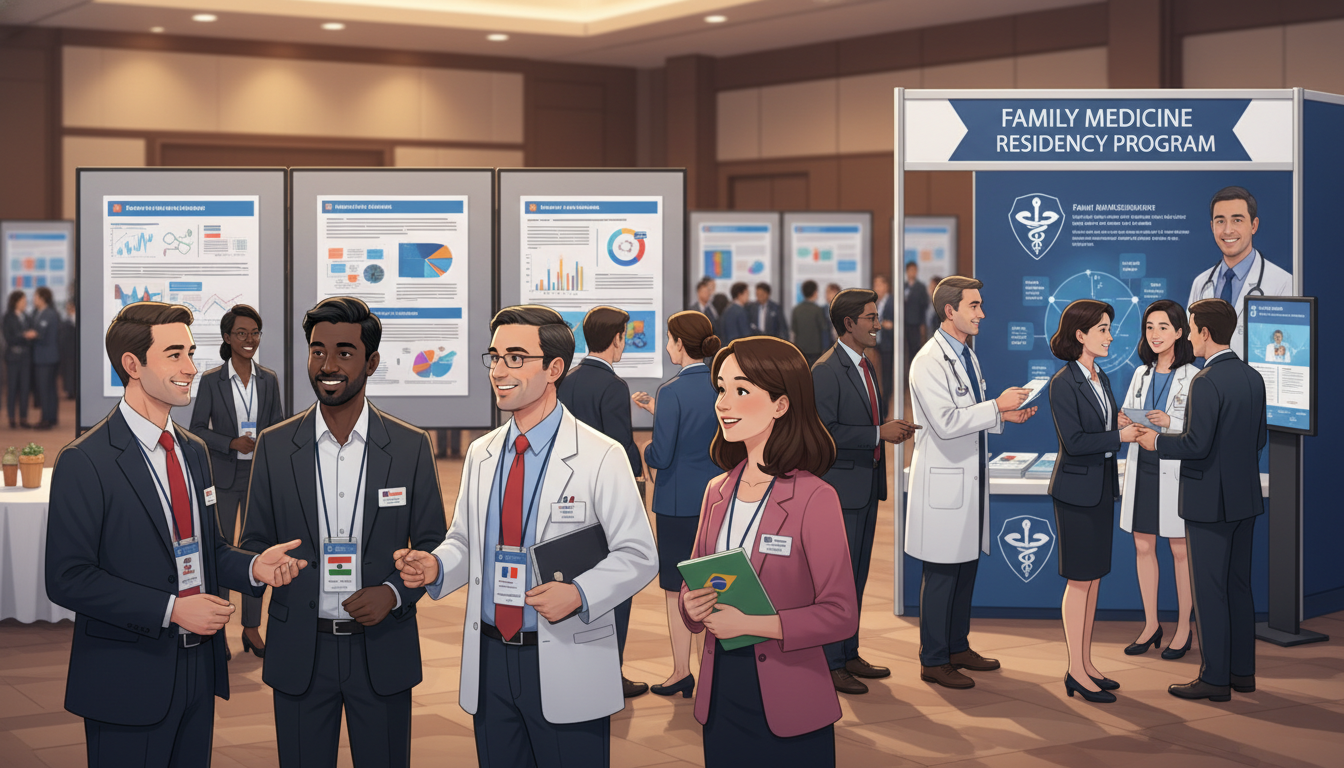
At residency fairs or program booths
- Introduce yourself to residents first; they’re often more approachable.
- Ask:
- “What do you think makes someone a good fit for your program?”
- “Have you worked with IMGs at your program? What helped them succeed?”
Before you walk away, ask:
“Is there someone at your program you’d recommend I contact if I have more specific questions as an IMG applicant?”
In informal spaces (coffee lines, hallways) Light, respectful approach:
“Hi, I’m [Name], a US citizen IMG planning to apply to EM. I saw your badge—are you with [Institution]? I’ve been reading about your program and would love to hear how residents like it there.”
Following up after conferences
Within 5–7 days, send short, specific follow-up emails:
Subject: Follow-up from SAEM – US Citizen IMG interested in EM
Dear Dr. [Name],
It was a pleasure meeting you at [Conference] after your session on [Topic]. I’m the US citizen IMG from [School] who asked about [specific question].
I appreciated your advice about [key takeaway]. I’m planning to apply to emergency medicine this upcoming ERAS cycle and will be strongly considering [Program Name]. If you ever have suggestions for resources or opportunities that might help me as an IMG applicant, I’d be very grateful.
Thank you again for your time and teaching,
[Your Name]
Save their contact in a simple spreadsheet: name, role, institution, where you met, what you discussed, last contact date.
4. Mentorship in Medicine: Finding and Cultivating EM Mentors as a US Citizen IMG
For US citizen IMGs, mentorship can be transformational, especially for understanding unwritten rules of the EM match and application strategy.
Types of mentors you should aim to have
Ideally, you’ll build a small “board of mentors” with complementary roles:
Career mentor (EM physician)
- Helps you understand EM careers, subspecialties, lifestyle.
- Gives feedback on your trajectory and long-term decisions.
Application mentor (often an EM faculty or PD/APD)
- Reviews your CV, personal statement, and ERAS list.
- Advises on which programs may be receptive to IMGs and your specific profile.
Near-peer mentor (resident or senior student)
- Recently went through the process; deeply understands current EM match realities.
- Offers practical tips on interviews, SLOEs, and away rotations.
Non-EM mentor (from your home school)
- Knows you well over time; can speak to your reliability, character, and growth.
- May support letters or advocacy in a general sense.
You may not find all four immediately—that’s fine. Start with one and build.
How to ask for mentorship (without making it awkward)
Start with smaller, time-limited requests. For example, after you’ve had one or two positive interactions:
“Dr. [Name], I’ve really appreciated your advice about pursuing EM as a US citizen IMG. Would it be okay if I reached out a few times over the next year with questions as I prepare for the EM match? I’d be very grateful for your continued guidance.”
You’re asking permission to maintain an ongoing connection—not for a lifetime commitment.
Being a good mentee
You earn mentorship by how you conduct yourself:
Be prepared when you meet:
- Bring a concise CV and list of questions.
- Don’t ask things Google can answer (e.g., “When is ERAS due?”).
Respect time limits:
- If you ask for 20 minutes, don’t take 45.
Act on feedback and close the loop:
- If they say, “You should do at least two EM rotations in the US,” reply later with:
“I took your advice and secured EM rotations at [Site A] and [Site B] for this summer.”
- If they say, “You should do at least two EM rotations in the US,” reply later with:
Express sincere appreciation:
- A short, specific thank-you email after each major interaction strengthens the relationship.
Over time, these mentors may:
- Advocate for you with colleagues
- Offer to review your personal statement or ERAS
- Help you interpret interview invites and rejections
- Support you emotionally through an uncertain process
5. Turning Your Network into Concrete EM Match Advantages
Networking is only useful if it translates into tangible application outcomes: interviews, SLOEs, and strong recommendations.
Strong SLOEs and letters of recommendation
In emergency medicine, the Standardized Letter of Evaluation (SLOE) is crucial. Your networking efforts should aim to:
- Secure SLOEs from at least:
- 1–2 US academic EM departments
- Possibly 1 community EM program (if relevant to your goals)
Ways networking helps:
- Attendings who know you better (because you asked for feedback, showed interest, followed up) are more likely to write detailed, personalized SLOEs.
- Program leaders who remember you from conferences or prior contact may look more favorably on your rotation performance.
Program signaling and informed preference
As a US citizen IMG, your application benefits from coherent, visible interest in specific programs or regions.
Your network helps you:
- Understand which programs:
- Historically interview or match IMGs
- Value particular experiences you have (global health, language skills, community service)
- Decide where to use limited signaling tools:
- ERAS preference signaling (if available for EM in your cycle)
- Geographic preferences
For example, a mentor might say:
“Program X doesn’t take many IMGs, but your US citizenship and strong EM SLOEs might make you competitive there. You should definitely apply and consider signaling if that’s a top choice.”
Navigating interviews and ranking with guidance
Once interview season begins, your network becomes a real-time advisory panel:
Ask mentors:
- “What questions should I be ready for as a US citizen IMG in EM?”
- “How honestly should I talk about my choice to study abroad?”
- “Given my goals, how would you compare Program A vs. Program B?”
Ask residents you’ve connected with:
- “What surprised you about your program after you started?”
- “What do you wish you had asked on interview day?”
Their insights help you rank programs based not just on name recognition, but on fit, IMG support, and realistic training experience.
FAQ: Networking in Medicine for US Citizen IMG in Emergency Medicine
1. When should I start networking if I’m an American studying abroad and interested in EM?
Ideally by late second year or early third year of medical school. Early networking helps you identify EM-friendly programs, plan US rotations, and understand requirements like SLOEs. That said, even if you’re late in the process, focused outreach before away rotations and during conference season can still make a meaningful difference.
2. I’m introverted—can I still network effectively in emergency medicine?
Yes. Networking is more about consistency and preparation than large-group socializing. Focus on one-on-one or small group interactions: brief emails, short meetings with faculty, attending small conference sessions, and quietly but thoughtfully engaging online. Aim for depth of connection with a few people, rather than trying to meet everyone.
3. Do I need a “big-name” mentor to match into emergency medicine as a US citizen IMG?
Not necessarily. What matters more is having mentors who:
- Know you well enough to give specific, honest advice
- Understand the EM match and how IMGs are viewed
- Are willing to advocate for you when appropriate
A mid-career EM faculty who invests in you can be more valuable than a famous name who barely knows you.
4. Is it appropriate to tell people I’m a US citizen IMG, or will that hurt my chances?
It’s appropriate—and often helpful—to be transparent. Framing matters:
- “I’m a US citizen who completed medical school abroad and plan to build my career in US emergency medicine.”
This tells faculty and programs you have legal work status in the US (an advantage compared with non–US citizen IMGs) and that you intentionally chose this path. Networking allows you to control this narrative and show that your training abroad has made you adaptable, resilient, and motivated.
By approaching networking as a long-term, relationship-building process—not a last-minute scramble—you can significantly strengthen your position as a US citizen IMG pursuing emergency medicine residency. Every attending you work with, every resident you meet, and every mentor who advises you becomes part of the professional community that will shape your career.