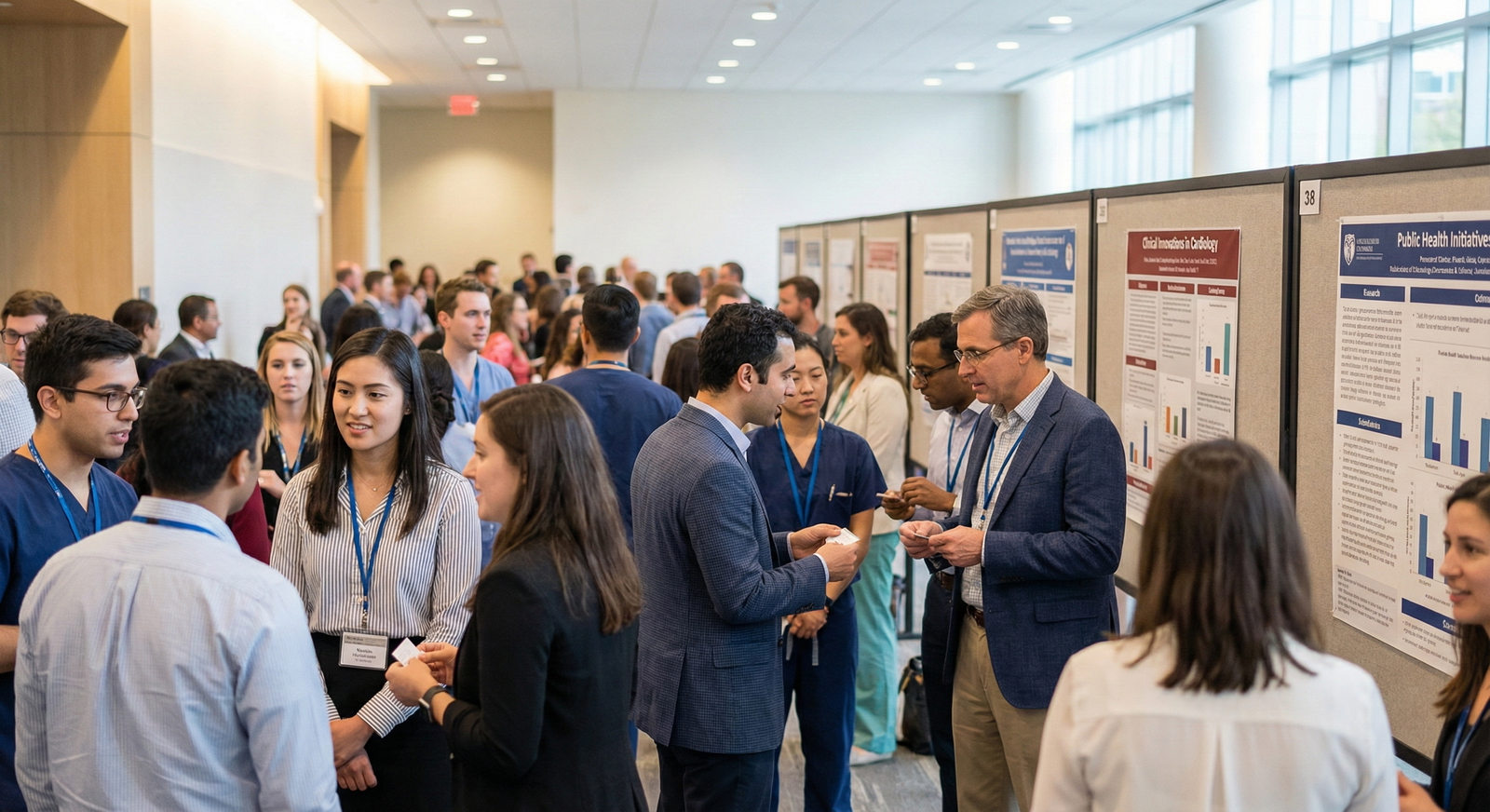
Why Networking Matters So Much During a Transitional Year
As a DO graduate entering a Transitional Year (TY program), you’re in a uniquely powerful—and time‑limited—position. You have one year to build clinical skills, explore specialties, and, just as importantly, develop a strong professional network that can shape your entire career.
Networking in medicine isn’t about collecting business cards or impressing attendings with small talk. It’s about building genuine, professional relationships that:
- Help you navigate the osteopathic residency match or re‑entry into the NRMP
- Open doors to PGY‑2 positions in categorical specialties
- Provide mentors who can guide your long‑term career in mentorship medicine
- Lead to research, QI, and leadership opportunities
- Support your wellbeing and resilience during a demanding year
For a DO graduate in a transitional year residency, effective medical networking can be the difference between a scattered, stressful year and a strategically leveraged launchpad into your ideal specialty.
This article will walk through, step by step, how to network thoughtfully and effectively during your TY program—on the wards, at conferences, online, and across osteopathic and allopathic environments.
Understanding Your Position as a DO Graduate in a TY Program
A Transitional Year residency sits at the intersection of flexibility and uncertainty. To use this year well, you need clarity about your identity, your goals, and your context as a DO graduate.
What Makes Transitional Year Residents Unique
A TY program typically offers:
- Rotations in multiple specialties (IM, surgery, ED, electives)
- Variable degrees of structure (some TYs are highly customizable)
- Exposure to several departments and faculty groups
Compared with categorical residents, you will:
- Interact with more services and attendings in a single year
- Have less built‑in continuity with one department
- Need to proactively create continuity in your professional relationships
This broad exposure is a huge networking asset—if you approach it intentionally.
The DO Graduate Perspective: Opportunities and Misconceptions
As a DO graduate, you may be navigating:
- Concerns about how program directors perceive DO vs. MD applicants
- Transition from AOA to ACGME unified accreditation
- A mix of osteopathic and allopathic environments
- Interest in maintaining OMT skills and osteopathic identity
Common internal narratives:
- “I need to prove I’m just as good as MDs.”
- “I may be at a disadvantage for competitive PGY‑2 spots.”
- “I don’t know how to talk about being a DO without sounding defensive.”
Reframe these. Your osteopathic background is a value‑add in medical networking:
- You bring holistic training, OMT, and a patient‑centered mindset.
- You can bridge osteopathic and allopathic cultures.
- You have an authentic story of resilience and adaptability that mentors often respect.
Clarifying Your Goals Before You Network
Your networking strategy should match your destination. Ask yourself:
What is my most likely next step?
- Applying to a categorical PGY‑2 spot (e.g., Internal Medicine, PM&R, Anesthesiology)
- Re‑entering the osteopathic residency match
- Applying broadly through NRMP for a new PGY‑1/PGY‑2 position
- Pursuing a gap year with research/hospitalist work
What kind of relationships will help me get there?
- Faculty in your target specialty
- Program leadership who can write strong letters
- Residents who recently matched into the fields you’re considering
- Osteopathic mentors who navigated similar paths
What do I want to be known for by the end of this year?
- “Solid, reliable team player”
- “Curious, academically engaged clinician”
- “Hard‑working DO who took full ownership of their growth”
Keeping these answers in mind will help you network with focus during your transitional year residency.
Day-to-Day Networking on the Wards and in Clinic
Most of your meaningful medical networking will not happen at conferences or formal events—it will happen in small, daily interactions during your rotations.

The Core Principle: Performance Is Your Foundation
Before anything else, your clinical performance is your primary networking tool. Effective networking in medicine is built on:
- Showing up on time, prepared, and reliable
- Owning tasks, following through, and communicating clearly
- Treating all team members—nurses, techs, clerks—with respect
- Demonstrating eagerness to learn without trying to “show off”
People are far more likely to mentor and advocate for a resident they trust clinically and enjoy working with.
How to Make a Strong Impression on Each Rotation
Think of each rotation as a “mini‑season” for networking. In the first week:
Introduce yourself clearly
- “Hi, I’m Dr. Smith, I’m a DO graduate in the Transitional Year program. I’m particularly interested in [X specialty, if known], and I’m excited to learn from the team.”
Learn names and roles early
- Make a note on your phone: attendings, fellows, residents, nurses, pharmacists.
- Use people’s names when interacting; it communicates respect and attention.
Signal interest strategically
- If you might pursue that specialty:
“I’m considering [IM/EM/Rad Onc/etc.] and would love to learn how you approached choosing this field.”
- If you might pursue that specialty:
Ask for feedback early and specifically
- “I’d appreciate any feedback on how I can be most helpful on the team this month.”
- Mid‑rotation: “Is there one thing I could do differently to function more like a PGY‑2 in this specialty?”
These questions do double duty: they help you improve and signal maturity and humility—traits mentors value.
Converting Casual Interactions into Lasting Connections
You don’t need dramatic “networking moments.” Instead, use small windows intentionally:
Post‑round debriefs
- “Dr. Lee, I really appreciated how you handled that complex family meeting. Would you be open to my emailing you later this week with a few questions about career decisions in [specialty]?”
End‑of‑rotation wrap‑up
- “I’ve really valued working with you. Would you mind if I reach out in the future for advice about navigating the osteopathic residency match and PGY‑2 applications?”
When you get a “yes,” follow through:
- Send a brief, professional email within a week.
- Include a concrete question or topic; don’t just say “I’d like to stay in touch” without substance.
Practical Example: Turning a TY ICU Month into a Career Opportunity
Imagine you’re a DO graduate on a four‑week ICU rotation. You’re considering Anesthesiology or Critical Care in the future.
- Week 1: Introduce yourself, ask how to be most helpful, and show up prepared.
- Week 2: Identify one attending whose teaching style resonates with you.
- Week 3: After a successful family meeting or procedure, you say:
- “Dr. Patel, I’m a DO grad interested in anesthesia or critical care after this transitional year. Could I set up a 20‑minute meeting to ask about how to position myself, especially coming from a TY background?”
- Week 4: Meet briefly, ask targeted questions, then follow up with a thank‑you email and your CV if they offer to review it.
This kind of interaction often leads to:
- Guidance on programs receptive to DOs
- Advice on timing your applications
- Potentially, a future letter of recommendation
Conference Networking and Professional Meetings for TY Residents
While daily clinical work is your core networking arena, conferences and formal events allow you to expand your reach beyond your hospital.
Choosing Where to Invest Your Time and Money
As a DO graduate in a transitional year residency, your time and finances are limited. Prioritize:
- Specialty‑specific conferences in your likely field (e.g., ACP, ACEP, ACOI, ACOEP, specialty college meetings)
- Osteopathic specialty meetings to maintain connections within the DO community
- Regional/state medical society events that are lower cost and more accessible
- Hospital‑sponsored grand rounds and visiting professorships
If your TY program offers educational funds, explicitly ask:
- “Can these funds support conference travel, especially for networking and presenting work relevant to my future specialty?”
How to Prepare for Medical Networking at Conferences
Treat conference networking like a clinical procedure—prepare in advance:
Know who will be there
- Scan the attendee list, if available.
- Identify programs and faculty from institutions you’re interested in.
- Note which have a track record of taking DO graduates.
Refine your brief introduction
- “I’m [Name], a DO graduate currently in a Transitional Year program at [Institution], exploring [specialty]. I’m especially interested in [sub‑interest] and how DOs are integrated into training at your program.”
Bring a polished, one‑page CV
- Both digital (PDF, easily emailable) and a few printed copies.
Set specific goals
- “Have meaningful conversations with 3–5 faculty in my specialty.”
- “Learn which programs are DO‑friendly for PGY‑2 entry.”
Effective Conference Networking in Practice
During sessions and poster halls:
Ask thoughtful questions after talks:
- “You mentioned your program’s approach to resident autonomy in the ICU—how does that differ for PGY‑2s coming from a TY program?”
Approach speakers respectfully
- Wait for a natural break in questions.
- Start by appreciating something specific from their talk, then introduce yourself briefly.
Leverage the DO connection
- If they are DO faculty:
“I’m also a DO, and I’d love to hear how you navigated your own training path.”
- If they are DO faculty:
After conferences, follow up within 3–5 days:
- Reference something specific from your conversation.
- Attach your CV if appropriate.
- Ask 1–2 concrete questions rather than a vague “I’d like to stay in touch.”
This style of focused, respectful conference networking can yield mentors, research collaboration, and insider insights into programs’ culture.
Building Mentorship and Sponsorship: Moving Beyond Casual Contacts
Networking that actually moves your career forward requires more than one‑off interactions. You’re aiming for mentorship and, ideally, sponsorship.

Mentorship vs. Sponsorship in Medicine
- Mentor: Advises, teaches, and supports your development.
- Sponsor: Actively advocates for you—recommends you for positions, emails colleagues on your behalf, and uses their reputation to back you.
During your transitional year residency, both are valuable, but sponsorship is especially powerful when seeking PGY‑2 spots or navigating the osteopathic residency match.
Types of Mentors You Should Seek as a DO TY Resident
Aim for a small portfolio of mentors, each with a unique role:
Clinical mentor in your intended specialty
- Guides you on skill development, board prep, and day‑to‑day work.
- Potential letter writer for future applications.
DO mentor who understands your training pathway
- Helps you leverage your osteopathic identity positively.
- Advises on DO‑friendly programs and opportunities.
Program‑level or institutional mentor
- Someone in your TY program leadership or GME.
- Can counsel you on institutional politics, opportunities, and timing.
Peer mentor (recent graduate ahead of you)
- A DO who just completed TY and matched into your specialty.
- Offers hyper‑practical, recent advice.
You don’t need many mentors; 3–5 meaningful relationships are better than 15 superficial ones.
How to Request Mentorship Professionally
Once you’ve had positive interactions with someone:
- Email or speak in person:
- “I’ve really appreciated your guidance on [topic]. I’m a DO graduate in a Transitional Year residency, and I’m actively planning my path toward [specialty]. Would you be open to meeting periodically over the next few months to discuss my progress and next steps? I’d be grateful for your mentorship.”
Make it easier for them to say “yes” by:
- Proposing manageable frequency: “Perhaps a 20–30 minute meeting every 1–2 months.”
- Offering structure: “I can send a brief agenda beforehand so we can use the time efficiently.”
Being a Good Mentee: How to Sustain the Relationship
To build a reputation that supports long‑term mentorship medicine:
- Prepare before each meeting:
- Send 3–5 bullet points of what you’d like to discuss.
- Act on advice when appropriate:
- If they suggest you reach out to a colleague, actually do it—and report back.
- Respect their time:
- Start and end on time; cancel only if absolutely necessary.
- Show progress:
- “Since we last spoke, I’ve [presented a poster/joined a QI project/updated my CV]. Your advice about [X] really helped.”
Sponsors especially look for mentees who execute, communicate, and uphold professional standards consistently.
Online and Informal Networking: Social Media, Email, and Everyday Moments
Not all networking in medicine is formal. As a DO graduate in a TY program, you can extend your reach well beyond your hospital.
Using Social Media Strategically (Not Desperately)
Platforms like LinkedIn, X/Twitter, and specialty‑specific forums can support your goals if used thoughtfully:
Polish your professional profile
- Clear statement: “DO graduate, Transitional Year resident at [Institution], pursuing [specialty].”
- Highlight clinical interests, research, and osteopathic training.
- Add a professional headshot (white coat or business attire).
Engage in targeted ways
- Follow societies in your specialty and osteopathic organizations.
- Like or thoughtfully comment on posts from leaders in your field.
- Share your own educational or QI projects (respecting patient privacy and institutional policies).
Reach out with purpose
- “Dr. Nguyen, I’m a DO Transitional Year resident interested in [specialty]. I appreciated your recent thread on training pathways for DO graduates. Would you have any advice on programs that value a TY background, or resources for someone in my position?”
Avoid:
- Public complaints about your program.
- Sharing patient details or protected information.
- Aggressive “cold DM’ing” multiple times if people don’t respond.
Email Networking: How to Write Emails People Actually Answer
You will send many professional emails during your TY program. Make them:
- Concise and specific
- Respectful of time
- Clear about what you’re asking for
Example template for a DO TY resident seeking advice:
Subject: DO TY Resident Seeking Advice on [Specialty] Training
Dear Dr. [Last Name],
My name is [Your Name], and I am a DO graduate currently completing a Transitional Year residency at [Institution]. I’m very interested in pursuing [specialty], particularly in [specific interest].
I’ve followed your work on [brief reference if applicable], and I admire your contributions to [field/education]. If you’re open to it, I would be grateful for 15–20 minutes of your time in the next few weeks for brief advice on how best to position myself for [specialty], especially coming from a TY background as a DO graduate.
I understand your schedule is busy and would be happy to accommodate a time that works for you.
Thank you for considering this,
[Your Name], DO
Transitional Year Resident, [Institution]
[Contact info / LinkedIn]
This kind of targeted, respectful communication is much more likely to receive a positive response.
Everyday Moments: Micro‑Networking Opportunities
Don’t overlook smaller, informal opportunities:
- Riding the elevator with a chair or PD
- “Good morning, Dr. [Name]. I’m Dr. [Your Name], a DO TY resident. I’ve really appreciated the [grand rounds/topic] your department hosted last month.”
- Shared workrooms
- Offer help to residents from other specialties; this builds a reputation across departments.
- Hospital committees or wellness groups
- Joining even one multidisciplinary group can increase your visibility and connections.
These brief moments contribute to your overall brand as someone approachable, engaged, and professional.
Action Plan: A Month-by-Month Networking Strategy for Your TY Year
To make this concrete, here is a sample framework you can adapt.
Months 1–3: Foundation and Exploration
- Clarify your likely specialty interests.
- Identify 1–2 potential mentors on early rotations.
- Ask for early feedback from attendings on your performance.
- Update your CV and create or refine your LinkedIn profile.
- Attend at least one local or hospital‑based networking event.
Months 4–6: Deepening Relationships
- Formalize mentorship with 2–3 faculty (at least one in your target specialty).
- Start or join a research or QI project if feasible.
- Present at a local meeting or submit an abstract to a national conference.
- Ask mentors specifically about:
- DO‑friendly programs
- Timing for applications
- Letters of recommendation
Months 7–9: Positioning for the Next Step
- Finalize your specialty choice, if you haven’t already.
- Solidify letters of recommendation from mentors who:
- Know you clinically
- Can speak to your growth during TY
- Attend at least one specialty‑focused conference if possible.
- Use medical networking at conferences to gather program‑level info.
Months 10–12: Closing Strong and Maintaining Your Network
- Express gratitude to mentors, attendings, and peers who helped you.
- Share your next steps (match outcome, PGY‑2 plans) with your network.
- Ask mentors how you can stay in touch as you transition.
- Offer help to future TY residents—start practicing mentorship medicine from the very beginning of your career.
Frequently Asked Questions (FAQ)
1. How can I stand out as a DO graduate in a mixed MD/DO environment during my TY?
Focus on three things:
- Clinical reliability – Be prepared, follow through, and communicate clearly.
- Osteopathic strengths – Subtly highlight your holistic approach and OMT skills when appropriate, without over‑selling.
- Professionalism and humility – Ask for feedback, respond well to criticism, and show genuine curiosity.
Over time, your actions will do more to “stand out” than any label on your degree.
2. Should I tell attendings early that I’m aiming for a different specialty than the one I’m rotating in?
Yes, but frame it constructively. For example:
“I’m very grateful to rotate with your team. I’m leaning toward [specialty], but I want to get the most out of this experience and function as effectively as possible for the team.”
This transparency can:
- Help them tailor teaching.
- Allow them to connect you with colleagues in your target field.
- Show that you’re thoughtful about your career.
Just be sure you still give full effort on that rotation—your brand as a professional is bigger than any one specialty.
3. How do I approach someone to ask for a letter of recommendation during my TY program?
Ask toward the end of a rotation or after a substantial project together, if you’ve worked closely and received positive feedback:
“I’ve appreciated learning from you this month, and I’m applying to [specialty] programs for next year. Based on our work together, would you feel comfortable writing a strong letter of recommendation for me?”
This phrasing gives them room to decline if they can’t provide a strong letter, which ultimately protects you.
4. How can I keep my network alive once I leave my transitional year residency?
Every 6–12 months, send brief updates to key mentors and colleagues:
- Share your current role and progress (e.g., starting PGY‑2, research projects).
- Mention how their advice or support helped you.
- Offer a quick update on your career goals.
For example:
“I wanted to let you know I’ve started my PGY‑2 in [specialty] at [Institution]. Your guidance during my Transitional Year, especially about [specific advice], was invaluable. I’m grateful for your support and hope to stay in touch.”
This simple habit converts one‑year connections into long‑term professional relationships, sustaining your medical networking and mentorship medicine throughout your career.