Why Networking Matters So Much for US Citizen IMGs in Med-Peds
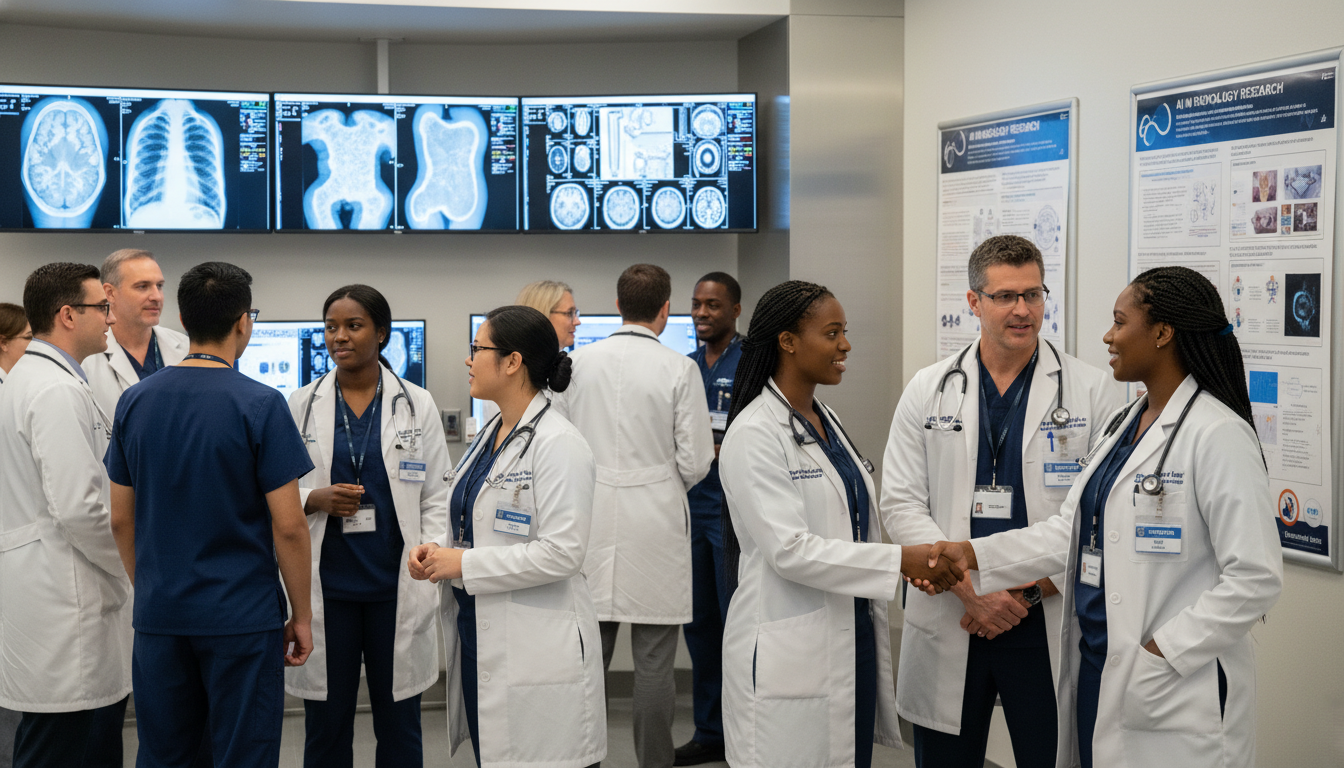
For a US citizen IMG or an American studying abroad in medicine, networking in medicine is not a “nice to have” – it is one of your most powerful tools to level the playing field. This is especially true in a competitive combined specialty like Medicine-Pediatrics (Med-Peds), where programs are relatively few, communities are tight-knit, and most applicants come from US MD schools.
As a US citizen IMG in Med-Peds, you face specific challenges:
- Limited built-in access to US faculty and program directors
- Fewer home-institution mentors who are connected to Med-Peds
- Less visibility in medicine pediatrics match conversations
- Potential bias or unfamiliarity with your medical school
Effective medical networking can:
- Turn “cold” programs into “warm” ones where people know your name
- Help you secure US clinical experiences, letters, and research
- Give you trusted guidance on program fit and application strategy
- Allow you to demonstrate your commitment to Med-Peds beyond your CV
This article walks you through a structured, practical approach to networking in medicine tailored specifically to Med-Peds–interested US citizen IMGs, from building your first connections to sustaining a professional network throughout residency.
Understanding the Med-Peds Community and Where You Fit In
Before you network effectively, you need to understand the terrain: who the key players are, where they gather, and how the Med-Peds community actually functions.
What Makes Med-Peds a “Small World” Specialty
Medicine-Pediatrics is a relatively small specialty with only about 80–90 programs in the US. That has big implications for networking:
- Program leadership overlaps: Many Med-Peds program directors (PDs) and associate PDs know each other from national organizations and working groups.
- Tight community: Faculty, fellows, and residents often collaborate on national education, advocacy, and quality improvement initiatives.
- Long memory: Positive interactions (and negative ones) can follow applicants across years and institutions.
For an American studying abroad, this is powerful: a handful of strong, genuine connections can open doors in surprising ways.
The Core Med-Peds Organizations You Should Know
If you’re serious about a med peds residency, get to know these:
National Med-Peds Residents’ Association (NMPRA)
- The central professional home for students and residents interested in Med-Peds
- Offers mentorship programs, virtual panels, and Med-Peds–focused resources
- Often your first access point to Med-Peds residents and faculty
American Academy of Pediatrics (AAP) – Section on Med-Peds, Section on Residents
American College of Physicians (ACP) – especially student and resident sections
Society of General Internal Medicine (SGIM) – Med-Peds heavily represented in primary care and academic medicine tracks
Even if you study abroad without an affiliated US school, you can still join as a student member and participate in virtual offerings. This is one of the best early steps in mentorship medicine if your school has limited US connections.
Mapping Your Personal Networking Starting Point
Before chasing contacts, map your current assets:
Existing US ties
- Friends or alumni from your college or high school in US residencies
- Family or personal contacts working in healthcare
- US-based physicians from observerships, shadowing, or volunteer work
School resources
- Alumni from your international med school who matched into Internal Medicine, Pediatrics, or Med-Peds
- Faculty with US training or visiting professorships
- Research supervisors with collaborative links to US institutions
Online communities
- Med-Peds interest groups on social media
- Professional listservs or forums for IMGs
This self-inventory helps you avoid starting from zero; you almost certainly have more connections than you think.

Building a Strategic Networking Plan as a US Citizen IMG
Random, one-off emails aren’t networking; they’re noise. A strategic plan helps you invest your limited time and money where it will pay off.
Step 1: Clarify Your Med-Peds Narrative
Before you talk to anyone, be able to answer, clearly and succinctly:
- Why Medicine-Pediatrics instead of categorical Internal Medicine or Pediatrics?
- What patient populations or clinical settings excite you most?
- What have you actually done to explore Med-Peds (electives, reading, shadowing, projects)?
- How does your path as a US citizen IMG or American studying abroad shape what you bring to Med-Peds?
Example 20–30 second “networking pitch”:
“I’m a US citizen studying medicine in [Country], and I’m pursuing a med peds residency because I’m drawn to caring for medically complex patients across the lifespan. I’ve done inpatient internal medicine at [Hospital], volunteered in a pediatric asthma clinic, and I’m currently working on a quality improvement project on transition of care from pediatric to adult services. I’m especially interested in underserved primary care. I’d love to learn more about how Med-Peds residents at your program get involved with transitions or population health.”
Having this ready makes every conversation smoother and more memorable.
Step 2: Identify Your High-Yield Networking Targets
For the medicine pediatrics match, prioritize:
Med-Peds residents
- Often more approachable than faculty
- Can give honest insight on program culture and IMG-friendliness
- May advocate informally for enthusiastic students they meet
Program leadership
- Med-Peds program directors and associate program directors
- Key for away rotations, interview invitations, and SLOEs/letters
Med-Peds–friendly Internal Medicine and Pediatrics faculty
- At institutions without Med-Peds, combined-trained or Med-Peds–aligned faculty can vouch for your fit with both fields.
Research mentors who publish in Med-Peds–relevant areas
- Transitions of care, complex care, chronic disease management, health services research, primary care, underserved medicine.
Create a simple spreadsheet with columns:
- Name, role, institution
- How you found them
- Contact info
- Date and method of first outreach
- Notes (interests, advice given, follow-up dates)
This keeps your medical networking organized and intentional.
Step 3: Make Your First Contacts the Right Way
When you reach out, be concise, specific, and respectful. A networking email should generally:
- Be 6–10 sentences max
- Show you’ve done basic homework
- Ask for advice or a brief conversation, not for a letter or a favor right away
Example email to a Med-Peds resident:
Subject: US Citizen IMG Exploring Med-Peds – Quick Advice?
Dear Dr. [Last Name],
My name is [Name], and I am a US citizen studying medicine at [School, Country]. I’m strongly interested in pursuing a med peds residency, particularly with a focus on [e.g., underserved primary care / transitions of care / global health].
I heard you speak at the recent [NMPRA webinar/Med-Peds panel] and really appreciated your points about [specific thing they said]. As an IMG, I’m trying to better understand how to prepare for the medicine pediatrics match and how applicants like me can demonstrate our commitment to the field.
If you might have 15–20 minutes sometime in the coming weeks for a brief Zoom call, I’d be very grateful for any advice you could share about steps to take during the next year. I understand your schedule is busy and would be happy to work around your availability.
Thank you for considering my request.
Best regards,
[Name]
[Medical School, Year]
[LinkedIn or professional website, if you have one]
For faculty, tighten it further and be extra clear you’re requesting guidance, not an immediate opportunity.
Conference and Virtual Networking: Turning Events into Real Relationships
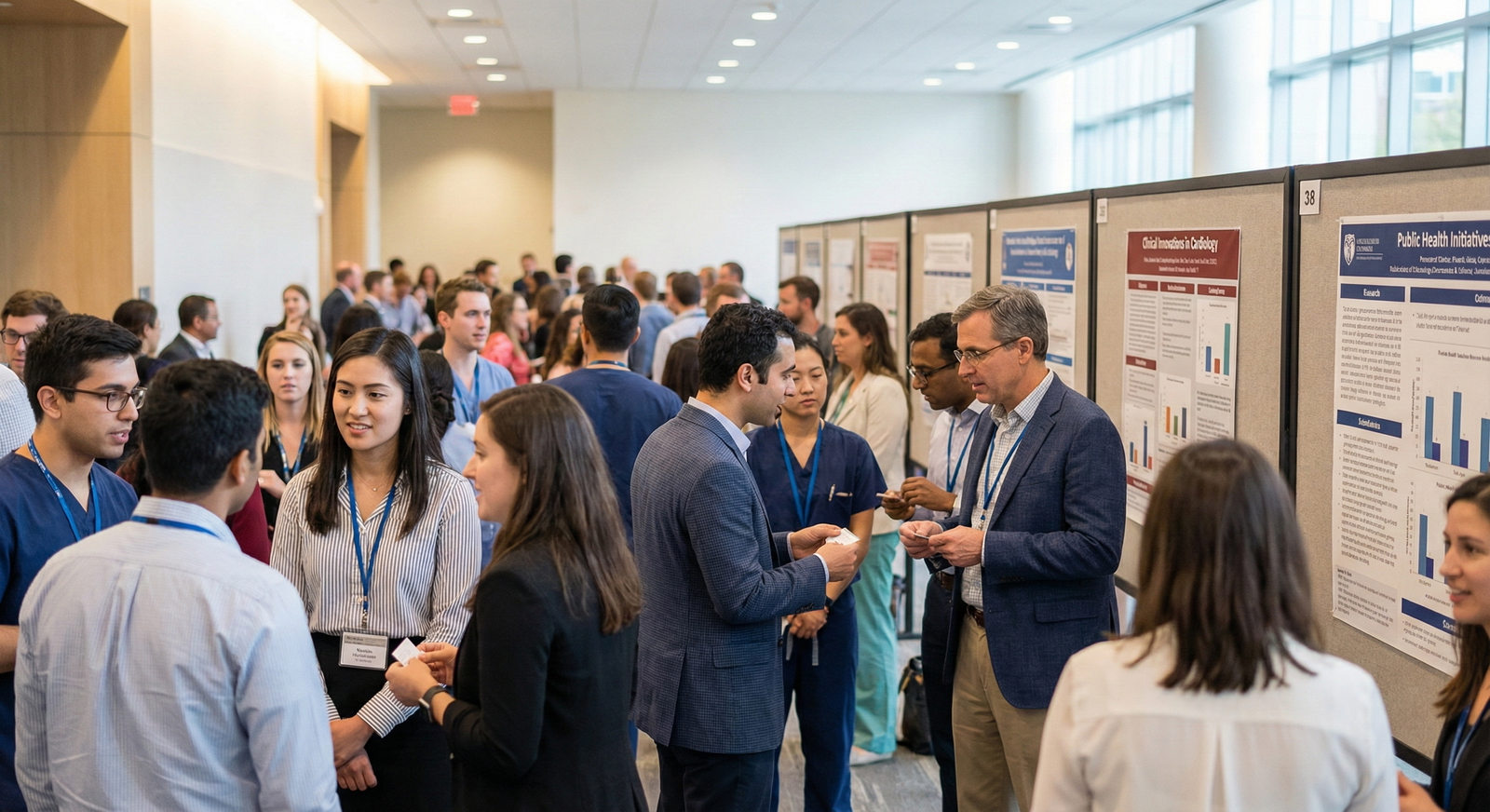
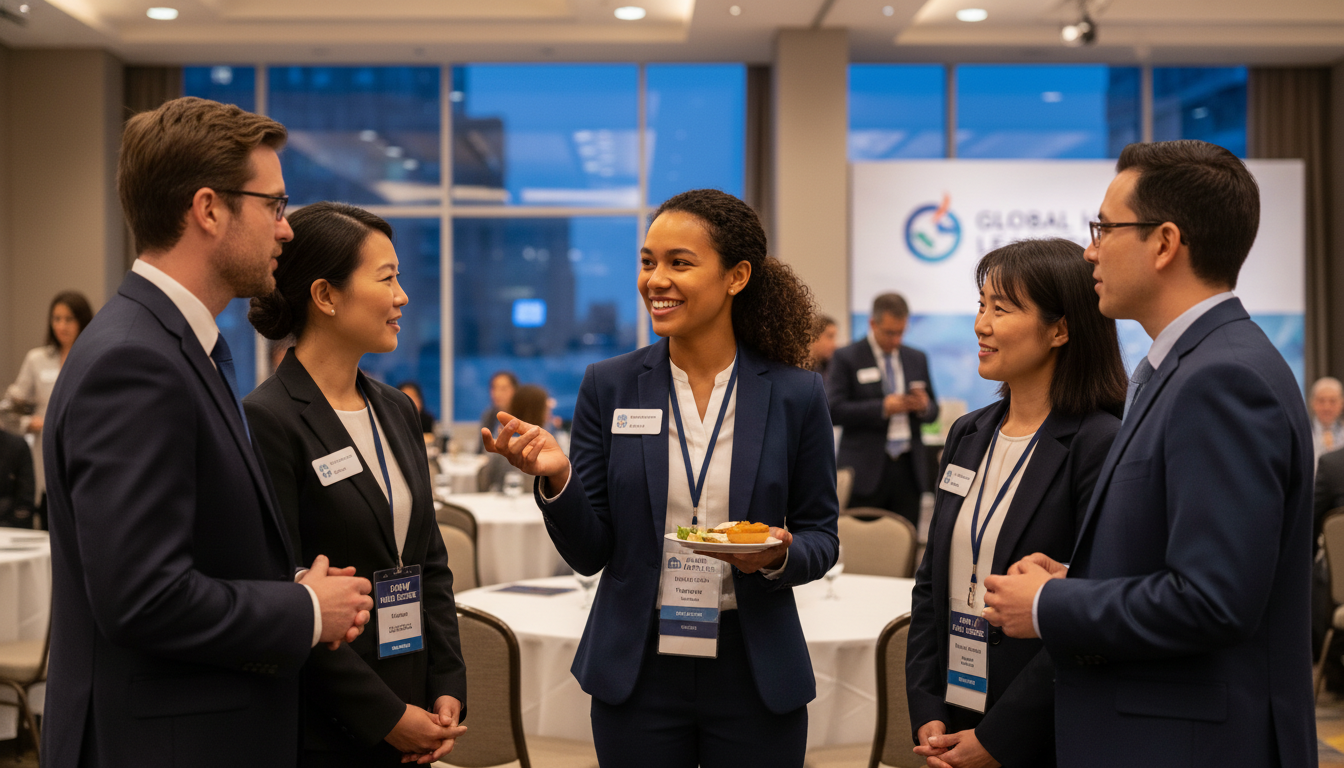
Conference networking and online events are some of the highest-yield opportunities for an American studying abroad who can’t always be physically in the US.
Which Conferences Matter for Med-Peds–Focused IMGs?
You don’t need to attend everything. Focus on conferences that:
- Have Med-Peds or primary care content
- Offer student/IMG discounts
- Provide virtual or hybrid options
High-value examples:
- NMPRA annual conference (often virtual or low-cost)
- AAP National Conference & Exhibition – especially Med-Peds section events
- ACP Internal Medicine Meeting – student & resident tracks
- SGIM annual meeting – strong internal medicine and primary care presence
If travel is limited, prioritize virtual attendance and smaller workshops where speaking up is easier.
How to Prepare for Conference Networking
Set 2–3 specific goals
- Example: “Talk to at least three Med-Peds residents and two program directors,” or “Identify one potential mentor in transitions of care.”
Review the program in advance
- Mark Med-Peds sessions, primary care workshops, IMG sessions, or mentoring events.
- Note speaker names and affiliations.
Create a short introduction script
Adapt it for:- Faculty (“I’m particularly interested in your work on…”)
- Residents (“Could you tell me about your experience in…”)
Prepare one simple, trackable “ask”
For example:- “Would you be open to a brief follow-up email if I have questions about Med-Peds programs?”
- “Could I reach out later this year for advice about rotations or the medicine pediatrics match?”
During the Conference: Practical Techniques
Ask good, concise questions in sessions
When appropriate: “I’m a US citizen IMG interested in Med-Peds. How might someone in my position get involved in similar work?”Use breaks strategically
Approach speakers right after sessions:- Thank them
- Mention one key point
- Share your interest and brief background
- Ask if you may follow up by email
Use your badge and scan others
Collect names and program affiliations, and jot a quick note afterward: “Met at NMPRA 2025, discussed community health.”Do not oversell
One or two strong, authentic interactions are better than ten rushed, forgettable ones.
Virtual Conference & Webinar Networking
For an American studying abroad, virtual options are essential:
- Change your display name to: “Name – US citizen IMG – [Interest | Med-Peds]”
- Use the chat strategically: ask focused questions that signal your interest in Med-Peds and your IMG status without sounding like you’re fishing for special treatment.
- Reach out on LinkedIn or by email within 48 hours:
- Reference the specific talk
- Share a brief takeaway
- Ask for permission to email a follow-up question or for a short meeting

Mentorship in Medicine: Finding, Keeping, and Using Mentors Wisely
Mentorship medicine is a cornerstone of successful networking, especially for US citizen IMGs who lack built-in institutional advocates in the US.
Types of Mentors You Need as a Med-Peds–Bound IMG
You may not find all in one person; a mentorship team is ideal:
Career mentor (Med-Peds–specific if possible)
- Helps with specialty choice, program targeting, and strategy
- Ideally a Med-Peds faculty member or senior resident
Application mentor
- Reviews your CV, personal statement, and ERAS list
- May be Internal Medicine or Pediatrics faculty who know US graduate medical education well
Research/academic mentor
- Guides you on scholarly output that aligns with Med-Peds or primary care
- Can be at your school or in the US via remote collaboration
Peer mentor (recent IMG match)
- A US citizen IMG or another IMG who recently matched into Med-Peds or a related field
- Gives you practical, up-to-date, ground-level advice
Where to Find Mentors as an American Studying Abroad
- NMPRA mentorship programs – explicitly designed for Med-Peds–interested students
- AAP and ACP student mentorship schemes
- Alumni networks:
- Your undergrad institution’s premed advising or alumni doctor network
- Your international med school’s match lists and alumni groups
- Social/professional media (used professionally):
- LinkedIn: search “Medicine-Pediatrics” + “MD” + “Resident”
- Professional X (Twitter) accounts of Med-Peds programs, faculty, and NMPRA
When you reach out, be honest about being a US citizen IMG and what you’re looking for:
- “I’m hoping for occasional guidance on how to prepare for the med peds residency application over the next 12–18 months.”
- “I’d really appreciate one or two conversations to understand how to position myself as a US citizen IMG for the medicine pediatrics match.”
How to Be a Good Mentee
Mentors are far more likely to invest in someone who:
Shows up prepared
- Sends questions or a brief agenda before meetings
- Reads suggested materials before asking follow-up questions
Respects time
- Starts and ends on time
- Schedules in advance, avoids last-minute requests when possible
Acts on advice
- If they suggest joining NMPRA or applying to a conference, do it
- Report back on what you did and what happened
Keeps mentors updated
- Brief, periodic updates during the application cycle
- Thank-you messages when milestones are reached (exam passed, interview invites, match outcome)
Using Mentors in the Medicine Pediatrics Match
Mentors can help you:
- Prioritize which programs to target as IMG-friendly
- Decide whether to apply also to categorical Internal Medicine or Pediatrics
- Polish your Med-Peds personal statement with an authentic narrative
- Navigate conversations about your IMG status in interviews
- Strategically request letters of recommendation
Avoid pushing mentors to “get” you a spot. Instead, aim for genuine guidance and opportunities to demonstrate your value.
From Networking to Outcomes: Turning Connections into Rotations, Research, and Interviews
Networking in medicine should lead to tangible steps that strengthen your application. For Med-Peds–interested US citizen IMGs, three high-yield areas are:
- US clinical experiences and rotations
- Research and scholarly work
- Visibility and perceived fit with Med-Peds programs
Using Networking to Access US Clinical Experiences
For many IMGs, especially an American studying abroad, obtaining US clinical experience is critical. Connections can help:
- Clarify which programs accept observership or elective students from your school
- Identify less-advertised rotations through personal contacts
- Unlock shadowing or short-term experiences in community Med-Peds practices or clinics
Action steps:
Ask Med-Peds residents:
- “Do any of your attendings host international students for observerships?”
- “Are there community Med-Peds clinics connected with your program that might welcome short-term shadowing?”
Ask faculty mentors:
- “Do you know colleagues in the US who might consider having a US citizen IMG for a short observership?”
Be professional, provide a brief CV, and be clear about your goals for the experience (e.g., understanding US systems, Med-Peds exposure).
Research and Scholarly Work Through Networking
You don’t need a PhD-level portfolio, but one or two solid, relevant projects can:
- Demonstrate academic curiosity
- Showcase commitment to Med-Peds–relevant topics
- Create reasons to stay in contact with US-based mentors
Look for:
- Quality improvement projects on transitions of care or complex patients
- Retrospective chart reviews related to chronic disease in youth and adults
- Educational projects (curriculum development, resident teaching modules)
Ask potential research mentors very specifically:
- “I’m interested in working on a small project related to Med-Peds or primary care that I can complete within [time frame]. Do you have any existing projects where I could help with data collection, chart review, or manuscript preparation?”
Start with realistic,-sized contributions. Once you show reliability, you’ll be invited into more significant roles.
Increasing Your Visibility to Med-Peds Programs
As a US citizen IMG, your application might initially be filtered out by some programs. Networking can’t override hard filters but can improve your chances at many programs, especially those open to IMGs.
Tactics:
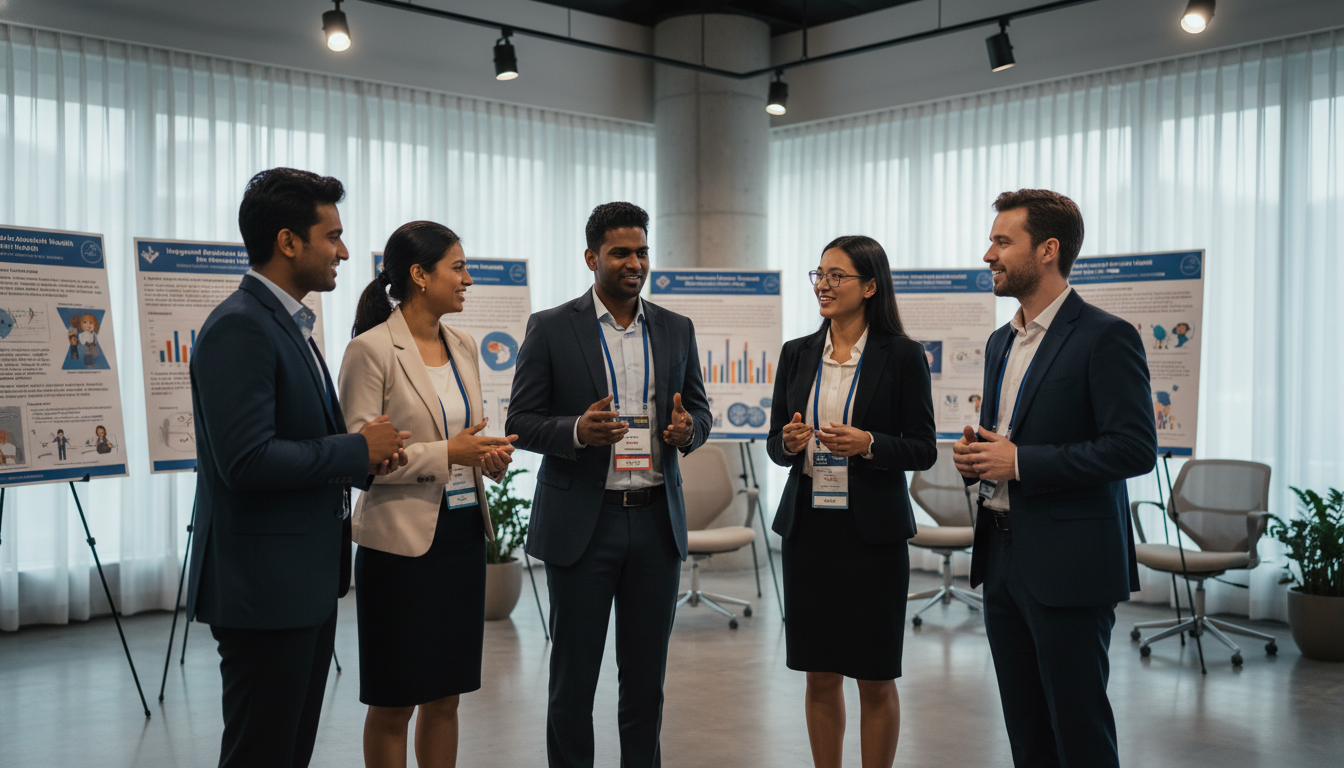
Present at conferences
- Even poster presentations at smaller meetings can place your name and face in front of Med-Peds faculty.
- Introduce yourself at your poster as a “US citizen IMG applying to Med-Peds next year.”
Engage with programs’ online presence
- Follow Med-Peds programs on LinkedIn/X.
- Occasionally comment thoughtfully on their posts (e.g., about resident projects, diversity initiatives).
- This subtly warms your name before application season.
Attend virtual open houses
- Ask one or two thoughtful questions that highlight your interest and context:
- “As a US citizen IMG, I’m particularly interested in understanding how your program supports diverse educational backgrounds. Could you share examples of support structures for residents transitioning from international schools?”
- Ask one or two thoughtful questions that highlight your interest and context:
Stay within professional boundaries
- Don’t pressure PDs or residents for interviews or special treatment—focus on learning and demonstrating insight into the program.
Common Pitfalls and How to Avoid Them
Networking in medicine can backfire if done poorly. IMGs are sometimes unfairly stereotyped as overly aggressive in networking; you can actively counter that.
Pitfall 1: Treating People as Stepping Stones
If faculty or residents feel you only care about what they can “get” you, they disengage quickly.
Solution:
- Ask genuine questions about their career and interests.
- Follow up with thanks, not demands.
- Show curiosity beyond “Can you sponsor my observership or write a letter?”
Pitfall 2: Oversharing Your Struggles
You may have faced significant challenges—visa issues, financial constraints, lack of support—but constantly leading with those can unintentionally frame you as a problem, not a colleague.
Solution:
- Acknowledge challenges briefly when relevant.
- Focus on what you’ve done to overcome them and what strengths your path gives you.
Pitfall 3: Inconsistent Follow-Up
You meet someone once, promise to send a CV or email, and then vanish. Months later, you reappear wanting a bigger favor.
Solution:
- Keep a simple follow-up system (spreadsheet or calendar reminders).
- If you delay, acknowledge it: “I apologize for the delayed follow-up; since we spoke, I have…”
Pitfall 4: Confusing Professional vs. Social Media Networking
Being “friends” on a social platform is not the same as a professional connection.
Solution:
- Use LinkedIn or email for professional networking.
- If using other platforms, keep messages formal and content professional.
- Don’t vent about programs, scores, or people where PDs or residents might see it.
FAQs: Networking in Medicine for US Citizen IMGs Targeting Med-Peds
1. As a US citizen IMG, do I have to disclose that I’m studying abroad when networking?
Yes, but you can frame it positively. Saying “I’m a US citizen studying medicine in [Country]” is honest and neutral. Quickly pivot to your strengths: bicultural experience, adaptability, language skills, or the diversity of clinical exposure you’ve had. Avoid sounding apologetic; present your background as part of your unique contribution to a Med-Peds residency.
2. How early should I start networking for a medicine pediatrics match?
Ideally 18–24 months before you apply. Start with:
- Joining NMPRA and relevant AAP/ACP sections
- Attending at least one Med-Peds–related webinar or conference per year
- Connecting with at least one Med-Peds resident and one faculty mentor
If you’re closer to the application season, focus on:
- Virtual open houses and webinars
- Short, targeted mentorship or advising conversations
- Maximizing visibility through presentations and rotations you already have access to
3. Is it okay to ask a mentor directly for a letter of recommendation?
Yes—if you’ve worked with them closely enough to justify it. When you ask, make it easy for them to say no:
“I’m applying to med peds residency and would be honored if you felt able to write a strong, supportive letter of recommendation based on our work together. If you don’t feel you know me well enough, I completely understand and would still value your advice.”
This gives them an ethical exit and protects you from lukewarm letters.
4. How can I tell if a Med-Peds program is IMG-friendly through networking?
Ask current residents (not just PDs):
- “Do you currently have or have you recently had IMGs in your program?”
- “How does your program view applications from US citizen IMGs?”
- “What kind of experiences have helped previous IMGs be successful applicants here?”
Look at:
- Program websites and resident bios (any IMGs or non-traditional paths?)
- Conversations at open houses—do they address IMG questions openly and specifically?
If residents consistently say, “We haven’t had IMGs in a long time,” or seem unsure, it may be a lower-yield target unless you have a very strong connection there.
By approaching networking in medicine with intention, professionalism, and authenticity, you can transform your status as a US citizen IMG from a perceived disadvantage into a distinctive part of your Med-Peds story. Thoughtful medical networking, conference networking, and mentorship medicine—combined with solid clinical and academic preparation—can significantly improve your chances in the medicine pediatrics match and set you up for a thriving career caring for patients across the lifespan.