

What actually happens if you email a program director and say, “You’re my number one choice”? Are you breaking NRMP rules… or just playing the same game everyone else is?
Let me spare you the half-baked Reddit takes and whispered hallway myths. The Match has real, enforceable rules. But a lot of what terrified MS4s say about them is flat-out wrong.
Let’s take this apart properly.
What The NRMP Actually Bans (And What It Doesn’t)
Most people arguing about this have never actually read the NRMP Match Participation Agreement. They’re quoting a friend of a friend.
Here’s the core reality:
The NRMP is overwhelmingly concerned with coercion and guarantees, not with you saying you like a program.
Programs and applicants both agree to one key principle:
You cannot make or solicit commitments about ranking, contracts, or positions before the official results.
That’s it. Everything revolves around that.
So, does telling a program they’re #1 automatically equal “making a commitment”? No. Not by default.
The red line is this:
- “You are my #1 choice; I intend to rank you first.” → Allowed.
- “You are my #1 and I promise I’ll definitely rank you first if you promise to rank me to match.” → Not allowed.
The first is a statement of preference. The second is essentially trying to create a side deal outside the algorithm.
The NRMP also explicitly prohibits programs from:
- Asking you “Where are you ranking us?”
- Asking for a “commitment to rank”
- Suggesting you’ll match if you rank them first
- Requiring or implying you must disclose your rank list
But that’s about what they can pressure you to say, not what you’re allowed to volunteer.
Bottom line: The NRMP doesn’t care that you like a program. It cares that nobody is gaming the system with promises and pressure.
The Myth: “Saying They’re #1 Is Illegal”
You’ve heard this in some version:
“Never tell a program they’re #1 — that’s against NRMP rules, you can get in trouble.”
No. That’s not what the rules say. That’s med-student folklore wrapped in misplaced fear.
The closest NRMP comes is banning soliciting or requiring a commitment about rank order. That is about program behavior, not yours.
Programs are not supposed to corner you and ask:
“So, are we your #1? Will you rank us first?”
If they do that, they’re flirting with a violation.
You, on the other hand, are allowed to express genuine, non-conditional interest. The “conditional” part is the key.
Acceptable:
- “I plan to rank your program first.”
- “You are my top choice and I’m excited at the possibility of training there.”
Not acceptable:
- “If you rank me to match, I will rank you first.”
- “I promise I’ll sign with you if you take me.”
- “I’ll withdraw from the Match if you give me a pre-match deal.”
These cross the line into binding-type promises or side agreements that undermine the Match.
The NRMP itself has said in guidance that post-interview communications expressing interest are not prohibited, as long as they do not involve commitments or guarantees.
So the blanket “you can’t tell a program they’re #1” myth? Wrong. Sloppy overinterpretation.
The Real Problem: Lying and Playing Games, Not the Words Themselves
Here’s the more uncomfortable truth:
The NRMP doesn’t police your honesty in these emails. It just enforces that the algorithm is what determines the outcome.
So yes, applicants tell multiple programs “you’re my #1.” Programs know this. Everyone knows this.
The Match is basically a big, organized prisoner’s dilemma, and post-interview love letters are the noise layered on top.
Ethically, though? Different story.
If you tell two programs they’re “my number one,” you’re not breaking NRMP rules, but you are:
- Undermining your own integrity
- Risking someone calling you out later (and yes, PDs talk)
- Feeding the same toxic post-interview arms race everyone complains about
Will the NRMP punish you for saying “you’re my #1” to three programs? No.
Will it make you look untrustworthy if it gets back to them? Yes.
So, the real “rule” you should care about is this:
Say things you’d be comfortable standing behind if they were read aloud in front of every PD you interviewed with.
What Programs Can’t Say To You (And Why It Matters)
If you want to understand where your boundaries are, it helps to see where theirs are.
Programs cross into NRMP violation territory when they:
- Ask you: “Are we your first choice?” or “Where will you rank us?”
- Tell you: “If you rank us first, you’ll match here.”
- Imply: “We only rank people highly if they tell us we’re their top choice.”
- Pressure you for any kind of written or verbal commitment about rank order
That’s coercion. That’s what the NRMP actually cares about stopping.
So if a PD says on the phone, “If you rank us number one, you will match here” — that’s shady and potentially reportable.
If they say, “We intend to rank you highly” — that’s allowed. NRMP even explicitly allows programs to say they’re ranking applicants highly or strongly interested.
Notice the asymmetry:
Programs can say they like you. You can say you like them.
Neither side can turn that into a binding pre-Match agreement.
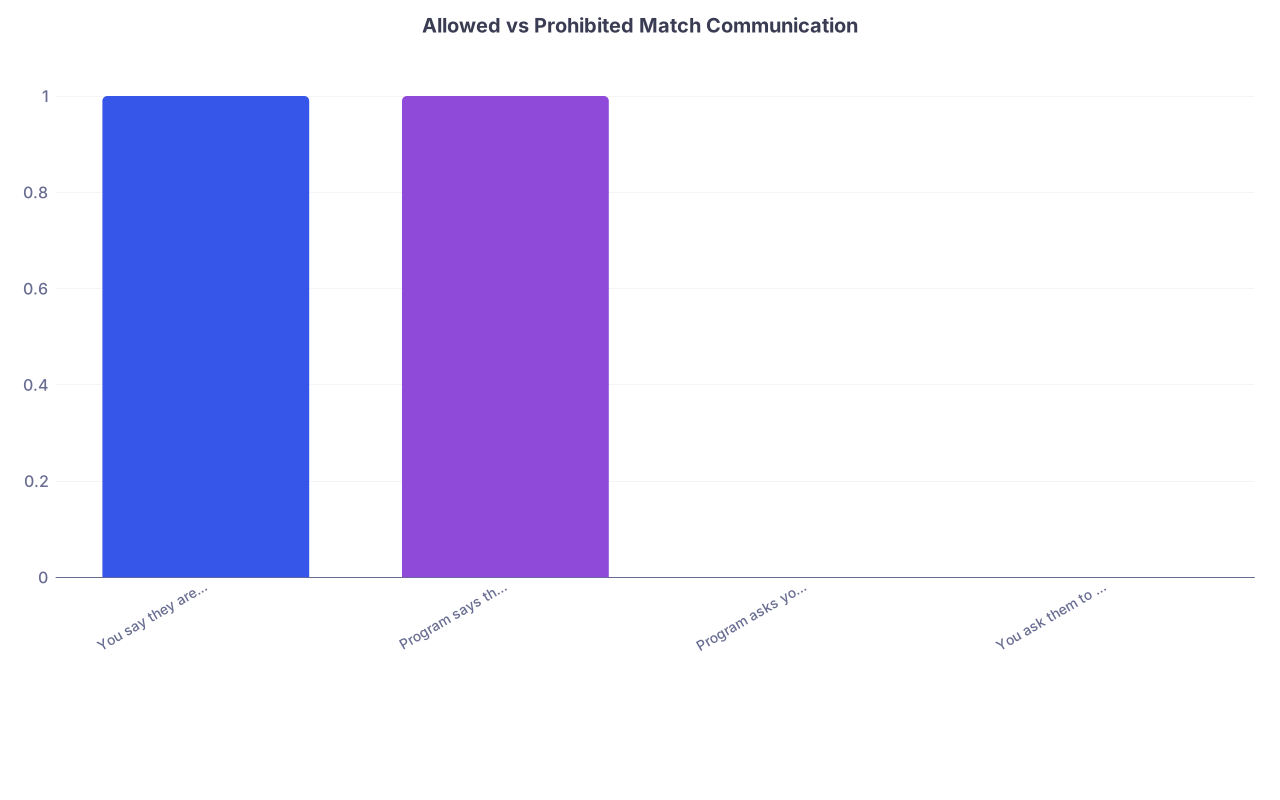
| Category | Value |
|---|---|
| You say they are #1 | 1 |
| Program says they like you | 1 |
| Program asks your rank list | 0 |
| You ask them to guarantee match | 0 |
Legend: 1 = Generally allowed, 0 = NRMP-problematic
The Algorithm Doesn’t Care About Your Flattering Emails
Here’s the part people do not want to accept:
The Match algorithm does not incorporate your emails, calls, or promises.
If a program ranks you #12, and they fill all their spots with their top 11, you’re not getting in — no matter how many “You’re my #1” emails you sent.
Same for you. If you rank them #5 and they rank you #1, you only match there if your #1–#4 don’t work out.
The algorithm is brutally indifferent to:
- “I guarantee you’re my first choice.”
- “We loved your interview, you’re at the top of our list.”
- “You’re our favorite candidate this season.”
This doesn’t mean communication is useless. It can influence human behavior before the list is submitted. A PD might bump someone up a few spots if they feel sincerely committed to the program. An applicant might move a program higher if they feel wanted.
But the system itself? It only sees the final lists. Not how much you gushed over each other.
That’s why the NRMP has no interest in banning “you’re my #1” emails. The algorithm already de-fangs them.
Smart Strategy: How To Communicate Without Being Dumb Or Dishonest
So, if it’s not illegal, should you do it? That’s a different question.
Here’s the nuanced, data-grounded view.
Step one: accept this reality.
Post-interview communication can slightly nudge how you are ranked. I’ve watched PD meetings where someone says, “By the way, she told us we’re her first choice,” and it breaks a tie between similar candidates.
Not decisive on its own. But not nothing.
So how do you play this game without lighting your integrity on fire?
Use graded honesty:
For your true #1 program
- You can say clearly:
“After completing all of my interviews, your program is my top choice, and I plan to rank you first on my list.” - That’s direct, truthful, and within the rules.
- You can say clearly:
For programs you really like but won’t rank first
- Use strong but non-deceptive language:
“Your program is one of my top choices, and I’d be very excited to train there.” - True. Non-committal. No fake promises.
- Use strong but non-deceptive language:
For programs you’re lukewarm about
- You’re not obligated to send anything.
- If you do, keep it generic:
“Thank you again for the opportunity to interview. I appreciated learning more about your program.”
What you should avoid:
- Sending “You’re my #1” to multiple programs. It’s not illegal. It’s just dishonest and occasionally traceable.
- Asking, “If I rank you first, will I match there?” That’s pushing them toward a violation and makes you look naïve.
- Fishing for reassurance to calm your anxiety. PDs can smell this.
The NRMP Nuclear Options: What Does Get People In Trouble
If you want to know where the real landmines are, they’re usually not in one-off emails. They’re here:
- Pre-Match agreements (outside of sanctioned early match systems): A program saying “We’ll take you if you agree not to rank anyone else” is a serious violation.
- Contracts before Match Day: Signing something that guarantees you a spot before the algorithm runs? Big problem.
- Withdrawal games: Back-channel deals to withdraw from the Match in exchange for a guaranteed position.
- Documented coercion: A program pressuring you in writing or on recorded calls to reveal your rank list or make promises.
That’s when NRMP investigations get ugly — program sanctions, barred from Match participation, specific individuals flagged.
Your polite “you’re my top choice” email isn’t in the same solar system as that.

| Step | Description |
|---|---|
| Step 1 | Normal Thank You or Interest Email |
| Step 2 | No NRMP Issue |
| Step 3 | You say you will rank them first |
| Step 4 | You and program make conditional promise |
| Step 5 | Potential NRMP Violation |
| Step 6 | Program demands rank list or commitment |
| Step 7 | Pre-match side deal or contract |
The Quiet Reality: PDs Don’t Fully Trust These Messages Anyway
Here’s the part students rarely hear said out loud.
I’ve sat in ranking meetings where someone reads a student’s email:
“You are my number one choice…”
There’s usually a half-smile and one of two reactions:
- “Okay, that’s nice; bump them up a bit.”
- Or: “They probably sent the same thing to five places.”
Programs know the game. They know students are panicking and advised by a dozen random mentors with conflicting scripts.
So the content of your message matters less than whether it fits everything else they’ve seen from you.
If you:
- Act engaged on interview day
- Ask smart, specific questions about their program
- Have a personal or geographic tie that makes your interest logical
- Then send a sincere note later
That can help. Modestly.
If you were checked out on interview day and they never sensed enthusiasm, your late “you’re my #1” email is just noise.

So What Should You Actually Do?
Here’s the honest, stripped-down, no-myth version:
You are allowed to tell a program they’re your #1.
That alone doesn’t break NRMP rules, as long as you’re not trading promises or demanding guarantees.Say it only if it’s true.
Not because NRMP will punish you for lying — they won’t — but because burning your reputation for a marginal gain is stupid.Don’t confuse etiquette with rules.
Advisors say “don’t tell them you’re #1” because they worry you’ll either lie or obsess over communications. That’s etiquette. Not law.Do not negotiate or condition anything.
No “if you rank me first, I’ll rank you first.” No “can you guarantee I’ll match here?” That’s where NRMP language starts getting sharp.Spend more time on your actual rank list than your emails.
The algorithm already favors your preferences. If you love a place, rank it first — even if another program flirted with you harder post-interview.
| Situation | Phrase Example |
|---|---|
| Safe, honest top-choice message | "Your program is my top choice and I plan to rank you first." |
| Safe strong interest | "Your program is one of my top choices." |
| Program-coercive (their violation) | "We can only rank you highly if you rank us first." |
| Risky conditional promise | "If you rank me to match, I will rank you first." |

The Bottom Line
Three key points and you can ignore 90% of the noise:
No, telling a program they’re #1 does not inherently break NRMP rules. The rules ban coercive commitments and side deals, not genuine expressions of interest.
The real danger isn’t legal — it’s ethical and reputational. Lying to multiple programs about being #1 is sleazy and occasionally backfires when PDs compare notes.
The Match algorithm only cares about your actual rank list. Use emails, if at all, to reflect your real preferences — not to play amateur negotiator in a system designed to ignore your negotiations.


