

Most residents who get burned in the Match did not lose because the program broke the rules. They lost because they could not prove it.
If you remember nothing else, remember this: in NRMP disputes, documentation is your oxygen. Without it, you are arguing feelings against someone else’s emails.
You are in a system that runs on paper trails:
- ERAS messages
- Emails
- Texts
- Interview invites and cancellations
- Rank list confirmations
When communications get sketchy—pressure to reveal your rank list, hints that offers depend on what you “promise,” threats about contract signing—your instinct may be to ignore it or handle it “politely.” That instinct will cost you.
So I am going to give you a protocol. Not vibes. Not vague advice. A concrete system to:
- Recognize communications that cross NRMP lines
- Capture, store, and organize evidence correctly
- Respond in ways that protect you instead of sabotaging you
- Prepare a clean packet for the NRMP if things escalate
Use this as your playbook.
1. Know What “Problematic” Actually Means Under NRMP Rules
You cannot document what you do not recognize. Programs say pushy, awkward, or unethical things all the time that are still technically within NRMP rules. You need to focus on the stuff that NRMP actually cares about.
Here is the short list of things that should set off alarms.
A. Pressure to Disclose Rank Order Lists
Classic violations:
- “So where are you ranking us?”
- “We need to know if we are your number one before ranking you highly.”
- “Tell me honestly—are we in your top three?”
NRMP rules: Programs may ask about your interest, but they may not:
- Ask how you intend to rank them
- Require a specific rank position
- Suggest that your position on their list depends on your answer
You can be friendly. You do not need to be stupid.
B. Coercive Statements About Ranking or Commitment
Watch for conditional language:
- “We only rank applicants highly if they commit to ranking us first.”
- “If you cannot tell us we are number one, we cannot justify ranking you.”
- “We expect our top candidates to tell us they will match here.”
This is the kind of wording that looks very bad in an NRMP file.
C. Threats, Retaliation, or Punitive Language
Examples I have actually seen screenshots of:
- “If you do not sign this pre-match contract, we will withdraw your rank.”
- “Telling other programs you prefer them over us will affect how we rank you.”
- “We heard you are interviewing elsewhere. That raises concerns about your commitment.”
Red flag: any time a program references rumors, other interviews, or your “loyalty” while tying it to their rank decision.
D. Illegal or Discriminatory Questions Tied to Selection
NRMP cares especially when the communication mixes:
- Illegal questions (marital status, pregnancy, family plans, age, disability, visa, etc.)
- With explicit or implied consequences: “We prefer residents without children,” “We try not to rank people who might need maternity leave soon,” and so on.
You should capture both the question and the context.
E. Attempts to Circumvent the Match
Things like:
- “We’d like you to sign a non-binding letter that you will rank us first.”
- “If you agree not to interview elsewhere, we will guarantee you a spot.”
- “We can create an off-cycle position for you if you withdraw from the Match.”
Some versions of this are nuanced and hard to prove. That is why documentation is everything.
2. Build a Documentation System Before You Need It
Do not wait for your first weird email to start thinking about documentation. By then you are already scrambling.
Set up a simple structure now.
A. Create a Dedicated Match Documentation Folder
Use something you control (not your school’s mailbox):
- Main folder:
Match/NRMP Documentation - Subfolders:
01_Emails02_Texts_and_DMs03_Calls_and_Meetings_Notes04_Screenshots05_Official_Policies_and_Contracts
Back this up to:
- A secure cloud account (Google Drive, OneDrive, iCloud)
- And a local copy (encrypted if possible)
Do not rely solely on institutional email staying accessible forever.
B. Use a Simple Naming Convention
Make things easy to find when you are stressed and have 30 minutes to file a complaint.
Example format:
YYYY-MM-DD_ProgramName_Medium_Subject
Sample files:
2026-01-15_ABC-IM_Email_Rank-List-Question.pdf2026-01-23_XYZ-Surgery_Text_Requesting-Commitment.png2026-01-25_ABC-IM_Call_Notes-Pressure-To-Rank-First.docx
Clean. Searchable. NRMP panel members will silently thank you.
3. Preserve Digital Communications Correctly (Emails, ERAS, Texts)
Evidence is not “I remember they said this.” Evidence is something with timestamps, senders, and content.
A. Emails and ERAS Messages
Protocol:
- Do not delete anything. Ever. Archive instead.
- Export as PDF:
- Open email
- Print → Save as PDF (include headers if possible: from, to, date, subject)
- Save into
01_Emailsfolder with proper filename
- Screenshot the thread if formatting breaks in PDF:
- Capture entire conversation, including timestamps and email addresses
- Save as PNG/JPEG in
04_Screenshots
Bonus: If there is a particularly problematic sentence, highlight it in a separate note file, but do not alter the original PDF.
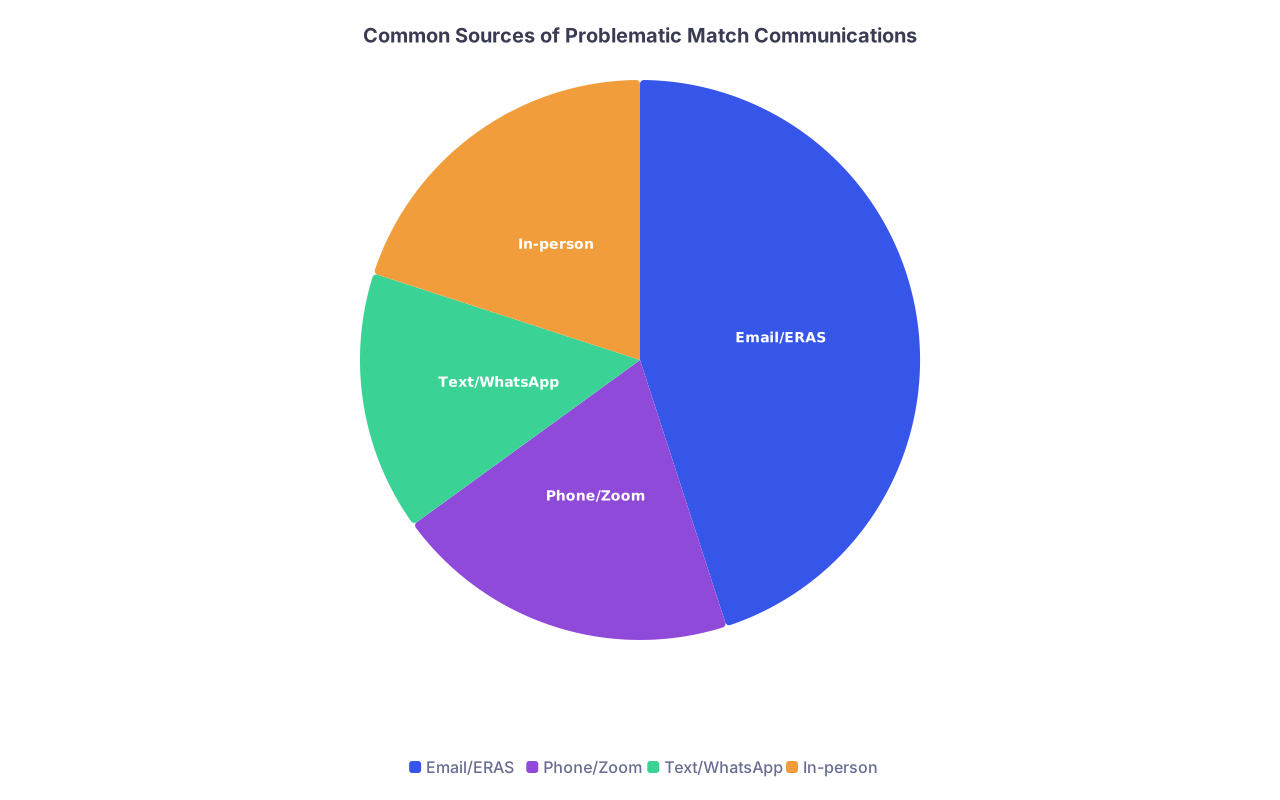
| Category | Value |
|---|---|
| Email/ERAS | 45 |
| Phone/Zoom | 20 |
| Text/WhatsApp | 15 |
| In-person | 20 |
B. Texts, WhatsApp, Signal, DMs
Programs should not conduct serious business over these, but they do.
Steps:
- Take full-screen screenshots:
- Include contact name/number
- Visible date and time
- Enough context before and after the problematic line
- Export full conversation if platform allows (e.g., WhatsApp chat export).
- Immediately save copies off your phone:
- Email to yourself (non-institutional)
- Upload to your Match folder on cloud storage
Important: Do not edit or crop the original files. If you want to hide personal info before sending to others (e.g., mentors), make a redacted copy, not the only copy.
C. Group Messages
Group chats between multiple applicants or faculty members can be gold in an NRMP investigation.
- Screenshot the group title and participant list
- Capture the exact problematic message and the context around it
- Save as separate files with clear names:
2026-02-10_ABC-IM_GroupChat_PD-Statement.png
4. Document Verbal Conversations Like a Professional
This is where most people screw up. The worst NRMP violations often happen in:
- Zoom calls
- Post-interview “check-ins”
- Hallway side chats
- Phone calls from PDs or chiefs
You will not have a recording. That is fine. You will build a highly credible paper trail instead.
A. Immediate Contemporaneous Notes
Right after the call:
Open a new note in your
03_Calls_and_Meetings_NotesfolderUse a template like:
- Date and time:
2026-01-18, 13:30–13:55 EST - Platform:
Zoom / Phone / In person - Participants:
Dr John Smith (PD), me - Summary (2–3 lines)
- Direct quotes (as close as you can remember)
- Your reaction and what you said in response
- Date and time:
Example excerpt:
Direct statements from Dr Smith:
- “We only rank applicants in our top 5 if they tell us we are number one on their list.”
- “If you cannot commit to ranking us first, I cannot promise we will keep you on our list.”
My responses:
- I replied that I am very interested in the program but cannot disclose my rank list.
- He reiterated they need this information “to make decisions.”
Do this within 10–15 minutes of the conversation while your memory is fresh. Time stamps on your document will help.
B. Follow-Up Confirmation Email (Subtle but Powerful)
If the conversation was clearly problematic, send a courteous summary email back to the person. You are not “confronting” them. You are locking in a record.
Example:
Subject: Follow up from today’s call
Dear Dr Smith,
Thank you again for taking the time to speak with me today about the residency program.
To make sure I understood correctly, you mentioned that the program tends to rank applicants more highly when they commit to ranking the program first on their NRMP list, and that this could affect how I am ranked. I appreciate your candor and your interest in my application.
As I said on the call, I am very interested in [Program Name] and will be considering it seriously as I finalize my rank list.
Best regards,
[Your Name], USMLE ID: [#######]
Why this works:
- It timestamps your understanding of what was said
- Gives the other party a chance to deny or correct (and if they do not, that silence is informative)
- If they reply and walk it back, you still have proof the problematic conversation occurred
Save the sent email AND any reply in your documentation folder.
5. Keep a Simple Incident Log
If something feels off more than once with the same program, individual emails and notes will get messy fast. This is where a basic log becomes gold.
Create a document like:
2026_Match_Incident_Log.xlsxor.docx
Columns you want:
- Date
- Program
- Person (PD, APD, coordinator, resident, etc.)
- Medium (email, Zoom, phone, text, in person)
- Summary (1–2 lines)
- Category (rank pressure, discriminatory question, threat, etc.)
- Evidence file name(s)
Example entries:
2026-01-18 | ABC IM | Dr Smith (PD) | Zoom | Asked me to confirm they would be my #1 to rank me top 5 | Rank pressure | 2026-01-18_ABC-IM_Call_Notes-Pressure-To-Rank-First.docx; 2026-01-18_ABC-IM_Email_Follow-up-Call.pdf2026-01-24 | XYZ Surgery | Coordinator | Email | Implied my visa status might limit ranking | Discriminatory | 2026-01-24_XYZ-Surgery_Email_Visa-Concern.pdf
This lets you hand NRMP a clean snapshot instead of a pile of unconnected files.
| Date | Program | Medium | Category |
|---|---|---|---|
| 2026-01-18 | ABC IM | Zoom | Rank pressure |
| 2026-01-21 | ABC IM | Rank pressure | |
| 2026-01-24 | XYZ Surg | Discriminatory | |
| 2026-02-02 | LMN Peds | Phone | Coercive remark |
6. How to Respond in Real Time Without Incriminating Yourself
You do not need to “win” the conversation. You need to avoid saying things that weaken your position later.
A. Phrases You Can Safely Use
When they press you about rank lists:
- “I am very interested in your program and would be happy to match here.”
- “I cannot disclose my rank list, but I can say you will be considered very seriously.”
- “I am still finalizing my rank list and am focusing on fit rather than promising any program a specific spot.”
These show interest without violating NRMP rules yourself.
B. What You Should Avoid Saying
- “Yes, I will rank you number one.” (even if you think you will)
- “I promise not to rank other programs above you.”
- “If you rank me highly, I’ll rank you first.”
If you later change your mind or if someone else reports contradictory communications, you now look dishonest. And NRMP does not like dishonest.
C. When a Question Is Clearly Out of Bounds
For illegal/discriminatory questions tied to selection:
- “That is a personal matter, and I prefer to focus on my fit for the program and my training goals.”
- “I am fully capable of meeting the demands of residency and prefer to keep family and personal plans private.”
Then document exactly how the question was asked and the surrounding context as described earlier.
7. When and How to Involve Others (Quietly and Strategically)
You do not need to go straight to NRMP every time someone says something awkward. But you also should not be isolated.
A. Who You Can Safely Loop In
- Your home institution’s Dean of Students or equivalent
- A trusted faculty adviser who knows NRMP rules
- GME office at your home institution
- Sometimes: a national organization (e.g., AMA, specialty societies) if they have Match support
When you email them:
- Forward the problematic communication
- Attach your call notes if relevant
- Add a short factual summary, not a rant
You are not asking for therapy. You are asking for guidance and, if needed, a future witness who saw your evidence in real time.
B. Ask for Written Advice
If they advise you on how to respond, ask them to send it in writing:
- “Would you mind summarizing your recommendation by email so I can keep it with my records?”
Then store that too. Shows you acted in good faith and followed institutional guidance.
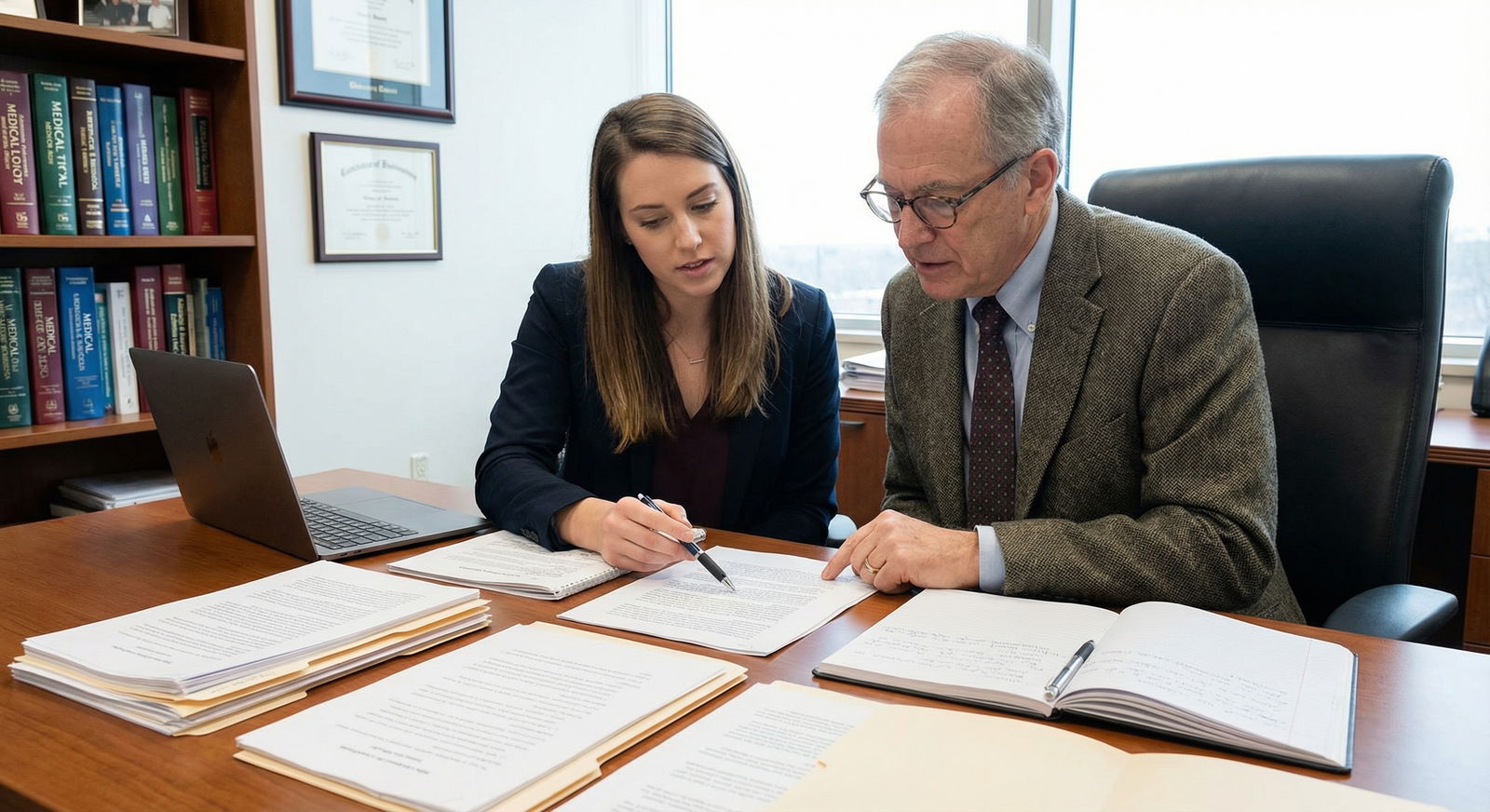
8. Preparing to File an NRMP Violation Report
Hopefully you never need this. But if you do, you want to be able to pull the trigger cleanly, not spend 10 hours hunting screenshots.
A. Understand What NRMP Actually Wants
They are looking for:
- Specific dates and times
- Exact or near-exact statements
- Supporting documentation (emails, messages, notes)
- A coherent timeline
They are not particularly interested in:
- How offended you felt
- Long narratives about your stress
- Anonymous rumors from other applicants with no evidence
B. Build a Clean Evidence Packet
When you reach the point of considering a report:
Export your incident log to PDF
Assemble key files in a folder:
- Top-level timeline or summary (1–2 pages)
- Supporting emails/texts/screenshots
- Call notes and follow-up emails
- Any institutional correspondence about it
Number your exhibits:
Exhibit 1: 2026-01-18 Zoom call notesExhibit 2: 2026-01-18 follow-up email to PDExhibit 3: 2026-01-21 PD email about ranking top 5 only if #1
Keep the tone factual. You are not writing a personal statement. You are documenting a rule violation.
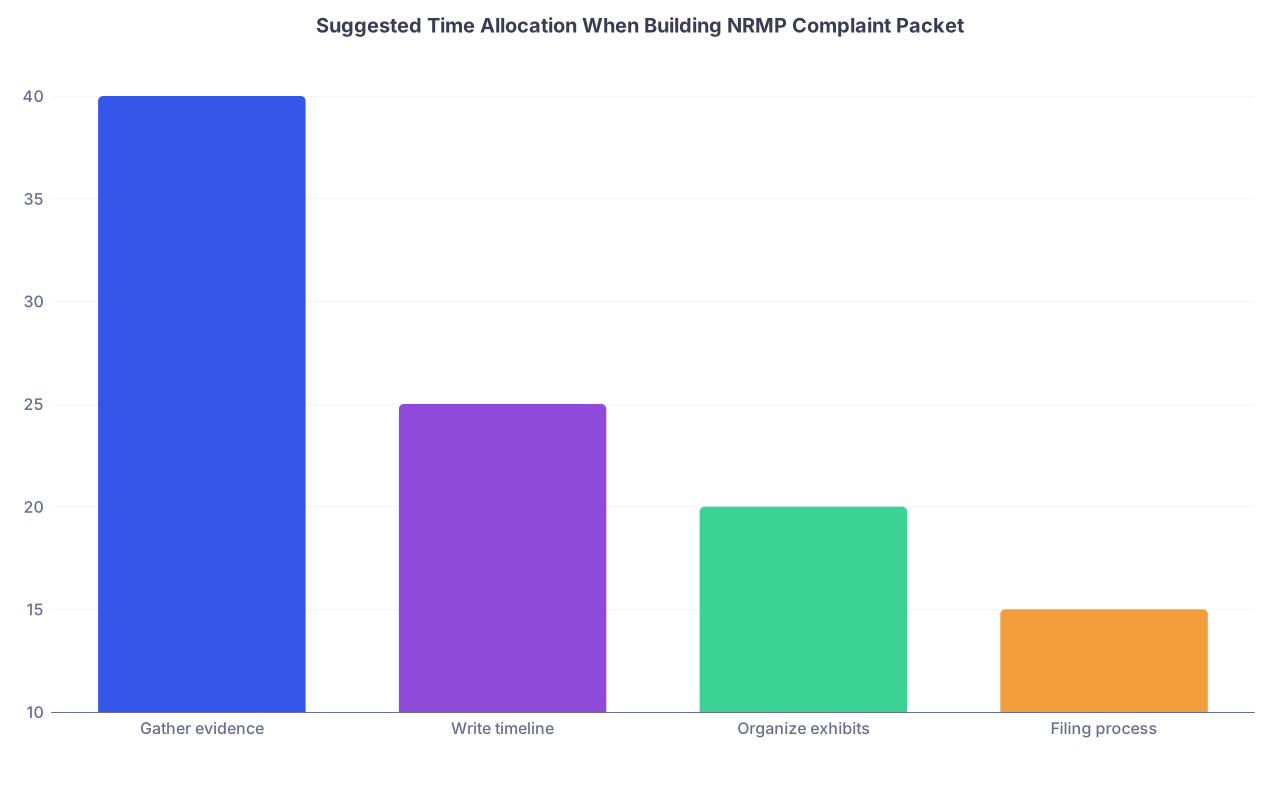
| Category | Value |
|---|---|
| Gather evidence | 40 |
| Write timeline | 25 |
| Organize exhibits | 20 |
| Filing process | 15 |
C. Timing Considerations
You do not have to wait until after Match to raise concerns. Sometimes:
- Your school can contact the program informally
- Problems get quietly fixed
- The behavior stops once they realize someone is watching
Just be deliberate. Once you formally involve NRMP, everyone’s lawyers wake up. Your documentation had better be tight.
9. Common Mistakes That Undermine Your Case
I have watched smart people sabotage themselves. Do not repeat these.
Mistake 1: Deleting Anything
You get angry, you delete the email, then later want to report it. Now you are asking NRMP to trust your paraphrase over a program’s denial. That is a losing hand.
Mistake 2: Editing or Rewriting Screenshots
Do not crop out timestamps, names, or context in your only copy. If you must hide something for a mentor, copy the file first, edit the copy, and label it clearly as redacted.
Mistake 3: Responding Emotionally in Writing
You get an outrageous email and fire back:
“This is illegal, and I am reporting you to NRMP and the ACGME.”
You now look reactive rather than methodical. A cleaner response is:
“I am not able to disclose my NRMP rank list. I remain very interested in the program.”
Then you document, consult mentors, and escalate strategically if needed.
Mistake 4: Relying Only on Group Chat Gossip
“Everyone knows that program does this” means nothing to NRMP without specifics. Get your own documentation. If others have evidence, encourage them to save it properly too.
Mistake 5: Confusing Awkwardness with Violations
Some PDs are just socially clumsy. “We really like students who end up ranking us highly” is annoying. It is not the same as:
“We rank people higher if they tell us we are number one.”
You are building a serious allegation. Distinguish between bad phrasing and actual pressure or coercion.

10. A Simple, Repeatable Workflow You Can Actually Use
Let me give you a dead simple mental checklist. Any time something feels off, run this.

| Step | Description |
|---|---|
| Step 1 | Receive concerning communication |
| Step 2 | Save and export email/text |
| Step 3 | Write detailed notes immediately |
| Step 4 | Name file and store in folder |
| Step 5 | Log incident in master log |
| Step 6 | Monitor, no action yet |
| Step 7 | Consult trusted adviser |
| Step 8 | Prepare evidence packet |
| Step 9 | Consider formal NRMP report |
| Step 10 | Written or verbal? |
| Step 11 | Serious or repeated issue? |
| Step 12 | Adviser suggests escalation? |
You do not need to think every time. You just follow the flow.
- Written → Save it, export it, organize it
- Verbal → Document it, then confirm it if appropriate
- Log everything that might matter later
- Escalate only after you have clarity and evidence

The Bottom Line
Keep this tight:
- Know the signals. Rank pressure, coercion, discriminatory questions tied to selection, and attempts to circumvent the Match are not “awkward.” They are documentation targets.
- Document like a professional. Save every written message, create detailed call notes right after verbal conversations, keep a simple incident log, and organize everything in one consistent system.
- Respond carefully and escalate strategically. Show interest without disclosing rank lists, avoid emotional replies, involve trusted advisers early, and only go to NRMP once your evidence is clean and complete.
You cannot control how programs behave. You can absolutely control whether you have the paper trail to protect yourself when they cross the line.


