

The horror stories you’ve heard about NRMP audits are massively exaggerated—and also, some of your quiet fears are completely valid.
Both are true.
You’re probably somewhere between, “What if they audit me and I get banned forever?” and “Maybe I accidentally committed Match fraud three months ago and don’t know it yet.” I know that late-night spiral really well: re-reading that one email you sent to a PD, wondering if one comma turned it into a binding contract.
Let’s walk through what NRMP audits actually are, what triggers them, what they care about, and what they honestly do not have the time or interest to chase. I’m going to be blunt, because vague reassurance doesn’t help when your brain is in catastrophe mode.
First: What an NRMP Audit Really Is (Not the Monster Under Your Bed)
An NRMP audit is not some SWAT raid where a team storms your email and reads your group chats from M3 year.
It’s basically this: NRMP checks whether you, programs, and schools followed the Match Participation Agreement. That’s it. The audit exists to protect the integrity of the Match algorithm and the fairness of the process, not to hunt down nervous MS4s who overused exclamation points in thank-you emails.
Most audits fall into three buckets:
- Routine compliance checks – NRMP randomly selects a sample (both applicants and programs) every year to confirm people are doing what they said they’d do.
- Triggered audits – when there’s a complaint or red flag about a possible violation.
- Special investigations – bigger, pattern-level stuff (like a program systematically breaking rules across multiple years).
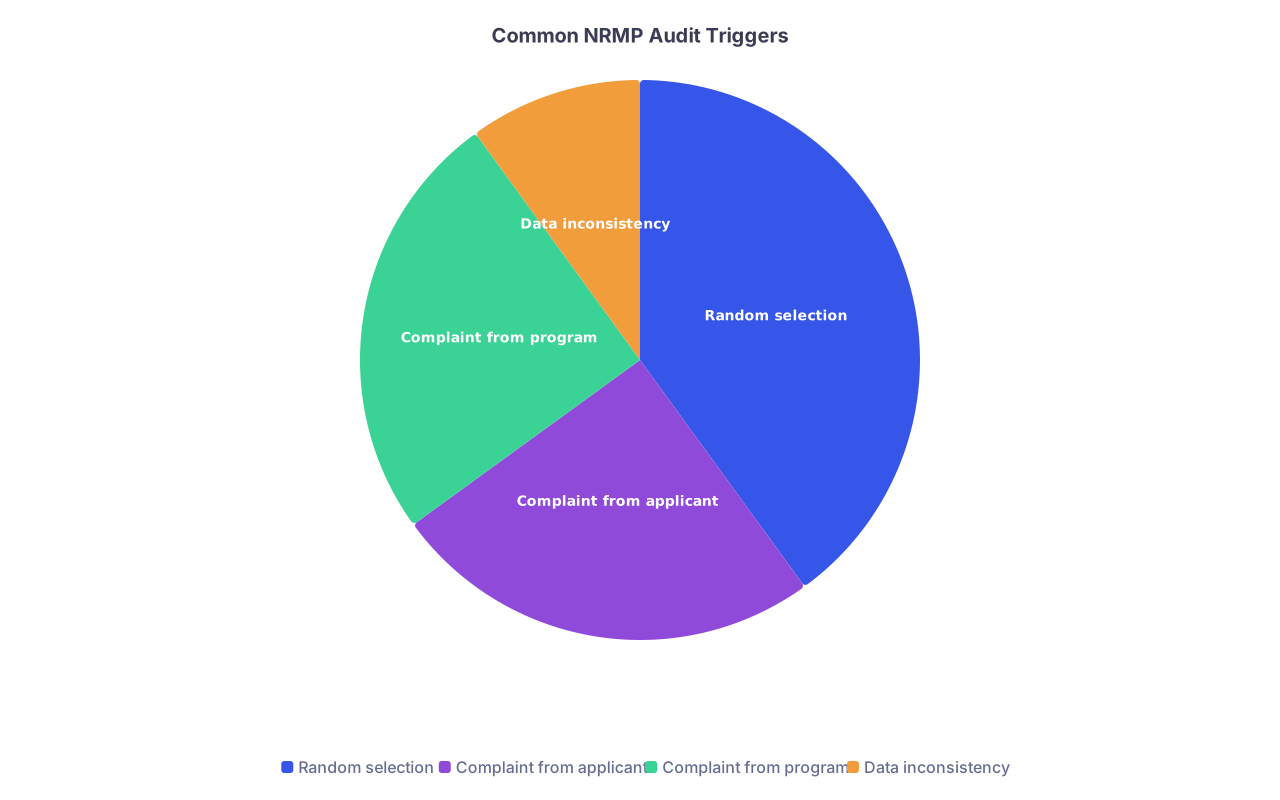
| Category | Value |
|---|---|
| Random selection | 40 |
| Complaint from applicant | 25 |
| Complaint from program | 25 |
| Data inconsistency | 10 |
So yes, you can be randomly audited. But no, that doesn’t automatically mean “You’re in trouble.” It usually means “We’re confirming your paperwork matches what you did.”
What NRMP Actually Looks At (The Stuff You’re Right to Take Seriously)
Let’s strip this down to the core. If I were NRMP, and I wanted to protect the process, what would I focus on? That’s basically where their real energy goes.
1. Did you and the program honor your Match commitments?
This is the big one. NRMP is obsessed with one principle: if you match, you show up; if a program ranks you, they honor the contract.
They’ll look at things like:
- You matched somewhere, then tried to back out without going through the official waiver process.
- A program tried to push you out of a signed position to take someone “better.”
- You started PGY-1 and bailed in a way that violated the rules.
They care a lot about post-Match behavior. Because that’s where the real damage happens—to patients, to programs, to fairness.
If they audit around this, they’ll want:
- Your contract or offer letter
- Email chains about withdrawing, resigning, or not starting
- Official waiver documentation (if you requested it)
If you’ve done nothing like that, breathe. You’re not the kind of case they go hunting for.
2. Were there any binding commitments before the Rank List deadline?
This is the next major category.
NRMP rules: No one is allowed to make or request a commitment that circumvents the algorithm. Translation: programs can’t say “Rank us #1 and we’ll rank you #1,” and you can’t say “I promise I’ll come if you rank me.”
They’ll care about:
- Real contracts/agreements signed before Match results
- Emails that look like genuine binding promises tied to ranking
- Programs requiring you to sign something that locks you in pre-Match (outside of officially allowed exceptions)
This is where people freak out about their “I will rank you highly” emails. The truth:
Normal thank-you / update language is fine.
What crosses lines is more like:
- “If you rank me, I will withdraw from the Match and sign directly with you.”
- “We will guarantee you a position outside the Match if you agree to withdraw.”
If you didn’t sign anything, didn’t withdraw from the Match early, and didn’t make some explicit quid-pro-quo agreement, you’re probably nowhere near their radar.
3. Did anyone lie—on purpose—in a way that affects the Match?
They’re not auditing your personal statement for exaggeration. They’re looking for actual fraud or misrepresentation that changes the reality of who you are as an applicant.
Things on their radar:
- Falsifying exams (claiming you passed Step when you didn’t)
- Lying about being eligible to start residency (visa, graduation, licensing)
- Programs lying about accreditation status, funding, or actual positions available
When you’re audited in this context, it’s usually tied to:
- A program or school reporting a discrepancy
- Clear evidence from other systems (ECFMG, USMLE, your school) that doesn’t match what you submitted
If your “lie” is more like “I said I did ~300 hours of volunteering and it was really 250,” that’s not ethical, but it’s also not what NRMP is burning investigation hours on. Programs might care, but NRMP is focused on structural truth about your ability to train.
4. Did your school/program follow the rules about sharing information?
Here’s something most applicants don’t think about: NRMP also audits schools and programs.
They look at whether:
- Schools released student rank lists or confidential information
- Programs demanded applicant rank list info (“Will you rank us first?” “Show us your list.”)
- Schools or programs tried to influence your ranking with threats or pressure
If you ever had a PD or coordinator try to push you into declaring them #1 or sharing your rank list, that’s actually something NRMP would get very interested in—on the program’s side, not just yours.
What NRMP Really Doesn’t Care About (Despite Your 2 AM Panic)
Here’s where your anxiety is lying to you. There’s a long list of things that feel “risky” but don’t rise to NRMP-audit-worthy.
1. Normal post-interview communication
Thank-you emails. Interest letters. Telling a program you “really liked” them. Sending an update about a new publication. None of this is weird. Everyone does it. NRMP doesn’t have time to sift through 100,000 polite emails.
What would be a problem? Stuff that sounds like coercion or contracting:
- Program: “If you tell us we’re your #1, we’ll guarantee you a spot.”
- Applicant: “If you promise to rank me to match, I’ll cancel my other interviews.”
That’s not normal communication. That’s negotiating outside the algorithm.
2. Soft, emotional, slightly cringe language
“Your program is my top choice.”
“I feel like this is where I belong.”
“I can see myself training here more than anywhere else.”
Is it overkill sometimes? Sure. Is it a violation? No.
NRMP rules don’t ban expressing preference. They ban asking someone else for their rank list or trying to make a binding pre-Match deal. You’re allowed to say “I love you” in this weird dating-game-of-a-process. You’re not allowed to say, “If you don’t say it back, I’ll sue.”
3. Innocent mistakes and awkward wording
Your anxious brain: “I wrote ‘I would love to train here and commit myself fully to your program’—that’s a contract; I’m going to be banned.”
Reality: NRMP is looking for intentional violations that undermine the algorithm. They’re not language-policing your over-eager fourth paragraph.
Yes, be careful. Don’t promise to break the rules or ditch other programs. But they’re not legally parsing every adverb you wrote at midnight.
4. Normal ranking behavior that feels “unfair”
Stuff like:
- Ranking a program higher even though they were a bit rude, because of geography
- Not ranking a program that was super nice
- Moving a program down at the last minute because of a bad gut feeling
These might make you feel guilty, but NRMP doesn’t care. Your rank list is your business, as long as you’re not coordinating it in some shady deal with programs.
What an Audit Might Actually Look Like for You
Most people never get audited. Those who do often get a pretty boring, bureaucratic version of what their anxiety predicted.
If you’re audited as an applicant, expect some version of:
- A notice from NRMP that your application has been selected for review or that they’re investigating a possible violation.
- A request for specific documents (emails, contracts, communication with a program, waiver requests, etc.).
- A chance to respond, explain, or clarify.
| Item Requested | Why They Want It |
|---|---|
| Email correspondence | Check for commitments/pressure |
| Match waiver documents | Confirm proper process |
| Contract/offer letters | Verify start/acceptance terms |
| Communication with school | Confirm reporting & actions |
| Timeline of events | Reconstruct what actually happened |
You’re not going to get:
- A random demand to see every email you sent to every program “just because”
- A forensic dive into your group chats, memes, and venting
- A secret blacklisting without explanation
NRMP tends to be pretty process-heavy and transparent once an actual investigation is open.
Biggest Misconception: “One Wrong Sentence Will Get Me Banned”
This is the nightmare, right? That some offhand message or poorly-worded email equals a Match violation and a multi-year ban.
Let me be blunt: NRMP does not want to nuke applicants over harmless stupidity. They save actual sanctions for clear, meaningful violations:
- You backed out of a Match commitment and refused to comply
- You helped a program circumvent the algorithm on purpose
- You lied about being able to start residency and then didn’t show up
- You signed a contract outside the Match while still participating in the Match in the same discipline without following allowed pathways
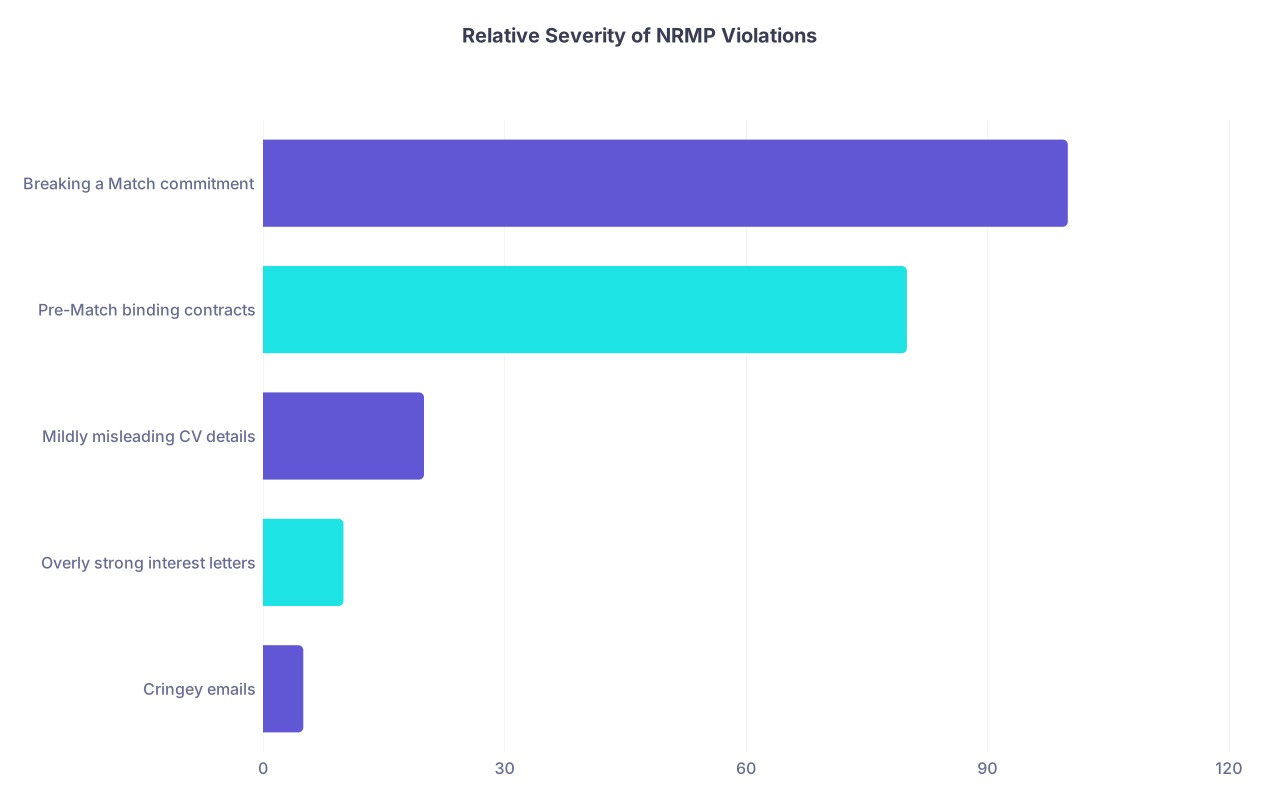
| Category | Value |
|---|---|
| Cringey emails | 5 |
| Overly strong interest letters | 10 |
| Mildly misleading CV details | 20 |
| Pre-Match binding contracts | 80 |
| Breaking a Match commitment | 100 |
Your panicked “thank you so much, I really loved your program and hope to join you” message? That’s a 5 on their radar, maybe a 0. The stuff they sanction is at 80–100.
Red Flags You Actually Should Avoid (So You Can Sleep)
Let’s talk about the real landmines, so you can stop inventing fake ones.
Be very, very cautious if:
- A program asks: “Will you rank us first?” and seems to tie this to how they’ll rank you.
- Anyone asks to see your rank list or tells you specifically how to rank others.
- A program pressures you to withdraw from the Match to sign something “off-cycle” for the same start year/discipline.
- You feel like you’re being threatened: “If you don’t do X, we won’t rank you” in a way that references specific rank behavior.
If that happens, write down what was said, when, and by whom. Save emails. If it feels bad, it probably is bad—and NRMP is way more interested in that than your slightly overenthusiastic thank-you message.
How to Act Now So You Don’t Panic Later
You want something actually practical, not just vibes. Here’s how to reduce both real risk and anxiety:
From now on, never promise anything beyond the rules.
You can say “I really liked your program” or even “You’re my top choice” if you mean it. Don’t say “I promise I’ll rank you #1 if…” and don’t ask them for their rank intentions.Keep email records and don’t delete important stuff until well after Match.
If anyone ever tries something sketchy, you’ll be glad to have receipts.If you’re unsure about a complicated situation (waivers, off-cycle offers, dual participation), talk to your dean’s office or GME office before you act.
They’ve seen this before. They can help you avoid accidentally walking into a rule violation.Understand this simple rule: if it feels like you’re making a side-deal outside the algorithm, stop.
That’s the heart of what NRMP is protecting.

| Step | Description |
|---|---|
| Step 1 | Considering message or agreement |
| Step 2 | Likely safe |
| Step 3 | High risk - do not send |
| Step 4 | Does it change how you or they must rank? |
| Step 5 | Is it a promise or condition? |
Quick Reality Check (For the 3 a.m. Spiral)
Let me say this as clearly as possible:
If you:
- Didn’t sign any secret contracts pre-Match
- Didn’t withdraw from the Match in a weird way
- Didn’t lie about major eligibility or exams
- Didn’t collude with a program about rank lists
then you are not the type of person NRMP is hunting.
Are you a stressed MS4/IMG who sent some overeager emails, maybe said “top choice” too many times, maybe rounded up a little on your volunteer hours? You’re in a giant, messy, very human group of applicants—not in some special “about to be banned” category.
FAQ (Four Questions You’re Probably Still Afraid to Ask)
1. Can NRMP actually see my emails to programs?
No, not automatically. They don’t have a backdoor to your Gmail. NRMP only sees emails if:
- You send them in response to an investigation, or
- A program or school shares them as part of a complaint.
They’re not live-monitoring your inbox.
2. What if I told more than one program they were my “top choice”? Is that a violation?
Ethically messy? Sure. NRMP violation? No—unless you turned it into a binding deal (like “I promise I’ll rank you first if you do X”). The rules don’t ban inconsistent compliments. They ban attempts to manipulate the algorithm with commitments.
3. Can I get in trouble if a program breaks the rules, even if I just went along with it?
Potentially, yes, if you actively helped—like agreeing to a side contract outside the Match for the same discipline/year while still in that Match. But if a program said something shady and you didn’t sign or commit to anything, they are more likely to be the focus, not you. If something felt off, document it and talk to your dean’s office or NRMP support.
4. I think I might’ve messed up—should I tell NRMP preemptively or just stay quiet?
If it’s something major (like you signed a contract outside the Match, or misrepresented an exam result), you should talk to your school’s dean’s office or a trusted advisor first and then consider contacting NRMP. If it’s “I wrote an overenthusiastic email” or “I said they were my top choice,” you’re not in violation territory, and confessing every anxious thought just creates more drama than clarity.
Open your sent folder right now and look at your last 3 emails to programs. If none of them include a binding promise about how you’ll rank or ask the program for their rank list, take a breath. You’re probably fine—and your time is better spent planning your next step than rereading that thank-you for the 20th time.


