Why Choosing Between a PhD and an MD Can Define Your Future in Science and Medicine
Choosing between a PhD vs MD is one of the most consequential decisions you can make if you’re drawn to medical education, scientific discovery, and healthcare professions. Both graduate degrees open doors to impactful careers, but they position you differently within the scientific and medical ecosystem.
This guide breaks down how PhD and MD career paths differ in training, daily work, impact, and lifestyle—so you can choose the path that best fits your goals and strengths.
Understanding the Degrees: What a PhD vs MD Really Means
Before diving into career paths and lifestyle, it helps to clearly define what each degree represents in the context of medical and scientific careers.
What Is a PhD (Doctor of Philosophy)?
A PhD is the highest research-focused graduate degree. In the biomedical and life sciences, a PhD prepares you to:
- Design and lead original research projects
- Develop new knowledge, tools, and theories
- Analyze complex data and publish scientific findings
- Teach and mentor students and trainees
Typical features of PhD training in the sciences:
- Duration: Approximately 4–7 years (often 5–6 in biomedical sciences)
- Components: Advanced coursework, qualifying/comprehensive exams, intensive lab work, dissertation research, and a written thesis defended before a committee
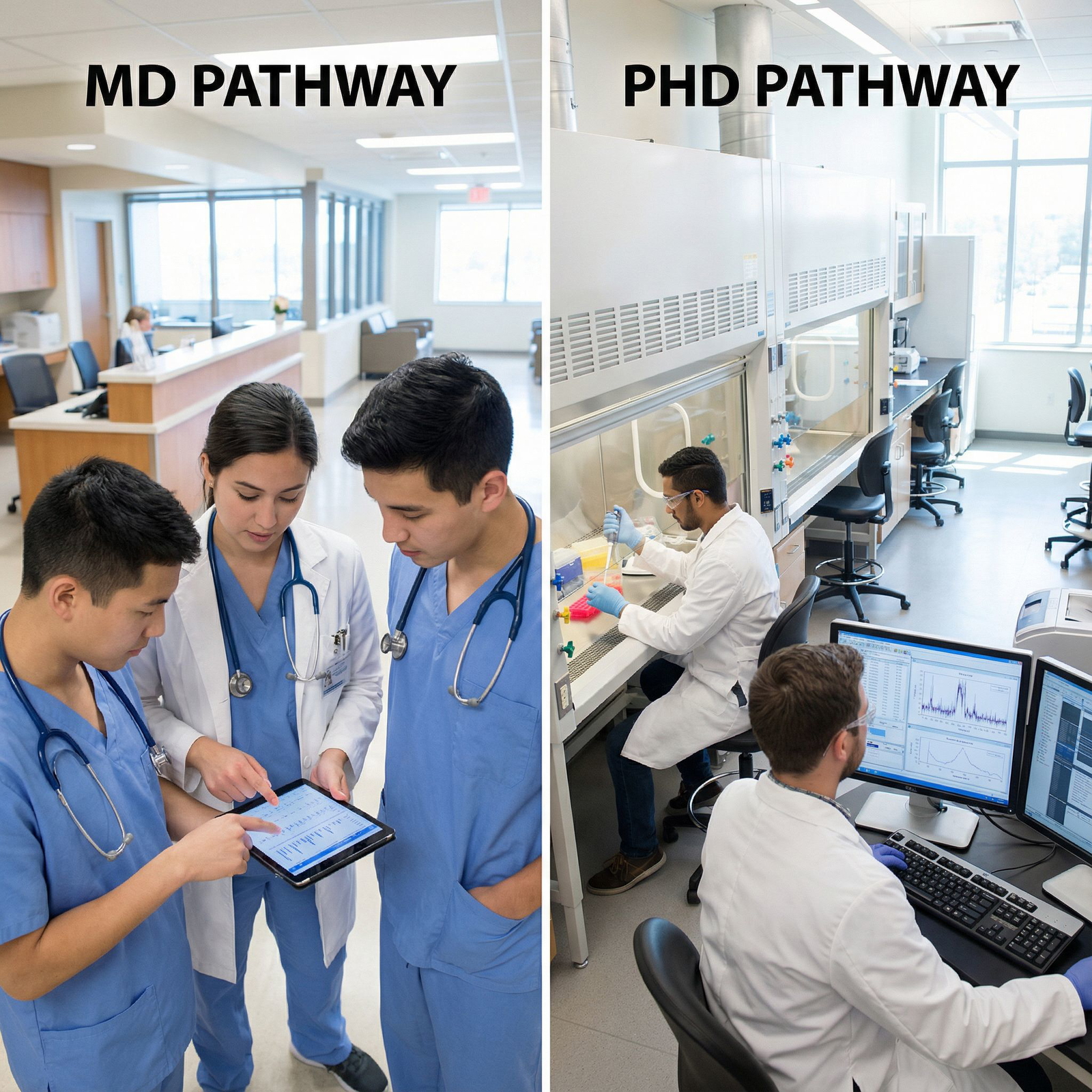
- Primary setting: Research labs in universities, research institutes, biotech/pharma, and sometimes government agencies
Graduates often pursue careers in academia (as professors or research faculty), industry (biotech, pharma, diagnostics), government (NIH, CDC, FDA), and nontraditional sectors like consulting, policy, or scientific communication.
What Is an MD (Doctor of Medicine)?
An MD is a professional degree that prepares you to practice clinical medicine and care directly for patients. MD training emphasizes:
- Diagnosis and management of disease
- Clinical decision-making and evidence-based practice
- Communication and collaboration with patients and healthcare teams
- Application of biomedical research to individual patient care
Key elements of MD training:
- Medical school (4 years):
- Preclinical years: Basic sciences (anatomy, physiology, biochemistry, pathology, pharmacology) and early clinical exposure
- Clinical years: Rotations through core specialties (internal medicine, surgery, pediatrics, OB/GYN, psychiatry, etc.)
- Postgraduate training:
- Residency (3–7+ years depending on specialty)
- Optional fellowships (1–3+ years) for subspecialization
MDs primarily work as clinicians but can also engage in research, teaching, leadership, and policy roles in healthcare systems.
Academic Focus and Long-Term Career Goals
One of the most important distinctions in the PhD vs MD decision is the primary focus of your future work—research vs clinical practice.

Research-Centered Careers: When a PhD Makes Sense
If you’re energized by questions like “How does this pathway work?” or “What mechanism drives this disease?” a research career may fit you well.
What PhD-trained scientists typically do:
- Lead research programs in universities, research hospitals, or institutes
- Develop new diagnostics, drugs, devices, or computational tools
- Publish in peer-reviewed journals and present at conferences
- Mentor graduate students and postdocs
- Compete for grant funding to support labs and trainees
Example career paths for PhD graduates in biomedical sciences:
- Academic research: Assistant/Associate/Full Professor in departments like Molecular Biology, Immunology, or Epidemiology
- Industry R&D: Scientist or Principal Scientist in biotechnology or pharmaceutical companies (e.g., drug discovery, clinical development, bioinformatics)
- Government and public health: Research roles at the NIH, CDC, FDA, or WHO
- Beyond the bench: Medical/scientific writing, consulting (healthcare or life sciences), policy advising, regulatory affairs, data science
If you are comfortable with uncertainty, enjoy deep intellectual work, and like spending long stretches of time solving a single complex problem, a PhD-aligned career path may be a strong match.
Patient-Focused Careers: When an MD Is the Better Fit
If you’re driven by questions like “How can I help this person sitting in front of me?” or “How can we improve outcomes in my community?”, an MD-focused path may be more fulfilling.
What MD-trained physicians typically do:
- Diagnose and treat acute and chronic conditions
- Counsel patients and families about health, risk, and prevention
- Work in teams with nurses, pharmacists, therapists, and other professionals
- Implement and interpret clinical guidelines and research
- Often teach medical students and residents in clinical settings
Example MD career paths:
- Primary care: Family medicine, internal medicine, pediatrics
- Hospital-based specialties: Emergency medicine, anesthesiology, critical care, hospitalist medicine
- Surgical fields: General surgery, neurosurgery, orthopedic surgery, cardiothoracic surgery
- Subspecialties: Cardiology, oncology, endocrinology, infectious disease, etc.
- Nonclinical roles: Health system leadership, insurance/managed care, digital health companies, public health agencies
Physicians impact scientific progress not only by providing patient care but also by contributing to clinical research, quality improvement, and systems-level change.
Teaching and Mentoring: Available in Both Paths, But Different in Style
Both PhD and MD holders can have robust teaching roles, though the focus differs.
PhD educators often:
- Teach undergraduates and graduate students in classroom and lab settings
- Supervise thesis projects and research rotations
- Develop and refine scientific curricula
- Train the next generation of scientists and occasionally physician-scientists
MD educators commonly:
- Teach at the bedside, in clinics, and in operating rooms
- Supervise medical students, residents, and fellows
- Lead case conferences, grand rounds, and simulation sessions
- Model clinical reasoning and professional behavior in real patient encounters
If teaching is central to your sense of purpose, consider whether you prefer classroom/lab-based academic mentoring or bedside clinical teaching—or a blend of both.
Training Pathways, Time to Independence, and Lifestyle Considerations
How long you train, how your training is structured, and what your day-to-day life looks like will differ substantially between PhD and MD tracks.
Duration and Structure of PhD Training
Most biomedical PhD programs follow a flexible but demanding structure:
Foundational Coursework (1–2 years)
- Advanced classes in your discipline (e.g., molecular biology, immunology, biostatistics)
- Rotations in 2–4 research labs to help you select a thesis advisor
Qualifying/Comprehensive Exams (Year 1–3)
- Written and/or oral exams to test foundational knowledge
- Often includes a research proposal component
Dissertation Research (3–5+ years)
- Intensive lab or computational work
- Data generation, analysis, and troubleshooting
- Multiple first-author manuscripts are often expected
Thesis Writing and Defense
- Writing a dissertation compiling your original work
- Formal defense before a faculty committee
Time to independent career:
- Often 9–12+ years from starting undergrad to first independent faculty or senior industry role (including postdoctoral training).
Lifestyle realities in PhD training:
- Lab hours can be variable and sometimes long, but often more flexible than clinical schedules
- Pressure to publish and secure funding is real, especially in academia
- Progress is less structured and more dependent on research outcomes and mentor fit
Duration and Structure of MD Training
The MD path is longer in calendar years but more structured and predictable in its stages.
Medical School (4 years total)
- Preclinical (Years 1–2): Basic sciences, standardized exams (e.g., USMLE Step 1/2, COMLEX)
- Clinical (Years 3–4): Rotations in core specialties plus electives, residency applications and interviews
Residency (3–7+ years)
- Full-time paid supervised clinical work
- Increasing responsibility for patient care
- Call schedules, nights, and weekends are common
- Board certification exams in your specialty
Fellowship (Optional, 1–3+ years)
- Subspecialized training (e.g., cardiology, GI, heme/onc, critical care)
Time to independent practice:
- Typically 7–15 years from starting medical school to practicing independently (depending on specialty and fellowships).
Lifestyle realities in MD training:
- Highly structured schedules, with less autonomy in early training
- Intense workload during residency and fellowship (long hours, emotional demands)
- Greater sense of direct daily impact through patient care—often highly rewarding, but also taxing
Financial Realities: Cost, Funding, Debt, and Long-Term Earning Potential
Financial considerations are often a decisive factor in the PhD vs MD decision, especially given the rising cost of medical education.
Cost of Education and Funding Structures
PhD programs (especially in STEM and biomedical sciences):
- Most reputable programs provide:
- Tuition waivers
- A modest stipend (often $25,000–$40,000/year depending on location and field)
- Health insurance, sometimes additional benefits
- You may graduate with little to no educational debt, but you do trade years of potential higher earnings for low trainee pay.
MD programs:
- Tuition and fees can easily exceed $200,000–$300,000+ over four years in the U.S.
- Additional costs: living expenses, exam fees, application travel, and sometimes relocation
- Many students rely heavily on loans and graduate with substantial debt
- Income during residency is modest (~$60,000–$75,000/year in many U.S. programs), but this is typically the first salaried role after medical school.
Salary Expectations and Job Market Trends
While exact numbers vary by specialty, institution, and geography, some general trends hold:
PhD graduates (biomedical fields):
- Early-career postdoc: ~$55,000–$70,000/year in the U.S.
- Academic faculty:
- Assistant Professor: ~$75,000–$130,000+ (widely variable by institution and location)
- Salary often tied to grant funding and teaching commitments
- Industry roles (biotech/pharma/data science):
- Entry-level PhD scientist: ~$90,000–$140,000+
- Senior roles and management can exceed $150,000–$200,000+
MD graduates:
- Resident physician: ~$60,000–$75,000/year with incremental increases
- Attending physician:
- Primary care: often $200,000–$250,000+
- Many specialties: $300,000–$500,000+
- Some procedural/surgical fields: can exceed $600,000+
The financial upside of an MD is generally higher, but comes with more debt, more structured and intense training, and sometimes higher burnout risk.
Key takeaway:
- PhD: Lower upfront cost, delayed and lower peak earnings, but often more career flexibility and less financial risk from debt.
- MD: High upfront cost and debt, but higher long-term earning potential and strong job stability in most specialties.
Interdisciplinary Opportunities and Combined Paths
Healthcare and science are increasingly collaborative, and many complex problems benefit from both scientific and clinical insight.
Interdisciplinary Work as a PhD
PhD scientists are often at the forefront of:
- Translational research (bench-to-bedside)
- Bioinformatics and computational biology
- Public health and epidemiology
- Health economics and outcomes research
You might:
- Collaborate with clinicians on clinical trials
- Develop biomarkers or companion diagnostics for new therapies
- Use large datasets (EHRs, registries, genomic data) to study disease patterns
- Work in multidisciplinary teams with statisticians, engineers, and healthcare professionals
Interdisciplinary Work as an MD
MDs frequently:
- Participate in or lead clinical trials
- Implement new diagnostic or therapeutic tools developed by scientists
- Collaborate with policy experts to shape health systems and regulations
- Serve as medical directors in biotech, digital health, or device companies
Physicians bring essential real-world context—patient needs, workflow realities, and health-system constraints—to scientific and technological innovation.
MD/PhD and Other Combined Degree Options
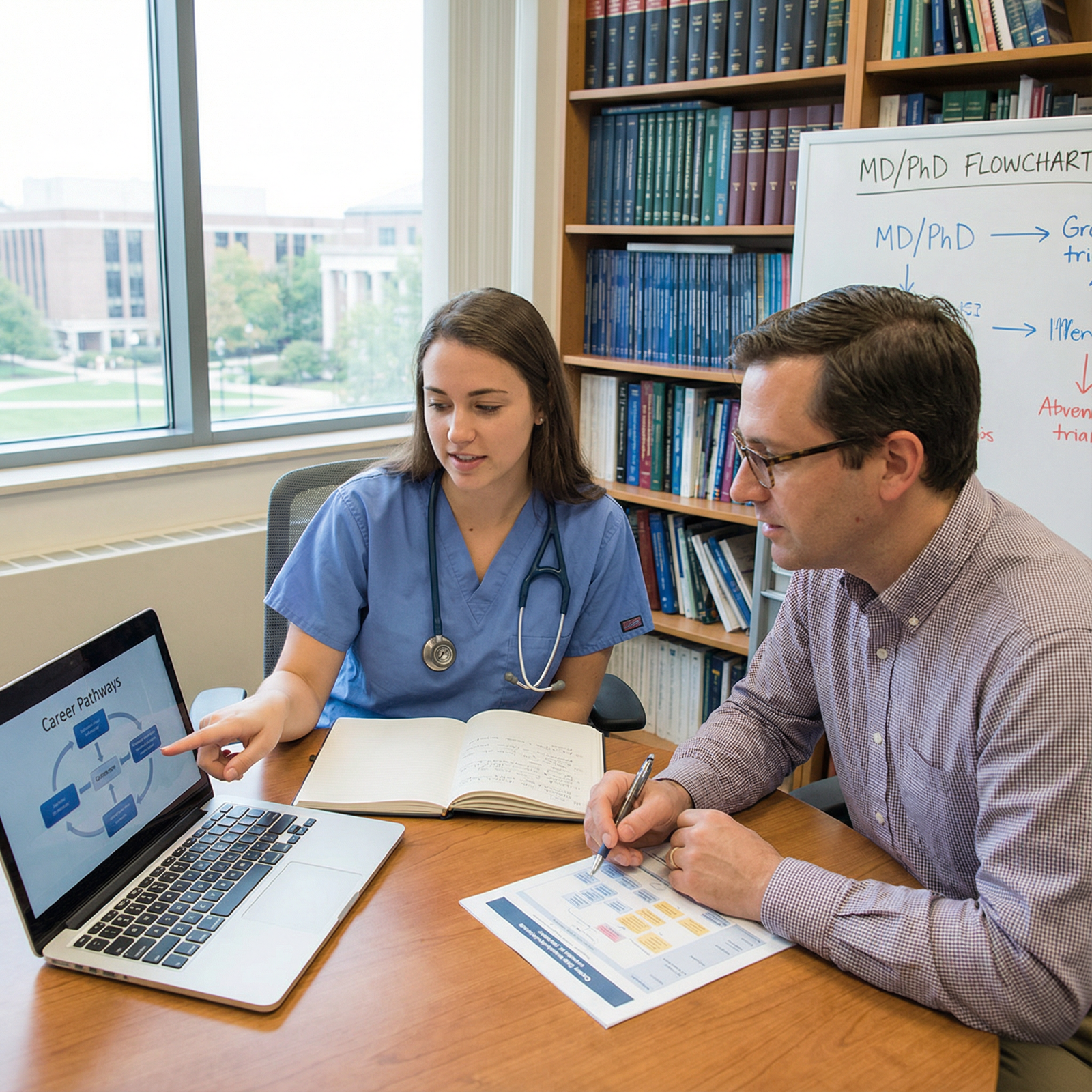
If you’re deeply drawn to both research and clinical work, combined degrees may be worth exploring:
MD/PhD programs:
- Often integrated 7–9+ year programs
- Funded tuition and stipend for the PhD portion (and sometimes full program)
- Train physician-scientists who split their careers between the lab and clinic
Other combinations:
- MD/MPH (public health)
- MD/MBA (healthcare management, entrepreneurship)
- MD/MS in clinical research, biomedical informatics, or health policy
These combined programs extend training but position you for leadership at the intersection of science, clinical care, and systems-level change.
How to Decide: Key Questions and Practical Strategies
This decision is not just about degree titles; it’s about the kind of work, impact, and daily life you want for decades. Use these questions and strategies to clarify your path.

Key Self-Reflection Questions
Do you prefer solving abstract, long-term questions or making immediate, person-to-person impact?
- Enjoy designing experiments, doing statistics, writing papers? → PhD
- Energized by clinical decision-making and patient interaction? → MD
How do you handle uncertainty and delayed gratification?
- Comfortable with experiments failing for months, with success measured in papers and grants? → PhD
- Prefer more structured training milestones and clearer timelines? → MD
What kind of stress do you tolerate better?
- Intellectual uncertainty, funding pressures, pressure to publish → Often PhD life
- Time pressure, emotional intensity of patient care, life-or-death decisions → MD life
How important are finances and job stability to you?
- MDs usually earn more with more stable demand, especially in many specialties
- PhDs have diverse career paths but sometimes face competitive academic job markets
What do you picture as a fulfilling “day in the life” 10 years from now?
- In a lab/office, leading a research team and writing grants?
- On a ward, in an OR, or in clinic caring for patients?
- Splitting time between both worlds (consider MD/PhD or research-focused MD careers)?
Practical Ways to Explore Each Path
Shadowing:
- Shadow clinicians in various specialties (clinic, OR, inpatient wards)
- Shadow researchers in basic science, translational, and clinical research labs
Research experience:
- Join a lab during undergrad or medical school
- Ask to attend lab meetings and journal clubs
- Try to see a project from start to finish if possible
Mentorship:
- Speak with PhD students, postdocs, faculty, residents, and attending physicians
- Ask them what they love and what is hardest about their jobs
- Find role models whose careers you could realistically imagine wanting
Career services and advising:
- Use your university’s pre-health or pre-graduate advising resources
- Attend information sessions for MD, PhD, and MD/PhD programs
Being deliberate and informed now can save you from costly pivots later, though it’s also important to remember that career paths are more flexible than they may appear.
Frequently Asked Questions (FAQs)
1. Can I switch from a PhD path to an MD (or vice versa) later?
Yes, transitions are possible, but they come with tradeoffs:
From PhD to MD:
- You must meet standard medical school admission criteria (prerequisites, MCAT, GPA).
- Some medical schools value PhD experience, especially if your work aligns with academic medicine or physician-scientist careers.
- You may spend extra years in training overall, but your research skills can be a major asset.
From MD to PhD:
- Physicians sometimes pursue a PhD or research master’s mid-career, particularly in epidemiology, public health, or clinical research.
- This extends training but can position you for academic and research leadership roles.
In both cases, strong motivation and a clear explanation of your transition are key.
2. Are MD/PhD programs worth it if I like both research and clinical care?
MD/PhD programs are designed for students who want to be physician-scientists, dedicating major portions of their careers to both research and patient care. They may be worth it if:
- You genuinely enjoy doing research—not just reading about it
- You can see yourself running a lab and applying for grants long term
- You are comfortable with a long training path (often 7–9+ years) before residency
If you simply want to be a “research-active clinician” but don’t necessarily want to lead a lab, an MD with substantial research involvement (e.g., research electives, research fellowships) might be a better fit than a full MD/PhD.
3. How do job prospects compare for PhD versus MD graduates?
- MDs generally have strong job security and demand, particularly in many primary care and in-demand specialties. Geographic flexibility and willingness to work in underserved areas can further increase options.
- PhD job markets are more variable:
- Tenure-track academic positions are competitive and limited.
- Industry, government, and nonacademic roles have grown significantly, especially in biotech, data science, and health-related technology.
Your specific field (e.g., computational biology vs. a narrow niche with fewer industry applications) and willingness to explore nontraditional roles heavily influence your job prospects as a PhD.
4. Can I do biomedical or clinical research with just an MD?
Absolutely. Many MDs build robust research careers without a PhD, especially in:
- Clinical trials and outcomes research
- Translational research (bridging lab findings and patient care)
- Health services, quality improvement, and implementation science
- Public health and epidemiology (often via additional training like an MPH or research fellowship)
Institutions often support research-oriented MDs with protected time, mentorship, and sometimes formal research tracks during residency and fellowship.
5. What personal qualities are especially important for success in each path?
While there’s overlap, some traits tend to be particularly important:
For PhD-focused careers:
- Curiosity and love of deep problem-solving
- Tolerance for ambiguity and delayed results
- Persistence in the face of experimental failure and grant rejection
- Strong analytical and writing skills
For MD-focused careers:
- Empathy and strong interpersonal communication
- Resilience under time pressure and emotional intensity
- Comfort making decisions with incomplete information
- Teamwork and leadership in multidisciplinary settings
Reflect honestly on your strengths and where you derive energy and satisfaction in your work.
Whichever path you choose—PhD, MD, or a combination—you’ll be committing to a demanding but deeply meaningful career. By understanding how these graduate degrees shape your day-to-day work, your long-term career options, and your contribution to science and healthcare, you can make a decision that aligns with both your passions and your practical needs.