From Classroom to Clinic: PhD vs. MD – Which Journey Truly Fits You?
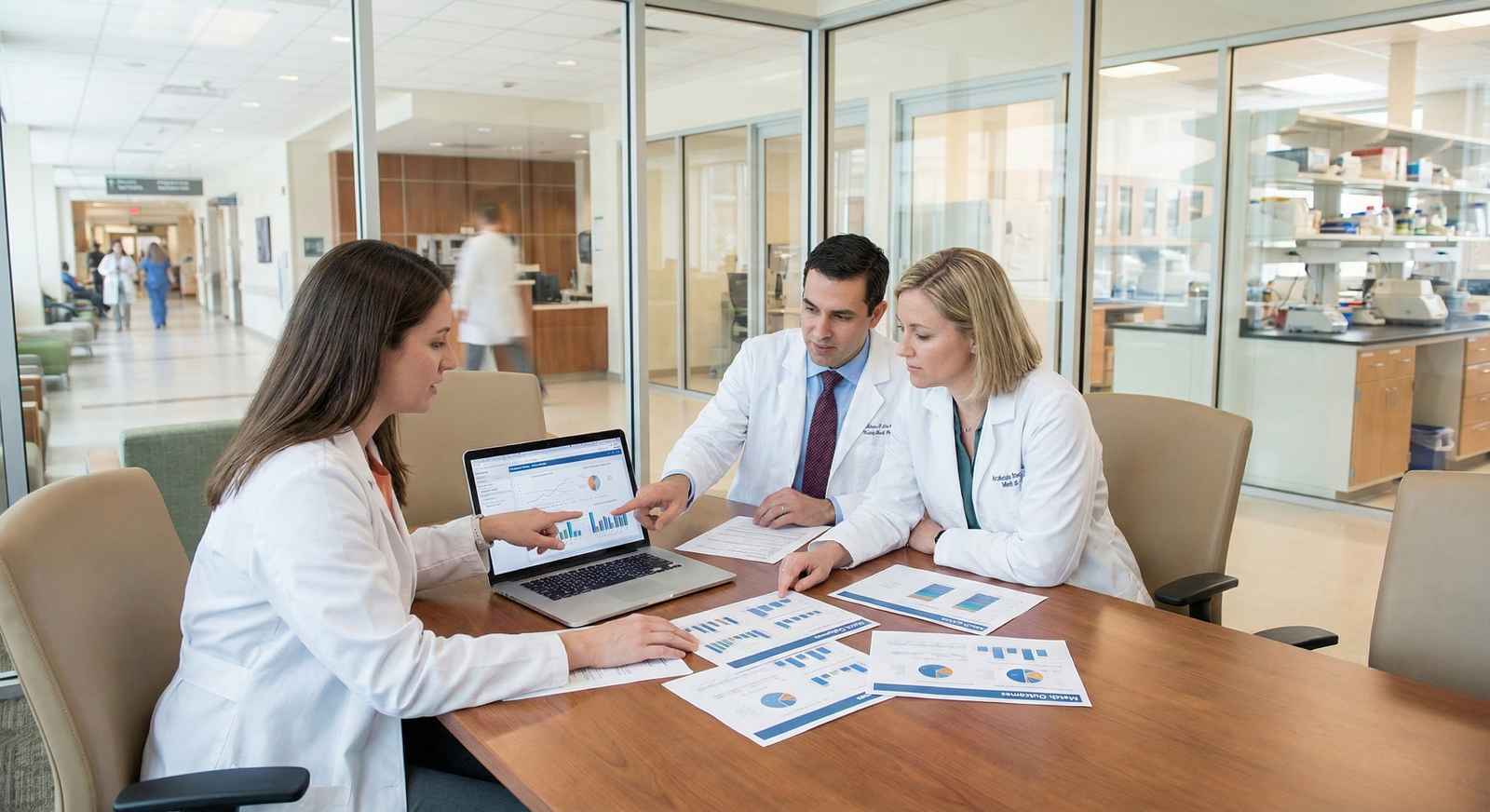
Choosing between a PhD and an MD is one of the most consequential decisions you can make in your medical and scientific career. Both degrees sit at the heart of modern Medicine and healthcare education, yet they prepare you for very different day-to-day realities, responsibilities, and long‑term career paths.
This guide expands on the core differences, overlaps, and strategic considerations between a PhD and an MD—so you can move beyond “Which is more prestigious?” to “Which is the right fit for how I want to spend my working life?”
1. Big Picture: How PhD and MD Roles Shape Healthcare
The healthcare system depends on two complementary engines:
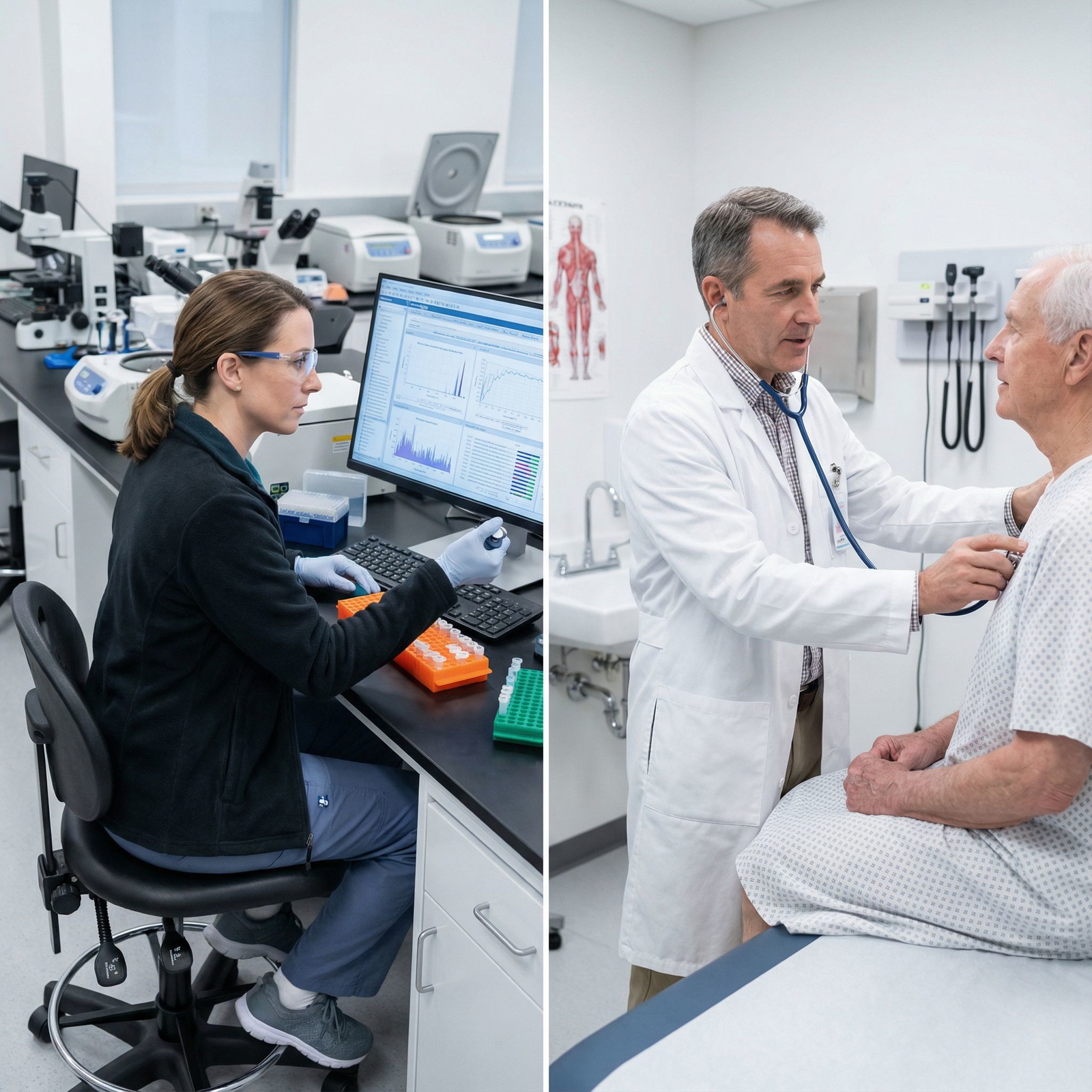
- MDs diagnose and treat patients, lead clinical teams, and deliver care in hospitals, clinics, and communities.
- PhDs generate new knowledge, develop and test interventions, and train future clinicians and scientists.
Both are crucial to advancing Medicine. One is not “better” than the other—they simply serve different functions.
How PhDs Contribute to Medicine
A PhD in medical sciences, biomedical sciences, epidemiology, or related fields is designed to turn you into an independent scientist. Common roles include:
- Designing and running experiments or studies
- Analyzing complex datasets and interpreting findings
- Writing grant applications and scientific papers
- Teaching and mentoring students and trainees
- Influencing clinical practice and policy through evidence
PhD-trained scientists expand the frontiers of knowledge—discovering new mechanisms of disease, testing innovative therapies, and evaluating health systems and public health interventions.
How MDs Contribute to Medicine
An MD is a professional clinical degree that prepares you to:
- Diagnose illnesses and injuries
- Develop and implement treatment plans
- Perform procedures and surgeries
- Communicate with patients and families about complex decisions
- Coordinate care across teams and specialties
MDs translate scientific evidence into real‑world clinical decisions, often in time-sensitive, emotionally charged situations.
In short:
- PhD: Generate knowledge
- MD: Apply knowledge to individual patients
Many people are drawn to both roles—which is where dual MD/PhD training comes in (covered later).
2. Training Pathways: What Your 5–12 Years Will Actually Look Like
Understanding the structure, timeline, and demands of each pathway is essential. You’re not just choosing a degree; you’re choosing how you’ll spend a substantial portion of your 20s and 30s.

PhD in Medicine / Biomedical or Health Sciences
Typical Duration: ~4–7 years (varies by country, specialty, and progress)
Core PhD Training Components:
Foundational and Advanced Coursework (1–2 years)
- Biostatistics, research methods, ethics, discipline-specific content (e.g., immunology, neuroscience, epidemiology).
- Often includes seminars and journal clubs to build critical appraisal skills.
Qualifying / Comprehensive Examinations
- Written and/or oral exams testing depth and breadth of knowledge.
- Often required to advance to “candidacy” status.
Original Research and Dissertation (3–5+ years)
- Designing and executing a novel research project under faculty supervision.
- Data collection, analysis, troubleshooting experiments or protocols.
- Writing and defending a dissertation and publishing in peer‑reviewed journals.
Teaching and Mentorship
- Many PhD candidates serve as teaching assistants.
- Some supervise undergraduate or master’s students in the lab.
Nature of Training:
- Highly self‑directed, with your progress tied to milestones rather than fixed calendars.
- Success depends heavily on mentorship, lab environment, and funding stability.
MD (Doctor of Medicine)
Typical Duration:
- Medical school: 4 years
- Residency: 3–7+ years depending on specialty (e.g., family medicine vs. neurosurgery)
Core MD Training Components:
Preclinical / Foundational Years (Years 1–2)
- Anatomy, physiology, biochemistry, pathology, pharmacology, microbiology.
- Increasingly integrated curricula with early patient contact and clinical skills labs.
- Focus on building a scientific foundation for clinical reasoning.
Clinical Rotations (Years 3–4)
- Rotations in internal medicine, surgery, pediatrics, obstetrics-gynecology, psychiatry, emergency medicine, and often electives.
- Direct patient care under supervision in wards, outpatient clinics, and emergency departments.
- Exposure to multiple specialties to inform residency choices.
Licensing Exams and Residency Match
- Standardized exams (e.g., USMLE, COMLEX, MCCQE, depending on country).
- Competitive matching into residency programs based on grades, exams, evaluations, research, and letters of recommendation.
Residency Training
- Full‑time clinical work with graduated responsibility.
- Long hours, on‑call shifts, and rigorous hands‑on training.
- Board certification exams at the end of training.
Nature of Training:
- Highly structured with clear schedules, rotations, and competency benchmarks.
- Physically and emotionally demanding, but intensely rewarding for those who thrive on patient interaction and teamwork.
3. Career Paths and Daily Work: What Your Life Actually Looks Like
Common Career Paths for PhD Graduates
Academic Researcher / Principal Investigator (PI)
- Employed in universities, medical schools, or research institutes.
- Writes grants, leads a lab, mentors trainees, publishes papers, and presents at conferences.
- Balance of research, teaching, and service (e.g., committees).
Industry Scientist (Biotech, Pharma, MedTech)
- Works on drug discovery, clinical trial design, medical devices, or diagnostics.
- More team‑oriented and product‑driven than academia.
- Roles in research & development, medical affairs, data science, or real‑world evidence.
Public Health / Policy / NGO Work
- Positions in government agencies, WHO, CDC, ministries of health, non‑profits.
- Uses research skills to shape health policy, surveillance systems, and large‑scale interventions.
Health Data Science and Consulting
- Analyzes clinical or population health data to support decision‑making.
- Roles in consulting firms, payers, health systems, or digital health startups.
Education and Administration
- Directing graduate programs, curriculum design, or institutional research offices.
- Teaching at undergraduate, medical, or graduate levels.
Typical Day for a PhD-trained Scientist (Academia Example):
- Morning: Lab meeting, reviewing experiment results, troubleshooting with trainees.
- Midday: Writing a grant or revising a manuscript.
- Afternoon: Teaching a seminar or meeting collaborators.
- Intermittent: Email, peer review, conference calls, administrative tasks.
Common Career Paths for MD Graduates
Primary Care Physician
- Family medicine, internal medicine, pediatrics, general practice.
- Long-term relationships with patients, preventive care, chronic disease management.
Specialist Physician
- Cardiology, oncology, surgery, anesthesiology, psychiatry, radiology, etc.
- Highly focused expertise with procedural or diagnostic emphasis.
Hospital or Health System Leadership
- Medical director, chief medical officer, quality improvement leadership.
- Overseeing clinical operations, safety, and system performance.
Public Health and Global Health
- Clinical care in underserved areas, NGO work, or governmental health agencies.
- Combining clinical expertise with program design and leadership.
Non-Clinical Careers
- Health informatics, medical education, consulting, pharmaceutical/biotech roles, media, or policy.
Typical Day for a Practicing MD (Outpatient Example):
- Morning: Office visits with scheduled patients, reviewing labs and imaging.
- Midday: Care coordination calls, electronic health record (EHR) documentation.
- Afternoon: Follow-up visits, addressing urgent issues, refilling prescriptions.
- Overall: Continuous patient interaction and clinical decision‑making.
4. Key Decision Factors: How to Choose the Right Path for You
1. Passion: Knowledge Discovery vs. Direct Patient Care
You may be better suited for a PhD if you:
- Feel energized by unanswered questions and complex problems.
- Enjoy designing experiments, coding, statistics, or critical reading of literature.
- Are comfortable working on long‑term projects with delayed gratification (e.g., years to complete a study).
- Enjoy writing and communicating scientific findings.
You may be better suited for an MD if you:
- Are deeply motivated by face‑to‑face patient care and seeing direct impact.
- Find clinical problem‑solving and diagnostic puzzles satisfying.
- Tolerate—or even thrive in—high‑pressure environments with rapid decisions.
- Want to be on the front line of patient advocacy and care delivery.
Many people like both. If you truly enjoy both worlds, consider:
- MD with strong research involvement
- MD/PhD combined programs (see FAQ)
- PhD followed by clinical training (or vice versa, depending on country regulations)
2. Work Environment and Culture
Typical PhD Environment:
- Labs, offices, conferences, and seminars.
- Collaborative but can be competitive for funding and publication.
- Flexibility in daily schedule, but intense around grant deadlines and experiments.
- Success metrics: publications, funding, impact of research.
Typical MD Environment:
- Hospitals, clinics, operating rooms, emergency departments.
- Fast‑paced, team‑oriented, heavy patient interaction.
- Less autonomy over schedule, especially early in career (residency/fellowship).
- Success metrics: patient outcomes, clinical competence, efficiency, team reputation.
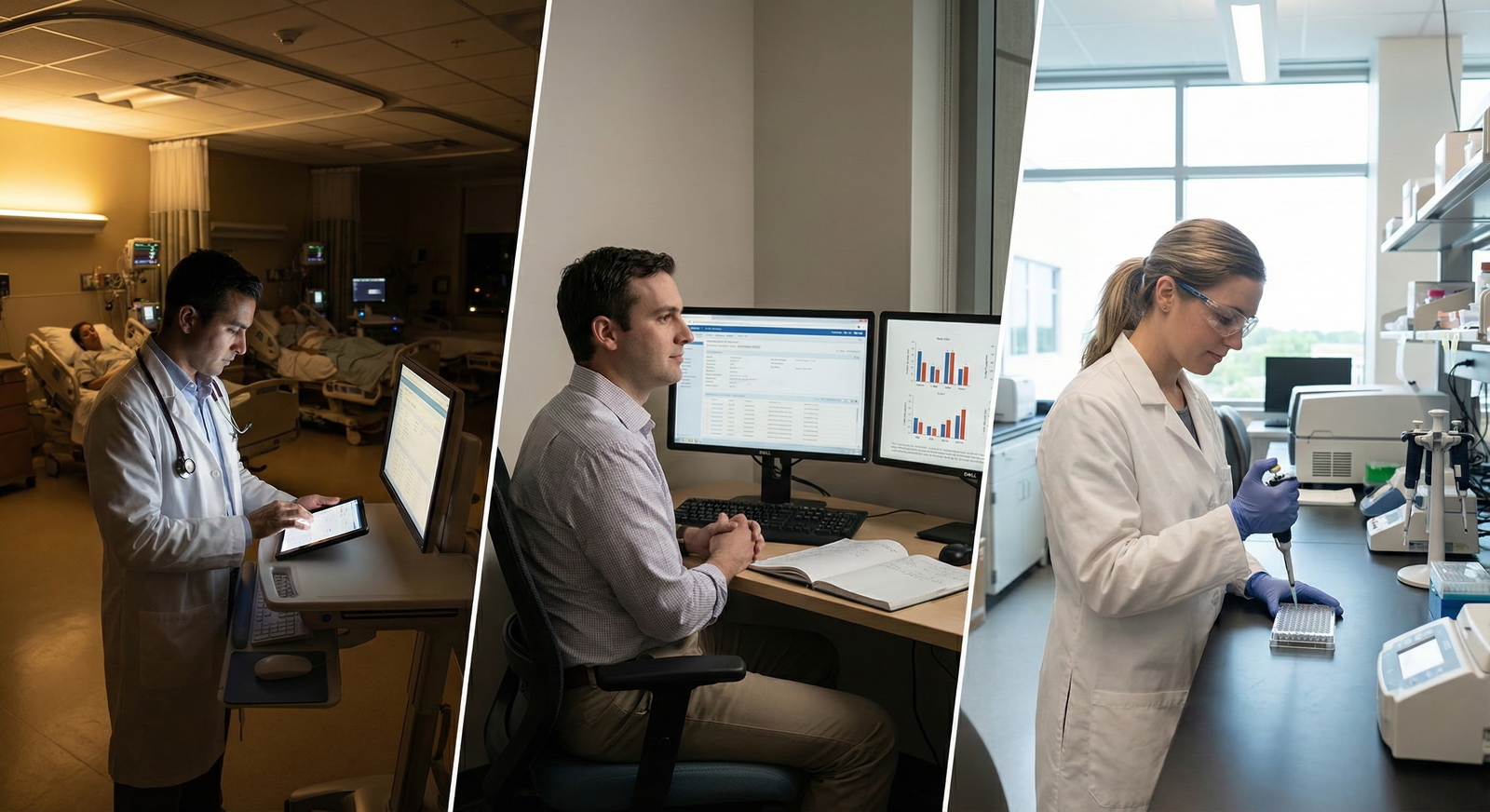
Ask yourself: Where do you want to be at 10 am on an average Tuesday—clinic, hospital ward, operating room, or lab/office?
3. Financial Considerations
PhD Financial Outlook:
- Many biomedical PhD programs offer tuition waivers and stipends.
- Stipends usually cover basic living expenses but are modest.
- Student debt may be lower, but earnings during training are limited.
- Postdoctoral and early‑career academic salaries are moderate and can be uncertain due to grant cycles.
- Industry roles often pay substantially more than academic positions.
MD Financial Outlook:
- Medical school often involves significant tuition and living expenses.
- Debt can be substantial, especially in countries with high tuition.
- Income during residency is modest but higher than a typical PhD stipend.
- Attending physician salaries are usually six figures (higher in some specialties and locations).
- Loan forgiveness or repayment programs may exist for primary care or underserved areas.
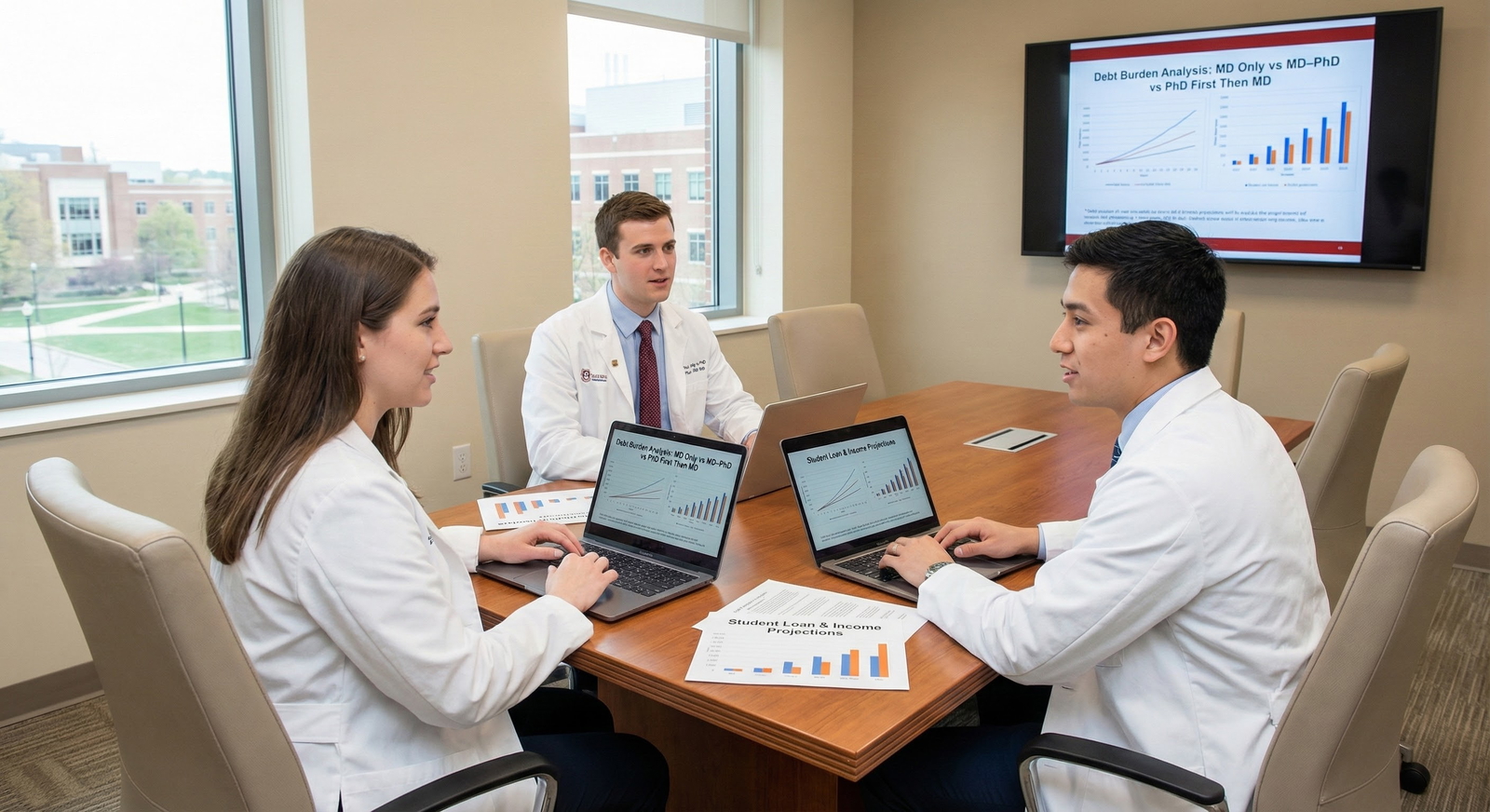
Financially, MDs tend to have higher earning potential, but also higher upfront costs and debt. PhDs may have less debt but a less predictable or lower salary curve, particularly in academia.
4. Lifestyle and Work–Life Balance
PhD Lifestyle:
- Often more flexible daily schedule; you may set your own hours to some extent.
- Peak workloads around experiments, thesis deadlines, and grant submissions.
- Potential to negotiate remote work or hybrid arrangements, especially in data-focused roles.
- International conference travel is common.
MD Lifestyle:
- Residency often involves long hours, nights, weekends, and holiday shifts.
- Post‑residency lifestyle varies widely by specialty:
- Dermatology, pathology, radiology, outpatient psychiatry: often more regular hours.
- Emergency medicine: shift-based with blocks of free time but nights/weekends.
- Surgical specialties: early mornings, long cases, call responsibilities.
- Boundary setting and burnout prevention require active effort.
Consider your tolerance for:
- Irregular hours vs. flexible self‑direction
- Physical fatigue vs. cognitive fatigue
- Emotional load from patient suffering vs. stress from funding and publication pressures
5. Case Examples: How Values and Interests Play Out in Real Life
Case 1: Sarah – PhD in Epidemiology
Sarah grew up watching family members struggle with chronic diseases that seemed to cluster in certain neighborhoods. During her undergraduate years, she became fascinated by patterns in health data and social determinants of health.
She chose a PhD in Epidemiology because she wanted to understand not just “What’s wrong with this one patient?” but “Why does this disease disproportionately affect this community?”
In her PhD, Sarah:
- Learned advanced statistics and causal inference methods.
- Worked with large health system databases and national surveys.
- Published papers on environmental exposures and regional disparities in chronic disease.
Today, Sarah:
- Holds a faculty position at a school of public health.
- Leads a research group analyzing real‑world data on air pollution and cardiovascular outcomes.
- Frequently advises local policymakers on urban planning and health equity.
Her impact is less visible to individual patients but profound at a population level.
Case 2: John – MD in Primary Care
John discovered his passion for patient care while volunteering at a free community clinic. He thrived on listening to patients’ stories and helping them navigate complex medical and social challenges.
He pursued an MD and matched into a family medicine residency.
During training, John:
- Managed a panel of patients across the life span—from newborns to older adults.
- Saw firsthand how social factors and mental health shaped physical health.
- Developed interests in preventive care and health education.
Today, John:
- Runs a primary care practice serving diverse families.
- Sees tangible improvements in his patients’ blood pressure, diabetes control, and quality of life.
- Mentors medical students interested in community-based practice.
His work is grounded in relationships, continuity, and direct impact on individual lives.
6. Strategic Advice: How to Explore and Decide
Get Real Exposure Early
Before committing to either track, actively seek experiences that simulate the day‑to‑day reality:
For PhD-curious students:
- Join a research lab as an undergraduate or medical student.
- Complete a research thesis, summer program, or research year.
- Ask to shadow PhD students and postdocs; attend lab meetings and journal clubs.
For MD-curious students:
- Volunteer in hospitals or community clinics.
- Shadow physicians in multiple specialties.
- Talk candidly with residents about their schedules and stressors.
Talk to People 5–15 Years Ahead of You
Ask about:
- What they love about their work
- What frustrates them
- What they wish they’d known before choosing their path
- How their career has evolved compared to their expectations
You’ll get a more realistic view than from glossy brochures or websites.
Consider Hybrid or Flexible Paths
If you’re genuinely drawn to both:
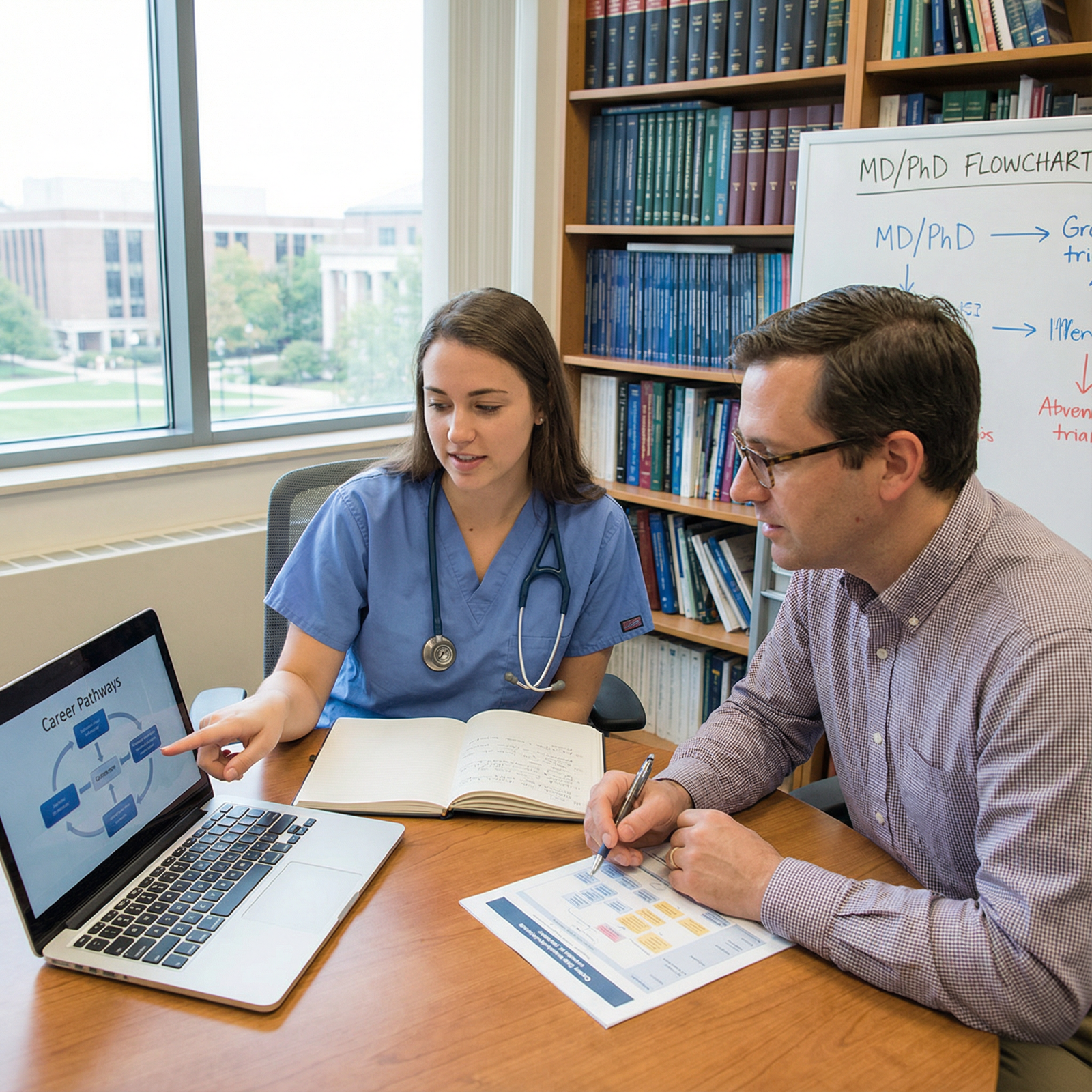
MD/PhD Programs:
- Integrated training in clinical medicine and research.
- Typically 7–9 years before residency.
- Prepare you for careers as physician‑scientists, often in academic medical centers.
MD with Research Training (e.g., Research Fellowships, Master’s, PhD later):
- Many MDs pursue additional research degrees or significant research time during or after residency.
- Especially common in academic medicine and highly competitive specialties.
PhD with Clinical Adjacent Roles:
- Clinical trials methodology, translational research, implementation science, informatics.
- Frequent collaboration with clinicians without being a practicing physician.
Align with Your Core Values
Reflect on:
- How do you define “making a difference”?
- What type of problems do you enjoy solving—molecular/mechanistic, population-level, or bedside clinical puzzles?
- How important are income, prestige, location flexibility, and schedule control?
- How do you handle uncertainty and delayed gratification?
Write down your answers and revisit them as you talk to mentors and gain experience.

FAQ: Common Questions About PhD vs. MD Paths in Medicine
1. Can I pursue both degrees (MD/PhD), and who is this ideal for?
Yes. MD/PhD programs (often called physician‑scientist training programs) are specifically designed for students who want substantial involvement in both clinical practice and research.
They are ideal if you:
- Genuinely enjoy both bench or clinical research and direct patient care.
- Envision a career in academic medicine, leading a research program while seeing patients part‑time.
- Are prepared for a long training period (often 7–9 years before residency).
MD/PhD graduates often work in:
- Academic medical centers
- Translational research institutes
- Leadership roles in clinical trials or drug development
If you are unsure, you can also start with an MD or PhD and add the other degree later—but combined programs are more integrated and may offer funding support.
2. What background do I need to enter a PhD program in medical or health sciences?
Most PhD programs in Medicine, biomedical sciences, or public health expect:
- A bachelor’s degree (and sometimes a master’s) in a related field (biology, chemistry, engineering, statistics, public health, etc.).
- Evidence of research experience: lab work, a thesis, publications, or significant project work.
- Strong academic record and letters of recommendation emphasizing research potential.
However, programs increasingly value diverse academic backgrounds (e.g., computer science, economics, sociology) if you can clearly articulate how your skills apply to health or biomedical research. If your background is non‑traditional, gaining research experience and completing prerequisite coursework can strengthen your application.
3. How competitive are MD and PhD applications, and what makes a strong applicant?
Both are competitive, but they emphasize different strengths.
MD applications prioritize:
- Strong GPA and standardized test scores (e.g., MCAT, local equivalents)
- Clinical exposure and shadowing experiences
- Demonstrated commitment to service and patient care
- Personal statements and interviews that convey empathy, resilience, and maturity
PhD applications prioritize:
- Academic performance, especially in relevant coursework
- Depth and quality of research experience
- Strong mentor recommendations describing curiosity, perseverance, and independence
- A clear, focused statement of purpose aligning with program faculty interests
For combined MD/PhD programs, you need to show:
- Both clinical motivation and robust research potential.
- A coherent vision for how you’ll integrate the two roles.
4. Is work–life balance realistically achievable for PhDs and MDs?
Yes, but it looks different in each path and requires active, ongoing effort.
For PhDs:
- You may have more control over your daily schedule, especially post‑training.
- However, pressure to publish and secure grants can blur boundaries and lead to overwork.
- Setting limits on work hours, learning to say no, and working in supportive environments are critical.
For MDs:
- Residency is often intense, with less flexibility and long hours.
- After training, specialty choice has a major impact:
- Some specialties are more compatible with part‑time work or predictable schedules.
- Others, especially surgical and acute care fields, are more demanding.
- Many physicians successfully maintain families, hobbies, and outside interests by setting boundaries, using team‑based care models, and choosing practice settings that align with their values.
In both careers, burnout is a real risk. Choosing a path that genuinely fits your interests, strengths, and temperament is one of the best preventive strategies.
5. Can I switch paths later if I change my mind?
Switching is possible but may be time‑consuming:
From PhD to MD:
- You must apply to medical school like any other candidate, fulfilling all prerequisites and exams.
- Your PhD can be an asset, especially if aligned with Medicine, but clinical exposure is still essential.
- Some schools may offer advanced standing or shortened programs in rare cases, but this is not guaranteed.
From MD to PhD or research-focused career:
- Many MDs pursue a PhD or a master’s in clinical research, public health, or related fields later.
- Others transition into research careers through fellowships or protected research time.
The more intentional you can be up front, the better. But it’s important to know that careers can evolve in unanticipated but rewarding directions.
Deciding between a PhD and an MD in Medicine is not simply a matter of prestige or salary; it’s about aligning your training and daily work with what energizes you most—whether that’s uncovering mechanisms in the lab, shaping public health policy, or advocating for an anxious patient in the clinic.
Take time to explore, reflect, and talk with people further along each path. Whichever journey you choose—PhD, MD, or a combination—you’ll be contributing to an evolving, vital field that touches lives on both individual and global scales.