The Journey of a Lifetime: PhD vs. MD – How to Choose Your Path in Medicine and Research
Choosing between an MD and a PhD is one of the most consequential decisions in a medical or science student’s life. It defines not only what you study, but how you work, whom you serve, and how you’ll spend your days for decades to come.
Both degrees are prestigious, demanding, and deeply impactful—but they prepare you for very different roles. Understanding those differences clearly is essential before you commit years of training to either path.
This guide breaks down the MD vs. PhD decision from the perspective of medical education, research opportunities, career paths, lifestyle, and personal fulfillment—so you can make a choice that truly fits who you are and the future you want.
MD vs. PhD: Foundations, Training, and Core Purpose
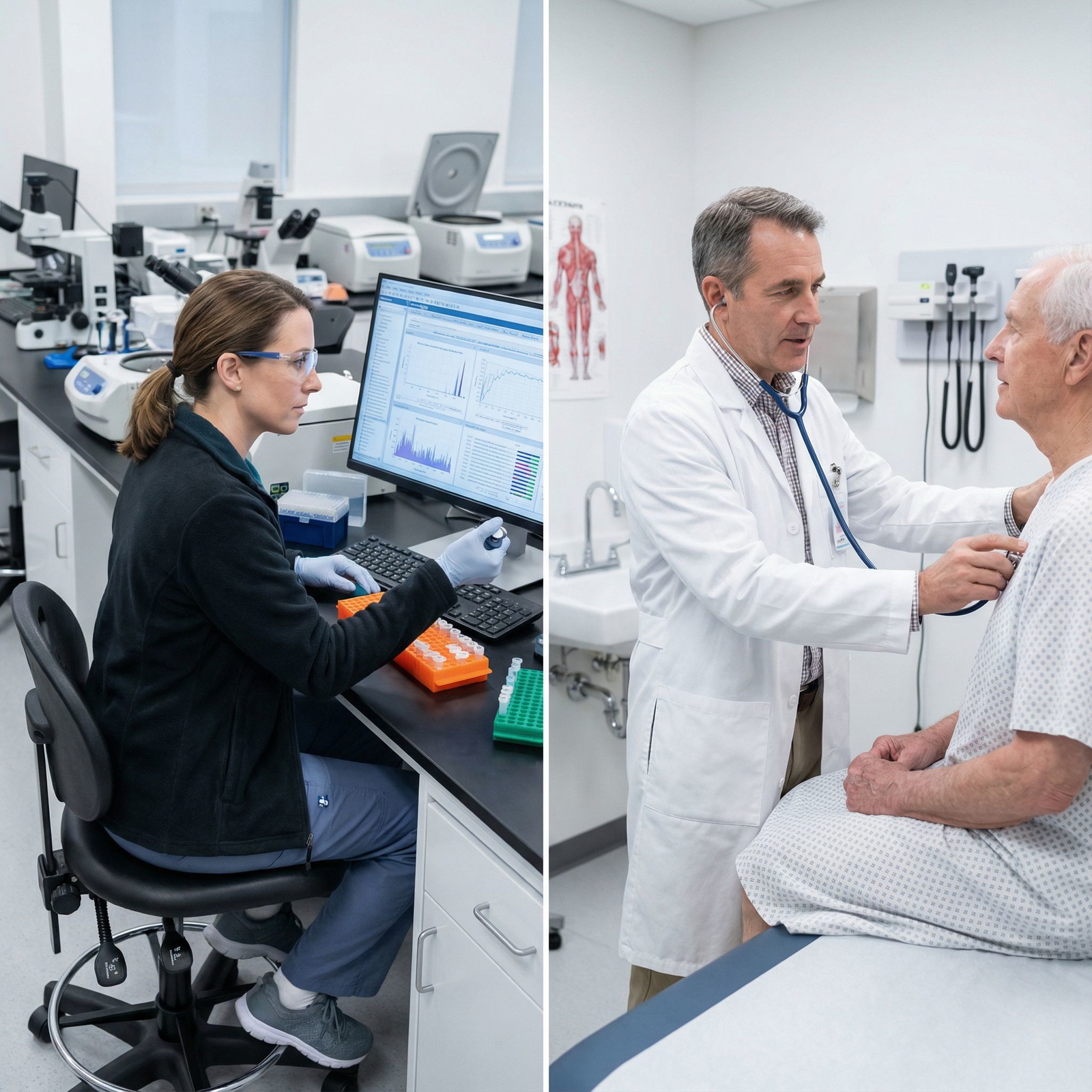
What Is an MD? A Degree Centered on Patient Care and Clinical Practice
An MD (Doctor of Medicine) is a professional degree that prepares you to become a practicing physician. The central focus is diagnosing, treating, and preventing disease in individual patients and populations.
Typical MD training pathway (North America model):
Undergraduate education (4 years)
- Major can be in any discipline, but you must complete pre-med prerequisites (biology, chemistry, organic chemistry, physics, math, often biochemistry and psychology).
- Competitive GPA and strong MCAT scores are usually required.
Medical school (4 years)
- Pre-clinical years (years 1–2):
- Foundational sciences (anatomy, physiology, pharmacology, pathology, microbiology).
- Early clinical skills (history taking, physical exam, communication, ethics).
- Clinical years (years 3–4):
- Core clerkships in internal medicine, surgery, pediatrics, psychiatry, obstetrics/gynecology, family medicine, and electives.
- Progressive responsibility in real clinical environments.
- Pre-clinical years (years 1–2):
Residency training (3–7+ years)
- Specialized postgraduate training in a field such as internal medicine, surgery, pediatrics, emergency medicine, psychiatry, radiology, etc.
- Board certification exams and licensure.
- Some pursue additional fellowships (1–3+ years) for subspecialization (e.g., cardiology, oncology, critical care).
Core identity of the MD:
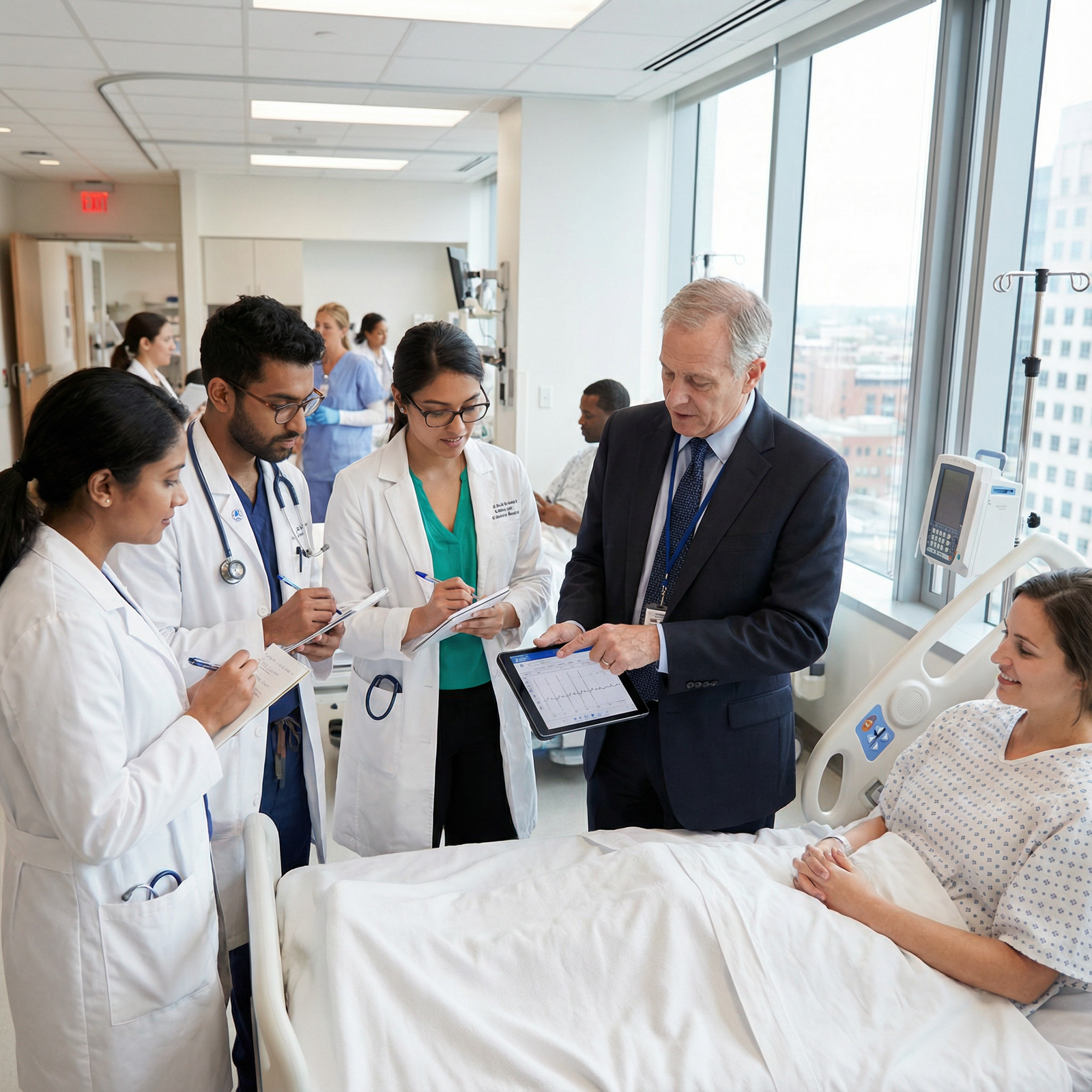
- Trained to care for patients and make real-time decisions that directly affect health and survival.
- Works in clinical settings: hospitals, clinics, emergency departments, operating rooms, and community practices.
- Applies existing evidence and clinical guidelines while sometimes contributing to clinical research.
What Is a PhD? A Degree Centered on Discovery, Evidence, and Expertise
A PhD (Doctor of Philosophy) is a research doctorate focused on generating new knowledge. In the health sciences, PhDs are awarded in disciplines such as biomedical science, epidemiology, pharmacology, neuroscience, public health, health policy, or medical education.
Typical PhD training pathway:
Undergraduate education (3–4+ years)
- Bachelor’s degree in a relevant field: biology, chemistry, neuroscience, engineering, psychology, public health, statistics, etc.
- Research experience (lab work, honors thesis, summer research) is highly valued.
Graduate school & PhD program (4–7+ years, often 5–6)
- Coursework (1–2 years):
- Advanced classes in your chosen field and related methods (e.g., molecular biology, statistics, epidemiology, qualitative methods).
- Training in scientific writing, grant writing, and research ethics.
- Qualifying/comprehensive exams:
- Written and/or oral exams to demonstrate mastery of the field.
- Original research & dissertation (3–5+ years):
- Design and execute a substantial research project.
- Generate new data or concepts.
- Publish work in peer-reviewed journals.
- Defend your dissertation before a committee.
- Coursework (1–2 years):
Core identity of the PhD:
- Trained to ask deep questions, design rigorous studies, and push the boundaries of what is known.
- Works in labs, research centers, universities, think tanks, government, or industry R&D.
- Focuses on innovation, data analysis, theory-building, teaching, and mentorship.
Key Factors in the MD vs. PhD Decision

1. Passion: Patient Care vs. Discovery (or Both)
The most important question is not “Which degree is better?” but “What kind of work energizes me on a daily basis?”
If you lean toward an MD:
You might:
- Feel drawn to direct patient interaction and building long-term therapeutic relationships.
- Enjoy fast-paced environments and making time-sensitive decisions.
- Want to apply science to real people and see immediate impact—relieving pain, saving lives, supporting families.
- Prefer structured training with clear milestones (clerkships, residency levels, board exams).
Clinical medicine still involves learning and teaching, but your primary contribution is to individual patients and clinical systems.
If you lean toward a PhD:
You might:
- Be excited by unanswered questions and complex problems.
- Enjoy designing experiments, analyzing data, and writing papers or grants.
- Thrive on long, deep projects rather than short episodic encounters.
- Feel satisfaction from creating knowledge or technologies that others (including MDs) will one day use.
Research can be slower in terms of visible impact—but your work can shape whole fields, influence guidelines, or transform treatments over time.
If you’re drawn to both:
You’re not alone. Many students feel equally passionate about patient care and research. In that case, consider:
- MD with strong research training (e.g., clinical research tracks, scholarly concentrations, research fellowships).
- MD-PhD (dual degree) for a formal physician-scientist career path.
- PhD with clinical collaboration (working closely with clinicians on translational or clinical research).
2. Career Goals and Long-Term Roles
MD Career Paths: Where an MD Can Take You
With an MD, your primary identity is as a clinician, but multiple tracks are available:
Full-time clinical practice
- Hospitalist, primary care physician, surgeon, emergency physician, anesthesiologist, psychiatrist, etc.
- Work in academic centers, community hospitals, private practice, or integrated health systems.
Academic medicine
- Combine:
- Clinical care (e.g., 50–80% of your time)
- Teaching medical students and residents
- Clinical or translational research
- Potential to advance into division chief, program director, department chair.
- Combine:
Public health and policy
- Roles in CDC, WHO, ministries of health, NGOs, or health systems.
- Focus on population health, health systems design, guideline development.
Leadership and administration
- Medical director, CMO, department leader, hospital executive.
- Work on quality improvement, patient safety, strategy, and operations.
Industry roles
- Medical affairs, drug/device development, clinical trials, health tech.
- Use your clinical expertise in pharma, biotech, medtech, or digital health.
PhD Career Paths: Where a PhD Can Take You
With a PhD, your primary identity is as a scientist or scholar:
Academic research and teaching (traditional route)
- Postdoctoral fellowship(s) (2–6 years after PhD).
- Faculty roles: assistant professor → associate professor → full professor.
- Run your own lab or research program; supervise students and trainees.
- Teach undergraduates, grad students, and sometimes health professions students.
Industry research and development
- Biotech and pharmaceutical R&D (drug discovery, preclinical research, clinical data science).
- Medical device or diagnostics companies.
- Tech and AI companies working on health-related products.
Government and public sector
- Research or policy roles at NIH, CDC, FDA, NIH-equivalents in other countries, or ministries of health.
- Design and evaluate programs; analyze health data; shape regulations.
Nontraditional and “alt-ac” paths
- Consulting (healthcare, life sciences, data science).
- Scientific communication, medical writing, or journalism.
- Intellectual property, patent law (with additional training).
- Health economics and outcomes research (HEOR).
A key difference: clinical licensure is tied to the MD, while research expertise and thought leadership are tied to the PhD. You can be a leader in healthcare without an MD, but you cannot legally practice medicine or independently manage patients without one.
3. Training Length, Structure, and Work–Life Balance
Both paths are long and intense—but in different ways.
MD: Intense, Structured, and Front-Loaded
Duration:
- 4 years medical school + 3–7 years residency (+ optional fellowship).
- Time to independent practice: typically 7–11 years after starting medical school.
Workload and schedule:
- Medical school: heavy studying, exams (e.g., USMLE/COMLEX or equivalents), clinical rotations with early mornings and call.
- Residency: long hours, nights, weekends; substantial responsibility and emotional stress.
- Post-training: variable; some specialties offer more regular hours, others have unpredictable call.
Work–life balance:
- Challenging during training.
- Improves for some specialties with experience and deliberate lifestyle choices, but medicine often remains demanding.
PhD: Long, Flexible, and Self-Directed
Duration:
- Often 5–7 years (sometimes shorter or longer depending on field, country, funding, and research progress).
Workload and schedule:
- High total workload, but generally more control over day-to-day schedule than clinical training.
- Intense periods (before deadlines, experiments, or defenses) balanced with pockets of flexibility.
- Success is tied to productivity (papers, grants), not just time spent.
Work–life balance:
- Highly variable—depends on lab culture, advisor expectations, and personal boundaries.
- More amenable to remote work, flexible hours, and part-time options in some roles after training.
A helpful question: Do you prefer a structured, externally defined path (MD) or a more open, self-directed path (PhD)? Both demand discipline; they just express it differently.
4. Financial Considerations: Cost, Debt, and Income
Money should not be the only factor, but it is a major practical consideration.
Cost of Education
MD programs:
- Tuition and fees can be substantial (commonly $30,000–$60,000+ per year in the U.S., often less in other countries or at public institutions).
- Living expenses add to the total cost.
- Many students graduate with six-figure debt.
PhD programs:
- Often fully funded (tuition covered + modest stipend) in STEM and many biomedical fields.
- You are effectively paid (modestly) to train and conduct research.
- Debt is usually much lower, especially if you manage finances carefully.
Income Trajectory
MD/physician:
- Delayed earnings due to long training and residency salaries.
- After residency/fellowship, earning potential is generally high.
- Many specialties: $200,000–$400,000+ annually in the U.S., with some higher.
- Income varies widely by specialty, location, and practice model.
PhD:
- Early-career pay (e.g., postdoc) can be modest.
- Tenure-track academic starting salaries (in biomedical fields) might be in the ~$70,000–$120,000+ range, depending on country and institution.
- Industry roles can be more lucrative (six-figure salaries possible), especially with data science, biotech, or leadership skills.
- Overall, median lifetime earnings are typically lower than MDs, but with much less educational debt and more variability by sector.
Think about:
- Your risk tolerance for debt.
- Your financial responsibilities (family, dependents).
- The kind of lifestyle you envision—not just income level, but also time and flexibility.
Personal Fulfillment: Matching Degree to Identity and Values

How Do You Want to Impact Patients and Society?
Both MDs and PhDs profoundly influence health, but in different ways and timeframes.
MD Impact
Direct, immediate, personal:
- Relieving pain in the emergency department.
- Delivering a baby safely.
- Guiding a family through a new cancer diagnosis.
- Managing chronic conditions over years.
System-level influence:
- Leading quality improvement initiatives, hospital policies, or health system reforms.
- Advocating for patient populations and health equity.
If you want daily, tangible stories of lives changed—and you are comfortable with high-stakes decision-making—this can be deeply satisfying.
PhD Impact
Broad, long-term, and often less visible day-to-day:
- Developing a new drug target, diagnostic test, or surgical tool.
- Creating better outcome measures, data systems, or AI models.
- Producing evidence that shapes clinical guidelines or health policy.
Educational impact:
- Training generations of students and junior scientists whose work will multiply your influence.
If you find meaning in building the foundations for tomorrow’s medicine, or shaping how entire populations receive care, this path can be profoundly rewarding.
Are You a Lifelong Learner—and in What Way?
Both MD and PhD careers demand continuous learning:
MDs:
- Ongoing CME (continuing medical education), board recertification, updating on new drugs, devices, guidelines.
- Learning primarily driven by clinical questions and patient care.
PhDs:
- Continuous engagement with the literature, new methods, and grants.
- Learning primarily driven by research questions and methodological innovation.
Reflect on which kind of learning environment you enjoy and can imagine sustaining over decades.
Real-World Stories: Two Different Journeys
The MD Journey: Sarah’s Path to Cardiology
Sarah loved human biology, but what truly moved her were people’s stories. During college, she volunteered in a homeless clinic and found deep meaning in listening, explaining, and advocating.
- She majored in biology and completed pre-med requirements.
- During medical school, she thrived on clinical rotations—especially cardiology—where she saw patients stabilize from acute heart attacks and return to their lives.
- Residency in internal medicine was grueling: long call nights, codes, complex ICU patients. But she loved being “on the front lines.”
- She pursued a cardiology fellowship, focusing on interventional procedures.
Now, as a cardiologist, her days are spent collaborating in a multidisciplinary team, performing life-saving interventions, and guiding patients in long-term heart health. Her research involvement is focused but limited—she participates in multicenter clinical trials and quality-improvement projects. Her primary fulfillment comes from seeing patients improve in real time.
The PhD Journey: James’s Path in Neuroscience Research
James discovered his passion in a different setting—a sophomore research lab, staring at brain imaging data.
- As a neuroscience major, he became fascinated by how neural circuits shape behavior.
- He joined a PhD program in neuroscience, where he spent years designing experiments, learning advanced imaging techniques, and publishing on new mechanisms of brain disease.
- A postdoctoral fellowship allowed him to refine his expertise in translational models for neurodegenerative disorders.
Today, as a principal investigator in a university-affiliated research institute:
- He leads a team of graduate students, postdocs, and technicians.
- His lab collaborates with clinicians, using patient samples and clinical data.
- He writes grants, attends conferences, and lectures to trainees.
James rarely interacts with patients directly, but his work has identified potential new therapeutic targets and contributed to early-phase drug development. His satisfaction lies in knowing his discoveries may one day alter the course of devastating diseases worldwide.
Both Sarah and James are improving lives—just through different careers, daily routines, and timelines of impact.
Actionable Steps to Decide Between MD, PhD, or Both
If you’re still uncertain, that’s normal. Use these concrete strategies:
1. Get Real Exposure
- Shadow physicians in multiple specialties: outpatient, inpatient, surgical, primary care.
- Work or volunteer in a lab for at least a year: wet lab, data science, public health, or clinical research.
- Seek mentors with MD, PhD, and MD-PhD backgrounds and ask:
- “What does a typical week look like for you?”
- “What parts of your job give you energy? What drains you?”
- “If you could start again, what would you choose?”
2. Reflect on Your Daily Preferences
Ask yourself:
- Do I want my main work product to be patient encounters and clinical decisions, or papers, grants, data, and teaching?
- Do I prefer solving problems in real time with incomplete data (common in clinics), or methodically over months/years with deep analysis (common in research)?
- How do I feel about unpredictable emergencies versus long projects with uncertain outcomes?
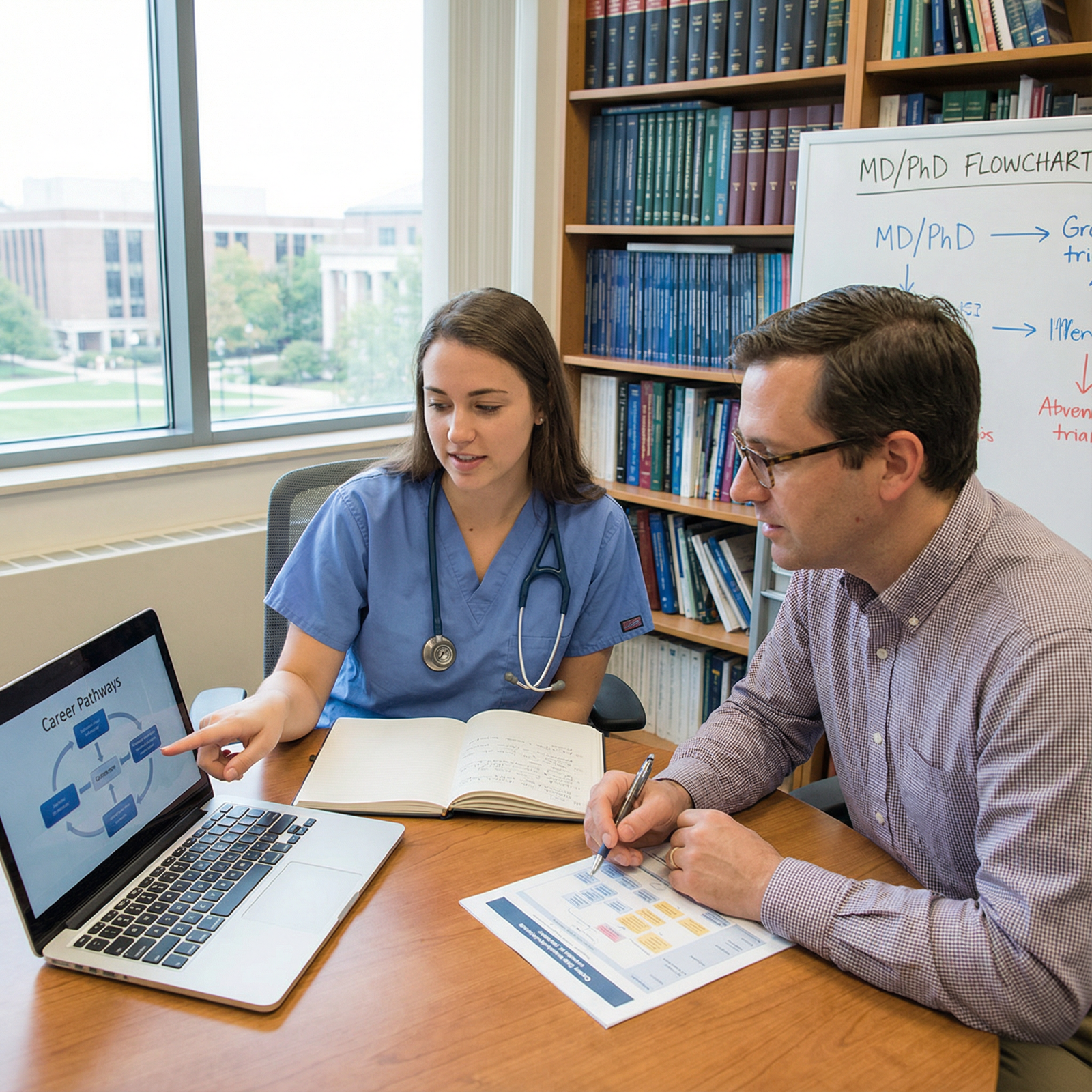
3. Consider MD-PhD and Hybrid Routes
If you genuinely feel equally drawn to both:
- Explore MD-PhD programs (e.g., MSTP in the U.S. or similar integrated programs elsewhere).
- Typically 7–9 years total (med school + PhD).
- Designed to train physician-scientists who split careers between research and clinical practice.
- Alternatively:
- Do an MD with a research-intensive residency/fellowship, or
- Do a PhD first, then apply to medical school (less common but possible), or
- Stay PhD-only and collaborate closely with clinicians in translational work.
Understand that MD-PhD is not “twice the prestige”; it is twice the commitment. Only pursue it if you truly want a dual career in both medicine and research.
4. Map Your Long-Term Vision
Write out:
- Where you’d like to be in 10–15 years:
- What does your ideal work day look like (hour by hour)?
- Who are you primarily interacting with (patients, students, data, colleagues, industry partners)?
- What problems are you working on?
- Then ask: Which degree(s) best match that vision?
Frequently Asked Questions (FAQs)
1. Can I pursue both an MD and a PhD?
Yes. MD-PhD programs and other dual-degree options exist specifically for students who want to be physician-scientists.
- Integrated MD-PhD programs:
- Often 7–9 years.
- Typically structured as: 2 years MD → 3–4 years PhD → final 2 years MD clinical rotations.
- Usually provide tuition support and a stipend.
- Graduates often pursue careers in:
- Academic medicine (running labs and seeing patients).
- Translational research.
- Leadership roles in clinical research and biotech.
However, this path is not required to do research as a physician, nor to work in health-related research as a PhD. It’s best for those who want research to be a major, sustained part of their professional identity.
2. Which path has higher job demand—MD or PhD?
It depends on field, location, and flexibility:
MDs:
- Ongoing demand for physicians in many regions and primary care specialties.
- Some residency spots and desirable specialties are highly competitive.
- Job prospects post-residency are generally strong, especially in underserved areas and non-ultra-competitive specialties.
PhDs:
- Academic faculty positions can be very competitive, especially in basic science fields.
- However, there is growing demand in:
- Biotech and pharma
- Data science and AI in healthcare
- Health policy, consulting, and outcomes research
- Versatility and willingness to explore non-academic roles improve job prospects.
Neither degree guarantees your ideal job; strategic planning, networking, and skills beyond the degree itself matter.
3. How long does it take to complete an MD compared to a PhD?
Approximate timelines (may vary by country):
MD:
- 4 years of medical school.
- 3–7 years of residency (plus optional 1–3 years fellowship).
- Total training after undergraduate: usually 7–11+ years until independent practice.
PhD:
- Typically 5–7 years after undergraduate for a research doctorate in biomedical or health-related sciences.
- Many then complete 2–6 years of postdoctoral training before securing a stable research position (especially in academia).
For dual MD-PhD programs, plan for about 7–9 total years of combined training before residency.
4. Do I need extensive research experience to apply to MD programs?
Not necessarily, but it helps:
- MD programs:
- Emphasize strong academics, clinical exposure, service, leadership, and clear motivation for medicine.
- Research is a plus, particularly for research-oriented or top-tier schools, but not always mandatory.
- MD-PhD programs:
- Expect substantial research experience (multiple years, publications or presentations if possible).
- You must demonstrate a clear commitment to research, not just clinical care.
If you are considering an MD-PhD or a research-heavy MD career, start seeking research opportunities early in your undergraduate or pre-med journey.
5. Is the financial aspect of either degree a significant barrier—and how can I manage it?
Finances matter, but there are strategies to mitigate barriers:
MD:
- Yes, cost and debt can be substantial.
- Strategies:
- Apply to schools with strong financial aid.
- Consider public or in-state institutions.
- Explore scholarships, service-based loan forgiveness (e.g., working in underserved areas), and military or government programs.
- Remember to consider lifetime earning potential, not just initial debt.
PhD:
- Many STEM and biomedical PhD programs provide tuition waivers and stipends.
- You will likely earn less during training compared to non-academic jobs but often graduate with minimal educational debt.
- Budgeting and financial planning are crucial, especially if you have dependents.
Run realistic projections: expected debt vs. expected income, and consider your comfort with different financial timelines.
Choosing between an MD and a PhD is not about which path is more prestigious—it’s about alignment: aligning your strengths, values, interests, and desired lifestyle with the training and career each degree offers.
Take the time to explore, reflect, and talk to people who are living the careers you’re considering. The journey is long in either direction—but when the path fits you well, it can be deeply meaningful and truly feel like the journey of a lifetime.