
Two years into her PhD, she was staring at a Western blot that refused to cooperate. Again. She whispered to me in the hallway, “I think I picked the wrong life. But if I quit now… every program will think I’m flaky, right?”
That same fear keeps looping in your head, doesn’t it? If I pivot from PhD to MD, will residency programs think I’m uncommitted, indecisive, or just not serious?
Let me just cut straight through the noise: no, switching from PhD to MD does not automatically brand you as “uncommitted.” But the way you explain it can absolutely make or break how programs see you.
The Fear Underneath The Question
Let’s be honest about what you’re actually scared of.
You’re worried that some PD in a dark room will pull up your ERAS, see “left PhD program” and instantly think:
- “They can’t stick with anything.”
- “They only like science when it’s convenient.”
- “They’ll bail when residency gets hard.”
You’re imagining them comparing you to the perfect, linear applicant: straight-through BS → MD, nothing messy, no detours, no signs of doubt.
And then there’s the worst-case spiral:
What if they think I’m just chasing prestige?
What if they think I wasn’t good enough for research so I bailed?
What if my old PI trashes me in a letter?
What if I look like a quitter forever?
I’ve seen all those worries. I’ve also seen people with way messier paths match into solid programs.
Here’s the uncomfortable truth: programs will notice you changed paths. But that doesn’t automatically hurt you. It just demands a coherent story.
How Programs Actually See Switching From PhD to MD
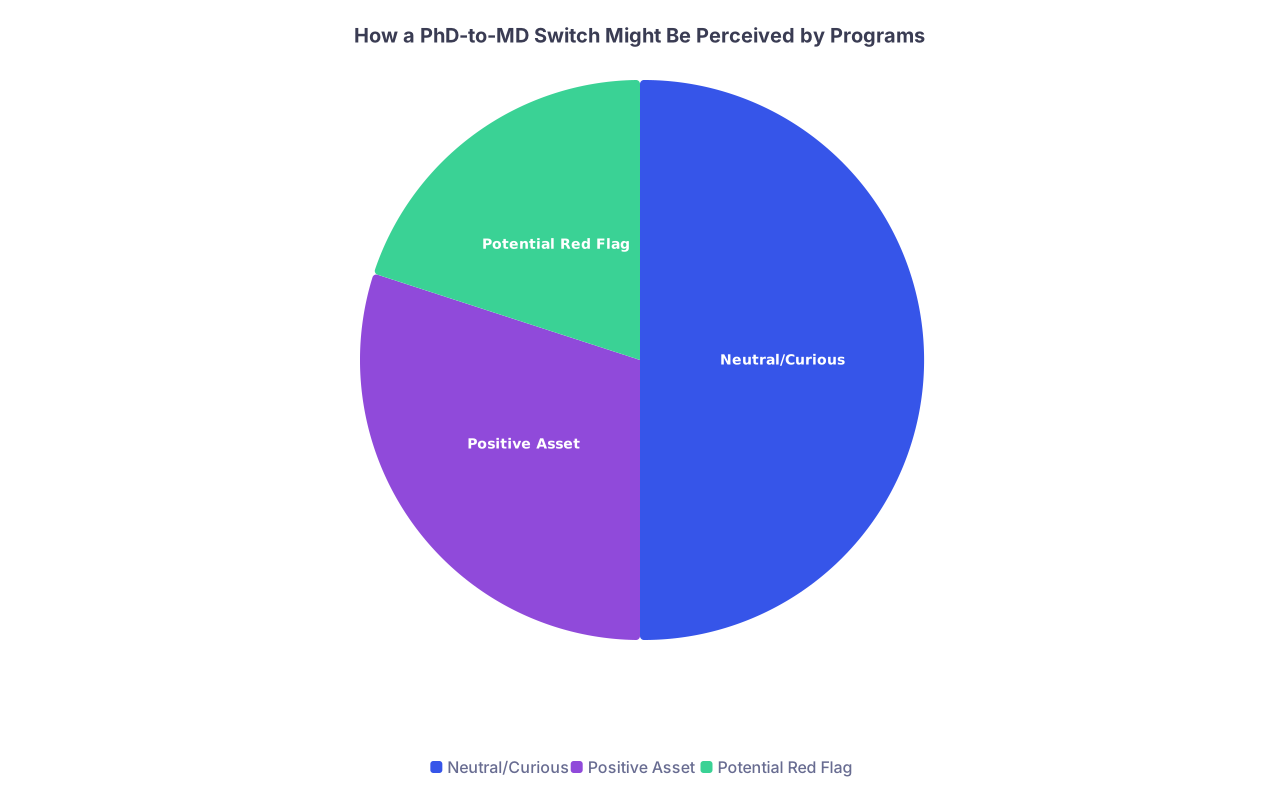
There are really three different ways this switch can land in a program director’s mind.
| Category | Value |
|---|---|
| Neutral/Curious | 50 |
| Positive Asset | 30 |
| Potential Red Flag | 20 |
About half the time? It’s neutral. A detail to ask about, not a verdict.
When It’s Mostly Neutral
If your path looks something like:
- You did a year or two of grad school
- You realized you want patient-facing work more than bench work
- You left cleanly (no academic misconduct, no catastrophic drama)
- You have at least one person from that world willing to vouch for you
…then most programs will just file this under: “Okay, they figured out what they actually want. Let’s see how they talk about it.”
They’re not hunting for perfection. They’re hunting for people who can show commitment now.
When It Actually Helps You
Here’s what quietly impresses them:
- You have a real understanding of research methods, stats, and how evidence is generated
- You’ve survived the grind of failed experiments, revisions, and criticism
- You can connect your PhD experience to how you’ll practice medicine (evidence-based, academic, teaching, etc.)
Especially for academic programs (IM, neuro, heme/onc, psych, etc.), a started-but-not-finished PhD is not a scarlet letter. It’s often a sign you’ve wrestled with big questions about your career.
I’ve watched PDs say things like, “At least they tried the full-time research life and know it’s not for them. That’s better than the starry-eyed kid who thinks they’ll magically be an R01 machine and a chief of surgery.”
When It Becomes a Red Flag
Let me be blunt: it can hurt you if your story looks like chaos.
For example:
- You’ve bounced between multiple degrees with no clear thread (MS → quit → PhD → quit → post-bacc → now MD)
- You trash-talk your old program, PI, or field
- You can’t articulate why you left beyond “I was bored” or “It was hard”
- Your letters suggest conflict, burnout, or unprofessional behavior
Programs are okay with change. They get nervous about instability.
Your job is to put your switch firmly in the “thoughtful decision” bucket, not the “impulse / meltdown” bucket.
Common Scenarios: Where Do You Fit?
Let’s walk through a few typical patterns. You’re probably close to one of these.

Scenario 1: Early-Stage PhD, Realization Hits
You did 1–2 years of PhD, maybe finished coursework, started lab rotations, maybe a small project. Then you realized: I actually care more about direct patient care than about optimizing this one protein purification step.
Programs usually see this as: perfectly normal. You got enough exposure to realize the day-to-day doesn’t match the life you want.
What helps you?
- You left in good standing
- You can describe specific experiences that nudged you toward clinical work (shadowing, volunteering, patient interactions, translational projects)
- You don’t sound like you’re running away from research; you’re moving toward medicine
Scenario 2: Advanced PhD, But You Didn’t Finish
This one scares people the most. You’re ABD (“all but dissertation”), years in, and you didn’t finish.
Programs will absolutely ask: “Why didn’t they complete?” They’re human.
But here’s what I’ve seen: if you can calmly explain:
- What year you left and what remained (e.g., “I had 1–2 manuscripts to finish, but my core interest had shifted to patient care.”)
- What changed in your goals and why
- How you’ve processed and accepted that decision (not still grieving it in a raw way)
…people move on. They might even respect that you cut your losses instead of sinking more years into a degree that no longer fit your goals.
Scenario 3: Structured MD/PhD → Transition to MD-Only
This is very common, and programs see it constantly. Dual-degree tracks are brutal. People realize they actually want to be clinicians first.
This is typically the least concerning, because:
- You were already vetted for medicine
- You were embedded in a medical education environment
- The MD side is already “in the bag” or in progress
Here the key is: showing you still respect research, you just don’t want it as your main identity.
What You Need To Do: The Story You Tell
Here’s the hard pill: just having a logical reason isn’t enough. You have to communicate it clearly, consistently, and without self-sabotage.
| Element | Weak Version | Strong Version |
|---|---|---|
| Reason for Leaving | “I didn’t like it” | “I realized I wanted direct patient care” |
| Tone About PhD | Bitter, blaming PI | Appreciative, but clear about misfit |
| Link to Medicine | Vague interest in “helping people” | Concrete experiences with patients |
| Evidence of Commitment | No follow-through activities | Long-term clinical volunteering/shadowing |
1. Own the Decision Without Self-Flagellation
Programs don’t want to see you groveling in your personal statement about how awful you feel for leaving. They want to see:
- You made a decision
- You learned from it
- You’re not likely to repeat the same pattern in residency
Something like:
“During my third year of PhD training, I realized I was consistently drawn more to the clinical questions behind our projects than to the long timelines of bench work. Shadowing in the neurology clinic, I found that working directly with patients combined the analytical thinking I enjoyed in research with a sense of immediacy and impact that I hadn’t found in the lab. After difficult conversations with my mentors, I made the decision to transition from a research-focused path to medical training.”
That’s responsible. Not dramatic.
2. Respect The PhD, Even If It Wasn’t Your Path
The fastest way to look immature is to trash your old life.
“I hated my PI.”
“Academia is toxic.”
“Bench work is pointless.”
You might feel that way. Don’t put it in your application. Don’t say it on interview day.
Instead:
- Acknowledge what you gained: discipline, analytic skills, understanding of evidence
- Admit the mismatch without contempt: “It wasn’t the right primary career for me”
- Make it clear you’re not anti-research; you’re just better suited elsewhere
Programs get nervous about people who burn bridges. You want to look like someone who can change direction without lighting the past on fire.
3. Show Long-Term Clinical Interest, Not a Sudden Panic Pivot
If your story is: “I hated my third year in lab and randomly decided on MD last January,” it will sound impulsive.
If instead you can point to:
- Years of intermittent shadowing
- Ongoing volunteering in clinical or community settings
- Times you gravitated toward clinical conferences, tumor boards, patient-facing projects
…then your switch looks like a clarification, not a sudden identity crisis.
This is where your activities list matters. It needs to back up your narrative.
4. Line Up the Right Letters
This part keeps people up at night: “Will my old PI destroy me?”
Honestly? Most don’t. Many are disappointed but professional. Some even respect the decision.
But you need to be strategic:
- Don’t use anyone who’s openly hostile about your leaving
- Do try to get at least one letter from someone in your PhD world who can say: “They were thoughtful, hardworking, and made a considered decision to pursue medicine.”
- Then add strong clinical/academic letters showing you’re flourishing in your new lane
Red flag is when every recommender seems confused about what you want.
The “Commitment” Question in Residency: What They Really Care About
Here’s the irony: programs aren’t actually obsessed with whether you stayed loyal to research forever. They care about:
- Will you show up to work?
- Will you complete the program?
- Are you going to be a nightmare when things get hard?
Your path from PhD to MD only matters insofar as it predicts those things.

| Step | Description |
|---|---|
| Step 1 | PhD to MD Switch |
| Step 2 | Red Flag |
| Step 3 | Viewed as Asset |
| Step 4 | Neutral but Watchful |
| Step 5 | Story Coherent |
| Step 6 | Good Performance Now |
If:
- You’ve done well in med school
- You haven’t bounced in and out of a dozen plans since
- You talk about the switch like a grown adult, not like a running-away fantasy
…then no, most programs are not going to brand you as “uncommitted.”
They’ll probably just ask in your interview: “Tell me about your transition from PhD to MD” and watch how you answer.
If you can say something calm, specific, and non-defensive, the topic usually dies right there.
What To Do Now If You’re Still In The PhD Or Just Left
This is the part where your anxiety is probably yelling: “What if I’ve already ruined it?” You haven’t. But you do need to be intentional.
| Category | Value |
|---|---|
| Clinical Exposure | 30 |
| MCAT/Academics | 30 |
| Research Wrap-up | 20 |
| Personal Reflection | 20 |
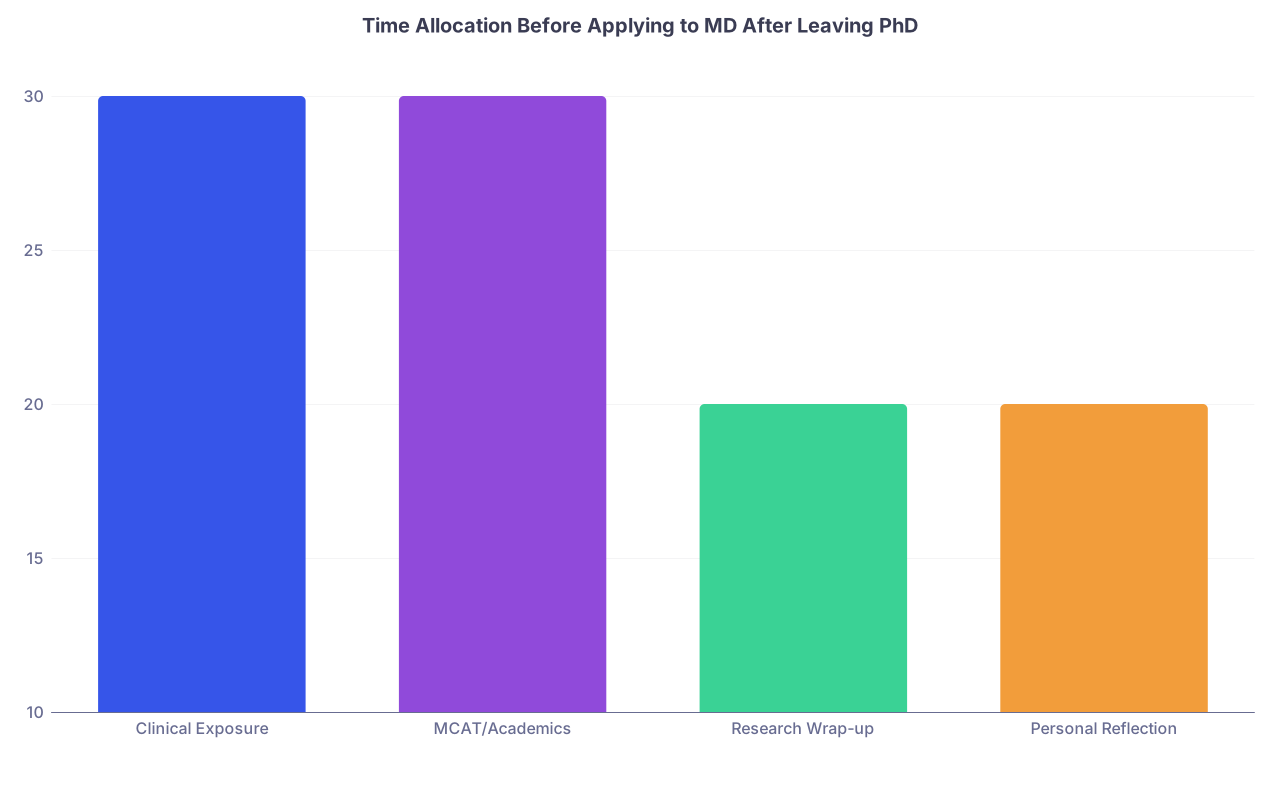
Use the time between leaving the PhD and applying to MD to:
- Get sustained clinical exposure (not just a one-week shadowing binge)
- Tighten up your academic profile (MCAT, post-bacc if needed)
- Close out anything from your PhD world as cleanly as you can (papers, projects, emails)
- Write out your narrative. Literally. A paragraph where you explain your path the way you’d want a PD to read it.
If you’re already in med school and worrying about residency: same idea, different scale. Your med school performance and clinical letters now carry more weight than your old program history.
Quick Reality Check: What Actually Gets People In Trouble
Here’s what I’ve actually seen tank applications far more than “left a PhD”:
- Failing multiple courses or boards without insight or remediation
- Unprofessional behavior, especially repeated
- Horrible interviews — defensive, blaming, vague
- Inconsistent stories across application, personal statement, and interview
- Cold, generic letters
Your past PhD path is not your biggest threat. Anxious you might be, but the data just doesn’t support that as the top problem.
FAQ (Exactly 4 Questions)
1. Will residency programs automatically think I’m a quitter because I didn’t finish my PhD?
No. They’ll notice it, and they’ll want an explanation, but it’s not an automatic “quitter” label. What matters is how you talk about it and what your trajectory looks like since then. If you left in good standing, have a clear reason tied to wanting clinical work, and show consistent commitment in med school, most programs will accept it as a thoughtful change in direction, not a character flaw.
2. Should I hide or downplay my PhD experience on my application?
Don’t hide it. That looks worse if it surfaces later, and you’re throwing away a major source of maturity and skills. You should be selective about how you frame it: emphasize what you learned (critical thinking, resilience, stats, scientific literacy), be honest but measured about why you left, and avoid bitter language. You’re curating the story, not erasing it.
3. Do I need a letter from my former PI or PhD advisor?
Not always, but it helps if the relationship is decent. A neutral-to-positive letter that says, “They worked hard, were thoughtful, and ultimately chose a better-fitting path,” is powerful. If the relationship is strained or you’re worried about sabotage, don’t use them; pick another faculty member from that environment who can speak to your professionalism. You’re not required to give programs a hostile narrator for your story.
4. What if interviewers press me and I start to feel defensive or emotional talking about leaving my PhD?
You need to practice this ahead of time. Write out a 3–4 sentence explanation. Say it out loud until it no longer spikes your heart rate. In the interview, keep your tone calm and matter-of-fact. Something like: “It was a hard decision, but it was the right one, and I’m grateful for what I learned there.” If they dig further, stick to specifics, not emotion dumps. Your goal isn’t to prove you suffered enough; it’s to show you’re clear-headed and stable now.
The bottom line? Switching from PhD to MD doesn’t brand you as uncommitted. What brands you is inconsistency, defensiveness, and a chaotic story.
If you can show that your path was a thoughtful recalibration, that you left your old world as cleanly as you could, and that you’re all-in on medicine now, most programs won’t see a quitter. They’ll see someone who was brave enough to correct course before it was too late.