PhD vs MD: Weighing the Benefits, Challenges, and Long-Term Impact of Each Path
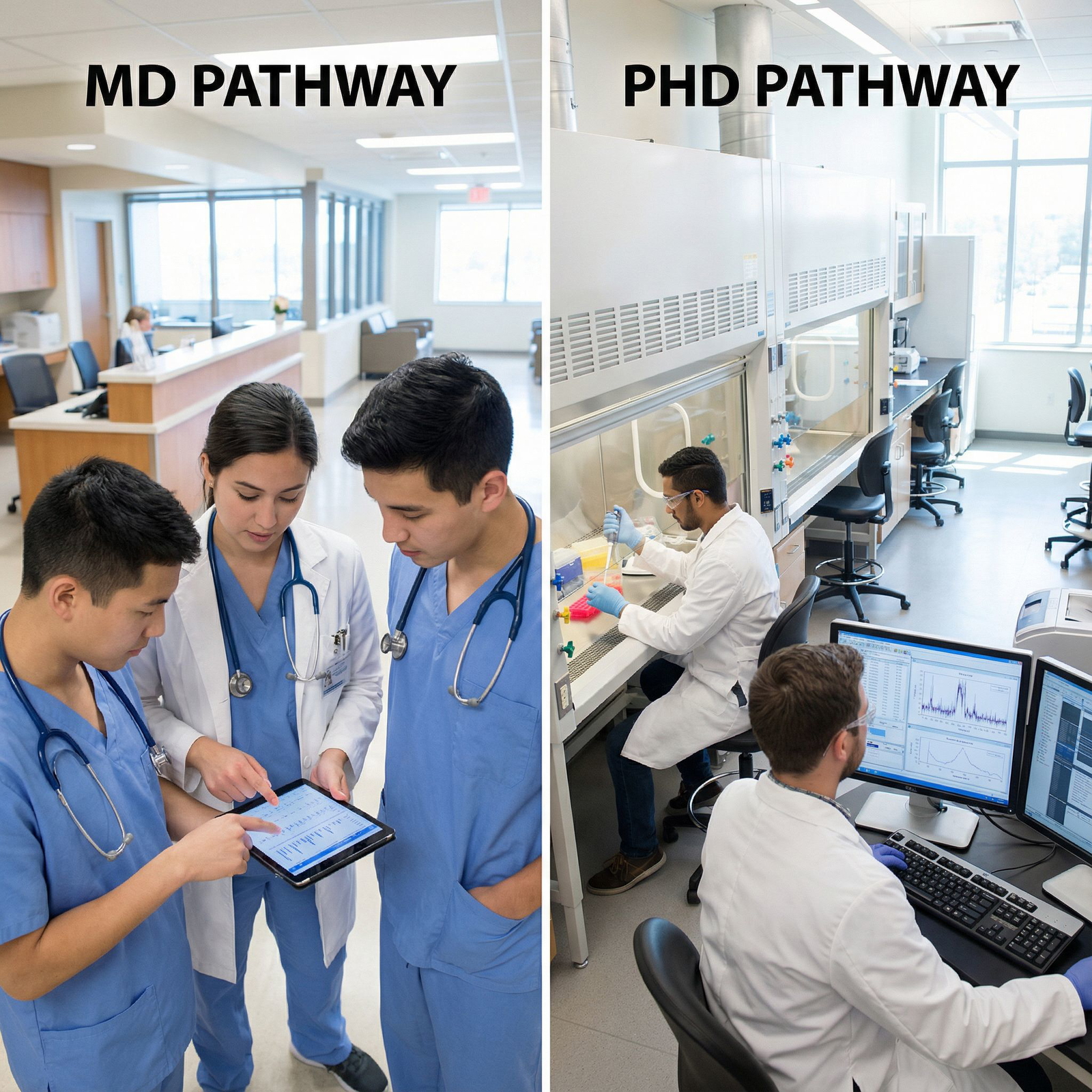
Choosing between a PhD vs MD is one of the most consequential decisions in Medical Education and Graduate Programs. Both degrees open doors to meaningful, intellectually demanding careers, but the day‑to‑day work, training experience, and lifestyle can be very different.
This guide walks you through what each degree involves, typical Medical Career Paths, the real benefits and drawbacks, and practical steps for Career Decision Making if you’re still on the fence—or considering an MD/PhD.
Foundations: What Do PhD and MD Degrees Actually Involve?
Understanding the structure and goals of each program is the first step toward making a grounded decision.
What Is a PhD in the Medical and Biomedical Sciences?
A PhD (Doctor of Philosophy) is a research doctorate focused on generating new knowledge. In the biomedical context, PhD programs train you to ask novel questions about biology, disease mechanisms, health systems, or policy—and to design rigorous methods to answer them.
Typical biomedical PhD areas include:
- Molecular and Cell Biology
- Neuroscience
- Immunology and Microbiology
- Pharmacology
- Epidemiology and Biostatistics
- Health Services Research and Health Policy
- Biomedical Engineering and Bioinformatics
Core Components of a Biomedical PhD Program
Deep Research Focus
You spend the majority of your time in a lab or research group, driving a long-term project that results in a dissertation and peer-reviewed papers. You are trained to:- Formulate testable hypotheses
- Design experiments or analytic approaches
- Analyze and interpret complex data
- Communicate findings in manuscripts and presentations
Advanced Coursework and Skills Training
Early in the program, you complete advanced coursework in your discipline, such as:- Molecular techniques, systems biology, or advanced imaging
- Biostatistics and research methods
- Scientific writing and grant proposal development
Program Length and Structure
- Average duration: 4–7 years, depending on field, project complexity, and funding
- Early years: coursework and lab rotations
- Later years: full-time research, dissertation writing, and publications
Typical Career Outcomes
Graduates often pursue:- Academic positions (assistant professor, research scientist)
- Industry R&D roles in biotech, pharma, or med-tech
- Government or nonprofit research (NIH, CDC, WHO)
- Roles in data science, consulting, health policy, or scientific communication
What Is an MD (Doctor of Medicine)?
An MD (or DO in osteopathic programs) is a professional doctorate that prepares you to diagnose, treat, and care for patients. The central goal is clinical competence and the ability to provide safe, effective medical care.
Core Components of an MD Program
Preclinical Education (Years 1–2 in many curricula)
- Foundational sciences: anatomy, physiology, pathology, pharmacology
- Early clinical skills: history-taking, physical exam, basic procedures
- Increasing use of integrated, systems-based and case-based learning
Clinical Rotations (Years 3–4 in many curricula)
- Core clerkships in internal medicine, surgery, pediatrics, obstetrics-gynecology, psychiatry, family medicine, and others
- Sub-internships and electives tailored to your interests (e.g., cardiology, emergency medicine, oncology)
Residency Training After the MD
- After graduation, you must complete a residency (and often fellowship) to practice independently
- Length: 3–7+ years, depending on specialty
- Family Medicine, Pediatrics, Internal Medicine: ~3 years
- General Surgery: ~5 years
- Neurosurgery: ~7 years
- Increasing responsibility, on-call shifts, and hands-on patient care
Typical Career Outcomes
MD graduates become:- Practicing physicians in outpatient or inpatient settings
- Surgeons and sub-specialists
- Physician leaders in hospital administration, quality improvement, global health, or public health
- Some also engage in teaching, clinical research, or health policy

Benefits of Each Path: What Do You Gain from a PhD vs MD?
Both degrees can lead to intellectually rich, impactful careers. The benefits differ in how you impact health, how you spend your time, and how your career evolves.
Key Benefits of Pursuing a PhD
1. Deep Engagement in Discovery and Innovation
If you are energized by questions more than by quick answers, a PhD offers unparalleled depth:
- You design and own long-term research projects
- You can work on foundational questions that may transform understanding of disease
- You contribute to the development of new drugs, diagnostics, algorithms, or health policies
Examples:
- Identifying a new biomarker for early cancer detection
- Developing AI tools for radiology image analysis
- Designing low-cost diagnostic tools for use in low-resource settings
2. Academic and Research Careers
A PhD is often essential for:
- Faculty roles (assistant/associate/full professor) in universities and medical schools
- Leadership positions in major research initiatives (e.g., NIH-funded centers, clinical trial networks)
In academia, you may:
- Teach and mentor undergraduate, graduate, and medical students
- Lead labs and research teams
- Compete for grants from NIH, NSF, foundations, or industry
3. Flexible and Diverse Career Options
Beyond academia, a biomedical PhD can lead to:
- Biotech and Pharma R&D – drug discovery, translational research, clinical trial design
- Data Science and AI – using large health datasets and machine learning
- Health Policy and Government – evidence synthesis, guideline development, regulatory work (FDA, EMA)
- Consulting and Strategy – advising healthcare and life sciences organizations
- Medical Writing and Communications – scientific publishing, regulatory writing, medical education content
This flexibility can be attractive if you value options and potential for career pivots over time.
4. Intellectual Autonomy and Long-Term Project Ownership
As you progress, you gain increasing autonomy in:
- Choosing research questions and methods
- Collaborating across disciplines and institutions
- Building your own research “niche”
For many, the opportunity to become a world expert in a narrow but impactful area is a major draw.
5. Integration with Emerging Technologies
PhD training in the biomedical sciences is often at the cutting edge of:
- Genomics, transcriptomics, and other omics
- Machine learning, big data analytics, and digital health tools
- Synthetic biology and gene editing (e.g., CRISPR)
If you envision yourself as a driver of scientific and technological innovation, the PhD path aligns closely with that role.
Key Benefits of Pursuing an MD
1. Direct, Immediate Impact on Patients’ Lives
The most distinctive benefit of an MD is direct clinical impact:
- Diagnosing life-threatening conditions in the ED or ICU
- Helping patients manage chronic disease over decades
- Providing comfort and guidance to families during critical moments
If you derive meaning from human connection, bedside conversations, and being there at life’s most vulnerable points, clinical practice can be profoundly fulfilling.
2. Wide Range of Specialties and Practice Settings
The MD opens a broad array of Medical Career Paths and lifestyles:
- Primary care (family medicine, internal medicine, pediatrics)
- Procedural specialties (surgery, interventional cardiology, gastroenterology)
- Cognitive specialties (neurology, rheumatology, endocrinology)
- Lifestyle-friendly fields (dermatology, outpatient psychiatry, some radiology positions)
- Nontraditional roles – administration, informatics, public health, telemedicine
This breadth allows for a high degree of personalization over time.
3. Strong Employment Demand and Geographic Mobility
Physicians are in demand across:
- Urban academic medical centers
- Community hospitals and private practices
- Rural and underserved areas nationally and globally
With an MD and licensure, you can often choose:
- Different regions or countries (with appropriate licensing)
- Practice settings (academic vs community, inpatient vs outpatient)
- Employment models (salaried employee vs independent contractor vs group practice partner)
4. Professional Recognition and Societal Trust
The MD is widely recognized and respected:
- Patients, families, and communities often look to physicians as trusted leaders
- The credential can facilitate influence in health systems, policy discussions, and media
This recognition can be leveraged to advocate for patients, champion public health initiatives, and lead organizational change.
5. Robust Earning Potential
While compensation varies:
- Many clinical specialties offer significantly higher average income than most purely research-focused roles
- Higher earning potential can:
- Facilitate faster debt repayment
- Provide financial flexibility for family planning, location choice, and retirement planning
However, income should be weighed against training length, debt load, and the intensity of clinical practice.
Challenges and Trade-Offs of Each Path
There is no “easy” option between PhD and MD. Each comes with substantial challenges that should factor into your Career Decision Making.
Challenges of Pursuing a PhD
1. Long, Uncertain Training Timeline
- While nominally 4–7 years, PhD duration can vary due to:
- Project setbacks or failed experiments
- Funding gaps or lab changes
- Scope changes in your dissertation
You must be comfortable with open-ended timelines and delayed financial stability.
2. Highly Competitive Academic Job Market
- There are more PhD graduates than tenure-track positions
- Many graduates spend years in postdoctoral fellowships with:
- Modest salaries
- Pressure to publish and secure grants
You need to be realistic about:
- The probability of a long-term academic position
- Alternative career paths you’d be happy with (industry, policy, data science, etc.)
3. Funding Dependency and Financial Constraints
- Many programs offer tuition waivers and stipends, but:
- Stipends are often modest, especially in high-cost cities
- Funding can be tied to grants that may not be renewed
- Financial stress can be a significant challenge, especially for students with families or existing debt.
4. Intellectual and Emotional Isolation
- Long hours at the bench or behind a computer, often on a narrow project
- Periods of negative data, paper rejections, or grant denials
- It’s easy to feel that progress is slow or invisible
Maintaining mental health, building community, and cultivating resilience are critical.
5. Pressure to Constantly Produce
- Success is frequently measured in:
- Number and impact of publications
- Grant funding won
- Conference presentations
Some individuals thrive in this environment; others find it draining. Consider your tolerance for prolonged uncertainty and external metrics of success.
Challenges of Pursuing an MD
1. Intense Academic and Clinical Demands
- Medical school requires:
- Massive information intake
- High-stakes exams (e.g., USMLE, COMLEX)
- Residency adds:
- Long shifts, overnight calls, frequent schedule changes
- Responsibility for very sick patients
This environment can lead to burnout, anxiety, depression, and impaired work–life balance if not managed proactively.
2. High Cost and Debt Burden
- Tuition and living costs can easily exceed six figures
- Many graduates carry substantial educational debt into residency and early practice
- Debt load can influence:
- Specialty choice (toward higher-paying fields)
- Willingness to pursue research or academic careers
- Major life decisions (housing, family planning, geographic mobility)
Research scholarship options, loan repayment programs, and service-based incentives (e.g., NHSC, military, rural practice programs) early.
3. Demanding Work Hours and Emotional Toll
- Shift work, nights, and weekends are common in many specialties
- You will be exposed to:
- Death, severe illness, trauma
- Moral distress (e.g., system limitations, resource constraints)
Physicians are at risk for burnout and compassion fatigue. You must prioritize self-care, boundaries, and support systems.
4. Regulatory, Licensing, and Credentialing Burden
- Multiple layers of exams and certifications:
- Licensing exams
- Board certification exams and recertification
- Hospital privileging and continuing medical education (CME) requirements
These are necessary but can be time-consuming and stressful alongside clinical duties.
5. Limited Control Early in Training
- As a medical student and resident, schedules and rotations are largely assigned
- Geographic flexibility may be limited by match outcomes and fellowship positions
- Only later in your career do you gain significant control over practice environment and workload.
Key Considerations Often Overlooked in PhD vs MD Decisions
Beyond prestige, income, or “what sounds impressive,” several nuanced factors can clarify which path is truly right for you.
1. What Type of Problems Do You Want to Solve Day-to-Day?
Ask yourself:
- Do you prefer conceptual, long-term questions like “How does this pathway contribute to cancer progression?” (PhD)
- Or immediate, practical problems like “What is the best management for this patient in front of me today?” (MD)
Both are vital, but they scratch different intellectual itches.
2. Your Tolerance for Uncertainty vs Structure
- PhD life:
- Flexible schedules, but experiments can fail unpredictably
- Fewer external guardrails; you create your own structure
- MD path:
- Highly structured training timeline and milestones
- Clear role expectations at each stage (student, intern, resident, attending)
Consider which environment you function best in.
3. Lifestyle Trajectory Over Time
PhD/Research Careers
- Grad school and postdoc: lower income, flexible but often long hours
- Later career variability: hours may become more predictable, but grant cycles and deadlines persist
Clinical Careers
- Training: intense hours, variable schedules, limited control
- Attending years:
- Potential for more control over schedule and location
- Some specialties allow part-time work or more stable hours
Talk with both senior researchers and attending physicians about what their weeks actually look like.
4. Impact Pathways: One Patient vs Many, Depth vs Scale
- MDs: deep, personal impact on individual patients and families
- PhDs: potentially broader, population-level impact via discoveries, technologies, guidelines, and policy
Neither is inherently “more meaningful”—but one may resonate more with your values.
5. Considering Dual-Degree Paths (MD/PhD and Others)
If you are strongly drawn to both patient care and research, MD/PhD or similar dual-degree programs may be worth exploring.
MD/PhD Programs: Training Physician-Scientists
- Typically 7–8+ years total
- Integrated training in both medicine and research
- Often offer tuition waivers and stipends
- Graduates often pursue:
- Academic medicine
- Translational research
- Leadership roles bridging bench and bedside
Other possible combinations:
- MD + MPH (public health)
- MD + MS (clinical research, informatics)
- PhD + MPH or PhD + MBA
These can position you at the intersection of clinical care, research, systems design, or policy.

Practical Steps for Making Your PhD vs MD Decision
To move from abstract pros and cons to a concrete decision, take these structured steps.
1. Get Real-World Exposure
- Shadow clinicians in different specialties
- Work in a research lab for at least a year (not just a short summer)
- Join journal clubs or research meetings
- Observe how you feel about:
- Clinical pace vs research pace
- Patient interaction vs data interaction
- Team dynamics in both environments
2. Talk with People 5–10 Years Ahead of You
Seek honest conversations with:
- Senior PhD students and postdocs
- Residents, fellows, and early-career attendings
- MD/PhD students and physician-scientists if you’re considering dual degrees
Ask questions like:
- “What surprised you most about your path?”
- “What do you like least, and how do you cope with it?”
- “If you could go back, would you choose this path again?”
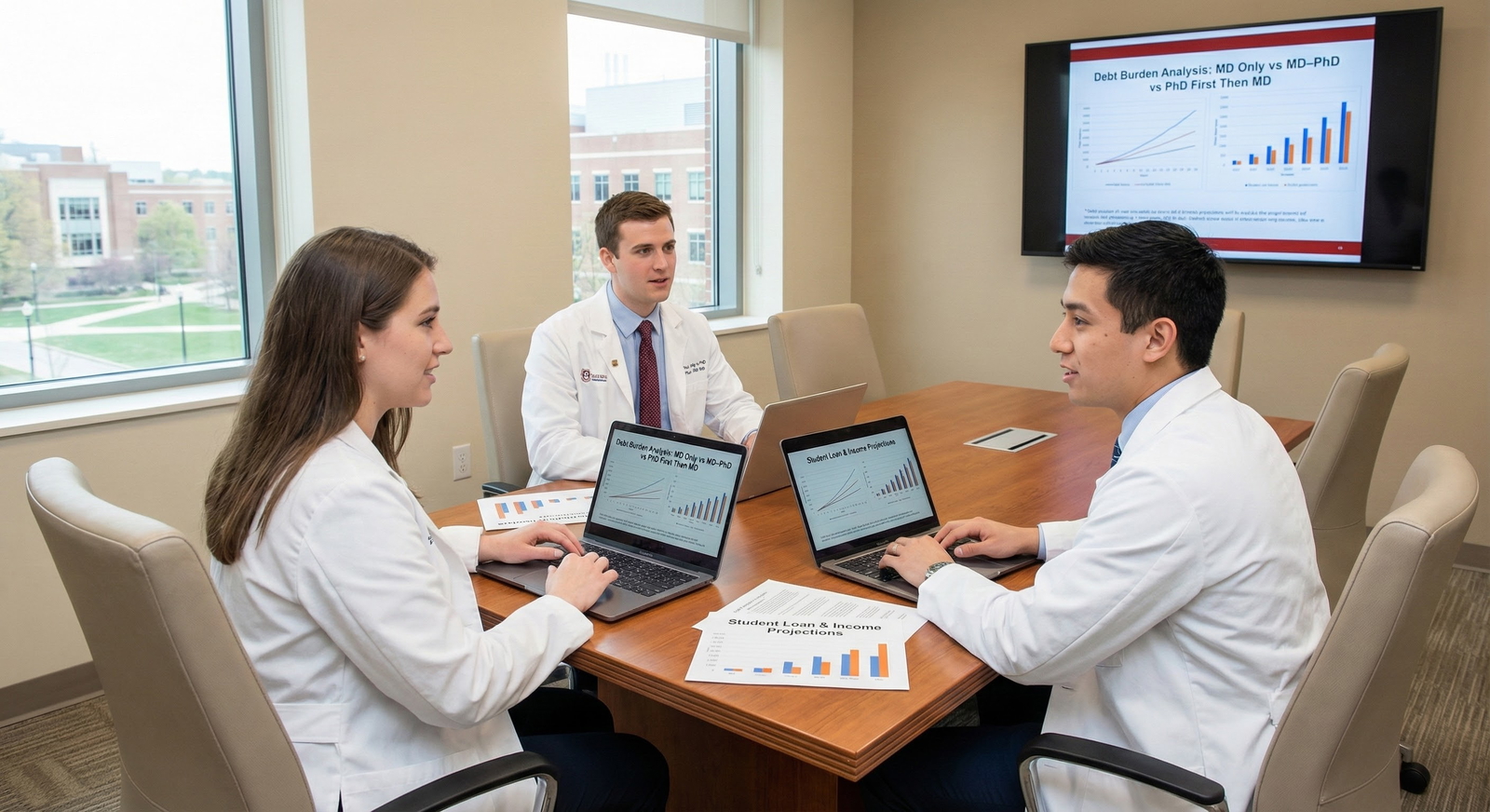
3. Map Out Financial and Time Commitments
Create a rough comparison:
- Years in training before stable income
- Estimated debt at graduation
- Typical starting salary range in your planned area
- Long-term earning potential and lifestyle flexibility
This is not about “maximizing money” but aligning financial reality with personal goals (family, location, hobbies, service).
4. Reflect on Your Motivations and Values
Ask yourself:
- What kind of “success” do I genuinely care about—titles, impact metrics, patient testimonials, scientific breakthroughs, work–life balance?
- What aspects of my current experience do I most look forward to each week?
- How do I handle failure and uncertainty now?
Writing this out can clarify patterns and preferences that guidance counselors or advisors might miss.
5. Accept That There Is No Perfect, Risk-Free Path
Every choice closes some doors and opens others. Many people also pivot:
- MDs may move into research, administration, or industry
- PhDs may move into clinical-adjacent roles, regulatory work, or health informatics
Focus on choosing the best fit for who you are now and who you reasonably want to become, not an imagined “perfect” career that doesn’t exist.
FAQs: Common Questions About PhD vs MD in Medical Education
1. Is a PhD or an MD “better” for a medical career?
Neither is inherently better; they serve different roles in the healthcare ecosystem.
- An MD is better if you want to diagnose and treat patients directly and build a primary identity as a clinician.
- A PhD is better if you want to focus on research, discovery, data, or policy and are less interested in day-to-day patient care.
Many impactful health leaders hold one or the other—or both.
2. Can I switch from a PhD path to an MD, or vice versa?
Yes, transitions happen, but they come with trade-offs:
- PhD to MD:
- You’ll still need to complete prerequisite courses and take the MCAT (or equivalent), then apply to medical school.
- Your research background can be an asset, especially for research-heavy med schools.
- MD to PhD:
- Some physicians return for PhDs or other research degrees later, especially if they want to lead labs or become physician-scientists.
Plan for additional time and financial considerations if you anticipate a potential switch.
3. Which path offers better job security?
- MDs generally have strong job security due to ongoing physician shortages in many regions and specialties.
- PhDs have solid prospects overall but the academic job market is competitive, and long-term roles may require flexibility (e.g., moving into industry, data science, or policy).
Think about the kind of security you value: steady clinical demand vs. flexibility across multiple research-related industries.
4. Are PhD programs funded? How does that compare to MD programs?
Biomedical PhD Programs
- Often provide tuition waivers and a living stipend, especially at research-intensive institutions.
- You may graduate with little to no additional educational debt, but your income during training is modest.
MD Programs
- Typically require substantial tuition payments, often financed by loans.
- Some MD/PhD programs and specific scholarships offer full or partial funding, but these are competitive.
Consider both upfront costs and long-term earnings, as well as where and how you want to live during training.
5. How do MD/PhD programs fit into this decision?
MD/PhD programs are designed for those who want to be physician-scientists, splitting their careers between clinical work and research. They are ideal if:
- You love both bench or data science and bedside care
- You want to lead or translate research that directly informs clinical practice
- You’re ready for a longer training period (often 7–9 years plus residency/fellowship)
These programs can be highly rewarding but are demanding; they are best suited to those with clear, sustained interest in both arenas.
By understanding the realities of PhD vs MD training, the typical Medical Career Paths that follow, and your own values and motivations, you can make a more confident, informed decision. Whether you ultimately choose Medical Education through clinical training, advanced research through Graduate Programs, or a combined route, the healthcare and biomedical fields offer many ways to build a career that is both impactful and personally meaningful.