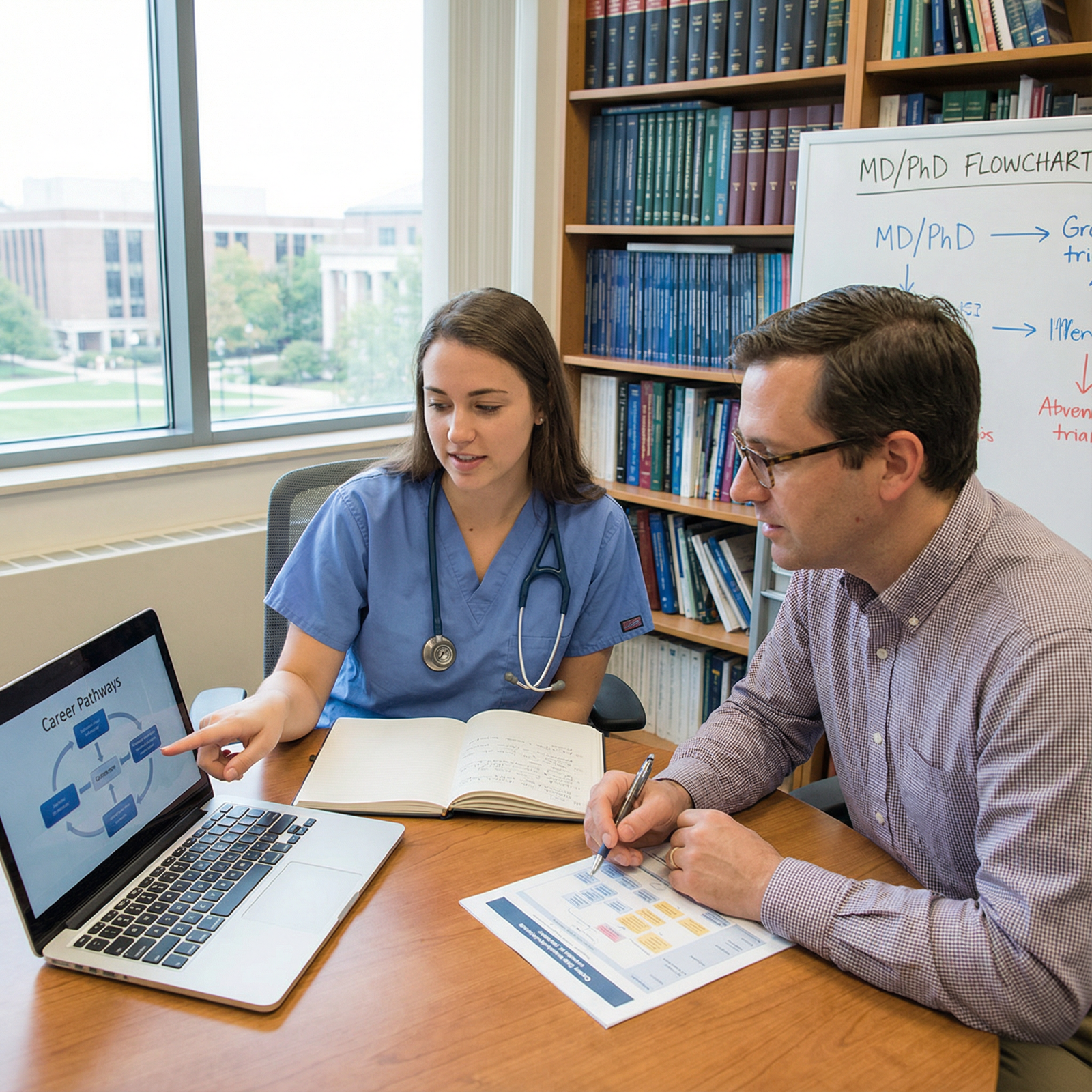
Understanding the Financial Implications of PhD vs. MD Career Paths
Choosing between a PhD (Doctor of Philosophy) and an MD (Doctor of Medicine) is one of the most consequential decisions for students interested in science, healthcare, and research. Beyond passion and aptitude, the choice has long-term consequences for your finances, lifestyle, and professional trajectory.
Both career paths are prestigious and impactful, but they differ markedly in:
- Upfront education costs
- How and when you earn income
- Typical debt burden
- Long‑term earning potential
- Career flexibility and job security
This expanded guide walks through each of these issues in detail so you can make a deliberate, financially informed decision about your future Career Path.
PhD vs. MD: Core Training and Career Focus
Before comparing the dollars and cents, it’s critical to understand what each degree actually prepares you to do.
The PhD Journey: Training for Discovery and Scholarship
A PhD is fundamentally a research degree. The primary goal is to create new knowledge, whether in biomedical science, health policy, epidemiology, neuroscience, or another field.
Typical structure of a PhD program in a biomedical or health-related field:
- Duration:
- Commonly 4–6 years in the U.S.
- Some programs (especially in Europe and the UK) are structured as 3–4 years after a prior master’s.
- Early years (coursework & rotations):
- Advanced coursework in your discipline (e.g., molecular biology, biostatistics, health economics).
- Lab or research rotations to identify a thesis advisor and research topic.
- Later years (dissertation research):
- Full-time research, data collection, writing, and publishing.
- Culminates in a dissertation and an oral defense.
Primary career orientations after a PhD:
- Academic careers (postdoc → assistant professor → tenure-track)
- Research careers in industry (e.g., biotech, pharma, health tech)
- Government or nonprofit research (e.g., NIH, CDC, WHO)
- Policy, consulting, data science, medical communications
The emphasis is on research, analysis, and knowledge creation, with less focus on direct patient care (unless you integrate clinical collaborations).
The MD Pathway: Training for Clinical Practice and Patient Care
An MD is a professional degree that prepares you to diagnose, treat, and manage patients across a wide spectrum of conditions.
Typical structure of the MD pathway:
- Undergraduate education:
- 4 years, including pre-med prerequisites (biology, chemistry, physics, etc.).
- Medical school (4 years):
- Pre-clinical years (M1–M2): Foundational science + basic clinical skills.
- Clinical years (M3–M4): Rotations in core specialties (internal medicine, surgery, pediatrics, OB/GYN, psychiatry, etc.), plus electives and residency applications.
- Residency training:
- 3–7+ years, depending on specialty (e.g., 3 years for internal medicine, 5+ for surgery, 6–7 for neurosurgery).
- Optional fellowship for subspecialization (1–3 additional years).
Primary career orientations after an MD:
- Clinical practice (outpatient, hospitalist, surgery, etc.)
- Academic medicine (clinical practice + teaching + research)
- Public health, administration, industry (pharma, medical devices, health tech)
- Non-clinical roles (consulting, policy, entrepreneurship)
The emphasis is on patient care and clinical decision‑making, with research as an optional (but valued) component.

Education Costs, Funding, and Debt: What You Pay Upfront
The financial starting point for each path is very different. PhD students are often paid to train; MD students typically pay substantial tuition and rely heavily on loans.
Education Costs and Funding in PhD Programs
Tuition and Program Funding
In most STEM and biomedical PhD programs in the U.S.:
- Tuition is waived for full-time PhD students.
- Students receive a stipend in exchange for teaching, research, or both.
- Health insurance is frequently included or heavily subsidized.
Typical financial structure:
- Annual tuition (nominal): $30,000–$60,000+ (often fully covered by the institution or grants)
- Annual stipend: ~$28,000–$40,000+ (varies by city, field, and institution)
- Out-of-pocket education costs: Often $0 in direct tuition, but:
- You pay for living expenses (rent, food, transport), usually from your stipend.
- Total annual living costs commonly range from $20,000–$40,000, depending on location.
Net result:
Many PhD students can complete their degree with little or no educational debt, especially if they budget carefully and avoid high-cost cities without stipend adjustments.
Additional Funding Opportunities
PhD students can access:
- Internal funding:
- Teaching assistantships (TAs)
- Research assistantships (RAs)
- Departmental fellowships
- External fellowships and grants:
- NIH F31, NSF GRFP, DoD fellowships
- Disease-focused organizations (e.g., American Heart Association, cancer foundations)
- Side opportunities (when allowed):
- Tutoring, scientific editing, consulting
Strategic use of fellowships not only elevates your CV but can boost your take‑home pay and reduce financial stress.
Education Costs and Debt in MD Programs
Medical School Tuition and Fees
MD education is significantly more expensive.
Typical annual medical school costs (U.S.):
- Public medical school (in-state):
- Tuition and fees: ~$35,000–$45,000
- Public medical school (out-of-state):
- Tuition and fees: ~$50,000–$60,000
- Private medical school:
- Tuition and fees: ~$55,000–$70,000+
On top of tuition:
- Living expenses: $20,000–$35,000/year (city-dependent)
- Boards, study materials, exam fees, and residency application costs add thousands more over four years.
Total cost of attendance for 4 years of medical school:
- Commonly $250,000–$350,000+, depending on institution and location.
- This does not include prior undergraduate loans, which many students also carry.
Financial Aid, Loans, and Debt Load
Most MD students rely heavily on loans:
- Around 70–75% of U.S. MD graduates have educational debt.
- Median MD student debt often falls in the $200,000–$250,000 range (and can exceed $300,000).
Forms of financial aid:
- Federal student loans:
- Direct Unsubsidized Loans, Grad PLUS Loans (with interest accruing during school).
- Institutional scholarships and grants:
- Merit-based, need-based, alumni-funded.
- Service-linked scholarships:
- Military (HPSP), National Health Service Corps (NHSC), and state programs in exchange for service commitments in underserved areas.
Key consideration:
While MD graduates typically earn high salaries, the debt burden significantly shapes their early financial choices and can delay major life milestones (home purchase, aggressive investing, etc.) if not managed strategically.
Income Trajectory: How, When, and How Much You Earn
The central financial trade‑off between PhD and MD paths involves timing and magnitude of earnings.
PhD Earnings: Slow Ramp-Up, Variable Ceiling
Income During Training
- PhD stipend: ~$28,000–$40,000/year (pre-tax), depending on program and location.
- This income starts immediately in graduate school.
- Students often have modest but steady income during their 20s, with potential to save small amounts if living costs are low and debt minimal.
Early Career (Postdoctoral and Entry-Level Roles)
After completing a PhD, many graduates pursue postdoctoral training:
- Postdoc salary:
- NIH NRSA scale starts in the low–mid $50,000s (increasing with years of experience).
- Often in high-cost cities with limited benefits.
- Duration: Commonly 2–5 years.
Alternative routes:
- Industry R&D scientist roles:
- Starting salaries often $90,000–$130,000+, higher in biotech hubs and for in-demand expertise (e.g., AI in medicine, statistical genetics).
- Government research roles (e.g., NIH, CDC):
- Salaries often $80,000–$130,000, depending on seniority and locality pay.
Mid-to-Late Career Earnings
Typical salary ranges (very approximate, U.S.):
- Academic careers:
- Assistant professor: ~$70,000–$120,000
- Associate professor: ~$90,000–$150,000
- Full professor: ~$120,000–$250,000+
- Industry careers:
- Senior scientist / group leader: ~$120,000–$180,000+
- Director / VP in biotech or pharma: $180,000–$300,000+ (often with bonuses and equity)
Takeaway:
PhD holders can reach six-figure salaries, especially in industry, but usually later in life and with greater variability depending on field, geography, and sector.
MD Earnings: High Ceiling with a Delayed Start
Income During Training (Medical School and Residency)
- Medical school:
- No income; most students borrow for tuition and living expenses.
- Residency:
- Annual salary typically $60,000–$75,000, depending on region and postgraduate year.
- Work hours often exceed 60–80 hours/week.
- Loan interest continues to accrue unless in specific federal programs or deferment options.
During residency, your effective hourly wage can be low, but this is followed by a dramatic increase after training.
Attending Physician Salaries
Physician salaries vary widely by specialty, region, and practice type (academic vs. private, employed vs. independent).
Approximate U.S. averages (Medscape and other surveys):
- Primary care (e.g., family medicine, internal medicine, pediatrics):
- ~$230,000–$280,000+
- Non-surgical specialties (e.g., psychiatry, neurology):
- ~$260,000–$350,000+
- Procedure-heavy and surgical specialties (e.g., cardiology, orthopedic surgery, dermatology, radiology):
- Often $400,000–$600,000+ or more over time.
Many physicians experience substantial income growth:
- Early attending years: lower end of these ranges.
- Mid-to-late career: higher end, plus potential bonuses, partnership distributions, and ancillary income.
Takeaway:
The MD path involves a high financial investment and years of relatively low earnings but leads to very high median lifetime income compared with most PhD paths.
Long-Term Financial Outlook: ROI, Net Worth, and Security
Your long-term financial picture is shaped by more than just salary. Timing, debt, job stability, and lifestyle all matter.
Financial Return on Investment (ROI) of a PhD
Strengths:
- Low or no tuition:
- Many PhD graduates have minimal educational debt, especially compared with MDs.
- Early, though modest, income:
- You earn a stipend in your early 20s while peers may still be accruing loans.
- Flexibility in career pivots:
- Skills in data analysis, statistics, and research design translate well to industry, tech, and policy.
Challenges:
- Later entry to higher-income roles:
- Many PhDs are in their early 30s by the time they complete a postdoc and land a higher-paying job.
- Uncertain academic job market:
- Tenure-track positions are limited and competitive.
- Field dependency:
- Earnings and opportunities vary widely by discipline (e.g., computational biology vs. basic science in low-funded areas).
Financially, a PhD can be very reasonable if you:
- Keep debt close to zero.
- Choose a field with strong industry or applied demand.
- Transition relatively quickly to well-compensated roles.
Financial Return on Investment (ROI) of an MD
Strengths:
- High and relatively stable income:
- Even lower-paid specialties generally out-earn typical PhD salaries.
- Persistent demand:
- Aging populations and chronic diseases sustain need for physicians.
- Comprehensive benefits:
- Health insurance, retirement contributions, paid time off, CME support.
Challenges:
- High debt burden:
- Loan balances of $200,000+ are common and accrue interest throughout training.
- Delayed wealth-building:
- Major investments (retirement accounts, home purchase, etc.) may start later due to prolonged training and loan repayment.
- Specialty and location differences:
- Income varies significantly by specialty choice and geographic region.
With disciplined financial planning (aggressive loan repayment or optimized use of loan forgiveness programs, early investing, lifestyle management), most physicians can achieve strong long-term net worth, but it requires intentional strategy.
Lifestyle, Work–Life Balance, and Non-Financial Considerations
While the focus here is finances, your day-to-day life and stress level matter just as much.
PhD Career Path: Autonomy with Academic Pressures
Potential advantages:
- More predictable weekday schedules in many research roles.
- Flexibility for remote or hybrid work in certain jobs (especially data-heavy roles).
- Intellectually stimulating environment with emphasis on curiosity and discovery.
Common stressors:
- Pressure to publish and secure external funding.
- Job insecurity in academic positions (time-limited contracts, soft money).
- Competitive job market for tenure-track roles; geographic flexibility may be restricted.
MD Career Path: Responsibility, Rewards, and Burnout Risk
Potential advantages:
- Direct patient impact and high sense of meaning for many physicians.
- Clear professional identity and social recognition.
- Robust job market and high job security in most specialties.
Common stressors:
- Long and irregular hours, especially in residency and certain specialties.
- Emotional burden of patient care, adverse outcomes, and administrative demands.
- Burnout, moral distress, and work–life balance issues, especially without supportive systems.
Practical advice:
When weighing PhD vs. MD, imagine your daily schedule at age 40 in each path, not just the letters after your name. Financial implications matter, but fit with your personality and values is critical.

Strategic Tips for Choosing and Planning Your Path
Clarify Your Primary Professional Identity
Ask yourself:
- Do you see yourself primarily as a clinician, directly caring for patients?
- Or primarily as a scientist/researcher, generating data, building models, and publishing?
- Or do you aspire to blend both (e.g., physician–scientist, clinical researcher)?
Your answer should guide whether an MD, PhD, or combined MD/PhD program (for physician–scientists) fits best.
Analyze Education Costs and Funding Before You Commit
For any program you consider:
- Request a detailed cost of attendance breakdown (tuition + fees + estimated living costs).
- For PhD programs:
- Ask about guaranteed funding duration, stipend levels, and health insurance.
- Inquire whether funding covers all years or just the first few.
- For MD programs:
- Investigate scholarships, grants, and work–study opportunities.
- Compare public vs. private options and in-state vs. out-of-state tuition.
- Model total debt at graduation under typical borrowing patterns.
Use online calculators or create a simple spreadsheet to simulate:
- Total borrowing
- Expected interest accumulation
- Payments under different repayment plans
Understand Loan Repayment and Forgiveness Options (MD Focus)
If you’re leaning toward an MD and expect debt, learn about:
- Income-driven repayment (IDR) plans (PAYE, SAVE, IBR).
- Public Service Loan Forgiveness (PSLF) for qualifying nonprofit or government employment.
- Military and service-based programs (HPSP, NHSC, state loan repayment).
- Employer-based loan repayment assistance offered by some hospitals or health systems.
Good planning early in residency can save tens of thousands of dollars over your career.
Consider Geographic and Field Flexibility
Your chosen path may limit or expand your options:
- Some PhD fields are geographically constrained to major academic or biotech hubs.
- Physicians can often practice in rural, suburban, or urban environments worldwide, though licensing varies.
- Certain specialties (for MD) or subfields (for PhD) are more portable and in-demand than others.
Align your choice with how flexible you want to be regarding where you live and work.
FAQ: Financial and Career Questions About PhD vs. MD Paths
1. Which path is generally less expensive in terms of education costs?
PhD programs are usually less expensive in direct education costs. In many biomedical and STEM disciplines, tuition is waived, and students receive a living stipend, making net out-of-pocket expenses relatively low if they budget carefully.
MD programs, by contrast, often involve substantial tuition and living expenses, leading to educational debt commonly in the $200,000+ range. While scholarships and service programs can offset some of this, MD training is typically a far greater upfront financial investment.
2. Do MDs or PhDs earn more over the course of a career?
On average, MDs earn more than PhDs over a full career, especially in higher-paying clinical specialties. Even primary care physicians generally out-earn most PhD roles over time.
However, there are exceptions:
- PhDs in certain high-demand fields (e.g., data science, quantitative finance, biotech leadership) can reach or exceed some physician income levels.
- Dual-degree MD/PhD physician–scientists in leadership roles may earn significantly more, but at the cost of prolonged training.
The right comparison depends on field, sector (academic vs. industry), geography, and individual career choices.
3. Can a PhD work in the medical field without being a physician?
Yes. Many PhD holders have influential roles in healthcare and medicine without being licensed clinicians. Examples include:
- Biomedical research scientists in hospitals and academic medical centers
- Biostatisticians and epidemiologists in public health
- Clinical trial designers and medical affairs professionals in pharma/biotech
- Health economists and policy analysts
- Medical writers, educators, and consultants
These roles contribute directly to medical advances, public health improvements, and evidence-based practice, even though they do not involve day-to-day patient care.
4. Is it possible to switch from a PhD to an MD (or vice versa)?
Switching is possible but requires planning:
- From PhD to MD:
- You’ll need the standard pre-med prerequisites and MCAT.
- Admissions committees often value a strong research background.
- Your PhD may shorten some aspects of training (e.g., advanced standing in some courses), but you should still expect the full MD curriculum and residency.
- From MD to PhD:
- Some physicians return for a PhD or research-intensive master’s if they wish to pivot to academic or industry research.
- Combined MD/PhD programs offer an integrated route for those who know early that they want to be physician–scientists.
You should weigh the additional time and financial costs carefully before switching tracks.
5. How do job prospects and security compare between PhD and MD careers?
MD job prospects:
- Overall strong and stable, with persistent demand for physicians in many regions, especially in primary care and underserved areas.
- Some specialties and urban markets may be more saturated, but physicians typically have good employment options.
PhD job prospects:
- Highly field-dependent; some areas (like bioinformatics, biostatistics, and AI in medicine) enjoy strong demand, especially in industry.
- Academic jobs, particularly tenure-track positions, are competitive, and many PhDs pursue alternative academic or industry roles.
- Flexibility to pivot into data science, consulting, or health tech can improve security and earnings.
Ultimately, both paths can lead to stable, fulfilling careers if you choose strategically and remain adaptable.
Understanding the financial implications of the PhD vs. MD decision is essential, but it should be integrated with your interests, strengths, and vision for your life. Take time to reflect, speak with current trainees and professionals in both paths, and model your personal financial scenarios. A well-informed choice now can align your career path, financial health, and personal fulfillment for decades to come.