Understanding PhD vs. MD Career Skills in Medical Education
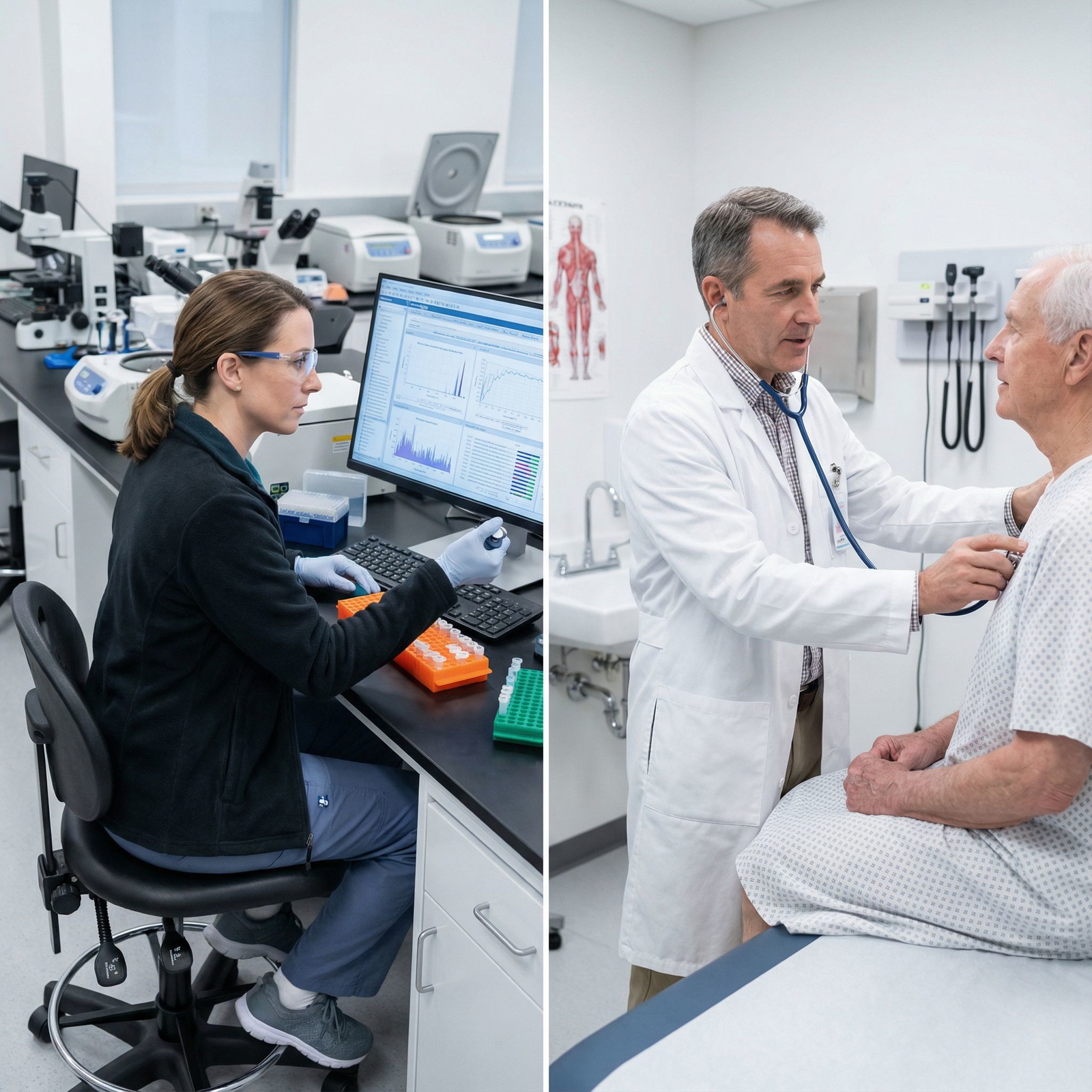
When planning a future in medicine and science, many students wrestle with the choice between pursuing a PhD (Doctor of Philosophy) or an MD (Doctor of Medicine). Both are demanding, prestigious training pathways within medical education, and both can lead to impactful careers—but they require different day‑to‑day skill sets, personalities, and working styles.
This guide breaks down the specific PhD Skills and MD Skills you’ll need, highlights overlapping strengths, and offers practical advice to help you decide which pathway—and which career paths—align best with your interests, values, and lifestyle goals.
Overview of PhD and MD Pathways in Medicine
Before diving into the skills, it helps to clarify the core purpose and structure of each degree and how they relate to the broader “Research vs Clinical” question.
What a PhD in a Medical or Scientific Field Typically Involves
A PhD is primarily a research degree. In the biomedical and health sciences, PhD graduates often work on:
- Discovering new mechanisms of disease
- Developing diagnostics, drugs, or medical devices
- Creating and testing new interventions in public health or health systems
- Advancing basic science that underpins future clinical care
Key characteristics of a PhD pathway:
- Main focus: Discovery, innovation, and generating new knowledge
- Core setting: Laboratories, research institutes, universities, biotech/pharma, public health organizations
- Typical activities: Designing studies, running experiments, analyzing data, publishing papers, applying for grants, mentoring students
- Time frame: Commonly 4–6 years of full‑time research after a bachelor’s degree (longer in some systems or part‑time settings)
What an MD Degree and Clinical Training Involve
An MD is a professional clinical degree preparing you to care for patients:
- Diagnosing and treating illness
- Performing procedures
- Coordinating care across teams
- Communicating complex information to patients and families
Key characteristics of an MD pathway:
- Main focus: Patient care and clinical decision‑making
- Core setting: Hospitals, clinics, emergency departments, operating rooms, community practices
- Typical activities: History and physical exams, interpreting tests, formulating differential diagnoses, discussing treatment options, performing procedures, leading clinical teams
- Time frame:
- ~4 years of medical school
- 3–7+ years of residency and possibly fellowship (depending on specialty)
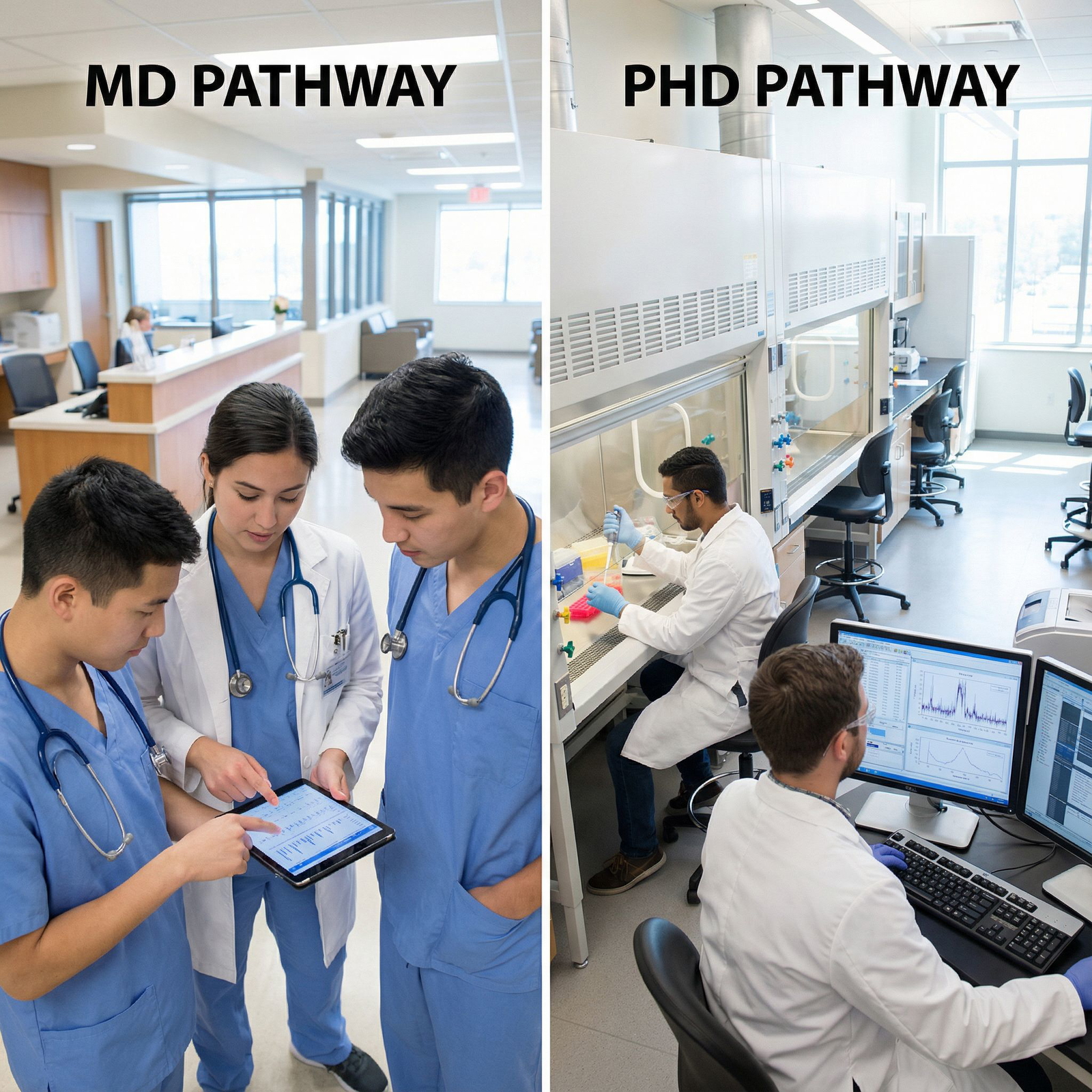
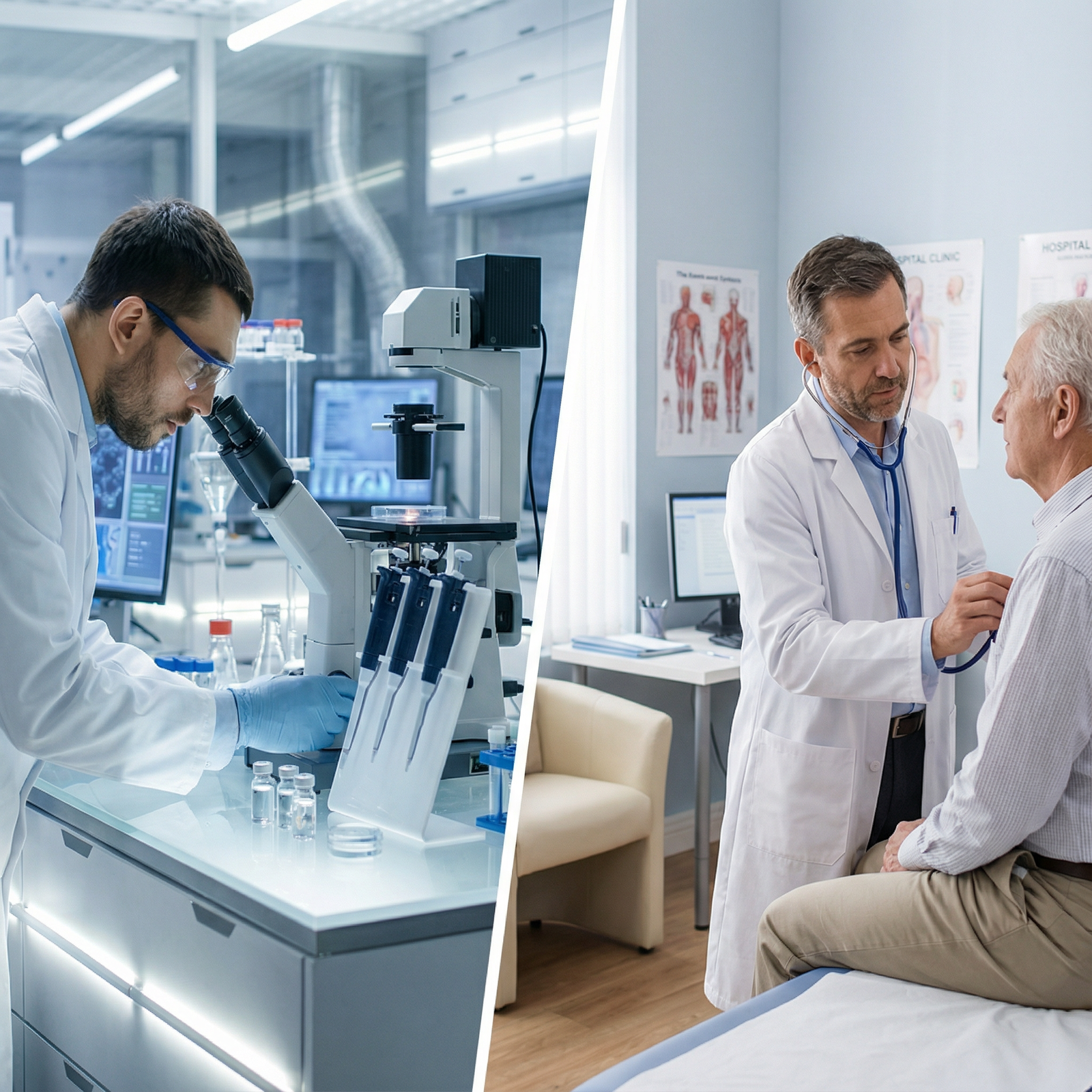
Understanding the fundamental difference—knowledge creation (PhD) vs. direct patient care (MD)—is the foundation for understanding the distinct skills each path demands.
Core Skills Needed for a PhD Career in Medicine and Science
For those drawn toward research, discovery, and academic medicine, the PhD pathway requires a specific set of competencies. These PhD Skills are critical to both completing your degree and thriving in long‑term research career paths.
1. Advanced Research Skills and Scientific Rigor
Research is the core of a PhD. You’re not just learning existing knowledge—you’re creating new knowledge.
Key components:
Literature Mastery and Gap Identification
- Efficiently search and synthesize existing literature
- Identify unanswered questions and true knowledge gaps
- Critically evaluate experimental methods, biases, and limitations
- Example: Instead of simply reading about cancer immunotherapy, you analyze which pathways are understudied or which patient populations haven’t been adequately examined.
Hypothesis Generation and Experimental Design
- Transform broad interests into testable hypotheses
- Design experiments and studies that are:
- Methodologically sound
- Reproducible
- Ethically appropriate
- Select appropriate controls, sample sizes, and statistical approaches
- Example: Designing a randomized controlled animal study or a human cohort study with clear inclusion/exclusion criteria.
Data Management and Statistical Analysis
- Work with raw data (often large or complex datasets)
- Use tools such as R, Python, SPSS, SAS, or Stata
- Apply appropriate statistical tests, interpret p‑values and confidence intervals, and understand effect size and power
- Organize and document data and code for reproducibility and future use
2. Critical Thinking and Scientific Problem‑Solving
PhD training is fundamentally about learning to think like an independent scientist.
Evaluating Evidence and Assumptions
- Question results, not just accept them because they’re significant
- Consider alternative explanations, confounders, and sources of error
- Distinguish correlation from causation
Iterative Problem‑Solving
- When experiments fail (and they often do), systematically troubleshoot:
- Re‑examine your protocol
- Check reagents and equipment
- Question your original assumptions
- View “failed” experiments as information to refine your approach, not as final setbacks
- When experiments fail (and they often do), systematically troubleshoot:
Conceptual Framework Development
- Construct theoretical models or conceptual frameworks to guide your research
- Situate your work within broader scientific and clinical contexts
- Example: Relating your molecular findings to disease mechanisms, or mapping how a health intervention fits within a larger health system.
3. Scientific Communication and Collaboration Skills
Your impact as a PhD scientist depends heavily on how clearly you can communicate your work.
Academic Writing
- Write manuscripts for peer‑reviewed journals
- Draft grants and fellowship applications
- Prepare abstracts, protocols, and ethics applications
- Tailor your language to different audiences: reviewers, funders, clinicians, policymakers
Oral Presentation Skills
- Present research at lab meetings, departmental seminars, and international conferences
- Use clear visuals (figures, tables, schematics) and storytelling structure
- Field challenging questions from experts—sometimes in real time
Collaboration and Interdisciplinary Work
- Work across disciplines (e.g., bioinformatics, engineering, clinical departments)
- Navigate authorship discussions, project ownership, and shared resources
- Build a professional network that supports your future career paths in academia, industry, or government
4. Time Management, Project Management, and Self‑Direction
A PhD is often an open‑ended project with shifting goals and few hard deadlines—self‑management is essential.
Long‑Term Planning
- Break down a 4–6 year project into:
- Annual aims
- Semester‑level goals
- Weekly and daily tasks
- Build contingency plans for experiments that may not work as expected
- Break down a 4–6 year project into:
Prioritization and Focus
- Balance bench work, data analysis, reading, writing, teaching, and conferences
- Decide when “good enough” is truly good enough to move on
Self‑Motivation and Accountability
- Progress is often judged yearly or at major milestones, not daily
- You must keep yourself moving forward even when no one is micromanaging you
5. Resilience, Perseverance, and Managing Uncertainty
Research is inherently uncertain and often frustrating; psychological resilience is a core PhD skill.
Coping with Failure and Rejection
- Experiments fail, papers get rejected, grants are turned down
- Learn to:
- Seek feedback rather than personalize criticism
- Revise and resubmit rather than abandon projects
- Maintain a growth mindset
Emotional Intelligence and Professional Relationships
- Navigate differences with mentors, collaborators, and peers
- Recognize when you need support and seek it early—through mentors, counseling services, or peer groups
Sustaining Motivation Over Years
- Connect day‑to‑day lab work with your larger scientific and societal goals
- Celebrate small milestones: a successful assay, a conference poster, a revised figure that finally makes sense

Core Skills Needed for an MD Career in Clinical Practice
If your primary goal is to diagnose and treat patients, lead clinical teams, and work directly in healthcare settings, the MD Skills you need differ in important ways from PhD skills—though there is some overlap.
1. Clinical Assessment and Diagnostic Reasoning
Clinical competence starts with being able to gather and interpret information from patients safely and systematically.
History‑Taking and Physical Examination
- Elicit complete, accurate, and sensitive histories
- Perform thorough, focused physical exams tailored to the clinical question
- Recognize “red flag” symptoms and signs that require urgent action
Formulating a Differential Diagnosis
- Generate and prioritize a list of possible diagnoses
- Use Bayesian reasoning—updating probabilities as new information becomes available
- Integrate lab results, imaging, and specialist input into your clinical reasoning
Clinical Decision‑Making Under Uncertainty
- Make time‑sensitive decisions based on incomplete data
- Balance risks and benefits, considering patient values and preferences
- Example: Choosing whether to admit a borderline patient vs. safe outpatient follow‑up.
2. Strong Medical Knowledge Base and Commitment to Lifelong Learning
MD training is intensive, but graduation is only the beginning of ongoing learning.
Mastery of Core Medical Sciences and Clinical Content
- Pre‑clinical: anatomy, physiology, biochemistry, pharmacology, pathology, microbiology
- Clinical: internal medicine, surgery, pediatrics, OB/GYN, psychiatry, emergency medicine, and more
Evidence‑Based Practice
- Read and interpret clinical studies, systematic reviews, and guidelines
- Apply evidence to individual patients while accounting for comorbidities, socioeconomic factors, and preferences
Lifelong Learning Strategies
- Use CME (Continuing Medical Education), conferences, journal clubs, and guidelines to stay current
- Regularly reflect on your practice: What went well? What could be improved? What did I learn?
3. Communication, Empathy, and Interpersonal Skills
Relationships are central to medicine. Communication skills can be as important as technical knowledge.
Patient‑Centered Communication
- Explain diagnoses, tests, and treatment options in clear, jargon‑free language
- Use teach‑back methods to confirm understanding
- Deliver bad news with compassion and structure (e.g., SPIKES protocol)
Interprofessional Teamwork
- Work closely with nurses, pharmacists, therapists, social workers, and other physicians
- Give and receive handoffs effectively, using structured tools (e.g., SBAR)
- Respect and leverage the expertise of every team member
Cultural Competence and Humility
- Recognize how culture, language, health literacy, and social determinants affect care
- Adapt communication style and care plans to meet each patient’s context and values
4. Ethics, Professionalism, and Clinical Judgment
Ethical decision‑making is a daily part of MD practice, not a theoretical exercise.
Medical Ethics and Law
- Apply core principles: autonomy, beneficence, non‑maleficence, justice
- Navigate consent, capacity, confidentiality, and end‑of‑life decisions
- Recognize and address conflicts of interest
Professional Behavior and Responsibility
- Maintain honesty, accountability, and reliability
- Disclose errors appropriately and work to prevent recurrence
- Uphold professionalism in person and online
Boundary Management and Respect
- Maintain appropriate boundaries with patients and colleagues
- Address unprofessional behavior and advocate for a safe, respectful work environment
5. Time Management, Stress Tolerance, and Self‑Care
Clinical training and practice are often fast‑paced, high‑stakes, and emotionally taxing.
Managing Heavy Workloads Efficiently
- Prioritize tasks across multiple patients and units
- Delegate safely to nursing staff and other team members
- Use checklists, order sets, and electronic tools to streamline care while preserving judgment
Coping with Stress and Emotional Burden
- Manage exposure to suffering, death, and conflict
- Develop healthy coping strategies: debriefing, peer support, therapy, physical activity
- Recognize signs of burnout, depression, or substance use early
Maintaining Personal Well‑Being and Boundaries
- Set realistic expectations about work–life balance at different training stages
- Protect time for sleep, relationships, and activities that sustain you
- Seek mentorship to navigate transitions (e.g., med school to residency, junior to senior roles)
Overlapping Skills: Where PhD and MD Training Converge
Despite their differences, there are crucial shared competencies in MD Skills and PhD Skills, particularly in modern medical education where research and clinical practice are increasingly interconnected.
Shared Core Competencies
Analytical and Critical Thinking Skills
- Whether interpreting p‑values or CT scans, both paths demand the ability to:
- Evaluate the quality of evidence
- Differentiate signal from noise
- Make reasoned judgments under uncertainty
- Whether interpreting p‑values or CT scans, both paths demand the ability to:
Problem‑Solving and Innovation
- Solving a lab protocol problem and troubleshooting a complex patient case both require:
- Creativity
- Flexibility
- Willingness to challenge assumptions
- Solving a lab protocol problem and troubleshooting a complex patient case both require:
Adaptability and Continuous Improvement
- Both researchers and clinicians must adapt to:
- New technologies (e.g., AI in radiology, CRISPR in gene editing)
- Evolving standards of care
- Changing institutional and funding environments
- Both researchers and clinicians must adapt to:
Communication and Collaboration
- Effective teamwork is essential in:
- Multi‑disciplinary research consortia
- Multidisciplinary clinical rounds and tumor boards
- Effective teamwork is essential in:
Research vs Clinical: Hybrid and Bridge Career Paths
Some professionals intentionally integrate both sides:
MD‑PhD (Physician‑Scientist) Pathways
- Train in both rigorous research and clinical care
- Often in academic medicine, leading translational research that moves discoveries from bench to bedside
- Requires the combined skill sets described in both sections, plus exceptional time and project management
Clinician‑Investigators and Clinician‑Educators
- MDs who conduct clinical or health services research alongside patient care
- MDs who focus on teaching and medical education research while maintaining clinical practice
PhD Scientists in Clinical Settings
- PhD researchers embedded within departments of medicine, surgery, or pediatrics
- Lead clinical trials, outcomes research, or implementation science without providing direct patient care
For students, understanding these hybrid options can be reassuring; the choice between PhD vs MD doesn’t have to be absolutely binary, especially in academic medicine.

Choosing Your Path: Practical Advice for Future Medical and Research Professionals
Deciding between a PhD, an MD, or a combined pathway is both an intellectual and deeply personal decision. Here are actionable steps to help you align your choice with your strengths and goals.
1. Reflect on What Energizes You Day to Day
Ask yourself:
Do you enjoy long‑term projects, slow but deep progress, and working through uncertainty to answer a question no one has answered before?
- You may be more aligned with a PhD or physician‑scientist track.
Do you thrive on immediate impact, face‑to‑face interaction, and making real‑time decisions that directly affect people’s lives?
- You may be better suited to an MD‑centered clinical career.
Consider keeping a journal during clinical or research experiences to see which tasks you look forward to—and which you find draining.
2. Seek Early, Real‑World Exposure
For PhD‑Curious Students:
- Join a research lab, even as an undergraduate or early medical student
- Attend research seminars and journal clubs
- Volunteer for a small project (e.g., data extraction, basic analysis, literature review)
For MD‑Curious Students:
- Shadow physicians in different specialties
- Volunteer in clinical settings (hospitals, free clinics, community health centers)
- Observe how physicians handle stress, uncertainty, and complex human situations
Real experiences are far more informative than abstract ideas of what a career might be like.
3. Talk to People Actually Living These Career Paths
- Speak with:
- Current PhD students and postdocs in biomedical sciences
- Medical students, residents, and attending physicians
- MD‑PhD trainees and physician‑scientists in academic centers
- Ask:
- What does a “typical day” look like for you?
- What do you like most and least about your work?
- If you could redo your training, what would you change?
Mentorship and candid conversations often reveal realities not visible from the outside.
4. Consider Lifestyle, Financial, and Geographic Factors
Beyond skills and interests, practical considerations matter:
- Training length and timing: Are you comfortable with a long training path (especially MD‑PhD)?
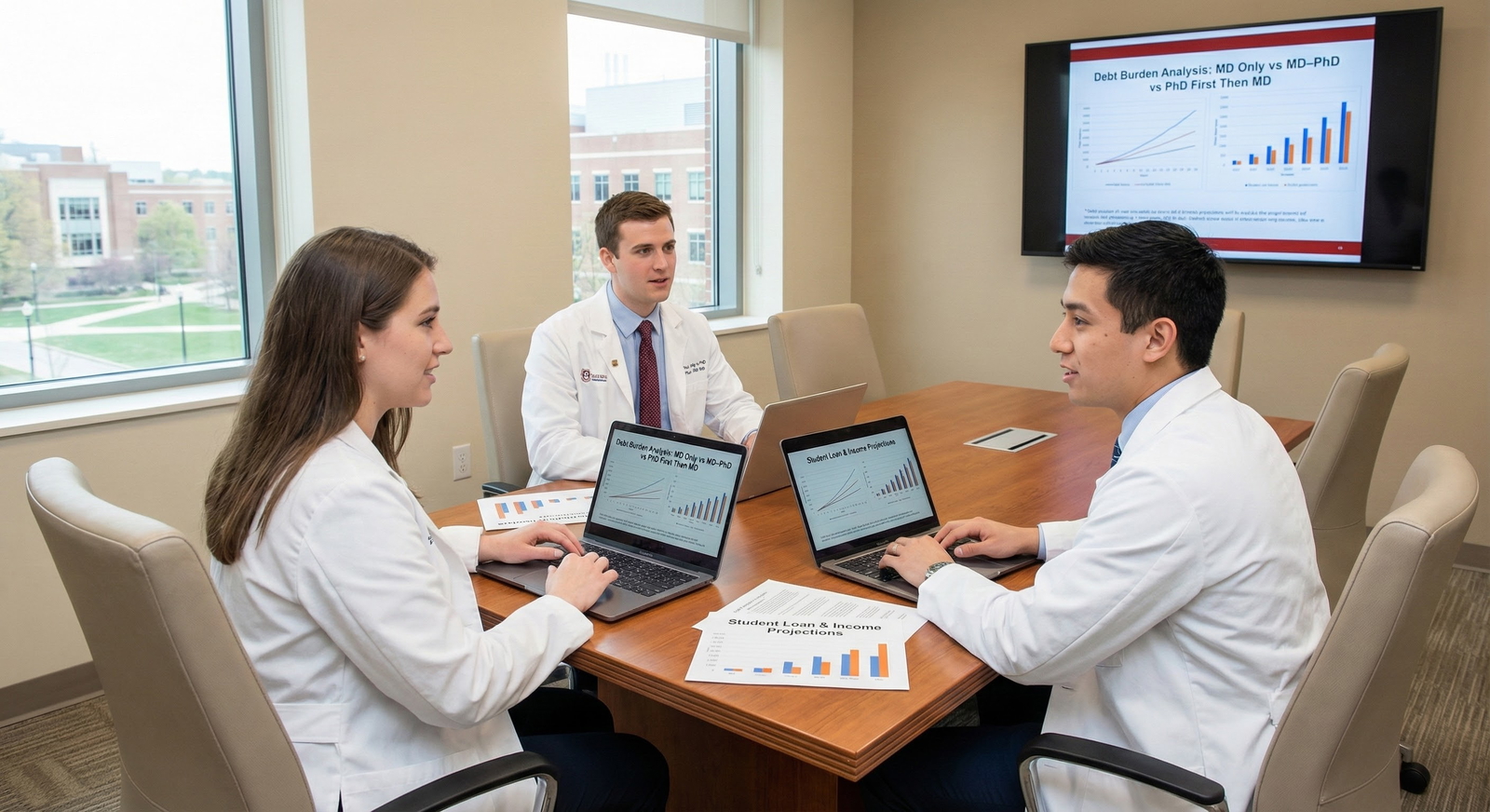
- Debt and compensation: MD careers often offer higher and more predictable income, but at the cost of longer, more intense training; PhDs may have less debt (stipend support) but may face more competitive academic job markets.
- Geographic flexibility: Research careers may be more dependent on specific institutions; clinical roles are often needed in a wider range of locations.
5. Remember That Career Paths Can Evolve
Many clinicians move into research, education, or administration later. Many PhDs move into industry, policy, or non‑academic roles. Your degree is a major decision, but it does not rigidly lock in every future choice.
FAQ: Skills, Training, and Career Decisions for PhD vs MD Paths
1. What are the most important PhD Skills compared to MD Skills?
For a PhD, the most important skills include:
- Independent research and experimental design
- Advanced data analysis and statistics
- Critical thinking and conceptual modeling
- Scientific writing and grant preparation
- Resilience in the face of uncertainty and failure
For an MD, the key skills emphasize:
- Clinical assessment and diagnostic reasoning
- Patient‑centered communication and empathy
- Teamwork in high‑pressure clinical environments
- Ethical and professional judgment
- Managing time, stress, and heavy workloads
Both paths require strong analytical thinking, communication, and adaptability.
2. Which has better career prospects: a PhD or an MD?
It depends on what you mean by “better” and which career paths you value:
MD graduates typically have:
- High employability in clinical settings
- Generally higher median salaries
- Clear structured training paths (residency, fellowship, attending roles)
PhD graduates have:
- Opportunities in academia, biotech/pharma, government, public health, data science, consulting, and more
- Variable job markets depending on field, geography, and funding
- High career satisfaction for those who enjoy research and discovery
Neither path is universally “better”—each suits different strengths and goals. For academic medicine, MD‑PhD or MD with strong research training can be particularly advantageous.
3. Can I pursue both a PhD and an MD, and what extra skills do I need?
Yes. Many institutions offer MD‑PhD programs or allow sequential training (PhD before or after MD). To succeed as a dual‑degree trainee, you’ll need:
- The full research skillset of a PhD
- The full clinical skillset of an MD
- Exceptional time management, resilience, and flexibility
- Clear long‑term goals (e.g., becoming a physician‑scientist leading translational research)
This path is demanding but can be highly rewarding for those passionate about bridging research vs clinical work.
4. How can I start building relevant skills early in my education?
For PhD‑oriented students:
- Take statistics, research methods, and programming courses (e.g., R or Python)
- Join a lab and engage in meaningful research, not just routine tasks
- Practice scientific writing early: abstracts, posters, small manuscripts
For MD‑oriented students:
- Strengthen communication and interpersonal skills (e.g., through volunteering, leadership roles)
- Learn basic clinical reasoning via case discussions or problem‑based learning
- Develop healthy coping strategies and time‑management habits before medical school/residency
For both, seeking mentorship and feedback is critical.
5. If I’m unsure between research and clinical work, what should I do now?
If you’re undecided:
- Get meaningful exposure to both—lab research and clinical observation.
- Reflect on your experiences: What felt energizing vs. draining?
- Talk to role models in each path and ask how they made their decision.
- Consider programs that keep both doors open, such as:
- MD programs with strong research tracks or scholarly concentrations
- Post‑baccalaureate research programs followed by medical school
- Taking 1–2 structured years for research during medical school
Most importantly, recognize that career trajectories within medicine and science are diverse and flexible. Focus on developing strong foundational skills—analytical thinking, communication, collaboration—that will serve you well in any direction you ultimately choose.
By understanding the distinct and overlapping PhD Skills and MD Skills, and by actively exploring research vs clinical environments, you can make a more informed decision about your place in the evolving landscape of medical education and scientific discovery.