
The fastest way to wreck your first years in private practice is to pair a new job with the wrong real estate decisions.
You’re not just “buying a house.” You’re locking in fixed costs, risk, and lifestyle while your income, schedule, and stability are all about to change at once. Add the idea of also buying a rental property right away, and now you’re running two plays at the same time when you barely know the field.
Let’s walk through this the way I’d walk a colleague through it in the physician lounge, with coffee in hand and pager going off every 12 minutes.
Step 1: Get Honest About Your Transition Risk (Before You Touch Real Estate)
Forget Zillow for a moment. You need to understand your income risk profile during this move from academic to private practice.
Here’s what usually changes:
- Academic: W-2 income, stable base, lighter RVU pressure, strong benefits, predictable schedule (relatively).
- Private practice: Higher potential income, but more volatility, ramp-up period, variable call, sometimes opaque compensation formulas, partnership track risk.
If you’re in this situation, run through these questions first:
Is your new income guaranteed, or heavily production-based?
- If they’re quoting you “$500k potential once ramped up,” that’s marketing, not a paycheck.
- Real question: What’s guaranteed for the first 1–2 years? Base + any written minimums.
What’s the partnership path, and do you believe it?
- “2-year partnership track” sometimes means “you’ll know in 24 months if we like you enough to consider it.”
- If income jumps significantly at partnership, those years before partnership are your tightest — do not overload yourself with housing and rental debt during this phase.
Are you moving to a new city/region you don’t know?
- If yes, buying immediately (home or rental) is a much bigger gamble. You don’t know micro-neighborhoods, traffic patterns, actual commute, schools, or how the call schedule will feel in real life.
How secure is the group or practice?
- Privately owned independent group? PE-backed? Hospital-employed but “productivity-driven”? Each has different income stability.
If your answers feel mushy, uncertain, or full of “they said it’ll probably…”, you’re in high transition risk territory. That doesn’t mean you can’t buy anything. It means timing and sequencing matter more.
Step 2: Decide Your Sequence: Home First, Rental First, Both, or Neither
You’ve essentially got four options as you move:
- Rent initially, buy nothing.
- Buy a home only.
- Buy a rental only, rent your residence.
- Buy both (home and rental) within 1–2 years.
Let me be direct: for most physicians moving from academic to private practice, Option 4 is a bad idea in the first 12–18 months. Your job, schedule, actual take-home pay, and lifestyle are still settling. Locking into two properties, two mortgages, and two sets of costs is asking for trouble.
Here’s a structured way to think about it:
| Option | Risk Level | Flexibility | When It Makes Sense |
|---|---|---|---|
| Rent, buy nothing | Low | High | New city, uncertain job fit |
| Buy home only | Medium | Medium | Stable job terms, strong desire |
| Buy rental only (rent your home) | Medium | Medium | Great deal in known market |
| Buy home + rental within 1–2 years | High | Low | Very stable income + experience |
For most people in your shoes, the smart play is:
- Year 0–1: Rent and stabilize income, or buy only a primary residence.
- Year 1–3: Add a rental once your cash flow and job stability are proven.
We’ll get more tactical on each.
Step 3: The Most Underused Strategy: Renting on Purpose
There’s an ego hit to “just renting” after training or during a job upgrade. I’ve heard all of this:
- “But I don’t want to throw money away.”
- “It feels like going backward.”
- “Rates are high, I should lock in something now.”
Here’s the blunt truth: The most expensive housing decision is not rent; it’s buying the wrong property at the wrong time and having to unwind it.
Renting for 6–18 months in your new city can be a power move if:
- You don’t know which area you truly like.
- You’re unsure whether this practice is a long-term fit.
- You have big unknowns: spouse job search, school fit for kids, partner fellowship options.
Use that rental period strategically:
- Drive your commute at actual working hours — 6:30 am, after a late call, during snow.
- Try different routes to the hospital/clinic and surgery center.
- Map call responsibilities: Do you really want to be 35 minutes away if OB calls you at 2 am?
- Walk neighborhoods on a Sunday afternoon and on a weekday evening. Very different vibes.
You might hate your practice after 9 months. You might be offered a better deal literally across town. Renting takes all that from a crisis to a simple address change.
Step 4: When Buying Your Primary Home Makes Sense
Let’s say your transition risk looks reasonable:
- Written 2-year guarantee or predictable W-2.
- Group is stable with low turnover.
- You’re moving to a city you know decently, or you’ve rented for a bit and learned the area.
Now you’re eyeing a primary home.
Here’s how to do this without handcuffing your future:
Keep the payment conservative.
- I don’t care what your pre-approval says.
- Your all-in housing cost (mortgage, property tax, insurance, HOA, and reasonable maintenance) should generally stay under 20–25% of your guaranteed gross income in those early years. Not the “potential” income. The guaranteed piece.
- If your base is $350k and “potential” is $550k, assume $350k for this math.
Prioritize time and sanity over granite.
- Your first private practice years will punch you in the face: RVUs, admin meetings, partnership politics, learning new systems.
- A 10-minute shorter commute each way is worth far more than a luxury kitchen that adds 25 minutes to your drive.
Don’t pick a “maybe this can be a rental later” house… on purpose.
- I see this mistake constantly. People try to force a future rental strategy onto their personal home choice.
- Most physician homes are bad rentals: too expensive, too nice, too large for the rent you can realistically get.
- Buy a home to live in well. If the market changes and it happens to work as a rental later, great. But don’t design a house purchase solely around “I can always rent it out” as your safety net.
Be very careful with jumbo loans early in your ramp-up.
- Jumbo + variable private-practice income + new partnership track = stress.
- If you lose that job or it’s not what you were promised, jumbo loans are a lot harder to carry while pivoting.
Step 5: When (and Whether) to Add a Rental Property
Now to the investor brain: “I want to use this move as a chance to start building a rental portfolio.”
Good instinct, wrong timing can crush you. The question isn’t “Is real estate smart?” It’s:
Can your specific situation absorb a vacancy, major repair, or job change at the same time?
Use this filter: You’re ready to buy a rental when all three are true:
- You’ve been in private practice at least 12 months, ideally 18–24.
- You know your true after-tax, after-withholdings monthly cash flow.
- You could cover:
- 6 months of your own living expenses, and
- 6 months of mortgage and expenses on the rental, with cash or liquid assets.
If you can’t do that, you’re not ready. You’re speculating.
To visualize the “when,” think of your first three years like this:
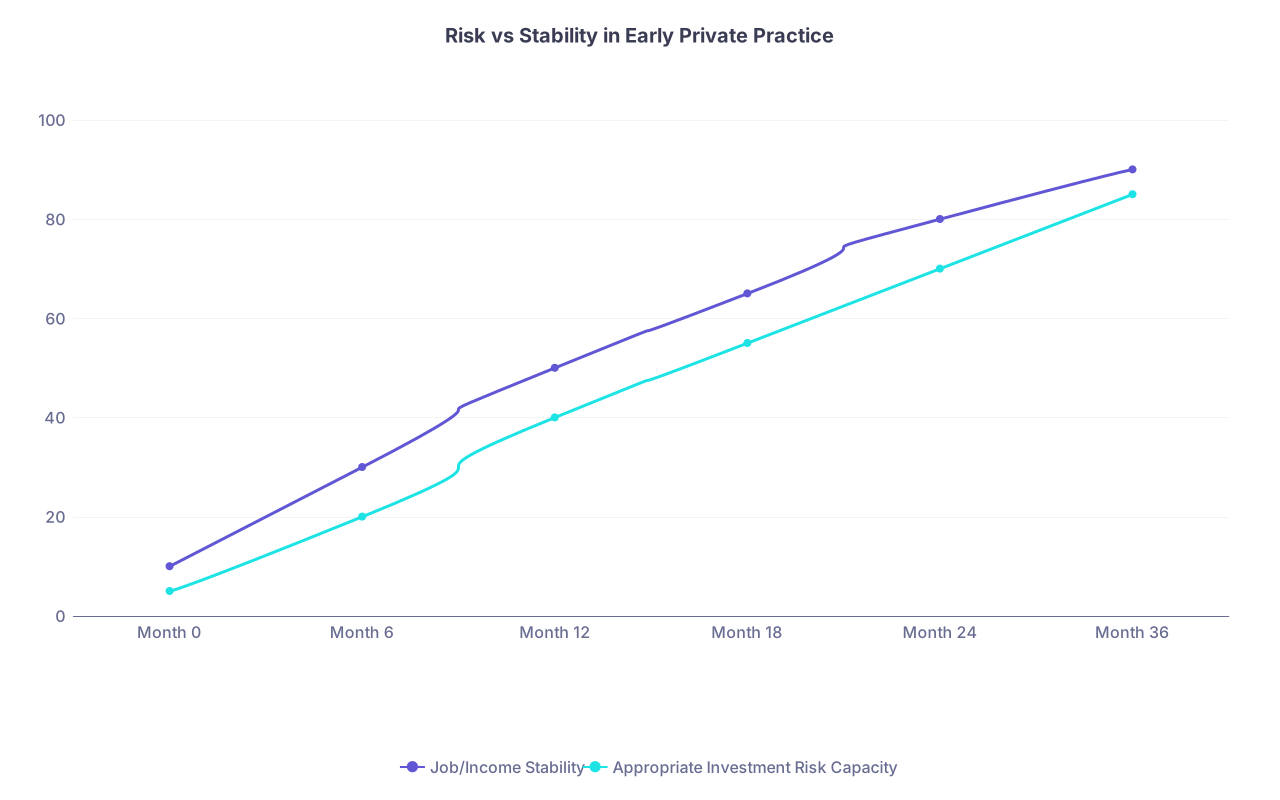
| Category | Job/Income Stability | Appropriate Investment Risk Capacity |
|---|---|---|
| Month 0 | 10 | 5 |
| Month 6 | 30 | 20 |
| Month 12 | 50 | 40 |
| Month 18 | 65 | 55 |
| Month 24 | 80 | 70 |
| Month 36 | 90 | 85 |
You’ll notice that the very early months are terrible for adding leverage and obligations. As stability increases, your capacity for risk does too.
Step 6: Buy Where You Understand, Not Just Where You Live
There’s a common error here: physicians assume their new city must also be their investment market. Not necessarily true.
If you’re moving from:
- Academic job in a Midwest city you know inside-out.
- To a private practice job in a new coastal metro.
You might be far better off:
- Renting in the new coastal city.
- And buying your first rental back in the Midwest city you already understand — with a solid property manager.
Ask yourself:
- Where do I understand rents, neighborhoods, school preferences, and tenant profiles?
- Where do I have local contacts (Realtors, contractors, or friends who can check on things)?
- Where do the numbers actually work? (Not just appreciation FOMO.)
If your new private practice city is a high-priced, low-yield area and you don’t understand it yet, don’t force it. Start where your information advantage is better.
Step 7: Physician-Specific Financing Nuances (That Change the Timing)
Your physician status changes some of the rules. Both in good and risky ways.
Physician Mortgage for Your Home
Most physician mortgage programs:
- 0–5% down.
- No or reduced PMI.
- More flexible DTI (debt-to-income) ratios.
- Often allow high total debt because “you’re a doctor.”
That last “benefit” is how you end up house-poor.
Use the physician mortgage like a scalpel, not a hammer:
- It can be great to buy a reasonable home earlier without tying up all your cash.
- It becomes dangerous when you use it to justify “stretching” to the top of what they’ll approve.
Also: banks love a clean story.
- Academic W-2 to private practice with a signed contract? Good.
- Same timeline plus you’re also trying to qualify soon after for another mortgage on a rental? Underwriter will start asking more questions about your income stability and reserves.
If you want both a home and a rental in the first 2–3 years:
- Plan which one you’ll finance first.
- Assume the second loan will require more documentation, more reserves, and less flexibility.
Debt-to-Income and Rentals
Your existing student loans and new private-practice contract all weigh into this. A quick snapshot:
| Profile | Primary Home Approval | Rental Loan Challenges |
|---|---|---|
| W-2 academic, stable, low debt | Easier | Moderate |
| New private practice, big income promise | Medium | Hard if no history |
| 1–2 years private practice, consistent pay | Easier | Easier, especially with reserves |
| High student loans, minimal savings | Tougher | Often not ready |
The takeaway: lenders get braver after they see 1–2 years of actual, consistent income in your new role. That’s why the Year 1–2 window is usually better for rentals than Month 0–6.
Step 8: Legal Structure and Liability: Don’t Overcomplicate Too Soon
You’re in the “financial and legal aspects” phase, so let’s talk structure.
Everyone loves to ask:
- “Should I use an LLC?”
- “Should I set up a holding company?”
- “What about an S-Corp for rentals?”
Here’s the reality for someone with one home and maybe one early rental:
Your primary home:
- Usually held in your personal name or a revocable trust (estate planning).
- Not in an LLC if you’re using a traditional mortgage; lenders generally don’t like that.
- Your real protection is good umbrella insurance and not being reckless with liability.
-
- Can be owned in your personal name or an LLC, depending on your state and your risk tolerance.
- If you do use an LLC, think through:
- Will your lender allow title in an LLC, or will they require personal name with later transfer?
- Does your state offer meaningful liability benefits from an LLC, or is good insurance + proper leases enough at this stage?
Insurance > Fancy Structure (early on):
- Liability on the homeowners and landlord policy.
- PLUS a personal umbrella policy of $1–3M minimum.
- For many early investors, this is more impactful than an over-engineered LLC structure.
Don’t spend $5,000 on entity setup for one or two small rentals, then starve your emergency fund. Get the insurance and basic legal hygiene right first: proper leases, local landlord law compliance, safety codes.
Step 9: A Realistic Timeline That Actually Works
Let’s put this together into something that looks like a real plan.
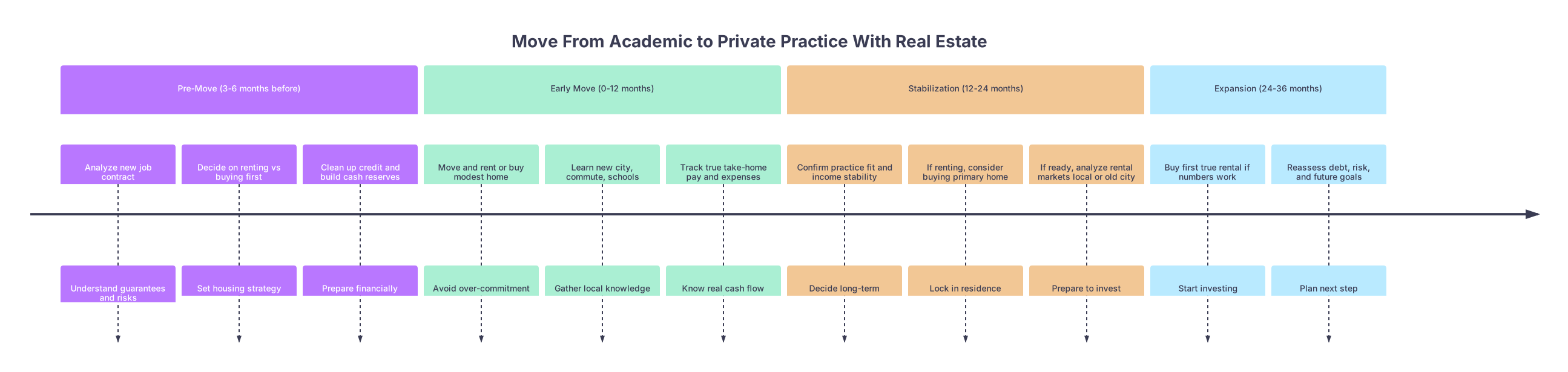
| Period | Event |
|---|---|
| Pre-Move (3-6 months before) - Analyze new job contract | Understand guarantees and risks |
| Pre-Move (3-6 months before) - Decide on renting vs buying first | Set housing strategy |
| Pre-Move (3-6 months before) - Clean up credit and build cash reserves | Prepare financially |
| Early Move (0-12 months) - Move and rent or buy modest home | Avoid over-commitment |
| Early Move (0-12 months) - Learn new city, commute, schools | Gather local knowledge |
| Early Move (0-12 months) - Track true take-home pay and expenses | Know real cash flow |
| Stabilization (12-24 months) - Confirm practice fit and income stability | Decide long-term |
| Stabilization (12-24 months) - If renting, consider buying primary home | Lock in residence |
| Stabilization (12-24 months) - If ready, analyze rental markets local or old city | Prepare to invest |
| Expansion (24-36 months) - Buy first true rental if numbers work | Start investing |
| Expansion (24-36 months) - Reassess debt, risk, and future goals | Plan next step |
This is boring. And that’s exactly the point. Stable, boring systems build wealth. Chaotic, rushed decisions blow it up.
Step 10: Two Sample Scenarios — What I’d Tell You
Let’s make this concrete.
Scenario A: Hospitalist, Moving From Academic Center to Private Group
- Old job: $260k academic hospitalist, midwestern city.
- New job: “$350–450k potential” private hospitalist group, new region.
- Student loans: $180k.
- Cash: $90k.
- Married, one toddler, spouse not working.
What I’d tell you:
- Rent for 12 months in the new city. Do not buy immediately.
- Hold at least $50–60k liquid after moving costs and any minor upgrades.
- Track your actual income for the first year. See: census, RVU reality, group culture.
- At month 9–12, if things look stable, start home search with a conservative budget — maybe $600–700k depending on COL and income reality.
- No rentals until at least month 18–24, and only if:
- You still have 6 months of total expenses in cash.
- You’re confident you’re staying with this group.
Scenario B: Subspecialist, Moving Within Same Metro, Big Income Jump
- Old job: $320k academic cardiology, same city.
- New job: $550k base, private cardiology group, written guarantee 2 years.
- You’ve lived here 7 years. Know the suburbs well.
- Student loans: paid off.
- Cash: $250k.
- Already renting a modest townhouse.
What I’d tell you:
- You can buy a home within the first 6–9 months if you want, because:
- City is known.
- Income has a strong written guarantee.
- You have excellent reserves.
- Keep the total housing cost sane relative to the guaranteed base — maybe a $900k–1.2M home depending on your risk tolerance and market.
- Sit with the new job for 12–18 months.
- At that point, if your cash has rebuilt and you’re truly tracking near that $550k and like the group, then:
- Start shopping for a rental in either your current city (areas you know well) or another market you understand.
- Do not stretch for a marginal deal. Your life and schedule already generate great income; you don’t need a “hero” property.
A Quick Reality Check on Returns
One more lens to calm the FOMO.
Compare three moves you could make with $100k of available capital in the first 2 years of your private practice job:
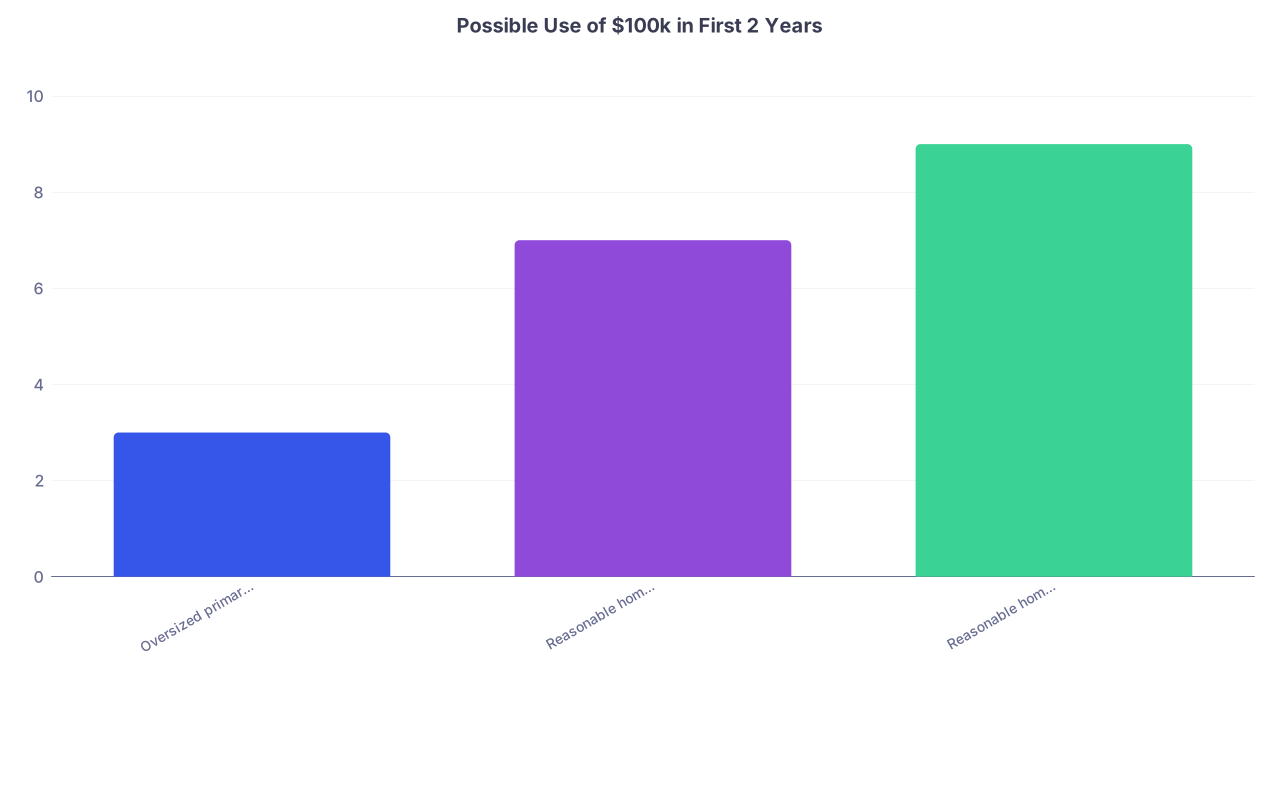
| Category | Value |
|---|---|
| Oversized primary home | 3 |
| Reasonable home + cash buffer | 7 |
| Reasonable home + solid rental | 9 |
Think of those values as long-term wealth potential on a 1–10 scale, given your early-career risk. Going “all in” on a big primary early is usually the weakest long-term move.
Final Tight Advice
If you’re moving from academic to private practice and trying to time a home purchase and a rental:
- Treat Year 0–1 as your stabilization year — protect flexibility with either renting or a conservative home purchase.
- Do not buy a rental until your new income is proven, your cash reserves are strong, and you could stomach a vacancy plus a job change without panic.
- Use your knowledge advantage: buy your primary where you’ll actually live well, and buy rentals only in markets and property types you truly understand, not just where you’re excited or newly employed.