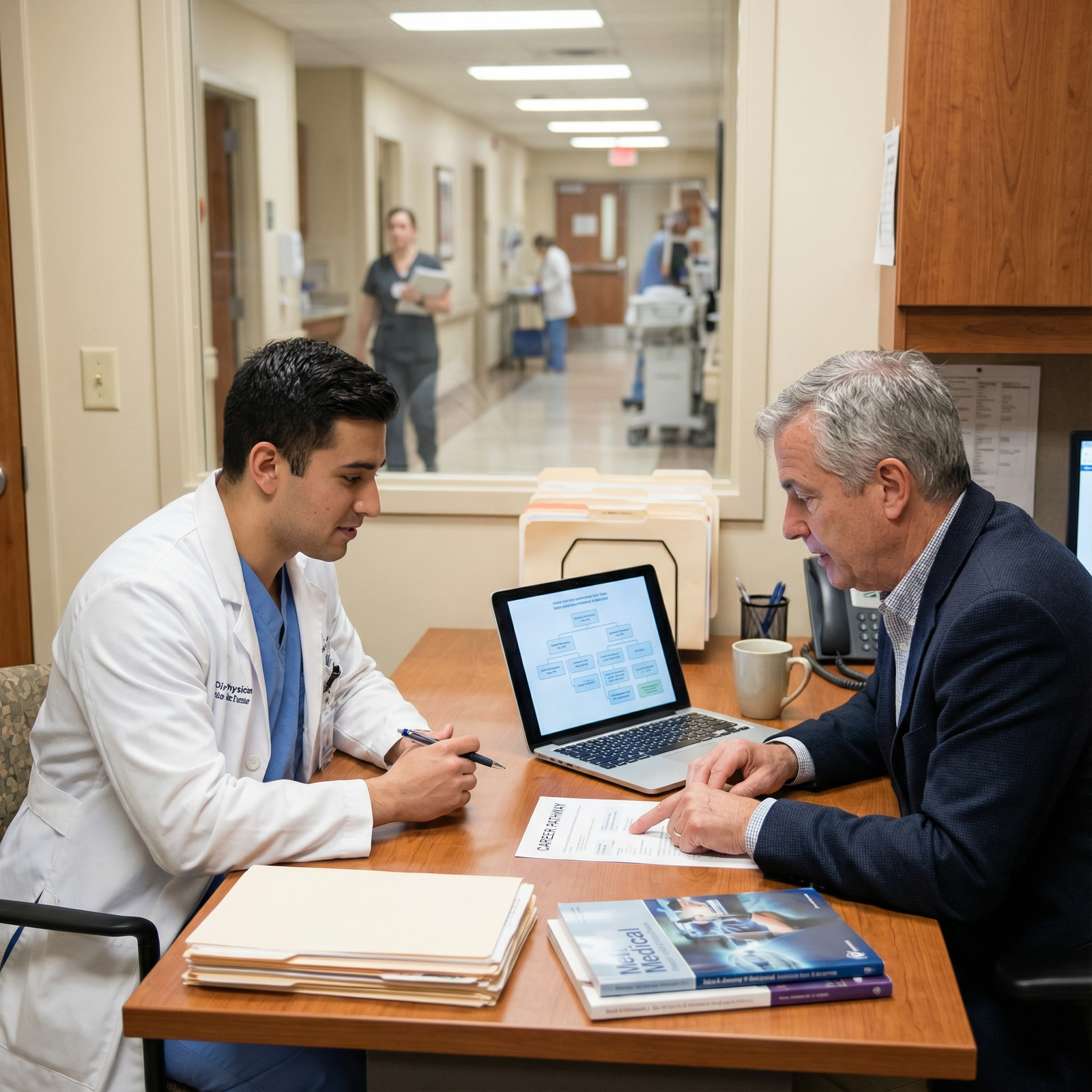
Introduction: Why the Preliminary-to-Categorical Transition Matters
In medical education, few phases feel as high-stakes and uncertain as moving from a preliminary year to a categorical residency. This transition is more than just switching programs or changing badge colors—it represents the bridge between being a broadly trained intern and committing fully to your chosen specialty.
Whether you are early in your preliminary internship or approaching the midpoint and already thinking about next steps, planning ahead can dramatically reduce stress and improve your chances of landing a strong categorical position. A thoughtful residency transition strategy helps you:
- Maximize clinical skills development during your preliminary year
- Build a mentorship network that will advocate for you
- Strengthen your residency application and interview performance
- Avoid common pitfalls that delay or derail categorical placement
In this guide, we’ll walk through what a preliminary year really is, how it fits into the broader residency transition, and practical, actionable strategies to move smoothly and confidently into a categorical residency.
Understanding the Preliminary Year in Medical Education
What Is a Preliminary Year?
A preliminary year (often called a “prelim year” or “preliminary internship”) is a one-year training program that provides broad, foundational clinical experience—usually in internal medicine, surgery, or a transitional format. It is commonly required for residents who will later enter advanced or categorical residency positions in fields such as:
- Anesthesiology
- Dermatology
- Neurology
- Ophthalmology
- Physical Medicine & Rehabilitation (PM&R)
- Radiology and Interventional Radiology
- Radiation Oncology
- Some subspecialty surgery tracks
Unlike a categorical residency, which offers a complete training pathway from PGY-1 through completion of board eligibility in a given specialty, a preliminary year is limited to PGY-1 and is not designed to lead directly to board certification in that specific field.
Types of Preliminary Programs: Transitional vs. Preliminary
Preliminary experiences typically fall into two broad categories:
Transitional Year (TY) Programs
Transitional programs provide a broad mix of specialties, often including:- Internal medicine
- Surgery
- Emergency medicine
- Pediatrics
- Electives in subspecialties (e.g., cardiology, radiology, ICU, dermatology)
These programs are ideal if:
- You want a wide clinical base before entering an advanced specialty
- You value flexibility and varied exposure
- You hope to explore or confirm specific interests while still meeting your internship requirement
Preliminary Medicine or Surgery Programs
These programs are more focused:- Preliminary Internal Medicine: Emphasis on inpatient and outpatient medicine, ICU, and subspecialty consult services
- Preliminary Surgery: Heavy exposure to OR, surgical wards, trauma, and surgical subspecialties
These tracks are typical for:
- Applicants headed into specialties that rely heavily on medical or surgical foundations
- Residents who want deeper competence in one domain before advanced training
Structure of a Preliminary Year: What to Expect
While schedules vary, most preliminary years share key components:
Core Clinical Rotations
Examples of a typical schedule might include:- 4–6 months of Internal Medicine or Surgery wards
- 1–2 months of ICU or step-down units
- 1 month of Emergency Medicine
- 1–2 months of subspecialty consults
- 1–2 months of electives
During these rotations, you will:
- Manage admissions, daily rounds, and discharges
- Participate in multidisciplinary care with nurses, pharmacists, therapists, and case managers
- Present patients on rounds and in conferences
Skill Acquisition and Systems Integration
Crucial elements of this phase include:- Rapidly learning hospital workflows and EMR systems
- Developing clinical reasoning and diagnostic skills
- Performing core procedures relevant to your specialty goals (e.g., IV placement, ABGs, basic suturing, lines under supervision)
- Learning to navigate consults, handoffs, and sign-out effectively
Communication and Bedside Manner
Your preliminary year is foundational for:- Building rapport with patients and families
- Breaking bad news and discussing goals of care with supervision
- Coordinating complex discharges and transitions of care
- Practicing cultural humility, empathy, and professionalism in high-stress settings
These experiences form the bedrock of your clinical skills and directly influence both your performance as a categorical resident and the strength of your application for those positions.

Laying the Groundwork: Preparing Early for the Categorical Residency Transition
Your preliminary year moves quickly. If you wait until the second half of the year to think about your categorical residency transition, you’ll find yourself rushed and stressed. Instead, build a deliberate plan from the beginning.
1. Set Clear, Specialty-Specific Goals
Before or early in your preliminary year, clarify:
- What specialty you are pursuing (or your top 1–2 if uncertain)
- Whether you need to reapply for the PGY-2+ portion (many advanced specialties require this)
- Gaps from medical school that you need to address (e.g., limited research, weaker Step scores, fewer specialty-specific rotations)
Practical steps:
- Review your specialty’s expectations using resources like NRMP program descriptions, specialty society guidelines, and your med school’s advising materials.
- Write a brief “training goals” document with 3–5 objectives, such as:
- “Improve procedural confidence and independence in basic bedside procedures.”
- “Obtain at least two strong specialty-aligned letters of recommendation.”
- “Engage in at least one research or quality improvement project tied to my target field.”
Revisit these goals mid-year and adjust as needed.
2. Build Robust Mentorship and Sponsorship
Mentorship is critical for navigating the residency transition. Aim for multiple mentors:
- Primary specialty mentor (in your target field, if available)
- Preliminary program mentor (e.g., chief resident, prelim program director, or attending who knows you well)
- Career advisor (someone experienced with Match strategy, ERAS, and fellowship pathways)
How to cultivate effective mentorship:
- Introduce yourself early on rotations and express your career interests clearly.
- Ask attendings you admire if they’re open to periodic check-ins.
- Schedule brief quarterly meetings to discuss:
- Progress and evaluations
- Application strategy
- Opportunities for research, QI, or presentations
Mentors may become sponsors—people who actively advocate for you, recommend you to program directors, and help you secure electives or research opportunities. This can be game-changing for categorical placement, especially in competitive specialties.
3. Invest in Professional Relationships and Networking
Residency is a team sport. Strong interpersonal relationships can lead to:
- High-quality letters of recommendation
- Informal advocacy when program directors ask, “Who are our star prelims?”
- Early knowledge of open categorical or PGY-2 positions
Actionable tips:
- Attend departmental conferences, grand rounds, and journal clubs—even when not mandatory.
- Volunteer to present a case, lead a short teaching session, or contribute to a QI project.
- Be a reliable, positive team member—people remember colleagues who make difficult rotations more manageable.
4. Take Initiative With Clinical and Academic Experiences
Being proactive is one of the most visible markers of a strong resident:
- Ask for increased responsibility (with appropriate supervision) once you demonstrate competence.
- Seek out:
- Interesting procedures (e.g., lines, paracenteses with supervision)
- Opportunities to follow complex patients longitudinally
- Cases suitable for conference presentations, posters, or write-ups
Academic engagement:
- Ask your mentors if there are ongoing research or QI projects that could use an extra pair of hands.
- Consider case reports or small retrospective reviews that can reasonably be completed within the year.
- Present at local or regional specialty meetings when possible—these experiences strengthen your CV and talking points for interviews.
5. Stay Organized and Protect Your Bandwidth
Balancing full-time clinical work with residency applications is demanding. Good organization can prevent burnout.
Tools and strategies:
- Use a digital calendar or app (e.g., Google Calendar, Notion, Trello) to track:
- ERAS deadlines and supplemental application windows
- Program research and target lists
- Letter of recommendation timelines
- Conferences, exams, and important institutional events
- Maintain a “living” CV and activity log—briefly note new roles, presentations, procedures (if relevant), and achievements as they occur.
- Block protected time—on lighter rotations—for application work, personal statement drafting, and interview prep.
Navigating the Categorical Residency Application Process
For many, the preliminary year overlaps with a new cycle of applying for categorical or advanced positions. Planning ahead for this second application process is essential.
1. Researching Categorical and Advanced Residency Programs
Start your program research early (often late MS4 or early PGY-1):
Key factors to consider:
Program type and structure
- Does it offer a full categorical track or only advanced positions starting at PGY-2?
- Are there integrated or combined programs (e.g., IM-peds, research tracks)?
Accreditation and outcomes
- ACGME accreditation status
- Board pass rates and fellowship match outcomes
Training environment and culture
- Size of the residency class
- Diversity and inclusivity efforts
- Resident wellness initiatives, call structure, and workload
Geography and lifestyle
- Location, cost of living, commute
- Support systems (family, partner, community)
Create a shortlist and a tiered list (reach, target, safety programs). Discuss this list with your mentors to calibrate it realistically.
2. Crafting and Updating Your Application Materials
You will likely use ERAS again to apply for categorical or advanced positions. Key elements include:
Curriculum Vitae (CV)
- Keep it current with:
- Rotations and key responsibilities
- Presentations, posters, or publications
- Committee roles or leadership positions (e.g., wellness committee, house staff councils)
- Awards or recognition during your prelim year
Be concise but specific about your contributions and impact.
Personal Statement
Your personal statement should:
- Clearly articulate why you chose your specialty and what sustains your interest
- Highlight how your preliminary year strengthened your clinical skills, professionalism, and resilience
- Address any career pivots transparently (e.g., switching intended specialties) while focusing on what you’ve learned and where you’re headed
- Provide concrete examples—specific patients, projects, or experiences—rather than broad generalities
Consider writing slightly tailored versions for different tiers of programs, especially if you have a strong regional or institutional preference.
3. Letters of Recommendation: Building a Strong Support Portfolio
Well-chosen letters of recommendation are critical in the transition from preliminary to categorical residency.
Who to ask:
- 1–2 letters from attendings in your target specialty (if available at your prelim site)
- 1 letter from a core clinical rotation (medicine, surgery, ICU, etc.)
- 1 letter from a program director or associate program director, if possible
Best practices:
- Ask early—ideally after a strong rotation, while your work is fresh in the attending’s mind.
- Provide:
- Your updated CV
- Personal statement draft (if ready)
- A brief summary of projects or cases you worked on with them
- A reminder of deadlines and how the letter will be submitted (e.g., ERAS LoR portal)
When you ask, it is reasonable to say, “Would you feel comfortable writing a strong letter of recommendation for me?” This gives them an opening to decline if they cannot provide a strong endorsement—which is better than a lukewarm letter.
4. Preparing Strategically for Residency Interviews
Interview season can be compressed and intense, especially when you’re simultaneously functioning as an intern.
Preparation tips:
Practice responses to common questions:
- “Why this specialty?”
- “Tell me about a difficult patient interaction and what you learned.”
- “How has your preliminary year prepared you for categorical training?”
- “Describe a time you received critical feedback and how you responded.”
Develop concise behavioral stories using frameworks like STAR (Situation, Task, Action, Result) to discuss:
- Leadership
- Conflict resolution
- Handling uncertainty
- Managing errors or near misses
Be ready to discuss:
- Specific cases that shaped your clinical judgment
- Any research or QI projects, including your role and outcomes
- How you have grown professionally during your preliminary year
Logistics:
- Keep an updated master schedule of interview dates, pre-interview socials, and follow-up emails.
- Communicate early with your chief residents and program leadership about interview days so coverage can be arranged.
Maximizing Your Preliminary Year for a Smooth Residency Transition
Beyond application mechanics, how you perform day-to-day as a preliminary resident has enormous impact on your categorical prospects.
Embrace and Act on Feedback
Constructive feedback is one of your most valuable tools.
After key rotations, ask supervisors direct questions like:
- “What is one thing I’m doing well that I should continue?”
- “What is one specific area I should focus on improving?”
Document recurring themes and create a mini “action plan” to work on:
- Clinical reasoning
- Time management
- Note quality and efficiency
- Communication with consultants and nurses
Residency directors often look for a clear trajectory of growth. Showing that you actively integrate feedback signals maturity and professionalism.
Enhance Core and Specialty-Relevant Clinical Skills
Use your preliminary year deliberately to refine both general and specialty-relevant clinical skills:
For procedure-heavy specialties (e.g., anesthesia, surgery, EM, IR):
- Seek opportunities to practice under supervision and log your experiences.
- Join simulation labs or skill workshops when offered.
For cognitive or consult-heavy specialties (e.g., neurology, radiology, psychiatry):
- Focus on sharpening your diagnostic reasoning and documentation.
- Practice clear, concise consult notes and presentations.
For all specialties:
- Maintain current certifications (e.g., ACLS, BLS, PALS if relevant).
- Review core guidelines in your target field and practice applying them to patient cases.
Maintain Professionalism and Resilience
Program directors value residents who:
- Are reliable, punctual, and accountable
- Handle difficult shifts without undermining team morale
- Communicate respectfully with all staff
Protect your well-being:
- Use institutional wellness resources when needed.
- Prioritize sleep, nutrition, and exercise as feasible.
- Lean on peer support—other residents are often your best allies during tough rotations.

Putting It All Together: A Strategic Approach to Transition
Successfully moving from a preliminary year to a categorical residency requires attention across several domains:
- Clinical excellence: Strong performance on rotations, positive evaluations, and demonstrated growth.
- Mentorship and networking: Building relationships that lead to high-impact advocacy and letters.
- Application strength: A polished ERAS application, compelling personal statement, and targeted program list.
- Interview readiness: Clear, authentic communication of your motivation, experiences, and fit.
- Professionalism and mindset: Maintaining a positive, solution-oriented attitude despite long hours and uncertainty.
By planning early, staying organized, and leveraging mentorship, you can convert your preliminary year from a stressful “holding pattern” into a powerful launchpad for your long-term career in medicine.
FAQs: Transitioning from Preliminary to Categorical Residency
Q1: Can I apply for categorical or advanced residency programs while still in my preliminary year?
Yes. Many residents apply during their preliminary year using ERAS, often with timelines similar to MS4 applicants. Start preparing early—ideally in the first few months—to update your CV, identify letter writers, and draft your personal statement. Coordinate closely with your program leadership to ensure your schedule supports interview season.
Q2: How important is my performance during the preliminary year for my future categorical residency?
Your performance is very important. Program directors heavily weigh:
- Rotation evaluations
- Professionalism and teamwork
- The strength and specificity of letters from your prelim faculty and program director
A strong preliminary year can compensate for earlier weaknesses (e.g., a marginal Step score), while a poor prelim performance can significantly hinder your chances of matching into a competitive categorical spot.
Q3: What are common mistakes to avoid during the transition from preliminary to categorical training?
Frequent pitfalls include:
- Delaying application preparation until late in the year
- Underestimating the impact of networking and mentorship
- Failing to request letters of recommendation early enough
- Not seeking or acting on feedback about clinical performance
- Applying to a too-narrow or unrealistic range of programs
Proactive planning, honest self-assessment, and mentor input can help you avoid these missteps.
Q4: How can I make my categorical residency application stand out?
Your application stands out when it tells a cohesive story of growth and commitment. Focus on:
- Highlighting unique aspects of your preliminary year (e.g., a QI project, leadership role, teaching experience, or impactful patient case).
- Demonstrating increasing responsibility and clinical independence (within supervision).
- Showing engagement in your target specialty through electives, research, conferences, or mentorship.
- Writing a clear, reflective personal statement that connects your experiences, values, and long-term goals.
Q5: Do I need to stay at the same hospital for my categorical residency after my preliminary year?
No, it is not required to stay at the same institution. Many residents complete a preliminary year in one program and then move to a different institution for their categorical or advanced training. That said, staying at the same hospital can offer:
- Familiarity with the system
- Existing relationships with faculty and leadership
- Potential internal preference for open positions
Ultimately, you should choose programs—whether at your current institution or elsewhere—that best align with your specialty interests, training goals, and personal circumstances.
A deliberate, well-planned approach to your preliminary year and residency transition can transform uncertainty into opportunity. By focusing on clinical skills, mentorship, organization, and self-advocacy, you position yourself for a successful move from preliminary to categorical training and a strong start to your specialty career.