
Understanding the Role of Research in Anesthesiology Residency Applications
Anesthesiology has become increasingly competitive, and a strong research profile is now a significant advantage in the anesthesia match. While anesthesiology is not as research-heavy as some subspecialties (e.g., dermatology, radiation oncology), academic productivity is an important differentiator—especially at university-based programs and top-tier academic centers.
Why Research Matters in Anesthesiology
Program directors often look at research to understand:
- Your genuine interest in anesthesiology or perioperative care
- Your ability to think critically and solve problems
- Your persistence and follow-through on long-term projects
- Your potential to contribute to academic departments and quality improvement efforts
Even in clinically focused programs, residents are increasingly expected to participate in:
- Quality improvement (QI) initiatives
- Patient safety projects
- Enhanced recovery after surgery (ERAS) pathways
- Perioperative outcomes research
- Education and simulation-based research
If you are asking yourself, “Do I actually need research for anesthesiology?” the realistic answer is: you can match without it, especially at community programs—but having a thoughtfully built research profile will expand your options, help you stand out, and support a more compelling overall application.
What Counts as “Research” for the Anesthesia Match?
Programs recognize a wide spectrum of scholarly and research-related activities, including:
- Prospective or retrospective clinical studies
- Basic or translational science with a perioperative, pain, or physiology angle
- Quality improvement projects with measurable outcomes
- Case reports and case series
- Narrative or systematic reviews, scoping reviews, meta-analyses
- Educational research (simulation, curriculum design, assessment tools)
- Health services, outcomes, or implementation science in perioperative care
- Global health projects related to anesthesia or surgical safety
All of these can contribute meaningfully to your profile if they are structured, supervised, and ethically conducted.
How Many Publications Do You Actually Need for Anesthesiology?
One of the most common questions is: “How many publications are needed to match anesthesiology?” There is no strict cutoff, but we can break it down by competitiveness level and goal program type.
Baseline: Matchable vs. Standout
Think of research not as a quota, but as tiers of competitiveness:
Tier 1: Minimal / None (0–1 scholarly item)
- Possibly no publications, maybe one poster or a small QI project
- Still compatible with matching, especially at community or clinically focused programs
- Other factors (Step scores, clerkship grades, letters, interview performance) become even more critical
Tier 2: Solid / Competitive (2–5 scholarly items)
- A mix of:
- 1–3 posters or oral presentations
- 1–2 manuscripts (case reports, reviews, or original research), possibly in progress or submitted
- Attractive to many mid- to high-tier programs, including academic ones
- A mix of:
Tier 3: Research-Heavy / Academic Track (5+ scholarly items)
- Multiple publications, maybe some first-author
- Involvement in ongoing projects, possibly a master’s or PhD component, or research year
- Strong fit for top academic departments or those emphasizing NIH funding and research tracks
Interpreting “Publications for Match” in Real Life
When people talk about “publications for match,” they often conflate different things:
- Published vs. Accepted vs. Submitted vs. In preparation
- Peer-reviewed journal publications vs. abstracts/posters vs. online articles
- First-author vs. middle-author vs. group author
For ERAS and the anesthesia match:
- Peer-reviewed journal articles carry the most weight, but:
- Case reports and narrative reviews are still very valuable—especially if anesthesia-related.
- Posters and presentations at institutional, regional, or national meetings show initiative and scholarly engagement.
- In-progress work (submitted or in preparation) matters if you can clearly explain your contribution and the project’s rigor.
A practical rule of thumb:
- Aim for 2–3 meaningful scholarly products related to anesthesiology or perioperative medicine by the time you apply.
- Beyond that, focus on depth and impact, not just adding more lines to your CV.
Finding and Designing Research Opportunities in Anesthesiology
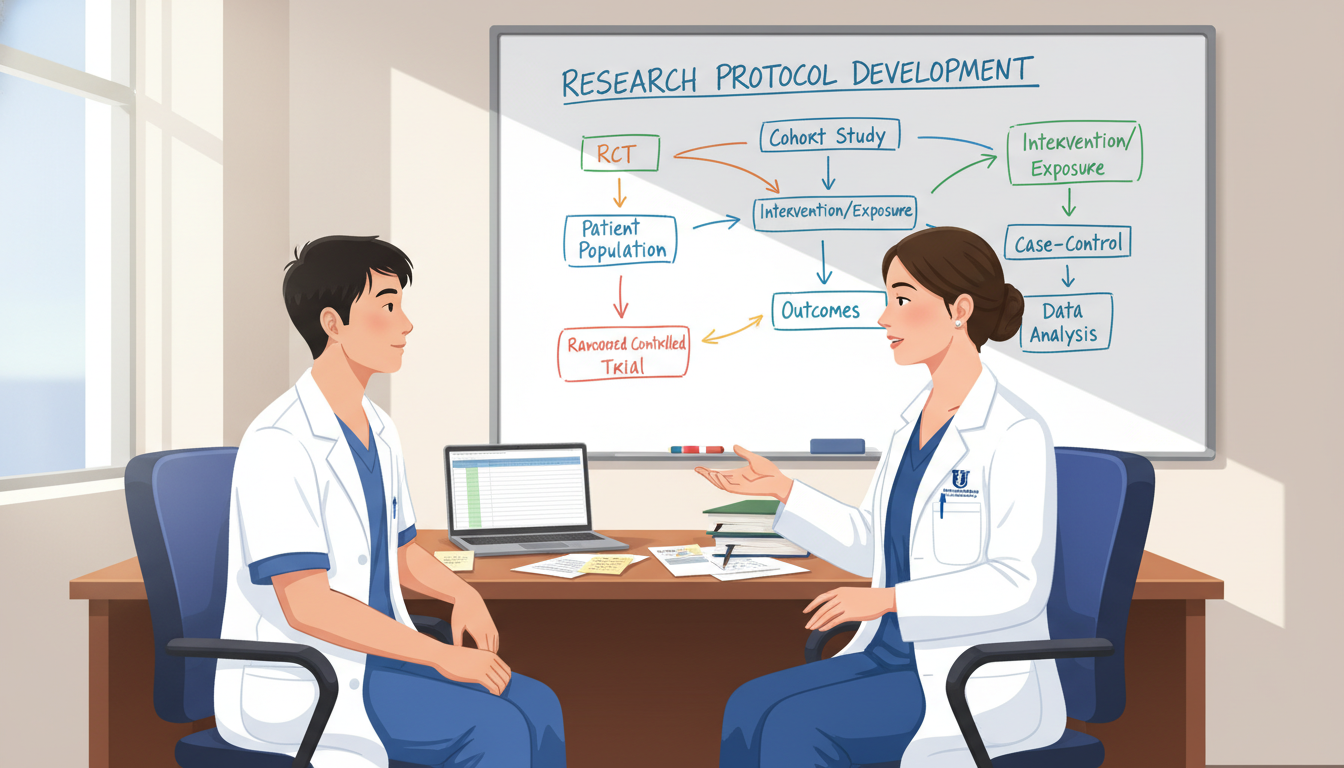
Many students struggle not with motivation, but with access—how to actually get involved. The good news is that anesthesiology lends itself to diverse, feasible projects that can be started even late in medical school if you’re strategic.
Step 1: Identify Your Institutional Landscape
Start by mapping out what exists at your institution:
- Departmental research page: Look at the anesthesia department website. Who is publishing? In what areas?
- Faculty profiles: Identify faculty with:
- Recent publications
- Roles in QI, ERAS, or patient safety
- Involvement in pain, critical care, or perioperative medicine
- Existing resident or student projects: Many departments have ongoing projects that could use an extra pair of hands.
If your school lacks an anesthesiology department, expand to:
- Surgery, critical care, emergency medicine, or pain medicine faculty with perioperative or procedural research
- Hospital QI and patient safety offices
- Simulation centers or education offices
Step 2: Approach Faculty Strategically
When contacting potential mentors, be specific and professional. Instead of “Do you have any research?”:
- Mention your interest in anesthesiology
- Highlight any relevant skills (statistics, programming, literature review experience)
- State your timeframe (e.g., “I can dedicate 4–6 hours per week over the next 8 months”)
- Give a concrete ask (e.g., to help with data collection, chart review, drafting a case report)
Example email snippet:
Dear Dr. [Name],
I am a third-year medical student with a strong interest in anesthesiology and perioperative medicine. I recently reviewed your work on [briefly mention topic], and I am very interested in contributing to similar projects.
I can commit approximately 4–6 hours per week over the next 9 months and have prior experience with [Excel/RedCap/literature reviews/basic stats, etc.]. I would be grateful for the opportunity to assist with any ongoing project or to discuss a small, feasible project I could help lead under your supervision.
Thank you for your time and consideration,
[Your Name]
Step 3: Choose Project Types That Match Your Timeline
Your strategy differs based on when you start.
If You’re Early (M1–Early M2):
You have time for:
- Prospective clinical studies (e.g., collect data on postoperative nausea and vomiting, opioid use, regional block success rates)
- Retrospective chart reviews
- Education or simulation projects with pre/post surveys
- More ambitious systematic reviews or meta-analyses
You can aim for 1–2 substantial projects plus additional smaller projects.
If You’re Mid-Stage (Late M2–M3):
You still have time for:
- Retrospective chart review studies
- Case reports and case series
- Narrative or scoping reviews
- QI and patient safety projects with relatively quick implementation
Prioritize projects where:
- The question is well-defined
- Data is already collected or accessible
- The mentor has a track record of publishing and moving projects forward
If You’re Late (Early M4 or Beyond):
Focus on projects with fast turnaround:
- Case reports (anesthesia complications, rare airway cases, regional anesthesia successes, unusual perioperative physiology)
- Review articles or book chapters (if a mentor invites you to contribute)
- Institutional posters that can be turned into short manuscripts
Even a well-executed poster with a strong methodology can strengthen your profile when you explain it clearly during interviews.
Project Ideas Specific to Anesthesiology
Some realistic project examples:
- Retrospective Study: Comparison of postoperative nausea and vomiting rates before and after implementation of a new PONV prophylaxis protocol.
- QI Project: Implementing a checklist to reduce perioperative hypothermia in elective surgeries.
- Case Report: Unusual airway management strategy in a patient with complex craniofacial abnormalities.
- Education Research: Assessing how a new simulation curriculum improves resident performance in managing malignant hyperthermia.
- Pain/Regional Study: Evaluating analgesic outcomes of a novel nerve block technique vs. standard practice.
Each of these can produce at least one abstract or poster, and often a manuscript.
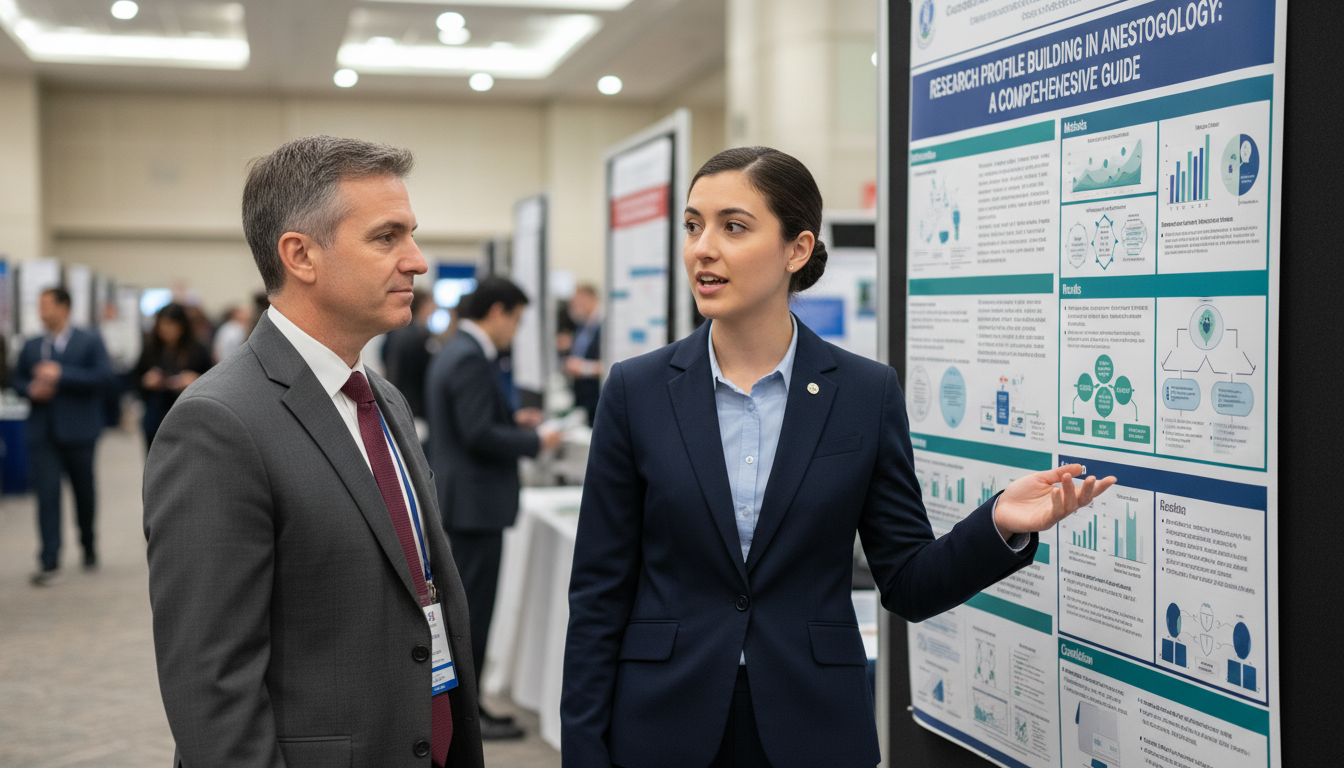
Building a Coherent, Credible Research Narrative
Beyond the raw number of “publications for match,” programs care about whether your research tells a story that makes sense for anesthesiology and for your career trajectory.
Anchor Your Work Around Anesthesiology-Relevant Themes
If possible, cluster your projects around a few themes:
- Perioperative outcomes and safety
- Regional anesthesia and pain management
- Critical care and hemodynamic management
- Airway management and respiratory physiology
- Simulation and anesthesia education
This allows you to say in your personal statement and interviews:
- “I’ve developed a specific interest in perioperative outcomes and ERAS protocols, as shown by my projects on postoperative pain, length of stay, and PONV reduction.”
Even if some of your projects are outside anesthesiology (e.g., cardiology or oncology research from earlier years), connect them to skills that matter in anesthesia:
- Data analysis
- Clinical reasoning and physiology
- Translating evidence into protocols
- Working in multidisciplinary teams
Show Progression and Increasing Responsibility
Program directors like to see growth. A strong research trajectory might look like:
- Early assistant role: Helping with data entry or chart review on a project, middle-author on a paper.
- Intermediate role: Leading a case report, first author on a small retrospective study or narrative review.
- Advanced role: Designing a project with mentor guidance, presenting at a regional or national meeting, maybe mentoring more junior students.
Even if you only reach step 1–2 by application time, clearly articulate:
- What you learned
- How you contributed
- How those experiences prepared you for academic work in residency
Prepare to Discuss Your Work in Detail
You should be able to clearly explain:
- The question you were trying to answer and why it mattered clinically
- Your role (what exactly did you do?)
- The methods at a conceptual level (study design, population, intervention/exposure, outcomes)
- Key results and their limitations
- What you would do differently next time
A common pitfall is listing many items on your CV but being unable to describe them convincingly. Depth of understanding often impresses more than a long list.
Turning Completed Work Into Maximum Impact
Once you’ve done a project, don’t stop at “we collected some data.” Convert your work into products that are visible in the anesthesia match.
1. Posters and Presentations
Try to present your work at:
- Institutional research days or anesthesia department conferences
- Regional meetings (e.g., state anesthesia societies)
- National meetings (ASA, IARS, SOAP, ASRA, SCCM if critical care–oriented)
Benefits:
- Enhances your CV under “Presentations”
- Provides talking points for interviews
- Exposes you to leaders and future letter-writers in the field
2. Manuscripts and Publications
For publications for match, prioritize getting at least 1–2 projects submitted before ERAS opens. Even if they are not yet accepted, you can list them as “submitted” or “in progress” (labeled accurately).
Common, feasible manuscript types:
- Case report with a short literature review
- Retrospective chart review of a clearly defined problem
- Narrative review on an anesthesiology-relevant topic
- QI project write-up if it uses standard QI frameworks (e.g., PDSA cycles, pre-post comparisons)
Work closely with your mentor on:
- Target journal selection (anesthesia journals, perioperative journals, education journals, or QI-focused outlets)
- Formatting, responding to reviewers, and resubmission if needed
3. Letters of Recommendation from Research Mentors
A strong research mentor letter can significantly strengthen your anesthesiology residency application. They can highlight:
- Your work ethic and reliability
- Your intellectual curiosity and critical thinking
- Your writing and communication skills
- Your potential as a future academic anesthesiologist or leader
Help your mentor by:
- Updating them with your CV, personal statement draft, and a bullet list of your contributions
- Reminding them of specific examples (e.g., how you handled a setback in the project) that speak to your character
Balancing Research with the Rest of Your Application
Research is just one pillar of a successful anesthesiology residency application. You must balance it with the other major components.
Core Application Priorities
- Strong clinical grades, especially in medicine, surgery, anesthesiology elective, and ICU
- USMLE/COMLEX scores (or pass results, if applicable)
- Letters of recommendation from anesthesiologists who know you well clinically or through research
- Sub-internships and away rotations demonstrating interest and fit
- A compelling personal statement that weaves together your clinical and research interests
Do not sacrifice your clinical performance to squeeze in more research at the expense of sleep or well-being. For anesthesiology, programs generally value:
- Solid clinical performance + modest but focused research
more than - Excellent research with weak or inconsistent clinical evaluations
Time Management and Practical Tips
- Set realistic expectations: 4–6 hours per week is often sustainable during preclinical or lighter rotations; less during intensive clerkships.
- Use tools like reference managers (Zotero, Mendeley) and citation alerts to stay efficient.
- Batch tasks: dedicate blocks of time for literature review vs. writing vs. data work.
- Be transparent with mentors when your schedule changes; responsible communication builds trust.
Frequently Asked Questions (FAQ)
1. Do I need anesthesiology-specific research to match into anesthesiology?
Not strictly, but it helps. Many successful applicants have research in other fields (internal medicine, surgery, cardiology, etc.) from earlier years. You should:
- Emphasize skills gained (critical appraisal, data analysis, collaboration).
- If possible, add at least one anesthesiology, perioperative, pain, or critical care–related project before applying to demonstrate focused interest.
2. How many publications are needed for a competitive anesthesiology residency application?
There is no fixed number, but:
- 0–1 items: Still matchable, especially at community programs.
- 2–5 items (mix of posters and manuscripts): Competitive for many academic programs.
- 5+ items with first authorship: Particularly attractive to research-heavy and top academic departments.
Quality, relevance, and your understanding of the work often matter more than just counting “how many publications needed.”
3. I’m late (M4) and have no research. Is it too late to improve my profile?
It’s not too late to add something meaningful:
- Collaborate on a case report with an anesthesiology mentor during your anesthesia or ICU rotation.
- Join an ongoing retrospective study where data is already collected and help with the write-up.
- Present a small QI project as a poster at your institution.
Even one thoughtfully executed project, clearly understood and honestly presented, is better than none—and can still strengthen your anesthesiology residency application.
4. What if my school doesn’t have a strong anesthesiology department?
You can still build a strong research profile by:
- Working with related specialties (surgery, critical care, pain, emergency medicine) on perioperative or procedural topics.
- Reaching out to anesthesiology departments at nearby institutions for remote collaboration (e.g., data analysis, literature reviews).
- Getting involved in multi-center or national projects, sometimes coordinated through interest groups or student anesthesia societies.
Be proactive and flexible; many anesthesiologists are open to mentoring motivated students, even from other institutions.
Developing a strong research profile in anesthesiology is less about chasing a magic number of publications and more about building a coherent, authentic narrative: you are curious, you care about perioperative outcomes and patient safety, and you have demonstrated the discipline to see scholarly work through. That combination—paired with solid clinical performance—will serve you well in the anesthesia match and beyond.