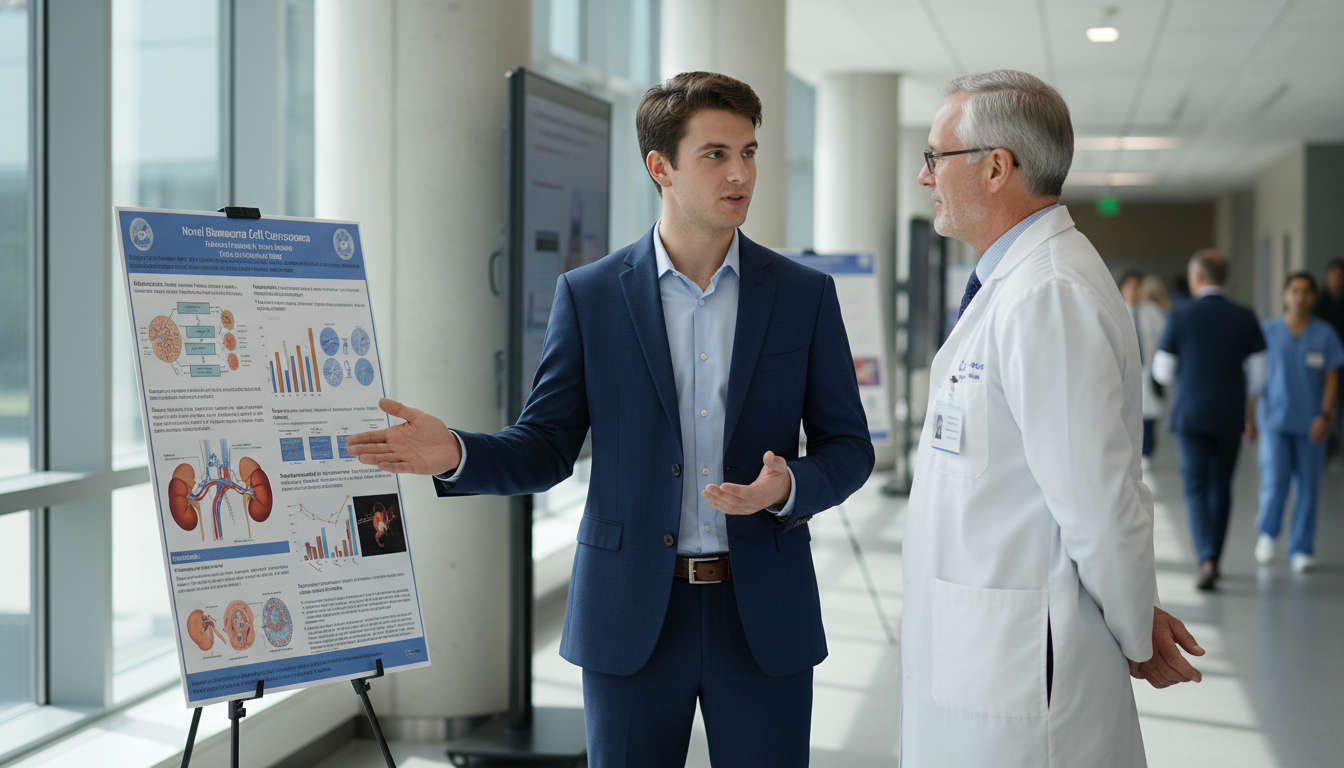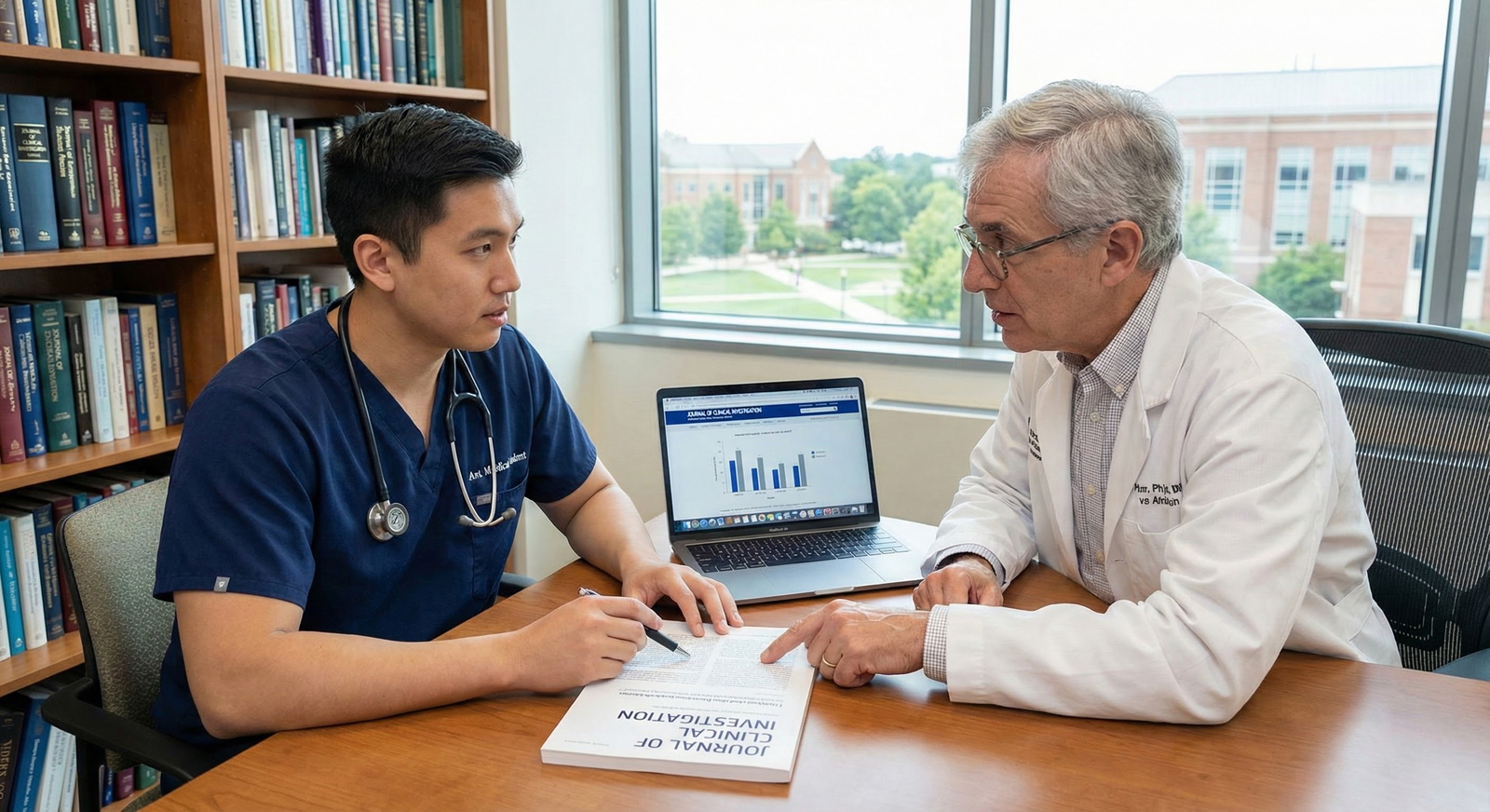
As an MD graduate targeting a Transitional Year (TY) residency, your research profile can be a strategic differentiator—especially if you’re aiming for competitive advanced specialties afterward (radiology, anesthesiology, dermatology, radiation oncology, PM&R, etc.). While the Transitional Year is often perceived as a “gap-filler,” programs increasingly look for applicants who bring curiosity, academic engagement, and evidence-based thinking. A thoughtful research portfolio shows exactly that.
This guide walks you through how to build, refine, and present a research profile that fits your goals as a recent MD graduate applying to Transitional Year programs.
Understanding the Role of Research in Transitional Year Applications
Transitional Year: What Programs Actually Look For
Transitional Year residencies are broad-based, one-year programs that prepare you for advanced training. Program directors often emphasize:
- Strong clinical performance (MS3/MS4 rotations)
- Solid USMLE/COMLEX scores
- Professionalism and teamwork
- Adaptability and reliability in diverse rotations
- Clear future specialty plans
Research is rarely the primary selection criterion. However, it can:
- Break ties between similarly qualified candidates
- Signal your commitment to academic medicine or an academic career path
- Support your future advanced specialty application
- Show discipline, follow-through, and ability to complete complex projects
For MD graduates from allopathic medical schools, especially in an allopathic medical school match, having at least some research exposure is now closer to the norm than the exception.
How Important Is Research for TY Compared to Categorical Programs?
The importance of research varies:
Community-based TY programs
Typically place more weight on clinical skills and “fit” than on a large research portfolio. A few projects or case reports may be sufficient.University-based TY programs
Often attach to academic institutions and advanced specialties. These programs may value research more, especially if aligned with the institution’s strengths (e.g., oncology, cardiology, radiology).TY programs connected to competitive advanced specialties
If your intended advanced specialty is research-heavy (e.g., dermatology, radiation oncology), your research profile is crucial for that future match, even if the TY program itself is more clinically oriented.
So, research is both a near-term bonus (for TY selection) and a long-term investment (for your PGY-2+ match).
How Much Research Do You Actually Need?
“How Many Publications Needed” for a Strong TY Application?
There is no fixed number, but realistic benchmarks for an MD graduate:
Minimum exposure (still viable for most TY programs):
- 0–1 publication
- 1–3 research experiences (could be basic, clinical, or quality improvement)
- Some form of scholarly output: poster, abstract, QI project
Solid profile (strong for most TY and a good base for advanced programs):
- 2–4 publications (any position: first author, co-author, middle author)
- A mix of case reports, clinical retrospectives, or review articles
- 3–6 total research or scholarly projects
Highly competitive profile (particularly useful if planning a research-heavy specialty):
- 5+ publications, including at least one as first or second author
- Multiple posters or oral presentations at regional/national meetings
- Clear thematic focus aligning with your advanced specialty interests
For a Transitional Year alone, you do not need double-digit publications. However, your future specialty may demand more, so think ahead.
Publications vs. “Research Experience”: What Counts?
When programs look at research for residency, they broadly consider:
Peer-reviewed journal articles
- Original research
- Case reports or case series
- Review articles
- Meta-analyses or systematic reviews
Conference output
- Posters or abstracts at local, regional, national meetings
- Oral or podium presentations
Quality improvement / patient safety projects
- Even if not published, these can be very relevant to TY and are often easier to complete.
Non-traditional research/scholarship
- Educational research (curriculum design, assessment tools)
- Clinical pathways or guideline development
- Database analyses, registry work
On ERAS, all of the above can be listed as research or scholarly experiences, even when not yet published.
Strategic Research Planning for the MD Graduate Applying to TY
Step 1: Clarify Your Long-Term Specialty Goal
Your research profile should align with where you want to be after your Transitional Year. Ask:
- Are you aiming for a competitive advanced specialty (e.g., derm, radiology, anesthesia, radiation oncology)?
- Are you leaning toward an academic versus community career?
- Are you interested in clinical research, basic science, QI, or medical education?
Example alignment:
- Future radiologist → Imaging studies, radiology case reports, AI in imaging, interventional procedures outcomes.
- Future anesthesiologist → Perioperative outcomes, pain management, critical care, patient safety.
- Future dermatologist → Clinical trials, case reports of rare skin conditions, epidemiology of skin cancer.
Even generic internal medicine or surgery–related projects can still strengthen your profile for a Transitional Year, but if you can align research with your future specialty, that is ideal.
Step 2: Map Your Timeline as an MD Graduate
As a recent MD graduate (rather than a current student), your time constraints and opportunities differ:
- You may have fewer built-in research blocks.
- You may have more flexibility in your schedule before residency.
- You must be realistic about how much you can finish before the ERAS deadline.
Construct a 12–18 month plan:
- Months 1–3: Join ongoing projects; start with quick-win case reports or chart reviews.
- Months 3–9: Take on one more substantial project (retrospective study, review article, or systematic review).
- Months 6–12: Push submissions, respond to revisions, and develop posters/abstracts.
- Months 9–18: Continue data analysis and manuscript writing as you transition into your TY year.
Programs respect continuity—show that you’re still active in research even if all projects aren’t yet published.

Types of Research Projects That Work Well for Transitional Year Applicants
1. Case Reports and Case Series
These are often the most accessible, especially if you have clinical exposure.
Why they’re great for TY applicants:
- Quick turnaround time compared to large clinical trials.
- Demonstrate attention to detail and literature familiarity.
- Can be tied to your clinical curiosity and reasoning.
How to do them efficiently:
- Ask attendings on wards: “Do you have any interesting cases or near-misses that might make good case reports?”
- Keep track of unique presentations, rare diseases, or unusual complications.
- Collaborate with residents or fellows who want help with literature search and drafting.
2. Retrospective Chart Reviews
These are common for MD graduates and can be completed in months rather than years.
Examples:
- Outcomes of patients admitted with sepsis in a specific hospital.
- Readmission rates after certain procedures.
- Effect of a protocol change on length of stay.
Key advantages:
- Often no prospective enrollment needed.
- IRB approval is needed but generally manageable.
- Highly transferrable skills: database management, statistical analysis, critical thinking.
3. Quality Improvement (QI) Projects
Transitional Year programs care deeply about patient safety and systems-based practice, and QI fits this perfectly.
Examples for a TY-relevant QI project:
- Reducing medication errors on inpatient teams.
- Improving discharge summary completion rates.
- Increasing influenza vaccination rates in a clinic.
- Decreasing delays in radiology turnaround times.
You can:
- Implement Plan-Do-Study-Act (PDSA) cycles.
- Collect pre- and post-intervention data.
- Present results at institutional QI days or regional meetings.
- Later, transform QI work into a publication or conference poster.
4. Review Articles and Educational Scholarship
If you lack access to a large patient database but can read and synthesize literature, review papers are an excellent path.
Examples:
- Narrative review on perioperative optimization in high-risk cardiac patients.
- Review of management strategies for a common condition in your future specialty.
- Educational tool or curriculum design for medical students or interns.
Work with a willing faculty mentor: many have topics they’ve wanted to write up but not enough time.
5. Basic Science or Translational Research
More time-consuming but valuable if:
- You’re considering a heavily academic career.
- You have preexisting lab connections from medical school or prior degrees.
- You can continue projects longitudinally (e.g., during and after TY).
For most MD graduates targeting a transitional year residency, basic science is beneficial but not mandatory. Clinical and QI projects often offer better ROI on your limited time.
Finding Mentors, Projects, and Opportunities as an MD Graduate
Leveraging Your Allopathic Medical School Network
Even if you’ve graduated, your allopathic medical school is still a resource:
- Email former research mentors, clerkship directors, and subspecialty attendings.
- Ask: “Do you have any ongoing projects I can contribute to remotely?”
- Offer concrete help: data collection, chart review, literature search, first-draft writing.
Most faculty appreciate dependable help and can involve you in projects quickly.
Connecting with TY-Linked Institutions and Advanced Specialties
If you have a shortlist of Transitional Year programs (or advanced programs) you’re targeting:
- Look up faculty profiles and publication lists on hospital or university websites.
- Identify 1–2 faculty whose research aligns with your interests.
- Send a concise, professional email:
- Introduce yourself as an MD graduate.
- State your goal (e.g., pursuing a transitional year followed by radiology).
- Request opportunities to assist with ongoing projects (remote or onsite).
- Attach CV with any prior research experience.
Even if these don’t result in immediate opportunities, they demonstrate your interest and sometimes translate into better interview conversations or LORs.
Online and Remote Opportunities
For MD graduate residency applicants with geographic or institutional limitations, consider:
- Multi-institutional collaborative studies
– e.g., resident-led collaboratives, specialty society projects. - Systematic review teams that recruit collaborators through academic Twitter/X, specialty forums, or listservs.
- Mentorship programs through specialty societies (e.g., ACR, ASA, AAD, etc.), which may pair you with faculty who have open projects.

Maximizing Visibility: Presentations, Publications, and ERAS Strategy
Turning Work into Tangible Outputs
Program directors care not just that you “did research,” but that you finished something. Focus on converting projects into:
- Journal articles (case reports, original studies, reviews)
- Conference abstracts and posters
- Oral presentations at local/national meetings
- Institutional presentations (grand rounds, M&M conferences, QI days)
When you list experiences on ERAS for the allopathic medical school match:
- Be honest and precise about your role.
- Distinguish between “completed & published” vs. “in progress” or “submitted.”
- Use the “Publications for match” section accurately—don’t claim “in review” unless a manuscript is actually under review.
How to Describe Your Role
Consider how a program director will read your CV:
- “Co-investigator on a retrospective study” is vague.
- “Performed data abstraction of 300 charts, led data analysis, and drafted methods section” is concrete.
In your descriptions:
- Highlight initiative and responsibility.
- Mention skills relevant for clinical practice (teamwork, statistics, critical appraisal).
- If applicable, note any mentorship or teaching roles (e.g., guiding junior students).
Addressing Gaps or Weaknesses in Your Research Profile
If you feel your research portfolio is light compared to peers:
- Emphasize quality over quantity:
- One well-done, first-author publication can outweigh several superficial co-authorships.
- Highlight impact:
- Did your QI project change a protocol?
- Did your research lead to a new clinical pathway?
- Demonstrate ongoing engagement:
- Show that you are currently working on projects (with specific roles and timelines).
- Include “Submitted” or “In preparation” manuscripts with realistic details, clearly labeled.
In your personal statement and interviews, frame your journey as one of growth—what you learned about evidence-based medicine, teamwork, and academic curiosity.
Practical Examples: Tailoring a Research Profile for Different Pathways
Example 1: MD Graduate Aiming for Transitional Year + Anesthesiology
Current profile:
- 1 case report on postoperative delirium (submitted).
- Participation in a QI project on reducing OR turnaround time.
- No publications yet.
Action plan:
- Push to finalize and publish the case report.
- Convert the QI project into a poster for a regional anesthesiology or quality & safety conference.
- Ask the anesthesiology mentor for a small retrospective project (e.g., outcomes in high-risk surgical patients).
ERAS narrative:
- Emphasize interest in perioperative outcomes and patient safety.
- Frame QI work as directly relevant to anesthesia practice and systems-based care in a TY.
Example 2: MD Graduate Aiming for Transitional Year + Dermatology
Current profile:
- No publications.
- Minimal prior research during medical school.
Action plan over 12 months:
- Join a derm faculty member’s ongoing case series.
- Take the lead on 1–2 derm case reports (e.g., rare skin malignancy, complex autoimmune condition).
- Draft a review on a niche topic (e.g., cutaneous manifestations of systemic disease) with mentorship.
- Submit at least one abstract to a dermatology meeting.
ERAS narrative:
- Show rapid progress: from no research to several submissions in <1 year.
- Highlight genuine interest in skin disease and continuity (derm projects continuing into or after TY).
Example 3: MD Graduate with Strong Basic Science Background Applying to TY
Current profile:
- 3 first-author basic science publications from preclinical years.
- Limited clinical research.
Action plan:
- Leverage basic science work to show rigor and perseverance.
- Add at least one clinically oriented or QI project during the pre-application year.
- Seek a mentor who can help translate lab findings into clinical relevance in interviews and personal statements.
ERAS narrative:
- Connect basic science skills (experimental design, data analysis) to improved clinical reasoning and evidence-based care.
- Emphasize desire to apply research mindset to patient care during the Transitional Year.
Putting It All Together: A Checklist for TY-Focused MD Graduates
Before you submit your applications, review this checklist:
Research Content
- At least 1–3 meaningful research or QI experiences.
- Ideally 1–3 publications (any type), or realistic submissions in progress.
- At least one poster or oral presentation (institutional, regional, or national).
Strategy and Alignment
- Research topics that relate either to:
- General internal medicine/surgery/emergency care, or
- Your intended advanced specialty.
- A mentor who can speak to your research performance in a letter of recommendation.
- Clear story tying your research to your future career goals.
Documentation and Presentation
- ERAS entries are complete, precise, and honest.
- Each project description reflects your active role and skills gained.
- Manuscripts and abstracts are properly tracked (submitted, accepted, in press).
Growth and Narrative
- Evidence of progression: more responsibility, more complex projects over time.
- Reflection on what research taught you about patient care, systems, or ethics.
- Ready talking points for interviews about:
- Your favorite project and why.
- A challenge you faced in research and how you resolved it.
- How you will continue scholarly work during your Transitional Year.
FAQs: Research Profile Building for MD Graduates Applying to Transitional Year
1. Do I need research to match into a Transitional Year program as an MD graduate?
Not strictly, especially for community-based TY programs. Strong clinical performance, solid test scores, and good letters can be enough. However, having some research—case reports, QI projects, or small clinical studies—improves your application and helps your future advanced specialty match.
2. How many publications needed to be “competitive” for TY and beyond?
There is no magic number. For most MD graduate residency applicants targeting a transitional year, 1–3 publications is a solid foundation. If you’re planning to enter a highly competitive advanced specialty (like dermatology or radiation oncology), aim for more robust output over time (5+ publications, including at least one first-author), recognizing this may extend beyond your TY year.
3. I have research experience but no publications yet. Will programs care?
Yes, they will, but you must frame it carefully. Document your concrete contributions (data collection, analysis, manuscript drafting) and show that manuscripts or abstracts are being actively developed. Program directors understand that not every project reaches publication quickly, but they value follow-through and honesty.
4. Can I still build a meaningful research profile if I’ve already graduated from my allopathic medical school?
Absolutely. Many MD graduates strengthen their research portfolios in the year(s) between graduation and residency. Use your existing school connections, seek remote collaborations, focus on achievable projects (case reports, reviews, QI, retrospective studies), and aim to convert work into posters and publications before and during your Transitional Year.
By approaching research profile building with a clear strategy, realistic expectations, and a focus on finishing projects, you can significantly bolster your application—not only for your Transitional Year residency, but also for the advanced specialty training that follows.