Why Your Research Profile Matters as a Caribbean IMG in Anesthesiology
For a Caribbean medical school graduate aiming for anesthesiology, a strong research portfolio is no longer “nice to have”—it is a strategic differentiator.
As a Caribbean IMG, program directors may know less about your school’s clinical rigor compared to U.S. MD/DO programs. Research helps bridge that gap by showing that you can:
- Think critically and scientifically
- Work in teams and communicate professionally
- Persist through complex, long-term projects
- Contribute to academic medicine, quality improvement, and patient safety
In competitive fields like anesthesiology residency, especially university and academic programs, applicants with robust scholarly output stand out. This is particularly true when your application also highlights a Caribbean medical school residency pathway (e.g., SGU residency match or other well-known Caribbean institutions). A credible research track record signals that you can thrive in an evidence-based, data-driven specialty.
You do not need to be a “research superstar” with dozens of papers. However, you do need a coherent, credible story:
- A few focused projects
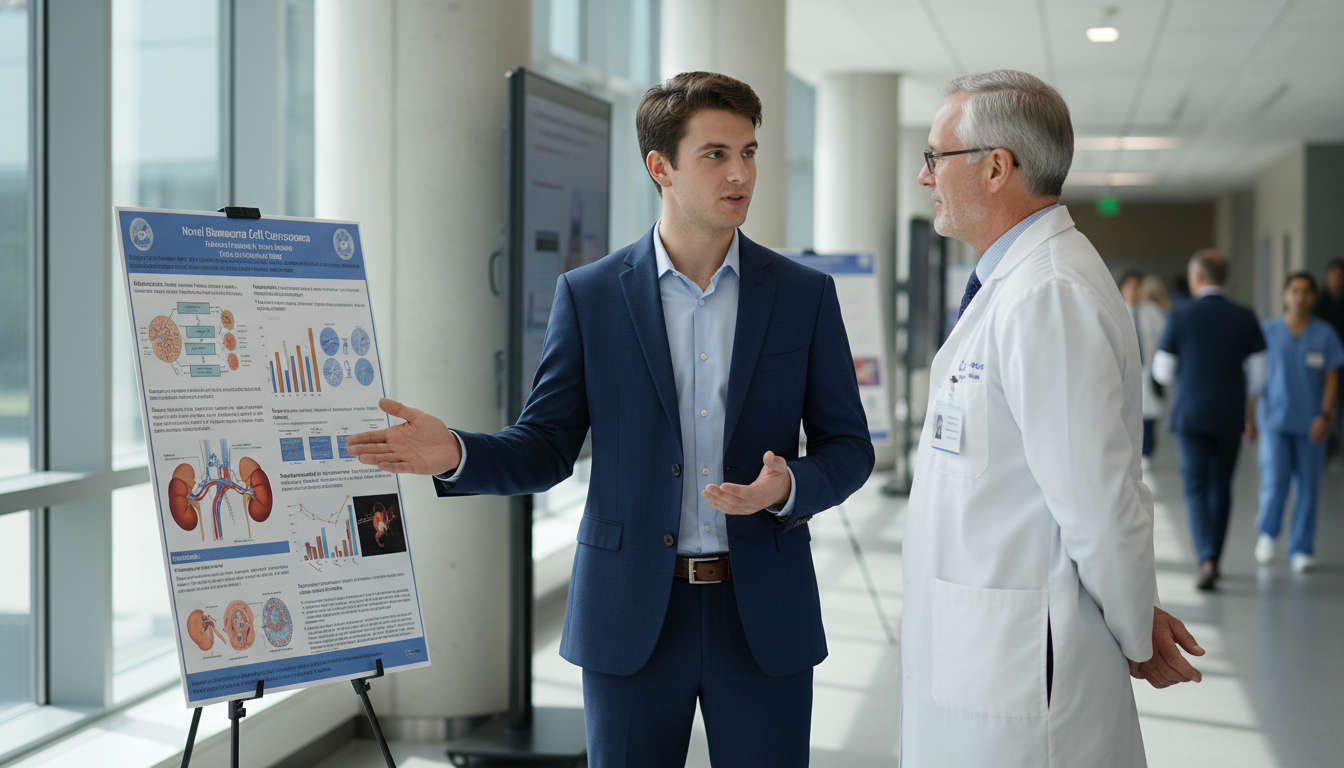
- Evidence of productivity (presentations, posters, publications)
- Clear alignment with anesthesiology, perioperative medicine, or critical care
This article lays out a realistic, step-by-step approach to building that story as a Caribbean IMG.
Understanding What “Counts” as Research for Anesthesiology
Research for residency is broader than randomized trials and large NIH-funded projects. Particularly for anesthesiology residency and the anesthesia match, program directors recognize a spectrum of scholarly work.
Types of Research and Scholarly Activity That Count
You can build a strong portfolio using a mix of:
Clinical Research
- Retrospective chart reviews (e.g., outcomes after a specific anesthesia protocol)
- Observational studies (e.g., airway complications in certain patient populations)
- Perioperative management studies
Quality Improvement (QI) and Patient Safety Projects
- Implementing a new pre-op checklist
- Reducing OR delays or PACU wait times
- Standardizing post-op pain protocols
Well-designed QI projects (with data collection, analysis, and outcome measures) are highly valued in anesthesiology because they impact day-to-day care.
Case Reports and Case Series
- Rare complications of regional blocks
- Unusual airway management challenges
- Perioperative management of complex comorbidities
These are often the most accessible “entry point” for early-career IMGs.
Systematic Reviews, Narrative Reviews, and Book Chapters
- Reviews of regional anesthesia techniques
- Perioperative management of patients with specific conditions (e.g., cirrhosis, obesity)
- Chapters in anesthesia, pharmacology, or critical care texts
Basic Science or Translational Research
- Pharmacology of anesthetic agents
- Mechanisms of anesthesia-induced neurotoxicity
- Pain pathway modulation
More common at large academic centers. If you have this, emphasize it, even if not purely anesthesiology-focused.
Educational Research
- Simulation-based training evaluations
- New teaching tools for airway management, ultrasound, or crisis resource management
These all contribute to your scholarly footprint and show intellectual curiosity.
What Program Directors Look for in Research Output
When anesthesiology program directors evaluate the research section of ERAS, they typically consider:
- Productivity: Did you bring projects to completion—like abstracts, posters, publications, or presentations?
- Consistency: Is there a pattern or progression rather than random, one-off activities?
- Relevance: Are at least some projects related to anesthesiology, perioperative medicine, critical care, or pain?
- Role: Did you have meaningful responsibilities beyond simply collecting data?
- Impact: Publications in peer-reviewed journals, especially indexed journals, carry the most weight.
They also know that Caribbean students may face structural barriers (less access to home institutions with large research programs). What matters is what you achieved within your context and how you present it.
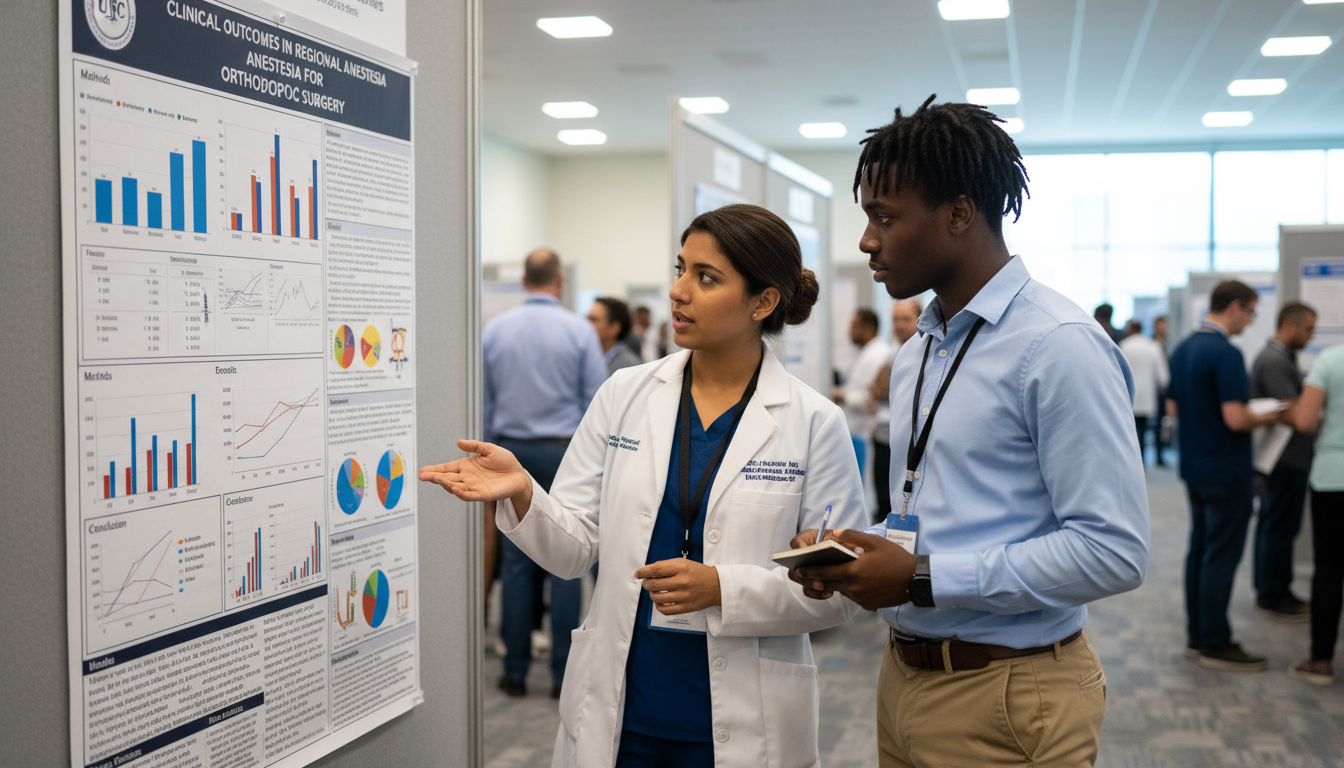
How Many Publications Do You Really Need for Anesthesiology?
Many Caribbean IMGs ask: “How many publications needed to be competitive?” The honest answer is: there is no magic number—but there are realistic targets and tiers.
General Benchmarks for Caribbean IMGs
For anesthesiology residency, a practical way to think about your research profile is:
Minimum to show serious scholarly engagement (baseline):
- 1–2 posters or oral presentations (regional or national level)
- 1–2 case reports or review articles, ideally published or accepted
- Some involvement in a QI or clinical project (even if not fully published)
Strong profile (competitive for many academic and community programs):
- 2–4 peer-reviewed publications (case reports, clinical studies, or reviews), with at least 1–2 anesthesia-related
- Several posters or oral presentations (institutional, regional, or national)
- Clear continuity of research or QI involvement over at least 1–2 years
Exceptional profile (particularly helpful for top academic programs):
- 5+ publications (mix of case reports, original research, reviews; anesthesiology-related if possible)
- National society presentations (e.g., ASA, IARS, ASRA)
- Involvement in prospective clinical research, multicenter studies, or notable QI initiatives
- Potential awards or recognition for your scholarly work
For most Caribbean IMGs targeting the anesthesia match, being in the “strong profile” range is both realistic and impactful—especially when combined with solid USMLE scores, strong letters, and targeted U.S. clinical experience.
Quality vs. Quantity
A smaller number of high-quality, clearly-explained projects can be more impressive than a long list of low-impact or poorly explained works.
Strive for:
- Clear anesthesiology or perioperative relevance
- Evidence of your active role (not just a peripheral contribution)
- Projects that you can speak about comfortably during interviews
Program directors often ask follow-up questions like:
- “Tell me about your most important research project.”
- “What was your role?”
- “What did you learn from the data?”
- “How would you improve that study if you could repeat it?”
If you cannot confidently answer these, the value of the line on your CV decreases substantially.
Step-by-Step Strategy to Build a Research Profile as a Caribbean IMG
Caribbean schools vary in research infrastructure. Some, like SGU, have more established pathways and connections that feed into the SGU residency match, while others require more individual initiative. The core strategy, however, is similar across schools.
Step 1: Clarify Your Timeframe and Capacity
Before committing, be realistic about:
- Where you are in training (Basic Sciences vs. Clinical Rotations vs. Post-graduation)
- How many hours per week you can devote to research
- Whether you are already in the U.S. or still abroad
- Your planned exam schedule (USMLE Step exams, OET, etc.)
You must protect your exam performance—research should enhance your application, not derail it by causing underprepared test scores.
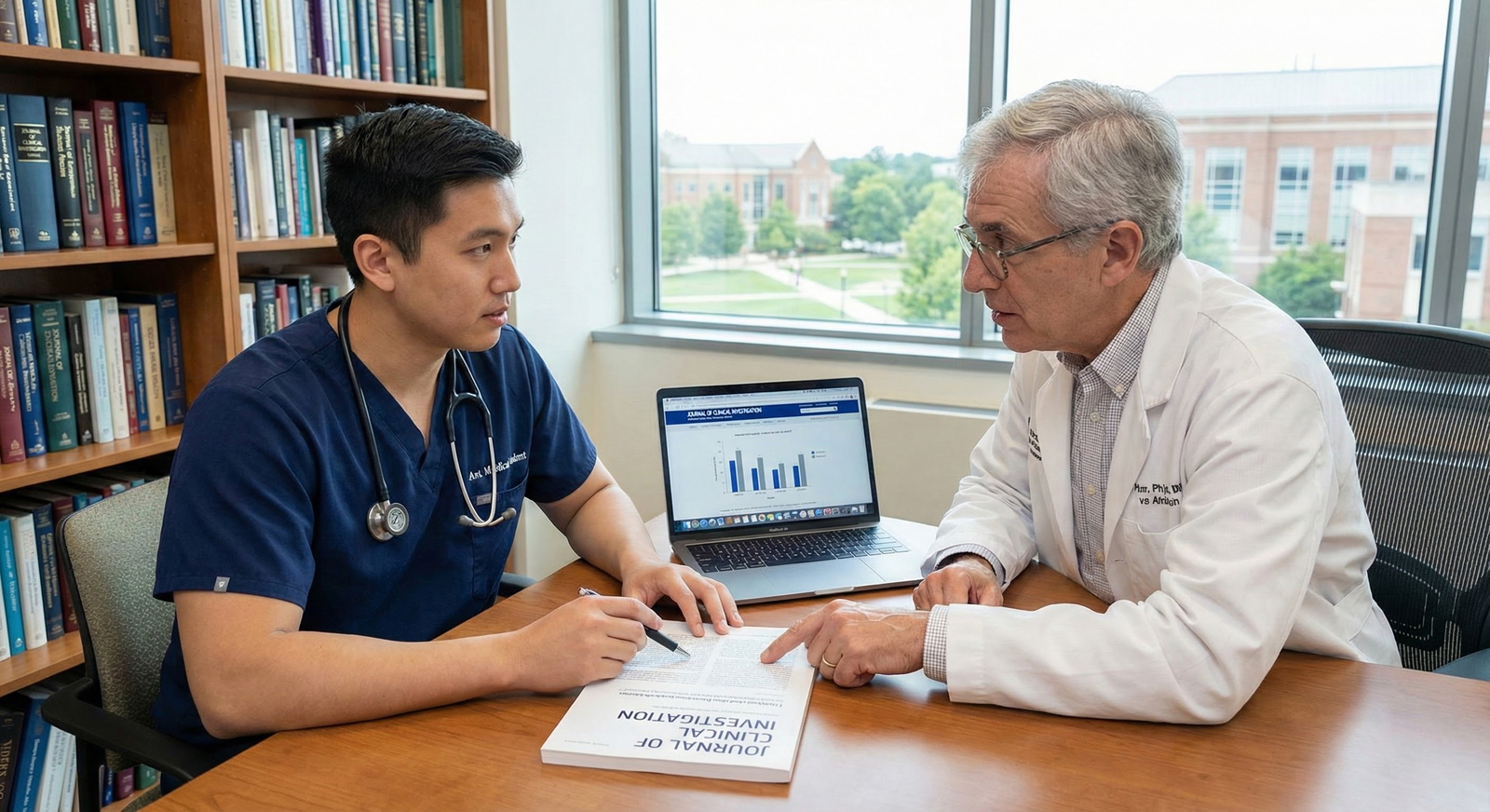
Step 2: Identify Potential Mentors Strategically
You need mentors with:
- Interest in anesthesiology or perioperative medicine
- A track record of publications or QI projects
- Openness to working with students or IMGs
Where to find them:
At Your Caribbean Medical School
- Look at faculty pages for anesthesiology, surgery, internal medicine, emergency medicine, and critical care.
- Ask senior students which faculty actually follow through on projects.
At U.S. Clinical Rotation Sites
- During anesthesia, surgery, ICU, and perioperative medicine rotations, identify attendings who publish or present at conferences.
- Express interest early in the rotation, not on the last day.
Through Cold Outreach
- Many IMGs successfully collaborate with researchers via polite, targeted emails.
- Search PubMed for anesthesiology research at hospitals where you’re rotating (or hope to rotate), then contact corresponding authors.
Email Template (Short Version):
Subject: Medical student interested in anesthesiology research assistance
Dear Dr. [Name],
I am a [year] Caribbean medical student currently rotating at [hospital/clinic] with a strong interest in anesthesiology and perioperative medicine. I reviewed your recent work on [briefly mention 1–2 relevant papers], and I am very interested in learning more about your research.
I would be grateful for the opportunity to assist with any ongoing projects—particularly with literature review, data collection, or abstract/manuscript preparation. I can commit approximately [X] hours per week and am eager to learn.
Would you be open to a brief meeting to discuss possible ways I might contribute?
Sincerely,
[Full Name]
[Caribbean Medical School, Graduation Year]
[Phone] | [Email] | [ERAS AAMC ID if applicable]
Send many such emails—volume matters. It is normal to get few or no replies; persistence is key.
Step 3: Start with Accessible Projects
As a Caribbean IMG, especially without a home academic institution in the U.S., you might not immediately join a large RCT. Instead, target projects that are:
- Feasible remotely or with limited hospital access
- Doable within months, not years
- Publishable in more accessible formats (case reports, reviews, small series)
Good starter projects:
- Case reports/case series from your clinical rotations (unusual airway, complex obstetric anesthesia, rare reaction to anesthesia agents).
- Retrospective chart reviews (e.g., outcomes before and after implementing a new PACU pain protocol).
- Narrative reviews on topics your mentor is already publishing about.
These early projects help you learn research basics, show reliability, and build trust with mentors–often leading to involvement in larger projects.
Step 4: Be the Most Reliable Person on the Team
Mentors love students who:
- Show up when they say they will
- Meet deadlines (or communicate early if they can’t)
- Are accurate with data and references
- Accept feedback professionally and revise quickly
As an IMG, your reputation for reliability can be as important as your technical skills.
Offer to do:
- Literature searches and reference management (e.g., using Zotero/EndNote)
- First drafts of case reports, abstracts, and review sections
- Data entry and basic cleaning under supervision
Over time, you can assume more sophisticated tasks like basic statistical analysis or draft full manuscripts.
Step 5: Aim for Tangible, CV-Ready Outputs
Target milestones you can list on ERAS:
- Abstract submitted → abstract accepted → poster or oral presentation delivered
- Manuscript drafted → revised → submitted → accepted → published
Plan your timeline around the anesthesia match:
- 1–2 years before applying: Start or join projects.
- 12–18 months before applying: Aim to submit abstracts and manuscripts.
- Application year: Even “submitted” or “under review” items can be listed on ERAS, but clearly labeled as such.
If you are at an institution with an anesthesiology department, ask:
- “Does your department support poster submissions to ASA/IARS/ASRA?”
- “Are there internal research days or regional conferences I can present at?”
Presentations (even at local or institutional levels) are important in demonstrating communication skills.

Tailoring Your Research Profile Specifically to Anesthesiology
Your research does not all need to be in anesthesia, but for maximum impact in the anesthesia match, you should connect as much as possible to anesthesiology or perioperative care.
Themes That Align Well with Anesthesiology
Consider focusing on:
Airway management and respiratory complications
- Difficult airways
- Postoperative respiratory failure
- Extubation strategies
Perioperative outcomes and optimization
- Prehabilitation and risk stratification
- Enhanced Recovery After Surgery (ERAS) protocols
- Perioperative fluid management
Regional anesthesia and pain management
- Nerve block techniques
- Opioid-sparing protocols
- Chronic pain interfaces with perioperative care
Critical care and hemodynamic management
- Shock resuscitation strategies
- ICU sedation and analgesia protocols
- Ventilator management
Patient safety and QI in the OR
- Checklists, time-outs, and handoff protocols
- Prevention of wrong-site surgery or medication errors
Even if your project is in general surgery or internal medicine, tie your work back to what anesthesiologists care about: hemodynamics, ventilation, analgesia, safety, and outcomes around the time of surgery.
How to Talk About Your Research in Anesthesiology Interviews
When asked about research, frame your answers around:
Clinical relevance to anesthesiology
- “This project looked at post-op respiratory complications, which has clear implications for anesthesia recovery room monitoring and extubation decisions.”
Your role and skill development
- “I led the literature review, developed data collection tools, and drafted the initial manuscript. Through this, I learned to critically evaluate evidence and handle large datasets.”
Impact on your approach as a future anesthesiologist
- “This experience made me more aware of how small changes in perioperative management can significantly influence patient outcomes.”
Having one or two “signature projects” you can discuss confidently is extremely valuable.
Leveraging Caribbean School Resources and Post-Grad Time
Your path as a Caribbean IMG often includes specific phases where research is more or less attainable. Use these intentionally.
During Basic Sciences (Preclinical Years)
Best activities:
- Joining or starting interest groups (Anesthesia, Surgery, Critical Care) that might sponsor small QI or educational projects
- Assisting faculty with literature reviews or basic science projects, even if not anesthesia-specific
- Learning research fundamentals: study design, biostatistics basics, reference managers
Don’t over-invest here at the expense of Step 1/Step 2 preparation, but use small, steady efforts to build a base.
During Clinical Rotations
This is often the best time for anesthesiology-relevant research:
- Seek anesthesia, surgery, ICU, and peri-op mentors at each site
- Watch for interesting cases that could become case reports
- Ask attendings who publish: “Is this case or topic something we could turn into a report or review?”
Keep a simple case log with:
- Patient demographics (de-identified)
- Key clinical events
- Unique management decisions
- Potential learning points
Later, you can approach mentors with specific proposals.
During Dedicated Research or Post-Graduation Gap Time
If your timeline allows a research year (or several months of flexible time), consider:
- Formal research fellowships in anesthesiology or critical care (some academic centers accept IMGs)
- Full-time roles as a research assistant or coordinator at U.S. teaching hospitals
Even 6–12 months of concentrated research can generate:
- Multiple posters
- Several manuscripts
- Strong letters of recommendation highlighting work ethic and academic potential
Important: If you are targeting a specific institution for residency, research there can be a powerful foot in the door.
Common Pitfalls and How to Avoid Them
Building a research profile can go wrong in predictable ways. As a Caribbean IMG, be alert to:
1. Overcommitting and Under-delivering
Taking on too many projects and failing to complete them can damage your reputation.
Solution:
- Start with 1–2 projects. Finish them. Then expand.
- Communicate clearly about your availability and exam schedule.
2. Chasing Only “Big” Projects
Waiting for the perfect RCT or multicenter study may leave you with nothing to show.
Solution:
- Use accessible projects (case reports, QI, reviews) to build momentum.
- Accept that not every project needs to be in a high-impact journal.
3. Neglecting Ethics and Authorship
Misunderstandings about IRB approval or authorship order can cause conflict.
Solution:
- Ask mentors early: “Has this project received IRB approval?” for human data.
- Clarify your role and potential authorship position from the start.
- Avoid “guest authorship” on projects you did not meaningfully contribute to.
4. Misrepresenting Your Contributions on ERAS
Program directors may contact mentors or ask detailed questions about your work. Exaggerations can be fatal to your credibility.
Solution:
- Be honest and precise about your contributions.
- Practice explaining what you actually did (not what the team did generally).
FAQs: Research Profile Building for Caribbean IMGs in Anesthesiology
1. I have no research experience. Is it too late if I’m close to applying?
It depends on your timeline, but even 6–12 months before applications, you can:
- Complete one or two case reports
- Join ongoing projects where data is already collected (help with analysis, writing, or literature review)
- Present posters at institutional or regional meetings
While you may not build an extensive portfolio in a short time, having something meaningful is better than nothing, and it shows initiative and growth.
2. Do all my publications need to be anesthesia-related?
No. Anesthesiology programs value any serious, methodologically sound research. However, it is ideal to have at least some work clearly connected to anesthesiology, perioperative medicine, pain, or critical care. For non-anesthesia projects, be prepared to explain what you learned and how those skills translate to anesthesiology practice.
3. Is a research year worth it for a Caribbean IMG aiming for anesthesiology?
If your application is otherwise borderline (e.g., modest scores, limited U.S. experience) and you can secure a robust research position at a reputable U.S. institution, a research year can be very valuable. It can:
- Increase your publications and presentations
- Provide strong U.S. letters from academic anesthesiologists
- Embed you in the culture of academic medicine
However, it is not mandatory for all applicants, and you must weigh financial, visa, and personal considerations.
4. How important are publications for match outcomes like the SGU residency match or other Caribbean medical school residency pathways?
Publications and strong research involvement are increasingly helpful across Caribbean medical school residency outcomes, including the SGU residency match. They:
- Differentiate you from peers with similar exam scores
- Strengthen your candidacy for academic and university-affiliated programs
- Compensate, to some degree, for perceptions about Caribbean school rigor
Still, research is one part of the picture—scores, U.S. clinical experience, letters, and interview performance remain critical.
A carefully constructed research portfolio will not, by itself, guarantee an anesthesiology residency. But as a Caribbean IMG, it is one of the most powerful levers you control to demonstrate your capability, maturity, and commitment to the specialty. By starting early, choosing accessible projects, and aligning your work with anesthesiology, you can turn research from an anxiety point into a clear strength in your application.