Why Your Research Profile Matters as a Caribbean IMG in EM
As a Caribbean IMG targeting emergency medicine, you are competing in one of the more popular and increasingly competitive specialties. Program directors know that many Caribbean medical school graduates—especially from places like SGU, AUC, and Ross—can become excellent emergency physicians. But they also know they receive large numbers of applications from Caribbean schools.
A strong research profile helps you:
- Stand out in a crowded pool of Caribbean medical school residency applicants
- Demonstrate academic curiosity and critical thinking
- Show genuine commitment to emergency medicine (EM)
- Compensate, to a degree, for perceived disadvantages (such as Step timing, first-attempt passes, or school reputation)
- Build connections with faculty who can advocate for you during the EM match
For EM specifically, research is helpful but not usually a primary filter the way it can be for some competitive specialties (like dermatology or plastics). However, it is often a differentiator when programs compare similar applicants—especially for Caribbean IMGs.
If you are from SGU or a similar institution, you’ve probably heard success stories about SGU residency match outcomes, including EM. Look closely at those who matched into solid EM programs: many have some type of scholarly activity listed on ERAS, even if it’s not all high-impact journal research.
Your goal is not to become a career scientist; it’s to build a strategic, realistic research profile that shows you can understand and use evidence in a fast-paced, data-driven field like emergency medicine.
Understanding “Research” in EM Residency Applications
Before you start chasing any project that mentions “research,” you need to understand what actually counts and how much matters.
What Counts as Research or Scholarly Activity?
In EM residency applications, “research” is broader than just PubMed-indexed articles. It generally includes:
Original Research Projects
- Retrospective chart reviews (very common in EM)
- Prospective clinical studies
- Quality improvement (QI) projects with data collection
- Education research (e.g., studying a new simulation curriculum)
- Example: “Impact of a triage sepsis alert on time to antibiotics in the ED”
Case Reports and Case Series
- Detailed reports on interesting or rare ED presentations
- Often more attainable for students who are in the ED frequently
- Example: “Atypical presentation of aortic dissection in a young adult with no risk factors”
Review Articles / Narrative Reviews
- Literature reviews on EM-relevant topics
- Often written under faculty supervision
- Example: “Managing acute agitation in the ED: a review of current evidence”
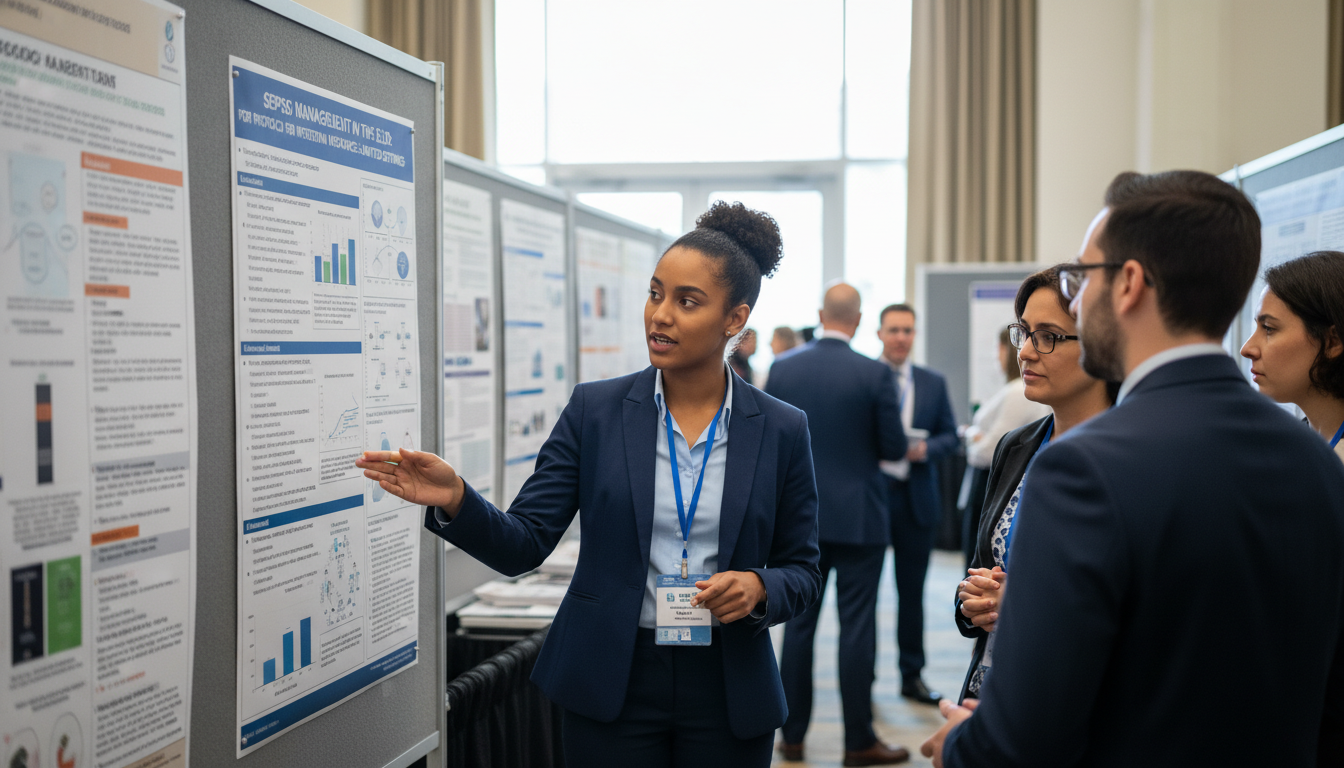
Abstracts, Posters, and Presentations
- Conference presentations (local, regional, national, or international)
- Institutional research days, SGU or school-specific symposia, EM specialty meetings
- Example: Poster at ACEP, SAEM, or EMRA/EM-related regional meetings
Quality Improvement (QI) & Systems Projects
- Process-related projects in the ED (like improving door-to-needle times for stroke)
- Very relevant to EM, often easier to get involved with as a student
- Often produce posters or institutional presentations
Non-traditional Scholarly Work
- Evidence-based blog posts or FOAMed contributions (if supervised and citable)
- Clinical guidelines developed locally (hospital protocol updates with literature review)
- Educational modules or simulation curricula that are disseminated or presented
On ERAS, all of this can be listed as “Scholarly Activity” or “Research Experience,” depending on form and output. Program directors recognize that not every applicant will have multiple PubMed papers, but they do expect you to understand what research looks like and to have participated in some capacity—especially as a Caribbean IMG aiming for EM.
How Many Publications Are Needed for EM Match?
There is no official number of publications required to match EM. But realistically, for a Caribbean IMG in EM, here’s a useful target range:
- Minimum to aim for:
- 1–2 meaningful scholarly activities (e.g., a poster + a case report, or a QI project + institutional presentation)
- Strong but realistic profile for a Caribbean IMG:
- 2–4 items total, ideally with:
- At least 1 EM-focused project
- At least 1 output that is presented or published (poster, abstract, or article)
- 2–4 items total, ideally with:
- Exceptional for EM (especially helpful for academically oriented programs):
- Multiple projects with at least 1–2 PubMed-indexed publications, plus conference presentations
When people ask “how many publications needed” for EM, the more important question is what story your research tells:
- Does it show consistent interest in EM or acute care?
- Does it show that you can see a project through to completion?
- Does it support the narrative in your personal statement and interviews?
For most Caribbean medical school residency applicants in EM, quality and alignment with EM matter more than raw quantity.
Strategic Planning: Building a Research Timeline as a Caribbean IMG
Your opportunities and constraints as a Caribbean student or graduate are different from those of U.S. MD students. You may be off-cycle, doing rotations at multiple sites, or studying for Step exams while moving between countries. That makes planning critical.
Phase 1: Preclinical Years (Basic Sciences in the Caribbean)
If you are still on your island campus (e.g., at SGU or another Caribbean school):
Goals:
- Learn research fundamentals
- Join at least one project (even if not EM-focused yet)
- Build relationships with mentors who can later support your EM match
Action Steps:
Find Faculty with Ongoing Projects
- Look for:
- Faculty who publish in EM, critical care, or internal medicine
- Public health or epidemiology professors with active projects
- Ask: “Do you supervise students in research? Are there any ongoing projects I could help with?”
- Look for:
Join Institutional Research or Scholarly Tracks
- Many Caribbean schools (especially large ones like SGU) have:
- Research electives
- Honors research tracks
- Student-run research interest groups
- These can help you learn methodology, IRB basics, and data handling
- Many Caribbean schools (especially large ones like SGU) have:
Start Small but Finish Something
- Even a small retrospective analysis, a case report, or a survey study can:
- Teach you the process
- Produce at least a poster or abstract
- Make it a priority to see the project through to a tangible output
- Even a small retrospective analysis, a case report, or a survey study can:
Learn Basic Skills Early
- Take free or institutional courses on:
- Basics of biostatistics
- Study design
- Reference managers (Zotero, Mendeley)
- Data tools (Excel, SPSS, R basics, if relevant)
- Take free or institutional courses on:
These fundamentals will make you significantly more efficient when better opportunities appear later in clinical years.
Phase 2: Clinical Rotations (Core and EM Rotations)
This is your prime time to build an EM-focused research profile.
Goals:
- Align projects with EM or acute care
- Produce at least one EM-related product (case report, QI project, or chart review)
- Leverage interactions with EM faculty for mentorship and letters
Action Steps:
Choose EM-Friendly Rotations Strategically
- If possible, schedule:
- An EM core or elective at a hospital with residents and academic activity
- Rotations at sites known for supporting SGU residency match or other Caribbean medical school residency pathways
- Ask your school which sites have active EM faculty doing research or QI.
- If possible, schedule:
Ask Early About Research Opportunities
- Within the first week of your EM rotation, say:
- “I’m very interested in EM and would love to get involved in any ongoing or upcoming research or QI projects. Is there a way I could help?”
- Target:
- EM attendings
- EM chief residents or fellows (often heavily involved in research)
- Site research coordinators
- Within the first week of your EM rotation, say:
Capitalize on Clinical Encounters for Case Reports
- Watch for:
- Rare diagnoses
- Common diagnoses with unusual presentations
- Difficult management decisions or diagnostic dilemmas
- If approved by your attending:
- Start documenting the case systematically
- Perform a preliminary literature search
- Propose a case report
- Watch for:
Join or Propose a Small QI Project
- EM is full of system problems:
- Delays in pain control
- Prolonged ED length of stay
- Inconsistent sepsis screening
- These lend themselves well to:
- Small, focused interventions
- Measurable outcomes
- Even if the project doesn’t become a full paper, a well-documented QI initiative that leads to a poster or presentation is excellent research for residency applications.
- EM is full of system problems:
Protect Time for Project Work
- Balancing rotations, Step exams, and research is tough:
- Set aside 2–3 hours per week for project-related work
- Use breaks between rotations or lighter blocks to push manuscripts or posters across the finish line
- Balancing rotations, Step exams, and research is tough:
Phase 3: Gap Year or Post-Grad Research Time (If Needed)
Some Caribbean IMGs choose a research year before or during residency applications, especially if they are targeting EM at academic institutions.
When a Research Year Makes Sense:
- You have minimal or no research experience yet
- You previously applied to EM and did not match
- You are targeting academic or university-based EM programs
- You can secure a structured research position (e.g., at a U.S. academic ED)
During a Research Year:
- Aim to work with a busy EM research group
- Seek:
- Multiple ongoing projects
- Opportunities to be included as an author on several manuscripts
- Abstracts for major EM conferences (ACEP, SAEM)
- The goal is to come out with:
- Several abstracts and posters
- 1–2 manuscripts submitted or accepted
- Strong letters highlighting your research productivity and professionalism

High-Yield Research Paths for EM-Focused Caribbean IMGs
Not all research is equally valuable for an EM match. As a Caribbean IMG, you need high-yield, achievable pathways.
1. Emergency Department Retrospective Chart Reviews
These are standard in EM research and very feasible for students.
Examples:
- “Characteristics and outcomes of elderly trauma patients in a community ED”
- “Impact of triage pain reassessment on opioid prescribing patterns”
Why it’s good for you:
- Often easier IRB approval
- Uses existing data
- Teachable to students with basic training
- Can lead to abstracts and, with effort, to publications
Your role may include:
- Data abstraction from charts
- Data cleaning and organization
- Literature searching and drafting the introduction or discussion
2. Case Reports with EM Attendings
Case reports are a classic entry point into publications for match purposes.
Ideal cases:
- Rare diagnoses presenting to the ED
- Classic diagnoses with rare complications
- A diagnostic or management pitfall offering a teaching point
Keys to success:
- Gain attending buy-in early
- Review your institution’s case-report policies and IRB requirements
- Perform a thorough literature review to justify publication
- Target EM journals that accept case reports or educational case formats
Even a single case report published in an EM journal can significantly enhance your profile as a Caribbean medical school residency applicant.
3. Quality Improvement Projects in the ED
QI is highly aligned with EM culture and operations.
Examples:
- Reducing time to EKG for chest pain patients
- Improving documentation for stroke alerts
- Simplifying sepsis order sets
How to turn QI into research for residency:
- Collect baseline data
- Implement a structured intervention
- Collect post-intervention data
- Analyze changes and present the results (poster, abstract, internal conference)
Even if QI doesn’t lead to a peer-reviewed paper, programs view it as strong evidence of initiative and systems-level thinking.
4. Education or Simulation Research
If you enjoy teaching, this can be ideal:
Examples:
- Evaluating the effect of a new simulation-based curriculum on EM clerkship performance
- Studying different teaching approaches for bedside ultrasound for EM students
As a student, your role may involve:
- Designing evaluation forms
- Collecting and managing data
- Analyzing pre/post scores
- Helping to draft abstracts and manuscripts
Education research often leads to conferences presentations (e.g., CORD, SAEM education tracks), which look excellent on an EM application.
Maximizing Impact: How to Present Your Research for EM Match
Having research is one thing; showing it effectively on ERAS and in interviews is another.
Building a Coherent EM-Focused Narrative
Program directors are not counting lines of your CV as much as they are asking:
“Does this applicant clearly want and understand emergency medicine?”
Your research should support that story.
Example Narrative:
- Early project in basic sciences: General epidemiology study with a public health professor
- Later projects:
- EM case report
- ED sepsis QI initiative
- Application message:
- “I began exploring research early in school, but during my clinical rotations I realized my skill set and interests aligned with EM. Since then, I have focused my research efforts on ED-based issues and acute care problems.”
This tells a coherent evolution toward EM, not a random collection of unrelated publications.
How to List Research in ERAS
For each entry, clearly specify:
- Your role (data collection, analysis, writing, presenting)
- The EM context (if not immediately obvious)
- Status: In progress, submitted, accepted, or published
- Output: Poster, talk, paper
Avoid inflating your contribution. EM faculty can easily spot exaggerated claims, and this can hurt you, particularly as a Caribbean IMG where credibility is under closer scrutiny.
Discussing Research in EM Interviews
Program directors, especially in EM, often ask:
- “Tell me about a research project you worked on.”
- “What did you learn from that experience?”
- “How has your research shaped your approach to clinical care in the ED?”
Prepare 1–2 research stories where you can discuss:
- Your specific role
- Challenges you encountered (e.g., data issues, IRB delays)
- What you learned about:
- Critical appraisal
- Teamwork
- Systems improvement
- How it affected your approach to EM
- Example: “Working on a sepsis QI project made me much more cognizant of early identification and aggressive management of potentially septic patients in the ED.”
This makes your research feel directly relevant, not just a checkbox for publications for match.
Common Pitfalls and How to Avoid Them as a Caribbean IMG
Caribbean IMGs sometimes approach research reactively rather than strategically. Avoid these common errors.
Pitfall 1: Chasing Any Project, Even if It Has No EM Relevance
Yes, any research is better than none, especially early. But if you are already in clinical years and focusing on the EM match, prioritize:
- Projects in EM, critical care, trauma, toxicology, ultrasound, or acute care
- Roles that can realistically lead to authorship or presentation within your application timeline
Pitfall 2: Starting Too Many Projects and Finishing None
Programs care much more about finished work than about many half-completed ideas.
Better approach:
- Commit to one main project at a time that you are confident will reach a definable output
- Only take on additional projects if:
- Your role is clear
- Expectations are realistic
- Timeframes fit your application cycle
Pitfall 3: Overstating Your Contribution
As a Caribbean medical school graduate, your file may be examined more critically. Exaggerating authorship or claiming first-author status without substantial contribution is risky.
Be honest. If you:
- Helped with data collection → say so explicitly
- Wrote parts of the introduction → say that
- Coordinated IRB paperwork → include that as your role
Honesty builds trust and is far more impressive long-term.
Pitfall 4: Ignoring Research Opportunities at Non-Academic Sites
Even community EDs may have QI or observational projects, especially if they host residents or students from multiple schools.
Ask:
- “Does your ED have any ongoing quality improvement or research initiatives I could help with?”
- “Is there a way I can assist with data collection or protocol implementation?”
Frequently, busy clinicians appreciate motivated students willing to do structured work, and this can turn into meaningful scholarship.
Action Plan: Step-by-Step Checklist for Caribbean IMGs Targeting EM
Use this as a working blueprint.
If You’re in Preclinical / Basic Sciences
- Join a research interest group or student research society
- Identify 1–2 faculty members involved in research
- Ask to assist with an ongoing project (regardless of specialty)
- Learn:
- Basic study types and biostatistics
- Reference management software
- Aim to complete at least one small project or presentation before clinicals
If You’re in Clinical Rotations
- During EM rotations, ask in week one about research/QI opportunities
- Identify at least one potential case for a case report
- Ask to join a QI or retrospective review project if available
- Block time weekly for research tasks
- Keep detailed records of your roles and contributions for ERAS
If You’re in a Gap Year or Doing a Research Year
- Seek positions in EDs with active research programs
- Clarify expectations (authorship, number of projects, mentorship)
- Aim for:
- Multiple abstracts/posters
- At least 1–2 manuscripts submitted or accepted
- Ask for letters highlighting:
- Work ethic
- Reliability
- Quality of scientific thinking
FAQs: Research Profile Building for Caribbean IMGs in EM
1. Do I need research to match into emergency medicine as a Caribbean IMG?
You can match EM without extensive research, but as a Caribbean IMG, having some scholarly activity is strongly beneficial. It is less about checking a box and more about supporting your commitment to EM and showing that you can think critically about evidence. For many Caribbean applicants, a small but focused research portfolio can be a differentiator, especially at academic or university-based programs.
2. How many publications or projects should I aim for before applying?
There is no fixed number, but a realistic and competitive target for a Caribbean IMG is 2–4 meaningful scholarly activities. For example:
- An EM case report
- A QI project in the ED with a poster or presentation
- A retrospective chart review with abstract submission
- A non-EM project from preclinical years, showing continuity
More important than “how many publications needed” is whether your experiences tell a coherent EM-focused story and show that you can complete projects.
3. Does it matter if my research is not in emergency medicine?
Early in your training, it is fine if your research is in other fields (internal medicine, surgery, etc.). However, as you approach the EM match, it is wise to have at least one project clearly connected to EM or acute care, such as:
- ED-based QI
- EM case reports
- Critical care or trauma projects involving the ED
This strengthens your narrative that you are genuinely focused on an EM career.
4. I’m late in my clinical years with no research yet. What should I do now?
Focus on fast-to-complete, high-yield projects:
- Case reports with engaged EM attendings
- Small QI projects that can be completed and presented within months
- Joining ongoing retrospective chart reviews where the infrastructure is already set
Be transparent about timelines with mentors. Even a single EM-focused project that leads to a poster or abstract before September of your application year can improved how your CV looks and gives you something substantive to discuss in EM interviews.
By planning deliberately, choosing EM-relevant, achievable projects, and finishing what you start, you can build a strong, strategic research profile—even as a Caribbean IMG—supporting a successful emergency medicine residency match.